 Lamborghini Murciélago
All generations, specs and history
Published Sources (5) Report an error
By Felix Hartmann, Automotive Technology & EV Contributor
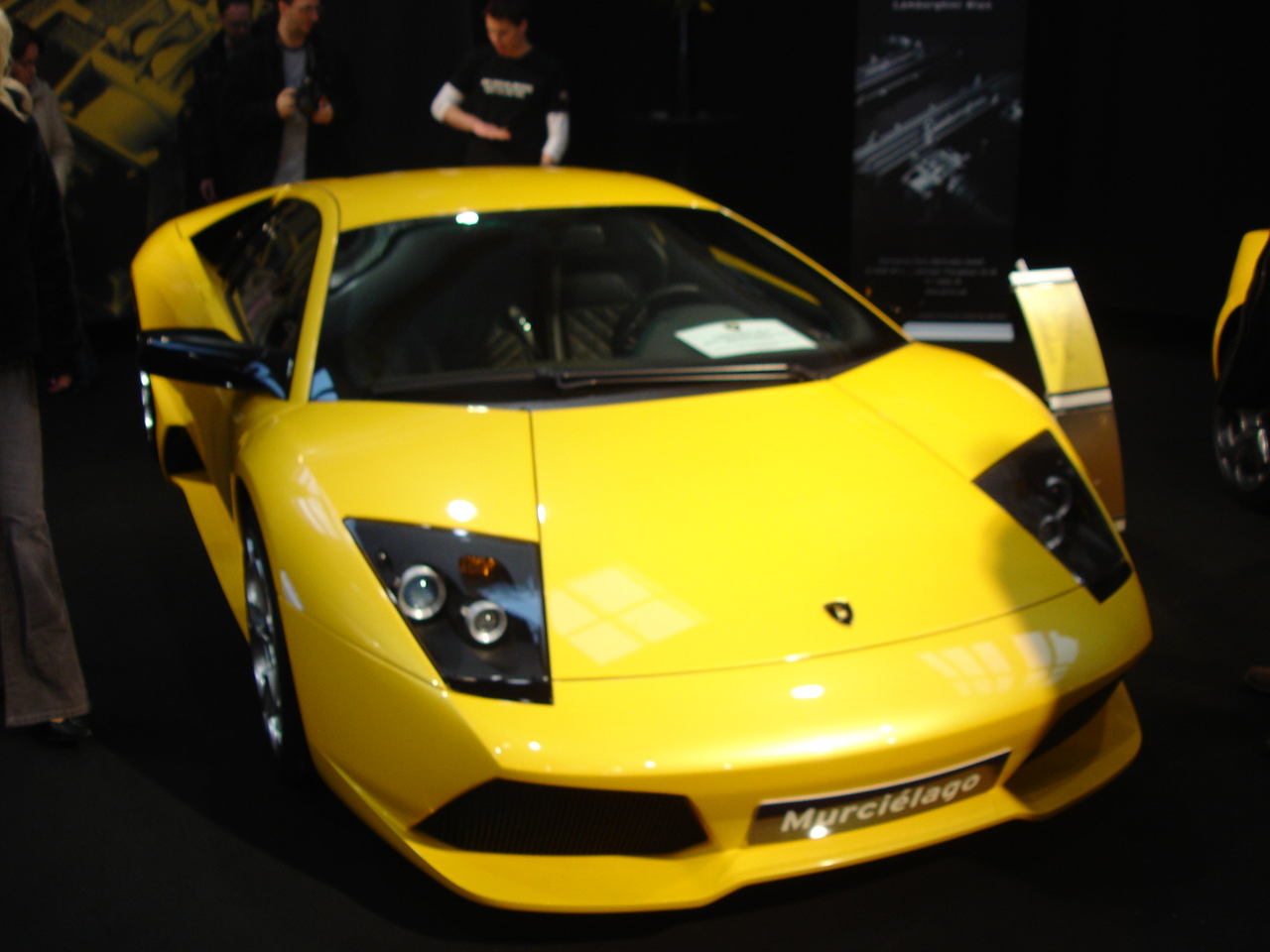
- Built
- 2001–2010
- Generations
- 2
- Top power
- 493 kW (670 PS)
Timeline
Murciélago generations
Click a generation for its own page


- Murciélago / Roadster 2001–2006 · Coupe · 427 kW (581 PS)
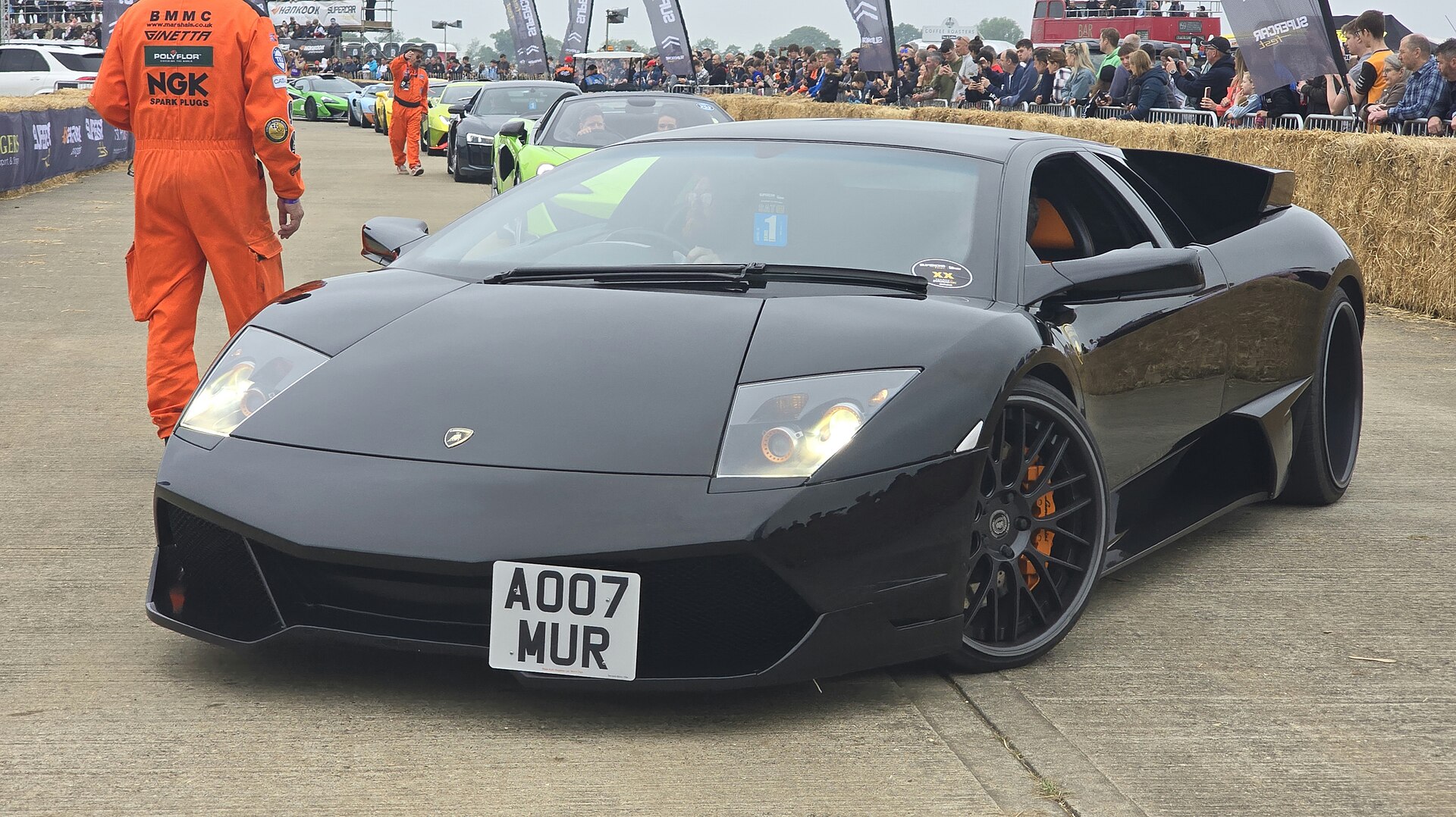
- Murciélago LP640 2006–2010 · Coupe · 471–493 kW (640–670 PS)
Newest first · 2 generations since 2001
-
2006
-
2001
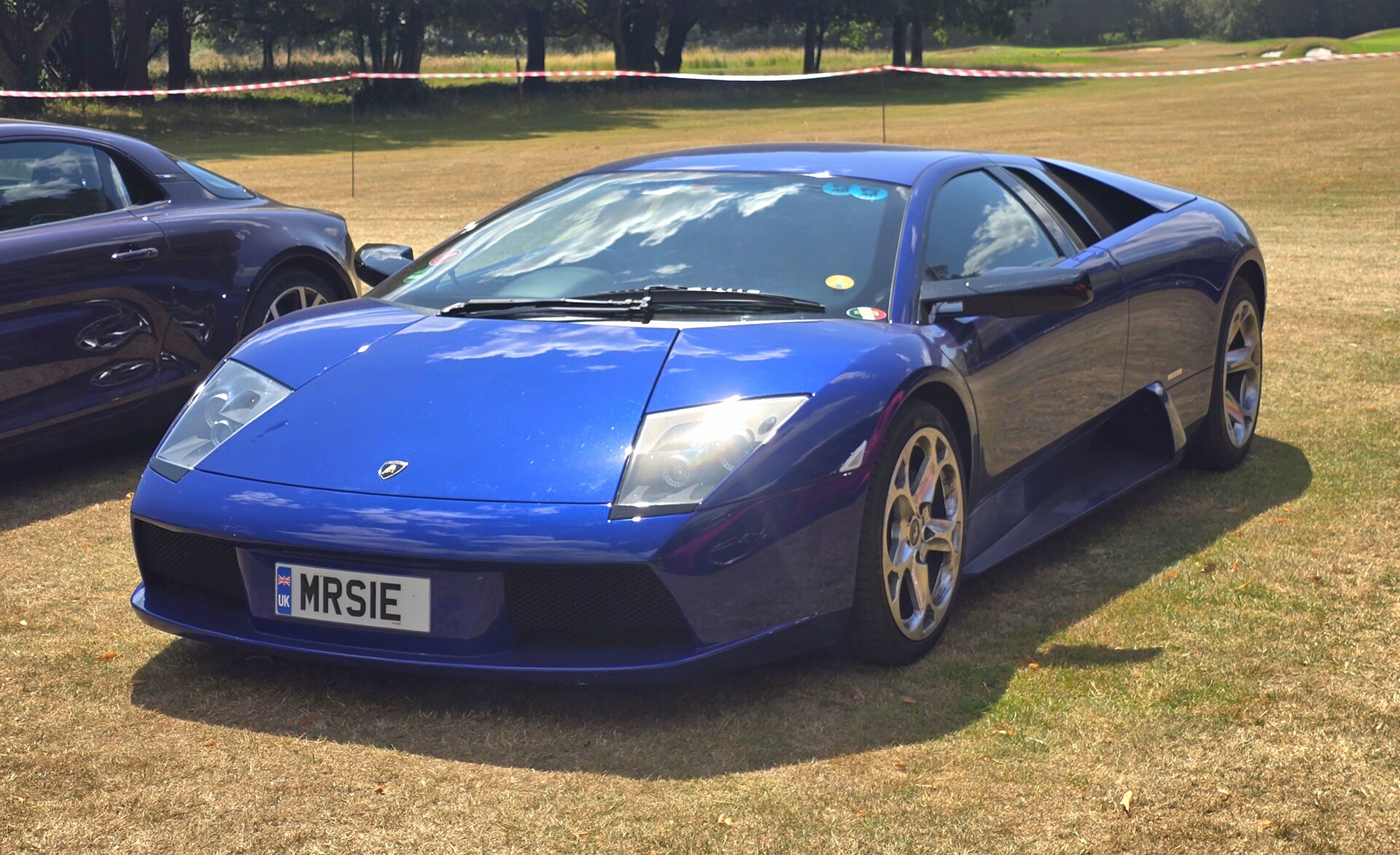
All generations by year: Murciélago LP640 (2006–2010) · Murciélago / Roadster (2001–2006)
Which one is mine?
Pick the year of first registration to see which generation it is.
- Murciélago LP640 2006–2010
- Murciélago / Roadster 2001–2006
The Lamborghini Murciélago is the mid-engined V12 supercar that Lamborghini built in Sant'Agata Bolognese from 2001 to 2010. It replaced the Diablo, it was the first new Lamborghini design in eleven years, and it was the first new model created after the company became part of the Audi and Volkswagen Group. Over its life the V12 grew from 6.2 to 6.5 litres and from 427 kW (580 PS) to 493 kW (670 PS), and the range expanded to a Roadster, the facelifted LP 640 and the track-oriented LP 670-4 SuperVeloce.
In short
- Built 2001–2010 at Sant'Agata Bolognese; Wikipedia's text gives 4,099 cars, while the year-by-year production table adds up to 3,983.
- Designed by Luc Donckerwolke; facelift (2006) by Filippo Perini of the Lamborghini Style Centre.
- Longitudinal mid-mounted V12 and permanent four-wheel drive with a viscous centre coupling; six-speed manual or e-gear automated manual.
- From 427 kW (580 PS) in 2001 to 493 kW (670 PS) in the LP 670-4 SV, with an official top speed of up to 342 km/h.
Specs by version
Engines
| Version | Engine | Gearbox | Drive | Production years |
|---|---|---|---|---|
| Murciélago LP640 · 6.5 L 12 cyl Automatic (AM7) · 2010 (EPA) | 6.5 l · 12 cyl 6,500 cc | 7-sp Dual-clutch | All-wheel drive | 2010 |
| Murciélago LP640 · 6.5 L 12 cyl Manual 7-spd · 2010 (EPA) | 6.5 l · 12 cyl 6,500 cc | 7-sp Manual | All-wheel drive | 2010 |
| Murciélago LP640 · 6.5 L 12 cyl Automatic (S6) · 2009 (EPA) | 6.5 l · 12 cyl 6,500 cc | 6-sp Automatic | All-wheel drive | 2009 |
| Murciélago LP640 · 6.5 L 12 cyl Manual 6-spd · 2009 (EPA) | 6.5 l · 12 cyl 6,500 cc | 6-sp Manual | All-wheel drive | 2009 |
| Murciélago LP640 · 6.5 L 12 cyl Automatic (S6) · 2008 (EPA) | 6.5 l · 12 cyl 6,500 cc | 6-sp Automatic | All-wheel drive | 2008 |
| Murciélago LP640 · 6.5 L 12 cyl Manual 6-spd · 2008 (EPA) | 6.5 l · 12 cyl 6,500 cc | 6-sp Manual | All-wheel drive | 2008 |
Performance
Show all 6 versions
| Version | Fuel consumption |
|---|---|
| Murciélago LP640 · 6.5 L 12 cyl Automatic (AM7) · 2010 (EPA) | 21.4 l/100 km11.0 mpg US · 13.2 mpg UK |
| Murciélago LP640 · 6.5 L 12 cyl Manual 7-spd · 2010 (EPA) | 23.5 l/100 km10.0 mpg US · 12.0 mpg UK |
| Murciélago LP640 · 6.5 L 12 cyl Automatic (S6) · 2009 (EPA) | 21.4 l/100 km11.0 mpg US · 13.2 mpg UK |
| Murciélago LP640 · 6.5 L 12 cyl Manual 6-spd · 2009 (EPA) | 23.5 l/100 km10.0 mpg US · 12.0 mpg UK |
| Murciélago LP640 · 6.5 L 12 cyl Automatic (S6) · 2008 (EPA) | 21.4 l/100 km11.0 mpg US · 13.2 mpg UK |
| Murciélago LP640 · 6.5 L 12 cyl Manual 6-spd · 2008 (EPA) | 23.5 l/100 km10.0 mpg US · 12.0 mpg UK |
Verified Manufacturer and type-approval data from our catalog · Sources and methodology
At a glance: Lamborghini Murciélago
| Specification | Lamborghini Murciélago |
|---|---|
| Production | 2001–2010, Sant'Agata Bolognese (Italy) |
| Cars built | 4,099 according to the text of the main source; production table 3,983 (3,084 coupés, 899 roadsters) |
| Body | two-seat coupé with scissor doors; Roadster from 2004 |
| Engine | V12, 6,192 cc (2001–2006) and 6,496 cc (2006–2010) |
| Power | 427 kW (580 PS) to 493 kW (670 PS) |
| Torque | 650 Nm to 660 Nm |
| Drive | four-wheel drive, viscous coupling, about 70% of torque to the rear |
| Gearbox | six-speed manual or six-speed e-gear |
| Kerb weight | 1,841 kg (coupé, 2001), 1,746 kg (LP 640 and SV) |
| Predecessor / successor | Diablo / Aventador |
The Murciélago sits between the Diablo and the Lamborghini Aventador in the line of V12 flagships that began with the Lamborghini Countach. All models are in the Lamborghini catalogue.
The name and the Audi era
Lamborghini has long named its cars after fighting bulls. Murciélago was a bull that survived a fight in Córdoba in 1879 and later became a famous breeding sire; the word itself is Spanish for "bat".
The car was the first all-new model after Audi took control of Lamborghini, and the first new design in eleven years. It was unveiled in 2001 and reached North American buyers as a 2002 model. The design came from Luc Donckerwolke, the Belgian designer who led Lamborghini's design department from 1998 to 2005. The car kept the scissor doors that have been a hallmark of Lamborghini's V12 flagships since the Countach.
Design and construction
Most of the body is carbon fibre. The roof is steel and the scissor doors are aluminium. The car is long and very low — 4,580 mm long (4,610 mm from 2006), 2,045 mm wide (2,057 mm from 2006) and 1,135 mm high on a 2,665 mm wheelbase.
To cope with the heat of the V12, the Murciélago has variable air intakes on its shoulders, which open electromechanically at high speed, and an active rear wing that rises at speed. Both stay retracted at normal speeds, so the clean shape is kept in everyday driving.
Lamborghini's own heritage page describes the design as a blend of the Countach's wedge shape and surfaces, the Miura's sensual lines and the Diablo's unusual proportions. It also notes that the gearbox sits in front of the engine, with the rear differential integrated into the powertrain.
Suspension uses independent double wishbones at all four corners.
Engine and performance
The V12, mounted lengthwise behind the cabin, traces its roots back to Lamborghini's first engines of the 1960s. In the original Murciélago it displaced 6,192 cc and produced 427 kW (580 PS) at 7,500 rpm and 650 Nm at 5,400 rpm. For the 2006 LP 640 it was enlarged to 6,496 cc, with 471 kW (640 PS) at 8,000 rpm and 660 Nm at 6,000 rpm. The final SuperVeloce reached 493 kW (670 PS).
The rear differential is integrated with the engine, and a viscous coupling acting as centre differential sends power to the front wheels when needed; the normal split is about 70% rear and 30% front. Buyers could choose a six-speed manual gearbox or the six-speed e-gear automated manual, which on the LP 640 received a launch control function.
| Version | Engine | Power | Torque | Top speed (official) |
|---|---|---|---|---|
| Murciélago (2001–2006) | 6,192 cc | 427 kW (580 PS) at 7,500 rpm | 650 Nm at 5,400 rpm | 332 km/h (some sources 330–333 km/h) |
| LP 640 (2006–2010) | 6,496 cc | 471 kW (640 PS) at 8,000 rpm | 660 Nm at 6,000 rpm | 340 km/h |
| LP 640 Roadster | 6,496 cc | 471 kW (640 PS) | 660 Nm | 336 km/h |
| LP 650-4 Roadster (50 cars) | 6,496 cc | 478 kW (650 PS) at 8,000 rpm | 660 Nm at 6,000 rpm | sources differ |
| LP 670-4 SuperVeloce (2009–2010) | 6,496 cc | 493 kW (670 PS) at 8,000 rpm | 660 Nm at 6,500 rpm | 342 km/h (small spoiler), 337 km/h (Aeropack wing) |
Independent magazine tests confirm the pace. Road & Track measured a standing quarter mile of 11.7 seconds for the original car and 10.9 seconds at 209.9 km/h for the SV.


Roadster and LP 640
An open study called the Murciélago Barchetta was shown at the Detroit motor show in 2003, and the production Roadster followed in 2004. It has a manually fitted fabric roof, and a label on the windscreen frame warns not to exceed 160 km/h with the roof in place. According to the text of the main source it weighs 29 kg more than the coupé.
At the Geneva motor show in March 2006 Lamborghini presented the facelifted Murciélago LP 640. The name gives the engine layout (longitudinal, "Longitudinale Posteriore") and the power in PS. Besides the 6.5-litre engine, it received asymmetric side air intakes, a single large exhaust outlet, revised suspension, a stronger e-gear clutch and a reworked seating position. Options included carbon-ceramic brakes and a glass engine cover. The LP 640 Roadster was shown at the Los Angeles motor show at the end of 2006.
Special editions and limited runs
- 40th Anniversary edition (2003): 50 cars in a special blue-green colour called Verde Artemis, with carbon exterior details, special wheels and exhaust, a numbered plaque and special leather.
- Versace edition (2006): an LP 640 shown in Paris, offered in white or black with Versace interiors, luggage, driving shoes, gloves and a watch; 20 cars were built in coupé and roadster form.
- LP 650-4 Roadster: 50 cars in Grigio Telesto grey with orange details and 478 kW (650 PS).
- LP 670-4 SuperVeloce (2009): shown at the Geneva motor show in 2009. It was about 100 kg lighter thanks to more carbon fibre and Alcantara, and had larger air intakes, a longer front splitter, a hexagonal see-through engine cover, a lighter exhaust and standard carbon-ceramic brakes. Lamborghini planned 350 cars, but production was cut short because the factory needed space for the Aventador. A China Limited Edition of ten SV cars was shown at the Beijing motor show.
The Murciélago LP 640 was also the basis of the Reventón of 2007, a limited model with identical mechanicals and stealth-aircraft-inspired styling.

Racing: R-GT and R-SV
The Murciélago R-GT was presented at the Frankfurt motor show in 2003. Developed with Reiter Engineering and Audi Sport, it had rear-wheel drive only and air restrictors to meet FIA, ACO and JAF rules; about seven were sold. It won the 2007 Zhuhai 2 Hours and the GT1 class at the 1000 km of Catalunya in 2009, and it finished eighth overall at the Spa 24 Hours in 2008. In Japan, the JLOC team raced an RG-1 version in Super GT and won the GT300 class at the Suzuka 500 km in March 2006.
For the 2010 FIA GT1 World Championship Reiter developed the Murciélago LP 670 R-SV. It was raced in 2010 and 2011 by Reiter, All-Inkl.com Münnich and the Swiss Racing Team, and Reiter finished third in the 2010 teams' championship.
Legacy
Production ended on 5 November 2010. Its successor, the Aventador, was unveiled at the Geneva motor show in 2011. The Murciélago was the V12 flagship that carried Lamborghini through its first decade under Audi. It also became a film star — a Roadster appeared in Batman Begins (2005) and the LP 640 in The Dark Knight, for which three cars were lent and one was destroyed. The brand's background is told in our history of Lamborghini.
Photo gallery


Lamborghini Murciélago: first vs latest generation
| Spec | Murciélago / Roadster | Murciélago LP640 | Change |
|---|---|---|---|
| Years | 2001–2006 | 2006–2010 | 5 years apart |
| Most powerful version | 427 kW (581 PS) | 493 kW (670 PS) | +66 kW (+15%) |
Oldest and newest generation in the 1cars catalog. Power is the strongest version of each; other rows are shown only when both generations have the figure.
Image credits · Photos from Wikimedia Commons under free licences
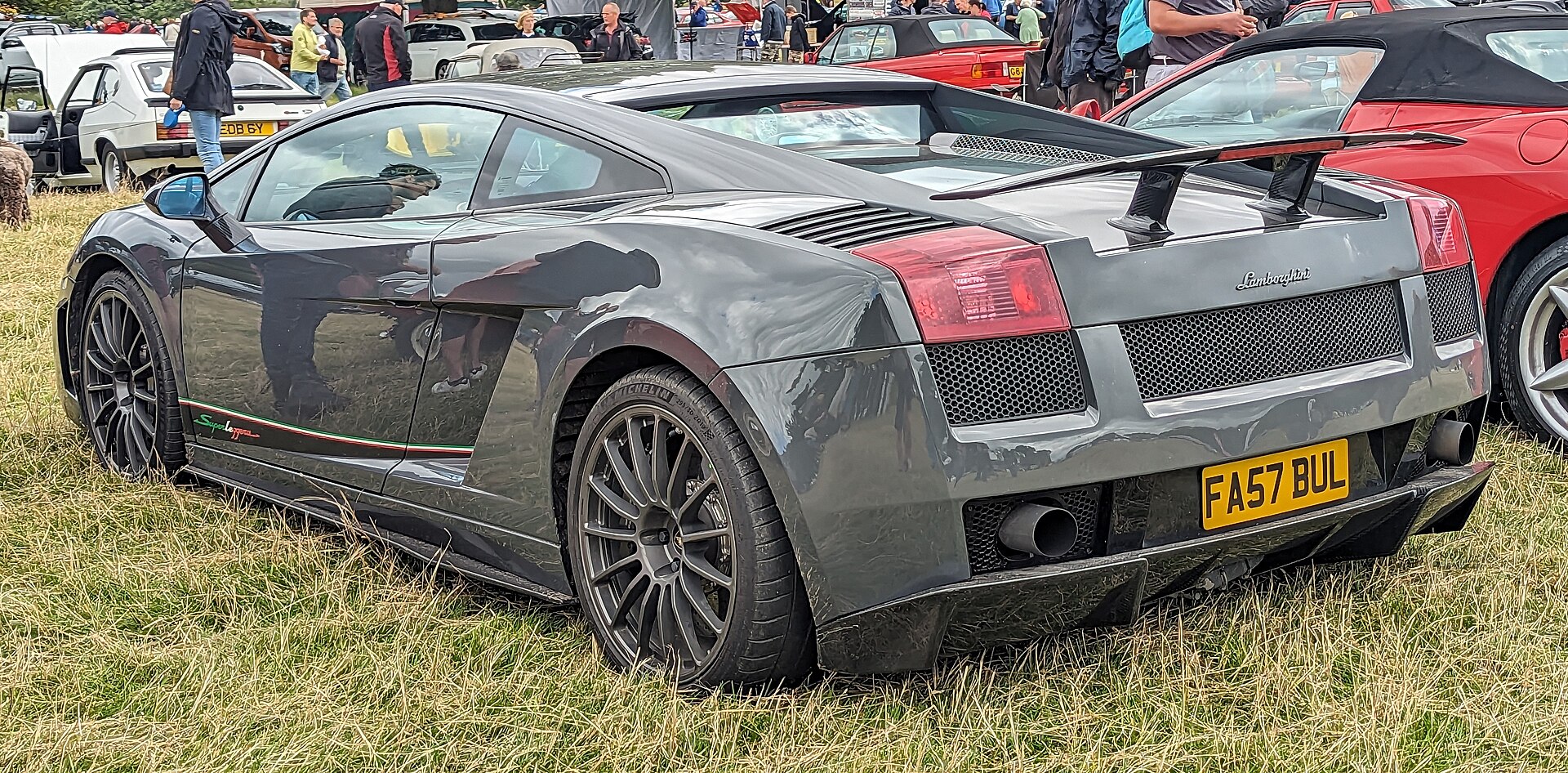
- Lamborghini Murciélago / Roadster · Photo: Calreyn88 / Wikimedia Commons, CC BY-SA 4.0
- Lamborghini Murciélago LP640 · Photo: Calreyn88 / Wikimedia Commons, CC BY-SA 4.0
Lamborghini Murciélago in our rankings
- No. 18 of 170 · Most powerful cars of the 2000s (427 kW · top 11%)
- No. 59 of 557 · Biggest engines: cars (6,500 cc · top 11%)
- No. 98 of 859 · Most powerful cars (493 kW · top 12%)
- No. 71 of 313 · Most powerful coupes (493 kW · top 24%)
- No. 39 of 173 · Biggest engines: coupes (6,500 cc · top 24%)
- No. 31 of 127 · Most powerful Italian cars (493 kW · top 26%)
More powerful than 89% of ranked cars of the 2000s in the 1CARS catalog (No. 18 of 170).
FAQ
How many Lamborghini Murciélagos were built?
The main text of Wikipedia gives 4,099 cars, while its year-by-year production table adds up to 3,983 (3,084 coupés and 899 roadsters).
How powerful is the Murciélago?
From 427 kW (580 PS) for the original 6.2-litre car to 471 kW (640 PS) for the LP 640 and 493 kW (670 PS) for the LP 670-4 SuperVeloce.
Is the Murciélago four-wheel drive?
Yes. A viscous coupling sends part of the torque to the front axle; the normal split is about 70% rear and 30% front.
What does LP 640 mean?
"LP" stands for Longitudinale Posteriore — the engine is mounted lengthwise behind the cabin — and 640 is the power in PS.
What replaced the Murciélago?
The Aventador, unveiled at the Geneva motor show in 2011.
Data sources
Data checked by an editor against the sources below.
- Wikipedia — Lamborghini Murciélago
- US EPA fueleconomy.gov — 28535.shtml
- US EPA fueleconomy.gov — 28534.shtml
- US EPA fueleconomy.gov — 25390.shtml
- US EPA fueleconomy.gov — 25389.shtml