 Lamborghini Miura
All generations, specs and history
Published Sources (1) Report an error
By Felix Hartmann, Automotive Technology & EV Contributor
- Built
- 1966–1973
- Generations
- 3
- Top power
- 283 kW (385 PS)
Timeline
Miura generations
Click a generation for its own page
P400 and P400 S overlapped in 1968–1969, so P400 S sits on a second lane
- P400 1966–1969 · Coupe · 257 kW (349 PS)
- P400 S 1968–1971 · Coupe · 272 kW (370 PS)
- P400 SV 1971–1973 · Coupe · 283 kW (385 PS)
Newest first · 3 generations since 1966
- 1971 P400 SV 1971–1973 · Coupe · 283 kW (385 PS)
-
1968
-
1966


All generations by year: P400 SV (1971–1973) · P400 S (1968–1971) · P400 (1966–1969)
Which one is mine?
Pick the year of first registration to see which generation it is.
- P400 SV 1971–1973
- P400 S 1968–1971
- P400 1966–1969
The Lamborghini Miura is the two-seat coupé that Lamborghini built in Sant'Agata Bolognese from 1966 to 1973. With its V12 mounted crosswise behind the cabin, it was the first high-performance production road car with a transverse mid-engine layout, and at its launch it was described as the fastest production car in the world. Its body, designed by Marcello Gandini at Bertone, made it one of the most admired shapes of the 1960s, and its layout became the template for the supercars that followed.
In short
- Built 1966–1973 in Sant'Agata Bolognese: 275 P400, 338 P400 S and 150 P400 SV according to Wikipedia.
- 3,929 cc 60° V12 mounted transversely, sharing one casting with the five-speed gearbox: 257 kW (350 PS) in the P400, 283 kW (385 PS) in the SV.
- Developed in their spare time by Giampaolo Dallara, Paolo Stanzani and Bob Wallace; body by Marcello Gandini at Bertone.
- Measured top speeds of 275 km/h (P400) and 278 km/h (P400 S); the claimed figure was 300 km/h.
Lamborghini Miura at a glance
| Specification | Lamborghini Miura |
|---|---|
| Production | 1966–1973, Sant'Agata Bolognese (Italy) |
| Versions | P400, P400 S, P400 SV; SVJ and Jota specials |
| Cars built | 275 P400, 338 P400 S, 150 P400 SV |
| Body | two-seat coupé, steel monocoque with aluminium front and rear sections |
| Engine | 3,929 cc 60° V12, four overhead camshafts, transverse mid-engine |
| Power | 257 kW (350 PS) to 283 kW (385 PS) |
| Torque | 355–400 Nm |
| Gearbox | five-speed manual in unit with the engine |
| Weight | 1,125 kg dry (P400); 1,292 kg kerb |
| Dimensions | 4,360 mm long, 1,760 mm wide, 1,055 mm high, 2,500 mm wheelbase |
| Successor | Countach |
The Miura was Lamborghini's third model after the 350 GT and 400 GT, and it turned the young company into a maker of supercars. Its successor was the Lamborghini Countach; all models are listed in the Lamborghini catalogue, and the story of the company is told in our history of Lamborghini.
Development: a project done after hours
Ferruccio Lamborghini founded his car company to build refined grand touring cars, not racing cars like those of Ferrari. Three young members of his engineering staff - Giampaolo Dallara, Paolo Stanzani and the New Zealand test driver Bob Wallace - had other ideas. In 1965 they developed a prototype chassis, the P400, working on it at night in their own time. When Lamborghini saw the running chassis he gave them a free hand, seeing the car as a way to promote the brand.
The bare rolling chassis, with its V12 mounted crosswise behind the seats, was shown at the Turin Auto Show in 1965. Customers placed orders even though the car had no body yet. The body was entrusted to Bertone, where the young stylist Marcello Gandini designed it; it was completed only days before the Geneva Motor Show in March 1966.
The team had not even checked that the engine would fit under the bodywork. At Geneva the prototype carried ballast in place of the engine, and the engine cover stayed locked; sales manager Ubaldo Sgarzi kept journalists who wanted to look inside away from the car. The reaction at the show was enthusiastic, and Lamborghini decided to start production the following year.
The name comes from the Miura family of Spanish fighting-bull breeders. The bull also became part of Lamborghini's new badge, and the company has named many later models after bulls and bullfighting.
Design and construction
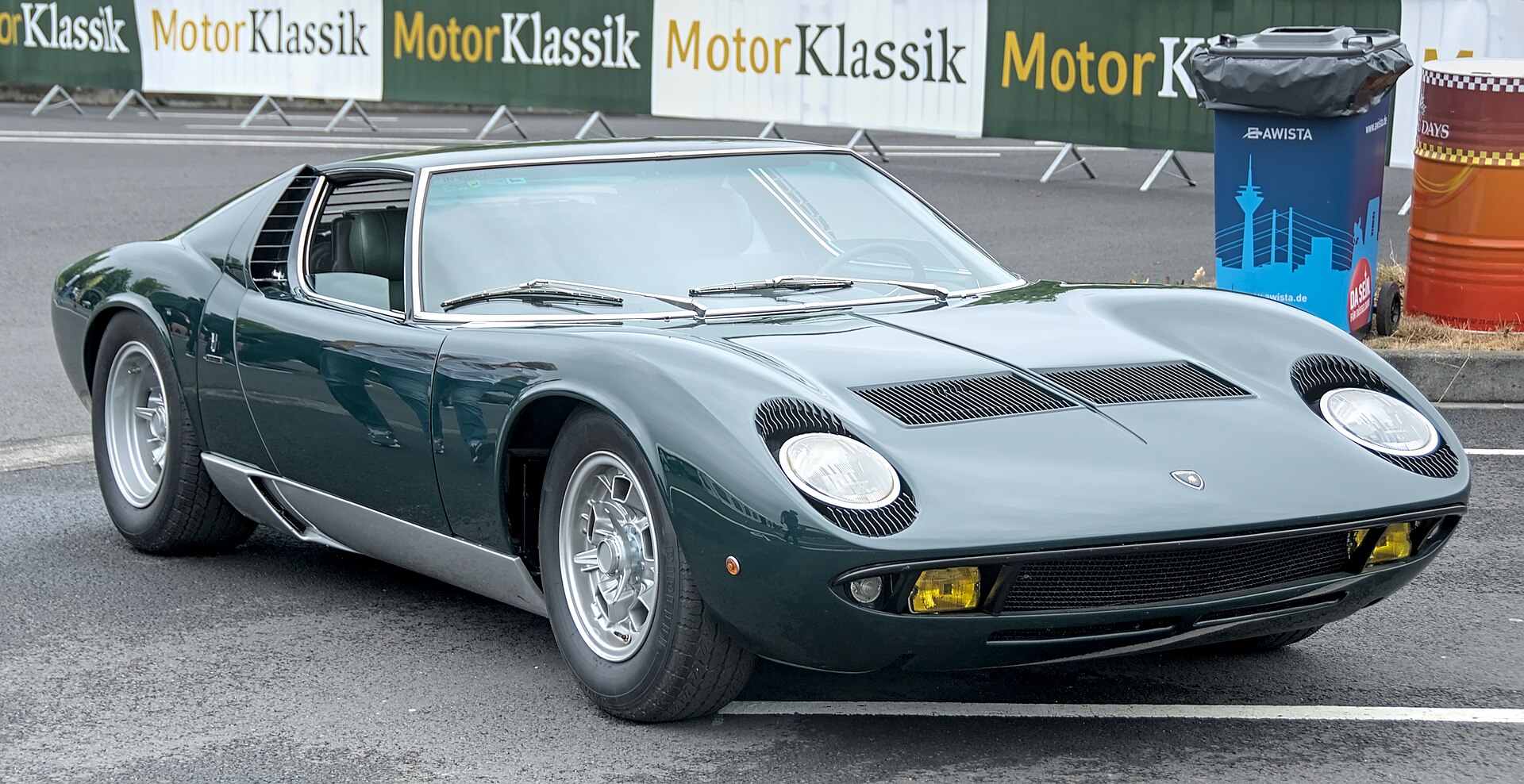
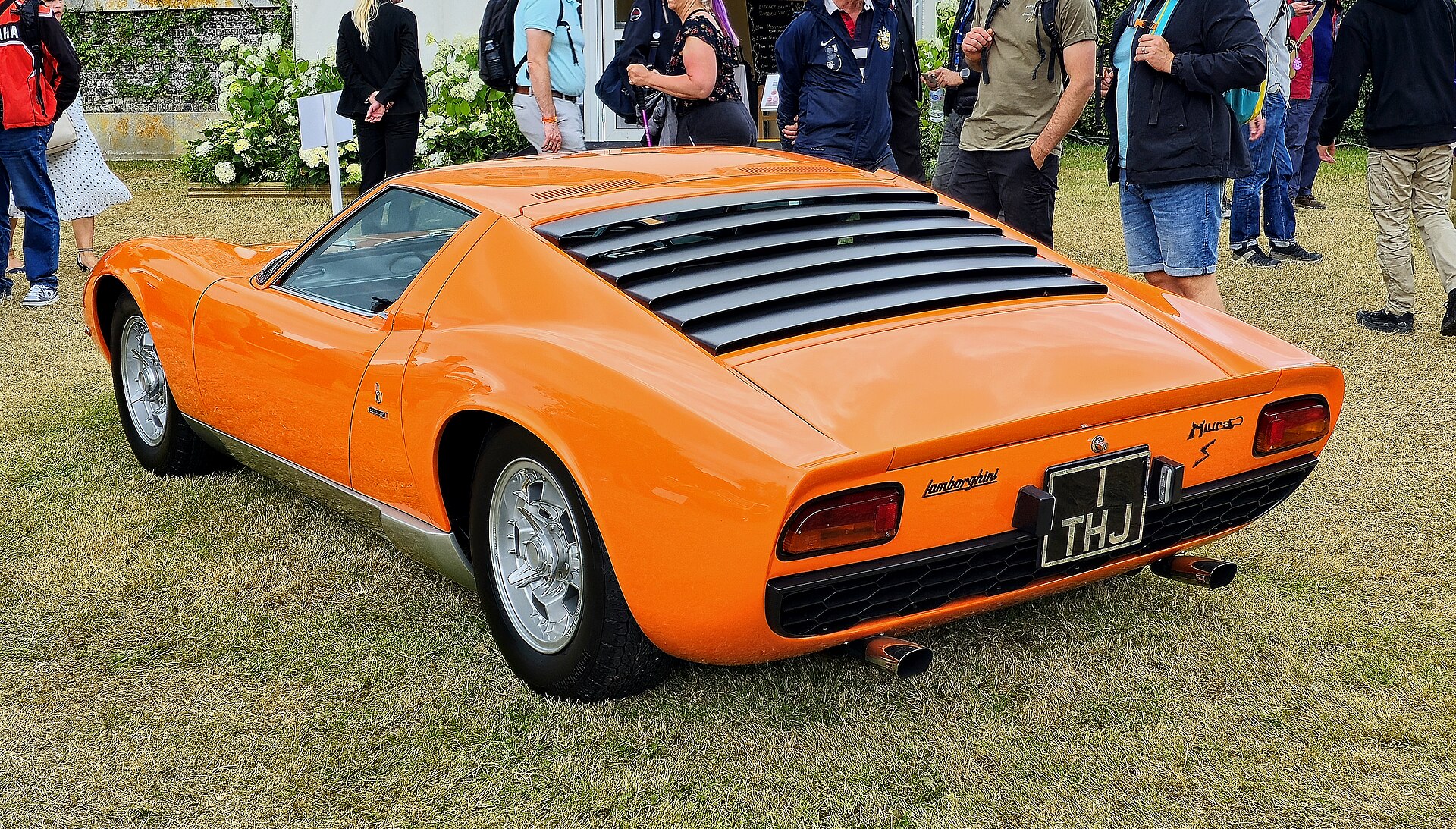
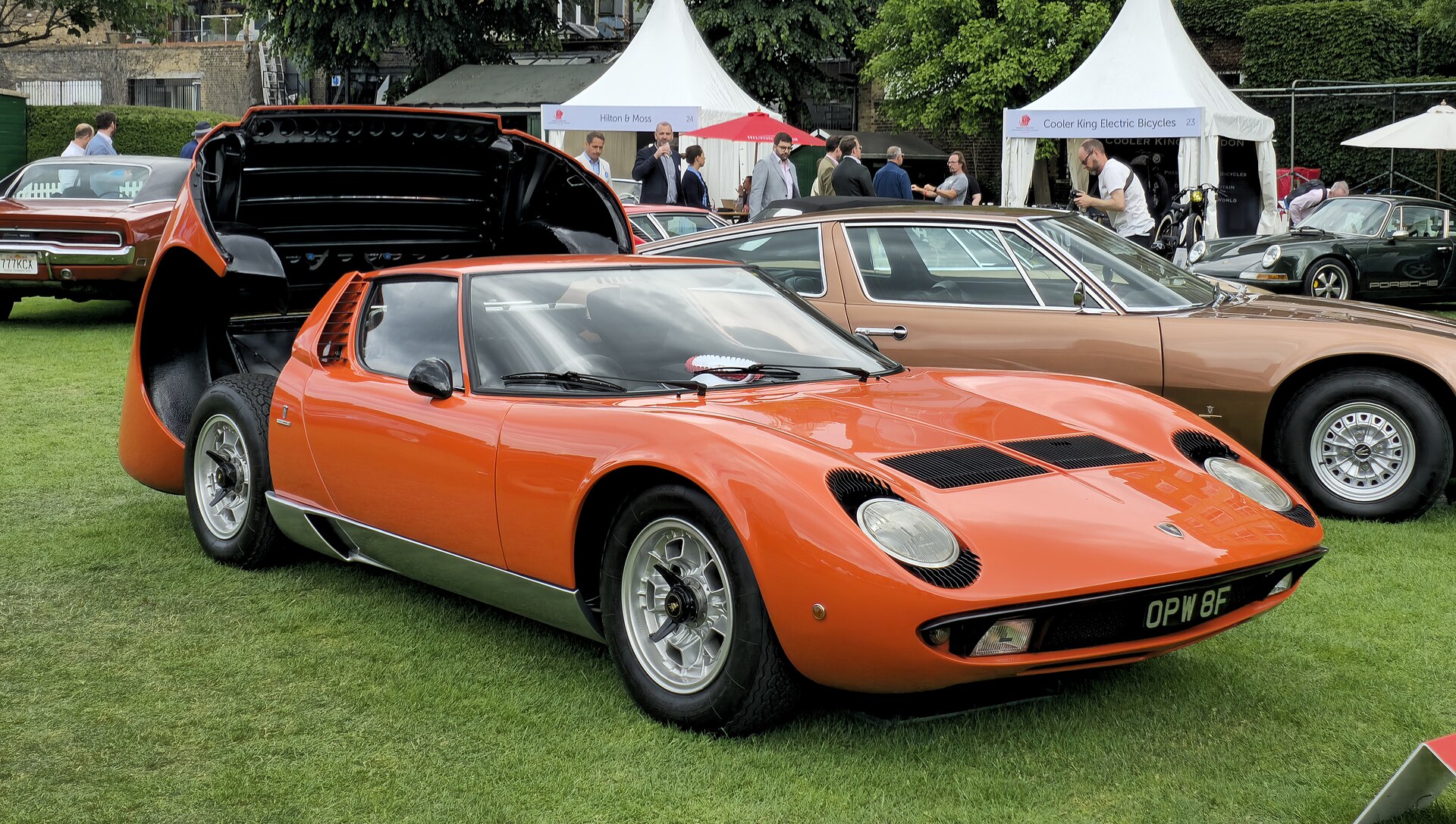
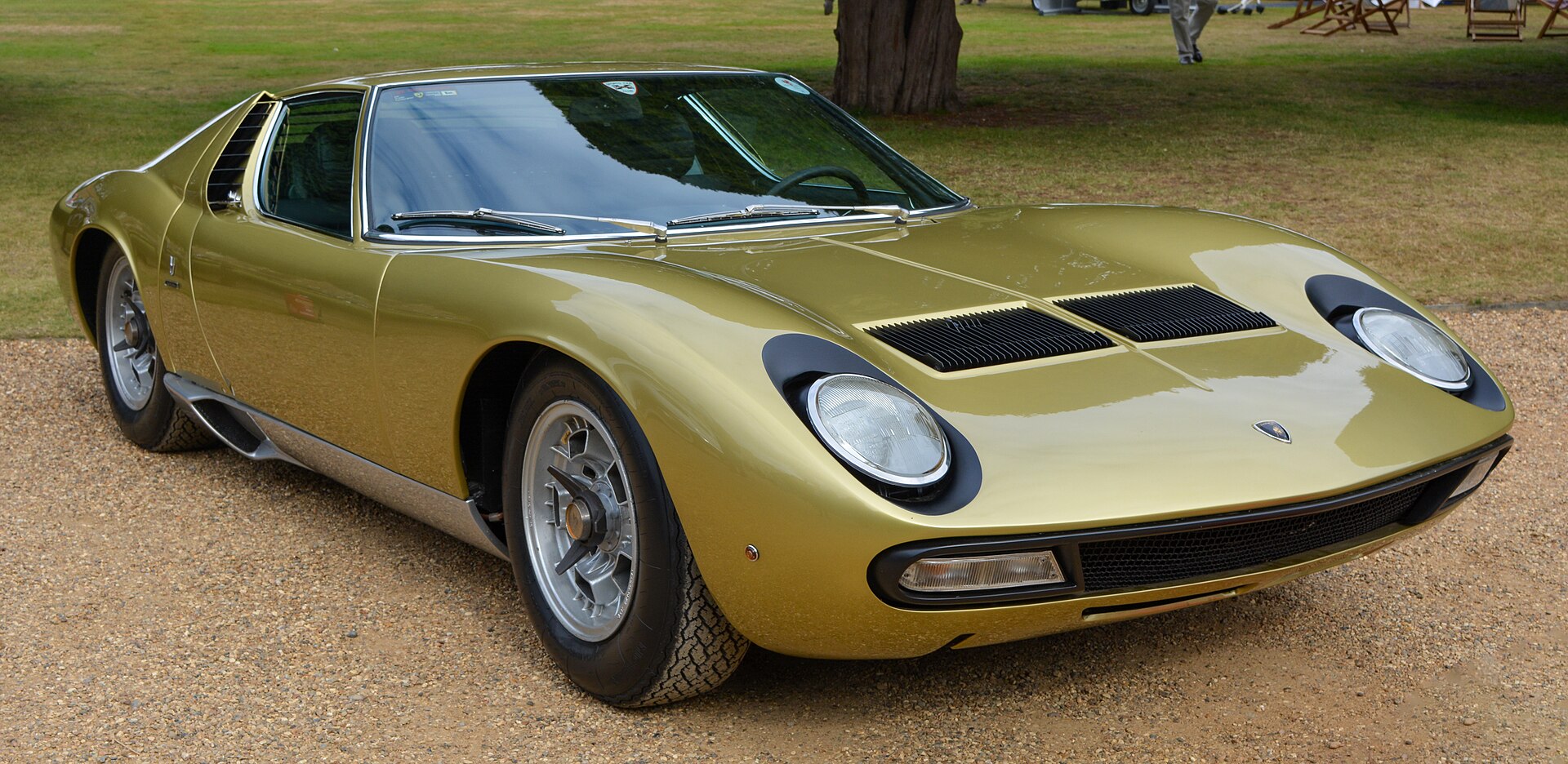
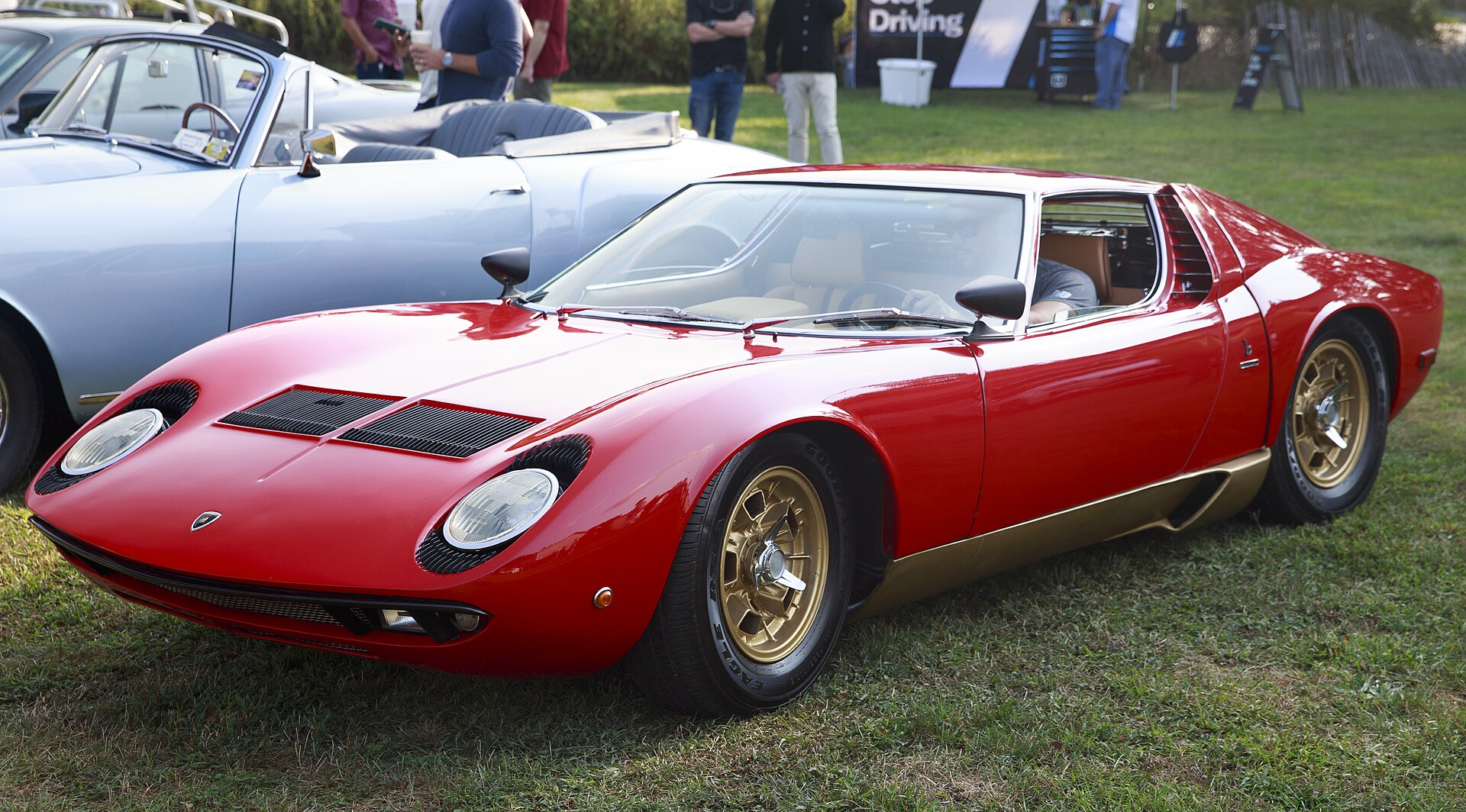
Gandini's design is low, wide and very short at the front. The headlamps lie almost flat and are surrounded by black "eyelashes" on the P400 and P400 S. The doors are long and open conventionally, and the rear window is covered by louvres that let heat out of the engine bay. The overall height is just 1,055 mm.
The structure is a monocoque with a steel frame and doors and aluminium front and rear body sections. Suspension is by upper and lower wishbones with coil springs and anti-roll bars at both ends, with rack-and-pinion steering and Girling disc brakes on all four wheels. The original tyres were Pirelli Cinturato 205VR15.
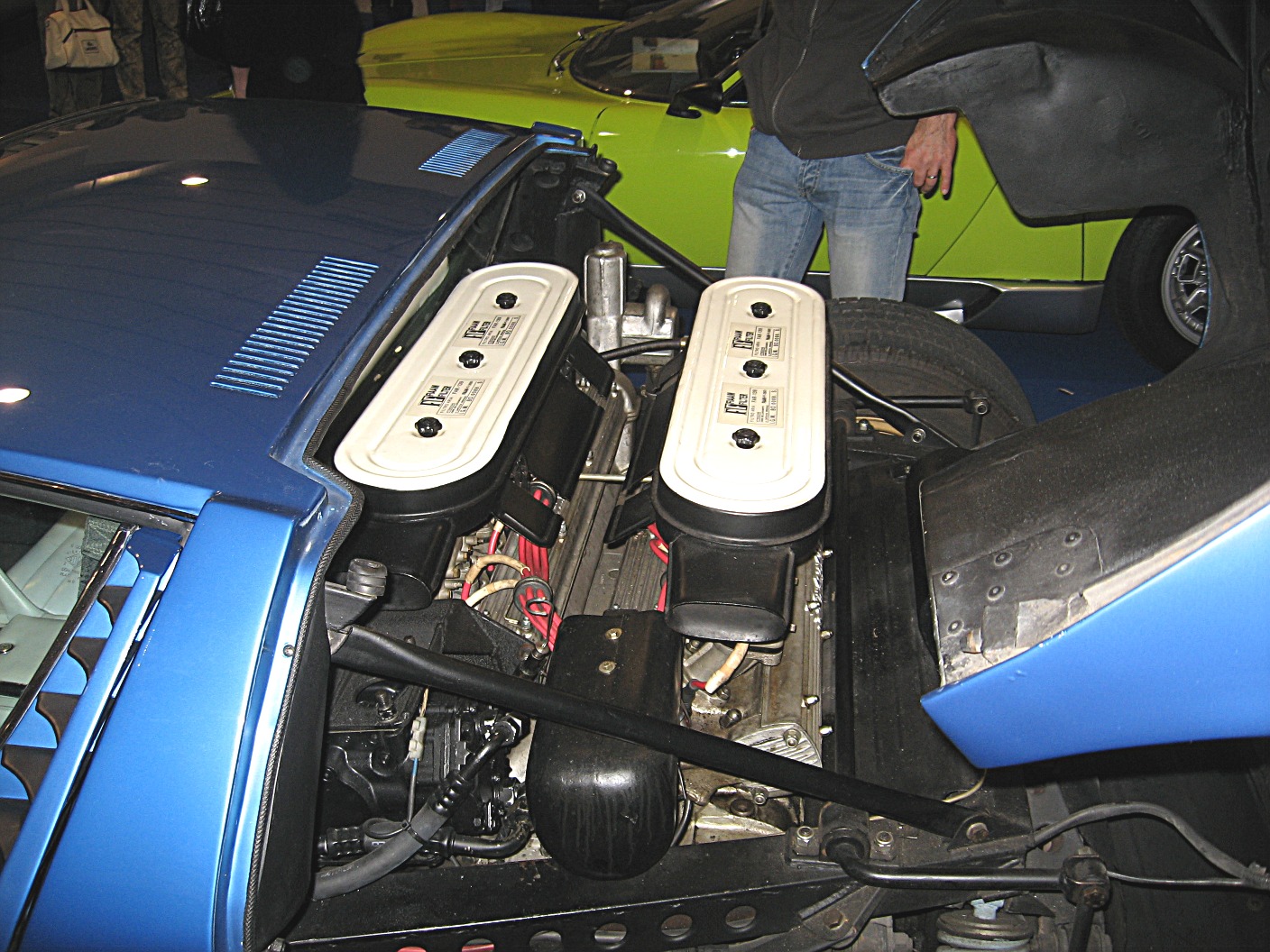
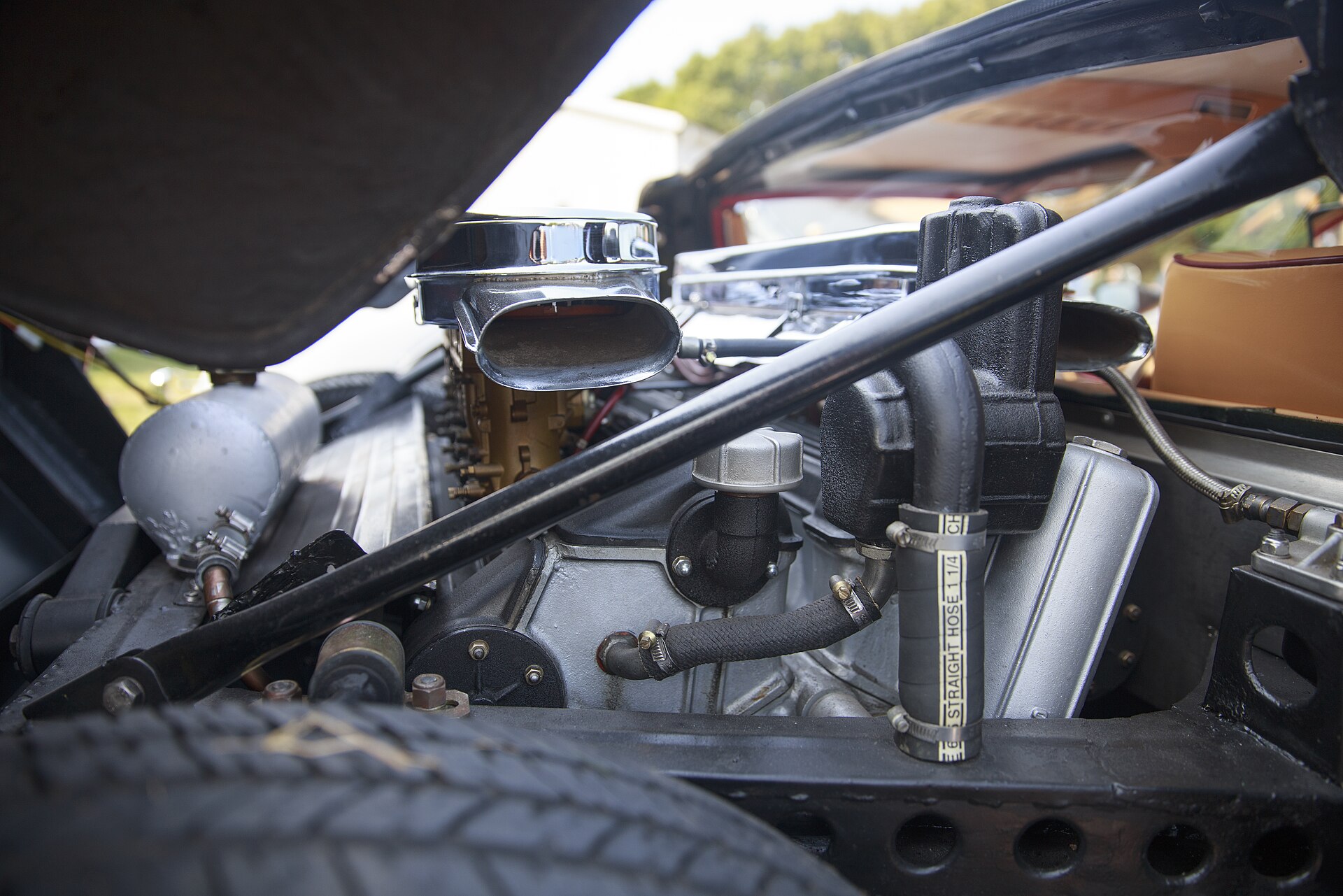
The key idea was packaging. Mounting the V12 across the car, directly behind the cabin, kept the wheelbase to 2,500 mm. To save more space, the engine and gearbox were cast in one unit and shared the same oil - an idea borrowed from the Morris Mini. Only the last 96 SVs had separate lubrication for the engine and gearbox, which also made it easier to fit an optional limited-slip differential.

Engine and performance
The V12 has a displacement of 3,929 cc (bore 82 mm, stroke 62 mm), two chain-driven overhead camshafts per bank and two valves per cylinder. It is fed by four triple-choke Weber carburettors. The engine was developed from the V12 of the 400 GT.
| Version | Compression | Power | Torque |
|---|---|---|---|
| P400 (1966–1969) | 9.5:1 | 257 kW (350 PS) at 7,000 rpm | 355 Nm at 5,000 rpm |
| P400 S (1968–1971) | 10.7:1 | 272 kW (370 PS) at 7,700 rpm | 388 Nm at 5,500 rpm |
| P400 SV (1971–1973) | 10.7:1 | 283 kW (385 PS) at 7,850 rpm | 400 Nm at 5,750 rpm |
The factory claimed a top speed of 300 km/h. Road tests recorded 275 km/h for the P400 and 278 km/h for the P400 S. A P400 S tested by a magazine used about 21 litres of fuel per 100 km. In the 1960s these figures made the Miura one of the fastest cars on the road.


Versions: P400, P400 S and P400 SV
The first production version, the P400 ("Posteriore 4 litri" - rear-mounted four-litre engine), was built from 1966 to 1969; 275 were made.
The P400 S, introduced at the Turin Motor Show in November 1968, had more power from larger intake manifolds and revised camshafts. It also brought small improvements to comfort: electric windows, more chrome trim, a slightly larger luggage space, wider Pirelli tyres and optional air conditioning. 338 were built.
The P400 SV of 1971 was the last and most developed version. It had revised camshaft timing and carburettors, wider rear wings for 9-inch wheels, a wider rear track (1,540 mm instead of 1,400 mm) and new tail lights. The SV is easy to recognise because the "eyelashes" around the headlamps were removed. 150 were built.

Jota, SVJ and the Roadster
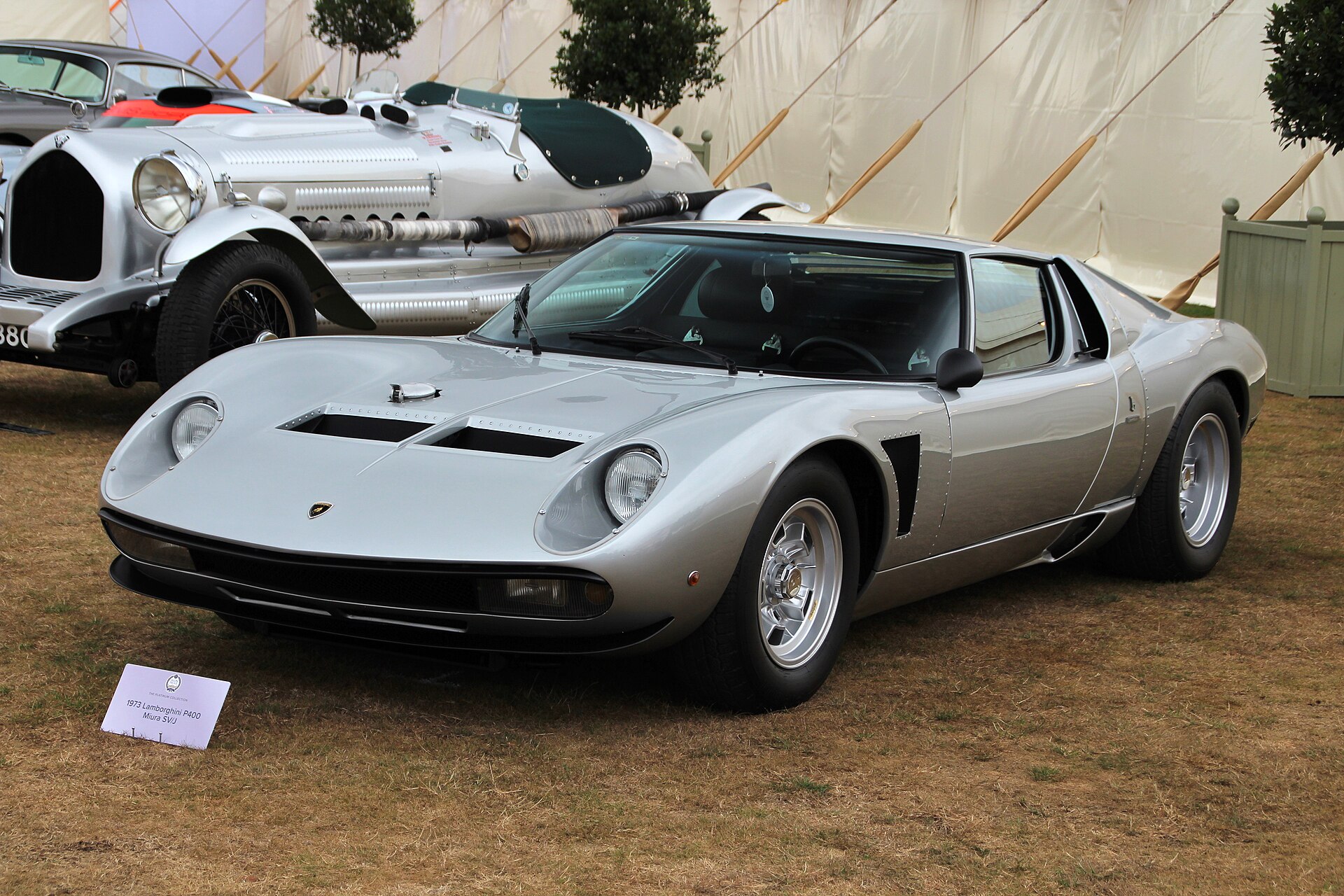
In 1970 Bob Wallace built a single test car, the Miura Jota, to explore the FIA's Appendix J racing rules. It had aluminium alloy body panels, plastic side windows, a front spoiler, fixed covered headlamps, two fuel tanks in the sills and a modified engine with a higher compression ratio, dry-sump lubrication and a freer exhaust. Its output was 312–328 kW (418–440 bhp) at 8,800 rpm, and it was about 360 kg lighter than a production Miura. The car was sold to a private owner and destroyed by fire after a crash in April 1971.
Customers then asked for cars in Jota style. The factory built six SVJs during production - one new car and five converted from SVs - and a seventh later from an unused chassis, which most experts do not count as an official SVJ. One SVJ was owned by the Shah of Iran. Other cars were converted to SVJ specification by independent workshops.
Bertone also built a one-off open Miura Roadster on a P400 chassis, shown at the Brussels Motor Show in 1968.

Film, owners and later homages
The Miura is the car in the opening scene of the 1969 film The Italian Job, in which an orange Miura is destroyed by a bulldozer. The car used for most of the driving shots survived and was restored by Lamborghini's Polo Storico department in 2019. Among the famous owners of Miuras were Frank Sinatra and Miles Davis.
Lamborghini returned to the Miura twice. The Miura Concept, presented in New York on 5 January 2006 for the car's 40th anniversary, was the first design by Walter de'Silva as Lamborghini's design chief, but the company said it would not build it. For the 50th anniversary in 2016 it presented the Aventador Miura Homage, built by Ad Personam in 50 examples (see the Lamborghini Aventador). The original P400 prototype won the Gran Turismo Trophy at the Pebble Beach Concours d'Elegance in 2008.
Legacy
The Miura changed the idea of what a fast road car should be. Before it, the most powerful road cars had their engines at the front; after it, a mid-mounted engine behind the driver became the standard layout for supercars. It also gave Lamborghini a reputation for daring design that the Countach, which replaced it about a year after the end of Miura production, took even further.
Photo gallery


Lamborghini Miura evolution in numbers
Did you know?
- The Lamborghini Miura ran for 7 years, from 1966 to 1973, over 3 generations in our catalog.
- The biggest jump in power came with the P400 S: up to 272 kW (370 PS), 15 kW more than the P400.
Most powerful version, kW
Figures from the 1cars catalog: power is the strongest version of each generation; generations without the figure are left out.
Lamborghini Miura: first vs latest generation
| Spec | P400 | P400 SV | Change |
|---|---|---|---|
| Years | 1966–1969 | 1971–1973 | 5 years apart |
| Most powerful version | 257 kW (349 PS) | 283 kW (385 PS) | +26 kW (+10%) |
Oldest and newest generation in the 1cars catalog. Power is the strongest version of each; other rows are shown only when both generations have the figure.
Image credits · Photos from Wikimedia Commons under free licences
- Lamborghini P400 · Photo: Calreyn88 / Wikimedia Commons, CC BY-SA 4.0
- Lamborghini P400 S · Photo: Calreyn88 / Wikimedia Commons, CC BY-SA 4.0
Lamborghini Miura in our rankings
- No. 11 of 88 · Most powerful cars of the 1970s (283 kW · top 13%)
- No. 30 of 94 · Most powerful cars of the 1960s (257 kW · top 35%)
- No. 306 of 859 · Most powerful cars (283 kW · top 36%)
- No. 61 of 127 · Most powerful Italian cars (283 kW · top 49%)
- No. 166 of 313 · Most powerful coupes (283 kW · top 54%)
- No. 486 of 912 · Longest-running car nameplates (7 years · top 60%)
More powerful than 87% of ranked cars of the 1970s in the 1CARS catalog (No. 11 of 88).
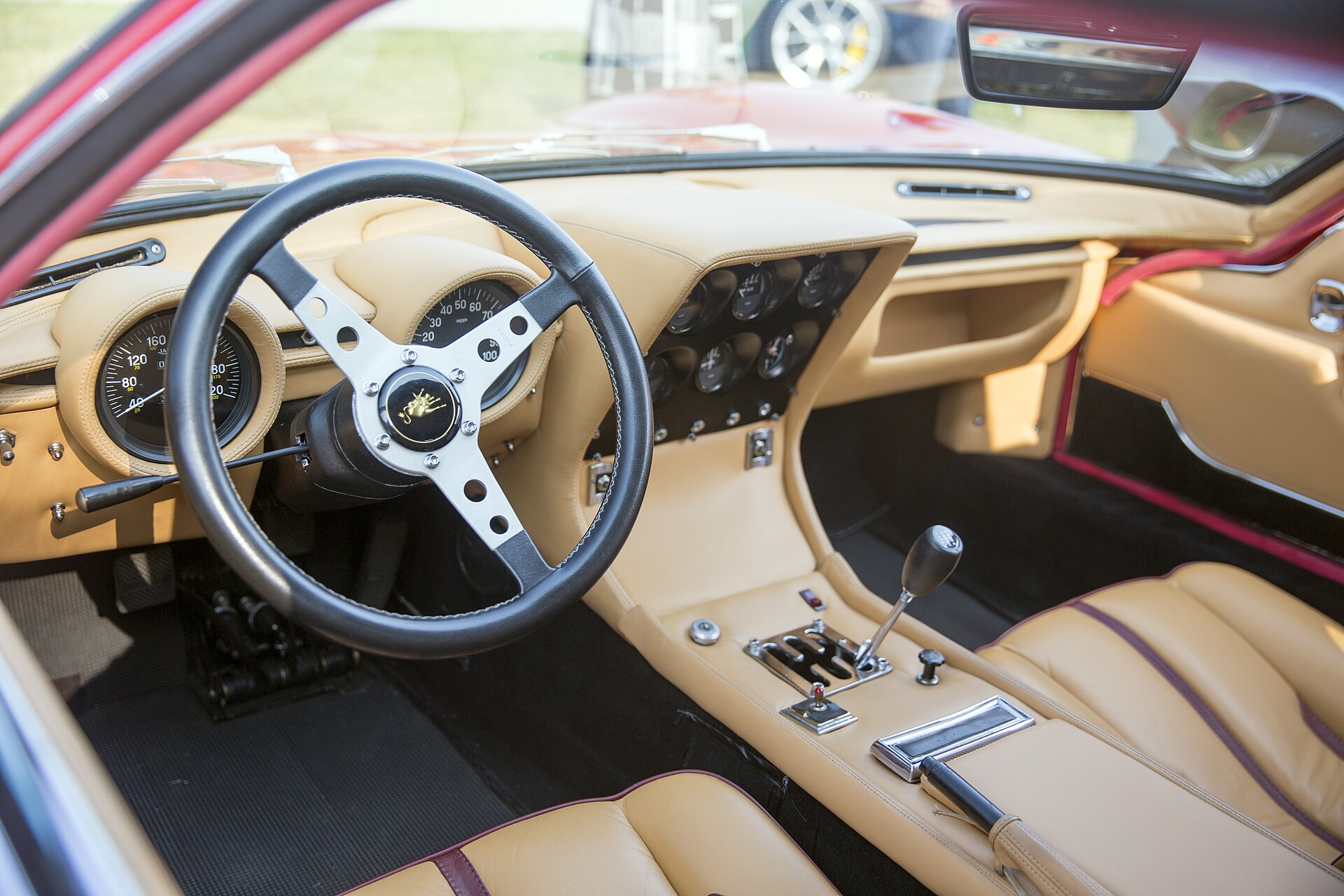
Lamborghini Miura photos 6
FAQ
Why is the Lamborghini Miura important?
It was the first high-performance production road car with a transverse mid-mounted engine, a layout that became standard for supercars.
How many Miuras were built?
Wikipedia gives 275 P400, 338 P400 S and 150 P400 SV, plus a few specials.
Who designed the Lamborghini Miura?
The chassis was developed by Giampaolo Dallara, Paolo Stanzani and Bob Wallace; the body was designed by Marcello Gandini at Bertone.
How fast is the Miura?
The factory claimed 300 km/h; road tests measured 275 km/h for the P400 and 278 km/h for the P400 S.
What replaced the Miura?
The Countach, which followed in 1974.
Data sources
Data checked by an editor against the sources below.