 Ferrari GTC4Lusso
Specs, engines and history
Published Sources (5) Report an error
By Felix Hartmann, Automotive Technology & EV Contributor
- Built
- 2016–2020
- Top power
- 507 kW (689 PS)
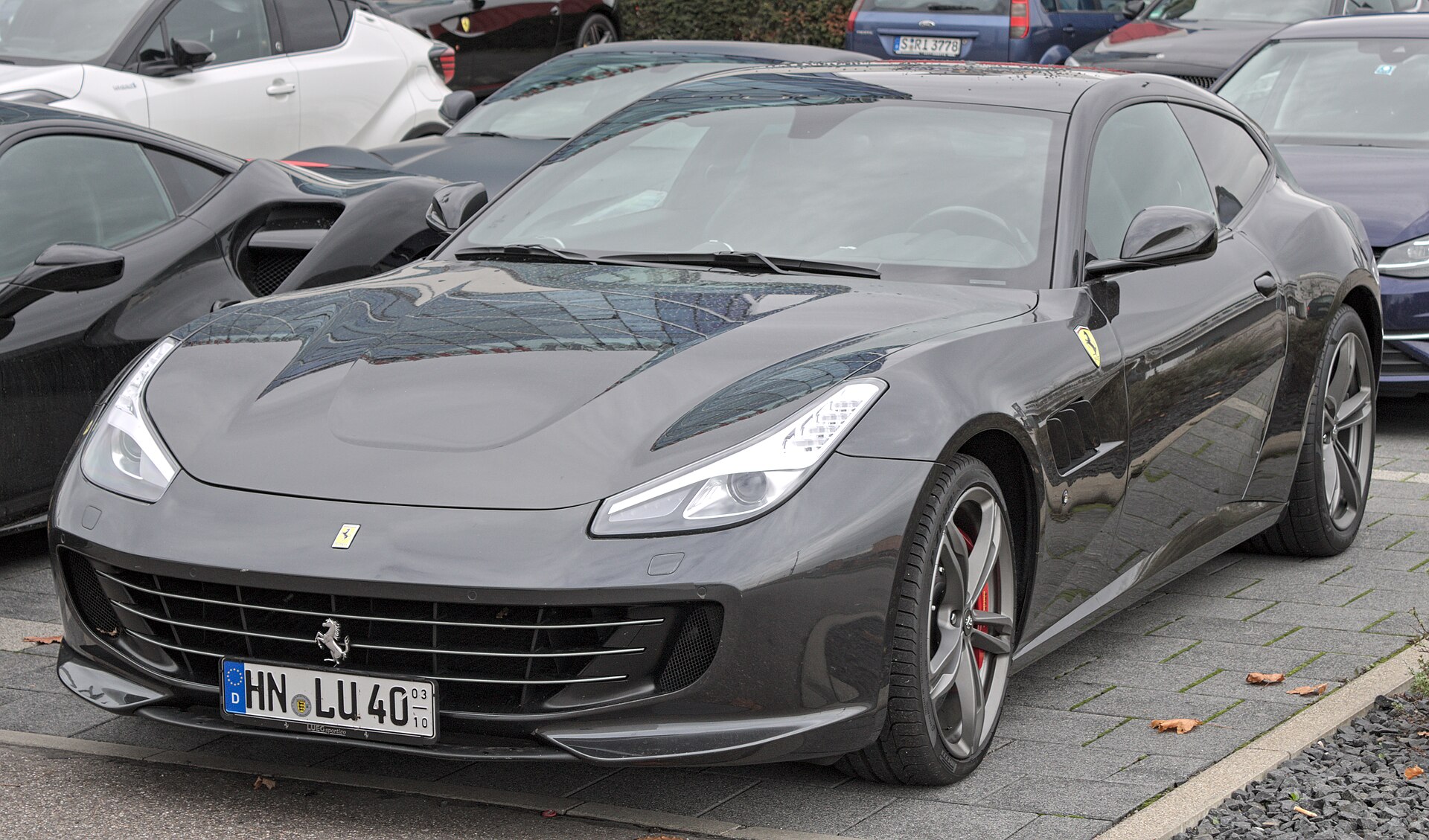
The Ferrari GTC4Lusso is a four-seat grand tourer with a shooting-brake body that Ferrari built in Maranello from 2016 to 2020. It replaced the FF and kept its unusual combination of a front-mounted V12, four-wheel drive and a large tailgate, but added four-wheel steering, more power and a new interior. From 2016 a cheaper, rear-wheel-drive GTC4Lusso T with a twin-turbo V8 joined the range. Production ended in August 2020, and the Purosangue took over the role of Ferrari's four-seater.
In short
- V12 version unveiled at the Geneva motor show in 2016, the V8 GTC4Lusso T at the Paris motor show the same year; production ended on 31 August 2020.
- GTC4Lusso: 6,262 cc V12 with 507 kW (690 PS) at 8,000 rpm, 4RM-S four-wheel drive and steering, 0–100 km/h in 3.4 s, 335 km/h.
- GTC4Lusso T: 3,855 cc twin-turbo V8 with 449 kW (610 PS) and 760 Nm, rear-wheel drive, 0–100 km/h in 3.5 s.
- German prices: €261,883 for the V12 (2016) and €226,000 for the T (2017).
Specs by version
Engines
| Version | Engine | Gearbox | Drive | Production years |
|---|---|---|---|---|
| 6.3 L 12 cyl Automatic (AM7) · 2020 (EPA) | 6.3 l · 12 cyl 6,300 cc | 7-sp Dual-clutch | Four-wheel drive (4×4) | 2020 |
| 6.3 L 12 cyl Automatic (AM7) · 2019 (EPA) | 6.3 l · 12 cyl 6,300 cc | 7-sp Dual-clutch | Four-wheel drive (4×4) | 2019 |
| 6.3 L 12 cyl Automatic (AM7) · 2018 (EPA) | 6.3 l · 12 cyl 6,300 cc | 7-sp Dual-clutch | Four-wheel drive (4×4) | 2018 |
| 6.3 L 12 cyl Automatic (AM7) · 2017 (EPA) | 6.3 l · 12 cyl 6,300 cc | 7-sp Dual-clutch | Four-wheel drive (4×4) | 2017 |
Performance
Show all 4 versions
| Version | Fuel consumption |
|---|---|
| 6.3 L 12 cyl Automatic (AM7) · 2020 (EPA) | 18.1 l/100 km13.0 mpg US · 15.6 mpg UK |
| 6.3 L 12 cyl Automatic (AM7) · 2019 (EPA) | 18.1 l/100 km13.0 mpg US · 15.6 mpg UK |
| 6.3 L 12 cyl Automatic (AM7) · 2018 (EPA) | 18.1 l/100 km13.0 mpg US · 15.6 mpg UK |
| 6.3 L 12 cyl Automatic (AM7) · 2017 (EPA) | 18.1 l/100 km13.0 mpg US · 15.6 mpg UK |
Verified Manufacturer and type-approval data from our catalog · Sources and methodology
GTC4Lusso at a glance
| Specification | Ferrari GTC4Lusso |
|---|---|
| Production | 2016–2020, Maranello (Italy) |
| Body | three-door shooting brake, four seats |
| Layout | front-mid engine; all-wheel drive (V12) or rear-wheel drive (T) |
| Engines | 6,262 cc F140 V12; 3,855 cc F154 BD twin-turbo V8 |
| Power | 507 kW (690 PS) V12; 449 kW (610 PS) V8 |
| Torque | 697 Nm (V12); 760 Nm (V8) |
| Gearbox | seven-speed dual-clutch (Magna 7DCL750) |
| Dry weight | 1,790 kg (V12), 1,740 kg (T) |
| Dimensions | 4,922 mm long, 1,980 mm wide, 1,383 mm high, 2,990 mm wheelbase |
| Predecessor / successor | FF / Purosangue |
The GTC4Lusso sits alongside two-seat V12 Ferraris such as the Ferrari 812 and the four-seat Ferrari California. The whole range is in the Ferrari catalogue.
From the FF to the GTC4Lusso
The FF had been launched in 2011. In 2016 Ferrari presented its successor at the Geneva motor show. Auto Zeitung describes the GTC4Lusso as largely a thorough facelift of the FF under a new name, and the dimensions and the basic architecture were indeed carried over.
The V8 GTC4Lusso T followed at the Paris motor show in 2016, and its production is listed from 2017. Ferrari confirmed the end of production on 31 August 2020. The four-seat role later passed to the Purosangue.
Design and practicality
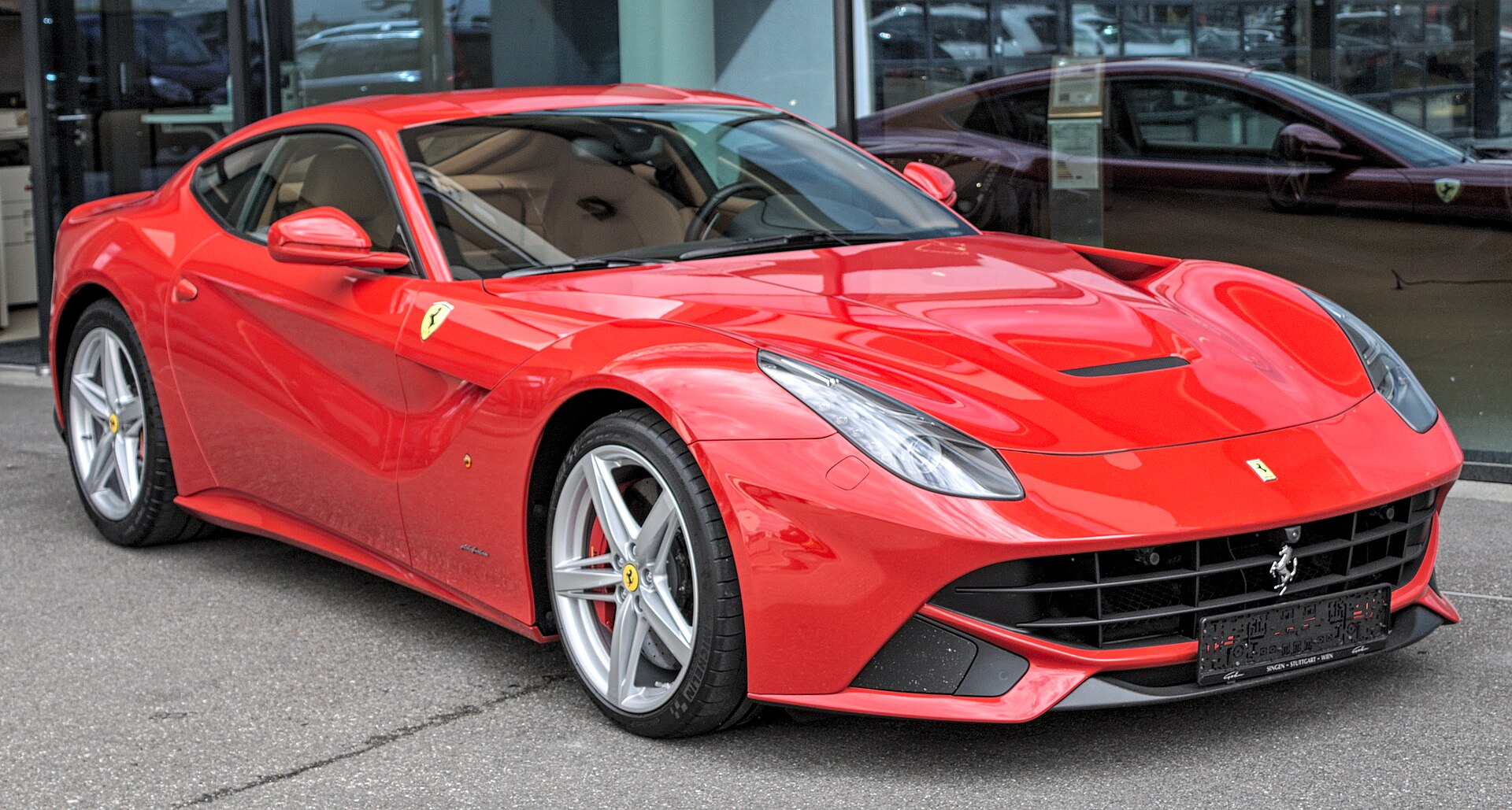
The body was designed by the Ferrari Styling Centre under Flavio Manzoni. Wikipedia describes the three-door shooting-brake body as having a near-fastback silhouette. Its recognisable details are a single front grille and four circular rear lights.
The car is 4,922 mm long, 1,980 mm wide and 1,383 mm high on a 2,990 mm wheelbase, with four individual seats.

V12 engine and performance
The V12 is the 6,262 cc F140 unit with a 65° angle between the banks and a high compression ratio of 13.5:1. It produces 507 kW (690 PS) at 8,000 rpm and 697 Nm at 5,750 rpm (Wikipedia's specification table gives 700 Nm). Power goes through a seven-speed dual-clutch gearbox made by Magna.
| Version | Engine | Power | Torque | Drive | 0–100 km/h | Top speed |
|---|---|---|---|---|---|---|
| GTC4Lusso (2016) | 6.3 V12 | 507 kW (690 PS) at 8,000 rpm | 697 Nm at 5,750 rpm | all-wheel drive | 3.4 s | 335 km/h |
| GTC4Lusso T (2016/17) | 3.9 V8 twin-turbo | 449 kW (610 PS) at 7,500 rpm | 760 Nm at 3,000–5,250 rpm | rear-wheel drive | 3.5 s | over 320 km/h |
The V12 car is three tenths of a second quicker to 100 km/h than the FF, according to Auto Zeitung; its top speed of 335 km/h is unchanged. The dry weight of the V12 version is 1,790 kg, which makes the 3.4-second time a strong figure for a four-seat shooting brake.

The 4RM-S: four-wheel drive and four-wheel steering
The FF's four-wheel-drive system was improved for the GTC4Lusso and given the name 4RM Evo. Combined with four-wheel steering, Ferrari calls the complete system 4RM-S. According to Auto Zeitung, steering the rear wheels reduces the turning circle at low speeds and makes the car more stable at high speeds. The V12 car is the only GTC4Lusso with four-wheel drive, but both versions have the steered rear axle.
GTC4Lusso T: the V8 version
The GTC4Lusso T uses the 3,855 cc F154 BD twin-turbo V8. It produces 449 kW (610 PS) at 7,500 rpm, 58 kW (80 PS) less than the V12, but more torque: 760 Nm between 3,000 and 5,250 rpm. It drives only the rear wheels, which saves weight — the dry weight is 1,740 kg, about 50 kg less than the V12. Ferrari quoted 0–100 km/h in 3.5 seconds and a top speed of over 320 km/h. According to Auto Zeitung, the T uses more than four litres per 100 km less fuel than the V12.
In Germany the T cost €226,000 in 2017, well below the V12, which had been priced at €261,883 at its launch in 2016.

Interior and dual cockpit
The cabin follows Ferrari's "dual cockpit" concept, with a central divider that separates the driver's area from the passenger's. A 10.25-inch touchscreen controls the infotainment system.

BR20 and legacy
After production ended, Ferrari built a one-off based on the V12 GTC4Lusso: the BR20, presented in November 2021. It has a fastback roof instead of the shooting-brake tail, a body about three inches (around 75 mm) longer, no rear seats and the unchanged 507 kW (690 PS) V12. Its design draws on Ferrari grand tourers of the 1950s and 1960s and keeps four round rear lights. Auto Zeitung notes that its top speed could exceed the 335 km/h of the standard car, but no figure was confirmed. The price was not disclosed — the magazine assumes a seven-figure sum — and the car is reported to be in Saudi Arabia.
The BR20 shows how flexible the GTC4Lusso platform was: the same front-mid V12, four-wheel drive and four-wheel steering could carry a long-roofed family car or a two-seat fastback coupé.
Wikipedia lists the Purosangue as the successor of the GTC4Lusso. For more on the brand, see our history of Ferrari.
Photo gallery


Ferrari GTC4Lusso in our rankings
- No. 93 of 859 · Most powerful cars (507 kW · top 11%)
- No. 74 of 557 · Biggest engines: cars (6,300 cc · top 14%)
- No. 66 of 313 · Most powerful coupes (507 kW · top 22%)
- No. 29 of 127 · Most powerful Italian cars (507 kW · top 23%)
- No. 50 of 173 · Biggest engines: coupes (6,300 cc · top 30%)
- No. 731 of 912 · Longest-running car nameplates (4 years · top 83%)
More powerful than 89% of ranked cars in the 1CARS catalog (No. 93 of 859).
FAQ
What engines does the Ferrari GTC4Lusso have?
The GTC4Lusso has a 6.3-litre V12 with 507 kW (690 PS); the GTC4Lusso T has a 3.9-litre twin-turbo V8 with 449 kW (610 PS).
Is the GTC4Lusso four-wheel drive?
The V12 version is. Its 4RM-S system combines four-wheel drive with four-wheel steering. The V8 GTC4Lusso T drives only the rear wheels but keeps four-wheel steering.
How fast is the GTC4Lusso?
The V12 reaches 100 km/h in 3.4 seconds and 335 km/h; the T reaches 100 km/h in 3.5 seconds and more than 320 km/h.
How much did the GTC4Lusso cost?
In Germany the V12 cost €261,883 in 2016 and the GTC4Lusso T €226,000 in 2017. The V8 version was therefore the cheaper choice by a clear margin, and it also used less fuel.
What replaced the GTC4Lusso?
Ferrari confirmed the end of production on 31 August 2020. The Purosangue is listed as its successor, and a one-off fastback, the BR20, was built on its base in 2021.
Data sources
Data checked by an editor against the sources below.
- Wikipedia — Ferrari GTC4Lusso
- US EPA fueleconomy.gov — 41691.shtml
- US EPA fueleconomy.gov — 40070.shtml
- US EPA fueleconomy.gov — 38674.shtml
- US EPA fueleconomy.gov — 37723.shtml