 Ferrari FF
Specs, engines and history
Published Sources (5) Report an error
By Felix Hartmann, Automotive Technology & EV Contributor
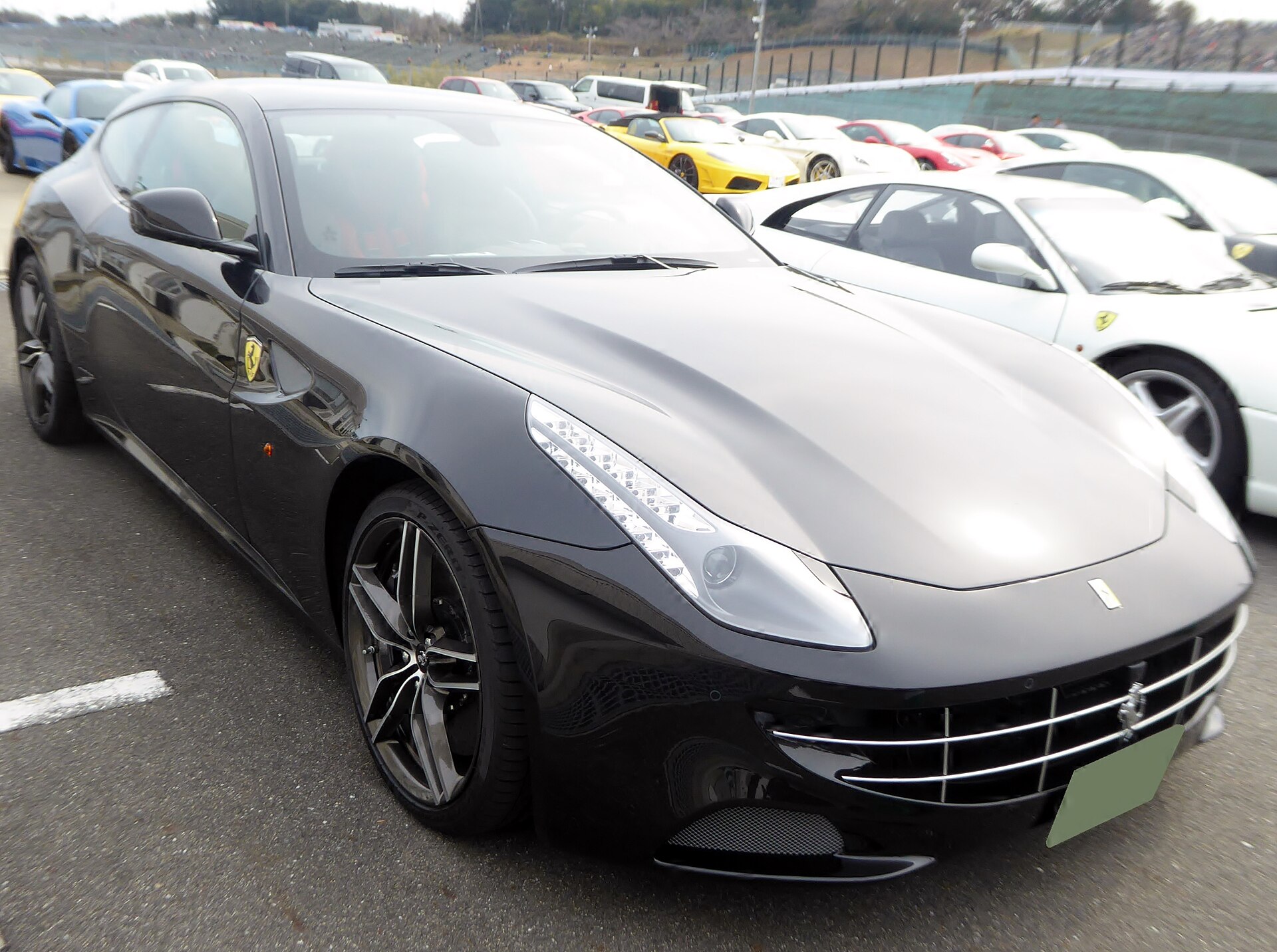
The Ferrari FF is a four-seat grand tourer with a shooting-brake body, built in Maranello from 2011 to 2016. Its name stands for "Ferrari Four" — four seats and four-wheel drive — and it was the first Ferrari road car to drive all four wheels. With a naturally aspirated 6.3-litre V12 at the front, a large boot and a top speed of 335 km/h, it was described at its launch as the fastest four-seater in the world. It replaced the 612 Scaglietti and was succeeded by the GTC4Lusso.
In short
- Revealed at the Geneva Motor Show in March 2011; built 2011–2016 in Maranello; 2,291 cars according to Wikipedia.
- 6,262 cc direct-injection V12 (F140 EB): 485 kW (660 PS) at 8,000 rpm and 683 Nm; seven-speed dual-clutch gearbox.
- 4RM four-wheel-drive system with a small front gearbox that weighs only 41 kg.
- Ferrari figures: 0–100 km/h in 3.7 s, top speed 335 km/h; boot of 450 to 800 litres.
Specs by version
Engines
| Version | Engine | Gearbox | Drive | Production years |
|---|---|---|---|---|
| 6.3 L 12 cyl Automatic (AM7) · 2016 (EPA) | 6.3 l · 12 cyl 6,300 cc | 7-sp Dual-clutch | Four-wheel drive (4×4) | 2016 |
| 6.3 L 12 cyl Automatic (AM7) · 2016 (EPA) | 6.3 l · 12 cyl 6,300 cc | 7-sp Dual-clutch | Four-wheel drive (4×4) | 2016 |
| 6.3 L 12 cyl Automatic (AM7) · 2015 (EPA) | 6.3 l · 12 cyl 6,300 cc | 7-sp Dual-clutch | Four-wheel drive (4×4) | 2015 |
| 6.3 L 12 cyl Automatic (AM7) · 2015 (EPA) | 6.3 l · 12 cyl 6,300 cc | 7-sp Dual-clutch | Four-wheel drive (4×4) | 2015 |
| 6.3 L 12 cyl Automatic (AM7) · 2014 (EPA) | 6.3 l · 12 cyl 6,300 cc | 7-sp Dual-clutch | Four-wheel drive (4×4) | 2014 |
| 6.3 L 12 cyl Automatic (AM7) · 2014 (EPA) | 6.3 l · 12 cyl 6,300 cc | 7-sp Dual-clutch | Four-wheel drive (4×4) | 2014 |
| 6.3 L 12 cyl Automatic (AM7) · 2013 (EPA) | 6.3 l · 12 cyl 6,300 cc | 7-sp Dual-clutch | Four-wheel drive (4×4) | 2013 |
| 6.3 L 12 cyl Automatic (AM7) · 2013 (EPA) | 6.3 l · 12 cyl 6,300 cc | 7-sp Dual-clutch | Four-wheel drive (4×4) | 2013 |
| 6.3 L 12 cyl Automatic (AM7) · 2012 (EPA) | 6.3 l · 12 cyl 6,300 cc | 7-sp Dual-clutch | Four-wheel drive (4×4) | 2012 |
| 6.3 L 12 cyl Automatic (AM7) · 2012 (EPA) | 6.3 l · 12 cyl 6,300 cc | 7-sp Dual-clutch | Four-wheel drive (4×4) | 2012 |
Performance
Show all 10 versions
| Version | Fuel consumption |
|---|---|
| 6.3 L 12 cyl Automatic (AM7) · 2016 (EPA) | 18.1 l/100 km13.0 mpg US · 15.6 mpg UK |
| 6.3 L 12 cyl Automatic (AM7) · 2016 (EPA) | 18.1 l/100 km13.0 mpg US · 15.6 mpg UK |
| 6.3 L 12 cyl Automatic (AM7) · 2015 (EPA) | 18.1 l/100 km13.0 mpg US · 15.6 mpg UK |
| 6.3 L 12 cyl Automatic (AM7) · 2015 (EPA) | 18.1 l/100 km13.0 mpg US · 15.6 mpg UK |
| 6.3 L 12 cyl Automatic (AM7) · 2014 (EPA) | 18.1 l/100 km13.0 mpg US · 15.6 mpg UK |
| 6.3 L 12 cyl Automatic (AM7) · 2014 (EPA) | 18.1 l/100 km13.0 mpg US · 15.6 mpg UK |
| 6.3 L 12 cyl Automatic (AM7) · 2013 (EPA) | 18.1 l/100 km13.0 mpg US · 15.6 mpg UK |
| 6.3 L 12 cyl Automatic (AM7) · 2013 (EPA) | 18.1 l/100 km13.0 mpg US · 15.6 mpg UK |
| 6.3 L 12 cyl Automatic (AM7) · 2012 (EPA) | 18.1 l/100 km13.0 mpg US · 15.6 mpg UK |
| 6.3 L 12 cyl Automatic (AM7) · 2012 (EPA) | 18.1 l/100 km13.0 mpg US · 15.6 mpg UK |
Verified Manufacturer and type-approval data from our catalog · Sources and methodology
Ferrari FF at a glance
| Specification | Ferrari FF |
|---|---|
| Production | 2011–2016, Maranello (Italy); type F151 |
| Cars built | 2,291 |
| Body | three-door shooting brake, four seats |
| Chassis | aluminium spaceframe |
| Engine | F140 EB 6,262 cc V12, naturally aspirated, front-mid-mounted |
| Power | 485 kW (660 PS) at 8,000 rpm |
| Torque | 683 Nm |
| Gearbox | seven-speed dual-clutch, rear transaxle |
| Drive | 4RM four-wheel drive |
| Kerb weight | 1,880 kg; 47:53 front/rear |
| Dimensions | 4,907 mm long, 1,953 mm wide, 1,379 mm high, 2,990 mm wheelbase |
| Predecessor / successor | 612 Scaglietti / GTC4Lusso |
The FF shares its V12 with the Ferrari F12berlinetta, introduced a year later, and its idea — a four-seat V12 Ferrari with all-wheel drive — continued in the GTC4Lusso and, later, the Purosangue. All models are listed in the Ferrari catalogue.
Development and design
Development of the FF began in 2007. Ferrari first considered basing the design on the Pininfarina Sintesi concept car; then Italdesign produced an angular proposal, before the project returned to Pininfarina and was finished at Ferrari's own Styling Centre. Lowie Vermeersch, then design director at Pininfarina, and Flavio Manzoni, Ferrari's head of design, are credited with the car.
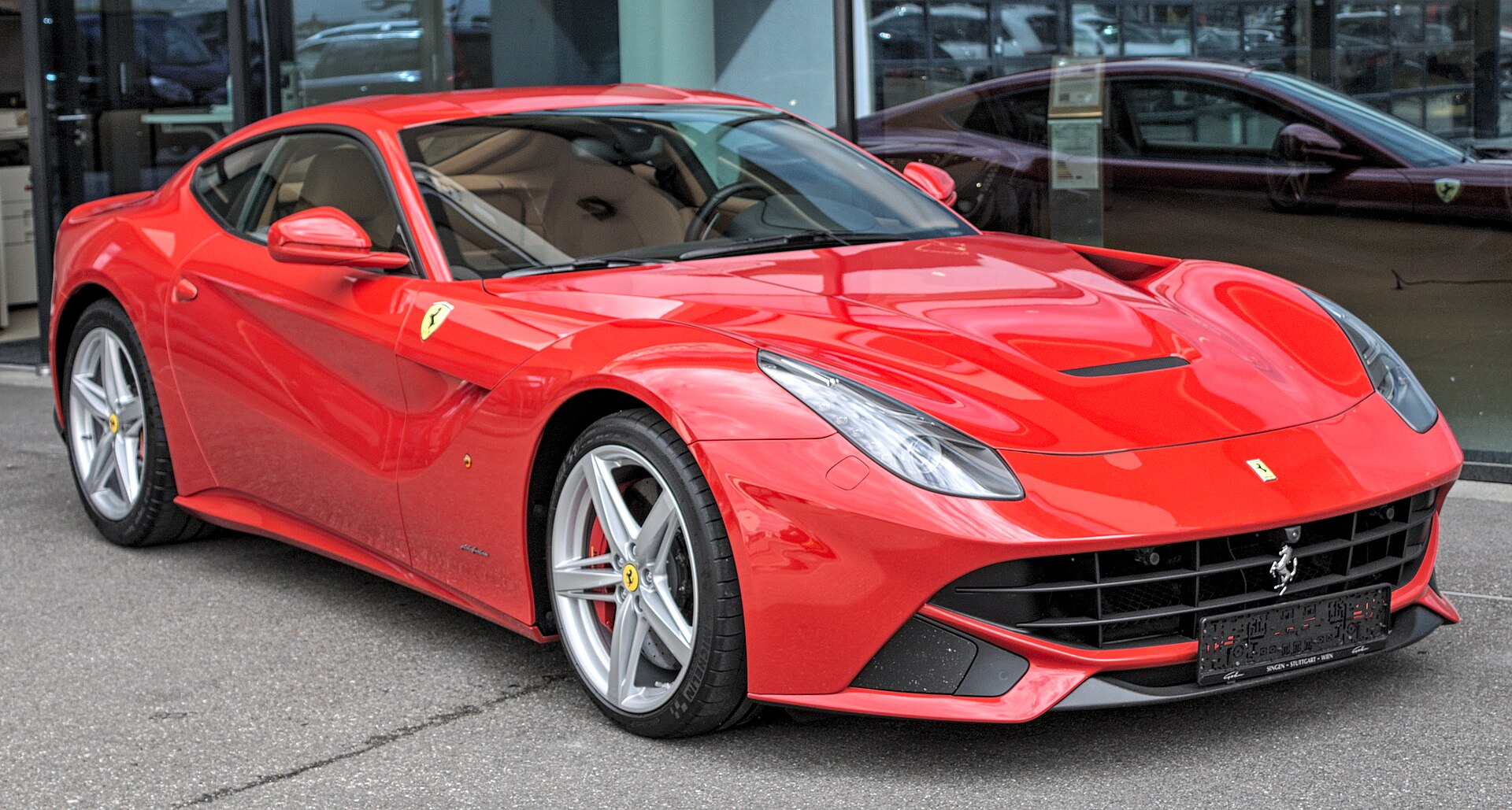
The shape surprised many observers. Instead of a classic coupé tail, the FF has a long roof that ends in a near-vertical tailgate — a shooting-brake layout chosen to give real space to the rear passengers and their luggage. The front end borrows from the other Ferraris of the time: the swept-back headlamps resemble those of the Ferrari 458 Italia, and the twin round tail lights recall the 458 and the 599 GTB Fiorano.
The FF was presented at the Geneva Motor Show in March 2011, and production started in Maranello the same month. Ferrari planned to build about 800 cars a year, and the first year's production was reported as sold out before deliveries began.
The structure is a mostly aluminium spaceframe. Compared with the 612 Scaglietti, Ferrari says it is 5 per cent lighter and 6 per cent stiffer in torsion. The drag coefficient is 0.329, helped by a split-level rear diffuser and side and rear vents that reduce lift and drag. The boot holds 450 litres, or 800 litres with the rear seats folded.


V12 engine and gearbox
The direct-injection V12 has a displacement of 6,262 cc. It produces 485 kW (660 PS) at 8,000 rpm and 683 Nm. It sits behind the front axle line, and the seven-speed dual-clutch gearbox is mounted at the rear of the car with the electronic differential built into its casing — the transaxle layout that helps to give a weight distribution of 47 per cent front and 53 per cent rear.
| Figure | Ferrari FF |
|---|---|
| Power | 485 kW (660 PS) at 8,000 rpm |
| Torque | 683 Nm |
| 0–100 km/h | 3.7 s |
| Top speed | 335 km/h |
| Fuel consumption | 15.4 l/100 km |
| CO₂ emissions | 360 g/km |
When it was launched, the FF was the fastest four-seat car in the world and Ferrari's second-fastest grand tourer after the 599 GTO.
The 4RM four-wheel-drive system
The most important technical feature of the FF is its four-wheel-drive system, which Ferrari called 4RM (quattro ruote motrici, four driving wheels). Ferrari wanted to avoid the weight of a conventional four-wheel-drive layout and to keep the centre of gravity low, so it chose a different solution.
A small secondary gearbox is mounted at the front of the engine and sends power to the front wheels. It has two forward gears and a reverse gear. Its first gear covers the first and second gears of the main gearbox, and its second gear covers third and fourth; above that, the car is driven by the rear wheels only. The front gearbox's ratios are about 6 per cent longer than the corresponding rear ratios, and its clutches slip to match the speed of the front wheels to that of the rear wheels.
Two electronically controlled wet multi-plate clutches, one for each front wheel, regulate how much torque goes to each side. This allows the system to vary the torque between the front wheels as well as between the axles. The complete unit weighs 41 kg, which Wikipedia describes as about half the weight of a traditional system.

Chassis and equipment
The FF uses magnetorheological dampers (SCM3) that adjust continuously to the road, Brembo carbon-ceramic brakes and a single control unit that combines the damper settings, the stability control and the electronic differential. Motor Trend described the FF in 2015 as docile and easy to live with, although it criticised the price and the key-then-button starting procedure.
SP FFX one-off
In 2014 Ferrari's special projects department built the SP FFX, a one-off car based on the FF for a customer in Japan. It replaced the shooting-brake rear with a coupé-style tail designed by Pininfarina. Patent drawings published before its presentation led to speculation that it previewed the next Ferrari California.
Reception and legacy
Reviews of the FF were mostly positive: critics praised its design and performance, but its price was criticised. Jeremy Clarkson called it "a very special, very fast car" in The Sunday Times, though he found the rear dull; Dan Neil of The Wall Street Journal called it "the coolest Ferrari of all time". The FF was named Estate Car of the Year by Top Gear in 2011, Luxury Car of the Year by Top Gear India in 2012, and the Chinese edition of Car and Driver chose it as the most beautiful supercar of 2011.
The FF proved that a Ferrari could combine a V12, four seats and all-wheel drive. In 2016 it was replaced by the GTC4Lusso, which kept the shooting-brake shape and the 4RM concept, and the idea later grew into the four-door Purosangue. For other front-engined V12 Ferraris of the period, see the Ferrari 599.
Photo gallery


Ferrari FF in our rankings
- No. 73 of 557 · Biggest engines: cars (6,300 cc · top 14%)
- No. 49 of 173 · Biggest engines: coupes (6,300 cc · top 30%)
- No. 657 of 912 · Longest-running car nameplates (5 years · top 77%)
- No. 41 of 51 · Most economical coupes (18.1 l/100 km · top 87%)
- No. 243 of 256 · Most economical cars (18.1 l/100 km · top 97%)
Bigger engine than 86% of ranked cars in the 1CARS catalog (No. 73 of 557).
FAQ
What does Ferrari FF stand for?
"Ferrari Four" — for its four seats and four-wheel drive.
Was the FF the first four-wheel-drive Ferrari?
Yes, it was the first Ferrari road car with four-wheel drive, using the 4RM system with a small front gearbox.
How much power does the Ferrari FF have?
485 kW (660 PS) at 8,000 rpm and 683 Nm from a 6.3-litre V12.
How many Ferrari FFs were built?
2,291 cars from 2011 to 2016, according to Wikipedia.
What replaced the Ferrari FF?
The GTC4Lusso, introduced in 2016.
Data sources
Data checked by an editor against the sources below.
- Wikipedia — Ferrari FF
- US EPA fueleconomy.gov — 36960.shtml
- US EPA fueleconomy.gov — 36961.shtml
- US EPA fueleconomy.gov — 35546.shtml
- US EPA fueleconomy.gov — 35547.shtml