 Ferrari Berlinetta Boxer
All generations, specs and history
Published Sources (1) Report an error
By Felix Hartmann, Automotive Technology & EV Contributor
- Built
- 1973–1984
- Generations
- 3
- Top power
- 253 kW (344 PS)
Timeline
Berlinetta Boxer generations
Click a generation for its own page
- 365 GT4 BB 1973–1976 · Coupe · 253 kW (344 PS)
- 512 BB 1976–1981 · Coupe · 250 kW (340 PS)
- 512 BBi 1981–1984 · Coupe · 250 kW (340 PS)
Newest first · 3 generations since 1973
-
1981
-
1976
-
1973
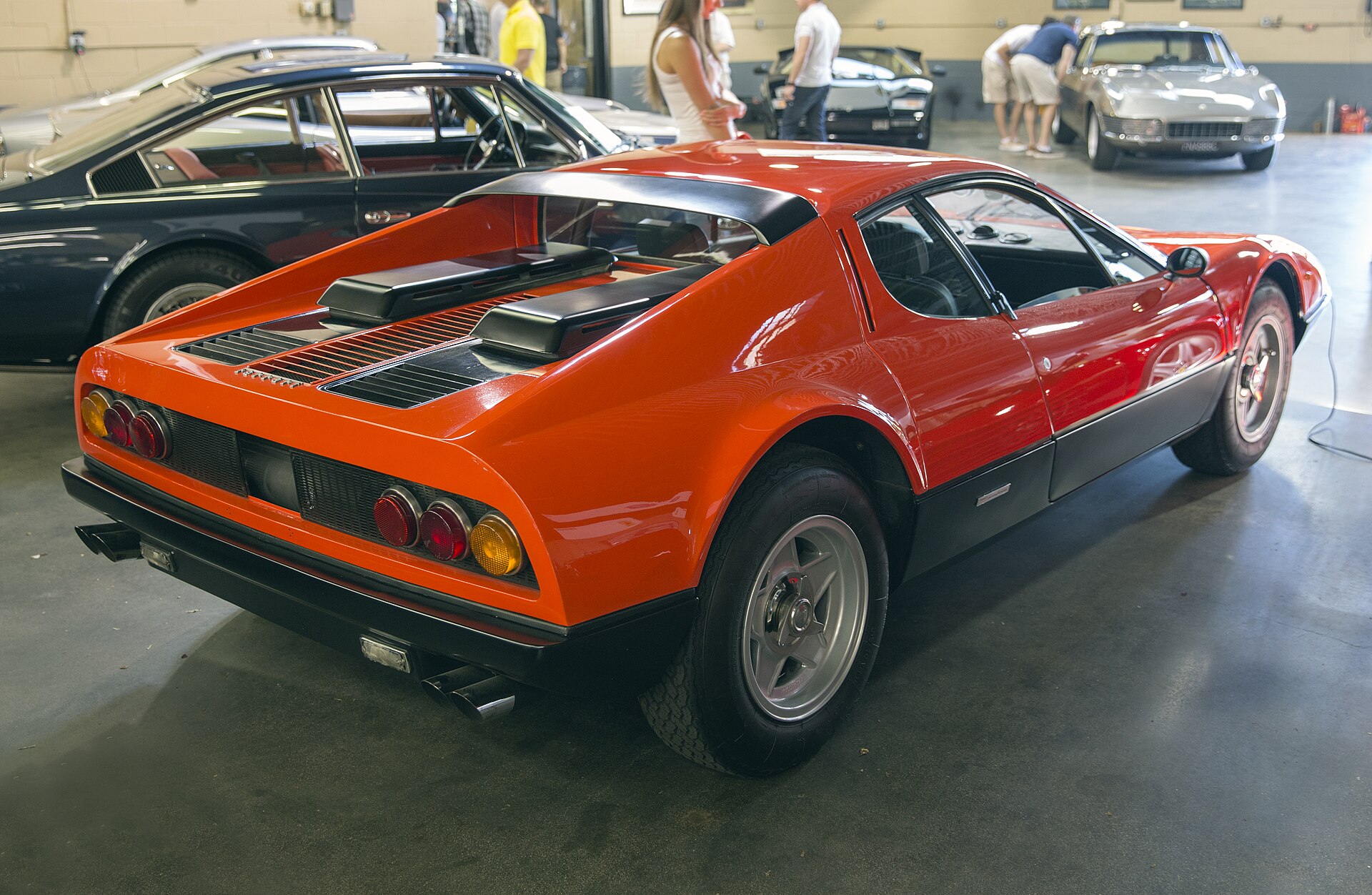


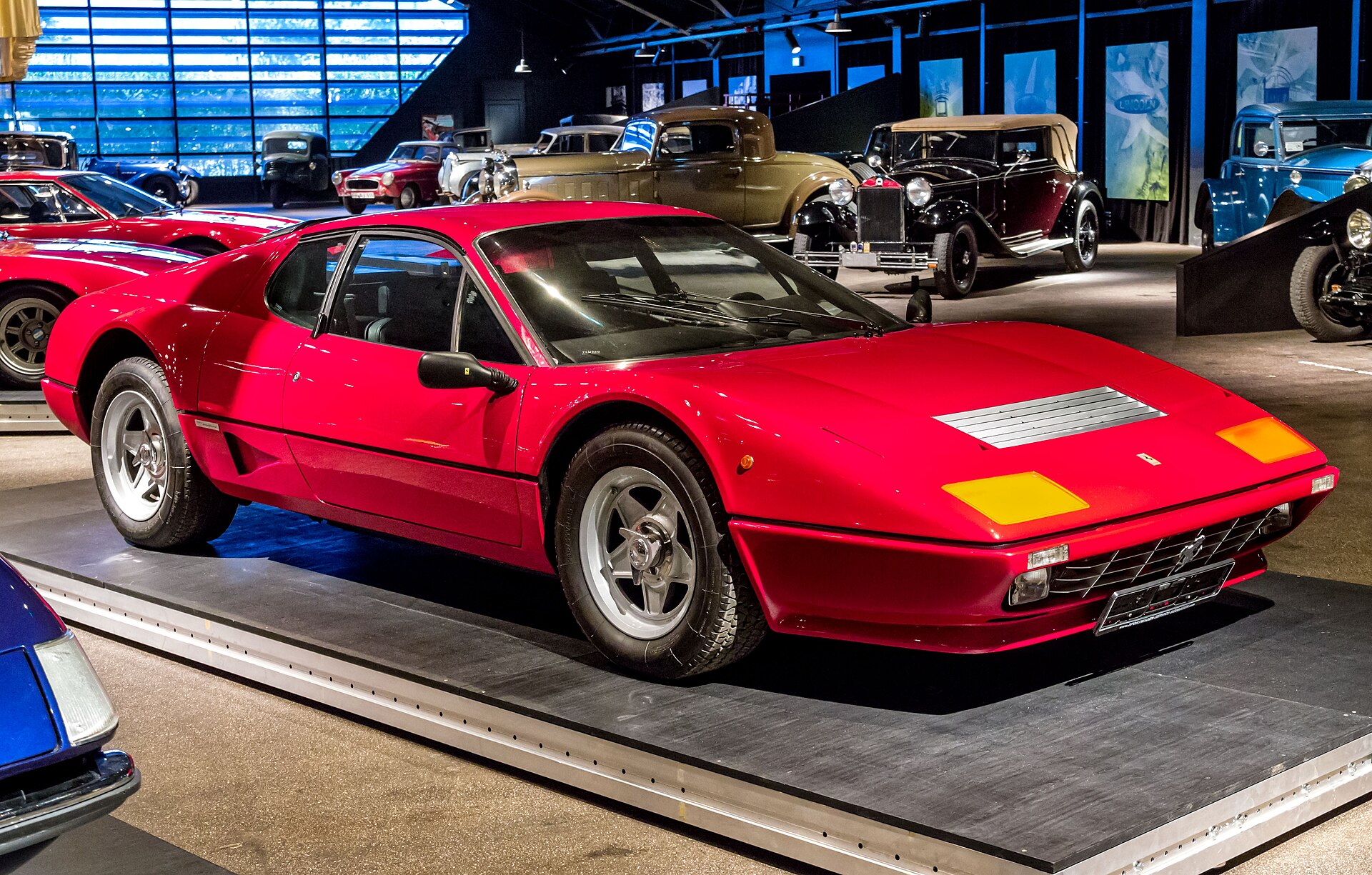
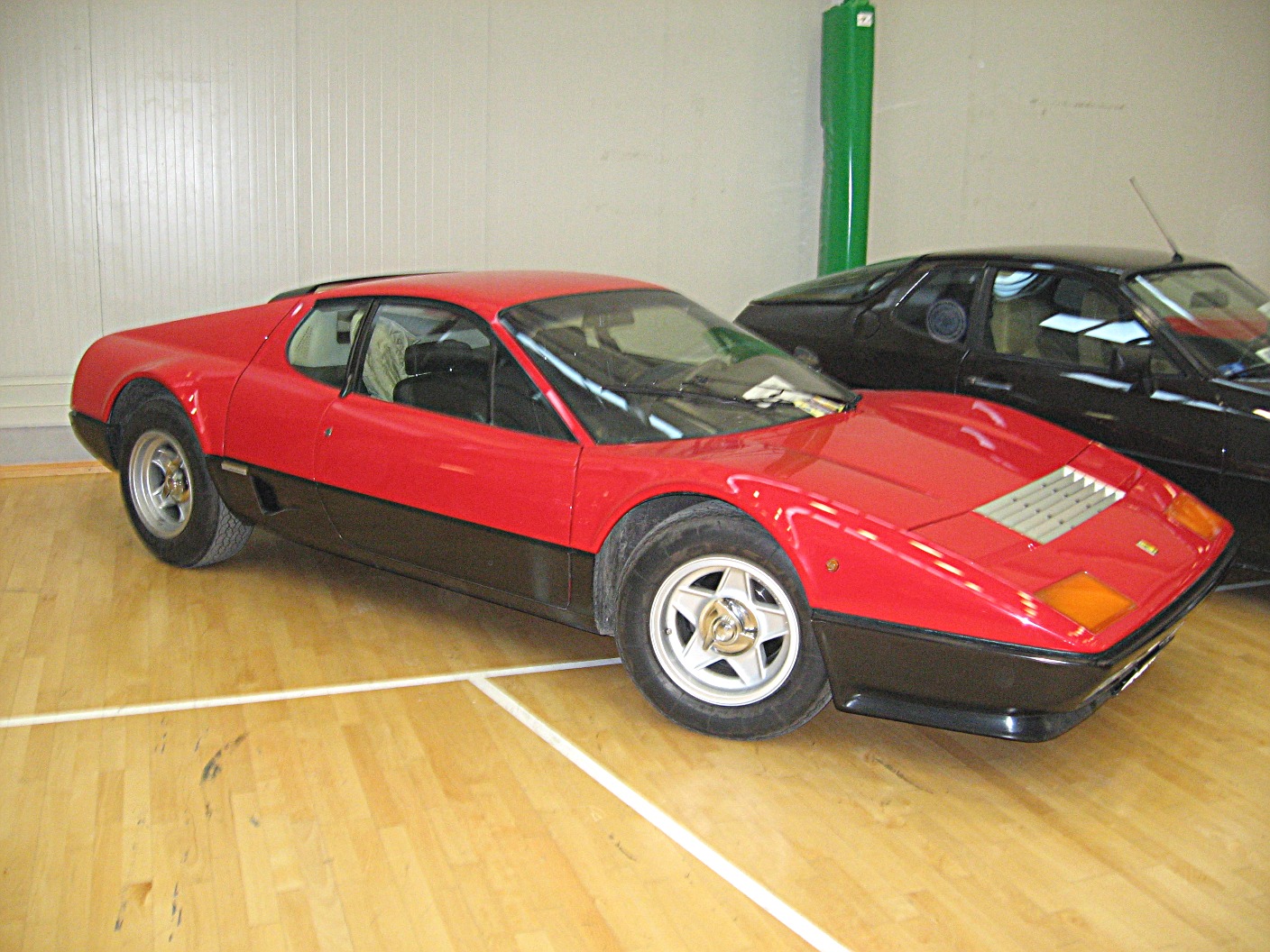
All generations by year: 512 BBi (1981–1984) · 512 BB (1976–1981) · 365 GT4 BB (1973–1976)
Which one is mine?
Pick the year of first registration to see which generation it is.
- 512 BBi 1981–1984
- 512 BB 1976–1981
- 365 GT4 BB 1973–1976
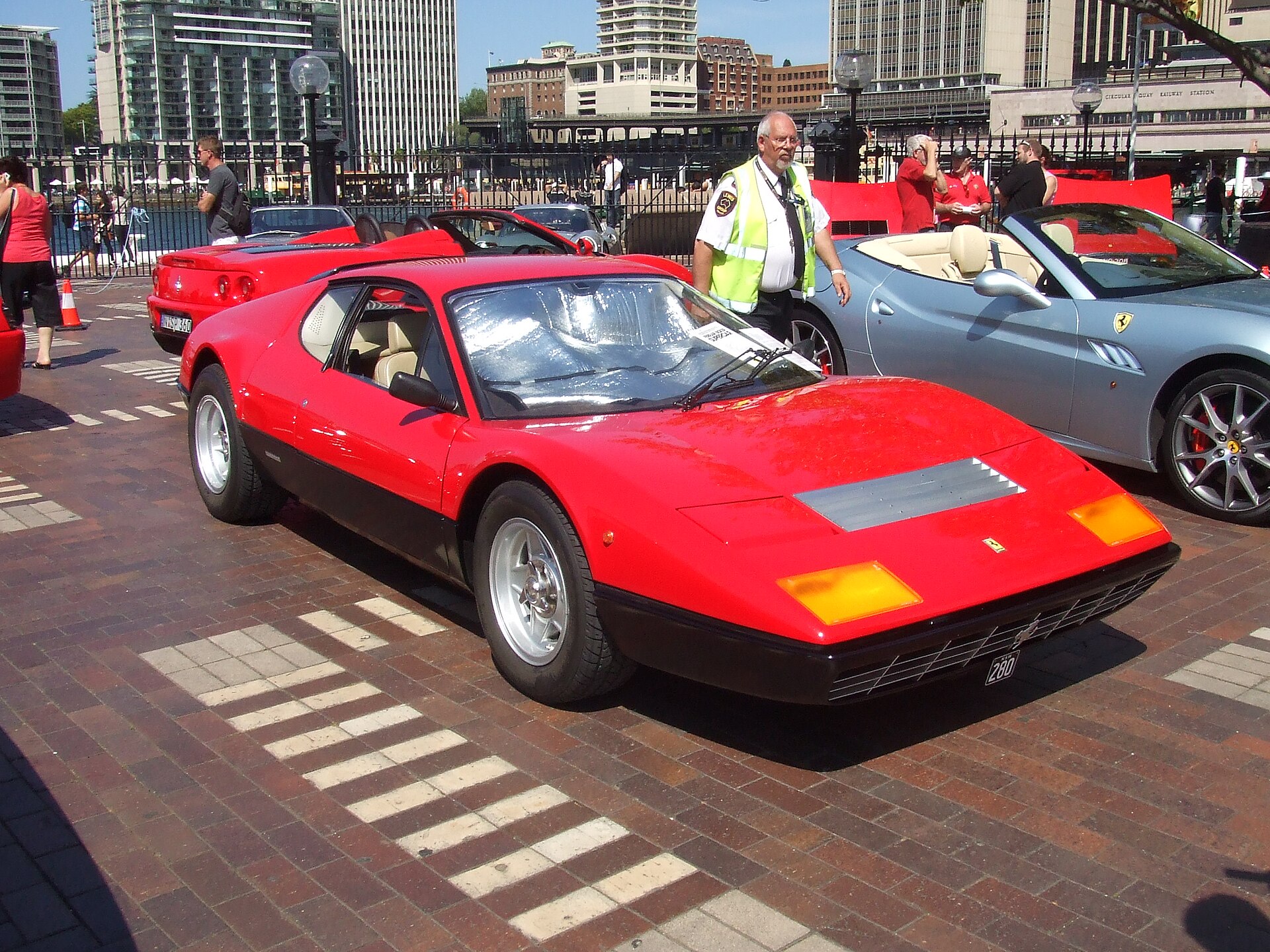
The Ferrari Berlinetta Boxer is the family of mid-engined, flat-12 sports cars that Ferrari built from 1973 to 1984. It began with the 365 GT4 BB, continued with the five-litre BB 512 and ended with the fuel-injected BB 512i, and in total 2,323 cars were made. The BB was Ferrari's first mid-engined road car with twelve cylinders, the successor to the front-engined 365 GTB/4 Daytona, and the direct ancestor of the Testarossa.
In short
- Built from 1973 to 1984 in three versions: 365 GT4 BB (387 cars), BB 512 (929) and BB 512i (1,007) - 2,323 in total.
- Ferrari's first mid-engined road car with a flat-12 engine: 4.4 litres and 253 kW (344 PS) at first, later 4.9 litres and 250 kW (340 PS).
- Designed by Leonardo Fioravanti at Pininfarina; bodies by Scaglietti, final assembly in Maranello.
- Successor: the Testarossa of 1984, with a revised flat-12 of about 5 litres.
Ferrari Berlinetta Boxer at a glance
| Specification | 365 GT4 BB | BB 512 | BB 512i |
|---|---|---|---|
| Years | 1973–1976 | 1976–1981 | 1981–1984 |
| Cars built | 387 | 929 | 1,007 |
| Engine | 4,390 cc flat-12, carburettors | 4,943 cc flat-12, dry sump | 4,943 cc flat-12, Bosch K-Jetronic |
| Power | 253 kW (344 PS) at 7,200 rpm | 250 kW (340 PS) at 6,200 rpm | 250 kW (340 PS) at 6,000 rpm |
| Torque | 409 Nm at 3,900 rpm | 451 Nm at 4,600 rpm | 451 Nm at 4,200 rpm |
| Weight | 1,235 kg dry | 1,515–1,596 kg dry | 1,580 kg kerb |
| Gearbox | five-speed manual | five-speed manual | five-speed manual |
The BB replaced the Daytona at the top of Ferrari's road car range. All Ferrari models are in the Ferrari catalogue.
History: why the engine moved behind the driver
Enzo Ferrari was for many years against a mid-engined road car. He believed it would be too difficult for his customers to drive. His engineers needed years to convince him, and his view changed as Ferrari lost its racing advantage to mid-engined rivals in the late 1950s and 1960s. The BB became the first mid-engined Ferrari road car with twelve cylinders.
A prototype of the 365 GT4 BB was shown at the Turin motor show in 1971, and the production car followed at the Paris motor show in 1973. The development team was led by Angelo Bellei, with Giuliano de Angelis responsible for engine development and Mauro Forghieri as engine designer. The body was designed by Leonardo Fioravanti at Pininfarina.
Design and construction
The BB is a two-door berlinetta, 4,400 mm long, 1,830 mm wide and only 1,120 mm high, on a 2,500 mm wheelbase. Its body combines a steel centre section with aluminium front and rear covers and doors, while the lower front and rear panels are made of fibreglass. The bodies were built by Scaglietti, and final assembly took place in Maranello.
Underneath is a steel tube chassis with a semi-monocoque centre section. Two large diagonal tubes run from the engine cradle to the roof to strengthen the car in a rollover. Suspension is independent all round with double wishbones and anti-roll bars, the steering is unassisted rack and pinion, and there are disc brakes on all four wheels.
The flat-12 engine and gearbox
Ferrari calls the engine a flat-12; Mauro Forghieri said its cylinder heads sit at a 180° vee, which makes it technically a 180° V12. The unusual feature of the layout is the gearbox: the five-speed manual transaxle sits directly below the engine, next to the oil sump, and drop gears carry the drive down to it. A limited-slip differential was fitted.
The later BB 512 received dry-sump lubrication to prevent oil starvation in hard cornering.
| Dimension | Berlinetta Boxer |
|---|---|
| Length | 4,400 mm |
| Width | 1,830 mm |
| Height | 1,120 mm |
| Wheelbase | 2,500 mm |
The first version: 365 GT4 BB (1973–1976)
The first BB used the Tipo F102A engine with 4,390 cc (bore 81 mm, stroke 71 mm) and four triple-barrel Weber 40 IF 3C carburettors. The owner's manual gives 253 kW (344 PS) at 7,200 rpm and 409 Nm at 3,900 rpm. The car had a single-plate Fichtel & Sachs clutch and a dry weight of 1,235 kg.
Ferrari claimed a top speed of 302 km/h. Road & Track measured about 282 km/h (175 mph) in June 1975, and Ferrari gave 5.4 seconds for 0–100 km/h. Production ended in 1976 after 387 cars, 88 of them with right-hand drive and 58 of those for the United Kingdom.

BB 512 (1976–1981)
The BB 512, shown at the Paris motor show in 1976, took its name from its five-litre, twelve-cylinder engine and revived the name of Ferrari's 512 racing cars. The Tipo F102B engine has 4,943 cc (bore 82 mm, stroke 78 mm) and a compression ratio of 9.2:1. Dry-sump lubrication replaced the wet sump, and a twin-plate clutch handled the extra torque.
Power figures vary between Ferrari documents. The brochure first quoted 268 kW (360 bhp), later revised to 254 kW (340 bhp); the owner's manual lists 250 kW (340 PS) at 6,200 rpm and 451 Nm at 4,600 rpm. Dry weight is given as 1,515 kg in the workshop manual and 1,596 kg in the owner's manual.
The BB 512 can be recognised by its chin spoiler, NACA air ducts behind the doors, two tail lights and two exhaust pipes on each side and more vents in the engine cover. It also has wider 225/70 VR 15 rear tyres on 9-inch wheels and a rear track of 1,563 mm. The owner's manual quotes 272 km/h as an attainable top speed; Autocar measured 262 km/h in May 1978.


BB 512i (1981–1984)
The last version, the BB 512i of 1981, replaced the carburettors with Bosch K-Jetronic fuel injection and used the F110A engine with revised camshaft timing and a Magneti Marelli Dinoplex ignition with a built-in rev limiter. The owner's manual lists 250 kW (340 PS) at 6,000 rpm and 451 Nm at 4,200 rpm, and an attainable top speed of 257 km/h.
The 512i was the best-equipped BB. Air conditioning, electric windows and a stereo were standard, and the car ran on Michelin TRX tyres (240/55 VR 415) on metric wheels. It was also the most numerous version, with 1,007 cars built until 1984. Wikipedia notes that perhaps 27 cars had an optional wool interior by Ermenegildo Zegna.

Racing: NART and the 512 BB LM
Scuderia Ferrari never raced the BB itself, but private teams did. Luigi Chinetti's North American Racing Team (NART) entered modified 365 GT4 BBs: chassis 18139 finished sixth at Sebring in 1975 and 16th at Le Mans in 1977 and 1978.
For customers, Ferrari built the 512 BB LM in two series. Three Series I cars ran at Le Mans in 1978 - two for Charles Pozzi and one for NART - but none finished. The Series II followed: nine cars were built in 1979 and 16 more were updated between 1980 and 1982, 25 in total. They also ran at Le Mans in 1980 and 1982, finishing tenth and sixth. The best result was fifth overall and first in the GTX class at Le Mans in 1981.
Legacy and collectors
The Berlinetta Boxer changed the layout of Ferrari's flagship from front-engined V12 to mid-engined flat-12, a format that continued in the Testarossa from 1984. In the United States, BBs arrived through the "grey market": specialists such as Richard Fritz's Amerispec, working with Chinetti Motors, converted cars to federal standards with more than 75 changes per car. Carburettor 512s needed secondary air injection and catalytic converters, while the injected 512i needed fewer changes. A change in US law in 1990 ended the practice for cars without a comparable US model, unless they were more than 25 years old.
For collectors, the three versions have clear identities: the early 365 GT4 BB is the lightest and rarest, the carburettor BB 512 has the bigger engine and the final BB 512i is the most usable and the most numerous. More about the company is in our history of Ferrari.
Photo gallery

Ferrari Berlinetta Boxer evolution in numbers
Did you know?
- The Ferrari Berlinetta Boxer ran for 11 years, from 1973 to 1984, over 3 generations in our catalog.
- The longest-running generation is the 512 BB (1976–1981): 5 years.
Most powerful version, kW
Figures from the 1cars catalog: power is the strongest version of each generation; generations without the figure are left out.
Ferrari Berlinetta Boxer: first vs latest generation
| Spec | 365 GT4 BB | 512 BBi | Change |
|---|---|---|---|
| Years | 1973–1976 | 1981–1984 | 8 years apart |
| Most powerful version | 253 kW (344 PS) | 250 kW (340 PS) | −3 kW (−1%) |
Oldest and newest generation in the 1cars catalog. Power is the strongest version of each; other rows are shown only when both generations have the figure.
Ferrari Berlinetta Boxer in our rankings
- No. 9 of 59 · Most powerful cars of the 1980s (250 kW)
- No. 27 of 88 · Most powerful cars of the 1970s (253 kW · top 31%)
- No. 325 of 912 · Longest-running car nameplates (11 years · top 39%)
- No. 359 of 859 · Most powerful cars (253 kW · top 42%)
- No. 70 of 127 · Most powerful Italian cars (253 kW · top 56%)
- No. 195 of 313 · Most powerful coupes (253 kW · top 63%)
More powerful than 84% of ranked cars of the 1980s in the 1CARS catalog (No. 9 of 59).
FAQ
What is the difference between the BB 512 and the BB 512i?
Both have the 4.9-litre flat-12 with 250 kW (340 PS). The BB 512 uses carburettors; the 512i, from 1981, has Bosch K-Jetronic fuel injection, a rev limiter and more standard equipment.
How many Ferrari Berlinetta Boxers were built?
2,323: 387 365 GT4 BBs, 929 BB 512s and 1,007 BB 512i models, built from 1973 to 1984.
How much power does the 512 BB have?
The owner's manual gives 250 kW (340 PS) and 451 Nm for the five-litre flat-12; early brochures quoted 268 kW (360 bhp).
What replaced the Ferrari Berlinetta Boxer?
The Testarossa of 1984, which used a revised flat-12 of about five litres.
Did the Berlinetta Boxer race at Le Mans?
Yes, with private teams. NART ran modified 365 GT4 BBs in 1977 and 1978, and the factory-built 512 BB LM raced from 1978; its best result was fifth overall and a GTX class win in 1981.
Data sources
Data checked by an editor against the sources below.