 Ferrari 575M Maranello
Specs, engines and history
Published Sources (1) Report an error
By Felix Hartmann, Automotive Technology & EV Contributor
- Built
- 2002–2006
- Top power
- 379 kW (515 PS)
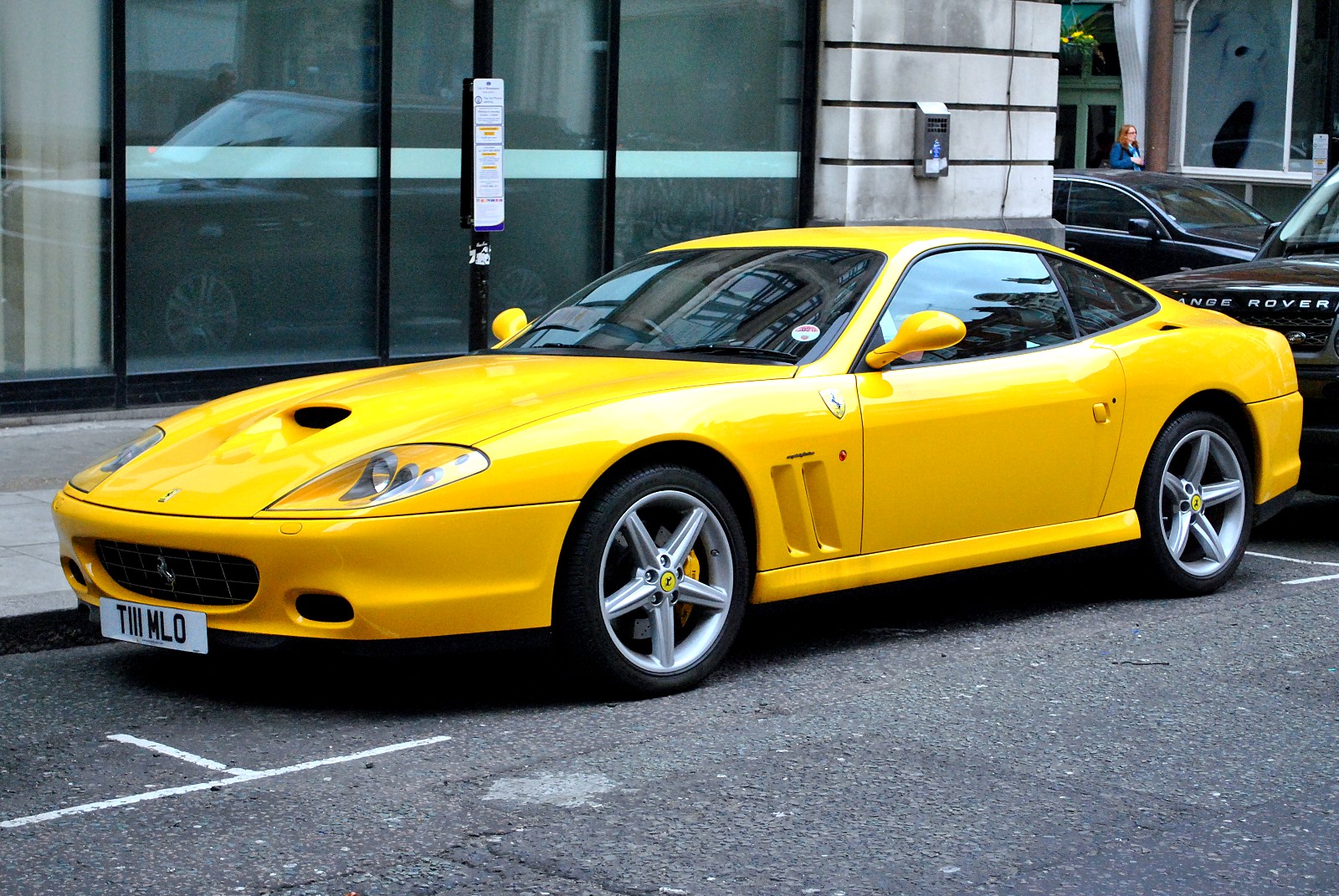
The Ferrari 575M Maranello is a front-engined V12 grand tourer that Ferrari built in Maranello from 2002 to 2006. It is an updated version of the 550 Maranello: "575" refers to the larger 5.75-litre engine and "M" stands for "modificata" (modified). With 379 kW (515 PS), a revised interior and adaptive suspension, it was also the first V12 Ferrari offered with the F1-style automated manual gearbox. Ferrari built 2,056 cars before the 599 GTB Fiorano replaced it.
In short
- Built 2002–2006 in Maranello; type F133; 2,056 cars, 246 of them with a manual gearbox.
- 5,748 cc naturally aspirated 65° V12 at the front: 379 kW (515 PS) at 7,250 rpm and 588 Nm at 5,250 rpm.
- Six-speed manual or six-speed F1 automated manual gearbox at the rear (transaxle), rear-wheel drive.
- 0–100 km/h in 4.2 seconds and 325 km/h top speed (F1 version); open Superamerica with a rotating glass roof from 2005.
Ferrari 575M Maranello at a glance
| Specification | Ferrari 575M Maranello |
|---|---|
| Production | 2002–2006, Maranello (Italy) |
| Cars built | 2,056 (246 manual); Superamerica 559 |
| Body | two-seat coupé (berlinetta); front-mid engine, rear-wheel drive |
| Engine | F133 5,748 cc V12, 65°, four valves per cylinder, dry sump |
| Power | 379 kW (515 PS) at 7,250 rpm |
| Torque | 588 Nm at 5,250 rpm |
| Gearbox | six-speed manual or six-speed F1 automated manual, transaxle |
| Kerb weight | 1,853 kg (Superamerica 1,905 kg) |
| Dimensions | 4,550 × 1,935 × 1,277 mm, wheelbase 2,500 mm |
| Predecessor / successor | 550 Maranello / 599 GTB Fiorano |
The 575M belongs to the line of front-engined V12 Ferraris that continued with the Ferrari 599 and the 812. All models are in the Ferrari catalogue.
What changed from the 550 Maranello
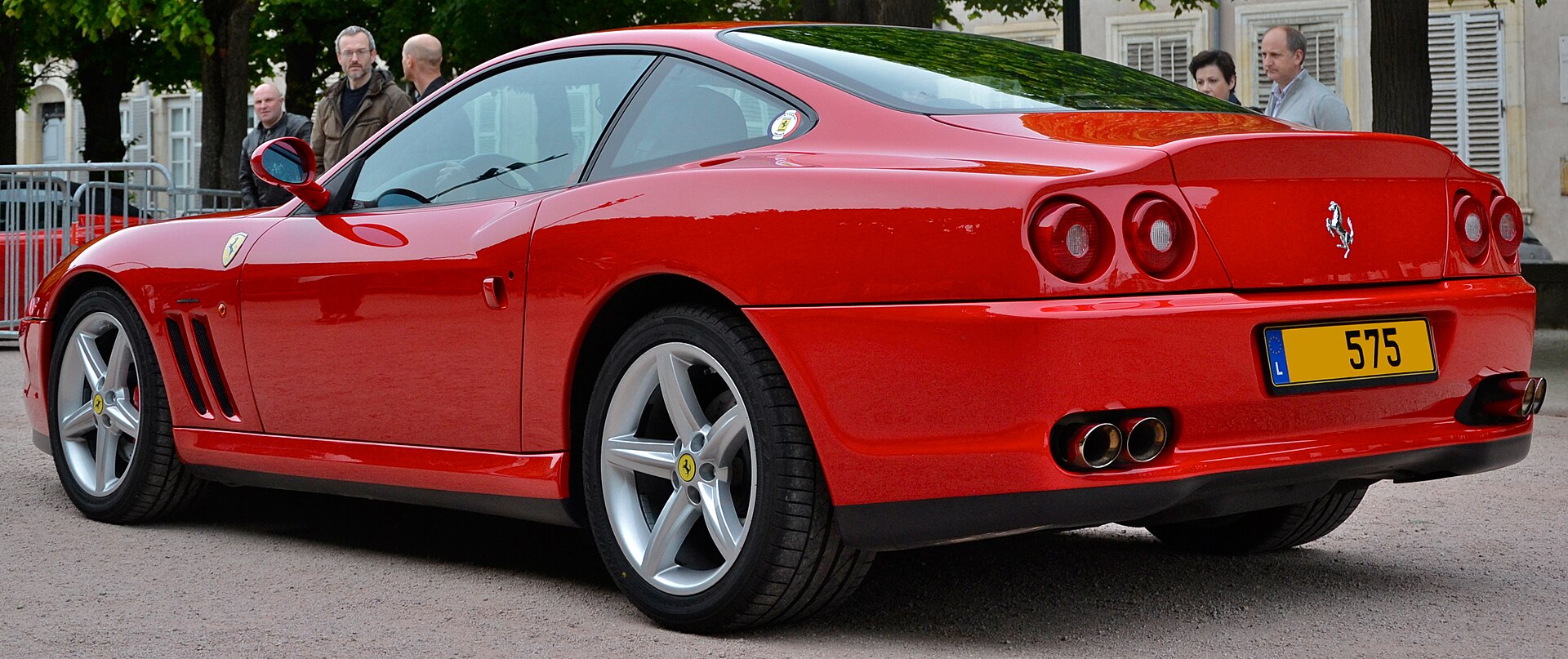
The 575M was introduced in 2002 as a thorough update rather than a new car. The body, designed at Pininfarina by Lorenzo Ramaciotti, keeps the shape of the 550 but has new front air intakes, a revised front spoiler and new headlights with xenon dipped beams. Changes under the car and around the wheels reduced drag and added downforce.
According to Ferrari and Wikipedia, the main changes were:
- a larger and more powerful engine, with more torque in the middle of the rev range;
- the optional F1 gearbox - a first for a V12 Ferrari - with launch control;
- adaptive damping on all four wheels, with Sport and Comfort settings;
- larger brake discs, new pads and an updated ABS/ASR system (version 5.4);
- lighter wheels: 1.8 kg less at each front wheel and 1.2 kg at each rear wheel;
- an improved weight distribution - 50:50 with the driver on board;
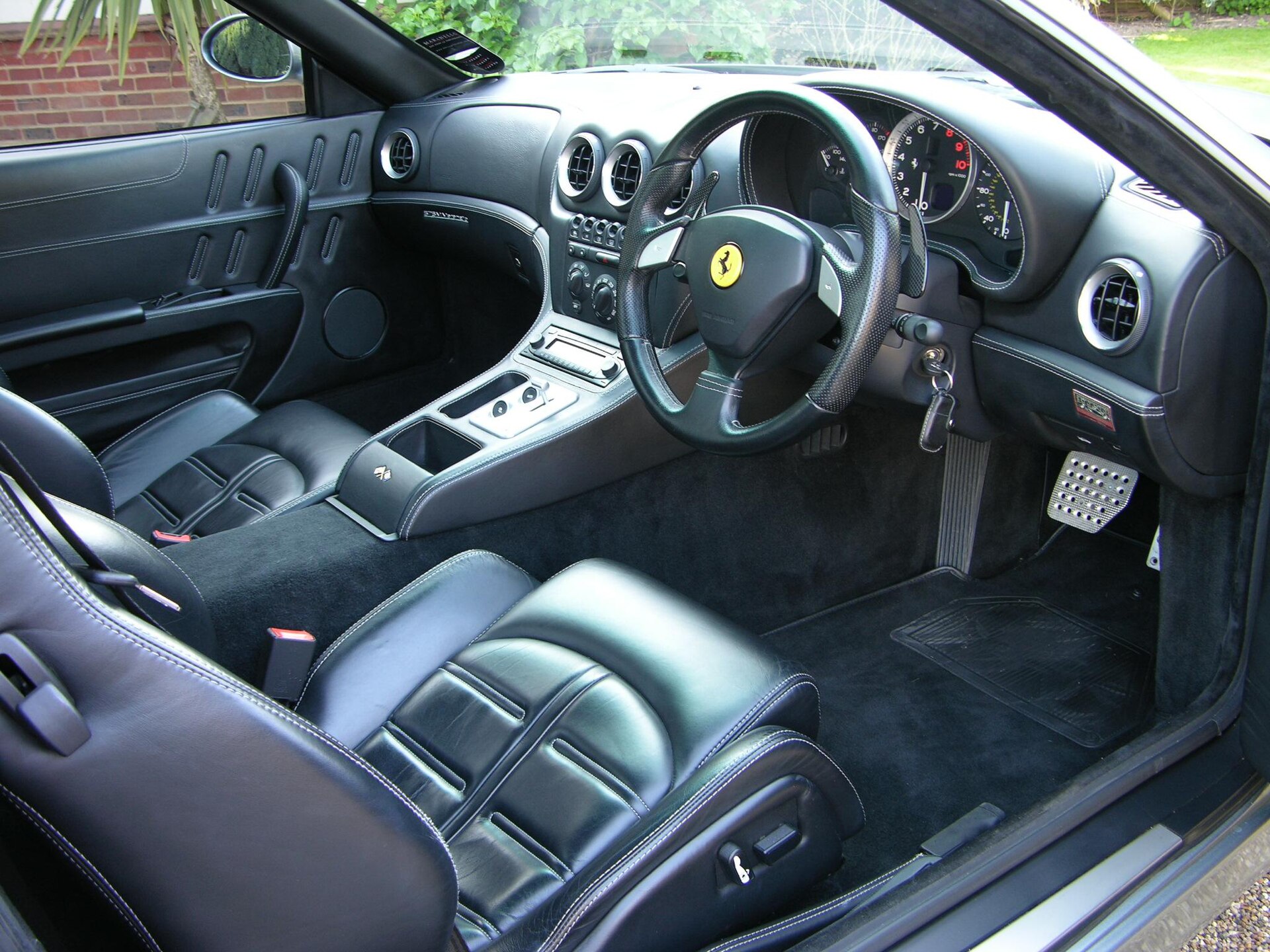
- a redesigned interior.

Engine and gearboxes
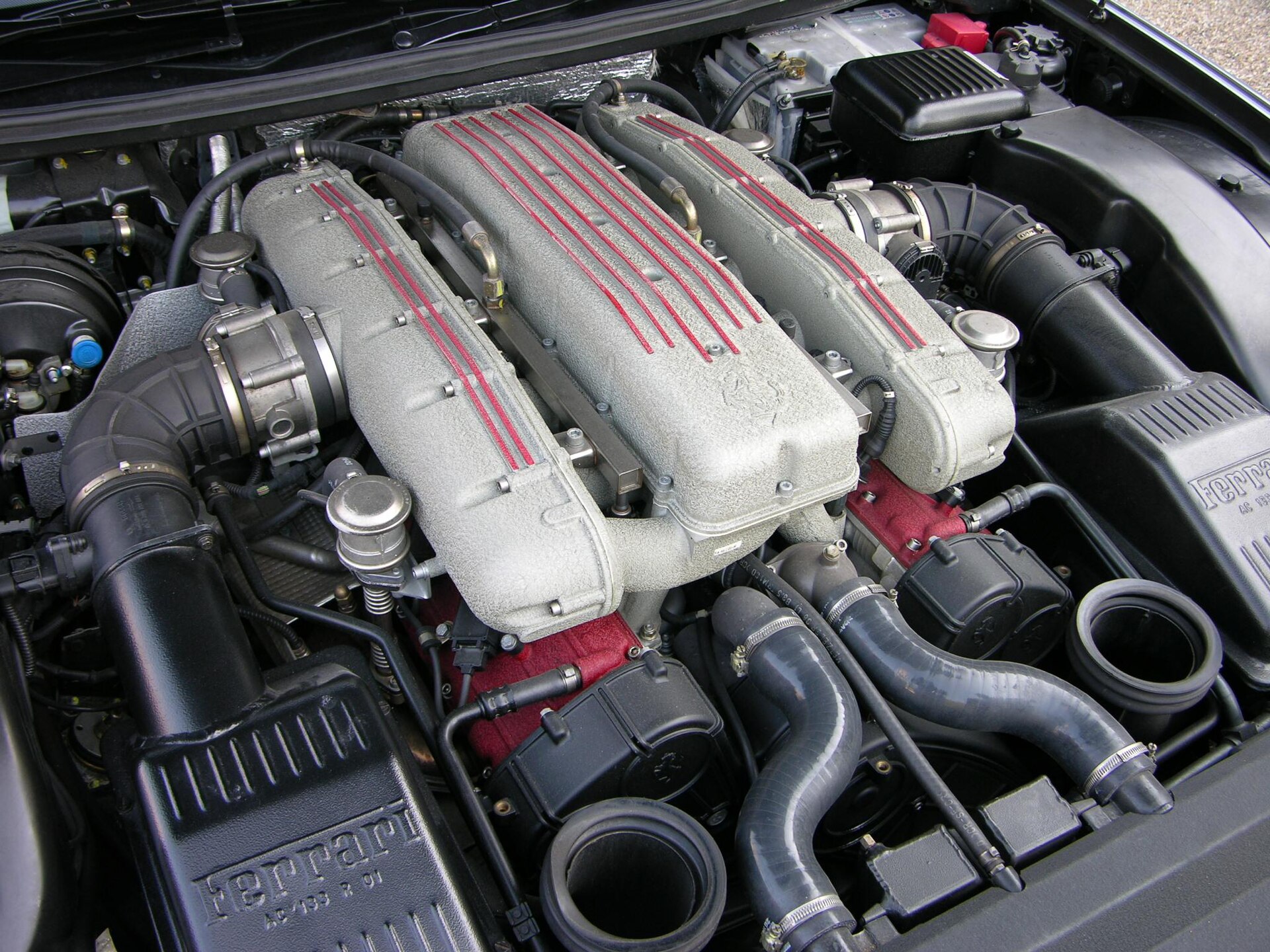
The F133 V12 has a 65° angle between the banks, twin overhead camshafts per bank, four valves per cylinder, an aluminium block and heads, and dry-sump lubrication. Its capacity grew from about 5.5 litres in the 550 to 5,748 cc (bore 89 mm, stroke 77 mm). It produces 379 kW (515 PS) at 7,250 rpm and 588 Nm at 5,250 rpm, and it has Bosch Motronic M 5.2 fuel injection.
Buyers could choose between a conventional six-speed manual with an open metal gate and the F1 gearbox, an automated manual built by Graziano. Both use the same single-plate clutch. The F1 system, operated by paddles behind the steering wheel, changes gear in about 200 milliseconds against about 300 ms for the manual, and it offers Sport, Automatic and Low Grip modes. During each shift the gearbox communicates with the adaptive dampers to reduce pitching. The gearbox sits at the rear together with the limited-slip differential.
| Figure | 575M Maranello (F1) |
|---|---|
| Power | 379 kW (515 PS) at 7,250 rpm |
| Torque | 588 Nm at 5,250 rpm |
| 0–100 km/h | 4.2 s (manual + 0.05 s) |
| 0–400 m | 12.25 s |
| 0–1,000 m | 21.9 s |
| Top speed | 325 km/h |


Cabin and chassis
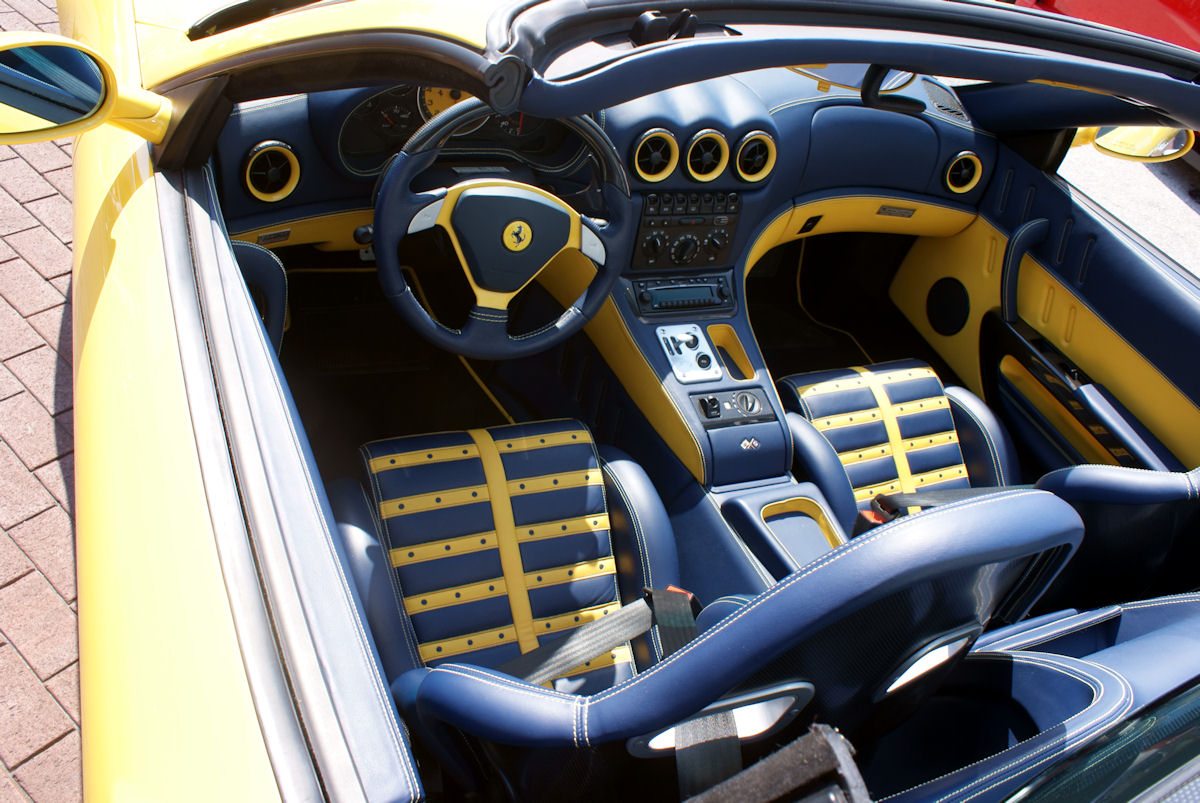
Inside, the driver faces a single instrument pod with the rev counter in the centre. The dashboard, centre tunnel and steering wheel were redesigned, and the six-way electric seats have a memory function on the driver's side. Customers could personalise their cars through Ferrari's Carrozzeria Scaglietti programme.
The car is 4,550 mm long, 1,935 mm wide and 1,277 mm high on a 2,500 mm wheelbase, and the fuel tank holds 105 litres. Kerb weight is 1,853 kg. The front track is 1,632 mm and the rear track 1,586 mm. Ferrari also improved the brakes: the discs have better ventilation, the Ferodo HP1000 pads give more bite, and stronger servo assistance reduces the effort needed on the pedal. Electronic tyre-pressure monitoring was standard, and 19-inch wheels with high-performance tyres were available.
Superamerica, GTC package and GTZ
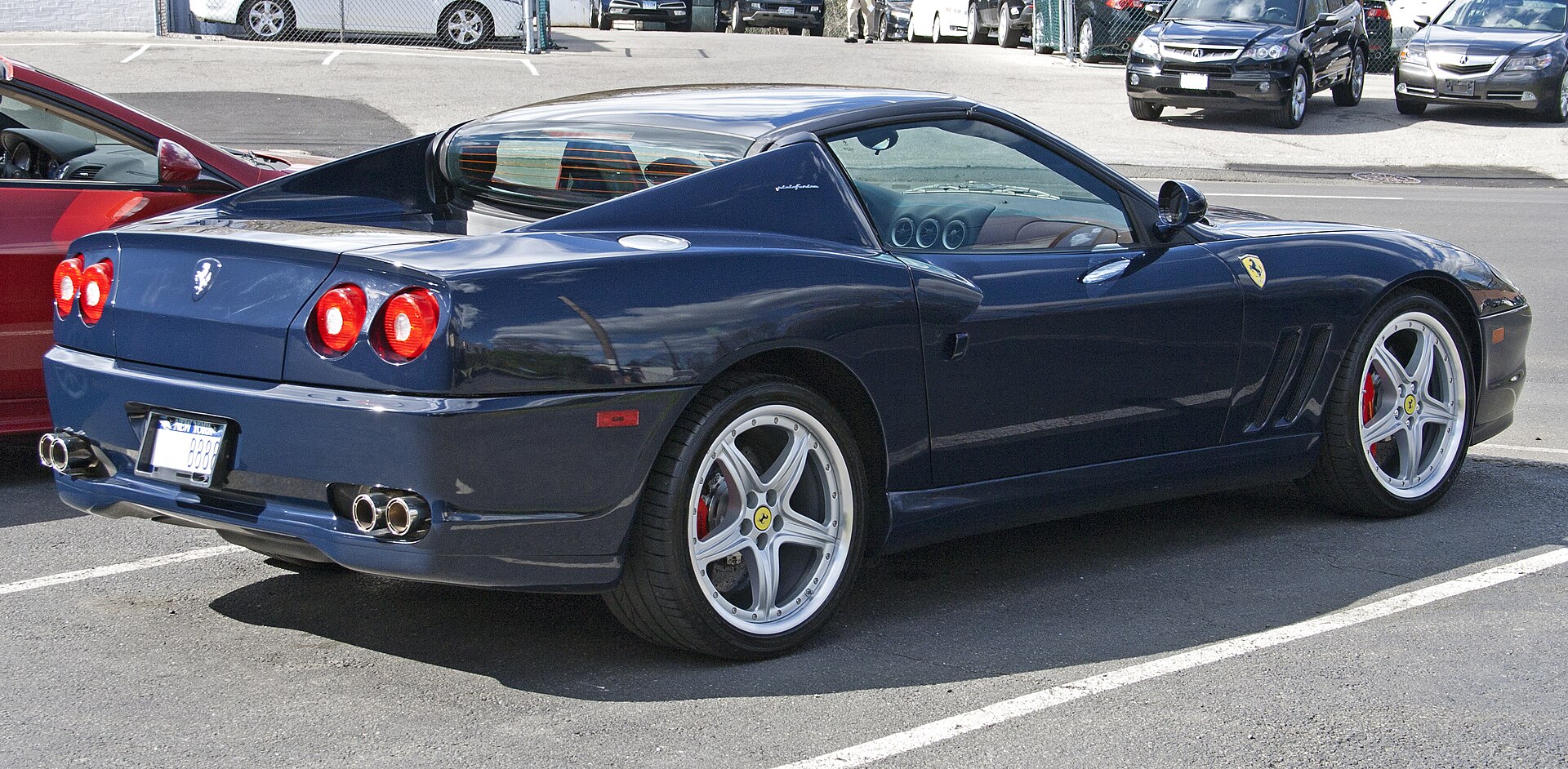
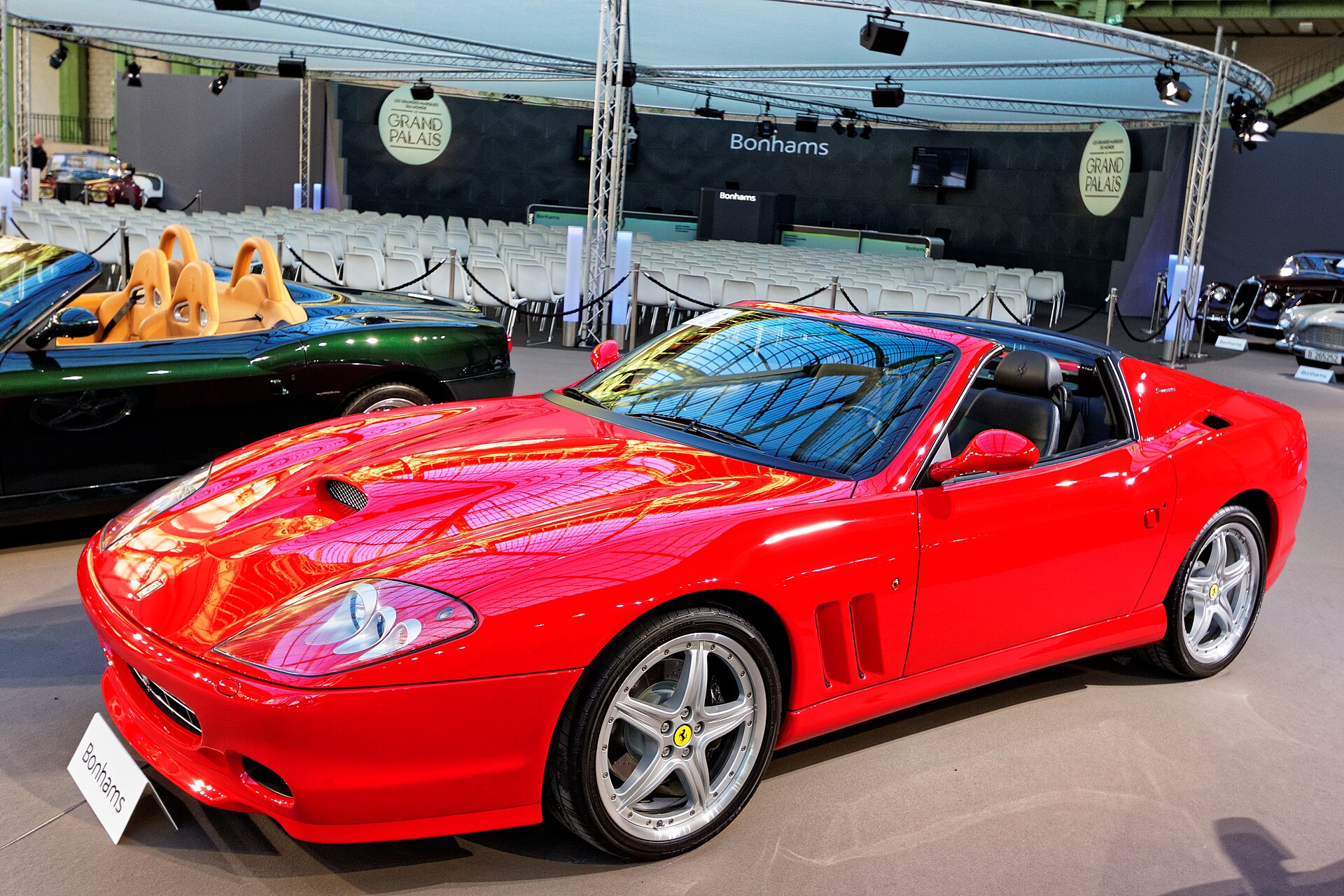
Superamerica (2005). The open version uses an unusual roof: a carbon-framed electrochromic glass panel, called "Revocromico", rotates 180 degrees on a single hinge to lie flat over the boot. It takes about 60 seconds, and the boot can still be opened with the roof down. The glass was developed with Saint-Gobain, and the idea had first appeared on the Alfa Romeo Vola concept by Leonardo Fioravanti. The engine was tuned to 397 kW (540 PS). Ferrari marketed the Superamerica as the world's fastest convertible, with 320 km/h. Production was limited to 559 cars - following Enzo Ferrari's rule of building one car fewer than the market wants - and 43 had a manual gearbox.
GTC handling package (2005). An option with Brembo carbon-ceramic brakes, stiffer suspension, a freer-flowing exhaust and 19-inch wheels. It was the fourth Ferrari with carbon-ceramic brakes, after the Enzo, the Challenge Stradale and the F430.
575 GTZ (2006). Zagato built six coupés on the 575M for the collector Yoshiyuki Hayashi from Japan, with a double-bubble roof and two-tone paint recalling the 250 GT Berlinetta Zagato. The running gear was unchanged.

Racing: 575 GTC
For the FIA GT Championship, Ferrari and N Technology developed the 575 GTC, shown at the 2003 Frankfurt motor show. Its V12 was enlarged to 6.0 litres and produced 447 kW (608 PS) and 730 Nm, with a six-speed Xtrac sequential gearbox, carbon body panels and a large rear wing; dry weight was 1,148 kg. The car won at Estoril in 2003 and once more in 2004, but it was less competitive than the Prodrive-built 550 GTS and had mostly disappeared by the end of 2005. It later served as a test car for Ferrari's XX programme.
Legacy
The 575M was the last step of the 550 line and the car that introduced Ferrari's F1 gearbox to the V12 range. Its successor, the 599 GTB Fiorano, arrived in 2006. Manual cars are rare: only 246 of the 2,056 coupés had the gated six-speed gearbox. The background of the company is in our history of Ferrari.
Photo gallery


Ferrari 575M Maranello in our rankings
- No. 31 of 170 · Most powerful cars of the 2000s (379 kW · top 19%)
- No. 192 of 859 · Most powerful cars (379 kW · top 23%)
- No. 116 of 313 · Most powerful coupes (379 kW · top 38%)
- No. 48 of 127 · Most powerful Italian cars (379 kW · top 38%)
- No. 719 of 912 · Longest-running car nameplates (4 years · top 83%)
More powerful than 81% of ranked cars of the 2000s in the 1CARS catalog (No. 31 of 170).
Ferrari 575M Maranello photos 6
FAQ
What does 575M mean?
575 refers to the engine capacity of about 5.75 litres (5,748 cc), and M stands for "modificata", meaning modified - the car is an updated 550 Maranello.
How powerful is the Ferrari 575M Maranello?
Its 5.75-litre V12 produces 379 kW (515 PS) at 7,250 rpm and 588 Nm at 5,250 rpm.
How many 575M Maranellos were built?
2,056 between 2002 and 2006, of which 246 had a manual gearbox. A further 559 Superamerica convertibles were built.
How fast is the 575M?
With the F1 gearbox it reaches 100 km/h in 4.2 seconds and has a top speed of 325 km/h.
What is the Ferrari Superamerica?
The 575M-based convertible of 2005, with a rotating electrochromic glass roof and 397 kW (540 PS). 559 were built.
Data sources
Data checked by an editor against the sources below.