 Ferrari 365 GT4 2+2, 400 and 412
All generations, specs and history
Published Sources (1) Report an error
By Felix Hartmann, Automotive Technology & EV Contributor
- Built
- 1972–1989
- Generations
- 3
- Top power
- 250 kW (340 PS)
Timeline
365 GT4 2+2, 400 and 412 generations
Click a generation for its own page
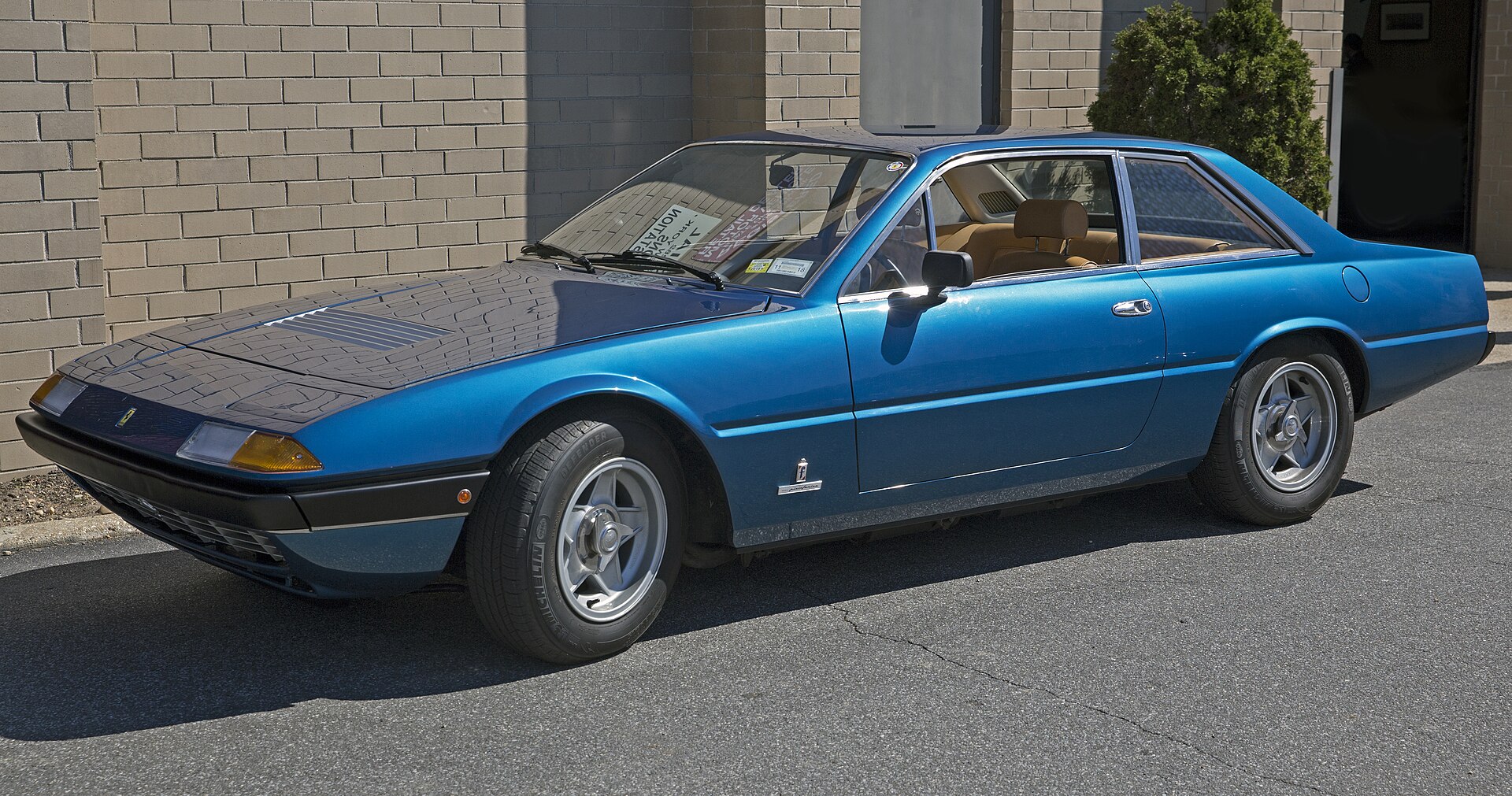
- 365 GT4 2+2 1972–1976 · Coupe · 250 kW (340 PS)
- 400 / 400i 1976–1985 · Coupe · 228–250 kW (310–340 PS)
- 412 1985–1989 · Coupe · 250 kW (340 PS)
Newest first · 3 generations since 1972
-
1985
-
1976
-
1972


All generations by year: 412 (1985–1989) · 400 / 400i (1976–1985) · 365 GT4 2+2 (1972–1976)
Which one is mine?
Pick the year of first registration to see which generation it is.
- 412 1985–1989
- 400 / 400i 1976–1985
- 365 GT4 2+2 1972–1976
The Ferrari 365 GT4 2+2, 400 and 412 are one continuous family of four-seat, front-engined V12 grand tourers that Ferrari built from 1972 to 1989. Designed at Pininfarina by Leonardo Fioravanti, they had a formal three-box shape unlike any other Ferrari of the time, and the 400 Automatic of 1976 was the first Ferrari with an automatic gearbox. In 17 years of production, about 2,900 cars were built.
In short
- Built 1972–1989; bodies by Pininfarina in Turin, final assembly by Ferrari in Modena; about 2,900 cars across four versions.
- Front-mounted V12 grown from 4.4 to 4.9 litres: from 228 kW (310 PS) to 250 kW (340 PS).
- The 400 Automatic used a GM THM400 three-speed automatic - the first automatic Ferrari; the 412 was the first Ferrari offered with ABS.
- Succeeded, after a three-year gap, by the 456 of 1992.
Ferrari 365 GT4 2+2, 400 and 412 at a glance
| Specification | Ferrari 365 GT4 2+2 / 400 / 412 |
|---|---|
| Production | 1972–1989 |
| Cars built | 524 / 502 (400) / 1,305 (400i) / 576 (412) |
| Body | two-door, four-seat saloon (2+2), Pininfarina design |
| Engine | front-mounted V12: 4,390 cc, 4,823 cc, 4,943 cc |
| Power | 228–250 kW (310–340 PS) |
| Gearbox | five-speed manual; three-speed automatic from 1976 |
| Wheelbase | 2,700 mm |
| Predecessor / successor | 365 GTC/4 / 456 |
These were Ferrari's family cars of the 1970s and 1980s, built at the same time as the mid-engined Dino 308 GT4 2+2; all models are listed in the Ferrari catalogue. The story of the company is told in our history of Ferrari.
Design by Pininfarina
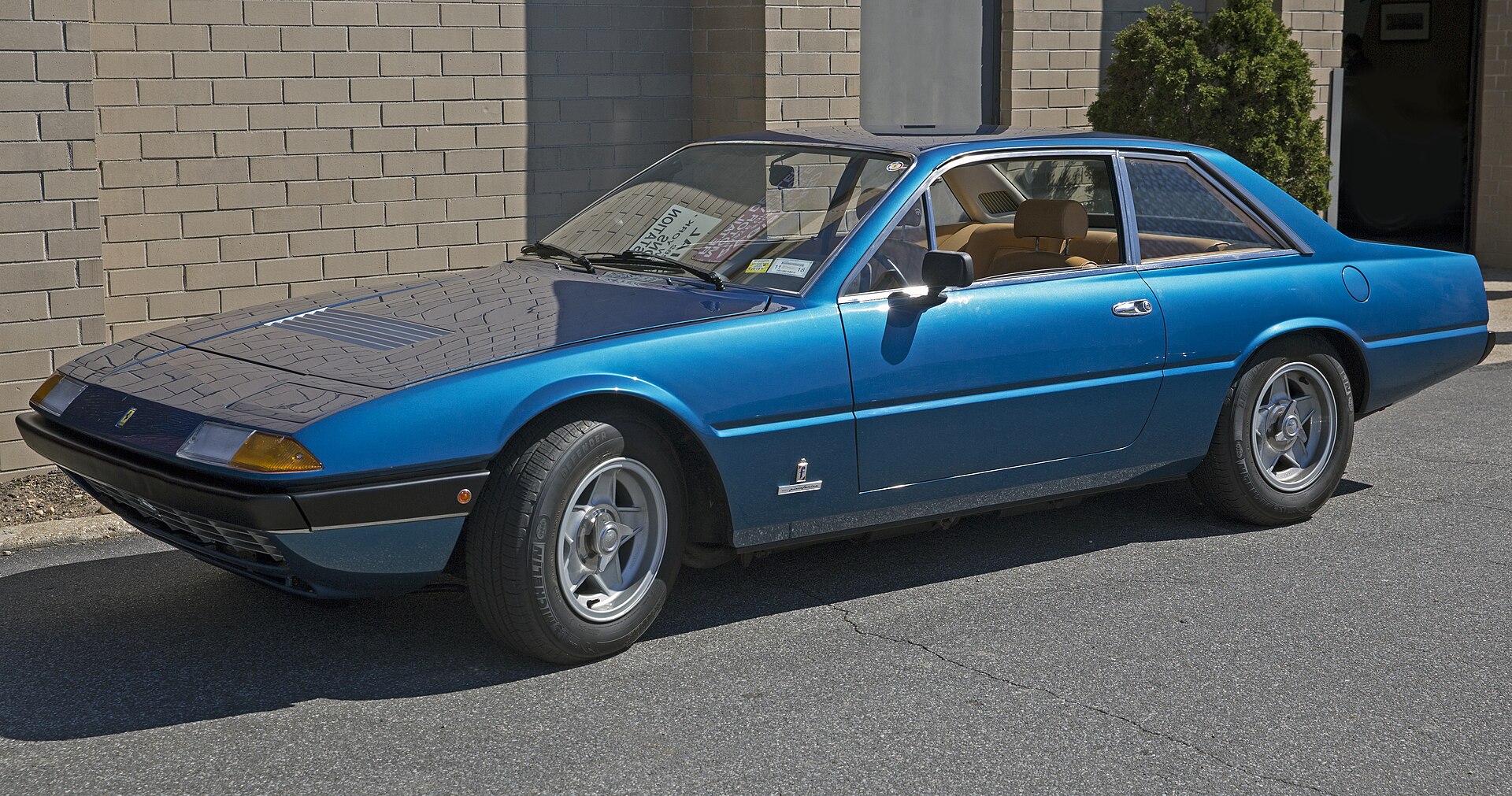
Leonardo Fioravanti at Pininfarina gave the 365 GT4 2+2 a three-box shape with a separate boot - a clear break from the fastback 365 GTC/4 it replaced. The wheelbase was 200 mm longer than that of the GTC/4, at 2,700 mm, to give real space for four people. A swage line ran along the whole flank; the 365 GT4 2+2 was the second Ferrari, after the 365 GTB/4 Daytona, to use this styling feature. Pininfarina built the steel bodies in Turin, and Ferrari assembled the cars in Modena.
The cabin was well equipped for the time, with leather upholstery, electric windows and air conditioning. The basic shape stayed in production for 17 years with only detailed changes.

The four versions
| Version | Years | Engine | Power | Built |
|---|---|---|---|---|
| 365 GT4 2+2 | 1972–1976 | 4,390 cc V12, six Weber carburettors | 250 kW (340 PS) at 6,200 rpm | 524 |
| 400 GT / 400 Automatic | 1976–1979 | 4,823 cc V12, six Weber carburettors | 250 kW (340 PS) | 502 |
| 400i | 1979–1985 | 4,823 cc V12, Bosch K-Jetronic injection | 228–232 kW (310–315 PS) at 6,500 rpm | 1,305 |
| 412 | 1985–1989 | 4,943 cc V12, fuel injection | 250 kW (340 PS) at 6,000 rpm | 576 |
365 GT4 2+2 (1972–1976). The first version used the 4.4-litre V12 with six Weber carburettors and a five-speed manual gearbox. It ran on five-spoke alloy wheels with knock-off hubs; Borrani wire wheels were optional.
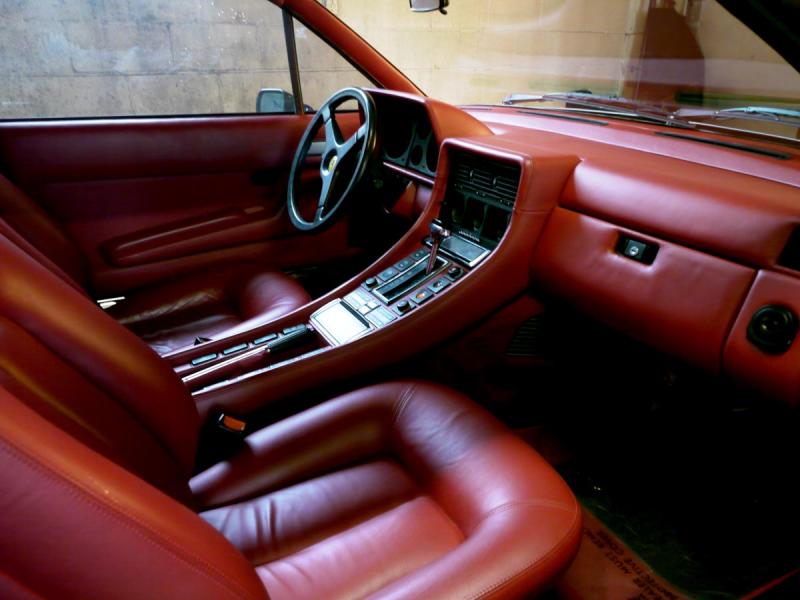
400 (1976–1979). The engine was enlarged to 4.8 litres. The big news was the 400 Automatic with a three-speed GM Turbo-Hydramatic THM400 gearbox, the first automatic in a Ferrari. It outsold the manual 400 GT: 355 Automatics against 147 GTs. Other changes included five-stud wheels instead of knock-off hubs, a revised interior, a lip on the front spoiler and twin instead of triple round tail lights. Wikipedia gives 0–60 mph in 7.1 seconds.
400i (1979–1985). In 1979 the carburettors gave way to Bosch K-Jetronic fuel injection, which cut emissions but also reduced output to 228 kW (310 PS). A late-1982 update with new camshafts and exhaust manifolds raised it to 232 kW (315 PS), and the car received a revised interior, a narrower grille, body-coloured bonnet vents and tail panel, new mirrors with a small Ferrari shield and Michelin TRX tyres on metric wheels. The top speed was about 240 km/h. With 1,305 cars, the 400i was the most successful version.
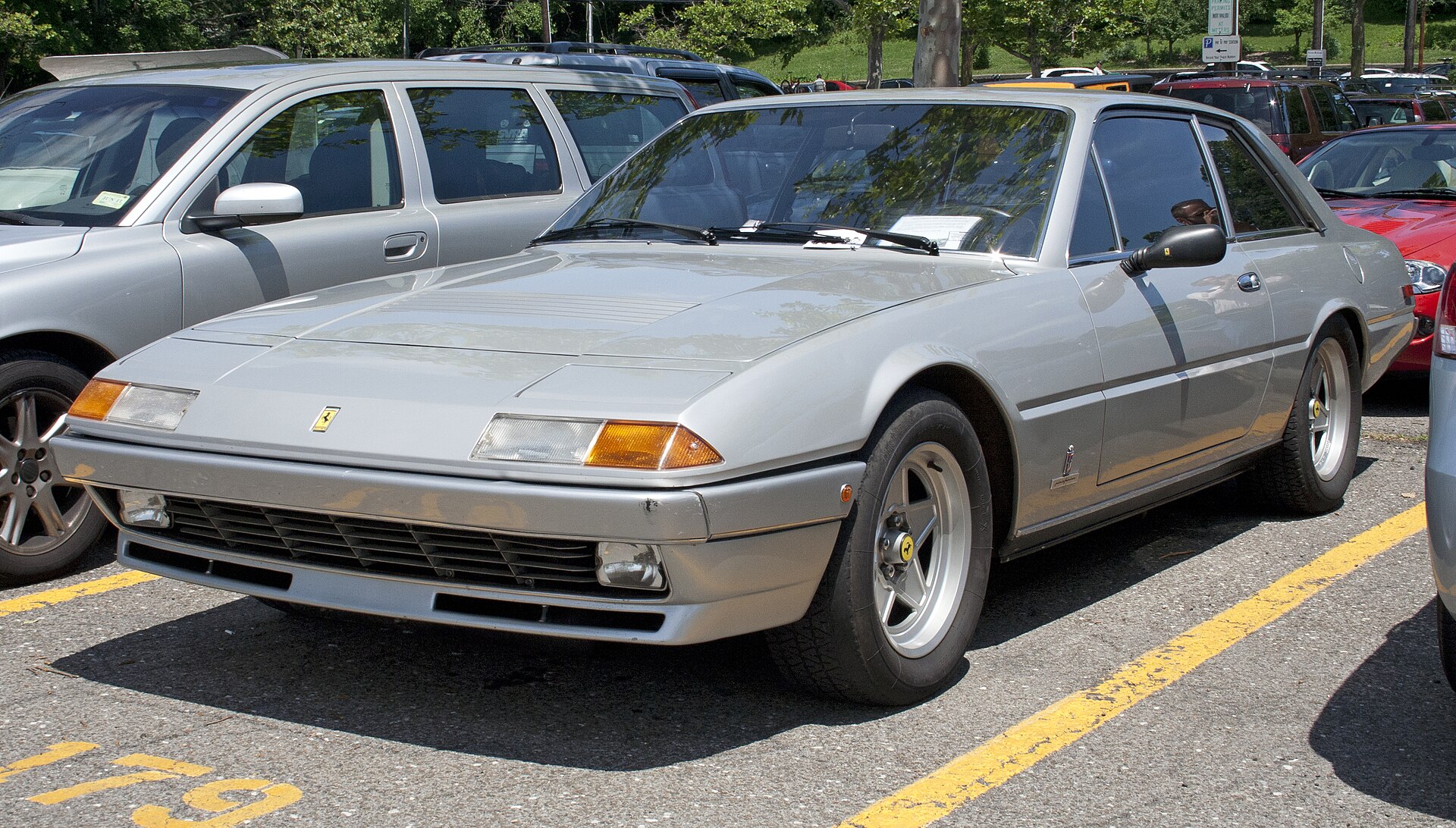
412 (1985–1989). The last version was also the most visibly changed: its black rear valance integrated the fog lamps and exhaust pipes, and the side window frames were finished in black. A 1 mm larger bore took the displacement to 4,943 cc and gave the new name. Output returned to 250 kW (340 PS). The 412 had a raised boot lid for more luggage space, body-coloured bumpers, a deeper front spoiler and new flat-faced wheels. It was the first Ferrari offered with Bosch ABS. Of the 576 cars, 270 had a manual gearbox.


Reception
Opinions about these cars have always been divided. The engineer and journalist L. J. K. Setright praised the body in CAR magazine in August 1984. Later commentators were much less kind: the BBC book on "crap cars" ranked the model 18th, and Jeremy Clarkson called it "awful in every way" on Top Gear. Buyers, however, clearly liked the comfortable automatic versions: 355 of the 502 400s and 883 of the 1,305 400i were automatics.
The 400i is an interesting case in another way: its fuel-injected engine met American emissions standards, but according to Wikipedia the car was never officially imported to the United States. A black 1987 412 starred in the 2006 film Daft Punk's Electroma; the car was later sold for charity.
Legacy
Production ended in 1989 without an immediate successor, leaving the mid-engined Mondial as Ferrari's only 2+2. The front-engined V12 four-seater returned in 1992 with the 456, and the idea continued through the 612 Scaglietti, the FF and, today, the Purosangue.
Photo gallery

Ferrari 365 GT4 2+2, 400 and 412 evolution in numbers
Did you know?
- The Ferrari 365 GT4 2+2, 400 and 412 ran for 17 years, from 1972 to 1989, over 3 generations in our catalog.
- The longest-running generation is the 400 / 400i (1976–1985): 9 years.
Most powerful version, kW
Figures from the 1cars catalog: power is the strongest version of each generation; generations without the figure are left out.
Ferrari 365 GT4 2+2, 400 and 412: first vs latest generation
| Spec | 365 GT4 2+2 | 412 | Change |
|---|---|---|---|
| Years | 1972–1976 | 1985–1989 | 13 years apart |
| Most powerful version | 250 kW (340 PS) | 250 kW (340 PS) | same (0%) |
Oldest and newest generation in the 1cars catalog. Power is the strongest version of each; other rows are shown only when both generations have the figure.
Image credits · Photos from Wikimedia Commons under free licences
- Ferrari 365 GT4 2+2 · Photo: Mr.choppers / Wikimedia Commons, CC BY-SA 3.0
- Ferrari 400 / 400i · Photo: Mr.choppers / Wikimedia Commons, CC BY-SA 3.0
- Ferrari 412 · Photo: Gte4289 / Wikimedia Commons, CC BY-SA 4.0
Ferrari 365 GT4 2+2, 400 and 412 in our rankings
- No. 8 of 59 · Most powerful cars of the 1980s (250 kW)
- No. 209 of 912 · Longest-running car nameplates (17 years · top 25%)
- No. 28 of 88 · Most powerful cars of the 1970s (250 kW · top 33%)
- No. 363 of 859 · Most powerful cars (250 kW · top 44%)
- No. 71 of 127 · Most powerful Italian cars (250 kW · top 58%)
- No. 196 of 313 · Most powerful coupes (250 kW · top 65%)
More powerful than 84% of ranked cars of the 1980s in the 1CARS catalog (No. 8 of 59).
FAQ
What was the first Ferrari with an automatic gearbox?
The Ferrari 400 Automatic of 1976, with a three-speed GM Turbo-Hydramatic gearbox.
How many 365 GT4 2+2, 400 and 412 cars were built?
About 2,900: 524 365 GT4 2+2, 502 400s, 1,305 400i and 576 412s.
Who designed the Ferrari 400?
Leonardo Fioravanti at Pininfarina.
What replaced the Ferrari 412?
The 456 of 1992, after a three-year gap.
Was the Ferrari 412 the first Ferrari with ABS?
Yes. The 412 of 1985 was the first Ferrari offered with Bosch anti-lock brakes, together with a choice of manual or automatic gearbox.
Data sources
Data checked by an editor against the sources below.