 Ferrari 348
Specs, engines and history
Published Sources (1) Report an error
By Oleksandr Hnatiuk, Automotive Editor & Used Car Specialist
- Built
- 1989–1995
- Top power
- 235 kW (320 PS)
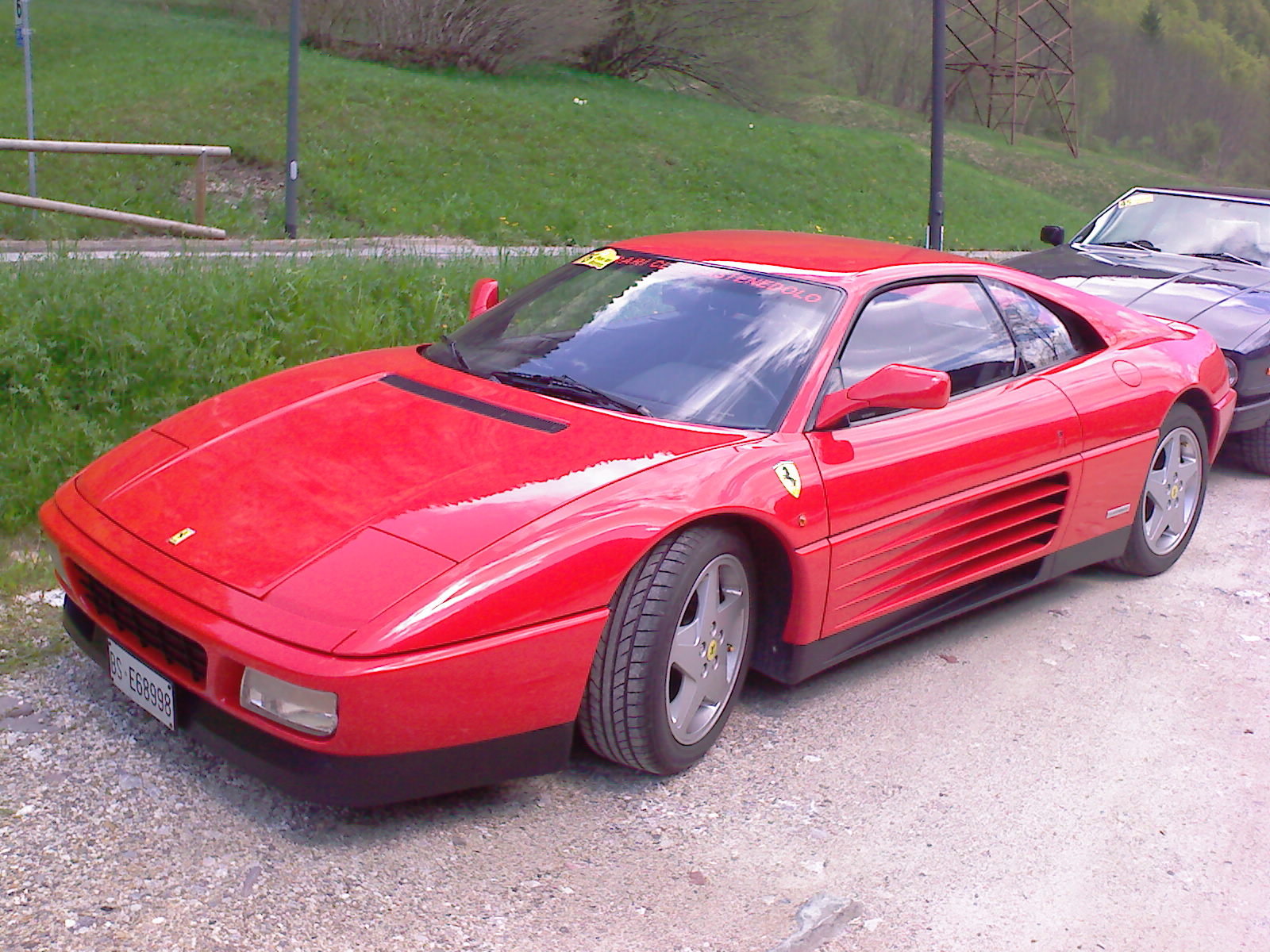
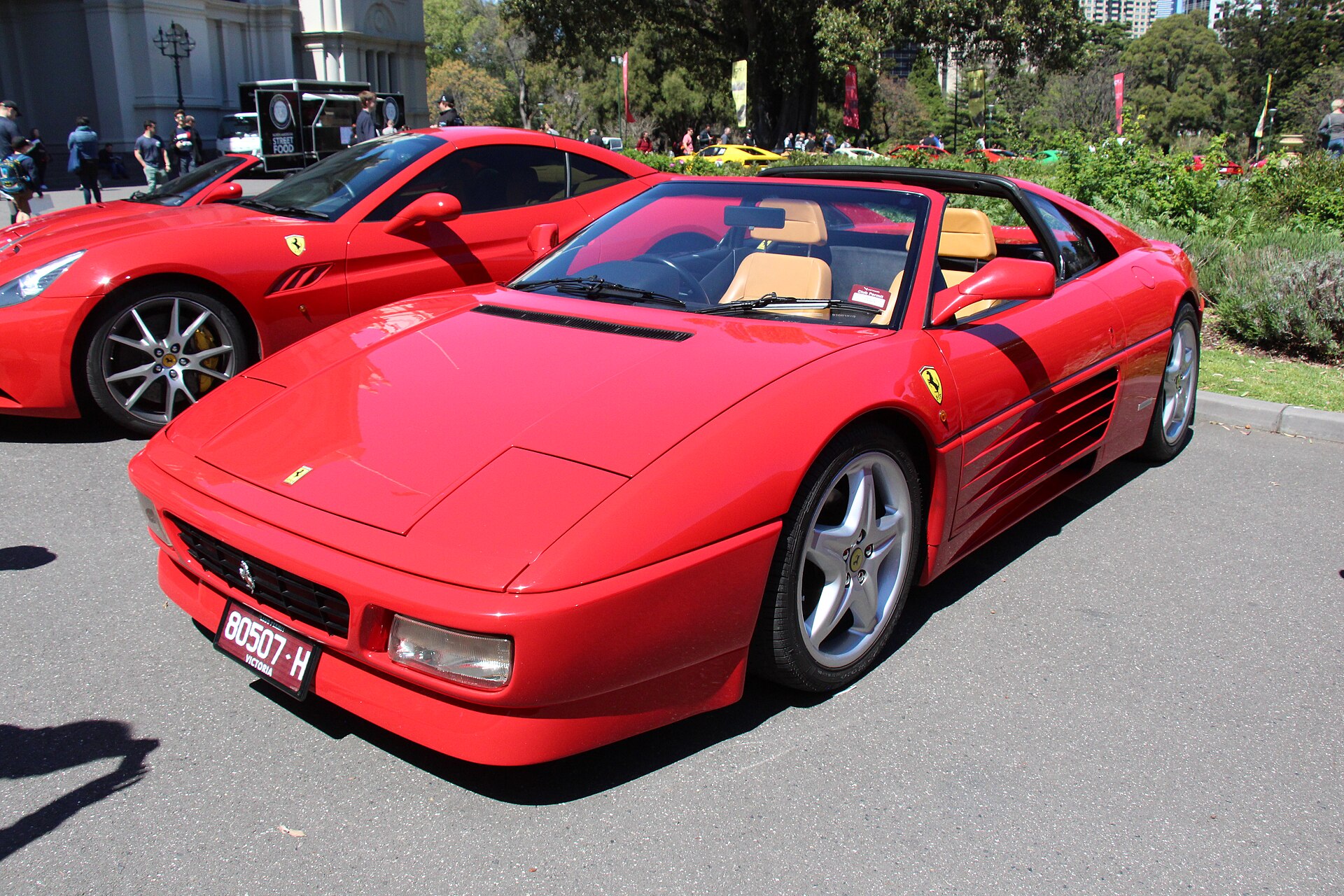
The Ferrari 348 is the mid-engined V8 sports car that Ferrari built in Maranello from 1989 to 1995 as the successor of the 328. It was offered as the 348 tb coupé and 348 ts targa, later as a Spider and in revised GTB and GTS form. Its most unusual technical feature was a transversely mounted gearbox behind a longitudinal V8 — a layout taken from Formula 1. Admired for its looks but criticised for its handling at the limit, the 348 was followed by the much-praised F355.
In short
- Built 1989–1995 in Maranello; 2,894 tb, 4,228 ts, 252 GTB, 137 GTS and 100 Serie Speciale according to Wikipedia; the infobox gives 8,844 in total.
- 3,405 cc quad-cam V8 (F119): 221 kW (300 PS) at 7,200 rpm and 324 Nm; 235 kW (320 PS) in the late GTB and GTS.
- Five-speed manual gearbox mounted transversely — the first Ferrari road car with this layout.
- Ferrari quoted 0–100 km/h in 5.4 s and more than 280 km/h for the GTB.
Ferrari 348 at a glance
| Specification | Ferrari 348 tb |
|---|---|
| Production | 1989–1995, Maranello (Italy) |
| Versions | tb, ts, Spider (1993), GTB and GTS (1993), Serie Speciale, Challenge, GT Competizione |
| Body | two-seat berlinetta (tb), targa (ts), convertible (Spider) |
| Engine | F119 3,405 cc 90° V8, four valves per cylinder, longitudinal mid-engine |
| Power | 221 kW (300 PS) at 7,200 rpm; GTB/GTS 235 kW (320 PS) |
| Torque | 324 Nm at 4,200 rpm |
| Gearbox | five-speed manual, transverse |
| Kerb weight | about 1,500 kg |
| Dimensions | 4,230 mm long, 1,894 mm wide, 1,170 mm high, 2,450 mm wheelbase |
| Predecessor / successor | 328 / F355 |
The 348 continues the line of Ferrari's V8 two-seaters that began with the 308 and leads to the F355, the 360 and the Ferrari F430. All models are listed in the Ferrari catalogue.
Name and debut
The 348 was presented at the Frankfurt Motor Show in September 1989. Its name follows Ferrari's convention of the time: 3.4 litres and eight cylinders. The letter "t" stands for trasversale, the transverse gearbox, so the tb is the transverse berlinetta and the ts the transverse targa (spider).
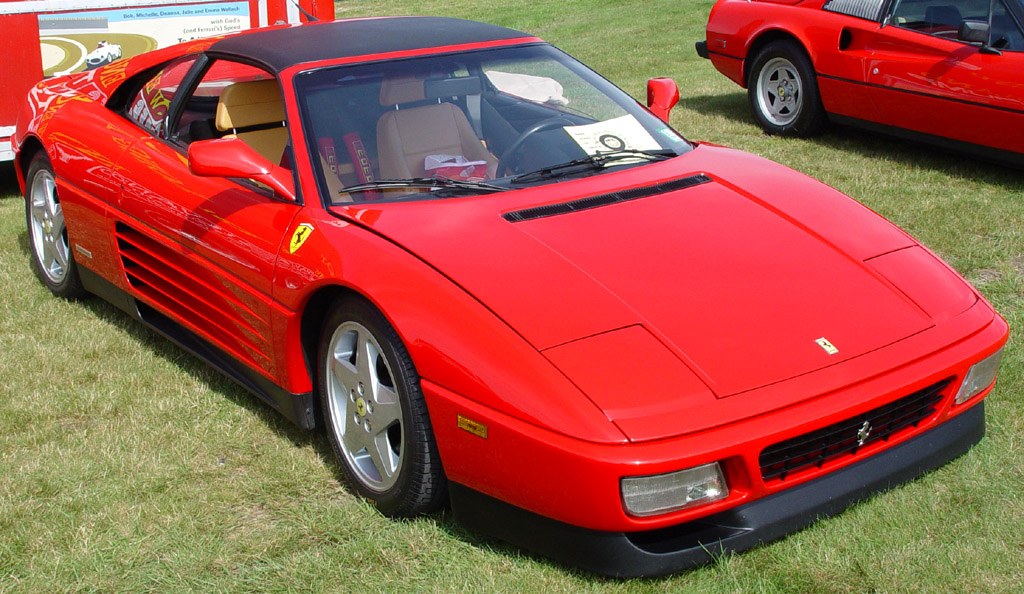
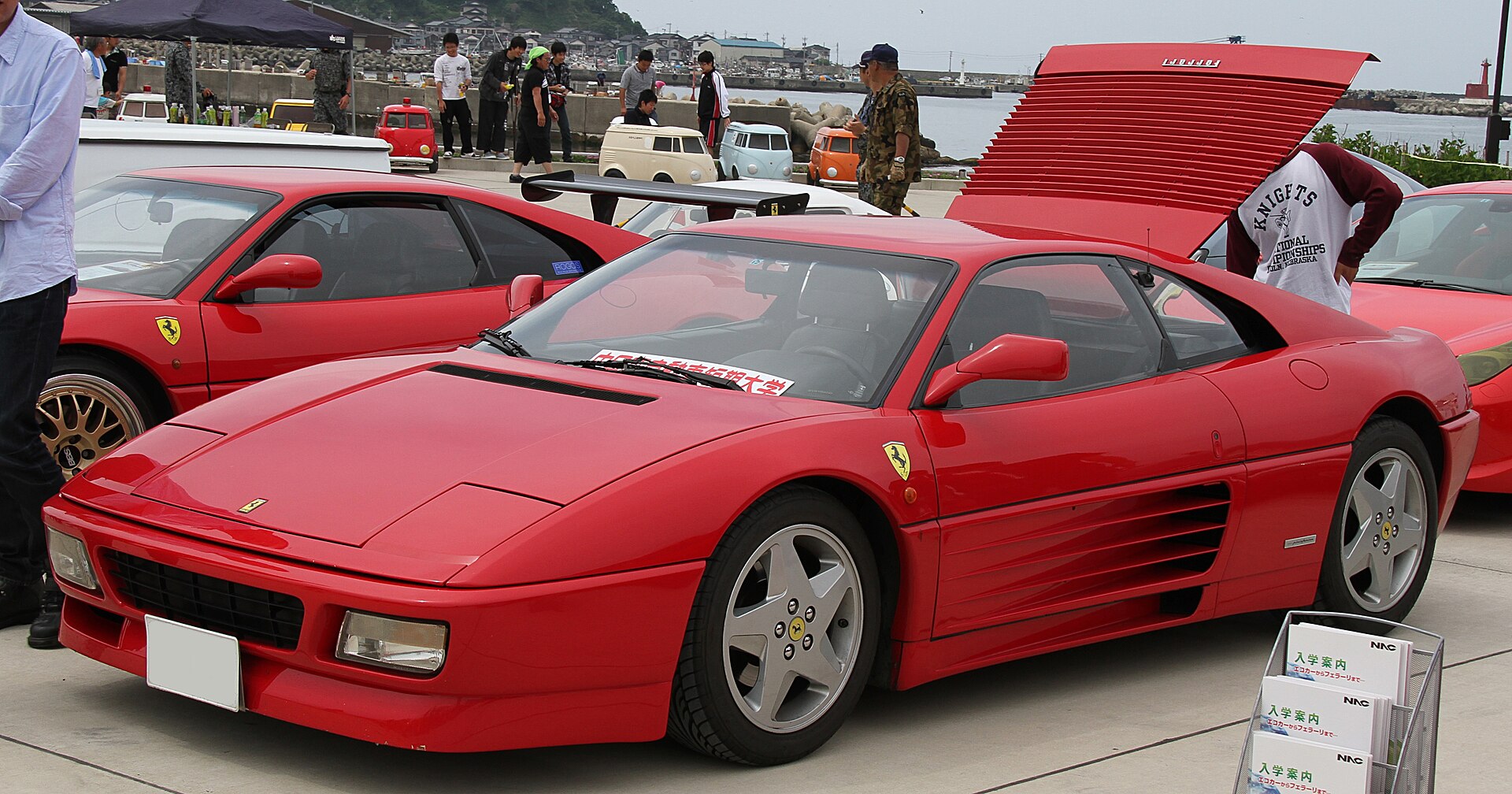
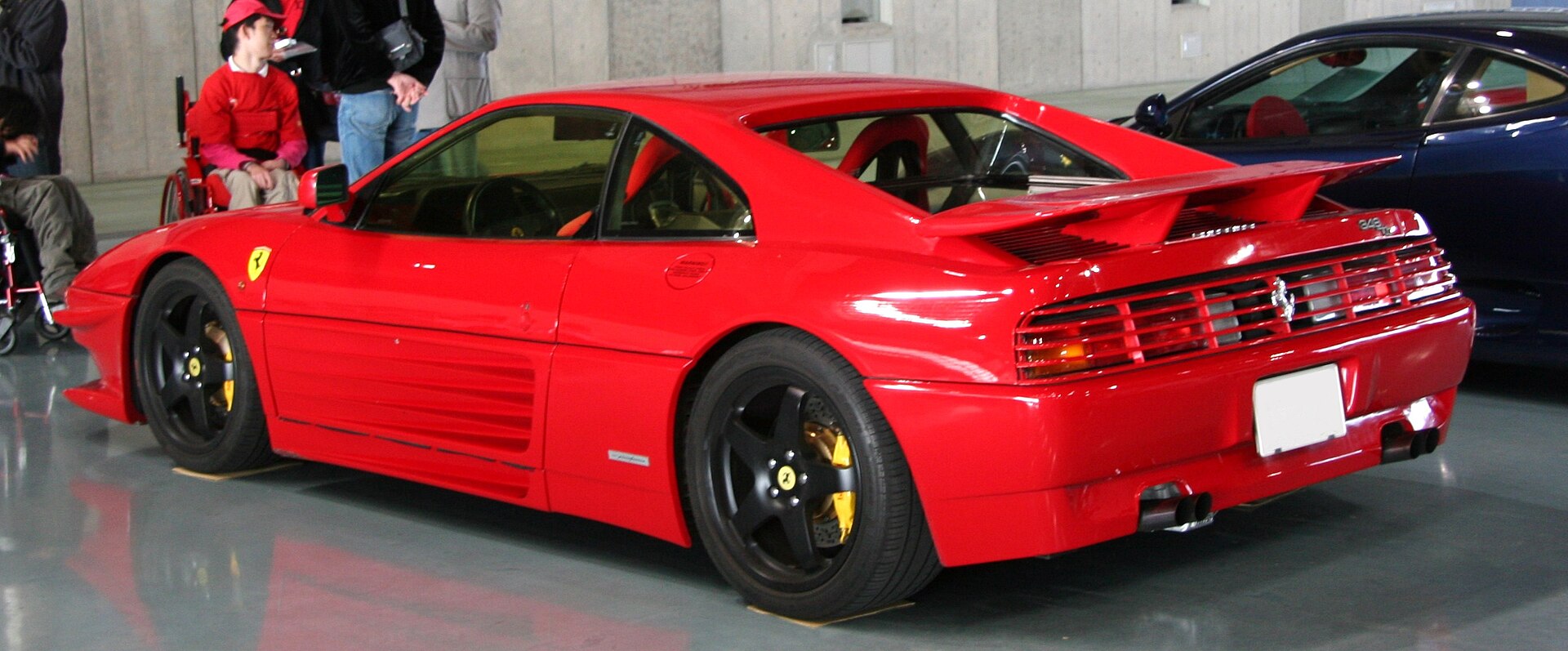
The car was styled at Pininfarina under Leonardo Fioravanti. It borrowed several cues from the Testarossa, above all the horizontal strakes over the side air intakes and the rectangular tail lights, and some themes recalled the F40. The radiators were moved from the nose to the sides of the car, which made it wider and the doors very wide, but also helped to keep heat out of the cabin. The front grille, however, was a dummy — a detail that critics did not like.

Engine and gearbox
The F119 V8 has a displacement of 3,405 cc (bore 85 mm, stroke 75 mm), four camshafts and 32 valves. It is mounted lengthwise and uses dry-sump lubrication to avoid oil starvation in fast corners. Engine management was by two Bosch Motronic units.
| Version | Power | Torque |
|---|---|---|
| 348 tb / ts (1989) | 221 kW (300 PS) at 7,200 rpm | 324 Nm at 4,200 rpm |
| 348 Serie Speciale | 232 kW (316 PS) at 7,200 rpm | — |
| 348 GTB / GTS (F119H, 1993) | 235 kW (320 PS) at 7,200 rpm | 323 Nm at 5,000 rpm |
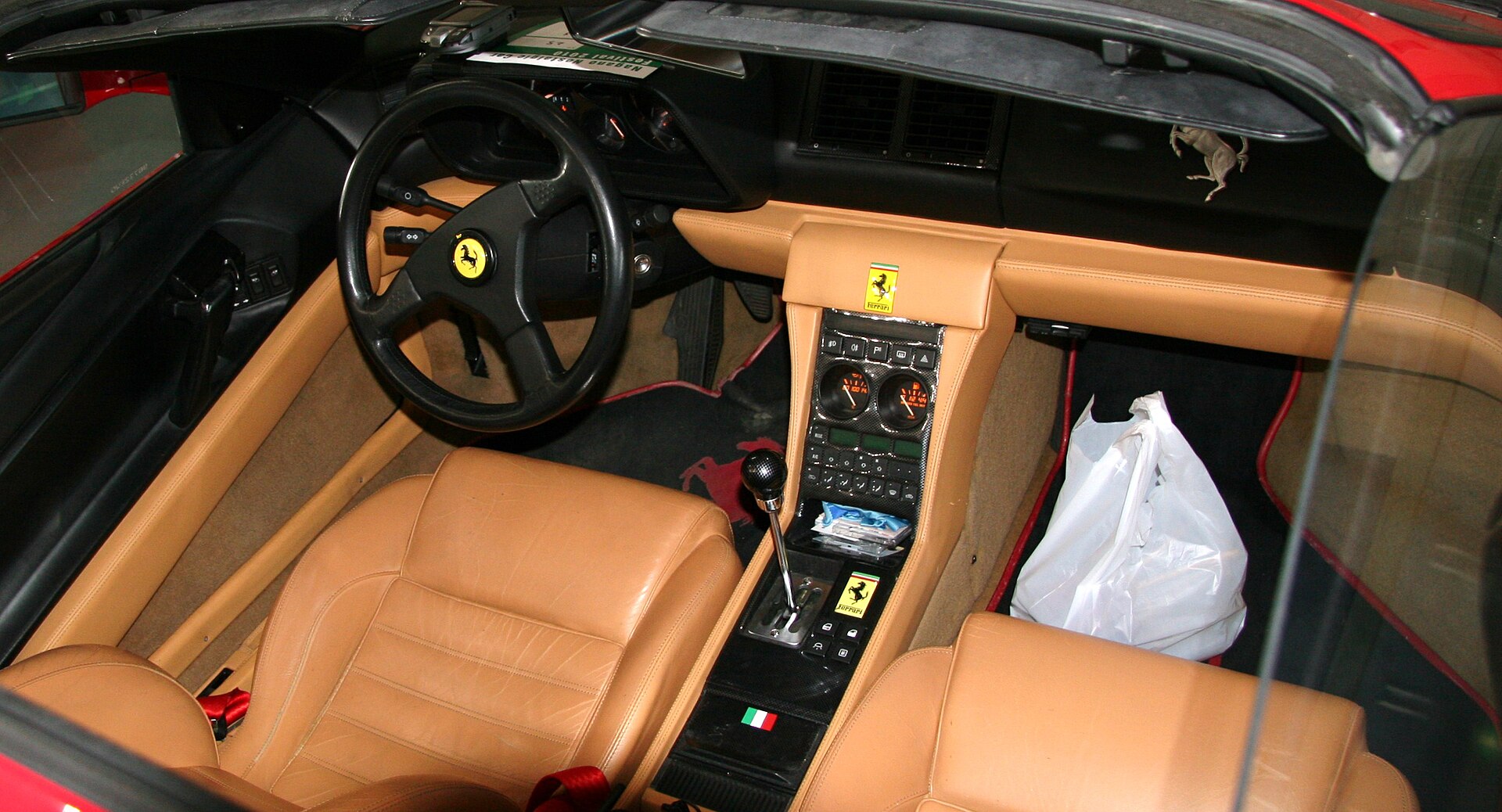
The five-speed manual gearbox sits across the car behind the engine. Ferrari had used this layout on the 312T Formula 1 car of the 1970s, and the 348 was the first road Ferrari to use it. Like many Ferrari gearboxes of the period, it was stiff and reluctant when cold.
The rear subframe can be removed to take the engine out for maintenance. From 1993 the cars also received Japanese starter motors and Nippondenso alternators, with the battery moved to the front left wing.

Chassis and performance
The 348 uses a steel platform with a rear sub-frame, independent suspension all round with adjustable ride height, and disc brakes on all four wheels with a dual ABS system. It weighs about 1,500 kg.
| Figure | Value | Source |
|---|---|---|
| 0–100 km/h | 5.4 s | Ferrari, GTB |
| Standing quarter-mile | 14.5 s | Car and Driver, original 348 |
| Top speed | 267 km/h | Car and Driver, original 348 |
| Top speed | over 280 km/h | Ferrari, GTB |
The early cars could oversteer suddenly at the limit, which became the main criticism of the model. Ferrari later revised the rear suspension mounting points and alignment settings to improve the handling.
Variants: Spider, GTB, GTS and Serie Speciale
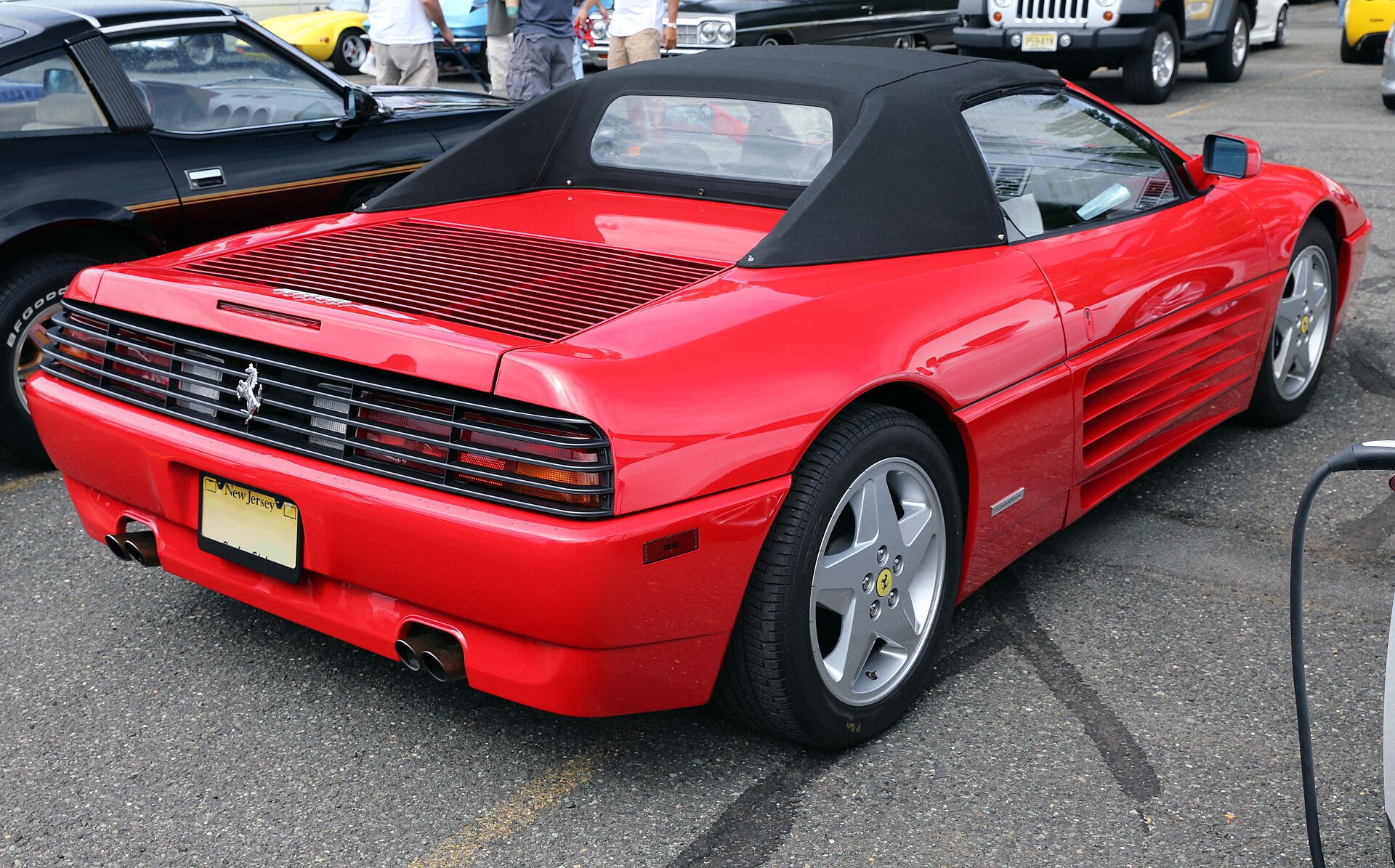
In 1993 the range was widened with the 348 Spider, a full convertible with a rear track widened by 50 mm. In late 1993 the coupé and targa were replaced by the GTB and GTS, with the stronger F119H engine (taller intake plenums, higher fuel pressure and revised cam timing), revised gear ratios, a slightly wider rear track, a body-coloured engine cover and lower skirts and a new grille. Only 252 GTB and 137 GTS were built before the F355 arrived.
For the United States, Ferrari built the 348 Serie Speciale in 1992 and 1993: 100 numbered cars with 232 kW (316 PS) and the wider rear track. Ferrari quoted a standing quarter-mile of 13.75 seconds for it.

Racing versions
The 348 was the car of the Ferrari Challenge one-make series from 1993 to 1995, before the F355 Challenge replaced it. For GT racing, Ferrari built 50 348 GT Competizione homologation cars, eight of them with right-hand drive, with a dry weight of 1,180 kg and a smaller fuel tank. Michelotto prepared racing cars for the Italian GT championship, in which the Jolly Club team won the Campionato Italiano Supercar GT in 1993 and 1994. In 1994 a Michelotto 348 GTC-LM of Team Repsol finished fourth in the GT2 class and eleventh overall at Le Mans.
Two 348-based test cars also played a part in Ferrari history: the M1 and M3 mules used to develop the Enzo, the M3 with a V12 engine. They were sold at auction in 2005 for €190,000 and could not be registered for road use.
Reception and legacy
The 348 received a mixed reception. Road & Track and AutoWeek called it "Best in Show" at its debut, and Road & Track preferred it to the Honda NSX in a 1991 comparison. Later reviewers, including evo in a 2015 retrospective, praised its steering. Critics pointed to its acceleration compared with cheaper rivals, the sound of the engine, heavy controls in traffic and the tricky handling of early cars. Ferrari's own president Luca Cordero di Montezemolo was reported to have disliked it strongly.
Its successor, the F355 of 1994, kept the steel structure but returned to round tail lights and softer shapes and fixed most of the 348's weaknesses. The story of the company is told in our history of Ferrari.

Photo gallery


Ferrari 348 in our rankings
- No. 398 of 859 · Most powerful cars (235 kW · top 47%)
- No. 78 of 127 · Most powerful Italian cars (235 kW · top 63%)
- No. 557 of 912 · Longest-running car nameplates (6 years · top 69%)
- No. 215 of 313 · Most powerful coupes (235 kW · top 70%)
More powerful than 53% of ranked cars in the 1CARS catalog (No. 398 of 859).
Ferrari 348 photos 6
FAQ
What does Ferrari 348 tb mean?
3.4 litres, 8 cylinders, and "t" for the transverse gearbox; "b" stands for berlinetta (coupé) and "s" for spider (targa).
How much power does the Ferrari 348 have?
221 kW (300 PS) in the original tb and ts; 235 kW (320 PS) in the 1993 GTB and GTS.
How many Ferrari 348s were built?
Wikipedia's infobox gives 8,844 cars; it also lists 2,894 tb, 4,228 ts, 252 GTB, 137 GTS and 100 Serie Speciale, without a figure for the Spider.
What replaced the Ferrari 348?
The F355, introduced in 1994.
Data sources
Data checked by an editor against the sources below.