 Ferrari 328
Specs, engines and history
Published Sources (1) Report an error
By Felix Hartmann, Automotive Technology & EV Contributor
- Built
- 1985–1989
- Top power
- 199 kW (271 PS)
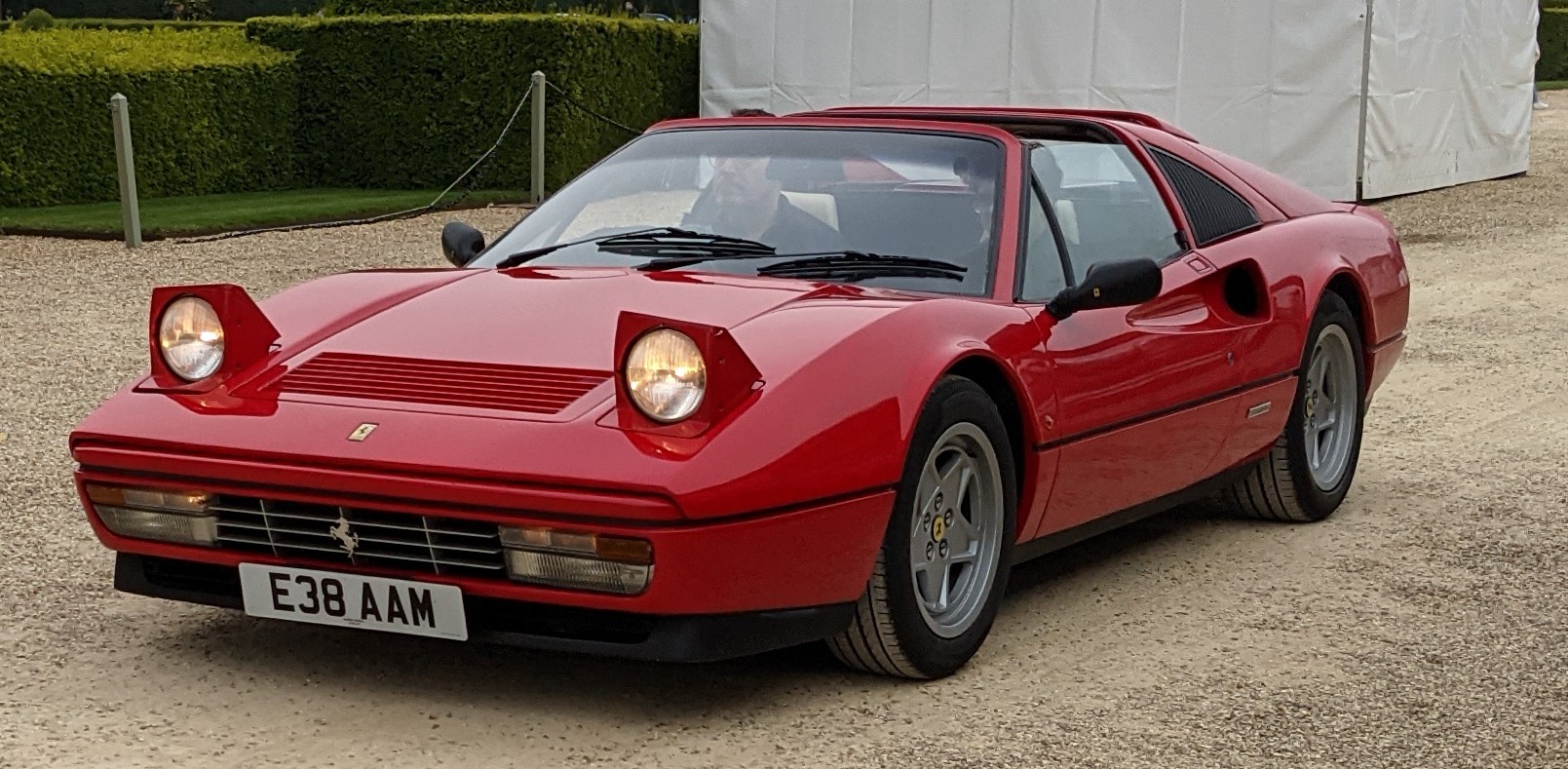
The Ferrari 328 is the mid-engined V8 two-seater that replaced the 308 in 1985 and was built in Maranello until 1989. Offered as the closed 328 GTB and the targa-topped 328 GTS, it was the final development of the transverse V8 berlinetta that Ferrari had introduced ten years earlier. A larger 3.2-litre engine, a softer Pininfarina shape and better build quality made it a success: 7,412 cars were built in four years, most of them GTS targas. For Italy, Ferrari also made two-litre turbocharged versions.
In short
- Shown at the Frankfurt motor show in 1985 together with the Mondial 3.2; built in Maranello until autumn 1989; successor: the 348.
- 3,185 cc 90° V8 with four valves per cylinder and Bosch K-Jetronic injection: 199 kW (270 PS) at 7,000 rpm and 304 Nm.
- 1,344 GTBs and 6,068 GTSs, 7,412 in total; with the 308, the family reached nearly 20,000 cars.
- ABS became available from mid-1988; the 2.0-litre GTB/GTS Turbo for Italy had 187 kW (254 PS).
Ferrari 328 at a glance
| Specification | Ferrari 328 GTB / GTS |
|---|---|
| Production | 1985–1989, Maranello (Italy) |
| Cars built | 7,412 (1,344 GTB, 6,068 GTS) |
| Designer | Leonardo Fioravanti, Pininfarina |
| Body | two-seat berlinetta (GTB) or targa (GTS) |
| Layout | transverse mid-engine, rear-wheel drive |
| Engine | F105CB 3,185 cc 90° V8, 32 valves |
| Power | 199 kW (270 PS) at 7,000 rpm |
| Torque | 304 Nm |
| Gearbox | five-speed manual |
| Kerb weight | 1,263 kg |
| Top speed | 267 km/h (GTB), 262 km/h (GTS) |
| Predecessor / successor | 308 GTB/GTS Quattrovalvole / 348 |
All Ferrari models of the period are in the Ferrari catalogue.
History: from the 308 to the 328
By the mid-1980s the 308 had been in production for ten years. Rather than design a new car, Ferrari updated it. The 328 was presented at the Frankfurt motor show in 1985, alongside the four-seat Mondial 3.2. Ferrari's own description is simple: the 328 is essentially a revised 308 GTB.
Before the final car, Ferrari tried another idea. In the summer of 1984 it built a prototype, chassis 49543, as a soft-top convertible. The open car was dropped, and the 328 kept the two body styles of its predecessor: the GTB berlinetta with a fixed roof and the GTS with a removable roof panel.
The 328 remained in production for four model years, from 1986 to 1989. In autumn 1989 it was replaced by the 348 tb. Ferrari calls the 328 GTB and GTS the final developments of its normally aspirated transverse V8 two-seat series, so the 328 was therefore the last of Ferrari's transverse V8 two-seaters, a line that had begun with the 308 GTB in 1975.
Design: what changed from the 308
Leonardo Fioravanti at Pininfarina, who had drawn the 308, also revised it for the 328. The wedge shape became softer, with a rounder nose and a new tail panel. Bumpers in body colour were integrated into the front and rear panels, as on the Mondial 3.2. The louvres behind the headlight pods were removed, and the front lid got a larger outlet for the radiator air. Even the door catches were new.
Inside, Ferrari changed the seat upholstery and stitching, the door panels and the switches. The instruments, with orange markings on black and back-lighting, came from the 1984 288 GTO, and a Momo steering wheel was fitted. Options included air conditioning, a leather dashboard and headlining, metallic paint, Pirelli P7 tyres and a rear spoiler, which was standard in Japan.
The body was still built mainly of steel, with an aluminium front lid. Wikipedia notes that the use of galvanised steel was an important improvement in corrosion protection over earlier models.
| Dimension | Ferrari 328 |
|---|---|
| Length | 4,255 mm |
| Width | 1,730 mm |
| Height | 1,128 mm |
| Wheelbase | 2,350 mm |
| Kerb weight | 1,263 kg |

Engine and gearbox
The engine, type F105CB, is a development of the four-valve V8 of the 308 Quattrovalvole. The bore grew to 83 mm and the stroke to 73.6 mm, giving 3,185 cc. Fuel injection is still the mechanical Bosch K-Jetronic, now combined with Marelli MED 806 A electronic ignition. Ferrari quotes 199 kW (270 PS) at 7,000 rpm. That is about 63 kW per litre, against about 61 kW per litre for the earlier four-valve 308. Wikipedia gives a torque of 304 Nm.
The engine is mounted across the car behind the cabin. The five-speed all-synchromesh gearbox sits in unit with it, below and behind the sump, and is operated through Ferrari's traditional open gate.
| Figure | 328 GTB | 328 GTS |
|---|---|---|
| Engine | 3,185 cc V8, 32 valves | 3,185 cc V8, 32 valves |
| Power | 199 kW (270 PS) | 199 kW (270 PS) |
| Torque | 304 Nm | 304 Nm |
| Top speed | 267 km/h | 262 km/h |
| Built | 1,344 | 6,068 |

Chassis and brakes
The frame is a tubular steel structure with oval-section tubes. The floor pan combines steel with a fibreglass sandwich. Suspension is independent all round, with unequal-length double wishbones, coil springs, Koni telescopic dampers and anti-roll bars at both ends. The brakes are large ventilated discs with twin-piston calipers and a dual hydraulic circuit. Steering is by unassisted rack and pinion, with 3.25 turns from lock to lock.
ABS and the 1988 update
The only major mechanical change came in 1988. Ferrari introduced anti-lock brakes, which needed a new suspension geometry with negative steering offset; this also reduced squat under acceleration and dive under braking. From chassis 76626, built in February 1988, the cars received the revised suspension and new 16-inch wheels with a convex centre instead of the earlier flat "star" design, whether or not ABS was fitted.
In Europe ABS was an option on cars from mid-1988 and on all 1989 cars. In the United States, mid-1988 cars had no ABS, but it was standard on all 1989 model-year cars. Late cars also carry small prancing-horse emblems on the door mirrors.

GTB Turbo and GTS Turbo for Italy
In Italy, cars with engines over two litres were taxed at 38 per cent VAT instead of 18 per cent. For this market Ferrari offered the GTB Turbo and GTS Turbo from 1986, successors to the 208 Turbo. Their 1,991 cc V8 (bore 66.8 mm, stroke 71 mm) has a water-cooled IHI turbocharger with 1.05 bar of boost and a Behr air-to-air intercooler on top of the engine. The engineer responsible was Nicola Materazzi.
The turbo engine produces 187 kW (254 PS) at 6,500 rpm and 328 Nm at 4,100 rpm - more torque than the 3.2-litre car. Ferrari claimed 0–100 km/h in 6.3 seconds and 253 km/h; the Italian magazine Quattroruote measured 6.6 seconds and 251 km/h in June 1986. The Turbo models can be recognised by NACA air intakes behind the rear wheel arches, five vents in the rear bumper, a black roof spoiler and a boost gauge inside. In total 1,136 were built: 308 GTB Turbos and 828 GTS Turbos.
| Figure | 328 (3.2) | GTB/GTS Turbo (2.0) |
|---|---|---|
| Displacement | 3,185 cc | 1,991 cc |
| Power | 199 kW (270 PS) | 187 kW (254 PS) |
| Torque | 304 Nm | 328 Nm |
| Top speed | 262–267 km/h | 253 km/h (claimed) |
Legacy and collectors
The 328 brought the transverse V8 Ferrari to its most mature form. It kept the shape and layout of the 308 but added a larger engine, improved corrosion protection and, at the end, ABS. Its production of 7,412 cars in four years shows how popular the formula had become; together the 308 and 328 reached nearly 20,000 cars. The GTS outsold the GTB by more than four to one.
For collectors, the main differences are the body style (the rarer GTB or the more common GTS), the market version and the year: cars from February 1988 have the revised suspension and convex wheels, and many late cars have ABS. The Italian-market Turbo models form a separate, small group. More about the company is in our history of Ferrari.
Photo gallery

Ferrari 328 in our rankings
- No. 15 of 59 · Most powerful cars of the 1980s (199 kW · top 29%)
- No. 485 of 859 · Most powerful cars (199 kW · top 57%)
- No. 88 of 127 · Most powerful Italian cars (199 kW · top 70%)
- No. 247 of 313 · Most powerful coupes (199 kW · top 79%)
- No. 713 of 912 · Longest-running car nameplates (4 years · top 83%)
More powerful than 71% of ranked cars of the 1980s in the 1CARS catalog (No. 15 of 59).
FAQ
How much power does the Ferrari 328 have?
The 3.2-litre V8 produces 199 kW (270 PS) at 7,000 rpm and 304 Nm. The Italian-market 2.0-litre Turbo has 187 kW (254 PS) and 328 Nm.
How many Ferrari 328s were built?
7,412: 1,344 GTB berlinettas and 6,068 GTS targas, built between 1985 and 1989.
What is the difference between the 328 and the 308?
The 328 has a larger 3.2-litre engine, a softer Pininfarina body with integrated bumpers, a revised interior, better corrosion protection and, from 1988, optional ABS.
What replaced the Ferrari 328?
The Ferrari 348, introduced in autumn 1989.
What is the Ferrari GTB Turbo?
It is the two-litre, turbocharged version of the 328 made for Italy, where larger engines were taxed more heavily. Its 1,991 cc V8 with an IHI turbocharger and intercooler produces 187 kW (254 PS); 1,136 GTB and GTS Turbos were built from 1986 to 1989.
Data sources
Data checked by an editor against the sources below.