 Ferrari 288 GTO
Specs, engines and history
Published Sources (1) Report an error
By Felix Hartmann, Automotive Technology & EV Contributor
- Built
- 1984–1987
- Top power
- 294 kW (400 PS)
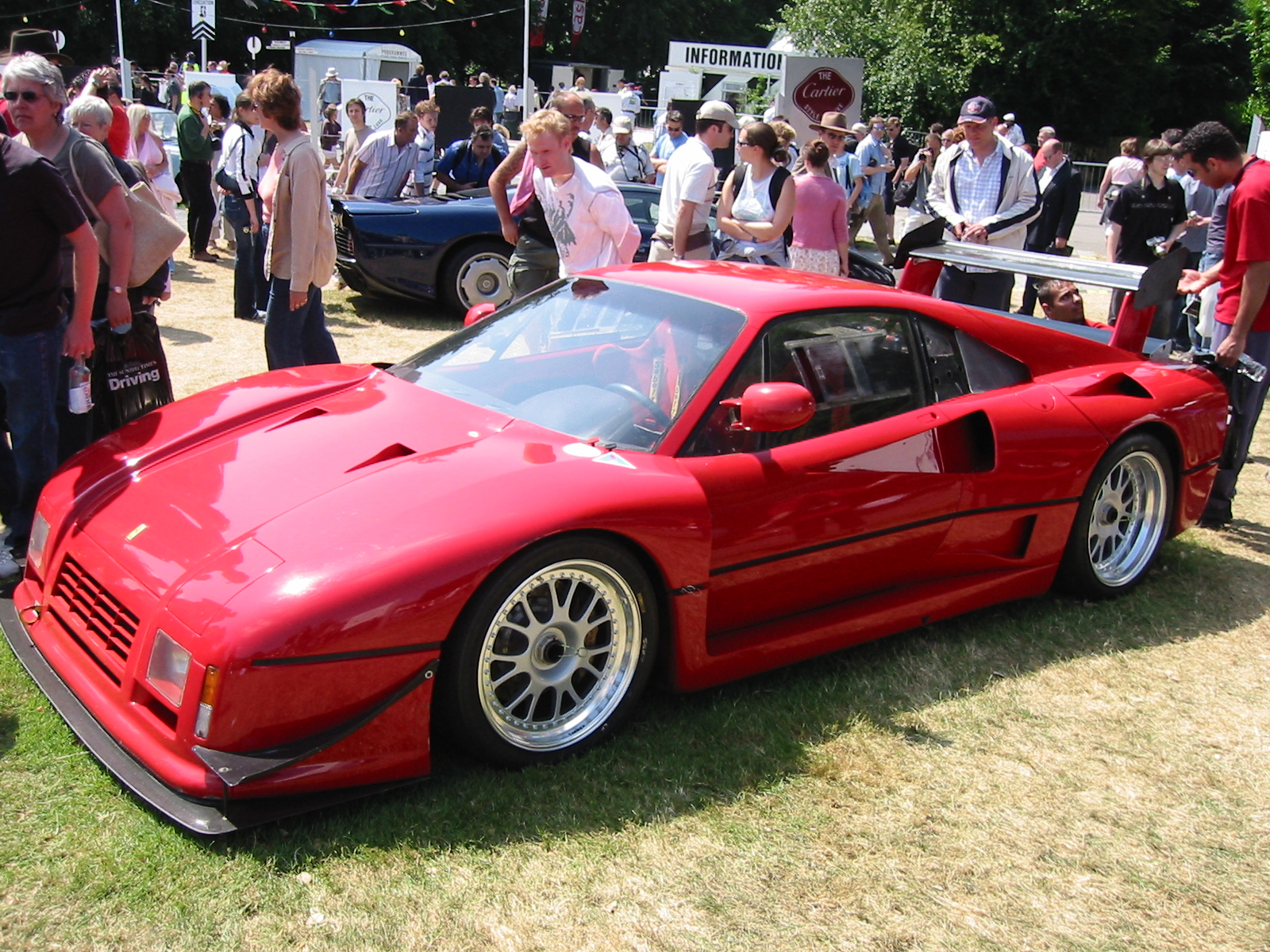
The Ferrari 288 GTO - officially just the Ferrari GTO - is the twin-turbocharged, mid-engined V8 berlinetta that Ferrari built from 1984 to 1987 to qualify for the FIA's Group B racing category. Only 272 were made. Although it shared its basic shape with the 308 GTB, almost everything under the skin was new, and the car is often seen as the first of Ferrari's limited-production flagships, the line that continued with the F40, F50, Enzo and LaFerrari.
In short
- 272 cars built in Maranello between 1984 and 1987; internal type F114, designed by Leonardo Fioravanti at Pininfarina, engineering led by Nicola Materazzi.
- 2,855 cc twin-turbo V8 mounted lengthwise: 294 kW (400 PS) at 7,000 rpm and 496 Nm at 3,800 rpm, five-speed manual gearbox.
- Dry weight about 1,160 kg thanks to glass-fibre, Kevlar and carbon-fibre body parts.
- Ferrari claimed 304 km/h; Road & Track measured 288 km/h. Six GTO Evoluzione cars followed in 1986 and led directly to the F40.
At a glance: Ferrari 288 GTO
| Specification | Ferrari 288 GTO |
|---|---|
| Production | 1984–1987, Maranello (Italy) |
| Cars built | 272 (plus six GTO Evoluzione) |
| Body | two-seat berlinetta, mid-engine, rear-wheel drive |
| Engine | F114 B 000, 2,855 cc V8, two IHI turbochargers, intercoolers |
| Power | 294 kW (400 PS) at 7,000 rpm |
| Torque | 496 Nm at 3,800 rpm |
| Gearbox | five-speed manual |
| Dry weight | 1,160 kg |
| Dimensions | 4,290 mm long, 1,910 mm wide, 1,120 mm high, 2,450 mm wheelbase |
| Predecessor / successor | 250 GTO (in name) / F40 |
The 288 GTO is part of the long line of Maranello sports cars in the Ferrari catalogue. The background of the company, from Enzo Ferrari's racing team to the modern supercars, is told in our history of Ferrari.
Why Ferrari built the GTO
In the early 1980s Ferrari's road-car business was under pressure. In 1983 Enzo Ferrari himself noted falling sales and what he called the "excessive gentrification" of the range. The company had just built the 208 Turbo for the Italian market and was considering a three-litre turbocharged road car with about 246 kW (330 bhp).
Nicola Materazzi, head of powertrain for the racing department (Gestione Sportiva), argued that much more was possible: he said about 298 kW (400 bhp) could be taken reliably from 3,000 cc. He proposed a return to GT-class racing, and the road-car management - General Director Eugenio Alzati, working under Fiat's managing director Vittorio Ghidella - approved the project on one condition: the work had to be done outside the normal Monday-to-Friday schedule.
The target became Group B, the FIA category for production-based racing and rally cars introduced in 1982. Homologation required 200 road cars. Wikipedia notes that the GTO was not originally conceived for Group B, contrary to some press reports of the time, but the regulations shaped the final car: Ferrari built the 200 cars required by the rules and then 70 more, plus a few extras, for a total of 272.
The name revived one of the most famous titles in Ferrari's history. The letter "O" stands for omologata - homologated - and the three letters had last been used on the 250 GTO of the early 1960s. The "288" that most people add stands for 2.8 litres and eight cylinders.
Design and construction
The body was designed by Leonardo Fioravanti at Pininfarina, and some of its themes had appeared on a 308 GTB design study shown at the 1977 Geneva motor show. At first glance the GTO looks like a 308, but every panel is different. The wheel arches are much wider to cover larger Goodyear tyres, the front and rear spoilers are bigger, four driving lights sit beside the grille, the mirrors are mounted on slim stalks in a "flag" style, and slanted vents behind the rear wheels cool the brakes - a detail borrowed from the 250 GTO. The rear spoiler is a clear reference to the same car.
The wheelbase is 2,450 mm, longer than the 308's, because the engine is mounted lengthwise instead of across the car. Composite materials were used extensively, which was rare for a road car in 1984. According to Wikipedia, the main body panels are moulded glass fibre, the bonnet is Kevlar and the roof combines Kevlar and carbon fibre, with steel used only for the doors. The RM Sotheby's catalogue describes the doors, deck lid and bonnet as lightweight aluminium; sources differ on these details, but they agree that most of the body is composite.
Every road car and every Evoluzione was built with left-hand drive and painted Rosso Corsa. The only exception known is chassis 55671, which Pininfarina converted to right-hand drive and repainted dark grey with a red stripe in 1990 for the royal family of Brunei.

Engine and performance
The engine, type F114 B 000, is a V8 of 2,855 cc. Its capacity was reduced by 1 mm of bore compared with the 308 engine for a reason found in the rule book: the FIA multiplied the displacement of turbocharged engines by 1.4, and 2,855 cc × 1.4 gives 3,997 cc - just under the four-litre limit of the class. Two water-cooled IHI turbochargers from Japan, Behr air-to-air intercoolers and Weber-Marelli fuel injection complete the package. The compression ratio is 7.6:1.
The engine sits lengthwise behind the cabin, where the 308 had its boot, and drives the rear wheels through a five-speed manual gearbox.
| Version | Power | Torque | Weight | Top speed |
|---|---|---|---|---|
| 288 GTO (1984) | 294 kW (400 PS) at 7,000 rpm | 496 Nm at 3,800 rpm | 1,160 kg dry | 304 km/h (Ferrari); 288 km/h (Road & Track) |
| GTO Evoluzione (1986) | about 485 kW (659 PS) at 7,800 rpm | not published | about 940 kg | reported 362 km/h |
When it appeared the GTO was described as the fastest road car yet produced. Road & Track's road test recorded a standing quarter mile in 14.1 seconds at 182 km/h. Ferrari claimed a top speed of 304 km/h; the magazine's measured figure was 288 km/h.
The wheels are 16-inch Speedline rims, 8 inches wide at the front with 225/55 VR16 tyres and 10 inches wide at the rear with 255/50 VR16 tyres (265/50 on cars converted for the United States).


GTO Evoluzione
Ferrari planned to race the GTO, and in 1986 it developed the GTO Evoluzione. The rules required 20 cars a year for an evolution model, but only six were built - five cars and one prototype. The Evoluzione had a reworked 2.9-litre twin-turbo V8 with about 485 kW (659 PS) at 7,800 rpm, weighed about 940 kg, and was reported to reach 362 km/h. Its body had front canards, many NACA ducts and a large carbon-fibre rear wing.
None of these cars ever raced. Group B circuit racing was suspended at the end of 1986. The Evoluzione's work did not go to waste, however: its styling and mechanical elements influenced the F40 of 1987, the next limited-production Ferrari.
Owners and reputation
Ferrari did not sell the GTO officially in the United States, because certification would have been too expensive for such a small run. Some European cars were later modified individually by grey importers for American rules.
Enzo Ferrari offered cars to his Formula 1 drivers: Michele Alboreto (chassis 56195), Keke Rosberg (56653) and Niki Lauda (58329). Lauda received the last of the 272 cars as a gift from Enzo Ferrari himself. Alboreto described the GTO as "cattiva" - angry - and praised the low centre of gravity of its engine compared with the Testarossa.
In 2004 Sports Car International placed the GTO second in its ranking of the top sports cars of the 1980s, behind the Porsche 959. It marks the point where Ferrari began its series of rare, technically advanced flagship cars - a line that continued much later with the Ferrari Enzo.
Photo gallery


Ferrari 288 GTO in our rankings
- No. 6 of 59 · Most powerful cars of the 1980s (294 kW)
- No. 293 of 859 · Most powerful cars (294 kW · top 35%)
- No. 58 of 127 · Most powerful Italian cars (294 kW · top 48%)
- No. 159 of 313 · Most powerful coupes (294 kW · top 52%)
- No. 774 of 912 · Longest-running car nameplates (3 years · top 89%)
More powerful than 89% of ranked cars of the 1980s in the 1CARS catalog (No. 6 of 59).
FAQ
How many Ferrari 288 GTOs were built?
272 road cars were built between 1984 and 1987 - 70 more than the 200 required for Group B homologation. Six GTO Evoluzione cars were built in addition.
What engine does the 288 GTO have?
A 2,855 cc twin-turbo V8 with IHI turbochargers, mounted lengthwise behind the cabin. It produces 294 kW (400 PS) at 7,000 rpm and 496 Nm at 3,800 rpm.
What does GTO mean?
Gran Turismo with the "O" for omologata, meaning a GT car homologated for racing. Ferrari had used the name before on the 250 GTO.
Did the 288 GTO ever race?
No. It was built for Group B, but circuit racing for that category was suspended at the end of 1986, before the GTO or the Evoluzione could compete.
How fast is the Ferrari 288 GTO?
Ferrari claimed 304 km/h. Road & Track measured 288 km/h and a standing quarter mile in 14.1 seconds.
Data sources
Data checked by an editor against the sources below.