 Aston Martin V12 Zagato
Specs, engines and history
Published Sources (1) Report an error
By Felix Hartmann, Automotive Technology & EV Contributor
- Built
- 2012–2013
- Top power
- 380 kW (517 PS)
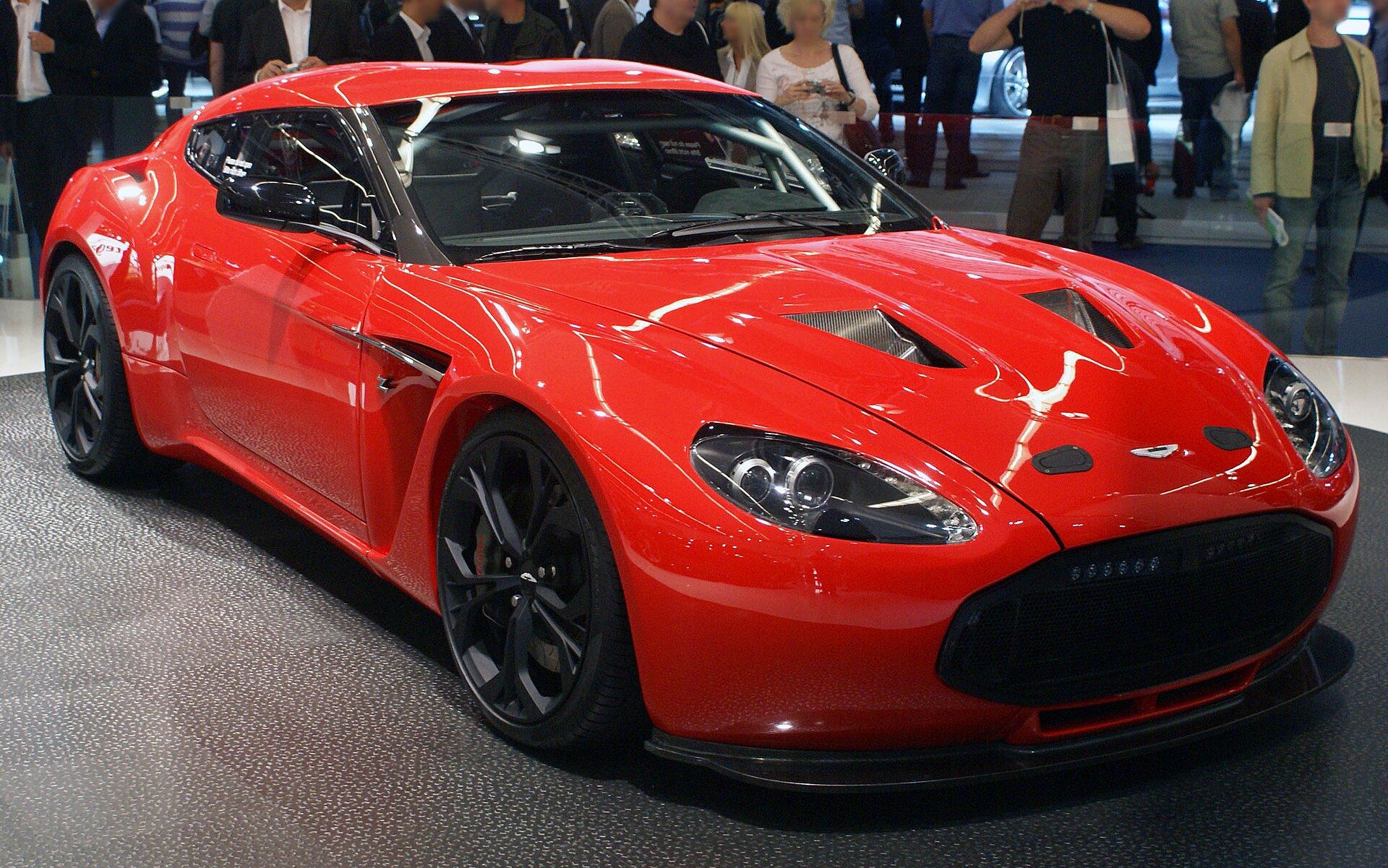
The Aston Martin V12 Zagato is a limited-production coupé that Aston Martin and the Italian coachbuilder Zagato created to celebrate fifty years of working together. Shown first as a concept in May 2011 and raced at the Nürburgring the same summer, it went into production at Gaydon in 2012 on the basis of the V12 Vantage. Aston Martin planned 150 road cars, but only 61 were built.
In short
- Concept shown at the Concorso d'Eleganza Villa d'Este on 21 May 2011, where it won the design award for concept cars and prototypes; road cars built 2012–2013.
- Based on the V12 Vantage: AM11 5,935 cc V12 with 380 kW (517 PS) and 570 Nm, six-speed manual gearbox, weight 1,450 kg.
- Hand-made aluminium body on a bonded aluminium chassis; designed by Marek Reichman, chassis engineering led by Chris Porritt.
- Two racing cars, "Zig" and "Zag", finished fifth and sixth in their class at the 2011 Nürburgring 24 Hours.
At a glance: Aston Martin V12 Zagato
| Specification | Aston Martin V12 Zagato |
|---|---|
| Production | 2012–2013, Gaydon (United Kingdom) |
| Cars built | 61 (150 planned) |
| Body | two-seat coupé, hand-made aluminium panels |
| Base | Aston Martin V12 Vantage |
| Engine | AM11 5,935 cc V12 |
| Power | 380 kW (517 PS) |
| Torque | 570 Nm |
| Gearbox | six-speed manual |
| Weight | 1,450 kg |
| Dimensions | 4,572 mm long, 2,000 mm wide, 1,300 mm high, 2,642 mm wheelbase |
The V12 Zagato is built on the Aston Martin Vantage V12. Earlier collaborations between the two companies go back to the DB4 GT Zagato; the full range is in the Aston Martin catalogue.
Fifty years with Zagato
The partnership between Aston Martin and Zagato began with the DB4 GT Zagato. To mark fifty years of that collaboration, Aston Martin presented the V12 Zagato at the Concorso d'Eleganza Villa d'Este on Lake Como on 21 May 2011. It won the competition's Design Award for Concept Cars and Prototypes - the same award the One-77 had received in 2009.
The car was designed by Aston Martin's Marek Reichman, and the chassis engineering was led by Chris Porritt. Aston Martin first developed a racing version, called the Corsa, in 2011, and the road car, the Stradale, followed in 2012. The two can be told apart by small details: the Stradale has no black quick-release fasteners on the bonnet and boot, and its exhaust pipes are spaced further apart.
Design and construction
Under the skin the V12 Zagato uses the bonded aluminium chassis of the V12 Vantage, with a steel roll cage. The front of the car resembles the V12 Vantage, while the roof and the rear are new. The body panels are aluminium and were made by hand.
The car is 4,572 mm long, 2,000 mm wide and 1,300 mm high, on a wheelbase of 2,642 mm, and weighs 1,450 kg.

Engine and performance
The engine is the AM11, a 5,935 cc V12 with a compression ratio of 10.9:1, mounted behind the front axle. It produces 380 kW (517 PS) and 570 Nm and drives the rear wheels through a six-speed manual gearbox.
| Version | Power | Torque | Gearbox |
|---|---|---|---|
| V12 Zagato (2012) | 380 kW (517 PS) | 570 Nm | six-speed manual |
| Heritage Twins (2020) | about 447 kW (600 bhp) | not stated | seven-speed manual or automatic |
The suspension uses double wishbones front and rear, retuned compared with the V12 Vantage, with fully adjustable Multimatic DSSV dampers. The racing cars had an endurance fuel tank of up to 120 litres and ran on Yokohama tyres.

Racing at the Nürburgring
The V12 Zagato raced before it went on sale. Its first race was a round of the VLN endurance series at the Nürburgring on 28 May 2011. At the four-hour VLN race on 11 June two cars finished second and third in the SP8 class, 15th and 39th overall in a field of about 150 cars.
At the 2011 Nürburgring 24 Hours, held on 25–26 June, the two cars - the green "Zig" and the red "Zag" - finished fifth and sixth in class SP8. Among the drivers were Ulrich Bez, designer Marek Reichman and engineer Chris Porritt. "Zag" also appeared at the Goodwood Festival of Speed in July 2011, driven by Reichman. On 17 October 2011 "Zig" took part in the VLN9 race together with a Lexus LFA, with Aston Martin and Toyota drivers swapping cars. In a later 24-hour race, "Zig", repainted in Gulf blue and black, finished 26th overall and second in its class, and at the Aston Martin Le Mans Festival it climbed from tenth to fourth place during its first stint.

Production
Aston Martin planned a run of 150 road cars, built at Gaydon, with deliveries starting in the second half of 2012. Orders fell short of expectations, and only 61 were made.
Legacy and the Heritage Twins
In April 2020 Aston Martin and the specialist R-Reforged announced a new series based on the car: 19 pairs of a coupé and a convertible, 38 cars in total. They have centre-lock 19-inch wheels, a deployable rear wing and an engine with about 447 kW (600 bhp), with a seven-speed manual or an automatic gearbox. For the wider history of the brand, see our Aston Martin history.

Photo gallery


Aston Martin V12 Zagato in our rankings
- No. 190 of 859 · Most powerful cars (380 kW · top 23%)
- No. 75 of 312 · Most powerful cars of the 2010s (380 kW · top 25%)
- No. 114 of 313 · Most powerful coupes (380 kW · top 37%)
- No. 48 of 109 · Most powerful British cars (380 kW · top 45%)
- No. 892 of 912 · Longest-running car nameplates (1 year)
More powerful than 77% of ranked cars in the 1CARS catalog (No. 190 of 859).
FAQ
How many Aston Martin V12 Zagatos were built?
61 road cars, out of 150 planned, built at Gaydon in 2012 and 2013, because orders fell short of expectations.
What is the V12 Zagato based on?
The V12 Vantage. It uses its bonded aluminium chassis and 5.9-litre V12 with 380 kW (517 PS) and 570 Nm.
Did the V12 Zagato race?
Yes. Two cars, "Zig" and "Zag", finished fifth and sixth in class SP8 at the 2011 Nürburgring 24 Hours.
Why was the V12 Zagato built?
To celebrate fifty years of collaboration between Aston Martin and Zagato, which began with the DB4 GT Zagato of the early 1960s.
What are the V12 Zagato Heritage Twins?
A 2020 series of 19 coupé and convertible pairs, 38 cars in total, with about 447 kW (600 bhp).
Data sources
Data checked by an editor against the sources below.