 Aston Martin DB4
Specs, engines and history
Published Sources (1) Report an error
By Felix Hartmann, Automotive Technology & EV Contributor
- Built
- 1958–1963
- Top power
- 225 kW (306 PS)
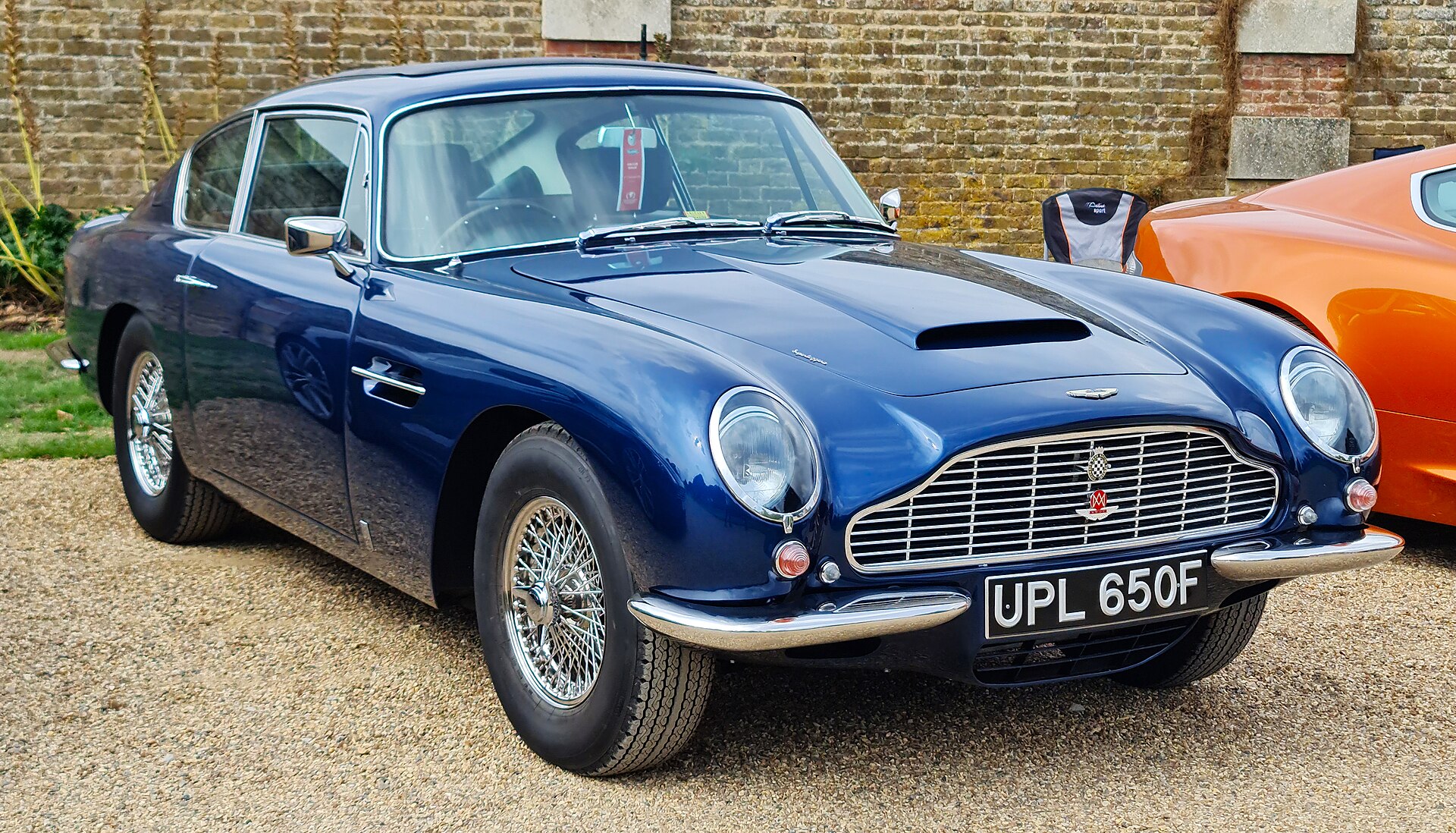
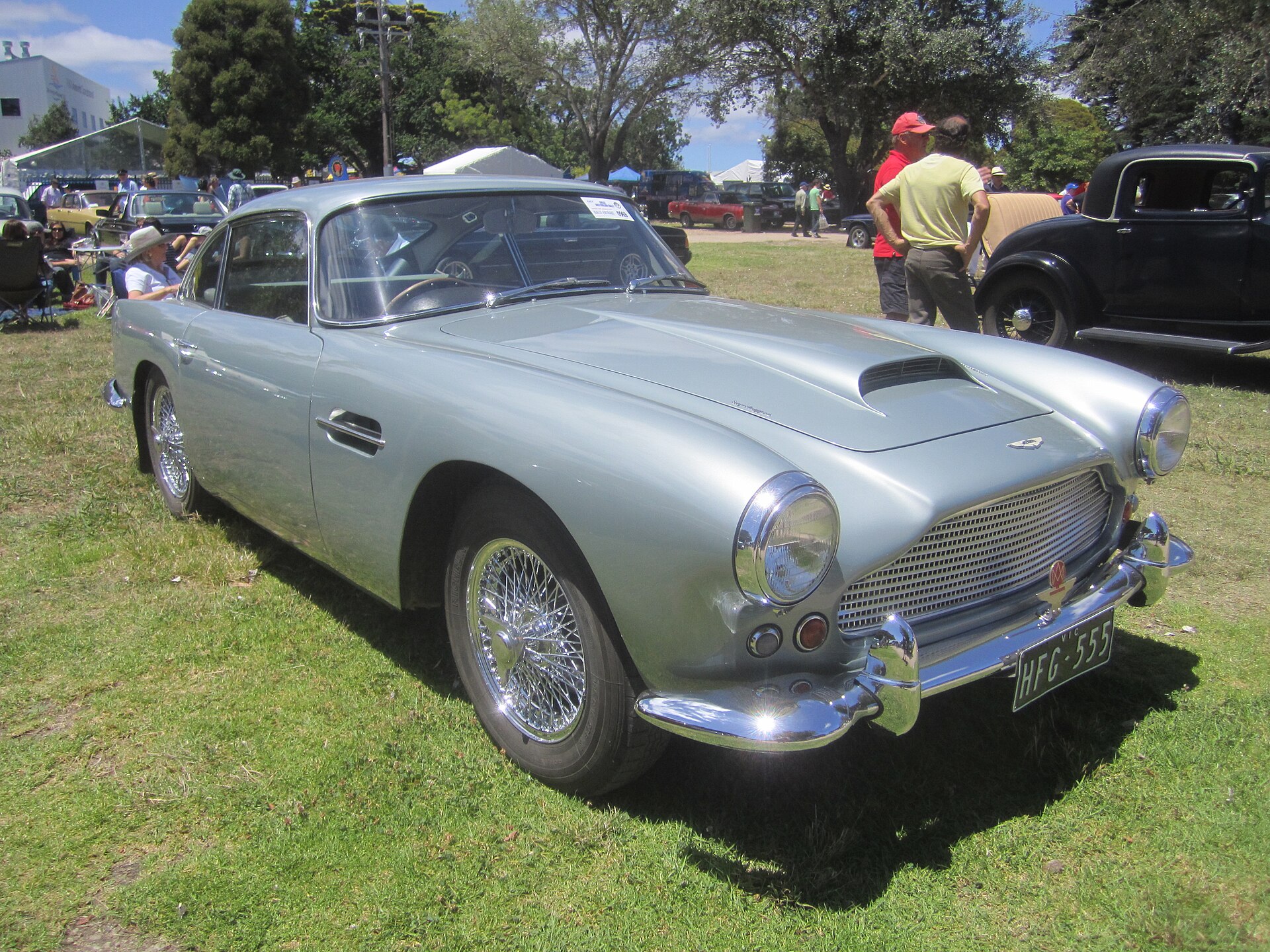
The Aston Martin DB4 is the grand tourer that Aston Martin built at Newport Pagnell from 1958 to 1963. Unveiled at the 1958 London Motor Show, it combined an Italian body by Carrozzeria Touring with a new aluminium straight-six designed by Tadek Marek, and its styling caused a sensation. Including the lightweight DB4 GT and the 19 DB4 GT Zagatos, 1,204 cars were built. The DB5 that followed was a separate design rather than a development of the DB4.
In short
- Built 1958–1963 at Newport Pagnell, Buckinghamshire - the first Aston Martin made there; 1,204 cars (1,110 DB4, 75 DB4 GT, 19 DB4 GT Zagato).
- 3,670 cc twin-overhead-camshaft straight-six in aluminium alloy: 179 kW (240 bhp) at 5,000 rpm with twin SU carburettors.
- Superleggera tube-frame construction by Touring; kerb weight 1,308 kg.
- Five series of saloon, a convertible from 1961, the Vantage engine from 1961 and the DB4 GT with 225 kW (302 bhp).
Aston Martin DB4 at a glance
| Specification | Aston Martin DB4 |
|---|---|
| Production | 1958–1963, Newport Pagnell (England) |
| Cars built | 1,204 (1,110 DB4, 75 DB4 GT, 19 DB4 GT Zagato) |
| Body | 2+2 coupé, two-seat coupé (GT), 2+2 convertible; front engine, rear-wheel drive |
| Engine | 3,670 cc straight-six, DOHC, aluminium block and head |
| Power | 179 kW (240 bhp) at 5,000 rpm; Vantage 198 kW (266 bhp); GT 225 kW (302 bhp) |
| Suspension | front double wishbones and coil springs; rear live axle with coil springs and Watt's linkage |
| Brakes | servo-assisted discs on all four wheels |
| Dimensions | 4,496 × 1,676 × 1,334 mm, wheelbase 2,489 mm |
| Kerb weight | 1,308 kg |
| Predecessor / successor | DB Mark III / DB5 |
The DB4 is part of the DB line of Aston Martin grand tourers named after David Brown; all models are in the Aston Martin catalogue. Its predecessors are covered in our articles on the DB2/4 Touring Spyder and the DB3S.
History and development
The letters DB stand for Sir David Brown, who built up the company from 1947. The DB4 was a clean break. It was not developed from the DB Mark III it replaced, and it used a new body, a new chassis and a new engine. It was also the first Aston Martin assembled at the Newport Pagnell works in Buckinghamshire.
The car was unveiled at the London Motor Show in 1958 and immediately drew attention for its looks. Production ran in five series until 1963. Alongside the standard saloon, Aston Martin added the lightweight DB4 GT in September 1959, the Vantage engine and a convertible in 1961. The DB4's design also became the basis for the DB4 GT Zagato and for the four-door Lagonda Rapide.
When The Motor magazine tested a DB4 in 1960, it recorded a top speed of 224 km/h and fuel consumption of 16.0 l/100 km.
Design: Touring Superleggera body
The body was designed by the Italian coachbuilder Carrozzeria Touring; the design is credited to Federico Formenti. Touring also supplied its lightweight Superleggera ("super light") construction, in which the body is built on a framework of small tubes.
The DB4 was offered as a 2+2 coupé with small rear seats; the GT was usually a two-seater.

Engine and chassis
The engine was designed by Tadek Marek, a Polish-born engineer and former racing driver, and developed from the earlier Lagonda straight-six. It is a 3,670 cc inline six with twin overhead camshafts, and both the cylinder block and the head are cast in R.R.50 aluminium alloy. With two SU carburettors it produces 179 kW (240 bhp) at 5,000 rpm and 325 Nm (240 lb-ft) at 4,200 rpm. Early cars had a tendency to overheat.
The front suspension is independent, with ball-jointed wishbones and coil springs, and the steering uses a rack and pinion. At the rear, a live axle with coil springs is located by a Watt's linkage. All four wheels have servo-assisted disc brakes; the early 292 mm Dunlop discs were later replaced by Girling units. Three final-drive ratios were offered: 3.54:1 as standard in Britain and Europe, 3.77:1 usually for the United States and 3.31:1 as an option for a higher top speed.
| Version | Years | Engine | Power | Top speed |
|---|---|---|---|---|
| DB4 (SU carburettors) | 1958–1963 | 3,670 cc | 179 kW (240 bhp) at 5,000 rpm | 224 km/h (The Motor, 1960) |
| DB4 Vantage | 1961–1963 | 3,670 cc, three SU carburettors | 198 kW (266 bhp) | - |
| DB4 GT | from 1959 | 3,670 or 3,750 cc, twin spark, three Webers | 225 kW (302 bhp) | 246 km/h |
| DB4 GT Zagato | - | as DB4 GT | as DB4 GT | - |
Specifications and production timeline
| Parameter | Metric | Imperial |
|---|---|---|
| Engine capacity | 3,670 cc | 224 cu in |
| Power (SU carburettors) | 179 kW at 5,000 rpm | 240 bhp |
| Torque | 325 Nm at 4,200 rpm | 240 lb-ft |
| Wheelbase | 2,489 mm | 98 in |
| Length | 4,496 mm | 177 in |
| Width | 1,676 mm | 66 in |
| Height | 1,334 mm | 52.5 in |
| Kerb weight | 1,308 kg | 2,883 lb |
| Top speed (The Motor, 1960) | 224 km/h | 139.3 mph |
| Year | Event |
|---|---|
| 1958 | DB4 unveiled at the London Motor Show; production starts at Newport Pagnell |
| 1959 | DB4 GT introduced in September |
| 1961 | Series IV with barred grille, Vantage engine and convertible (October) |
| 1962 | Series V from September with longer, taller body |
| 1963 | End of production after 1,204 cars of all types |
| 2016 | Aston Martin announces 25 DB4 GT continuation cars |
Series I to V, Vantage and convertible
Aston Martin built the DB4 in five series, each with small changes:
- Series II added frames around the side windows.
- Series III received tail lights made of three small lamps on a chrome plate instead of single-piece units.
- Series IV replaced the egg-crate grille with a barred grille.
- Series V (from September 1962) had recessed tail lights, a taller and longer body for more interior space, smaller wheels to keep the overall height the same and the more aerodynamic nose of the Vantage and GT.
DB4 Vantage. Introduced with the Series IV in 1961, the Vantage engine had three SU carburettors and special cylinder heads for 198 kW (266 bhp). Most Vantages also had the GT's faired-in headlights. 136 saloons and 32 convertibles were built with this engine. In addition, 14 standard-bodied DB4s were fitted with the GT engine and are often called "Vantage GT".
Convertible. From October 1961 Aston Martin offered a convertible with lines similar to the saloon; a factory hard-top was available but is extremely rare. 70 convertibles were built - 30 Series IV and 40 Series V - and 32 of them had the Vantage engine. The standard car reached about 219 km/h.

DB4 GT and DB4 GT Zagato
The DB4 GT appeared in September 1959 as a lighter, faster version. It has faired-in headlights, a thinner aluminium skin and a shorter wheelbase, so many cars have no rear seats. The engine - 3,670 or 3,750 cc - gained two spark plugs per cylinder, two distributors, three twin-choke Weber carburettors and a 9.0:1 compression ratio, for 225 kW (302 bhp). The DB4 GT could reach 246 km/h, and Wikipedia describes it as the fastest road-legal production car of its time. 75 were built.
Nineteen DB4 GTs were rebodied by Zagato in Italy. The DB4 GT Zagato has a plain oval grille, Borrani wire wheels and a rounded tail without the GT's small fins. Bertone also built a single car on the GT chassis, known as the Bertone Jet.
Continuation cars
In 2016 Aston Martin announced 25 new DB4 GTs, built to the specification of the 1959 lightweight cars and intended for track use only. They were built at Newport Pagnell, the original home of the DB4, with deliveries expected from late 2017.

Legacy
The DB4 changed Aston Martin. It brought the Touring Superleggera body, the Marek straight-six and production at Newport Pagnell, and its design was the basis for the DB4 GT Zagato and the Lagonda Rapide saloon. More than half a century later, Aston Martin chose the DB4 GT for its first continuation series. The wider story is in our history of Aston Martin.
Photo gallery


Aston Martin DB4 in our rankings
- No. 414 of 859 · Most powerful cars (225 kW · top 50%)
- No. 221 of 313 · Most powerful coupes (225 kW · top 71%)
- No. 72 of 109 · Most powerful British cars (225 kW · top 71%)
- No. 629 of 912 · Longest-running car nameplates (5 years · top 77%)
More powerful than 50% of ranked cars in the 1CARS catalog (No. 414 of 859).
FAQ
How many Aston Martin DB4s were built?
1,204 in total: 1,110 DB4s (saloons and convertibles), 75 DB4 GTs and 19 DB4 GT Zagatos.
What engine does the DB4 have?
A 3,670 cc twin-cam straight-six designed by Tadek Marek, with an aluminium block and head. With twin SU carburettors it produces 179 kW (240 bhp).
Who designed the DB4?
Carrozzeria Touring in Italy; the design is credited to Federico Formenti. Touring's Superleggera construction was used for the body.
What is the difference between the DB4 and the DB4 GT?
The GT is lighter, has a shorter wheelbase and faired-in headlights, and its twin-spark engine produces 225 kW (302 bhp). Only 75 were built.
What are the DB4 GT continuation cars?
25 track-only DB4 GTs announced by Aston Martin in 2016 and built at Newport Pagnell to the 1959 lightweight specification.
Data sources
Data checked by an editor against the sources below.