 Ferrari 308 GTB/GTS
All generations, specs and history
Published Sources (1) Report an error
By Felix Hartmann, Automotive Technology & EV Contributor
- Built
- 1975–1985
- Generations
- 3
- Top power
- 188 kW (256 PS)
Timeline
308 GTB/GTS generations
Click a generation for its own page
- 308 GTB / GTS 1975–1980 · Coupe · 177–188 kW (241–256 PS)
- 308 GTBi / GTSi 1980–1982 · Coupe · 151–157 kW (205–213 PS)
- 308 Quattrovalvole 1982–1985 · Coupe · 172–177 kW (234–241 PS)
Newest first · 3 generations since 1975
-
1982
-
1980
-
1975
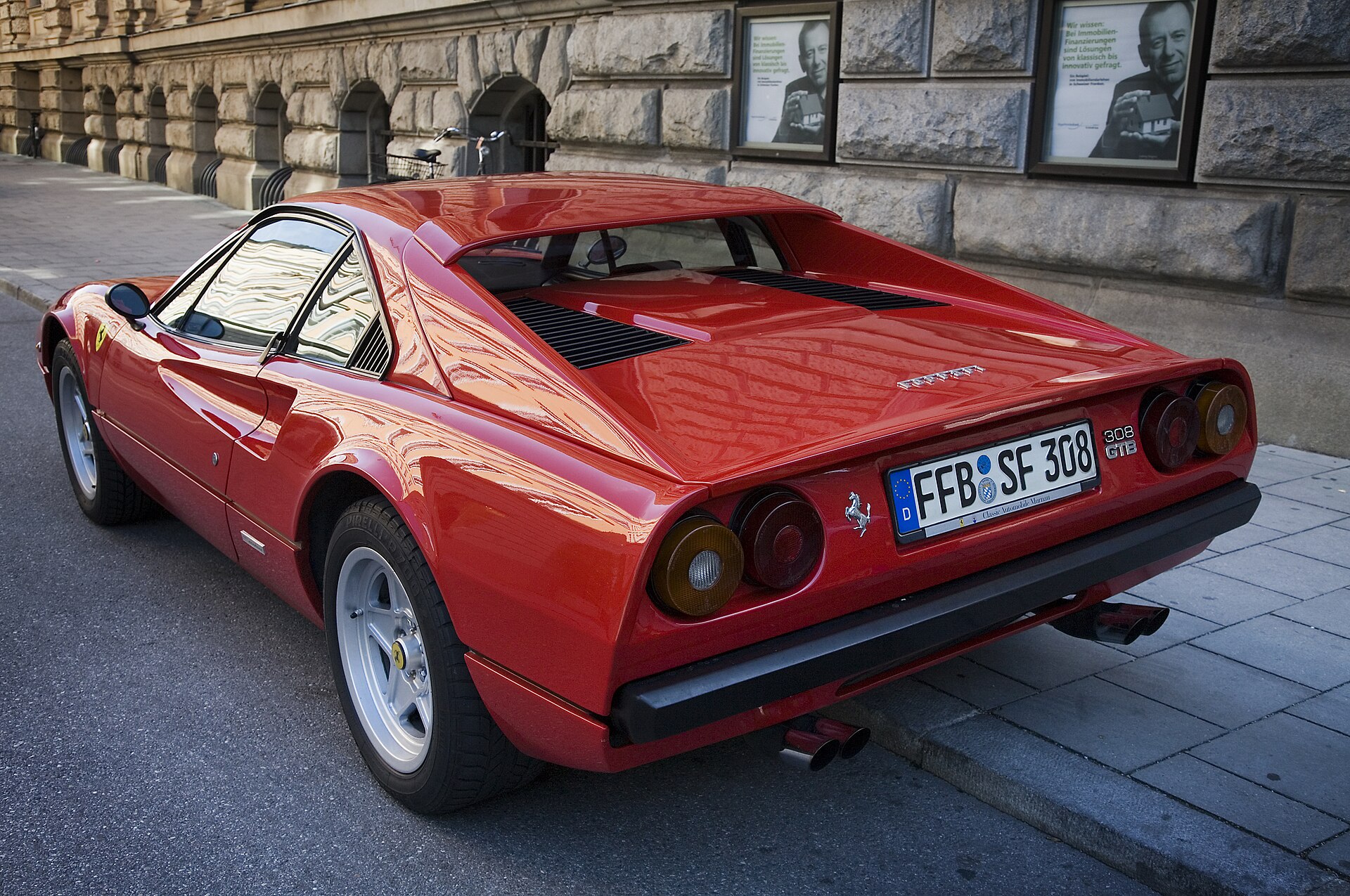


All generations by year: 308 Quattrovalvole (1982–1985) · 308 GTBi / GTSi (1980–1982) · 308 GTB / GTS (1975–1980)
Which one is mine?
Pick the year of first registration to see which generation it is.
- 308 Quattrovalvole 1982–1985
- 308 GTBi / GTSi 1980–1982
- 308 GTB / GTS 1975–1980
The Ferrari 308 GTB is the mid-engined V8 two-seater that Ferrari presented at the Paris Motor Show in 1975 as the successor to the Dino 246. Designed by Leonardo Fioravanti at Pininfarina and built until 1985 as the closed GTB and, from 1977, the targa-top GTS, it became one of the best-selling Ferraris of its time and the basis of a long line of mid-engined V8 models. It is also the car that Thomas Magnum drove for eight seasons in the television series "Magnum, P.I.".
In short
- Built in Maranello from 1975 to 1985; designed by Leonardo Fioravanti (Pininfarina), bodies by Scaglietti; successor: 328 GTB/GTS.
- Transverse 2,927 cc 90° V8 with four Weber carburettors: 188 kW (255 PS) in European form, 177 kW (240 PS) for the USA; fuel injection from 1980, four valves per cylinder from 1982.
- The first production Ferrari with a fibreglass body: 808 GTBs were made in glass-reinforced plastic before steel bodies took over in 1977.
- About 12,000 cars in all 308 GTB/GTS versions, plus two-litre 208 and 208 Turbo models for Italy.
Ferrari 308 GTB/GTS at a glance
| Specification | Ferrari 308 GTB (1975) |
|---|---|
| Production | 1975–1985, Maranello (Italy) |
| Designer | Leonardo Fioravanti, Pininfarina; bodies by Scaglietti |
| Body | two-seat berlinetta (GTB); targa (GTS) from 1977 |
| Layout | transverse mid-engine, rear-wheel drive |
| Engine | F106 AB 2,927 cc 90° V8, two overhead camshafts per bank |
| Power | 188 kW (255 PS) Europe; 177 kW (240 PS) USA |
| Gearbox | five-speed manual, in unit with the engine |
| Dry weight | 1,050 kg (Wikipedia, fibreglass car) / 1,090 kg (Ferrari) |
| Top speed | 252 km/h (Ferrari) |
| Predecessor / successor | Dino 246 GT/GTS / 328 GTB/GTS |
The 308 replaced the Dino 246 and was sold alongside the four-seat Dino 308 GT4 styled by Bertone. All Ferrari models are listed in the Ferrari catalogue.
History: from Dino successor to Quattrovalvole
In the mid-1970s Ferrari's V8 range began with the 2+2 Dino 308 GT4, styled by Bertone, whose V8 design the new car shared. The two-seat 308 GTB was presented at the Paris and London motor shows in 1975 as a supplement to the GT4 and as a direct replacement for the two-seat Dino 246.
Pininfarina's Leonardo Fioravanti kept some of the Dino's design ideas, such as the scalloped air intakes in the doors and the twin round tail lights, but drew a lower, sharper wedge. The bodies were built by Carrozzeria Scaglietti in Modena. The targa-top GTS followed at the Frankfurt Motor Show in 1977.
The 308 was developed continuously over ten years. Fuel injection replaced the carburettors in 1980 (GTBi and GTSi), four-valve cylinder heads arrived in 1982 (Quattrovalvole), and two-litre versions were made for the Italian market. In 1985 the 308 was replaced by the 328 GTB/GTS, which kept the same basic layout.
Design and body
The 308 GTB was the first production Ferrari with a fibreglass (glass-reinforced plastic, "vetroresina") body; only the front lid was aluminium. Ferrari built 808 of these cars, all of them berlinettas. From late 1976 for US cars and around mid-1977 for European cars, the body was made of pressed steel and aluminium instead. The change added about 150 kg. Ferrari notes that a seam line between the windscreen pillar and the roof panel shows that a car has the fibreglass body.
The car is 4,230 mm long, 1,720 mm wide and 1,120 mm high, on a 2,340 mm wheelbase. The luggage compartment is behind the engine and is reached by lifting the engine cover. A deep front spoiler was optional from 1977. Standard wheels were five-spoke 14-inch alloys with 205/70 VR 14 tyres; 16-inch wheels were available as part of an option pack.
US cars had larger bumpers with shock absorbers to meet the 5 mph impact standard, sealed-beam headlamps and rectangular side marker lights.

GTS: the targa version
The 308 GTS, introduced at the 1977 Frankfurt Motor Show, has a removable roof panel finished in grained satin black that is stored in a vinyl cover behind the seats. All GTS cars used a wet-sump engine. The GTS became the more popular body style, especially later in the production run: Wikipedia gives 3,219 carburettor GTS cars, 1,743 GTSi and 3,042 GTS Quattrovalvole.
The GTS is also the car of "Magnum, P.I." (1980–1988). Tom Selleck's character drove a 1979 308 GTS in the first season, a 1981 GTSi in seasons two to six and a 1984 GTS Quattrovalvole in the last two seasons; the car's number plate was "ROBIN 1".

Engine and gearbox
The engine, code F106 AB, is an aluminium 90° V8 with a flat-plane crankshaft and two belt-driven overhead camshafts per bank. It is mounted transversely behind the cabin, and the gearbox sits below and behind the sump. The displacement is 2,927 cc, with a bore of 81 mm and a stroke of 71 mm. Early cars had four twin-choke Weber 40 DCNF carburettors and two valves per cylinder.
European cars had dry-sump lubrication, while US, Australian and Japanese cars used a wet sump; European GTBs kept the dry sump until 1981. The European engine produced 188 kW (255 PS) - Wikipedia gives the figure at 6,600 rpm with a 7,700 rpm redline, while Ferrari's own table quotes 7,700 rpm. The US version with emissions equipment had 177 kW (240 PS).
Power goes through a single-plate clutch and a five-speed, all-synchromesh "dog-leg" gearbox to a limited-slip differential. Suspension is independent all round with unequal-length wishbones, coil springs, telescopic dampers and anti-roll bars. There are disc brakes on all four wheels and unassisted rack-and-pinion steering.

Injection and four valves: GTBi and Quattrovalvole
In 1980 Bosch K-Jetronic fuel injection and Marelli Digiplex electronic ignition were introduced, and the cars became the 308 GTBi and GTSi. Emissions rules cost power: the European engine now produced 157 kW (214 PS), the US engine 151 kW (205 PS). Only 494 GTBi were built, compared with 1,743 GTSi.
The answer came at the 1982 Paris Motor Show: the Quattrovalvole, with four valves per cylinder (32 valves in total). In European form it produced 177 kW (240 PS) at 7,000 rpm and 260 Nm at 5,000 rpm; US cars with catalytic converters were rated at 172 kW (230 hp) SAE net. The Quattrovalvole remained in production until 1985.
| Version | Years | Power (Europe) | Built |
|---|---|---|---|
| 308 GTB (fibreglass) | 1975–1977 | 188 kW (255 PS) | 808 |
| 308 GTB (all bodies) | 1975–1980 | 188 kW (255 PS) | 2,897 |
| 308 GTS | 1977–1980 | 188 kW (255 PS) | 3,219 |
| 308 GTBi / GTSi | 1980–1982 | 157 kW (214 PS) | 494 / 1,743 |
| 308 GTB / GTS Quattrovalvole | 1982–1985 | 177 kW (240 PS) | 748 / 3,042 |
| 208 GTB / GTS | 1980–1981 | 114 kW (155 PS) | 140 / 160 |
| 208 GTB / GTS Turbo | 1982–1985 | 162 kW (220 PS) | 437 / 250 |

Two-litre cars: 208 and 208 Turbo
In Italy, cars with engines larger than two litres were taxed at 38 per cent VAT instead of 18 per cent. For this market Ferrari built the 208 GTB and GTS from 1980, with a 1,991 cc version of the V8 and four Weber 34 DCNF carburettors. With 114 kW (155 PS) it was one of the smallest V8s ever produced and, according to Wikipedia, the slowest Ferrari. Only 140 GTBs and 160 GTSs were made.
The 208 GTB Turbo, unveiled at the 1982 Turin Motor Show, was the first turbocharged road-going Ferrari. A single KKK K26 turbocharger, Bosch K-Jetronic injection and Marelli ignition raised the output to 162 kW (220 PS) at 7,000 rpm, and Ferrari claimed a top speed of 241 km/h. A GTS Turbo followed in 1983; 437 GTB Turbos and 250 GTS Turbos were built before the 328-based GTB/GTS Turbo replaced them in 1986.
Rallying and Group B
The Padua Ferrari dealer and race preparer Michelotto built rally versions of the 308 from 1978 to 1986. Eleven Group 4 cars were made, with engines tuned to around 215–245 kW and mechanical Kugelfischer injection; one won the Rally di Monza in 1979. In 1981 the French Pozzi team ran four of them, and Jean-Claude Andruet won the Targa Florio Rally and the Tour de France Automobile. Andruet's second place in the 1982 Tour de Corse was the best World Rally Championship result for the 308.
Four Group B cars followed, with the Quattrovalvole engine tuned to about 231 kW (310 hp) at 8,000 rpm; one of them won the Spanish Rally Championship in 1985 with Antonio Zanini. Michelotto also developed the 308 GT/M from November 1982: three chassis were built, with a 840 kg weight and 271–276 kW, before the end of Group B stopped the project. The 288 GTO of 1984 borrowed its styling from the 308 GTB Quattrovalvole.
Legacy and collectors
In 2004 Sports Car International placed the 308 fifth in its list of the top sports cars of the 1970s. Its importance for Ferrari is easy to see in the numbers: the production figures for the 308 GTB and GTS versions add up to about 12,000 cars over ten years. Its layout - a transverse mid-mounted V8 behind two seats, with GTB and GTS bodies - continued in the 328, and its styling lived on in the 288 GTO.
For collectors, the versions differ clearly. The early fibreglass GTBs are the rarest road versions and the lightest; the GTBi and GTSi are the least powerful; and the Quattrovalvole cars have the most powerful engine of the regular range. European cars and US cars also differ in bumpers, lights, lubrication system and output. The wider story of the company is told in our history of Ferrari.
Photo gallery


Ferrari 308 GTB/GTS evolution in numbers
Did you know?
- The Ferrari 308 GTB/GTS ran for 10 years, from 1975 to 1985, over 3 generations in our catalog.
- The longest-running generation is the 308 GTB / GTS (1975–1980): 5 years.
- The biggest jump in power came with the 308 Quattrovalvole: up to 177 kW (241 PS), 20 kW more than the 308 GTBi / GTSi.
- The most powerful Ferrari 308 GTB/GTS is not the newest: the 308 GTB / GTS (1975–1980) offered up to 188 kW (256 PS), the 308 Quattrovalvole up to 177 kW (241 PS).
Most powerful version, kW
Figures from the 1cars catalog: power is the strongest version of each generation; generations without the figure are left out.
Ferrari 308 GTB/GTS: first vs latest generation
| Spec | 308 GTB / GTS | 308 Quattrovalvole | Change |
|---|---|---|---|
| Years | 1975–1980 | 1982–1985 | 7 years apart |
| Most powerful version | 188 kW (256 PS) | 177 kW (241 PS) | −11 kW (−6%) |
Oldest and newest generation in the 1cars catalog. Power is the strongest version of each; other rows are shown only when both generations have the figure.
Image credits · Photos from Wikimedia Commons under free licences
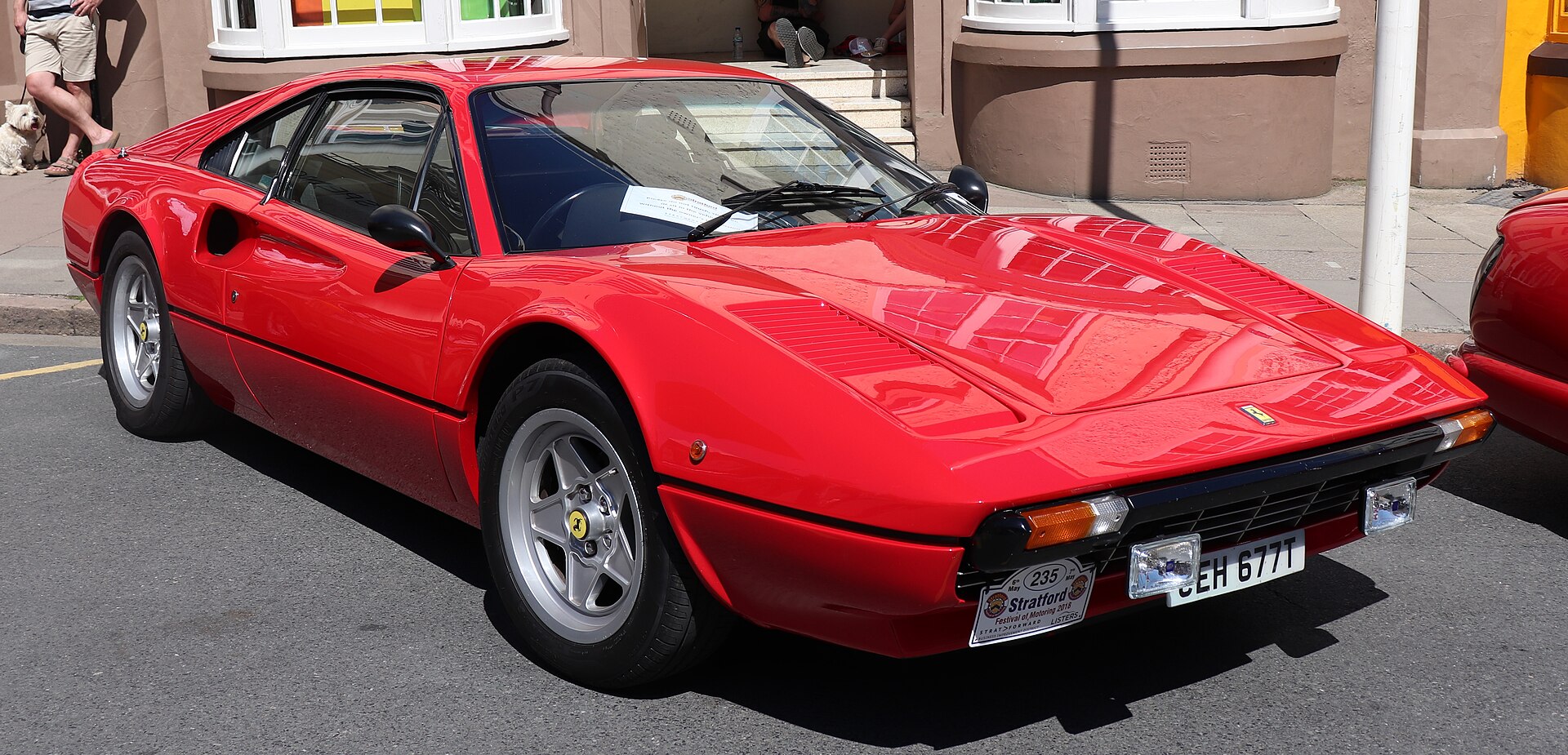
- Ferrari 308 GTB / GTS · Photo: Jorge Royan / Wikimedia Commons, CC BY-SA 3.0
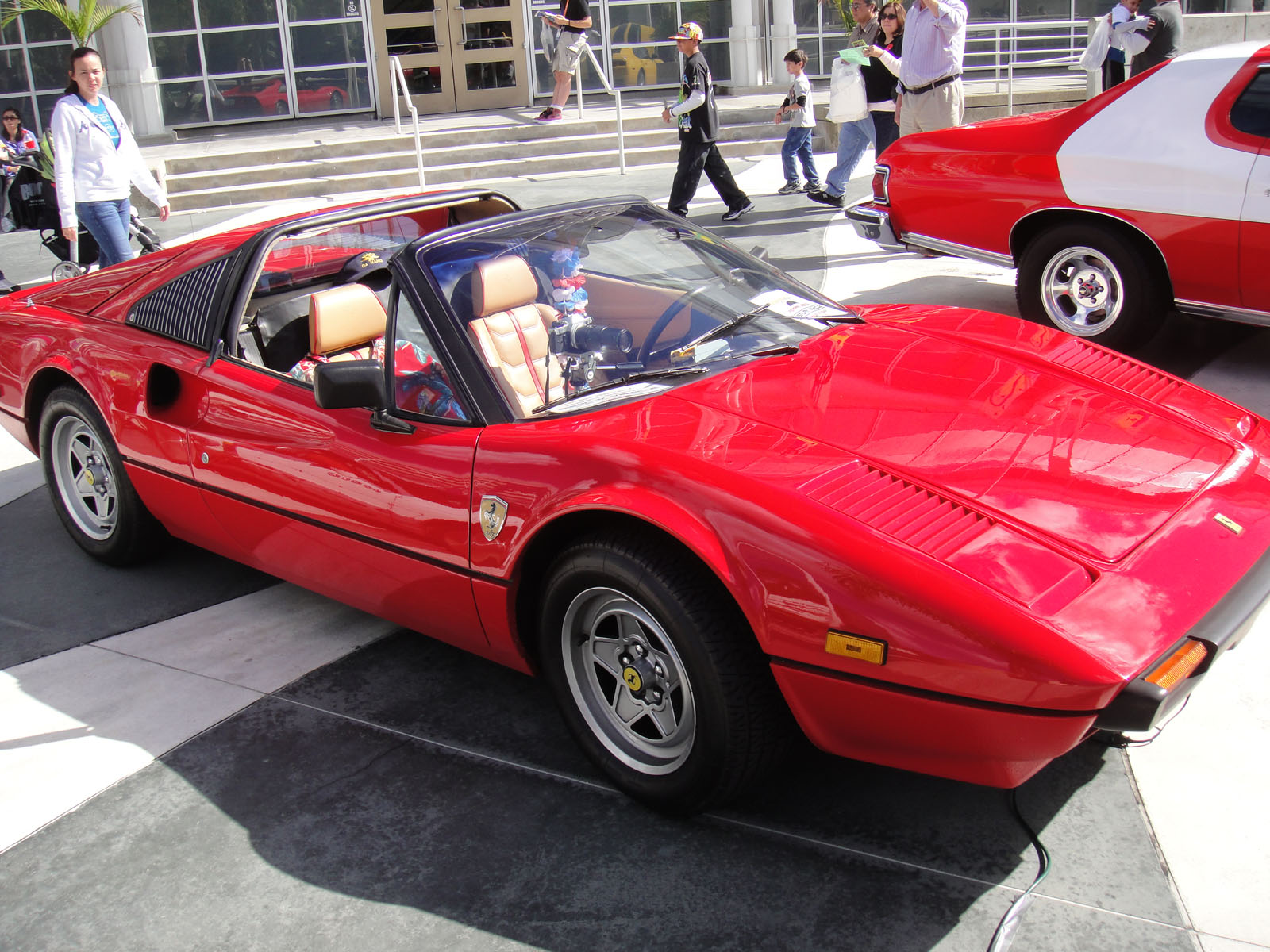
- Ferrari 308 GTBi / GTSi · Photo: The Conmunity - Pop Culture Geek from Los Angeles, CA, USA / Wikimedia Commons, CC BY 2.0
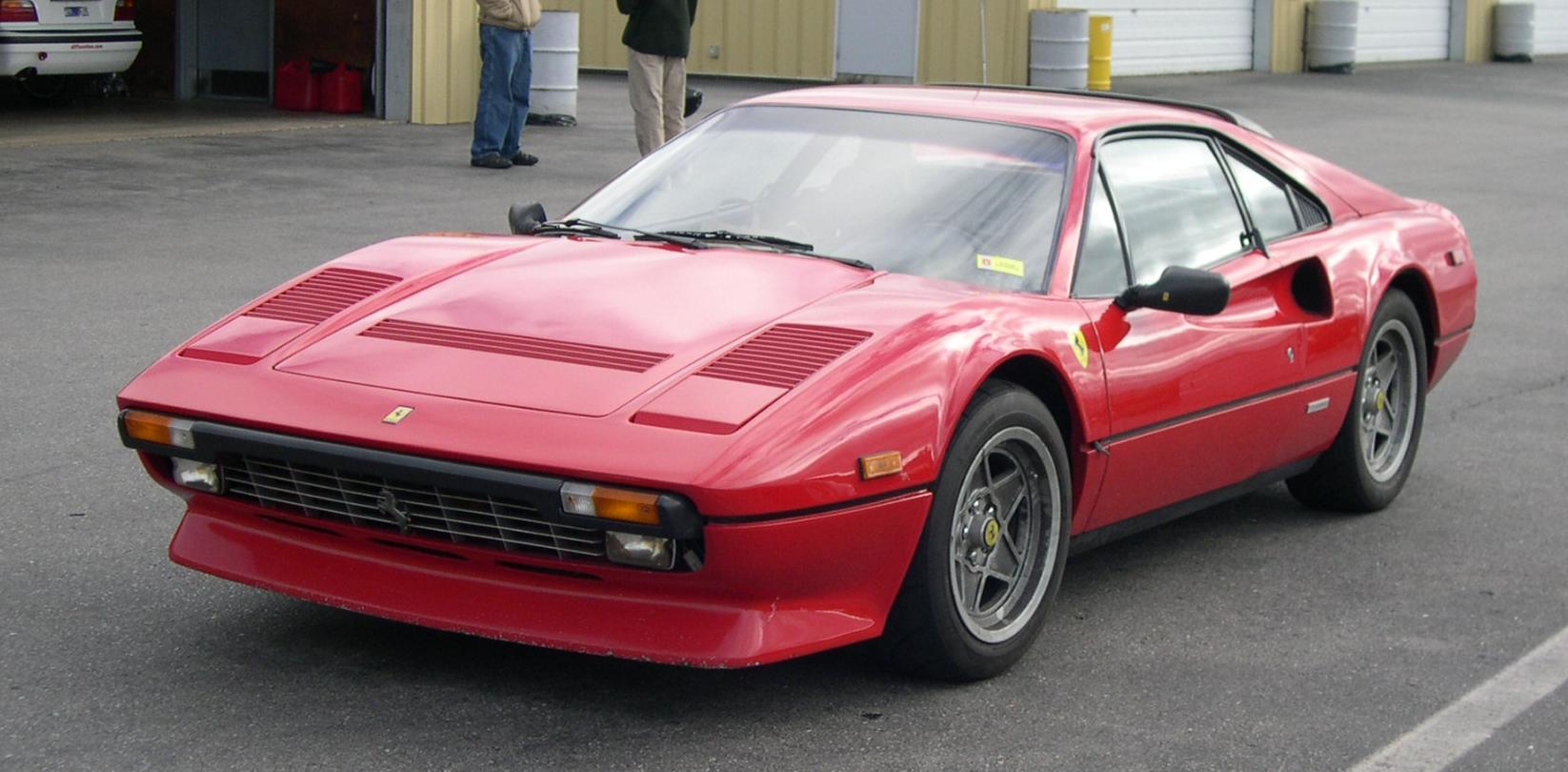
- Ferrari 308 Quattrovalvole · Photo: No machine-readable author provided. Sfoskett~commonswiki assumed (based on copyright claims). / Wikimedia Commons, CC BY 2.5
Ferrari 308 GTB/GTS in our rankings
- No. 23 of 59 · Most powerful cars of the 1980s (177 kW · top 39%)
- No. 358 of 912 · Longest-running car nameplates (10 years · top 43%)
- No. 506 of 859 · Most powerful cars (188 kW · top 60%)
- No. 154 of 345 · Cars with the most generations (3 generations · top 68%)
- No. 94 of 127 · Most powerful Italian cars (188 kW · top 76%)
- No. 253 of 313 · Most powerful coupes (188 kW · top 82%)
More powerful than 61% of ranked cars of the 1980s in the 1CARS catalog (No. 23 of 59).
FAQ
What is the difference between the Ferrari 308 GTB and GTS?
The GTB is the closed berlinetta, the GTS a targa with a removable roof panel stored behind the seats. The GTS was introduced in 1977 and always had a wet-sump engine.
What is a "vetroresina" 308?
It is an early 308 GTB with a fibreglass body. Ferrari built 808 of them before switching to steel and aluminium bodies in 1977.
How much power does the Ferrari 308 have?
The original European car had 188 kW (255 PS). The fuel-injected GTBi had 157 kW (214 PS), and the four-valve Quattrovalvole 177 kW (240 PS).
Which Ferrari did Magnum drive?
Thomas Magnum drove a 308 GTS: a 1979 car in the first season, a 1981 GTSi in seasons two to six and a 1984 GTS Quattrovalvole in the final two seasons.
Data sources
Data checked by an editor against the sources below.