 Peugeot 3008
All generations, specs and history
Published Sources (1) Report an error
By Felix Hartmann, Automotive Technology & EV Contributor
- Built
- 2008–present
- Generations
- 3
Timeline
3008 generations
Click a generation for its own page


Newest first · 3 generations since 2008
-
2024
-
2016
-
2008
All generations by year: 3008 III (2024–now) · 3008 II (2016–2023) · 3008 I (2008–2016)
Which one is mine?
Pick the year of first registration to see which generation it is.
Check by VINThe Peugeot 3008 is a compact crossover from the French brand Peugeot — in essence a family car with SUV looks, competing with models such as the Skoda Karoq. It was previewed by the Prologue concept in 2008, and the production 3008 appeared at the Geneva motor show in spring 2009. The second generation, shown at the Paris motor show in autumn 2016, became 2017 European Car of the Year and was facelifted in September 2020. The third generation, revealed in September 2023, is offered as a hybrid and as the electric E-3008.
In short
- Three generations: 2008–2016, 2016–2023 and from 2023.
- The second generation uses the EMP2 platform, the i-Cockpit with a small steering wheel and a digital instrument panel, and front-wheel drive only, except for the Hybrid4 plug-in hybrid.
- Facelift engines: PureTech 130 and 180 petrol, BlueHDi 130 diesel, Hybrid 225 and Hybrid4 300 plug-in hybrids.
- 219 mm of ground clearance and a 520-litre boot (second generation).
Peugeot 3008 at a glance
The 3008 sits between the Peugeot 308 and the larger 5008. It is a monocoque crossover with a transverse engine and front-wheel drive; the Hybrid4 versions add an electric motor at the rear for all-wheel drive. More Peugeot models are listed in our Peugeot catalogue.
Peugeot 3008 generations
First generation (2008–2016)
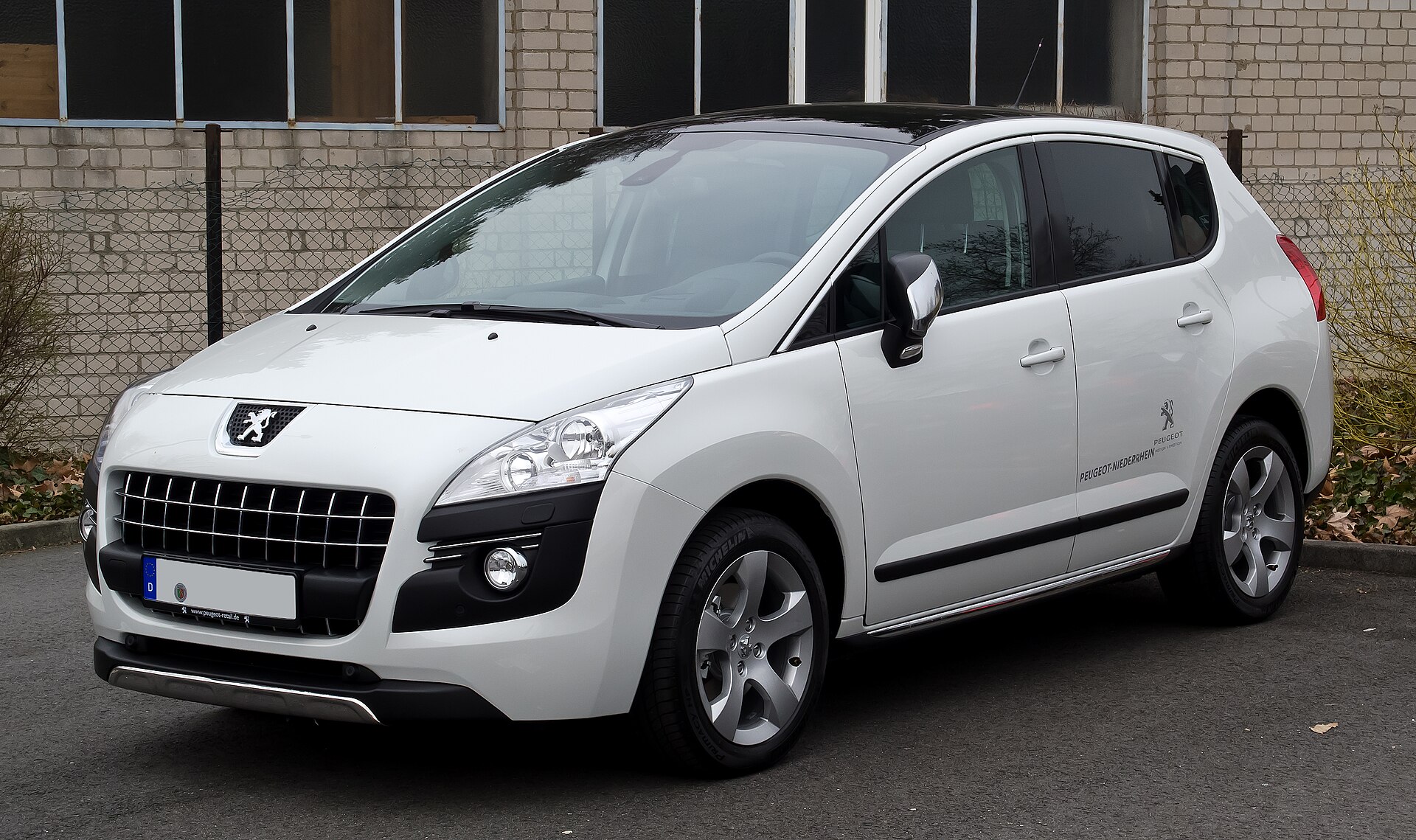
The first 3008 shared its platform with the Peugeot 308 and looked more like a high-riding compact MPV. Engines included 1.2 e-THP, 1.6 VTi and 1.6 THP petrol units and HDi diesels with 81, 110 and 120 kW (110, 150 and 163 PS). A diesel-electric HYbrid4 version launched in 2012, using a 2.0-litre diesel at the front and an electric motor at the rear. A facelift at the end of 2013 mainly changed the exterior. The first 3008 won What Car? Car of the Year 2010.
Second generation (2016–2023)
The second 3008 was announced in May 2016, shown at the Paris motor show that autumn and went on sale in January 2017. It moved to the EMP2 platform, adopted a true SUV look and was named 2017 European Car of the Year. A facelift was revealed online in September 2020, with deliveries from early 2021.
Exterior (facelift)
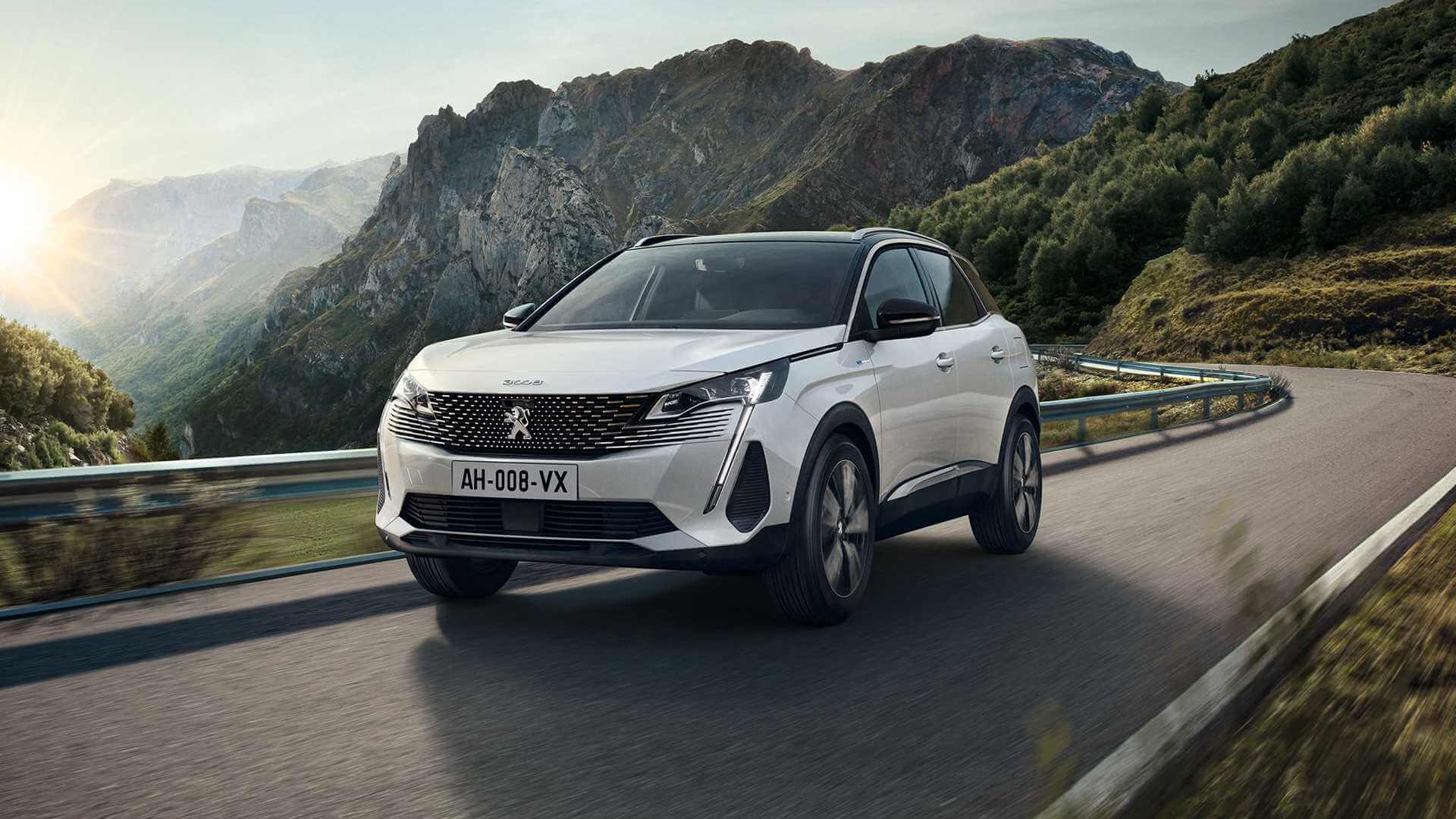
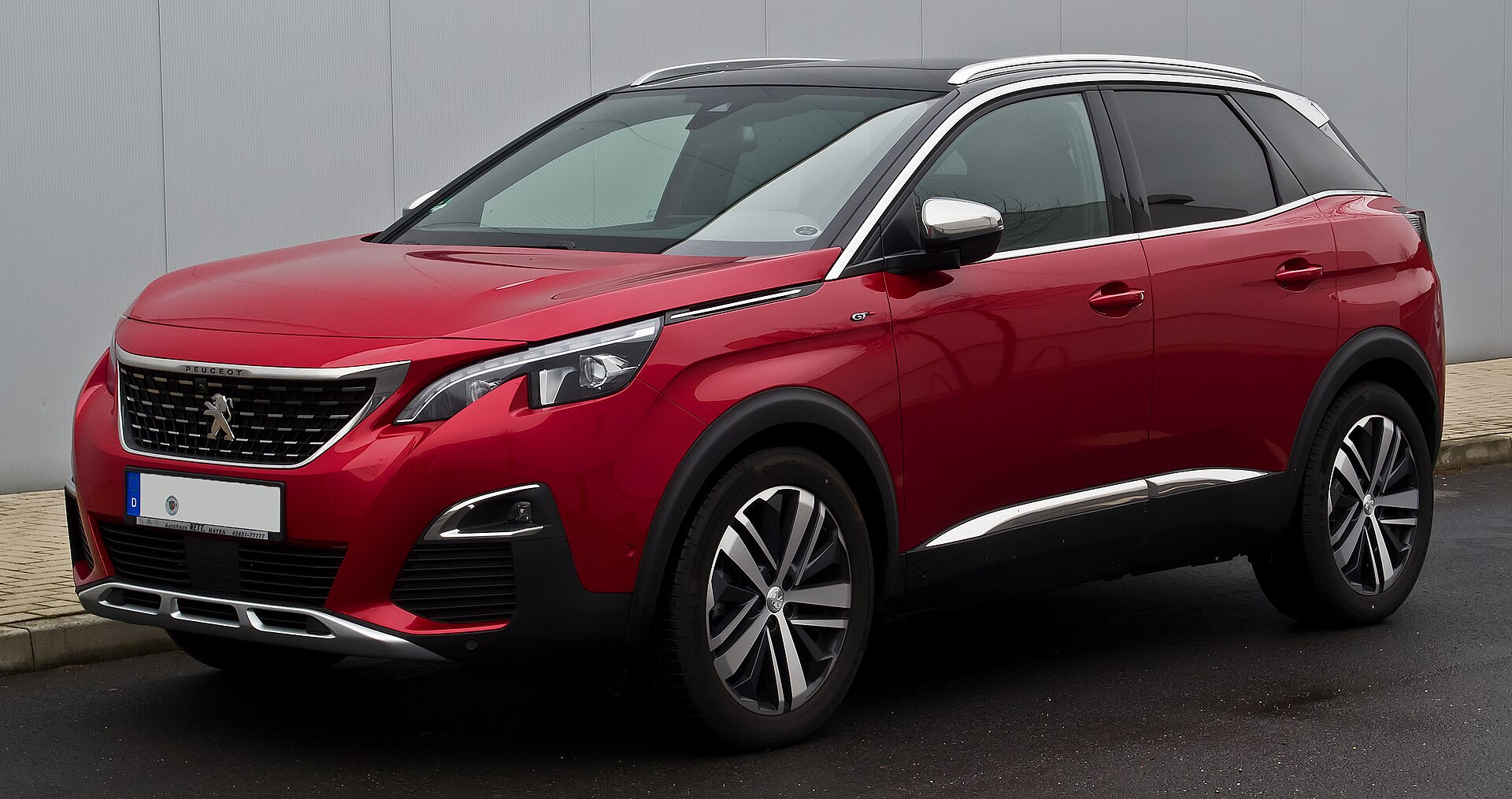
The updated 3008 looks bold. The long, wide front has a nearly flat bonnet that slopes down at the front, slanted LED headlights with wavy daytime running-light graphics and a frameless grille with a 3D pattern that seems to flow into the bumper and headlights, with a large lion emblem in the centre. Vertical "fang" running lights narrow the bumper visually, which also has a hexagonal lower intake, two vertical teardrop-shaped ducts that channel air to the brakes and a sturdy plastic guard. Separate fog lamps were dropped; the main headlights have a Foggy Mode instead.
The profile has a flowing roof with silver rails, a chrome strip above the windows, a rising rear side window, wide gloss-black pillars, large rounded mirrors with indicators, a chrome sill trim and plastic cladding along the lower body. Wheels are 17 or 18 inches, and ground clearance is an impressive 219 mm. At the rear, a slim spoiler with side supports, a steeply raked window, vertical LED light strips and a bumper with chrome details complete the design. GT and GT Pack versions look sportier, and a Black Pack adds a black grille, roof, rails, door and bumper trims, spoiler and a dark-chrome lion.
Interior
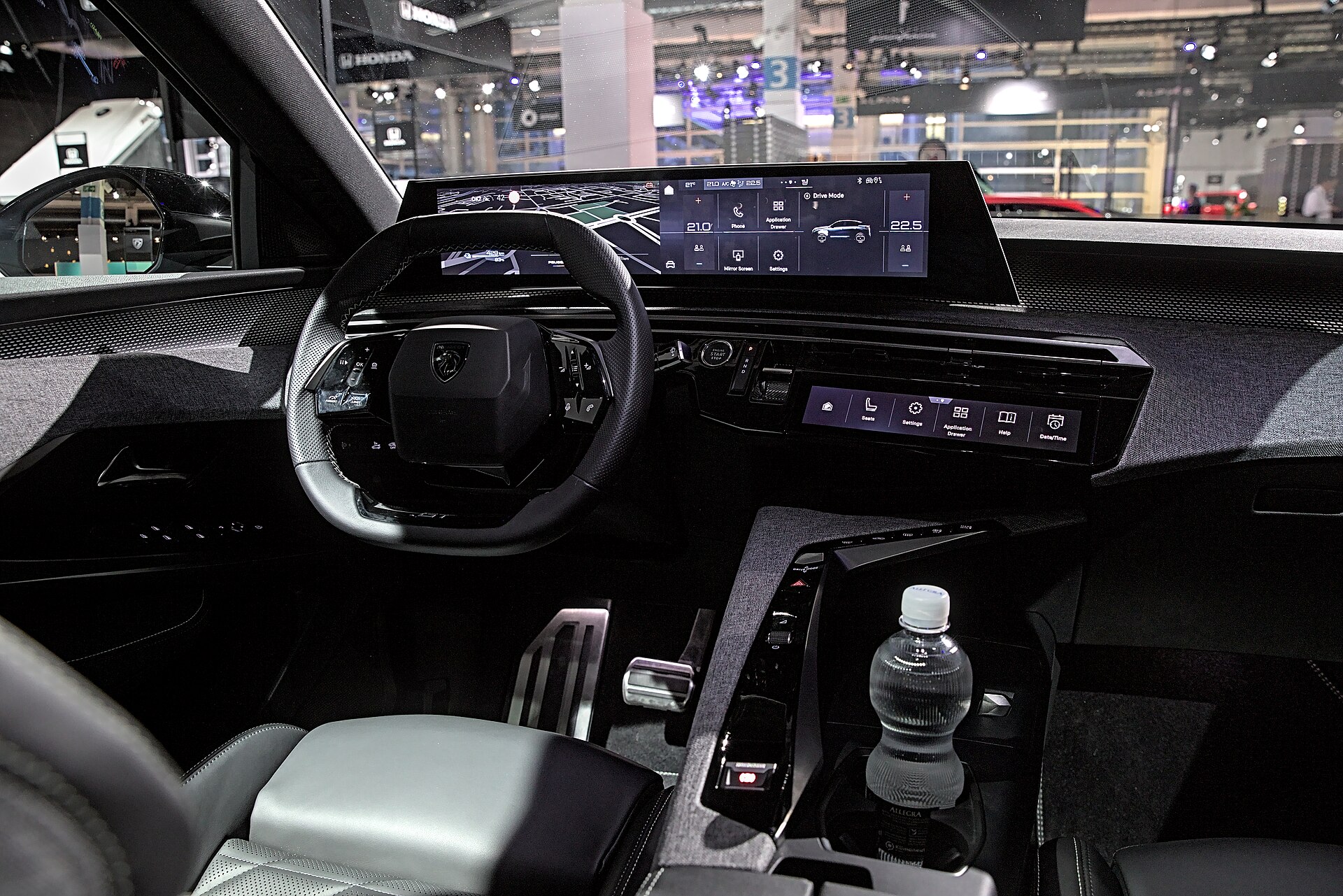
The futuristic i-Cockpit is designed for ergonomics as much as for looks, though the infotainment system has a menu that is not always intuitive and the screen can reflect sunlight. Quality fabric or leather, two types of plastic and metal inserts make the cabin look more expensive than it is. A compact two-spoke steering wheel, flattened at the top and bottom, has paddle shifters, and the digital instrument panel (12.3 inches on higher trims) is viewed over the rim. A 10-inch touchscreen sits in the centre, above angled air vents and a row of piano-key switches for the climate system, followed by a wireless charging pad. A wide tunnel, separated from the passenger by a silver plastic rail, holds the unusual gear selector, large cooled cupholders and a big armrest with a cooled compartment. Expensive versions have one of the largest panoramic roofs in the class.
The 3008 seats five, though three adults are tight in the rear because the car is not very wide, and rear legroom is limited; headroom is good and the backrest reclines. With two in the rear, a fold-down armrest is available. The boot holds 520 litres, or 1,580 litres with the rear seats folded; sportier versions have a power tailgate.
Engines and transmissions (second generation, facelift)
| Engine | Fuel | Power (kW / PS) | Gearbox |
|---|---|---|---|
| 1.2 PureTech 130 | Petrol | 96 kW / 130 PS | 6-speed manual or EAT8 automatic |
| 1.6 PureTech 180 | Petrol | 132 kW / 180 PS | EAT8 automatic |
| 1.5 BlueHDi 130 | Diesel | 96 kW / 130 PS | 6-speed manual or EAT8 automatic |
| Hybrid 225 | Petrol plug-in hybrid | 165 kW / 225 PS (system) | e-EAT8 |
| Hybrid4 300 | Petrol plug-in hybrid, AWD | 221 kW / 300 PS (system) | e-EAT8 |
There was also a 1.6 THP petrol engine with 110 kW (150 PS) and 240 Nm (0–100 km/h in 8.9 seconds, 206 km/h, about 6 l/100 km) with a six-speed automatic, and a 2.0 BlueHDi with 110 kW (150 PS) and 370 Nm (9.6 seconds, 200 km/h, about 4.8 l/100 km) with a six-speed manual, as offered in some markets. Apart from the Hybrid4, the 3008 is front-wheel drive; Advanced Grip Control with Normal, Mud, Snow, Sand and ESP Off modes improves traction on loose surfaces.
Chassis
The EMP2 modular platform uses MacPherson struts at the front and a torsion-beam rear axle, with a body that combines several grades of high-strength steel. The tailgate and boot floor use thermoplastic, and the rear subframe, suspension arms and wings use aluminium. Rack-and-pinion steering has adaptive electric assistance with a variable ratio.
Third generation (2023 onwards)
The third 3008 was revealed in September 2023 as the first model on Stellantis' STLA Medium platform. It has a fastback coupé-SUV shape with a drag coefficient of 0.28 and a 21-inch panoramic i-Cockpit display. The electric E-3008 is built at Sochaux, with 73 kWh or 96.9 kWh batteries, front- or all-wheel drive and up to about 500 km of WLTP range; mild-hybrid and plug-in hybrid versions followed in 2024.
Safety and equipment (second generation)
The facelifted 3008 offers autonomous emergency braking, distance warning, lane departure prevention, driver fatigue monitoring, automatic high beam, traffic-sign recognition, active blind-spot monitoring with steering correction, adaptive cruise control with stop function, lane positioning assistance, night vision that detects pedestrians and animals up to 200 m ahead, keyless entry, ABS and ESP, an electric parking brake, tyre-pressure sensors, rain and light sensors, parking sensors, LED lighting, hill-start assist, central locking, six airbags and Advanced Grip Control. Typical equipment includes 17- or 18-inch alloys, an 8- or 10-inch touchscreen with Android Auto and Apple CarPlay, cruise control, heated seats and electric windows; higher versions add keyless entry, a rear camera, hill descent control, adaptive cruise control, blind-spot monitoring, memory seats and a power tailgate.
Key specifications by generation
| Parameter | 1st generation | 2nd generation | 3rd generation |
|---|---|---|---|
| Years | 2008–2016 | 2016–2023 | 2023 onwards |
| Platform | PSA (shared with 308) | EMP2 | STLA Medium |
| Drive | Front (HYbrid4 AWD) | Front (Hybrid4 AWD) | Front or AWD |
| Ground clearance | — | 219 mm | — |
| Boot | — | 520 / 1,580 l | — |
Strengths and weaknesses
Owners praise a spacious cabin, good sound insulation, handling and comfort, moderately firm suspension, decent performance, low fuel consumption, reliable cold starts, high ground clearance, good equipment and safety, and a large boot; the second generation stands out for its design. Drawbacks include tight rear space for three adults, expensive dealer servicing and the lack of all-wheel drive outside the Hybrid4. Rivals include the Nissan Qashqai, Volkswagen Tiguan, Kia Sportage, Mazda CX-5, Citroën C5 Aircross, Nissan X-Trail, Skoda Kodiaq, Hyundai Tucson and Toyota RAV4.
Peugeot 3008 evolution in numbers
Did you know?
- The Peugeot 3008 has been around for 18 years: 3 generations in our catalog since 2008.
- The longest-running generation is the 3008 I (2008–2016): 8 years.
Image credits · Photos from Wikimedia Commons under free licences
- Peugeot 3008 I · Photo: M 93 / Wikimedia Commons, CC BY-SA 3.0 de
- Peugeot 3008 II · Photo: © M 93 / Wikimedia Commons, CC BY-SA 3.0 de
- Peugeot 3008 III · Photo: Alexander-93 / Wikimedia Commons, CC BY-SA 4.0
Peugeot 3008 in our rankings
- No. 201 of 912 · Longest-running car nameplates (18 years · top 23%)
- No. 119 of 305 · Oldest car models still on sale (18 years · top 40%)
- No. 214 of 345 · Cars with the most generations (3 generations · top 68%)
In production longer than 77% of ranked nameplates in the 1CARS catalog (No. 201 of 912).
FAQ
Was the Peugeot 3008 European Car of the Year?
Yes, the second-generation 3008 won the 2017 European Car of the Year award.
Does the Peugeot 3008 have all-wheel drive?
Only the Hybrid4 plug-in hybrid (and the diesel HYbrid4 of the first generation); other versions are front-wheel drive with Advanced Grip Control.
What engines does the facelifted Peugeot 3008 have?
PureTech 130 and 180 petrol, BlueHDi 130 diesel, and the Hybrid 225 and Hybrid4 300 plug-in hybrids.
How big is the Peugeot 3008 boot?
The second generation offers 520 litres, or 1,580 litres with the rear seats folded.
Data sources
Data checked by an editor against the sources below.