 Peugeot 406
Specs, engines and history
Published Sources (1) Report an error
By Oleksandr Hnatiuk, Automotive Editor & Used Car Specialist
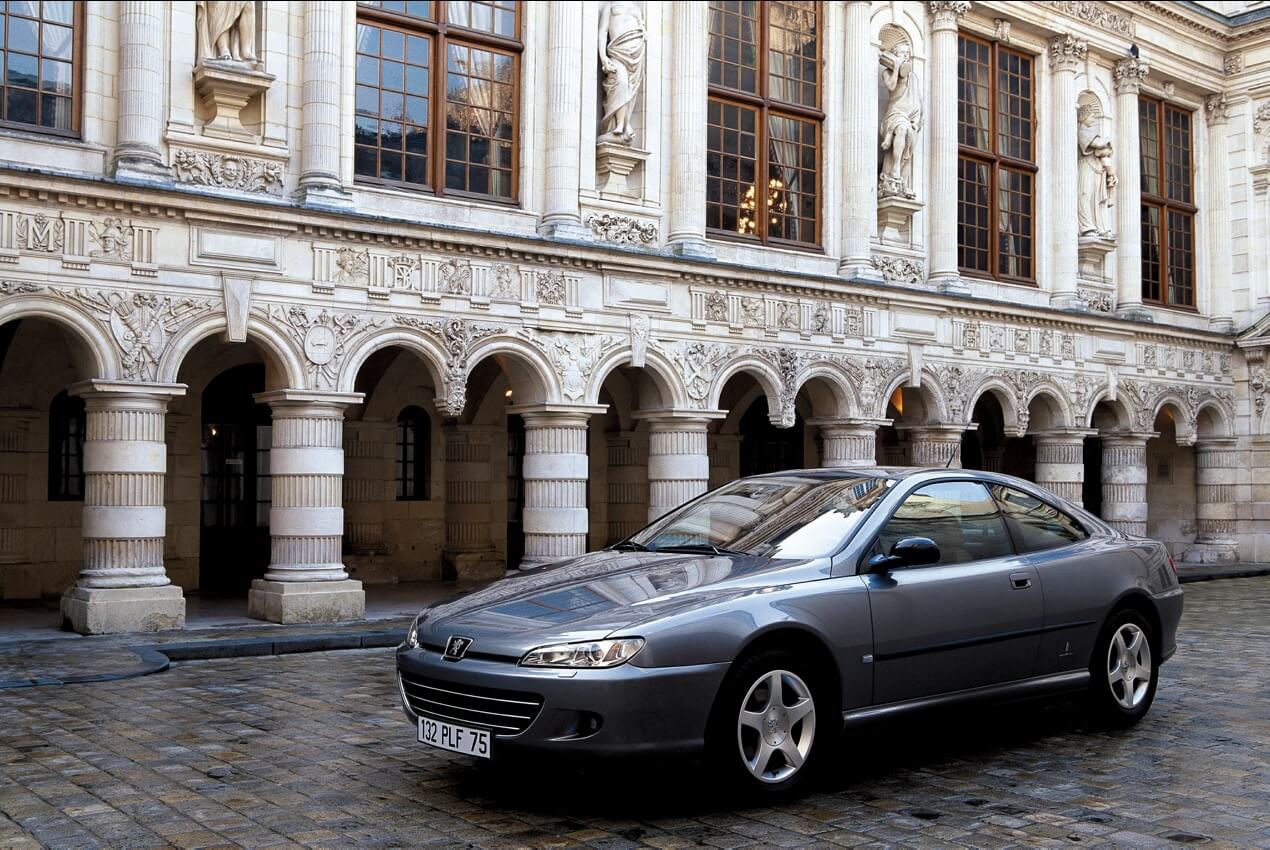
The Peugeot 406 is a D-segment family car built by the French manufacturer as a sedan, a wagon and a coupé. It was produced in a single generation, replaced the long-serving Peugeot 405 in autumn 1995 and gave way to the 407 in 2004. Bigger than its predecessor yet faithful to Peugeot's styling traditions, it combined aggression with elegance and became one of Europe's most popular mid-size cars — and it remains a sensible, good-value used buy.
In short
- One generation, launched in autumn 1995 as the successor to the 405; sedan, wagon and a coupé styled by Pininfarina.
- Petrol engines from a 63 kW (86 PS) 1.6 to a 3.0 V6 with up to 150 kW (204 PS); turbodiesels and HDi common-rail diesels.
- Boot space: 430 litres (sedan), 390 litres (coupé) and 526–1,741 litres (wagon).
- The 406 starred in the 1998 French film Taxi.
Peugeot 406 at a glance
The 406 is a front-wheel-drive car with transverse engines, MacPherson front suspension and a multi-link rear axle. The sedan and wagon received a facelift at the end of the 1990s; the coupé was updated only at the turn of 2002 and 2003. Other models of the brand are in our Peugeot catalogue, and the company's story is told in the history of Peugeot.
Design
The 406's shape is a stylistic evolution of the 405: the designers kept the recognisable lines but replaced the sharp-edged forms of the 1980s with rounder ones. Smooth lines, a low, powerful nose, integrated bumpers and almond-shaped headlights give it a dynamic silhouette that still looks good next to much newer cars.
The 406 Coupé was designed by the Italian studio Pininfarina, which benefited both its looks and its aerodynamics.
The facelift, intended to revive falling sales, gave the sedan a sharper front end. New, longer headlight units had wear-resistant plastic lenses and "crystal" reflectors; the rear lights became fully red twin units, and fog lamps were fitted even to the base version. A black fine-mesh grille, a larger badge, a more domed bonnet, more rounded bumpers made of more flexible materials and chrome strips on the side mouldings completed the update. The sedan rode on 15-inch wheels.
Interior and practicality
The dashboard is well thought out. The centre console carries the audio system with a CD player, a monochrome trip computer display and the climate-control panel — still unusual at the time — plus switches for the heated front seats. The instrument cluster places the fuel gauge in the middle, the rev counter and temperature gauge on the left, the speedometer on the right and a small display for trip data and outside temperature at the bottom. The four-spoke steering wheel has no audio buttons.
The cabin is simple and uncluttered despite a strong body with programmed crumple zones, a steel cross-member under the dashboard and a side-impact protection system. Soft plastics make it pleasant to the touch, and sound insulation is good. The coupé's boot holds 390 litres, the sedan's 430 litres and the wagon's 526 litres, rising to 1,741 litres with the rear seats folded.
Engines and transmissions
| Engine | Type | Power (kW / PS) |
|---|---|---|
| 1.6 8V | Petrol | 63 kW / 86 PS |
| 1.8 8V | Petrol | 71 kW / 97 PS |
| 1.8 16V | Petrol | 81 kW / 110 PS |
| 1.8 EW (later) | Petrol | 85 kW / 115 PS |
| 2.0 16V | Petrol | 97–100 kW / 132–136 PS |
| 2.0 turbo | Petrol | 107 kW / 145 PS |
| 2.0 HPi | Petrol, direct injection | 103 kW / 140 PS |
| 2.2 | Petrol | 115 kW / 156 PS |
| 3.0 V6 | Petrol | 140–150 kW / 190–204 PS |
| 1.9 turbodiesel (1995–1999) | Diesel | 66 kW / 90 PS |
| 2.0 HDi | Diesel, common rail | 66 or 81 kW / 90 or 110 PS |
| 2.2 HDi | Diesel, common rail | 96 kW / 131 PS |
The 1.6 is adequate only for relaxed driving, and the 1.8 versions are not quick either. The 2.0-litre petrol engines are the best balance of performance and economy; the turbocharged 2.0 was available only briefly. The V6 was developed jointly by PSA and Renault. All engines drive the front wheels through a five-speed manual or a four-speed automatic gearbox.
Chassis
Much of the 406's reputation rests on its well-balanced suspension: MacPherson struts at the front and a multi-link rear axle, both carefully tuned to work together. Two types of hydraulic power steering were used — a French-made system in early cars and a ZF unit later. The facelifted car has disc brakes on all four wheels.
Safety and equipment
Base cars have driver and passenger airbags and three-point seat belts; higher trims add side curtain airbags and rear-seat airbags. Electronics such as ABS, EBD, ESP, an immobiliser, an alarm and rain and light sensors were advanced for the time. Options included climate control, cruise control, a trip computer, navigation, electronically adaptive suspension, speed-sensitive power steering, brake assist, electric folding mirrors, an electric sunroof, a CD changer, athermic windscreen glass, an auto-dimming mirror, leather upholstery in three colours and electric front seats with memory.
Key specifications
| Parameter | Value |
|---|---|
| Launch | Autumn 1995 |
| Segment | D (large family car) |
| Bodies | Sedan, wagon, coupé (Pininfarina) |
| Drive | Front-wheel drive |
| Petrol power | 63–150 kW / 86–204 PS |
| Diesel power | 66–96 kW / 90–131 PS |
| Gearboxes | 5-speed manual, 4-speed automatic |
| Boot | Sedan 430 l; coupé 390 l; wagon 526 / 1,741 l |
Strengths and weaknesses
Owners praise the 406's good sound insulation, elegant and uncluttered interior, soft suspension that copes well with bad roads, decent performance, generous equipment, solid build, precise handling and plenty of space. Repairs are inexpensive, and the glass-lensed headlights are good. The four-speed automatic feels short of ratios, and the car needs regular, careful maintenance to avoid problems. Rivals included the Renault Laguna, Toyota Avensis, Mazda 626, Nissan Primera, Opel Vectra and Volkswagen Passat.
Peugeot 406 in our rankings
In production longer than 51% of ranked nameplates in the 1CARS catalog (No. 403 of 912).
FAQ
When was the Peugeot 406 launched?
In autumn 1995, as the replacement for the Peugeot 405. It was succeeded by the Peugeot 407 in 2004.
Who designed the Peugeot 406 Coupé?
The Italian design house Pininfarina.
What engines does the Peugeot 406 have?
Petrol engines from 1.6 to 3.0 litres (63–150 kW / 86–204 PS), early turbodiesels and later 2.0 and 2.2 HDi common-rail diesels (66–96 kW / 90–131 PS).
Was the Peugeot 406 in the film Taxi?
Yes. The 406 was the star car of the 1998 French film Taxi.
How big is the Peugeot 406 boot?
430 litres in the sedan, 390 litres in the coupé and 526 litres in the wagon (1,741 litres with the rear seats folded).
Data sources
Data checked by an editor against the sources below.