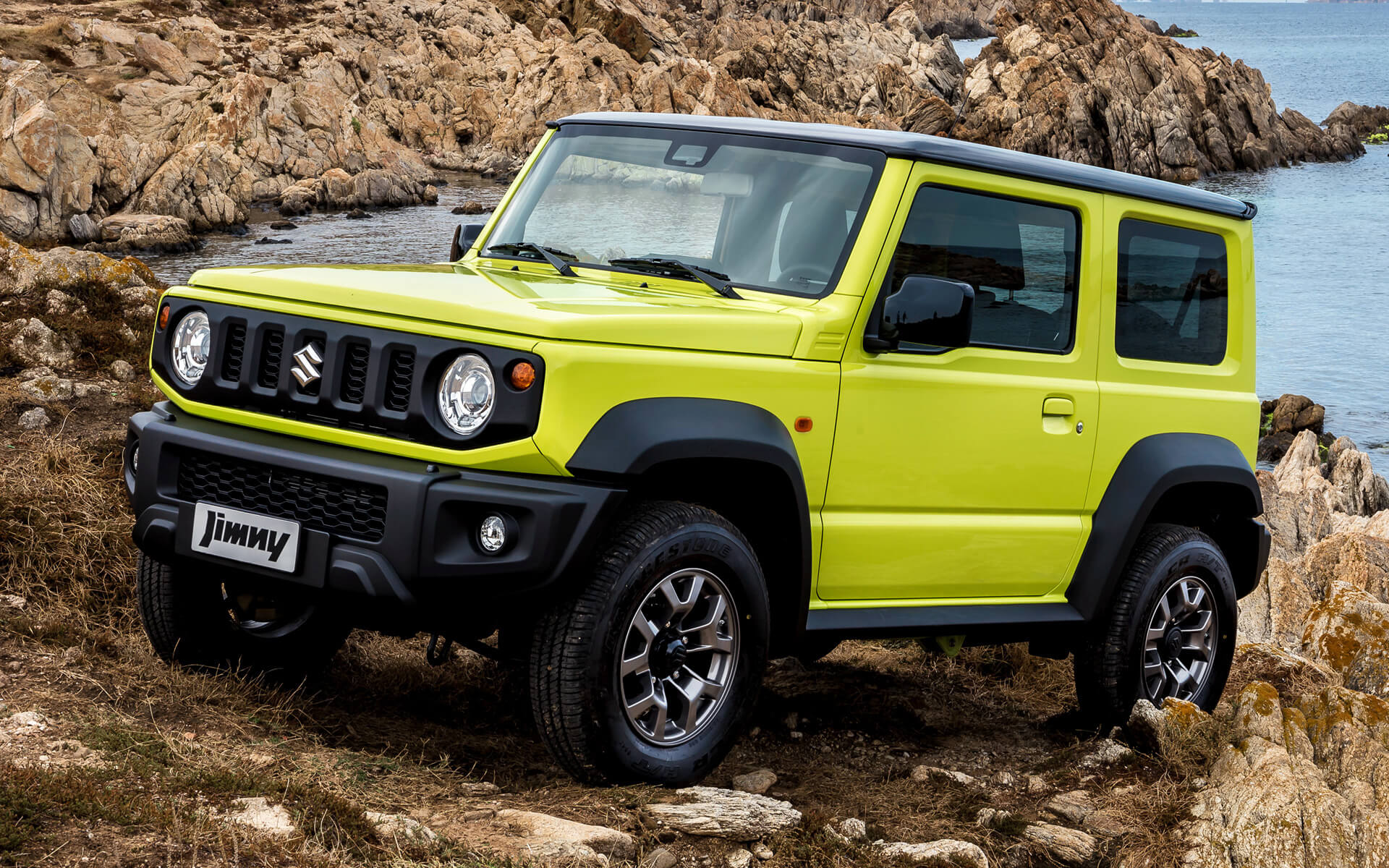
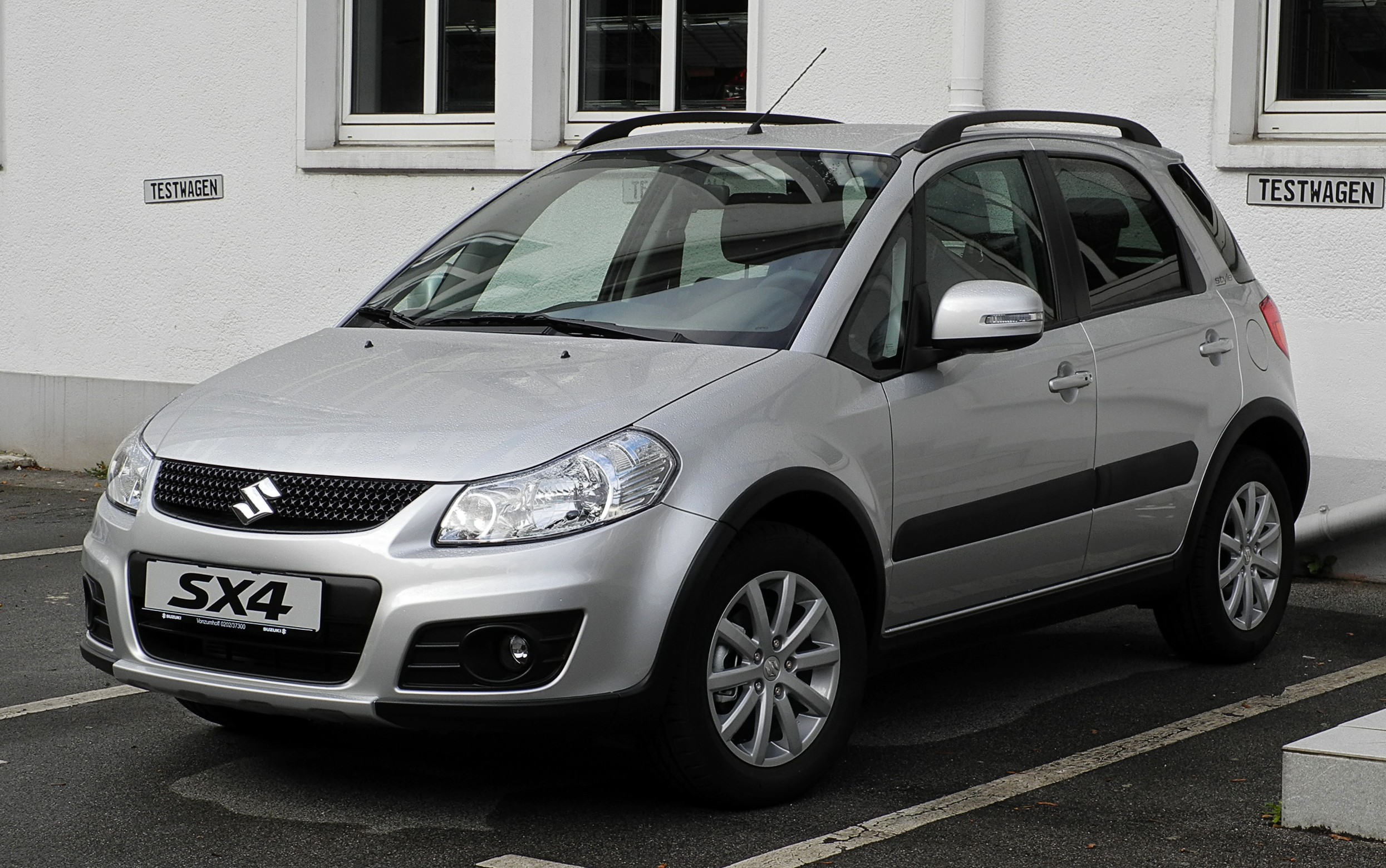
 Suzuki Grand Vitara I FT/GT (1998–2005)
Specs, engines, safety and known problems
Published Sources (3) Report an error
By Sarah Whitmore, Senior Automotive Writer Reviewed by Oleksandr Hnatiuk
- Power
- 64–135 kW (87–184 PS)
- Fuel, 80 kW (109 PS)
- ~1,800 EUR a year
- Generation
- 1 of 2
Model timeline
Where the FT/GT sits in the Grand Vitara story
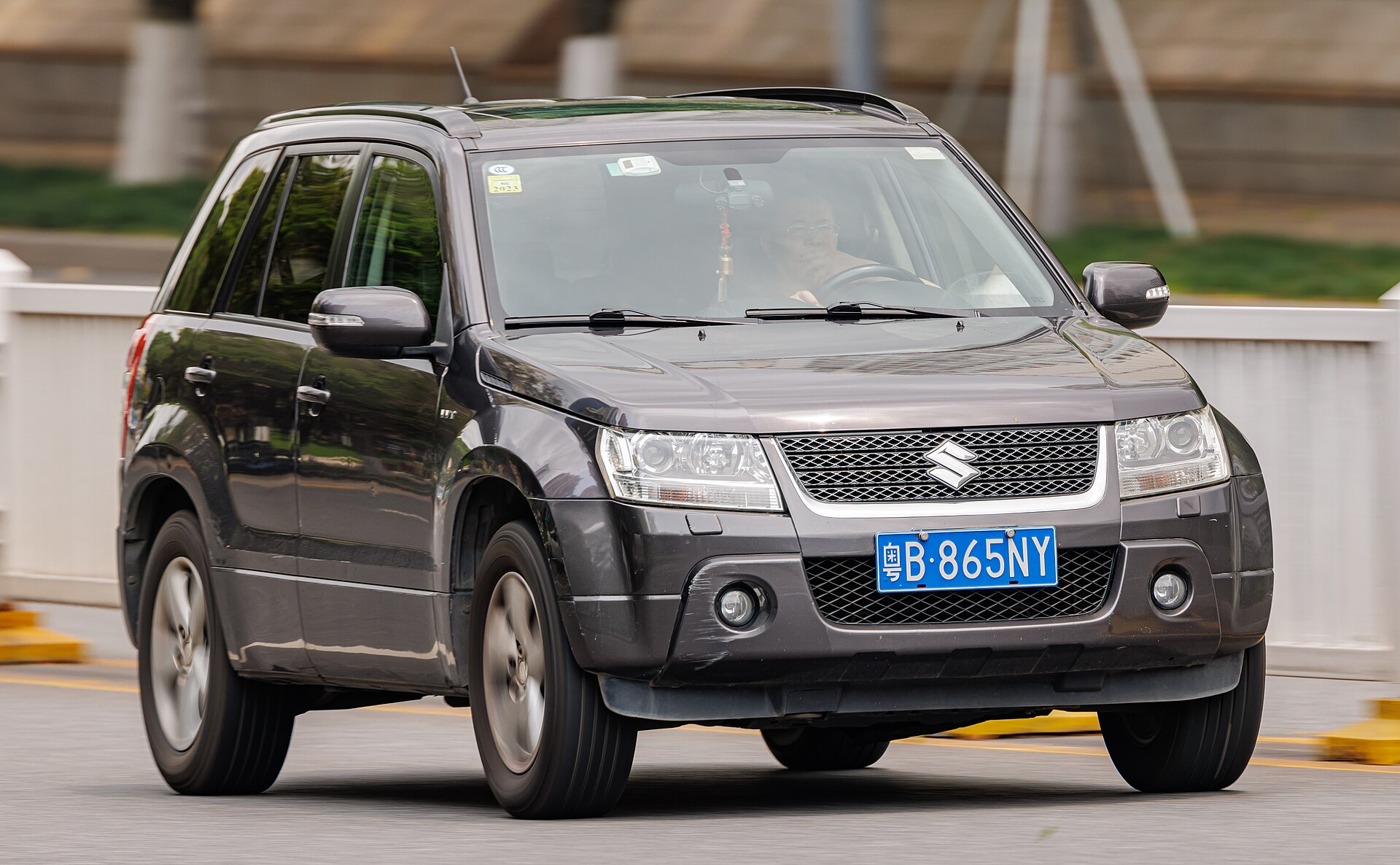
Successor Grand Vitara II (JT) (2005–2015)


Newest first · 2 generations since 1998
-
2005
-
1998
All generations by year: Grand Vitara II (JT) (2005–2015) · Grand Vitara I (FT/GT) (1998–2005)
The first Suzuki Grand Vitara is a compact off-roader built from 1998 to 2005, announced in November 1997 and launched in March 1998 as the successor to the original Vitara. It kept a separate ladder frame and switchable four-wheel drive, and came as a three-door, a five-door and a soft-top. European cars were imported from Japan, and a long seven-seat XL-7 joined in 2001.
In short
- Built from 1998 to 2005; ADAC files the wagon as FT, the soft-top as GT and the XL-7 as HT.
- Engines in Europe: 1.6 and 2.0 petrol, 2.5 and 2.7 V6 petrol, and a 2.0 TD diesel with 64 kW (87 PS) or 80 kW (109 PS).
- Body-on-frame construction, coil springs at both ends and switchable four-wheel drive.
- The IIHS rated the four-door Acceptable in its frontal offset test but Poor for side impacts, as side airbags were not offered.
Running cost
Fuel · Grand Vitara FT/GT 80 kW (109 PS)
about 1,800 EUR fuel a year at 15,000 km
7.3 l/100 km · diesel at 1.65 EUR/l · change mileage, fuel price or version
Grand Vitara I (FT/GT) specs by version
Engines
| Version | Engine | Power | Torque | Drive | Production years |
|---|---|---|---|---|---|
| Diesel · 2 versions | |||||
| 64 kW (87 PS) | 6 cyl · Diesel | 64 kW 87 PS86 hp | — | Four-wheel drive (4×4) | 2001 |
| 80 kW (109 PS) | 6 cyl · Diesel | 80 kW 109 PS107 hp | — | Four-wheel drive (4×4) | — |
| Petrol · 3 versions | |||||
| 1.6 petrol | 1.6 l · Petrol 1,590 cc | 69 kW 94 PS93 hp | 138 Nm102 lb-ft | Four-wheel drive (4×4) | — |
| 80 kW (109 PS) | 6 cyl · Petrol | 80 kW 109 PS107 hp | — | Four-wheel drive (4×4) | — |
| 2.0 petrol | 2.0 l · 6 cyl · Petrol 1,995 cc | 94 kW 128 PS126 hp | 174 Nm128 lb-ft | Four-wheel drive (4×4) | — |
| Other · 5 versions | |||||
| 2.0 TD diesel | 2.0 l 1,997 cc | — | 250 Nm184 lb-ft | Four-wheel drive (4×4) | — |
| 2.5 V6 petrol | 2.5 l 2,493 cc | — | 213 Nm157 lb-ft | Four-wheel drive (4×4) | — |
| 116 kW (158 PS) | 6 cyl | 116 kW 158 PS156 hp | — | Four-wheel drive (4×4) | 2001 |
| 127 kW (173 PS) | 6 cyl | 127 kW 173 PS170 hp | — | Four-wheel drive (4×4) | 2001 |
| 135 kW (184 PS) | — | 135 kW 184 PS181 hp | — | Four-wheel drive (4×4) | 2003 |
Performance
Show all 2 versions
| Version | 0–100 km/h | Top speed | Fuel consumption |
|---|---|---|---|
| 80 kW (109 PS) | — | — | 7.3 l/100 km32.2 mpg US · 38.7 mpg UK |
| 116 kW (158 PS) | 12.4 s 0–62 mph | 170 km/h106 mph | 10.9 l/100 km21.6 mpg US · 25.9 mpg UK |
Dimensions and weight
Show all 10 versions
| Version | Length | Kerb weight |
|---|---|---|
| Diesel · 2 versions | ||
| 64 kW (87 PS) | 4,700 mm185.0 in | 1,245 kg2,745 lb |
| 80 kW (109 PS) | 4,700 mm185.0 in | 1,245 kg2,745 lb |
| Petrol · 3 versions | ||
| 1.6 petrol | 4,700 mm185.0 in | 1,245 kg2,745 lb |
| 80 kW (109 PS) | 4,700 mm185.0 in | 1,245 kg2,745 lb |
| 2.0 petrol | 4,700 mm185.0 in | 1,245 kg2,745 lb |
| Other · 5 versions | ||
| 2.0 TD diesel | 4,700 mm185.0 in | 1,245 kg2,745 lb |
| 2.5 V6 petrol | 4,700 mm185.0 in | 1,245 kg2,745 lb |
| 116 kW (158 PS) | 4,700 mm185.0 in | 1,245 kg2,745 lb |
| 127 kW (173 PS) | 4,700 mm185.0 in | 1,245 kg2,745 lb |
| 135 kW (184 PS) | 4,700 mm185.0 in | 1,245 kg2,745 lb |
Verified Manufacturer and type-approval data from our catalog · Sources and methodology
From Vitara to Grand Vitara
The original Vitara arrived in 1988, with a long five-door from 1990. Its successor was larger, with the five-door moving up into the compact SUV class, and was at first sold in many markets only with engines of two litres and more, while the old Vitara continued with smaller units. The extra "Grand" marked that step up.
The construction stayed traditional. Like its predecessor, the new car used a separate ladder frame and four-wheel drive that the driver engages when needed. One notable change was the steering: Suzuki replaced the earlier recirculating-ball box with a lighter rack-and-pinion system. Mazda sold a rebadged version in Japan as the Proceed Levante until 2000, and North American buyers knew the same vehicle as the Chevrolet Tracker. In Japan it kept the Escudo name.
The Suzuki Grand Vitara overview follows the nameplate on to the JT of 2005, which switched to permanent four-wheel drive and a body with an integrated ladder frame. The model's place in the brand's story is covered in our history of Suzuki.
Body styles and plants
Three bodies were built on two wheelbases:
- Three-door: 2,200 mm (86.6 in) wheelbase; in Germany first sold with the 2.0 petrol from 1998, later with the 1.6 and the diesel.
- Five-door: 2,480 mm (97.6 in) wheelbase; early German versions had the 2.5 V6 or the 2.0 TD, and the 2.0 petrol joined in 2002.
- Soft-top: a short two-door convertible; ADAC lists it as the Grand Vitara Cabrio (GT) for 1999 to 2002, and Wikipedia states that soft-tops were made in North America.
European cars came from Suzuki's Iwata plant in Shizuoka. North American Vitaras were built by CAMI Automotive in Ingersoll, Ontario, and the model was also assembled in Indonesia, Argentina and Ecuador. In the UK, a 1.6-litre GV1600 arrived in early 2001 as a cheaper entry point.
Engines and four-wheel drive
European buyers had five engine families over the model's life. Gearboxes were a five-speed manual or a four-speed Aisin automatic.
| Engine | Displacement | Power | Torque | Bodies | Years (Germany) |
|---|---|---|---|---|---|
| 1.6 petrol | 1,590 cm³ (97.0 cu in) | 69 kW (94 PS) at 5,200 rpm | 138 Nm (102 lb-ft) at 4,000 rpm | 3-door | 2001–2005 |
| 2.0 petrol | 1,995 cm³ (121.7 cu in) | 94 kW (128 PS) at 5,900 rpm | 174 Nm (128 lb-ft) at 2,900 rpm | 3- and 5-door | 1998–2005 |
| 2.5 V6 petrol | 2,493 cm³ (152.1 cu in) | 106 kW (144 PS); 116 kW (158 PS) from 2004 | 213 Nm (157 lb-ft) at 3,300 rpm (158 PS) | 5-door | 1999–2005 |
| 2.7 V6 petrol | not listed | 127 kW (173 PS); 135 kW (184 PS) from April 2003 | not listed | XL-7 only | 2001–2005 |
| 2.0 TD diesel | 1,997 cm³ (121.9 cu in) | 64 kW (87 PS) to 2001; 80 kW (109 PS) common-rail | 250 Nm (184 lb-ft) at 1,750 rpm (109 PS) | 3- and 5-door | 1998–2005 |
Performance was modest by modern standards. ADAC lists the 2.0 five-door manual at 12.1 seconds from 0 to 100 km/h, 160 km/h (99 mph) and 9.3 L/100 km (30.4 mpg UK) on the NEDC cycle. The 109 PS diesel is slower at 13.9 seconds but uses 7.3 L/100 km (38.7 mpg UK). The 158 PS V6 automatic reaches 170 km/h (106 mph) and 0–100 km/h in 12.4 seconds, at a cost of 10.9 L/100 km (25.9 mpg UK). The 1.6 three-door needs 14.3 seconds and tops out at 150 km/h (93 mph).
The four-wheel drive is part-time and switched in by the driver. A part-time system has no centre differential, so four-wheel drive is meant for loose or slippery surfaces; this is the main mechanical difference from the permanent system of the later JT. Suspension uses coil springs front and rear, with disc brakes at the front and drums at the back.
Dimensions and capacities
The table shows a German-market 2.0 Comfort five-door from 2002–2005, with the three-door 1.6 for comparison in the last rows. Wikipedia quotes shorter lengths, 3,810 mm for the three-door and 4,090–4,155 mm for the five-door, possibly because European cars carry the spare wheel on the tailgate.
| Parameter | Metric | Imperial |
|---|---|---|
| Length (5-door, ADAC) | 4,195 mm | 165.2 in |
| Width | 1,780 mm | 70.1 in |
| Height | 1,740 mm | 68.5 in |
| Wheelbase (5-door) | 2,480 mm | 97.6 in |
| Kerb weight (2.0 manual) | 1,430 kg | 3,153 lb |
| Payload | 520 kg | 1,146 lb |
| Boot, seats up / to roof | 275 / 1,148 L | 9.7 / 40.5 cu ft |
| Fuel tank | 66 L | 14.5 UK gal |
| Braked / unbraked towing | 1,850 / 700 kg | 4,079 / 1,543 lb |
| Length (3-door, ADAC) | 3,885 mm | 153.0 in |
| Boot, 3-door, seats up / folded | 161 / 479 L | 5.7 / 16.9 cu ft |
The three-door 1.6 weighs only 1,245 kg (2,745 lb). Its smaller 56 L (12.3 UK gal) tank and 1,600 kg (3,527 lb) braked towing limit also set it apart from the five-door.
The XL-7 and later updates
The biggest addition came in September 2001: the Grand Vitara XL-7, a stretched seven-seater about 4.70 m (185.0 in) long. It sat on a longer wheelbase and used an all-aluminium 2.7 V6 that was not offered in the other versions. Sold as the XL-7 in North America and as the Grand Vitara XL-7 in Europe and Australia, it was the most powerful car in the range. In April 2003 it received a new front end and an uprated 135 kW (184 PS) engine. ADAC files it as a separate series, HT, which shows how far it moved from the standard wagon.
The rest of the range was updated in stages. Wikipedia lists facelifts in 2000, 2002 and 2004, and German sources describe a model update for September 2001. The practical changes for European buyers were mainly mechanical: the common-rail 80 kW (109 PS) diesel replaced the older 64 kW unit, the 1.6 opened the range from late 2001, and in August 2004 the 2.5 V6 rose to 116 kW (158 PS) with an automatic gearbox.
Safety: IIHS tests and equipment
No Euro NCAP result for the first Grand Vitara was found. The US Insurance Institute for Highway Safety tested the four-door, and its ratings apply to 1999–2004 models:
- Moderate overlap front: Acceptable, based on a 1999 Grand Vitara JLX four-door.
- Side impact: Poor, based on a 2003 four-wheel-drive four-door without side airbags, which the IIHS notes were not available.
In Germany, ADAC lists driver and passenger airbags, ABS and Isofix as standard on the 2002–2005 2.0 Comfort. ADAC lists no stability control, so the car demands care on loose or wet surfaces, as any tall, short-wheelbase off-roader does.
Buying a first-generation Grand Vitara today
The youngest cars are now about 20 years old, and no TÜV or ADAC breakdown data for this generation was found. Condition matters more than the model's reputation, so these sourced points are a starting list:
- Diesel recall: ADAC records a May 2006 recall for a loose connection on the glow-plug relay of diesels built from 2000 to 2004, covering 3,595 vehicles worldwide. Check that it was done.
- Side protection: no version had side airbags, which explains the Poor IIHS side rating.
- Towing: the five-door is rated at 1,850 kg (4,079 lb) braked, so check the clutch and transfer box on cars that have pulled caravans or trailers.
- Engine choice: the 2.0 petrol was the core engine of the range; the V6 uses the most fuel, and the 109 PS diesel is the most economical on paper.
When new, ADAC listed the 2.0 Comfort five-door at EUR 22,900 for the 2002–2005 model period, while the three-door 1.6 started at EUR 17,850 in late 2001. Suzuki offered a three-year or 100,000 km warranty at the time, with six years against rust perforation.
For other used options, browse Japanese SUVs, the diesel SUV list or the Suzuki model range.
Image credits · Photos from Wikimedia Commons under free licences
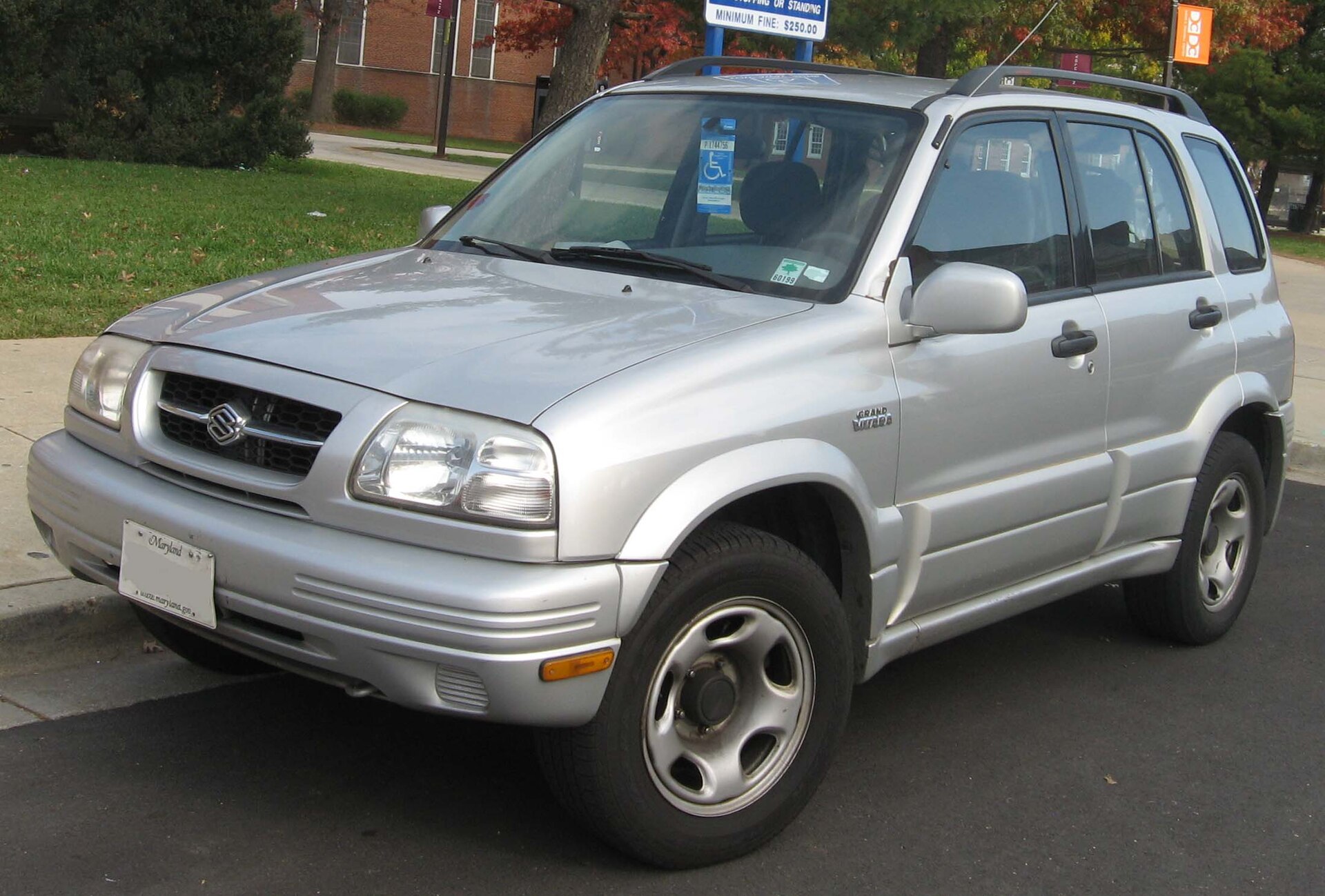
- Suzuki Grand Vitara I (FT/GT) · Photo: IFCAR / Wikimedia Commons, Public domain
- Suzuki Grand Vitara II (JT) · Photo: Dinkun Chen / Wikimedia Commons, CC BY-SA 4.0
FT/GT rivals
-
Ended 2025
- Years
- 2000–2025
- Body
- SUV
- Fuel
- Petrol, Hybrid
- Power
- 95–186 kW (129–253 PS)
5 generations
- I
- II
- III
- Escape
- IV
-
Ended 2015
- Years
- 2006–2015
- Body
- SUV
- Fuel
- Petrol, Diesel
- Power
- 104–110 kW (141–150 PS)
-
Ended 2015
- Years
- 2006–2015
- Body
- SUV
- Fuel
- Petrol, Diesel
- Power
- 103–183 kW (140–249 PS)


FAQ
What years is the first-generation Suzuki Grand Vitara?
It was built from 1998 to 2005. Suzuki announced it in November 1997, launched it in March 1998 and replaced it with the JT in 2005.
Does the 1998–2005 Grand Vitara have a separate chassis?
Yes. It is built on a separate ladder frame with switchable four-wheel drive. The 2005 JT that followed moved to a body with an integrated ladder frame and permanent four-wheel drive.
What is the Grand Vitara XL-7?
It is a stretched seven-seat version launched in September 2001, about 4.70 m long, with a 2.7 V6 of 127 kW (173 PS), raised to 135 kW (184 PS) in April 2003.
Which engines did the first Grand Vitara have in Europe?
A 1.6 petrol with 69 kW (94 PS), a 2.0 petrol with 94 kW (128 PS), a 2.5 V6 with 106–116 kW (144–158 PS), the XL-7's 2.7 V6 and a 2.0 TD diesel with 64 or 80 kW (87 or 109 PS).
How safe is the first-generation Grand Vitara?
The IIHS rated the 1999–2004 four-door Acceptable in the moderate overlap frontal test and Poor in the side test, as side airbags were not available. No Euro NCAP result was found.
Data sources
Data checked by an editor against the sources below.
- The text of this article (1cars archive)
- Wikipedia — Suzuki Grand Vitara
- ADAC — 2generation