 Suzuki Jimny
All generations, specs and history
Published Sources (1) Report an error
By Sarah Whitmore, Senior Automotive Writer
- Built
- 1970–present
- Generations
- 4 · LJ to JB64/JB74
Timeline
Jimny generations
Click a generation for its own page


- Jimny LJ 1970–1981 · Convertible, SUV
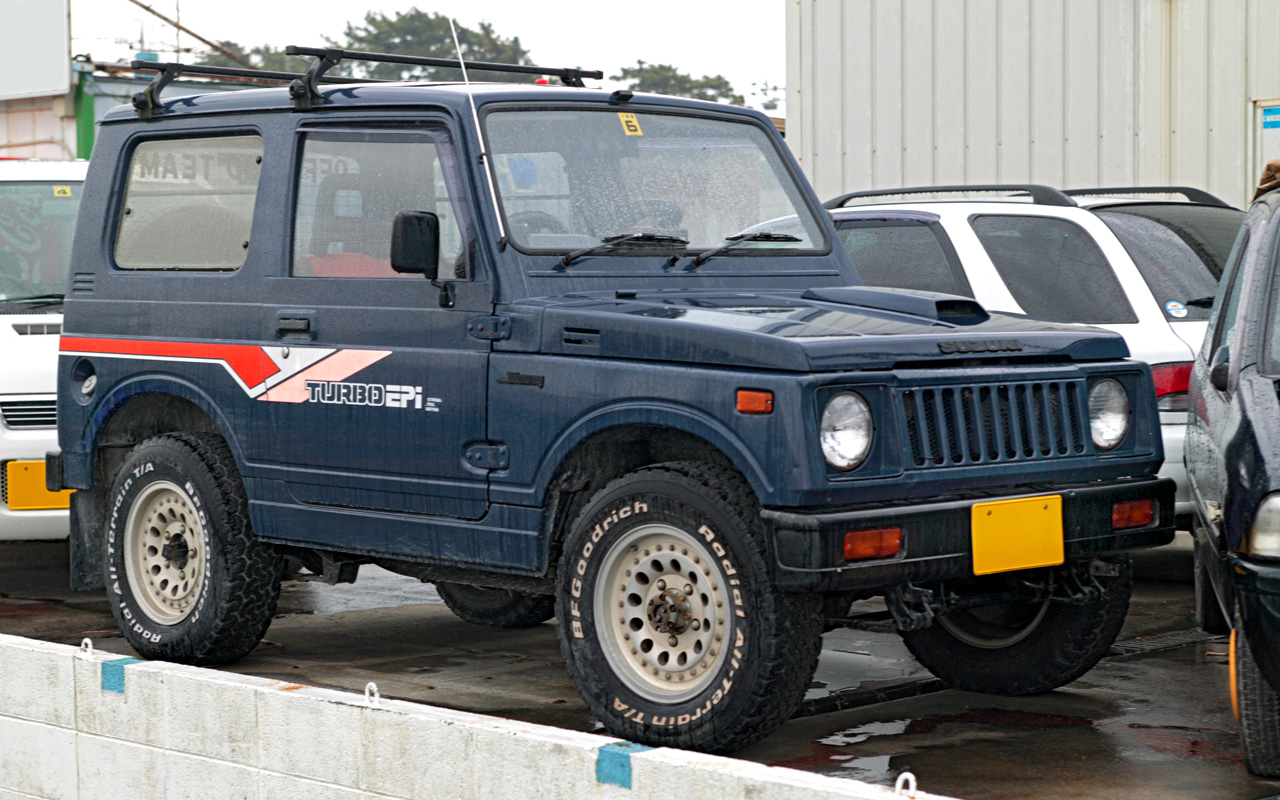
- Jimny SJ 1981–1998 · Convertible, SUV
- Jimny JB23/JB33/JB43 1998–2018 · Convertible, SUV
- Jimny JB64/JB74 Current 2018–now · SUV
Newest first · 4 generations since 1970
-
2018
-
1998
-
1981
-
1970
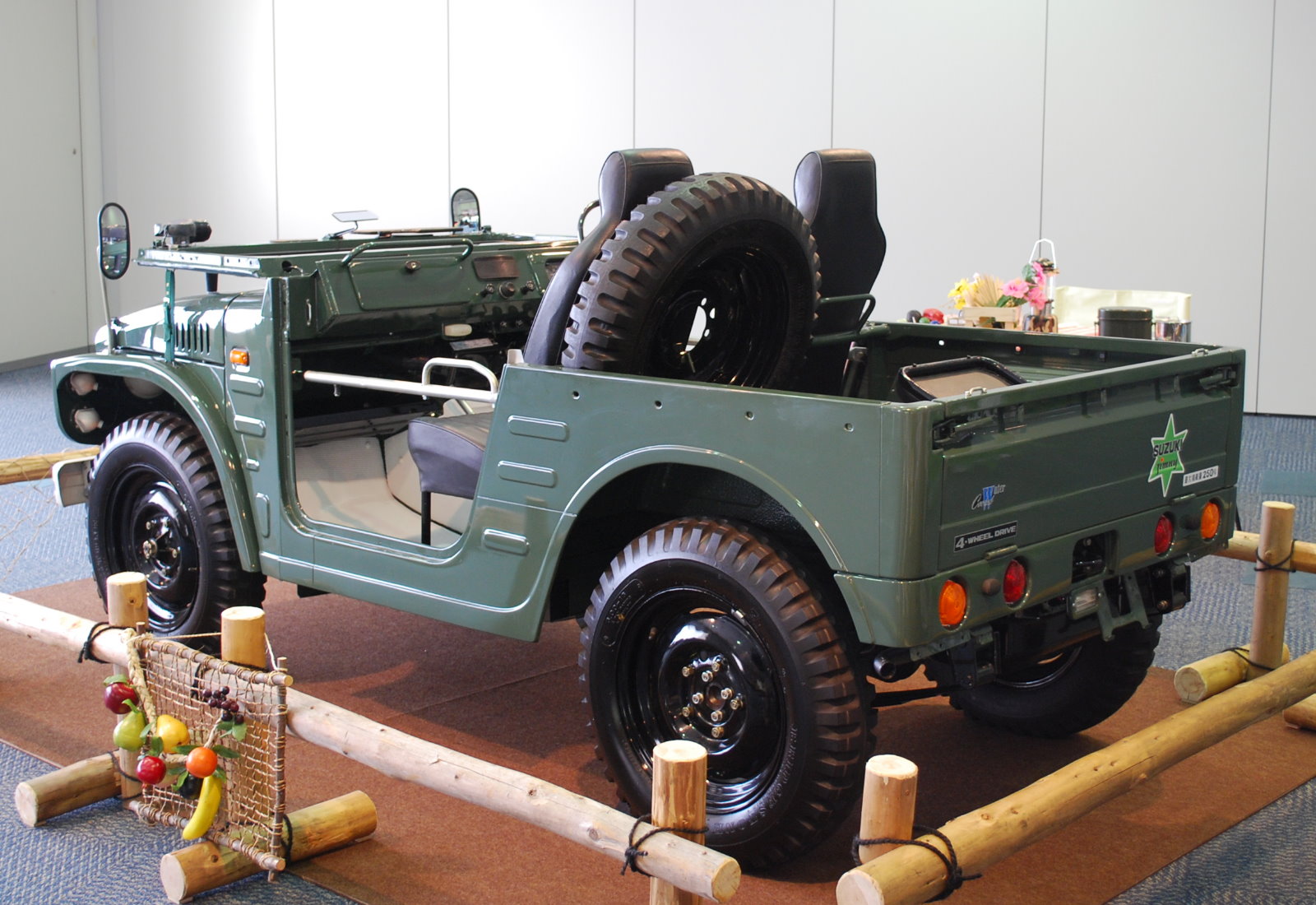
All generations by year: Jimny JB64/JB74 (2018–now) · Jimny JB23/JB33/JB43 (1998–2018) · Jimny SJ (1981–1998) · Jimny LJ (1970–1981)
Which one is mine?
Pick the year of first registration to see which generation it is.
- JB64/JB74 2018–present
- JB23/JB33/JB43 1998–2018
- SJ 1981–1998
- LJ 1970–1981
The Suzuki Jimny is a compact Japanese off-roader with a history going back to 1968, when Suzuki bought the production rights to the Hope Star ON 360 — a small 1967 four-wheel-drive vehicle with a two-stroke Mitsubishi engine of 15 kW (21 PS). In April 1970 the first Suzuki LJ10 Jimny (also called Brute IV) went into production. Four generations have followed; the fourth appeared in summer 2018 and went on sale in Japan straight away, and in 2023 Suzuki added a five-door version with a 340 mm longer wheelbase, built in India.
In short
- Four generations: 1970, 1981, 1998 (shown in Tokyo in 1997) and 2018.
- Always a ladder frame, rigid axles and part-time four-wheel drive with low range.
- The 2018 Jimny has a 1.5-litre engine with 75 kW (102 PS), 210 mm of ground clearance and approach/departure angles of 37/49 degrees.
- Space is limited: the latest model is a four-seater with an 85-litre boot (830 litres with the rear seats folded).
Suzuki Jimny at a glance
The Jimny has never tried to be a crossover: its job is to go where other cars get stuck, and its small size makes it very manoeuvrable on tight trails. More Suzuki models are in our Suzuki catalogue.
Suzuki Jimny generations
First generation (1970–1981)
The first Jimny was built for eleven years and was constantly updated. It came with an open or closed all-steel body, and as a long-wheelbase pickup. It started with an air-cooled 0.36-litre two-stroke twin of 18 kW (25 PS) and 33 Nm, later water-cooled with 21 kW (28 PS); by the end there was a 0.8-litre four-cylinder with 30 kW (41 PS) and 60 Nm. A four-speed manual and four-wheel drive were standard, and top speed was 72–105 km/h. Technically it was a classic off-roader: ladder frame, rigid axles on leaf springs front and rear, worm-type steering without assistance and drum brakes all round.
Second generation (1981–1998)
The second Jimny stayed in production for 17 years and was updated many times. It was offered with an open or closed body, as a two-door coupé and as a long-wheelbase pickup. Ground clearance was 205 mm. Inside there was a four-spoke wheel, three separate dials and a grab handle for the front passenger.
Petrol three- and four-cylinder engines of 0.7–1.3 litres produced 40–56 kW (55–76 PS) and 57–115 Nm, and a 1.9-litre turbodiesel delivered 46 kW (62 PS). Gearboxes were four- or five-speed manuals with part-time four-wheel drive. Early cars had leaf springs, front discs and rear drums and worm steering; from the 1995 update the front axle got coil springs and the steering gained electric or hydraulic assistance.
Third generation: JB43 (1998–2018)
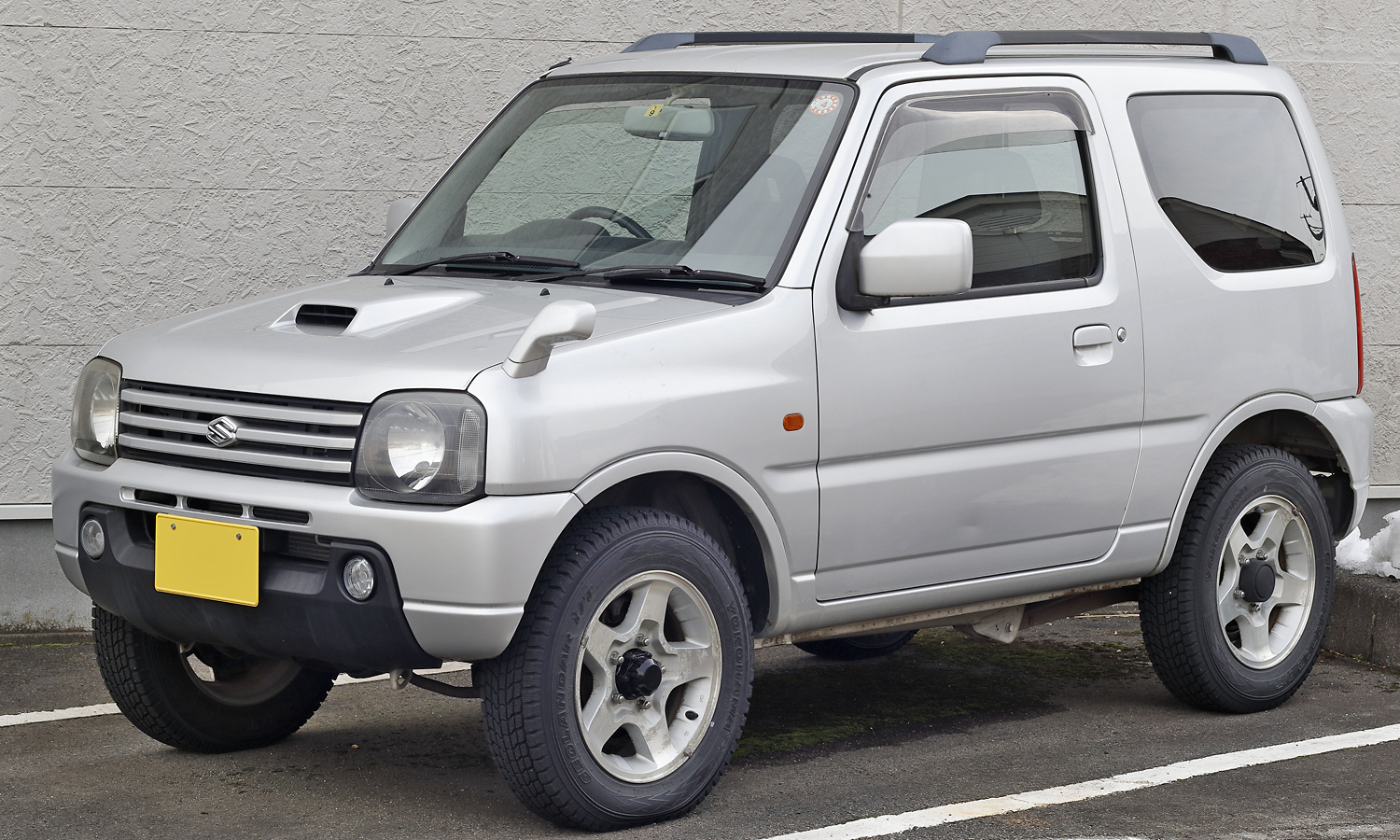
Shown at the 1997 Tokyo motor show and updated in 2005 and 2012, the third Jimny has rounded square headlights, a small grille, a bonnet scoop, round fog lamps and flared arches. Ground clearance is 190 mm, and the spare wheel hangs uncovered on the side-hinged tailgate.
The front seats are comfortable even on long trips, and the wide door lets rear passengers climb in without folding the seat. The dashboard is hard plastic but well assembled; seats are hard-wearing fabric or optional leather. Air conditioning, two airbags and a double-DIN radio were fitted. The rear bench suits two teenagers rather than adults. The boot holds just 113 litres, or 816 litres with the rear seats folded, though the floor has a noticeable step.
The 1.3-litre four-cylinder with two camshafts, 16 valves, multi-point injection and variable valve timing produces 63 kW (85 PS) and 110 Nm. A five-speed manual is standard and a four-speed automatic optional; consumption is 7.3–7.8 l/100 km, top speed 135–140 km/h and 0–100 km/h takes 14.1–17.2 seconds. The part-time system has three modes: 2WD (rear-wheel drive), 4WD (front axle engaged, up to 100 km/h) and 4WD-L with low range. The Jimny can wade through 450 mm of water. A three-section ladder frame carries the body on rubber mounts; both axles are rigid on coil springs, located by trailing arms and Panhard rods. Steering is rack-and-pinion with hydraulic assistance, and the brakes are ventilated front discs and rear drums with ABS.
Fourth generation (2018 onwards)
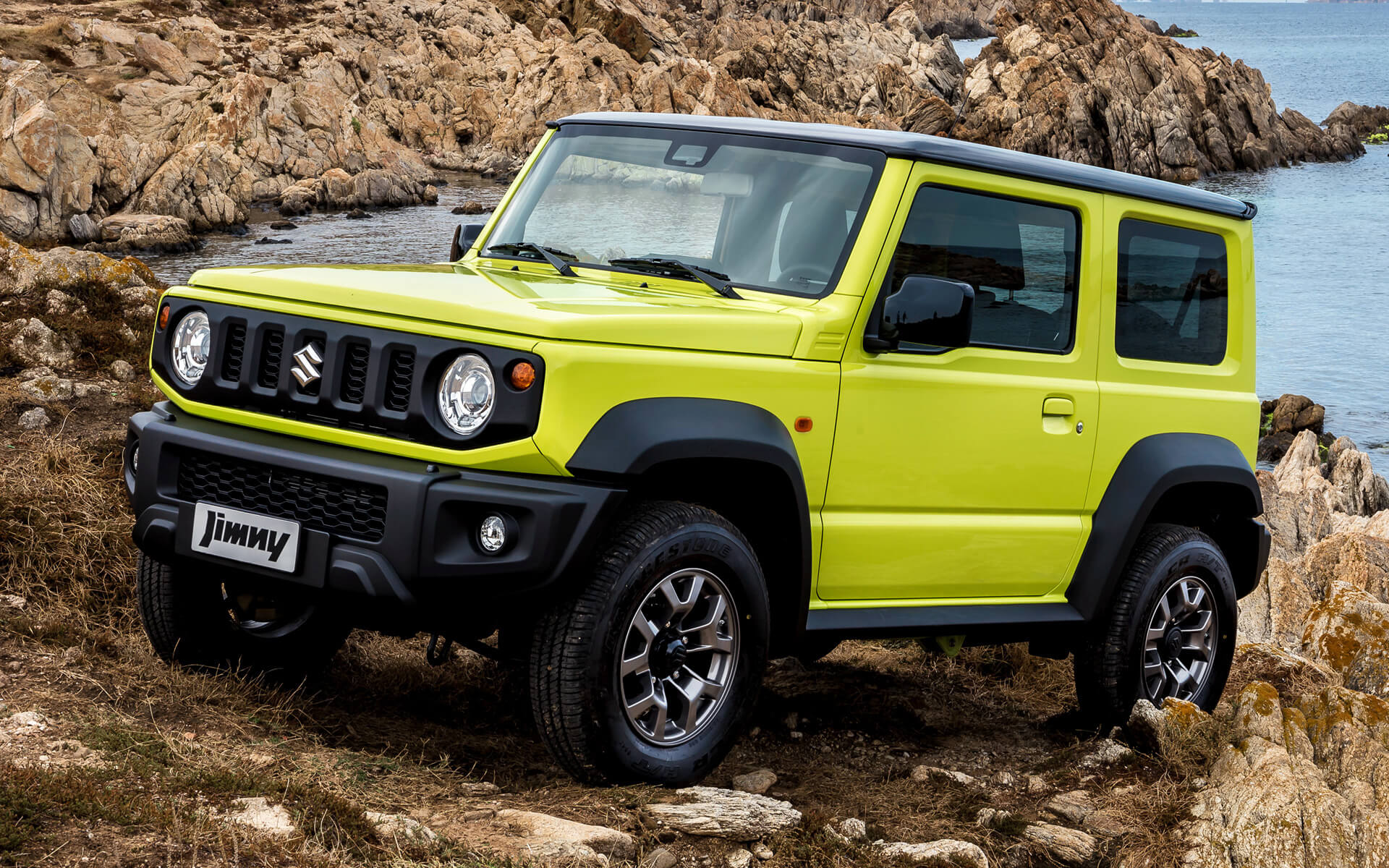
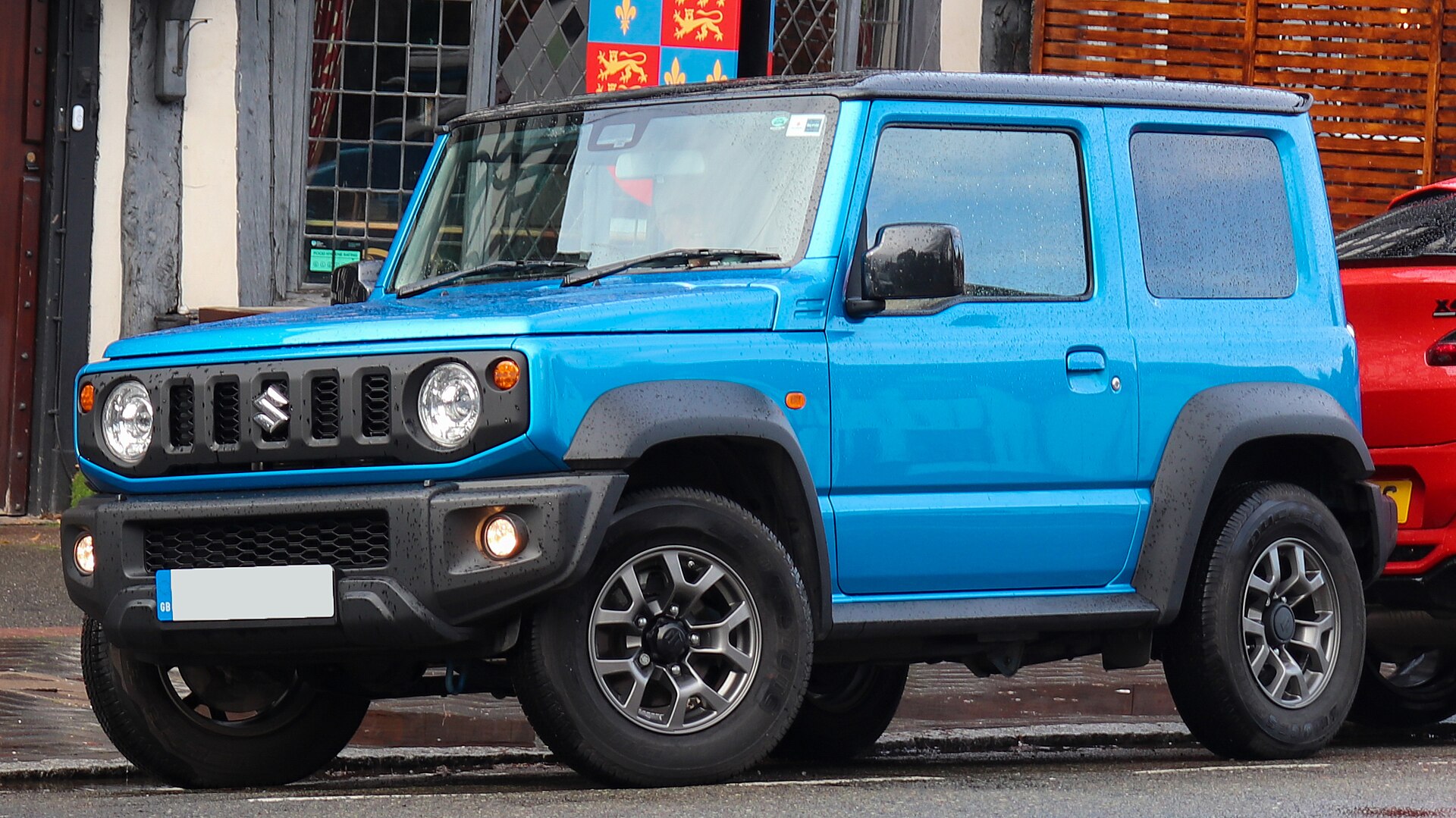
The fourth Jimny looks tougher than ever, with a boxy body that recalls the Mercedes-Benz G-Class, round headlights, a grille with five vertical slots and a solid bumper with fog lamps. Short overhangs, plastic-protected wheel arches, a flat roof and large windows for good visibility off-road complete the look. Ground clearance is 210 mm, the approach angle 37 degrees and the departure angle 49 degrees. Wheels are 15-inch steel or alloy (16-inch in Japan), and a full-size spare sits on the tailgate.
The interior echoes the angular exterior: a three-spoke multifunction wheel, two analogue dials with a trip display, a 7-inch infotainment screen and three round climate controls. Materials are inexpensive but well made, and there is exposed metal in the rear. It is strictly a four-seater, with comfortable, supportive front seats and limited rear legroom. The boot holds 85 litres; with the rear seats folded it becomes a flat 830-litre load area with a wide opening and low sill.
Engines and transmissions
| Generation | Engines | Power (kW / PS) | Gearboxes |
|---|---|---|---|
| 1st (1970–1981) | 0.36 two-stroke twin; 0.8 four-cylinder | 18–30 kW / 25–41 PS | 4-speed manual |
| 2nd (1981–1998) | 0.7–1.3 petrol; 1.9 turbodiesel | 40–56 kW / 55–76 PS (diesel 46 kW / 62 PS) | 4- or 5-speed manual |
| 3rd (1998–2018) | 1.3 petrol, 16 valves | 63 kW / 85 PS, 110 Nm | 5-speed manual, 4-speed automatic |
| 4th (2018–) | 1.5 K15B petrol, 16 valves | 75 kW / 102 PS, 130 Nm | 5-speed manual, 4-speed automatic |
The fourth generation keeps part-time four-wheel drive without a centre differential — the front axle is engaged at up to 100 km/h on loose or slippery surfaces — plus a transfer case with low range. The ladder frame uses high-strength steel and carries the body on eight rubber mounts; both axles are rigid on coil springs. Steering is a worm-and-roller type with hydraulic assistance and a damper that reduces kickback, and the brakes are front discs and rear drums with ABS.
Safety (fourth generation)
Front and side airbags, ABS, stability control, headrests for all seats, ISOFIX mounts, LED headlights, fog lamps, cruise control and the Safety Support autonomous braking system with pedestrian recognition are available.
Strengths and weaknesses
Owners love the Jimny's compact size and exceptional off-road ability; the ladder frame is a real advantage. Fuel consumption rises on the motorway, the boot is tiny, the cabin is basic and, in the latest model, the exposed metal in the rear is not to everyone's taste. It is a specialist vehicle rather than a city car; serious off-road rivals are much larger, such as the Mitsubishi Pajero Sport and Toyota Land Cruiser Prado.
Suzuki Jimny evolution in numbers
Did you know?
- The Suzuki Jimny has been around for 56 years: 4 generations in our catalog since 1970.
- The longest-running generation is the Jimny JB23/JB33/JB43 (1998–2018): 20 years.
Image credits · Photos from Wikimedia Commons under free licences
- Suzuki Jimny LJ · Photo: Mytho88 / Wikimedia Commons, CC BY-SA 3.0
- Suzuki Jimny SJ · Photo: Tennen-Gas / Wikimedia Commons, CC BY-SA 3.0
- Suzuki Jimny JB23/JB33/JB43 · Photo: 天然ガス / Wikimedia Commons, CC BY-SA 4.0
- Suzuki Jimny JB64/JB74 · Photo: Vauxford / Wikimedia Commons, CC BY-SA 4.0
FAQ
How many generations of the Suzuki Jimny are there?
Four: 1970, 1981, 1998 and 2018.
What engine does the new Suzuki Jimny have?
A 1.5-litre K15B four-cylinder petrol engine with 75 kW (102 PS) and 130 Nm, with a five-speed manual or four-speed automatic.
Is the Suzuki Jimny a real off-roader?
Yes. It has a ladder frame, rigid axles, part-time four-wheel drive with low range, 210 mm of ground clearance and approach/departure angles of 37/49 degrees.
How big is the Suzuki Jimny boot?
The fourth generation has 85 litres with four seats and 830 litres with the rear seats folded.
Data sources
Data checked by an editor against the sources below.