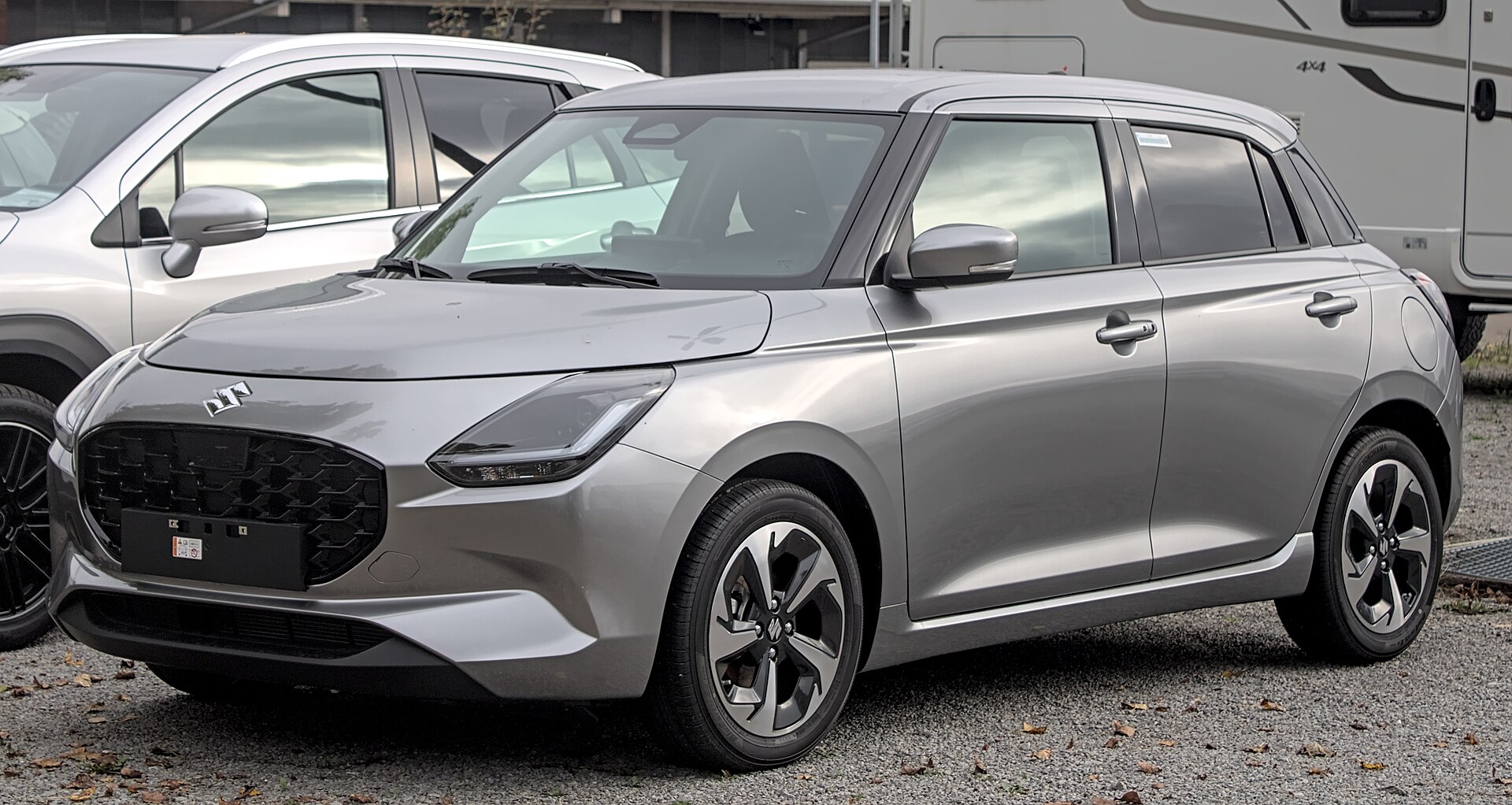
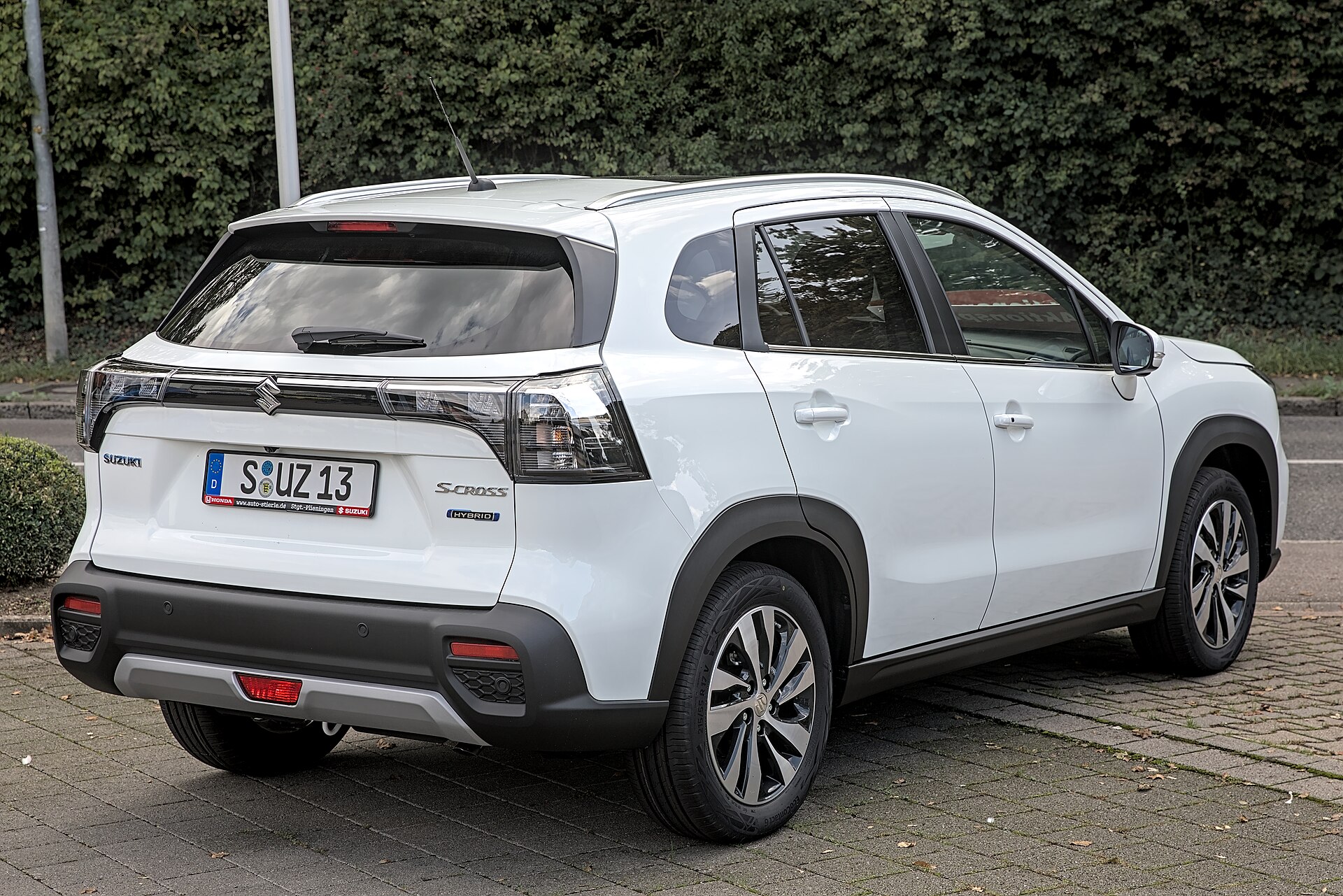
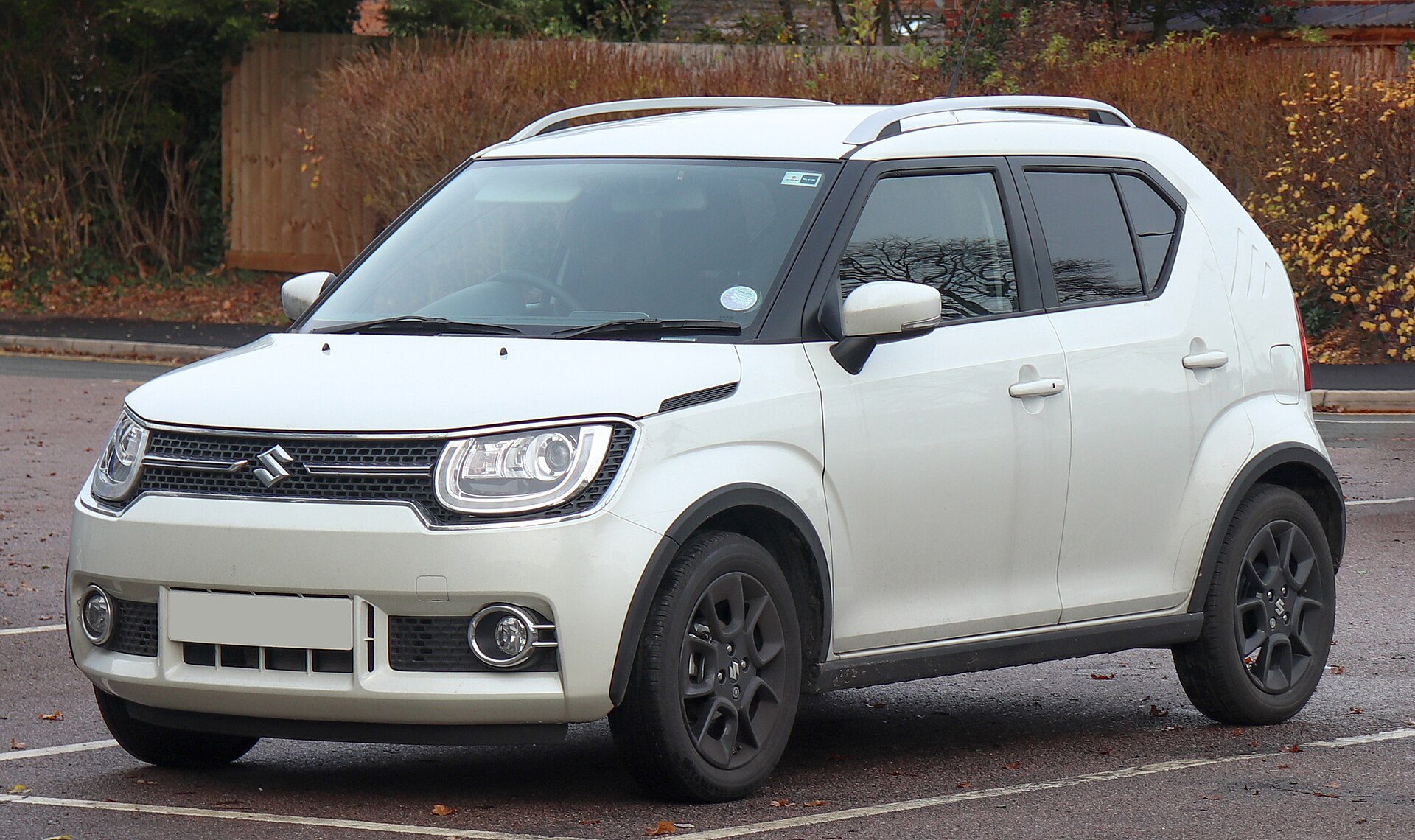
 Suzuki SX4
Specs, engines and history
Published Sources (1) Report an error
By Felix Hartmann, Automotive Technology & EV Contributor
- Built
- 2006–2021
- Top power
- 112 kW (152 PS)
Which SX4 to buy: verdict
Our verdict · Felix Hartmann
- Best all-rounder: an SX4 S-Cross 1.4 Boosterjet (2016-2020) with 103 kW, quick and available with Allgrip.
- Most efficient: the 2020-2021 S-Cross 1.4 Boosterjet Hybrid, with WLTP figures of 5.4 l/100 km in front-wheel-drive form.
- Cheapest four-wheel drive: a first-generation SX4 1.6 with i-AWD, compact and simple, but with a 270-litre boot.
- Long distances: a 2009-2014 SX4 2.0 DDiS with 99 kW and 320 Nm, or a pre-2018 S-Cross 1.6 DDiS.
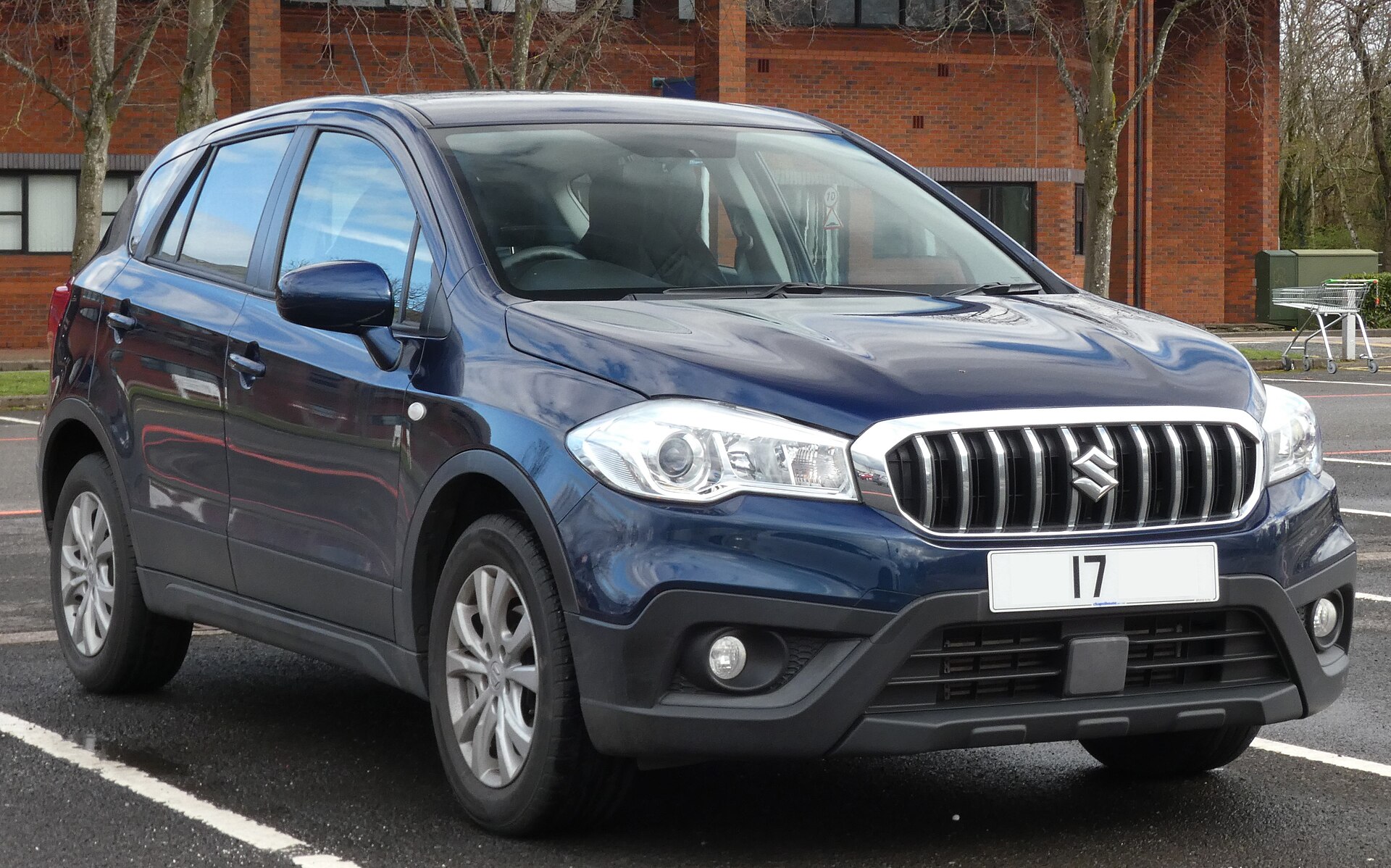
The Suzuki SX4 is a compact crossover that Suzuki built in two generations for Europe: the original SX4 of 2006-2014, a tall hatchback and saloon developed with Fiat and styled by Italdesign Giugiaro, and the larger SX4 S-Cross of 2013-2021. Both were built at Magyar Suzuki in Esztergom, Hungary, and both offered on-demand four-wheel drive. In 2021 the S-Cross was replaced by a heavily reworked successor sold simply as the Suzuki S-Cross.
In short
- SX4 I (2006-2014): 4.1 m hatchback or 4.5 m saloon, petrol and Fiat/PSA diesel engines from 66 to 112 kW, i-AWD four-wheel drive, four Euro NCAP stars (2006).
- SX4 S-Cross (2013-2021): 4.3 m crossover with a 440-litre boot, Allgrip four-wheel drive and five Euro NCAP stars (2013).
- From 2016 the S-Cross used Boosterjet turbo petrol engines (82 and 103 kW); from 2020 only a 48-volt 1.4 mild hybrid with 95 kW (129 PS).
- SX4 was short for "Sports X-over 4 Seasons"; the name was shared with the Fiat Sedici twin of the first generation.
Suzuki SX4 at a glance
| Specification | SX4 I (2006-2014) | SX4 S-Cross (2013-2021) |
|---|---|---|
| Segment | B/C-segment crossover | C-segment SUV |
| Body | 5-door hatchback, 4-door saloon | 5-door SUV |
| Built (Europe) | Esztergom, Hungary | Esztergom, Hungary |
| Length | 4,115 mm (hatchback) | 4,300 mm |
| Wheelbase | 2,500 mm | 2,600 mm |
| Power range (Europe) | 66-99 kW (petrol and diesel) | 82-103 kW |
| Four-wheel drive | i-AWD | Allgrip |
| Twin model | Fiat Sedici | none |
Both generations, and every other Suzuki, are listed in our Suzuki catalogue.
Generations and model history
| Generation | Code | Years | Body styles | Engines | Power (kW / hp) |
|---|---|---|---|---|---|
| SX4 I | GY, EY, RW | 2006-2014 | 5-door hatchback, 4-door saloon | 1.5, 1.6, 2.0 petrol; 1.6, 1.9, 2.0 diesel | 66-112 kW (90-152 PS) |
| SX4 S-Cross | JY | 2013-2021 | 5-door SUV | 1.6, 1.0 and 1.4 Boosterjet petrol, 1.4 mild hybrid; 1.6 diesel | 82-103 kW (112-140 PS) |
SX4 I (2006-2014): the Fiat co-production
Suzuki and Fiat signed a joint development agreement in April 2003. The design came from Giorgetto Giugiaro's Italdesign, the Japanese launch followed on 1 December 2005 and the international debut at the Geneva Motor Show in March 2006. Magyar Suzuki in Esztergom built both the SX4 and the Fiat Sedici for Europe; further plants in Japan, India, China and Indonesia supplied other markets. A saloon joined the hatchback in 2007.
The 2010 update brought a new grille and cabin, six airbags and optional ESP on the 1.6. A second facelift followed in 2012. The first generation remained in production until 2014, and ADAC lists the German cars as 2006-2010 and 2009-2014 (facelift). Suzuki also entered the World Rally Championship with the SX4 WRC in 2007.
SX4 S-Cross (2013-2021): a bigger crossover
The second generation kept the SX4 badge but grew into a C-segment SUV: 4,300 mm long, with a wheelbase 100 mm longer than before and a much bigger boot. European sales began in autumn 2013; production stayed in Esztergom. The Fiat twin ended with this generation; Fiat replaced the Sedici with the 500X.
The 2016 facelift (ADAC: from 10/2016) brought the turbocharged Boosterjet petrol engines. In spring 2020 the conventional petrol and diesel engines were dropped to meet Euro 6d, and the S-Cross became a 48-volt mild hybrid. Production for Europe ended in 2021; the successor, unveiled on 25 November 2021, kept the same dimensions under a new body and drops the SX4 prefix.


Engines, transmissions and performance
| Engine | Generation | Years | Power | Torque |
|---|---|---|---|---|
| 1.5 VVT petrol | SX4 I | 2006-2012 | 73 kW (99 PS) | 133 Nm |
| 1.6 VVT petrol (M16A) | SX4 I / S-Cross | 2009-2016 | 88 kW (120 PS) | 156 Nm |
| 2.0 VVT petrol (J20B) | SX4 I | 2010-2014 | 112 kW (152 PS) | 190 Nm |
| 1.9 DDiS diesel | SX4 I | 2006-2009 | 88 kW (120 PS) | 280 Nm |
| 2.0 DDiS diesel | SX4 I | 2009-2014 | 99 kW (135 PS) | 320 Nm |
| 1.0 Boosterjet | S-Cross | 2016-2019 | 82 kW (112 PS) | 170 Nm |
| 1.4 Boosterjet | S-Cross | 2016-2020 | 103 kW (140 PS) | 220-230 Nm |
| 1.6 DDiS diesel | S-Cross | to 2018 | 88 kW (120 PS) | - |
| 1.4 Boosterjet Hybrid (48 V) | S-Cross | 2020-2021 | 95 kW (129 PS) | 235 Nm |
Not every engine was sold in every market; a 1.8-litre petrol with 96 kW, for example, was offered only in China. The first-generation SX4 used a six-speed manual from 2010 and offered four-speed automatics and, on the 2.0, a CVT. The S-Cross had five- and six-speed manuals, a six-speed automatic and, for the 1.6 DDiS with Allgrip, the six-speed TCSS dual-clutch gearbox.
The mild hybrid of 2020 uses a 48-volt integrated starter generator that adds 10 kW and 53 Nm. With it, the S-Cross 1.4 Boosterjet Hybrid reaches 190 km/h.
Four-wheel drive: i-AWD and Allgrip
The first SX4's i-AWD had three modes: 2WD for economy, AUTO for automatic torque distribution, and LOCK, which fixes a 50:50 split up to 64 km/h. The S-Cross switched to Allgrip with four driving modes; it can send torque to the rear wheels before the fronts lose grip.
Dimensions, space and boot
| Parameter | SX4 I hatchback (metric / imperial) | SX4 S-Cross (metric / imperial) |
|---|---|---|
| Length | 4,115 mm / 162.0 in | 4,300 mm / 169.3 in |
| Width | 1,730 mm / 68.1 in | 1,785 mm / 70.3 in |
| Height | 1,585 mm / 62.4 in | 1,580 mm / 62.2 in |
| Wheelbase | 2,500 mm / 98.4 in | 2,600 mm / 102.4 in |
| Ground clearance | - | 175 mm / 6.9 in |
| Kerb weight (EU) | 1,235 kg / 2,723 lb (1.6) | 1,255 kg / 2,767 lb (1.4 Hybrid) |
| Boot, seats up / folded | 270 / 1,045 l | 440 / 1,269 l |
| Fuel tank | 50 l / 13.2 US gal | 47 l / 12.4 US gal |
The boot is where the two generations differ most: the S-Cross offers 440 litres against 270 litres in the first SX4 hatchback. The SX4 saloon of 2007-2014 was 4,490-4,511 mm long.

Fuel economy and running costs
ADAC lists the first-generation SX4 1.6 at 6.2 l/100 km (NEDC) and 141 g/km of CO2. The S-Cross 1.4 Boosterjet Hybrid with front-wheel drive is rated at 5.4 l/100 km (about 44 mpg US) and 122 g/km under the stricter WLTP cycle. The front-wheel-drive S-Cross was the cheaper choice; in Germany the Allgrip cost roughly EUR 1,700-1,850 more in the same trim (2016-2021 list prices).
Trims and equipment
German S-Cross trims were Club, Comfort and Comfort+. ADAC lists these starting prices:
- 1.0 Boosterjet Club: EUR 19,790 (10/2016-08/2018)
- 1.4 Boosterjet Comfort Allgrip: EUR 25,390 (10/2016-08/2019)
- 1.6 DDiS Comfort+ Allgrip TCSS: EUR 31,490 (10/2016-08/2018)
- 1.4 Boosterjet Hybrid Club: EUR 25,090 (03/2020-12/2021)
- 1.4 Boosterjet Hybrid Comfort+ Allgrip automatic: EUR 33,590 (04/2021-12/2021)
The first-generation SX4 Streetline 1.6 Club started at EUR 15,990 (ADAC, 10/2009-02/2013).
Safety
Euro NCAP awarded the first SX4 four stars in 2006; ADAC's record gives 78% for adult occupant protection. Australia's ANCAP rated a 2007 five-door hatchback with one star overall, with no ESC available. The SX4 S-Cross earned the full five Euro NCAP stars in 2013, and ANCAP's front-wheel-drive test of the same year recorded 14.30 of 16 points in the frontal offset test and full marks in the side and pole tests. See our safety section for current results.
Reliability and known issues
Our sources do not document a recurring fault pattern for either generation, so we do not list one. Practical points for buyers are structural: the first-generation diesels came from Fiat and PSA, the 2016-2020 S-Cross petrol engines are small turbocharged units, and the 2020-2021 mild hybrid adds a 48-volt system. For four-wheel-drive cars, check that all Allgrip or i-AWD modes engage.
Sales
The first SX4 sold best in 2008, with 51,985 registrations in Europe; together with the Fiat Sedici the twins reached about 75,000 that year. China was the largest single market for the SX4 in 2011 with 66,964 cars. The S-Cross peaked in Europe in 2014 with 39,070 registrations.
Rivals
| Model | Engines | Power (kW / hp) | Boot (l) | Price from (EUR) |
|---|---|---|---|---|
| Suzuki SX4 S-Cross (2016-2021) | 1.0/1.4 Boosterjet, 1.4 Hybrid, 1.6 DDiS | 82-103 kW (112-140 PS) | 440 | 19,790 (2016) |
| Nissan Qashqai J11 facelift (2017-2021) | 1.2/1.3/1.6 DIG-T, 1.5/1.6/1.7 dCi | 81-120 kW (110-163 PS) | 430 | 20,490 (2017) |
| Fiat 500X facelift (2018-2022) | 1.0/1.3 Firefly, 1.6 E-torQ, 1.3/1.6 MultiJet | 70-111 kW (95-150 PS) | 350 | 17,490 (2018) |
The S-Cross offered the largest boot of the three. Use the comparison tool for other crossovers.
Photo gallery

Suzuki SX4 in our rankings
- No. 551 of 1082 · Longest-running car nameplates (8 years · top 54%)
- No. 794 of 1011 · Most powerful cars (112 kW · top 79%)
- No. 106 of 130 · Most powerful Japanese cars (112 kW · top 82%)
In production longer than 46% of ranked nameplates in the 1CARS catalog (No. 551 of 1082).
FAQ
How many generations of the Suzuki SX4 are there?
Two carried the SX4 name in Europe: the SX4 (2006-2014) and the SX4 S-Cross (2013-2021). The 2021 Suzuki S-Cross is a heavily reworked successor without the SX4 prefix.
What does SX4 stand for?
Suzuki explains it as "Sports X-over 4 Seasons", pointing to the crossover body and four-wheel drive.
Where was the Suzuki SX4 built?
European cars of both generations came from Magyar Suzuki in Esztergom, Hungary. The first generation was also built in Japan, India, China and Indonesia.
Is the Suzuki SX4 S-Cross safe?
It received five stars from Euro NCAP in 2013. The first-generation SX4 had four stars in 2006.
How big is the boot of the SX4 S-Cross?
440 litres with the rear seats up and 1,269 litres with them folded, according to ADAC.
Data sources
Data checked by an editor against the sources below.