 Suzuki Ignis
All generations, specs and history
Published Sources (4) Report an error
By Felix Hartmann, Automotive Technology & EV Contributor
- Built
- 2000–2024
- Generations
- 2
- Top power
- 80 kW (109 PS)
- Euro NCAP
- 3 stars · Ignis II
Timeline
Ignis generations
Click a generation for its own page

- Ignis HT51S/HT81S 2000–2008 · Hatchback · 61–80 kW (83–109 PS)
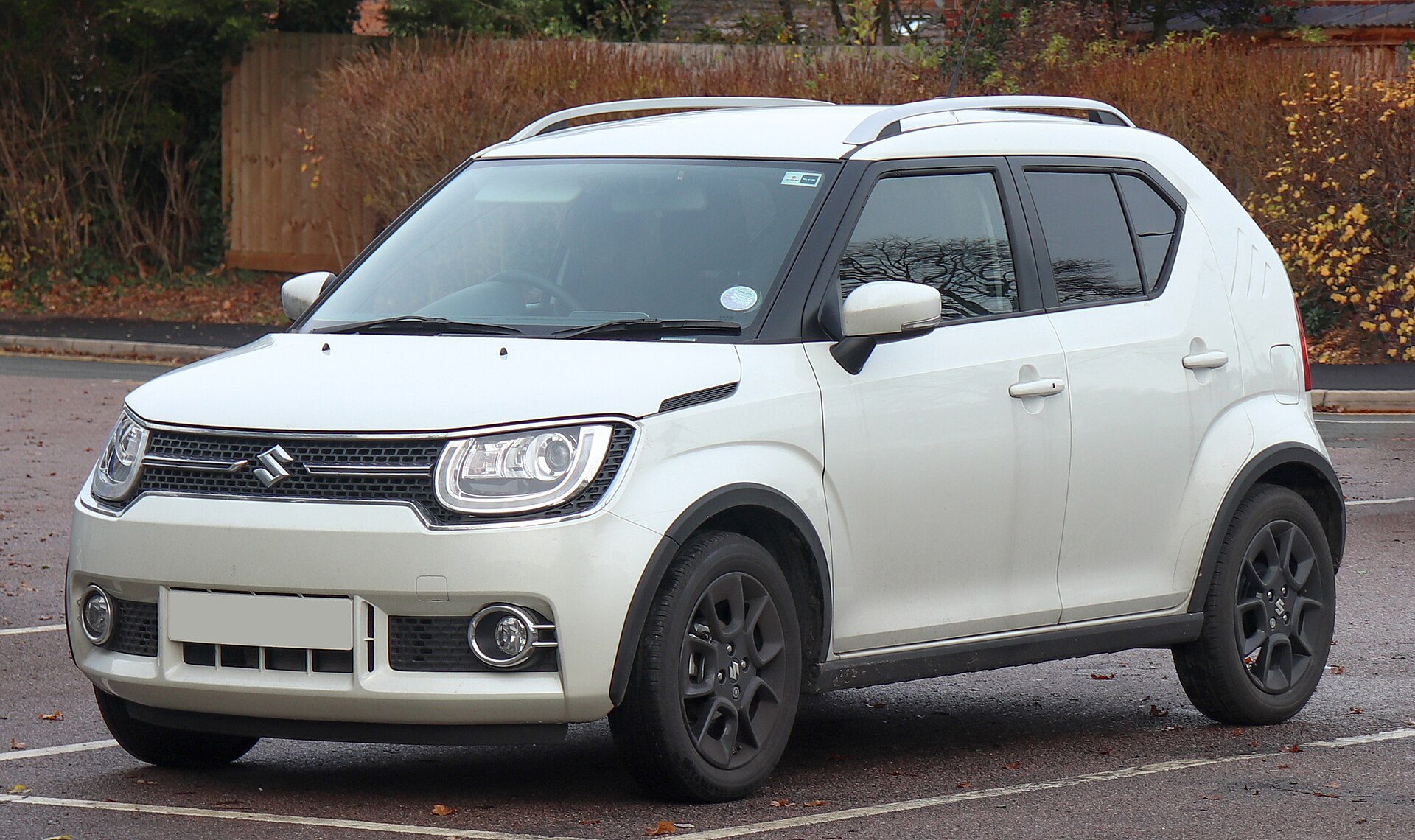
- Ignis II 2016–2024 · Hatchback, Crossover · 61–66 kW (83–90 PS)
Newest first · 2 generations since 2000
-
2016
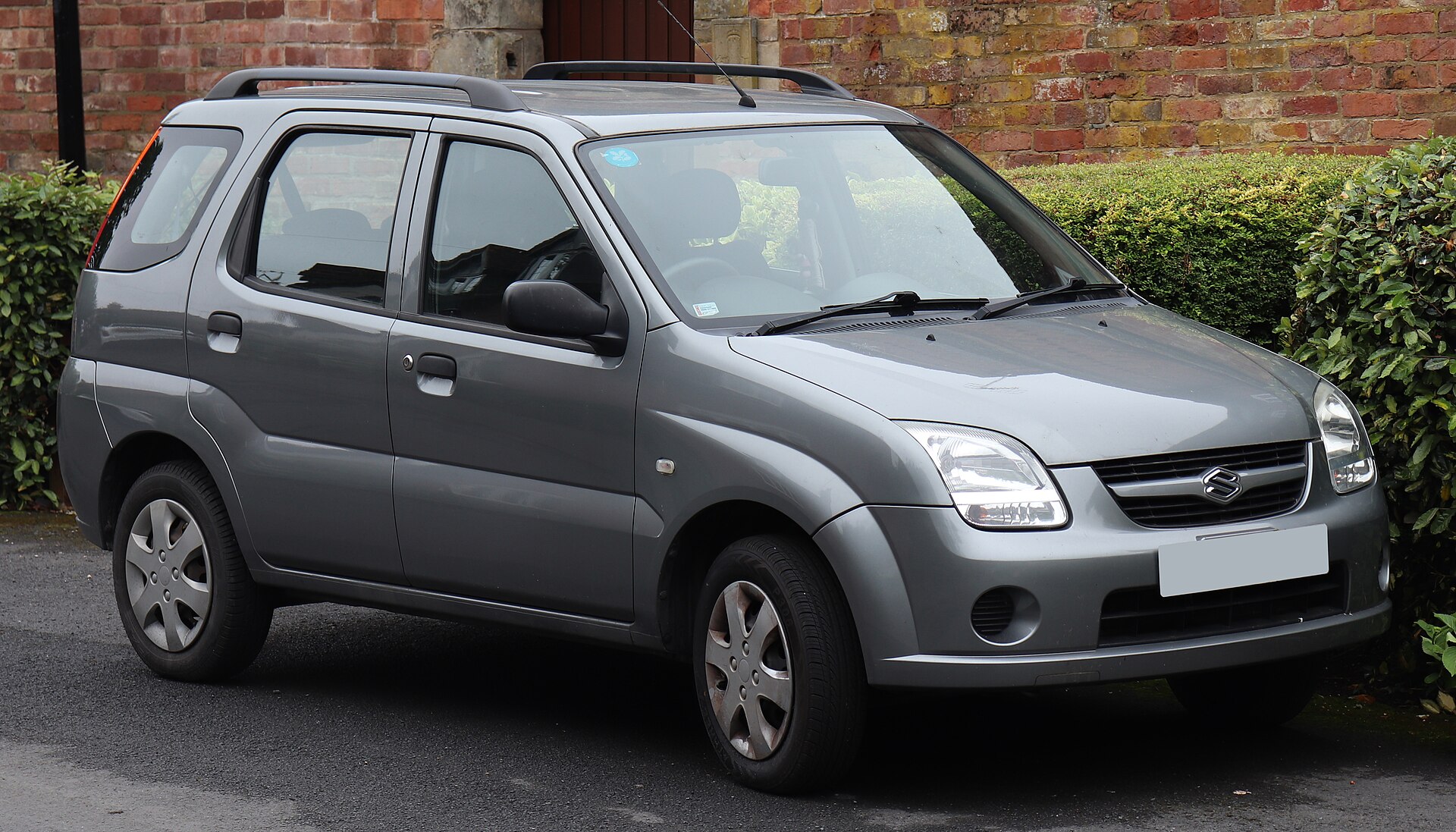
- 2000 HT51S/HT81S 2000–2008 · Hatchback · 61–80 kW (83–109 PS)
All generations by year: Ignis II (2016–2024) · Ignis HT51S/HT81S (2000–2008)
Which one is mine?
Pick the year of first registration to see which generation it is.
- Ignis II 2016–2024
- HT51S/HT81S 2000–2008
Which Ignis to buy: verdict
Our verdict · Felix Hartmann
- Best all-rounder: a 2020-2024 1.2 Dualjet Hybrid with front-wheel drive and the manual gearbox: lightest, most economical and with the biggest boot.
- For snow and rough roads: the Allgrip manual, which keeps the 180 mm of ground clearance and adds rear drive when needed.
- For town driving: the CVT automatic of 2020-2024 rather than the older AGS automated manual.
- On a tight budget: a 2017-2020 car with the 66 kW engine; ask whether the SHVS mild-hybrid option was fitted.
The Suzuki Ignis is a small Suzuki that has carried the same name in two very different forms: a conventional supermini from 2000 to 2008 and, from 2016, a 3.7-metre micro SUV with a high seating position and optional four-wheel drive. In Europe the second generation was sold only with a 1.2-litre petrol engine, from 2020 as a 12-volt mild hybrid with 61 kW (83 PS). Suzuki withdrew it from European showrooms in 2024 as it trimmed its range to meet the tighter EU CO2 fleet target for 2025.
In short
- Two generations: Ignis I (2000-2008, from 2003 built in Esztergom, Hungary, for Europe) and Ignis II (2016-2024 in Europe, built in Japan).
- Ignis II is 3,700 mm long, weighs from 935 kg and has up to 180 mm of ground clearance; Allgrip four-wheel drive was optional.
- The 2020 facelift brought the 1.2 Dualjet Hybrid with 61 kW (83 PS) and 107 Nm, and a CVT in place of the AGS automated manual.
- Euro NCAP (2016): three stars as standard, five stars with the optional Safety Pack.
Size at a glance
| Dimensions | Suzuki Ignis II |
|---|---|
| Length | 3,700 mm145.7 in |
| Width | 1,690 mm66.5 in |
| Height | 1,605 mm63.2 in |
| Wheelbase | 2,435 mm95.9 in |
| Boot | 267 L9.4 cu ft |
Running cost
Fuel · Ignis 1.2 Dualjet Hybrid
about 1,300 EUR fuel a year at 15,000 km
4.9 l/100 km · petrol at 1.75 EUR/l · change mileage, fuel price or version
Specs by version
Engines
| Version | Engine | Power | Torque | Gearbox | Drive | Production years |
|---|---|---|---|---|---|---|
| Hybrid · 2 versions | ||||||
| Ignis II · 1.2 Dualjet Hybrid | 1.2 l · 4 cyl · Hybrid K12D | 61 kW 83 PS82 hp | 107 Nm79 lb-ft | 5-sp Manual | Front-wheel drive | 2020–2024 |
| Ignis II · 1.2 Dualjet Hybrid Allgrip | 1.2 l · 4 cyl · Hybrid K12D | 61 kW 83 PS82 hp | 107 Nm79 lb-ft | 5-sp Manual | All-wheel drive | 2020–2024 |
| Petrol · 1 version | ||||||
| Ignis II · 1.2 Dualjet | 1.2 l · 4 cyl · Petrol 1,197 cc | 66 kW 90 PS89 hp | 120 Nm89 lb-ft | - | Front-wheel drive | 2016–2020 |
Performance
Show all 2 versions
| Version | 0–100 km/h | Top speed | Fuel consumption | CO₂ |
|---|---|---|---|---|
| Ignis II · 1.2 Dualjet Hybrid | 12.7 s 0–62 mph | 165 km/h103 mph | 4.9 l/100 km48.0 mpg US · 57.6 mpg UK | 110 g/km |
| Ignis II · 1.2 Dualjet Hybrid Allgrip | 12.8 s 0–62 mph | 165 km/h103 mph | 5.4 l/100 km43.6 mpg US · 52.3 mpg UK | 121 g/km |
Dimensions and weight
Show all 2 versions
| Version | Length | Width | Height | Wheelbase | Kerb weight | Boot | Fuel tank |
|---|---|---|---|---|---|---|---|
| Ignis II · 1.2 Dualjet Hybrid | 3,700 mm145.7 in | 1,690 mm66.5 in | 1,605 mm63.2 in | 2,435 mm95.9 in | 935 kg2,061 lb | 267 l9.4 cu ft | 32 l8.5 gal US |
| Ignis II · 1.2 Dualjet Hybrid Allgrip | 3,700 mm145.7 in | - | 1,605 mm63.2 in | - | 985 kg2,172 lb | 204 l7.2 cu ft | - |
Verified Manufacturer and type-approval data from our catalog · Sources and methodology
Safety
-
Ignis II · Euro NCAP 2016
Older protocol · Full Euro NCAP result
Stars from different years and organisations are not directly comparable: test protocols change every few years.
Suzuki Ignis at a glance
| Specification | Suzuki Ignis II (Europe) |
|---|---|
| Segment | A-segment city car with SUV styling |
| Body | five-door hatchback |
| Built | Sagara plant, Makinohara (Japan); Gurgaon (India) for the Indian market |
| Length / width / height | 3,700 / 1,690 / 1,605 mm |
| Wheelbase | 2,435 mm |
| Kerb weight | 935 kg (FWD) to 985 kg (Allgrip) |
| Engine | 1.2-litre four-cylinder petrol, mild hybrid optional (standard from 2020) |
| Power | 66 kW (90 PS) to 2020; 61 kW (83 PS) from 2020 |
| Drive | front-wheel drive or Allgrip four-wheel drive |
| Boot | 267 l (FWD), 204 l (Allgrip) |
ADAC files the car as a "Kleinstwagen" (city car) with an SUV body, and that sums up its appeal: the footprint of an A-segment hatchback with a little more ground clearance and the option of driving all four wheels. All Suzuki models are collected in our Suzuki catalogue.
Generations and model history
| Generation | Code | Years | Body styles | Engines | Power (kW / hp) |
|---|---|---|---|---|---|
| Ignis I | HT51S, HT81S | 2000-2008 | 3-door and 5-door hatchback | 1.3 and 1.5 petrol; 1.3 diesel (Europe from 2003) | 61-80 kW (83-109 PS) in Europe |
| Ignis II | - | 2016-2024 (Europe) | 5-door hatchback / micro SUV | 1.2 Dualjet petrol, 1.2 Dualjet mild hybrid | 61-66 kW (83-90 PS) |
Ignis I (2000-2008): the tall supermini
The first Ignis was a compact hatchback with three or five doors, coded HT51S for the 1.3-litre M13A engine and HT81S for the 1.5-litre M15A. Export cars with the 1.3 had 61 kW (83 PS). The Ignis Sport used the 1.5 with 80 kW (109 PS) in Europe and reached 100 km/h in 8.9 seconds and a top speed of 185 km/h. Four-wheel drive was offered alongside front-wheel drive.
In 2003 Europe received a lengthened version built by Magyar Suzuki in Esztergom, Hungary, about 145 mm longer than the Japanese car. It also brought a 1.3-litre Fiat Multijet turbodiesel. Subaru sold a badge-engineered version as the G3X Justy from 2003 to 2007, and Suzuki campaigned the Ignis S1600 in rallying. ADAC lists the European cars in two steps: 2000-2005 and 2003-2008.
Ignis II (2016-2024): the micro SUV
After a gap of eight years the name returned on a very different car, previewed by the iM-4 concept of 2015. Suzuki announced the Japanese launch on 21 January 2016, and the first 1,602 European registrations followed later that year. The European cars came from Suzuki's Sagara plant in Japan; Maruti Suzuki built the Indian version in Gurgaon with different engines.
The facelift went on sale in Japan on 4 February 2020, in Germany in April 2020 and in the UK in August 2020. It added a new grille and bumpers, three new metallic paints and revised trim colours, but the main change was under the bonnet.


Engines, transmissions and performance
| Engine | Years (Europe) | Power | Torque | Gearbox | 0-100 km/h | Top speed |
|---|---|---|---|---|---|---|
| 1.2 Dualjet (SHVS optional) | 2016-2020 | 66 kW (90 PS) | 120 Nm | 5-speed manual or 5-speed AGS | - | - |
| 1.2 Dualjet Hybrid, FWD | 2020-2024 | 61 kW (83 PS) | 107 Nm | 5-speed manual or CVT | 12.7 s | 165 km/h |
| 1.2 Dualjet Hybrid, Allgrip | 2020-2024 | 61 kW (83 PS) | 107 Nm | 5-speed manual | 12.8 s | 165 km/h |
The European Ignis II has a single engine family: a naturally aspirated 1,197 cc four-cylinder. Before 2020 the 12-volt SHVS mild-hybrid system was an option; the K12D Dualjet Hybrid of the facelift made it standard and enlarged the lithium-ion battery from 3 Ah to 10 Ah. Nominal output fell from 66 to 61 kW, but Suzuki quoted up to 11% better efficiency, depending on the version.
The automated five-speed AGS of the early cars was replaced by a CVT at the facelift. Allgrip four-wheel drive uses a viscous coupling that sends part of the torque to the rear axle on snow, ice or wet roads, and in Europe it was available only with the manual gearbox.
Dimensions, space and boot
| Parameter | Metric | Imperial |
|---|---|---|
| Length | 3,700 mm | 145.7 in |
| Width (without mirrors) | 1,690 mm | 66.5 in |
| Height | 1,605 mm | 63.2 in |
| Wheelbase | 2,435 mm | 95.9 in |
| Ground clearance (max.) | 180 mm | 7.1 in |
| Kerb weight (EU) | 935-985 kg | 2,061-2,172 lb |
| Boot, FWD (seats up / folded) | 267 / 1,097 l | 9.4 / 38.7 cu ft |
| Boot, Allgrip (seats up / folded) | 204 / 1,086 l | 7.2 / 38.4 cu ft |
| Fuel tank | 32 l | 8.5 US gal |
The Allgrip version gives up 63 litres of boot space to the four-wheel-drive hardware. Comfort versions have two individually sliding rear seats, which lets owners trade legroom against luggage room. At 3.70 m the Ignis is 30 mm longer than a third-generation Hyundai i10, so it parks like a city car; our size comparison tool puts it next to any other model.

Fuel economy and running costs
Under the WLTP cycle ADAC lists 4.9 l/100 km (about 48 mpg US) and 110 g/km of CO2 for the front-wheel-drive manual, and 5.4 l/100 km (about 44 mpg US) and 121 g/km for the Allgrip. At the 2020 launch Suzuki still quoted 3.9 l/100 km and 89 g/km on the older NEDC cycle for the front-driven car. With a 32-litre tank the real-world range is modest, but the low kerb weight keeps tyres and brakes small and cheap.
Trims and equipment
In Germany the facelifted Ignis came in three trims. The Club had a CD radio with DAB, the Comfort added heated front seats and the sliding rear seats, and the Comfort+ brought cruise control, a smartphone-compatible audio system and extra safety systems. The German base price rose from EUR 13,690 for the pre-facelift Club to EUR 15,470 at the facelift launch in March 2020.
ADAC's final list prices for the 2020-2024 model period were EUR 18,210 for the Club, EUR 19,860 for the Comfort, EUR 21,130 for the Comfort CVT, EUR 21,860 for the Comfort Allgrip and EUR 22,700 for the Comfort+ Allgrip.
Safety
Euro NCAP tested a left-hand-drive Ignis 1.2 GL with front-wheel drive in 2016. With standard equipment it scored three stars. The optional Safety Pack, which adds autonomous emergency braking and lane departure warning, lifted the rating to five stars, although the car still had no knee airbags or active bonnet.
The Indian-built Ignis is a different story: in Global NCAP's 2022 test of the Maruti Suzuki version it scored only 16.48 of 34 points for adult protection and 3.86 of 49 for child protection. That car has a different equipment level and is not comparable with the European model. Euro NCAP results of other models are collected in our safety section.
Reliability and known issues
We found no documented, recurring fault pattern for the European Ignis II in the sources used for this guide. Technically it is a simple car: a naturally aspirated four-cylinder without turbocharger or diesel particulate filter, a small 12-volt mild-hybrid battery and conventional suspension. When buying used, check that the Allgrip version has the manual gearbox (as all European Allgrip cars should) and ask for the service history of the CVT on automatic cars.
Sales and the end of the Ignis in Europe
The Ignis II sold steadily in Europe: 41,166 cars in 2017, 43,774 in 2018, 38,091 in 2019, 37,568 in 2020 and 42,206 in 2021, before dropping to 20,826 in 2022. From January to May 2024 Suzuki still registered 17,822 Ignis in the enlarged European market.
On 1 July 2024 Suzuki GB announced that the Ignis, Swace, Swift Sport and Jimny commercial would be discontinued by early 2025, to make room for electric models. Across the EU the reason was the stricter CO2 fleet target of 93.6 g/km from 2025. ADAC's German model period for the Ignis ends in August 2024.

Rivals
| Model | Engines | Power (kW / hp) | Boot (l) | Price from (EUR) |
|---|---|---|---|---|
| Suzuki Ignis (2020-2024) | 1.2 Dualjet Hybrid | 61 kW (83 PS) | 267 | 18,210 (ADAC list, 2020-2024) |
| Hyundai i10 III (2020-2023) | 1.0, 1.2, 1.0 T-GDI | 49-74 kW (67-100 PS) | 252 | 10,713 (2020) |
| Fiat Panda 312 facelift (2020-2025) | 1.0 Hybrid, 0.9 TwinAir, 1.2 LPG | 51-63 kW (70-85 PS) | 225 | 11,990 (2020) |
| Toyota Aygo X (2022-2025) | 1.0 petrol | 53 kW (72 PS) | 231 | 16,150 (2022) |
The Fiat Panda 4x4 is the closest match for the Allgrip version: in 2020 ADAC listed the Panda 0.9 TwinAir Turbo Wild 4x4 from EUR 16,740. The car comparison shows the four side by side.
Photo gallery


Suzuki Ignis: first vs latest generation
| Spec | Ignis HT51S/HT81S | Ignis II | Change |
|---|---|---|---|
| Years | 2000–2008 | 2016–2024 | 16 years apart |
| Most powerful version | 80 kW (109 PS) | 66 kW (90 PS) | −14 kW (−18%) |
Oldest and newest generation in the 1cars catalog. Power is the strongest version of each; other rows are shown only when both generations have the figure.
Suzuki Ignis in our rankings
- No. 7 of 76 · Lightest hatchbacks (935 kg)
- No. 25 of 531 · Smallest cars (3,700 mm · top 5%)
- No. 19 of 391 · Lightest cars (935 kg · top 5%)
- No. 58 of 297 · Most economical cars (4.9 l/100 km · top 20%)
- No. 23 of 93 · Smallest hatchbacks (3,700 mm · top 25%)
- No. 28 of 54 · Most economical hatchbacks (4.9 l/100 km · top 52%)
Shorter than 95% of ranked cars in the 1CARS catalog (No. 25 of 531).
FAQ
How many generations of the Suzuki Ignis are there?
Two under this name in Europe: the Ignis I supermini (2000-2008) and the Ignis II micro SUV, sold in Europe from 2016 to 2024. The 2003 European car built in Hungary was a lengthened version of the first generation.
Is the Suzuki Ignis a hybrid?
From 2020 every European Ignis is a 12-volt mild hybrid with 61 kW (83 PS). The small electric motor assists the petrol engine, but the car cannot drive on electric power alone.
Does the Suzuki Ignis have four-wheel drive?
Yes, as the Allgrip version with a viscous coupling. In Europe it was offered only with the five-speed manual gearbox.
Why was the Suzuki Ignis discontinued in Europe?
Suzuki dropped the Ignis in 2024 to meet the EU's tighter CO2 fleet target for 2025 and to prepare its range for electric models.
How big is the boot of the Suzuki Ignis?
267 litres with front-wheel drive and 204 litres with Allgrip, rising to about 1,100 litres with the rear seats folded.
Data sources
Data checked by an editor against the sources below.
- Wikipedia - Suzuki Ignis
- ADAC - Ignis
- ADAC
- Motor1 - Suzuki Ignis 2020 Facelift Leistung