Best luxury SUVs 2026: seven large premium SUVs compared
A luxury SUV is bought for comfort, refinement and image, but at €70,000 to €110,000 the hard numbers still matter: how much it carries, how much it tows, what it uses and how well it protects you. The seven large premium SUVs below are on sale new in Europe in 2026. They range from the Lexus RX hybrid to the seven-seat BMW X7, which is more than 5.1 metres long.
Quick picks
- Best overall: BMW X5 – new for 2026, 670 Nm diesel at 7.0 l/100 km.
- Best off the road: Range Rover Sport – 283 mm clearance and 900 mm wading depth.
- Best to drive and biggest boot: Porsche Cayenne – 772 litres and 3,500 kg towing.
- Most economical: Lexus RX 350h – 6.3 l/100 km from €73,850.
- Best seven-seater: BMW X7 – seven seats and 3,500 kg towing.
The table compares the entry version of each car with the figures listed by ADAC, Germany's motoring club. Boot volumes are with the rear seats in use.
| Model (version) | Power | WLTP consumption | Boot | Braked towing | List price from, Germany |
|---|---|---|---|---|---|
| BMW X5 (40d xDrive) | 230 kW (352 PS) | 7.0 l/100 km | 655 l | 3,000 kg | €94,800 (2026) |
| Range Rover Sport (D250 S) | 183 kW (249 PS) | 7.1 l/100 km | 647 l | 3,500 kg | €93,500 (2025) |
| Porsche Cayenne (Tiptronic S) | 260 kW (353 PS) | 10.7 l/100 km | 772 l | 3,500 kg | €102,700 (2025) |
| Lexus RX (350h AWD) | 152 kW (207 PS) | 6.3 l/100 km | 461 l | 2,000 kg | €73,850 (2025) |
| BMW X7 (xDrive40d) | 259 kW (352 PS) | 8.0 l/100 km | 750 l | 3,500 kg | €108,500 (2025) |
| Audi Q8 (3.0 TDI quattro) | 170 kW (231 PS) | 8.0 l/100 km | 605 l | 2,800 kg | €90,200 (2025) |
| Volvo XC90 (B5 AWD) | 184 kW (250 PS) | 8.3 l/100 km | 302 l (7 seats) | 2,400 kg | €81,490 (2024) |
Looking for a large SUV that also works as a caravan tow car? The best used diesel estates are a cheaper route to strong towing figures, and the BMW X5 buying guide covers the earlier generations.
-
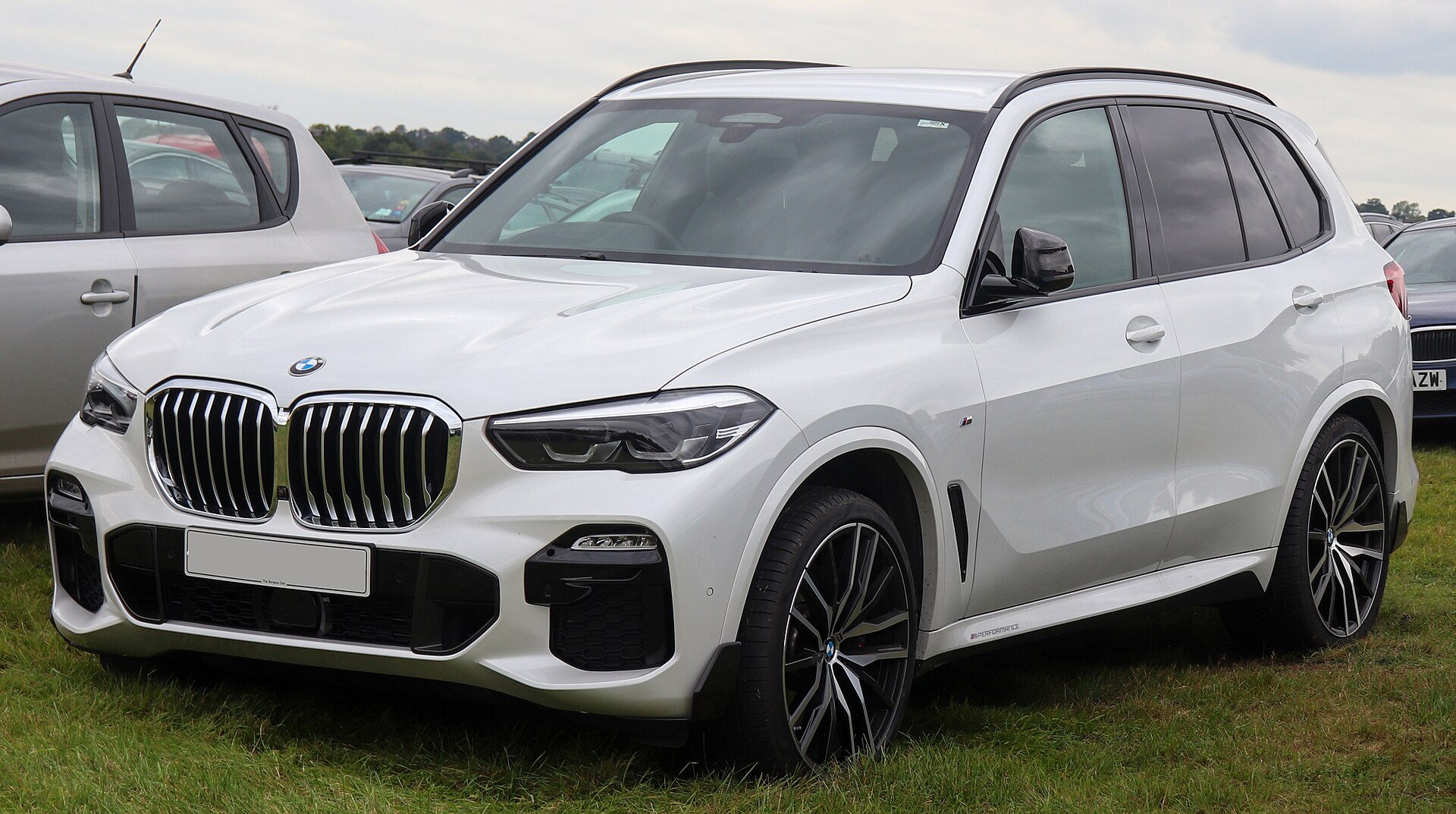
1. BMW X5 G65
Best overall
- Production years
- 2026–present
- Body type
- SUV
- Fuel
- Petrol, Diesel, Plug-in hybrid, Electric
- Power output
- 294–425 kW (400–578 PS)
The fifth-generation X5 reaches German customers from November 2026. The 40d xDrive diesel produces 230 kW (352 PS) and 670 Nm, reaches 100 km/h in 6.1 s and uses 7.0 l/100 km WLTP. The boot holds 655 litres, 1,850 litres with the rear seats folded, and it may tow 3,000 kg braked. A 50e plug-in hybrid with 360 kW and a 40 petrol are also listed. The outgoing X5 had an excellent record: ADAC counts only 1.0 breakdowns per 1,000 for 2023 cars. The drawbacks: the new car had no Euro NCAP result yet, and ADAC lists no manufacturer vehicle warranty.
Full review: BMW X5 G65Pros
- 7.0 l/100 km WLTP (40d)
- 3,000 kg braked towing
- Predecessor among ADAC's most reliable large SUVs
Cons
- No Euro NCAP result yet; from €94,800
-
2. Land Rover Range Rover Sport L461
Best off the road
- Production years
- 2022–present
- Body type
- SUV
- Fuel
- Petrol, Diesel, Plug-in hybrid, Electric
- Power output
- 184–467 kW (250–635 PS)
The third Range Rover Sport arrived in 2022 and is the best prepared for rough terrain in this list. ADAC lists up to 283 mm of ground clearance and 900 mm of wading depth. The D250 diesel mild hybrid has 183 kW (249 PS) and 570 Nm, uses 7.1 l/100 km WLTP and may tow 3,500 kg braked. Petrol and plug-in hybrid versions with up to 395 kW are offered, and cars from September 2023 have a five-year or 150,000 km warranty. The drawback: its 2022 Euro NCAP score of 81 points is the lowest recent result here.
Pros
- 283 mm clearance and 900 mm wading depth
- 3,500 kg braked towing
- Five-year or 150,000 km warranty
Cons
- 81/100 Euro NCAP score (2022)
Spec sheet: Land Rover Range Rover Sport L461 3.0 l D250 184 kW (250 PS)
Full review: Land Rover Range Rover Sport L461 -
3. Porsche Cayenne (9Y0)
Best to drive and biggest boot
- Production years
- 2018–present
- Body type
- SUV
- Fuel
- Petrol, Plug-in hybrid
- Power output
- 250–544 kW (340–740 PS)
The third-generation Cayenne was facelifted in 2023, and the base version has 260 kW (353 PS) and 500 Nm. It reaches 100 km/h in 6.0 s and 248 km/h, yet ADAC lists the biggest boot here at 772 litres and a 3,500 kg towing limit. E-Hybrid plug-in versions with 346 kW or 382 kW are also offered. The drawbacks: the base petrol version uses 10.7 l/100 km WLTP, the list price starts at €102,700 in Germany, and the vehicle warranty is only two years.
Pros
- 772-litre boot
- 3,500 kg braked towing
- 6.0 s to 100 km/h in base form
Cons
- 10.7 l/100 km WLTP and €102,700 price
Spec sheet: Porsche Cayenne (9Y0) 3.0 l V6 250 kW (340 PS)
Full review: Porsche Cayenne (9Y0) -
4. Lexus RX V (ALA10)
Most economical and safest
- Production years
- 2022–present
- Body type
- SUV
- Fuel
- Petrol, Hybrid, Plug-in hybrid
The fifth RX has been on sale since late 2022 and is offered only with hybrid power. Since October 2025 the RX 350h has 152 kW (207 PS), all-wheel drive and a WLTP consumption of 6.3 l/100 km, the lowest here. It costs from €73,850, the cheapest entry price in this list. Euro NCAP awarded five stars in December 2022 with 89 points, including 91 per cent for safety assist. Lexus covers the car for three years or 100,000 km and the hybrid parts for five years. The drawbacks: the 461-litre boot is the smallest with five seats, and towing is limited to 2,000 kg.
Full review: Lexus RX V (ALA10)Pros
- 6.3 l/100 km WLTP
- 89/100 Euro NCAP score (2022)
- From €73,850
Cons
- 461-litre boot and 2,000 kg towing
-
5. BMW X7 G07
Best seven-seater
- Production years
- 2018–present
- Body type
- SUV
- Fuel
- Petrol, Diesel, Hybrid
- Power output
- 195–390 kW (265–530 PS)
The X7 is BMW's largest SUV, 5,181 mm long with seven seats as standard. It was facelifted in 2022, and the xDrive40d diesel has 259 kW (352 PS) and 720 Nm. It reaches 100 km/h in 5.9 s and may tow 3,500 kg braked. ADAC lists 750 litres of boot space and 2,120 litres with the rear seats folded. The drawbacks: it weighs 2,565 kg, uses 8.0 l/100 km WLTP and costs from €108,500, the most in this list. ADAC shows no Euro NCAP result.
Pros
- Seven seats as standard
- 3,500 kg braked towing
- 720 Nm diesel
Cons
- ��108,500 and 2,565 kg
Spec sheet: BMW X7 G07 3.0 l xDrive30d 195 kW (265 PS)
Full review: BMW X7 G07 -
6. Audi Q8
Best coupé-style SUV
- Production years
- 2018–present
- Body type
- SUV
- Fuel
- Petrol, Diesel, Hybrid
- Power output
- 170–471 kW (231–640 PS)
Audi's coupé-style flagship SUV has been built since 2018 and was facelifted in 2023. The 3.0 TDI quattro diesel delivers 170 kW (231 PS) and 500 Nm, reaches 100 km/h in 7.1 s and uses 8.0 l/100 km WLTP. Despite the sloping roof, ADAC lists a 605-litre boot, and towing is rated at 2,800 kg. A 3.0 TFSI e plug-in hybrid with 290 kW joined in November 2025. Euro NCAP awarded five stars in 2019. The drawbacks: it costs from €90,200, and the vehicle warranty is two years.
Full review: Audi Q8Pros
- 605-litre boot despite the coupé roof
- 2,800 kg braked towing
- Plug-in hybrid available
Cons
- From €90,200 with a two-year warranty
-
7. Volvo XC90 II
Best value seven-seater
- Production years
- 2015–present
- Body type
- SUV
- Fuel
- Petrol, Diesel, Plug-in hybrid
- Power output
- 140–335 kW (190–455 PS)
The second XC90 has been built since 2015 and was refreshed again in 2024. The B5 petrol mild hybrid has 184 kW (250 PS), all-wheel drive and seven seats as standard, from €81,490 in Germany, about €27,000 less than the BMW X7. It may tow 2,400 kg braked. A plug-in hybrid version is also listed by ADAC. The drawbacks: the B5 uses 8.3 l/100 km WLTP, the boot holds only 302 litres with all seven seats up, and its five-star Euro NCAP rating dates from 2015.
Pros
- Seven seats from €81,490
- 2,400 kg braked towing
- All-wheel drive as standard
Cons
- 302-litre boot with seven seats; 2015 Euro NCAP rating
Spec sheet: Volvo XC90 II D5 165 kW (224 PS)
Full review: Volvo XC90 II


Data ranking: Most powerful SUVs and crossovers — all 197 models in our catalog with a figure, ranked by the numbers.
How we chose
Selection. The list covers large premium SUVs sold new in Europe in 2026, with a published model page on 1cars and a German starting price above €70,000. The Audi Q7 was left out because ADAC lists the current 4M versions only until April 2026, with an all-new car following, and the Genesis GV80 because ADAC lists it only until 2024. Electric luxury SUVs such as the BMW iX and Porsche Macan are covered in a separate electric SUV list.
Data sources. Power, torque, acceleration, WLTP consumption, dimensions, kerb weights, boot volumes, towing limits, ground clearance, warranty terms, Euro NCAP results and German list prices come from the ADAC Autokatalog pages for the named versions (accessed October 2026). Euro NCAP stars not shown by ADAC come from the 1cars catalogue. Breakdown rates come from the ADAC Pannenstatistik 2026.
Ranking. The order is editorial. It weighs comfort-related practicality, running costs, towing, safety, reliability data and price, and it is not a test score. Prices are German list prices for the entry version with the year it became available. More detail is on the 1cars pages for the Range Rover Sport and Porsche Cayenne.
Frequently asked questions
Which luxury SUV has the biggest boot?
With five seats in use, the Porsche Cayenne: 772 litres according to ADAC. The seven-seat BMW X7 lists 750 litres and the BMW X5 655 litres. The Lexus RX offers 461 litres.
Which luxury SUV is the most economical?
The Lexus RX 350h hybrid, at 6.3 l/100 km WLTP. The BMW X5 40d diesel uses 7.0 l/100 km and the Range Rover Sport D250 7.1 l/100 km. The petrol Porsche Cayenne needs 10.7 l/100 km.
Which luxury SUV is best for towing?
The Range Rover Sport D250, Porsche Cayenne and BMW X7 xDrive40d may each tow 3,500 kg braked. The BMW X5 40d is rated at 3,000 kg, the Audi Q8 3.0 TDI at 2,800 kg and the Lexus RX at 2,000 kg.
Which luxury SUV is the safest?
Of the cars with a recent Euro NCAP test listed by ADAC, the Lexus RX scored 89 out of 100 points in 2022, with 91 per cent for safety assist. The Range Rover Sport scored 81 points in the same year.
Are luxury SUVs reliable?
The best are. ADAC records only 1.0 breakdowns per 1,000 for BMW X5s registered in 2023, and lists the X5 among the best upper mid-size cars in its Pannenstatistik 2026.