
 Mercedes-Benz W123
Specs, engines and history
Published Sources (1) Report an error
By Felix Hartmann, Automotive Technology & EV Contributor
- Built
- 1976–1986
- Top power
- 136 kW (185 PS)
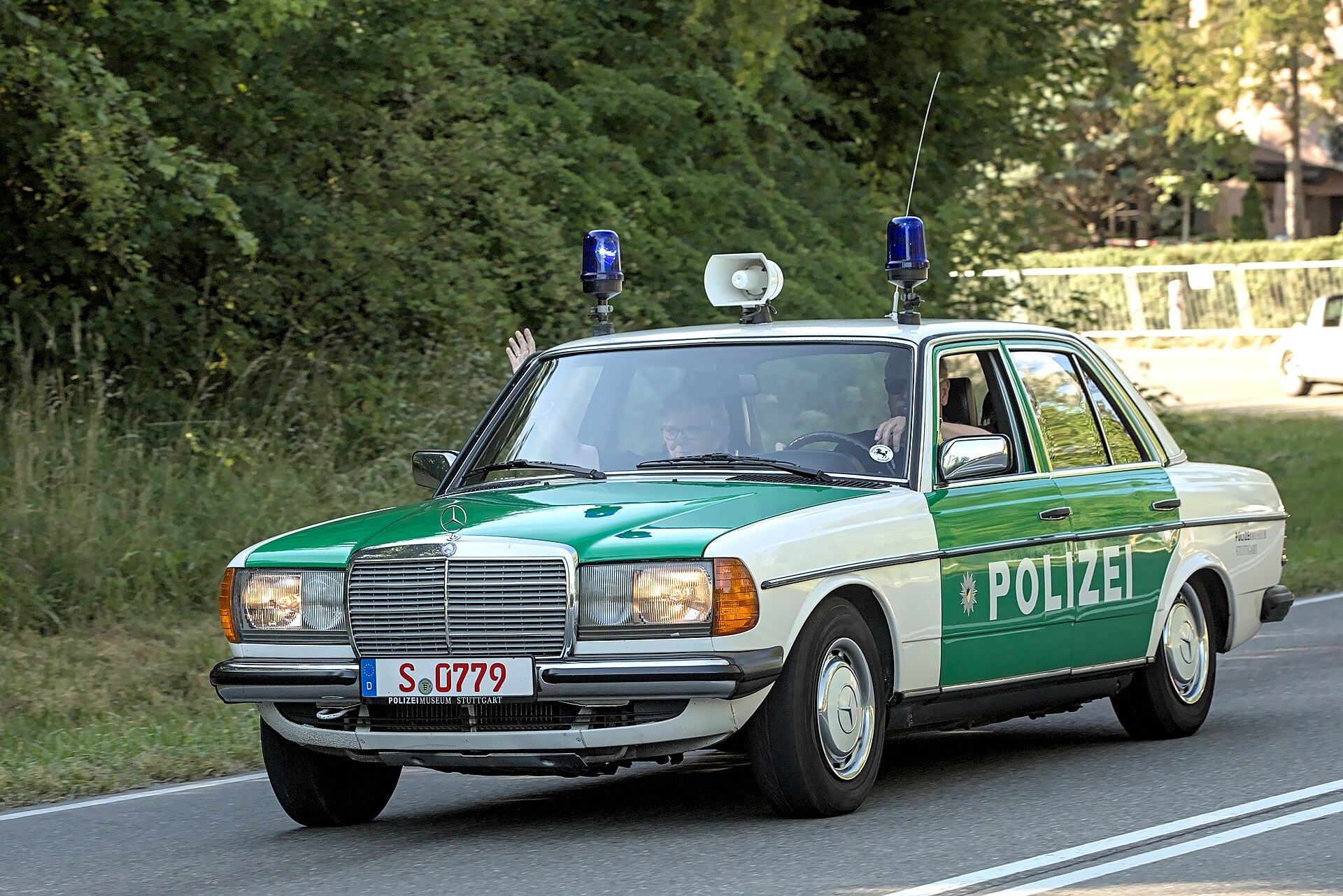
The Mercedes-Benz W123 is the mid-size Mercedes built from November 1975 to January 1986 as a saloon, estate, coupé and long-wheelbase saloon. Engines ran from the 40 kW (55 PS) 200 D to the 136 kW (185 PS) 280 E. With 2,696,915 cars built, it overtook the W114/W115 as the best-selling Mercedes range and became the direct forerunner of the E-Class.
In short
- Saloon on sale from 29 January 1976; coupé and long-wheelbase saloon from 1977, the S123 estate in production from April 1978.
- 2,696,915 built in total, including 199,517 estates, 99,884 coupés and 13,700 long-wheelbase cars.
- Four- and five-cylinder diesels, four- and six-cylinder petrol engines, and from 1980 a turbodiesel estate.
- Optional ABS from August 1980 and an optional driver's airbag from 1982.
Specs by version
Engines
| Version | Engine | Power | Drive | Production years |
|---|---|---|---|---|
| Diesel · 4 versions | ||||
| 200 D | 2.0 l · 4 cyl · Diesel OM 615 | 44 kW 60 PS59 hp | Rear-wheel drive | 1979–1985 |
| 240 D | 2.4 l · 4 cyl · Diesel OM 616 | 53 kW 72 PS71 hp | Rear-wheel drive | 1978 |
| 300 D | 3.0 l · 5 cyl · Diesel OM 617 | 65 kW 88 PS87 hp | Rear-wheel drive | 1979 |
| 300 TD Turbodiesel | 3.0 l · 5 cyl · Diesel OM 617 A | 92 kW 125 PS123 hp | Rear-wheel drive | 1982 |
| Petrol · 3 versions | ||||
| 200 | 2.0 l · 4 cyl · Petrol M 102 | 80 kW 109 PS107 hp | Rear-wheel drive | 1980–1985 |
| 230 E | 2.3 l · 4 cyl · Petrol M 102 E23 | 100 kW 136 PS134 hp | Rear-wheel drive | 1980–1985 |
| 280 E | 2.7 l · 6 cyl · Petrol M 110 E28 | 136 kW 185 PS182 hp | Rear-wheel drive | 1978 |
Performance
Show all 2 versions
| Version | 0–100 km/h | Top speed |
|---|---|---|
| 230 E | 11.5 s 0–62 mph | 180 km/h112 mph |
| 280 E | 9.9 s 0–62 mph | 200 km/h124 mph |
Verified Manufacturer and type-approval data from our catalog · Sources and methodology
Mercedes-Benz W123 at a glance
| Item | Mercedes-Benz W123 |
|---|---|
| Years | November 1975 to January 1986 (saloon on sale 29 January 1976) |
| Production | 2,696,915 (all bodies and bare chassis) |
| Plants | Sindelfingen, Stuttgart and Bremen (Germany); assembly also in South Africa, Thailand and China |
| Body styles | 4-door saloon (W123), 5-door estate (S123), 2-door coupé (C123), long-wheelbase saloon (V123), chassis for special bodies |
| Design | styling department under Friedrich Geiger, with Bruno Sacco |
| Layout | front engine, rear-wheel drive; wheelbase 2,795 mm (saloon), 2,710 mm (coupé), 3,425 mm (long) |
| Engines | 2.0-2.4 litre four-cylinder and 3.0 litre five-cylinder diesels; 2.0-2.3 litre four-cylinder and 2.5-2.7 litre six-cylinder petrol |
| Power | 40 kW (55 PS) to 136 kW (185 PS) |
| Kerb weight | 1,390-1,650 kg |
| Top speed | 200 km/h (280 E) |
| 0-100 km/h | 9.9 s (280 E, Wikipedia EN) |
| Price new | DM 18,870 (200) to DM 26,895 (280 E) in 1976 |
Replacing the Stroke Eight with S-Class thinking
The W123 took over from the W114/W115 "Stroke Eight", whose suspension and steering layout it carried forward in developed form. Hagerty UK puts development at roughly eight years and notes that the engineers borrowed features from the S-Class of the period, the W116 described in our S-Class generations guide. The saloon was shown to the press in the south of France on 29 January 1976.
Demand ran ahead of supply from the start. Wikipedia DE records waiting times of up to three years, while the English article speaks of nine to twelve months, so figures vary between sources. Nearly new cars changed hands for more than DM 5,000 above list price, even though the outgoing /8 was up to DM 2,400 cheaper during the overlap. At launch the range spanned DM 18,870 for the 200 to DM 26,895 for the 280 E.
Saloon, coupé, long saloon and the T-model
The four-door saloon carried the range, with about 2.38 million built; the exact figure differs by a few dozen cars between sources. The C123 coupé followed in June 1977 on a wheelbase 85 mm shorter, and stayed in production until August 1985. Of its 99,884 cars, 84,375 had petrol and 15,509 diesel engines; the 280 C was the rarest coupé at 3,704 examples.
The V123 long-wheelbase saloon arrived in August 1977 with 630 mm more between the axles, and 13,700 were made. Mercedes also supplied 8,373 rolling chassis to coachbuilders for ambulances and hearses.
The S123 estate, called the T-model, was shown at the Frankfurt IAA in September 1977 and entered production in April 1978 at Bremen. Hagerty UK describes it as the first estate Mercedes built in its own factory, and 199,517 were made. Hydraulic self-levelling rear suspension was standard on the estates, and a rear wiper arrived in 1979.
Mercedes updated the car in stages. The second series began in August 1979, and the third in September 1982 brought rectangular headlamps and power steering across the range, zebrano wood trim and reshaped front seat backs for more rear knee room.
Engines from 200 D to 280 E
| Model | Engine | Displacement | Power and period |
|---|---|---|---|
| 200 D | OM 615 4-cyl diesel | 1,988 cc | 40 kW (55 PS) to 1/1979; 44 kW (60 PS) from 2/1979 |
| 220 D | OM 615 4-cyl diesel | 2,197 cc | 44 kW (60 PS), 1976-1979 |
| 240 D | OM 616 4-cyl diesel | 2,404 cc | 48 kW (65 PS) to 7/1978; 53 kW (72 PS) from 8/1978 |
| 300 D | OM 617 5-cyl diesel | 3,005 cc | 59 kW (80 PS) to 8/1979; 65 kW (88 PS) from 9/1979 |
| 300 TD Turbodiesel | OM 617 A 5-cyl turbodiesel | 2,998 cc | 92 kW (125 PS) |
| 200 | M 115, later M 102 | 1,988 / 1,997 cc | 69 kW (94 PS) to 8/1980; 80 kW (109 PS) from 9/1980 |
| 230 | M 115 4-cyl | 2,307 cc | 80 kW (109 PS), 1976-1980 |
| 230 E | M 102 4-cyl, K-Jetronic | 2,299 cc | 100 kW (136 PS), from 7/1980 |
| 250 | M 123 6-cyl | 2,525 cc | 95 kW (129 PS) to 8/1979; 103 kW (140 PS) from 9/1979 |
| 280 | M 110 6-cyl, twin cam | 2,746 cc | 115 kW (156 PS) |
| 280 E | M 110 6-cyl, K-Jetronic | 2,746 cc | 130 kW (177 PS) to 3/1978; 136 kW (185 PS) from 4/1978 |
The diesels sold in the largest numbers. The 240 D reached about 455,000 cars, ahead of the 230 E with 442,000 and the 200 D with 378,000. The turbocharged five-cylinder went into the European estate as the 300 TD Turbodiesel from 1980, and Wikipedia DE notes that a fully equipped late example cost nearly DM 80,000. North American buyers got the turbodiesel in the 300 D saloon and 300 CD coupé from 1981, rated at 89 kW (121 PS) at first and 92 kW (125 PS) from late 1982.
Petrol cars were thirsty by later standards. A 1981 owner survey of the 250 returned 14.4 l/100 km, against a factory figure of 11.7-12.8 l/100 km.

Taxi ranks, the Sydney marathon and safety options
Many German taxi operators standardised on the W123, and Wikipedia EN notes that 500,000 km or more with only minor repairs was common. Demand of this kind took the W123 to 2,696,915 cars, at the time a record in the history of Mercedes-Benz. Motor Trend named it Import Car of the Year for 1977, quoting a US price of USD 16,000 for the 280 E.
The car also proved itself over long distance. Andrew Cowan, Colin Malkin and Mike Broad won the 1977 London-Sydney Marathon in a 280 E, and three more 280 Es finished second, sixth and eighth among 47 finishers.
Anti-lock brakes became an option in August 1980. A driver's airbag with a passenger seat-belt tensioner was offered from 1982 at DM 1,762.80; sources give January or September 1982 for its introduction.
The W124 replaced the saloon from 1985, and its descendants are covered in our E-Class generations overview. Saloon production ended in November 1985 and the last estates left the line in January 1986.
Mercedes-Benz W123 today: what to check when buying
Rust is the main enemy. Wikipedia DE rates rust protection as poor, especially on 1970s cars, and Autocar links this to steel shortages of the period. Check the wheel arches, door bottoms, battery tray and sunroof, and look under any thick underbody coating for hidden corrosion.
Petrol engines can suffer from failed fuel pump relays and water pumps, and the injected sixes need checking for timing chain wear. A jerky automatic often only needs its vacuum control valve adjusting. The estate's self-levelling suspension usually needs a specialist overhaul, and the vacuum central locking can leak. Treat cars with a taxi firm in the history with care.
Pattern body panels come from suppliers such as Niemöller and Mecatechnic, but Wikipedia DE warns that reproduction parts are often of lower quality than originals. Mercedes models old and new are listed in our Mercedes-Benz catalogue, and other period cars are collected under classic cars.
On values, the Classic Trader market overview based on sales data from 2021 to January 2026 places most W123s at roughly EUR 10,000-30,000. The 200 and 240 D sit at the entry level, while the 280 E, 280 CE, 280 TE, the coupés and the best estates command the higher figures.
Photo gallery

Mercedes-Benz W123 in our rankings
- No. 6 of 20 · Biggest engines: station wagons (2,998 cc)
- No. 9 of 21 · Fastest cars of the 1970s (200 km/h)
- No. 9 of 15 · Quickest cars of the 1970s, 0–100 (9.9 s)
- No. 64 of 155 · Biggest engines: sedans (3,005 cc · top 42%)
- No. 432 of 1113 · Longest-running car nameplates (10 years · top 43%)
- No. 303 of 667 · Biggest engines: cars (3,005 cc · top 46%)
Bigger engine than 70% of ranked station wagons in the 1CARS catalog (No. 6 of 20).
FAQ
How many Mercedes W123 were built?
Mercedes built 2,696,915 W123s between November 1975 and January 1986. The total covers about 2.38 million saloons, 199,517 estates, 99,884 coupés, 13,700 long-wheelbase saloons and 8,373 chassis for special bodies.
Which W123 sold best?
The 240 D diesel was the most popular version with about 455,000 cars. The fuel-injected 230 E followed with 442,000, and the 200 D diesel came third with 378,000.
What do W123, S123, C123 and V123 mean?
They are Mercedes' internal codes for the body styles of the same model series. W123 is the saloon, S123 the T-model estate, C123 the coupé and V123 the long-wheelbase saloon.
Did the W123 have ABS and an airbag?
Yes, both as options. ABS became available in August 1980, and a driver's airbag with a passenger seat-belt tensioner followed in 1982 at an extra cost of DM 1,762.80.
Data sources
Data checked by an editor against the sources below.
- Wikipedia - Mercedes Benz W123


