 Toyota Mirai
All generations, specs and history
Published Sources (3) Report an error
By Felix Hartmann, Automotive Technology & EV Contributor
- Built
- 2014–present
- Generations
- 2 · JPD10 to JPD20
- Top power
- 134 kW (182 PS)
Timeline
Mirai generations
Click a generation for its own page


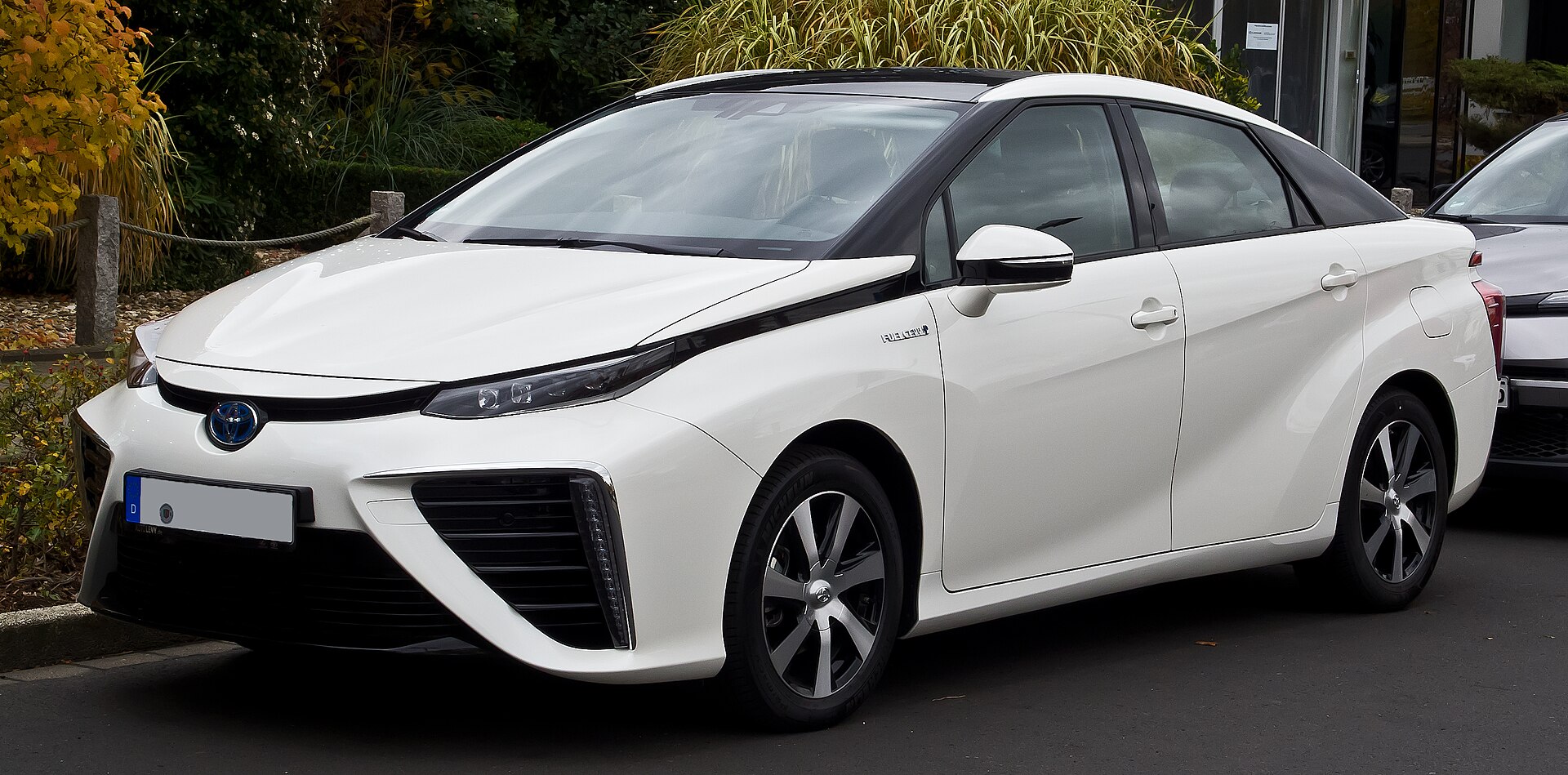
- Mirai I JPD10 2014–2020 · Sedan · 113 kW (154 PS)
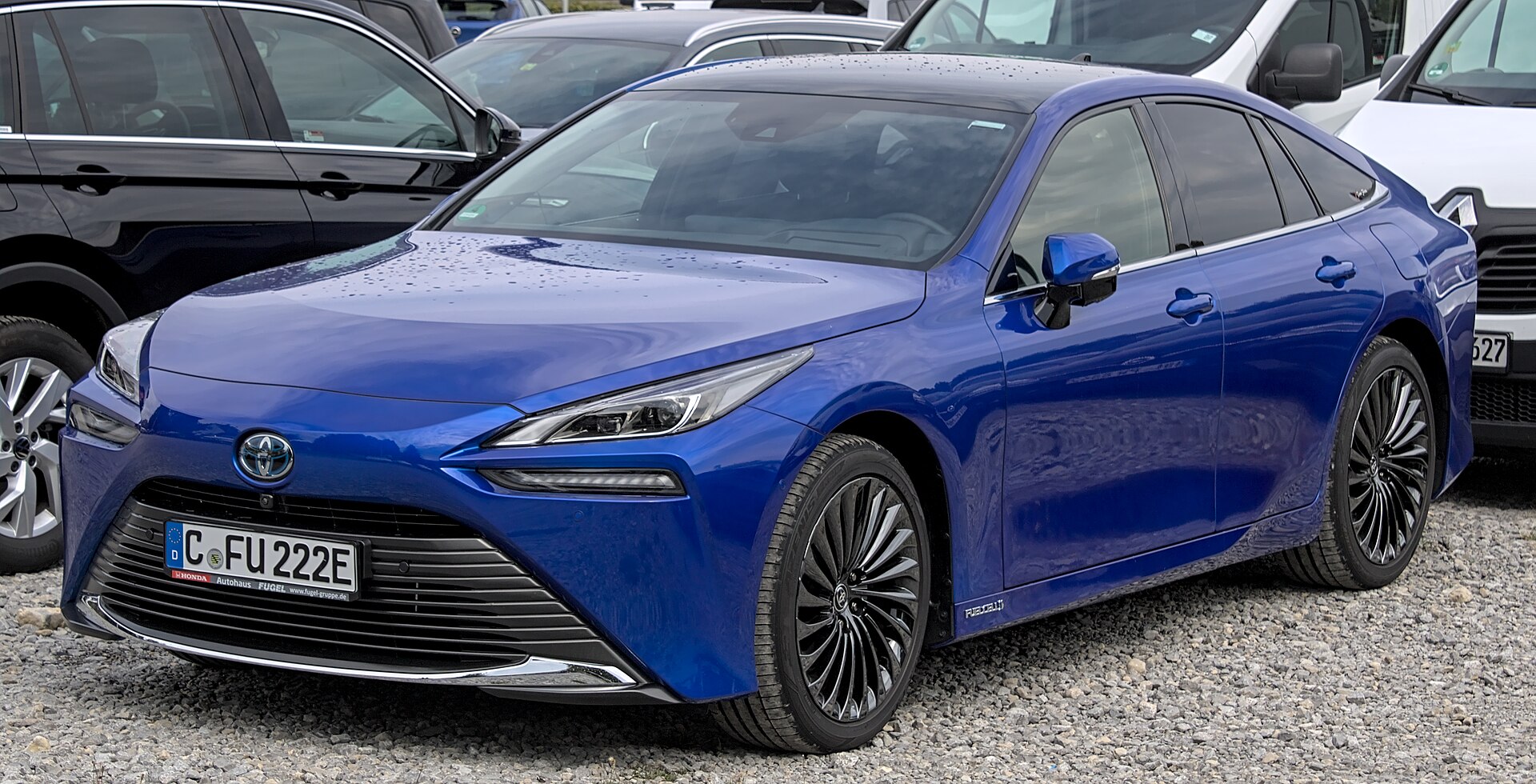
- Mirai II JPD20 Current 2020–now · Sedan · 134 kW (182 PS)
Newest first · 2 generations since 2014
-
2020
-
2014
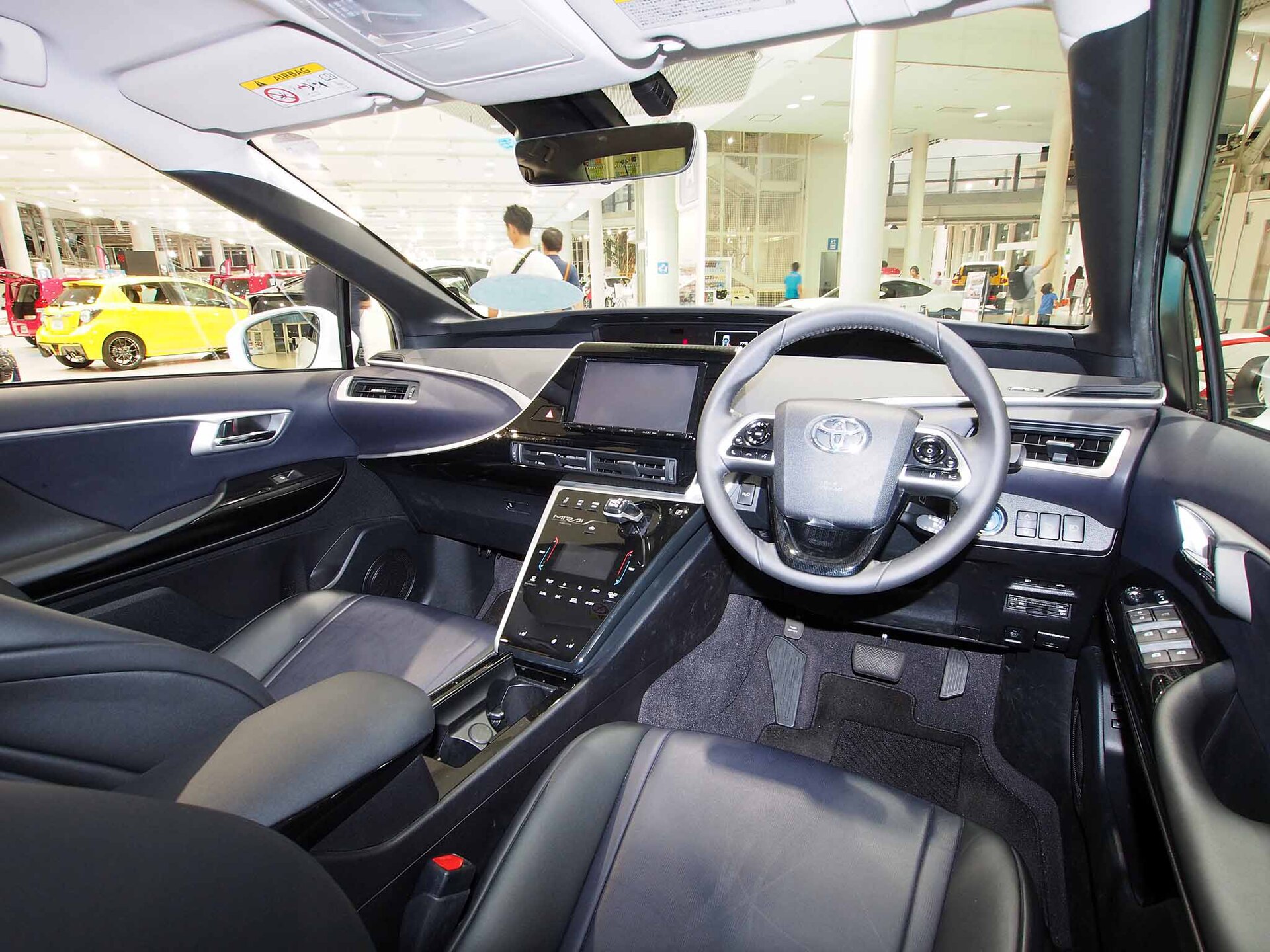
All generations by year: Mirai II JPD20 (2020–now) · Mirai I JPD10 (2014–2020)
Which one is mine?
Pick the year of first registration to see which generation it is.
Check by VINWhich Mirai to buy
Our verdict · Felix Hartmann
- Only if hydrogen is nearby: check the stations on your regular routes before anything else.
- Best choice: the second generation (2020-on), with more power, rear-wheel drive and up to 650 km of WLTP range.
- Cheapest entry: a used first-generation Mirai, but its 502 km EPA range and older NiMH battery make it a niche buy, and the 2017 recall work should be confirmed.
The Toyota Mirai is a hydrogen fuel cell saloon: an electric car that makes its own electricity on board from hydrogen and oxygen and emits only water. Toyota has built it at the Motomachi plant in Toyota City, Japan, since December 2014. The first generation was a front-wheel-drive mid-size saloon with 113 kW; the second, on sale since December 2020, is a larger rear-wheel-drive car on the TNGA platform with 134 kW (182 PS) and a WLTP range of up to 650 km.
In short
- Two generations: JPD10 (2014-2020) and JPD20 (since December 2020; Europe from April 2021).
- A tank of 5.6 kg of hydrogen gives up to 650 km (WLTP); refuelling takes 3 to 5 minutes. A second-generation Mirai drove 1,360 km on one fill in August 2021.
- Five Euro NCAP stars in 2021 for the second generation.
- Low volume: 21,475 sold worldwide by November 2022; ADAC lists a German base price of EUR 68,490 (2026).
Size at a glance
Toyota Mirai I JPD10
The Toyota Mirai II JPD20 is 85 mm longer and 65 mm lower than the Toyota Mirai I JPD10.
| Dimensions | Toyota Mirai II JPD20 | Toyota Mirai I JPD10 | Difference |
|---|---|---|---|
| Length | 4,975 mm195.9 in | 4,890 mm192.5 in | +85 mm+3.3 in |
| Width | 1,885 mm74.2 in | - | - |
| Height | 1,470 mm57.9 in | 1,535 mm60.4 in | −65 mm−2.6 in |
| Wheelbase | 2,920 mm115.0 in | 2,780 mm109.4 in | +140 mm+5.5 in |
| Boot | 321 L11.3 cu ft | 361 L12.7 cu ft | −40 L−1.4 cu ft |
Specs by version
Engines
| Version | Engine | Power | Torque | Gearbox | Drive | Production years |
|---|---|---|---|---|---|---|
| JPD10 · 2014–2020 | ||||||
| JPD10 · Fuel Cell 154 (5 kg H2) | Hydrogen | 113 kW 154 PS152 hp | 335 Nm247 lb-ft | Single-speed | Front-wheel drive | 2014–2020 |
| JPD20 · 2020–present | ||||||
| JPD20 · Fuel Cell 182 (5.6 kg H2) | Hydrogen | 134 kW 182 PS180 hp | 300 Nm221 lb-ft | Single-speed | Rear-wheel drive | 2020 |
Performance
Show all 2 versions
| Version | 0–100 km/h | Top speed | Range |
|---|---|---|---|
| JPD10 · 2014–2020 | |||
| JPD10 · Fuel Cell 154 (5 kg H2) | 9.6 s 0–62 mph | 179 km/h111 mph | 502 km312 mi |
| JPD20 · 2020–present | |||
| JPD20 · Fuel Cell 182 (5.6 kg H2) | - | 174 km/h108 mph | 650 km404 mi |
Dimensions and weight
Show all 2 versions
| Version | Length | Width | Height | Wheelbase | Kerb weight | Boot |
|---|---|---|---|---|---|---|
| JPD10 · 2014–2020 | ||||||
| JPD10 · Fuel Cell 154 (5 kg H2) | 4,890 mm192.5 in | - | 1,535 mm60.4 in | 2,780 mm109.4 in | 1,850 kg4,079 lb | 361 l12.7 cu ft |
| JPD20 · 2020–present | ||||||
| JPD20 · Fuel Cell 182 (5.6 kg H2) | 4,975 mm195.9 in | 1,885 mm74.2 in | 1,470 mm57.9 in | 2,920 mm115.0 in | 1,900 kg4,189 lb | 321 l11.3 cu ft |
Verified Manufacturer and type-approval data from our catalog · Sources and methodology
Toyota Mirai at a glance
| Specification | Toyota Mirai |
|---|---|
| Segment | Mid-size saloon |
| Body | 4-door saloon |
| Plant | Motomachi, Toyota City, Aichi, Japan |
| Powertrain | Hydrogen fuel cell stack + electric motor + buffer battery |
| Drive | First generation front-wheel drive; second generation rear-wheel drive |
| Hydrogen storage | 70 MPa (700 bar) high-pressure tanks |
| Production | December 2014 to date |
Its main fuel cell rivals have been the Hyundai Nexo SUV and, until 2021, the Honda Clarity Fuel Cell. Other Toyota models are on our Toyota brand page, and battery-electric cars are covered in our electric cars section.
Generations
| Generation | Code | Years | Body styles | Engines | Power (kW / hp) |
|---|---|---|---|---|---|
| Mirai I | JPD10 | 2014-2020 | 4-door saloon, FWD | fuel cell 114 kW, motor 113 kW, NiMH battery | 113 kW (154 PS) |
| Mirai II | JPD20 | 2020- | 4-door saloon, RWD | fuel cell 128 kW, motor 134 kW, lithium-ion battery | 134 kW (182 PS) |
First generation (JPD10, 2014-2020)
The first Mirai went on sale in Japan in December 2014 and later in California and in a handful of European countries. Its fuel cell stack produced up to 114 kW, and the electric motor 113 kW (154 PS) and 335 Nm. Two tanks held 5 kg of hydrogen at 70 MPa, and a 1.6 kWh nickel-metal hydride battery stored recovered braking energy. The EPA rated the range at 502 km for the 2016 model year; Toyota had first predicted about 480 km. Top Gear lists 0-100 km/h in 9.6 seconds and a top speed of 111 mph (179 km/h).
In Germany the first Mirai cost EUR 60,000 plus VAT, or EUR 78,540 in total, in 2015. In Japan the price was 6.7 million yen before taxes, with a government incentive of 2 million yen. In February 2017 Toyota recalled about 2,800 cars because of a fuel cell boost converter fault, which was fixed with a software update.
Second generation (JPD20, 2020-)
Toyota unveiled the second Mirai in October 2019 and put it on sale in December 2020; the German catalogue of ADAC lists April 2021 as the European start. The car moved to a rear-wheel-drive TNGA platform and grew by about 85 mm in length and 140 mm in wheelbase. Toyota aimed for 30% more range, and the tank capacity rose to 5.6 kg. In August 2021 a Mirai covered 1,360 km on one 5.65 kg fill in a record drive. Toyota added its Teammate Level 2 driver assistance in April 2021 and a new infotainment system in March 2023.


Fuel cell, motor and performance
| Parameter | Mirai I (2014) | Mirai II (2020) |
|---|---|---|
| Fuel cell stack output | 114 kW | 128 kW (174 PS) |
| Motor power | 113 kW (154 PS) | 134 kW (182 PS) |
| Motor torque | 335 Nm | 300 Nm |
| Buffer battery | 1.6 kWh NiMH, 245 V | lithium-ion, 84 cells, 310.8 V |
| Hydrogen capacity | 5.0 kg (122 l, two tanks) | 5.6 kg (142.2 l) |
| 0-100 km/h | 9.6 s | 9.0 s (0-62 mph) |
| Top speed | 179 km/h (111 mph) | 174 km/h (108 mph) |
| Range | 502 km (EPA, 2016) | up to 650 km (WLTP) |
The fuel cell combines hydrogen from the tanks with oxygen from the air to make electricity, which drives the motor; the battery covers peaks in demand and stores energy recovered under braking. Refuelling at a 700-bar station takes 3 to 5 minutes, which is the Mirai's main advantage over a battery-electric car. To convert these figures between kW, PS and hp, use our power converter.

Dimensions, space and boot
| Parameter | Mirai I | Mirai II |
|---|---|---|
| Length | 4,890 mm (192.5 in) | 4,975 mm (195.9 in) |
| Width | - | 1,885 mm (74.2 in) |
| Height | 1,535 mm (60.4 in) | 1,470 mm (57.9 in) |
| Wheelbase | 2,780 mm (109.4 in) | 2,920 mm (115.0 in) |
| Kerb weight | from 1,850 kg (4,079 lb) | 1,900-1,950 kg (4,189-4,299 lb) |
| Boot | 361 l (12.7 cu ft) | 321 l VDA (11.3 cu ft); ADAC: 300 l |
The hydrogen tanks take up a lot of space, so the boot of the larger second-generation car is smaller than the first's and well below that of a typical executive saloon. ADAC measures 300 litres and Toyota UK quotes 321 litres (VDA).
Fuel consumption and running costs
Toyota UK gives a combined hydrogen consumption of 0.79 kg/100 km on 19-inch wheels and 0.89 kg/100 km on 20-inch wheels; ADAC lists 0.8 kg/100 km (WLTP combined), rising to 1.1 kg/100 km on the motorway. Running costs depend almost entirely on the local hydrogen price and on how far the nearest station is: in most of Europe the network is thin, and the Mirai makes most sense where several 700-bar stations are within reach. Our cost of ownership calculator can model fuel and depreciation for any car.
Trims and equipment
Equipment depends on market. The second generation is offered with 19-inch or 20-inch wheels; Toyota UK's technical data also mention a Design Premium Pack, which raises the height to 1,480 mm. Toyota added its Teammate Level 2 driver assistance system in 2021 and a new infotainment system in 2023.
Safety: Euro NCAP
Euro NCAP tested the second-generation Mirai in September 2021 and awarded five stars:
| Area | Score |
|---|---|
| Adult occupant | 88% |
| Child occupant | 85% |
| Vulnerable road users | 80% |
| Safety assist | 82% |
ANCAP aligned its rating with this result. The first-generation Mirai was not tested by Euro NCAP. See our safety ratings for other saloons.
Reliability and known issues
Apart from the 2017 software recall on the first generation, the main documented problems are legal. In June 2023 owners filed a lawsuit in California alleging fuel cell system defects that could cause a sudden loss of power; Toyota denies the allegations, and the case was still at the pre-trial stage in June 2024. In July 2024 a class action in California targeted the poor availability of hydrogen refuelling. ADAC also lists a recall announced in November 2025 for cars built from March 2021 to September 2025; check with a Toyota dealer that it has been carried out.
Sales
| Year | Global sales |
|---|---|
| 2015 | 507 |
| 2017 | 2,741 |
| 2019 | 2,494 |
| 2021 | 5,918 |
| 2022 | 3,924 |
| 2023 | 4,023 |
| 2024 (to November) | 1,702 |
By November 2022, 21,475 Mirai had been sold worldwide: 11,368 in the United States, 7,435 in Japan and 2,622 in the rest of the world. The best year was 2021, the first full year of the second generation.
Rivals
| Model | Engines | Power (hp) | Boot (l) | Price from (EUR) |
|---|---|---|---|---|
| Toyota Mirai II | hydrogen fuel cell, RWD | 182 | 321 | 68,490 (Germany, ADAC, 2026) |
| Hyundai Nexo (2018-) | hydrogen fuel cell SUV | 154-163 | - | - |
| Hyundai Nexo (2025-) | hydrogen fuel cell SUV | 258 | - | - |
| Honda Clarity Fuel Cell (2016-2021) | hydrogen fuel cell | - | - | - |
The first Hyundai Nexo stores 6.3 kg of hydrogen and has an EPA range of up to 611 km; the second generation, revealed on 3 April 2025, has 190 kW (258 PS) and a quoted range of 700 km. Honda ended production of the Clarity Fuel Cell in August 2021. A battery-electric executive saloon is the more practical alternative for most buyers; the comparison tool helps you weigh them.
Photo gallery


Toyota Mirai: first vs latest generation
| Spec | Mirai I JPD10 | Mirai II JPD20 | Change |
|---|---|---|---|
| Years | 2014–2020 | 2020–present | 6 years apart |
| Most powerful version | 113 kW (154 PS) | 134 kW (182 PS) | +21 kW (+19%) |
| Length | 4,890 mm | 4,975 mm | +85 mm |
| Wheelbase | 2,780 mm | 2,920 mm | +140 mm |
| Lightest kerb weight | 1,850 kg | 1,900 kg | +50 kg |
| Top speed | 179 km/h | 174 km/h | −5 km/h |
Oldest and newest generation in the 1cars catalog. Power is the strongest version of each; other rows are shown only when both generations have the figure.
Toyota Mirai in our rankings
- No. 61 of 531 · Longest cars (4,975 mm · top 12%)
- No. 24 of 101 · Longest sedans (4,975 mm · top 24%)
- No. 16 of 61 · Heaviest sedans (1,900 kg · top 28%)
- No. 27 of 94 · Widest sedans (1,885 mm · top 29%)
- No. 121 of 391 · Heaviest cars (1,900 kg · top 32%)
- No. 375 of 1082 · Longest-running car nameplates (12 years · top 35%)
Longer than 88% of ranked cars in the 1CARS catalog (No. 61 of 531).
FAQ
How does the Toyota Mirai work?
A fuel cell stack combines hydrogen from high-pressure tanks with oxygen from the air to generate electricity for an electric motor. The only emission from the tailpipe is water.
What is the range of the Toyota Mirai?
Up to 650 km (WLTP) for the second generation with 5.6 kg of hydrogen. The first generation was rated at 502 km (EPA).
How long does it take to refuel a Mirai?
About 3 to 5 minutes at a 700-bar hydrogen station.
How much does the Toyota Mirai cost?
ADAC lists a German base price of EUR 68,490 for the second generation (2026). The first generation cost EUR 78,540 including VAT in Germany in 2015.
Data sources
Data checked by an editor against the sources below.
- Wikipedia - Toyota Mirai
- Topgear - Spec
- Co - 241127 Mirai Tech Specs