 Citroen DS
Specs, engines and history
Published Sources (1) Report an error
By Oleksandr Hnatiuk, Automotive Editor & Used Car Specialist
- Built
- 1955–1975
- Top power
- 97 kW (132 PS)
Which DS to choose
Our verdict · Oleksandr Hnatiuk
- For the original design: an early DS 19 with the first front and the hydraulic gearbox.
- For everyday use: a DS 21 or DS 23 of the Series 3 with directional headlamps, ideally with fuel injection.
- For the simplest technology: an ID, with manual gearbox and fewer hydraulic functions.
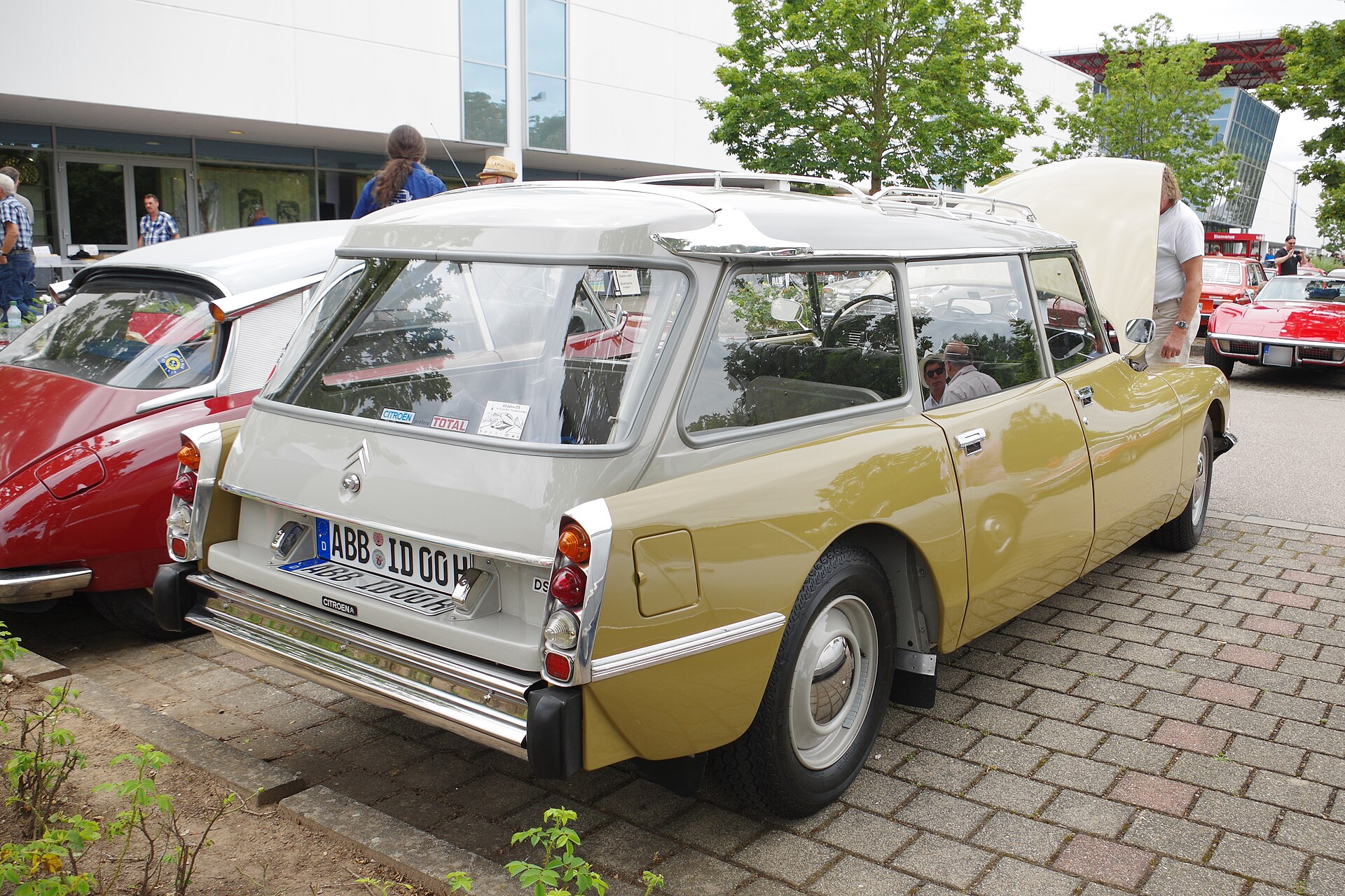
- For space: a Break or Safari estate.
- For rarity: a Chapron convertible, of which about 1,400 were sold.
The hydraulic system needs its specified fluid and regular checks of the spheres. Today's Citroën models are in the Citroën catalogue, and more stories of the period are under 1960s classics.
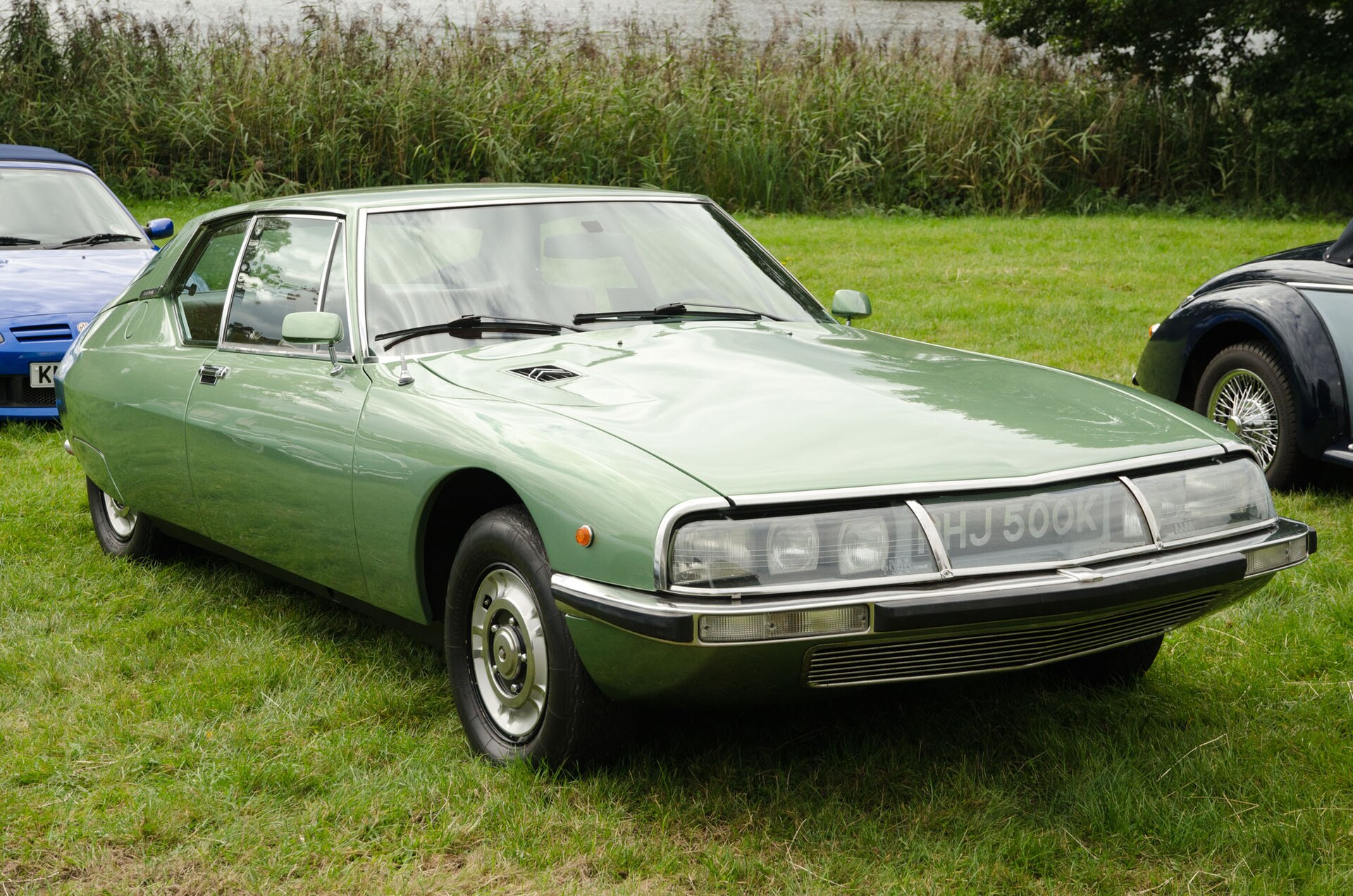
The Citroën DS is the large front-wheel-drive saloon that Citroën presented at the Paris Motor Show on 6 October 1955 and built until April 1975. With hydropneumatic self-levelling suspension, powered steering, a hydraulically operated gearbox and inboard front disc brakes, it replaced the Traction Avant and was itself followed by the CX. In twenty years 1,455,746 were made in six countries, most of them in Paris.
In short
- 743 orders in the first 15 minutes of the 1955 show, about 12,000 on the first day and about 80,000 deposits in ten days.
- Four-cylinder engines from 1,911 cc to 2,347 cc; the DS 23 with Bosch electronic fuel injection reached 97 kW (130 hp DIN).
- Saloon, cheaper ID, estate (Break, Safari) from 1958 and a Chapron convertible from 1960 to 1971.
- Winner of the Monte Carlo Rally in 1959 and 1966; voted the most beautiful car of all time by Classic & Sports Car in a poll of 20 designers.
Size at a glance
| Dimensions | Citroen DS / ID |
|---|---|
| Length | 4,826 mm190.0 in |
| Width | 1,791 mm70.5 in |
| Height | 1,464 mm57.6 in |
| Wheelbase | 3,124 mm123.0 in |
Specs by version
Engines
| Version | Engine | Power | Drive | Production years |
|---|---|---|---|---|
| DS 20 (1985 cc) | 2.0 l · 4 cyl · Petrol 1,985 cc | — | Front-wheel drive | 1965–1975 |
| ID 19 (1911 cc) | 1.9 l · 4 cyl · Petrol 1,911 cc | 51 kW 69 PS68 hp | Front-wheel drive | — |
| DS 19 (1911 cc) | 1.9 l · 4 cyl · Petrol 1,911 cc | 56 kW 76 PS75 hp | Front-wheel drive | 1955–1965 |
| DS 21 (2175 cc) | 2.2 l · 4 cyl · Petrol 2,175 cc | 79 kW 107 PS106 hp | Front-wheel drive | 1965 |
| DS 23 (2347 cc) | 2.3 l · 4 cyl · Petrol 2,347 cc | 86 kW 117 PS115 hp | Front-wheel drive | 1973–1975 |
| DS 23 Injection Electronique (2347 cc) | 2.3 l · 4 cyl · Petrol 2,347 cc | 97 kW 132 PS130 hp | Front-wheel drive | 1973–1975 |
Dimensions and weight
Show all 6 versions
| Version | Length | Width | Height | Wheelbase | Kerb weight |
|---|---|---|---|---|---|
| DS 20 (1985 cc) | 4,826 mm190.0 in | 1,791 mm70.5 in | 1,464 mm57.6 in | 3,124 mm123.0 in | 1,270 kg2,800 lb |
| ID 19 (1911 cc) | 4,826 mm190.0 in | 1,791 mm70.5 in | 1,464 mm57.6 in | 3,124 mm123.0 in | 1,270 kg2,800 lb |
| DS 19 (1911 cc) | 4,826 mm190.0 in | 1,791 mm70.5 in | 1,464 mm57.6 in | 3,124 mm123.0 in | 1,270 kg2,800 lb |
| DS 21 (2175 cc) | 4,826 mm190.0 in | 1,791 mm70.5 in | 1,464 mm57.6 in | 3,124 mm123.0 in | 1,270 kg2,800 lb |
| DS 23 (2347 cc) | 4,826 mm190.0 in | 1,791 mm70.5 in | 1,464 mm57.6 in | 3,124 mm123.0 in | 1,270 kg2,800 lb |
| DS 23 Injection Electronique (2347 cc) | 4,826 mm190.0 in | 1,791 mm70.5 in | 1,464 mm57.6 in | 3,124 mm123.0 in | 1,270 kg2,800 lb |
Verified Manufacturer and type-approval data from our catalog · Sources and methodology
Citroën DS at a glance
| Parameter | Value |
|---|---|
| Maker | Citroën, Paris (Quai de Javel); also Slough, Heidelberg (Victoria), Johannesburg, Mangualde, Koper |
| Production | October 1955 – 24 April 1975 |
| Built | 1,455,746, of which 1,330,755 in Paris |
| Body styles | four-door saloon, estate (Break / Safari), convertible (Chapron) |
| Engines | 1.9–2.3 l OHV four-cylinder, carburettor or fuel injection |
| Power | 51 kW (69 hp) ID 19 to 97 kW (130 hp DIN) DS 23 injection |
| Layout | front engine, front-wheel drive |
| Designers | Flaminio Bertoni (styling), André Lefèbvre (engineering), Paul Magès (suspension) |
| Predecessor / successor | Traction Avant / CX |
Development and production history
The DS came after about 18 years of development. Its styling is credited to Flaminio Bertoni and its engineering to André Lefèbvre; the hydropneumatic suspension was developed by Paul Magès. The name is a play on words: "DS" reads like déesse, French for "goddess", and the cheaper ID that followed reads like idée, "idea".
The launch at the 1955 Paris Motor Show became one of the best-known in the industry. Citroën took 743 orders in the first 15 minutes and about 12,000 on the first day; by the end of the ten-day show it held about 80,000 deposits. English Wikipedia notes that the first-day record stood for more than 60 years. The new car was not cheap: the DS19 of 1955 cost 65% more than the Traction Avant it replaced.
The range widened quickly. The cheaper and less powerful ID made the car more affordable, and the estate arrived in 1958. Henri Chapron built the convertible from autumn 1960 to summer 1971, about 1,400 of which were sold, as well as special saloons such as the Prestige. The luxurious Pallas trim arrived in 1965. In 1967 Robert Opron redesigned the front for the 1968 model year with directional headlamps that turned with the steering, described in English Wikipedia as the first adaptive headlights on a mass-market car.
| Year | Event |
|---|---|
| 6 October 1955 | Launch at the Paris Motor Show |
| 1958 | Estate (Break / Safari) and ID estate introduced |
| 1959 | Monte Carlo Rally win |
| 1960 | Chapron convertible (to 1971) |
| 1962 | Petit-Clamart attack on President de Gaulle's DS |
| 1965 | Pallas trim, 1,985 cc and 2,175 cc engines |
| 1967 | Series 3 front by Robert Opron with directional headlamps |
| 1970 | Peak year: 103,633 cars; fuel injection for the DS 21; five-speed gearbox |
| 1973 | DS 23 with 2,347 cc |
| 24 April 1975 | Last DS built |

Hydropneumatic suspension and other engineering
The heart of the DS is its high-pressure hydraulic system. The hydropneumatic suspension levels the car automatically, and the driver can adjust the ride height. English Wikipedia gives working pressures of 13–15 MPa in one section and 17.2 MPa (2,490 psi) in another. The same system also operated the clutch, the gearbox and the brakes, and the DS had power steering, which the early ID lacked.
The front brakes were inboard discs, mounted next to the gearbox, and English Wikipedia calls them the first successful use of disc brakes on a mass-produced car. The wheels were held by a single central bolt. The standard DS used the four-speed BVH hydraulic gearbox: the driver selected the gears by a lever, but there was no clutch pedal. The ID had a conventional manual gearbox and manual steering. A five-speed manual arrived in 1970 and a three-speed Borg-Warner automatic in September 1971.
US cars were sold with fixed headlamps instead of the directional units. The DS also had a famous moment of safety: on 22 August 1962 President Charles de Gaulle survived an assassination attempt at Petit-Clamart when his DS, hit by bullets and with two punctured tyres, still escaped at full speed.
Engines and drivetrain
| Version | Introduced | Engine | Power |
|---|---|---|---|
| DS 19 | 1955 | 1,911 cc OHV I4 | 56 kW (75 hp) at launch; later 62 kW (83 hp) after the 1961 changes |
| ID 19 | — | 1,911 cc OHV I4 | 51 kW (69 hp) |
| DS 20 | 1965 (as DS19a, renamed 1969) | 1,985 cc I4 | — |
| DS 21 | 1965 | 2,175 cc I4 | 79 kW (106 hp DIN); fuel injection from 1970 |
| DS 23 | 1973 | 2,347 cc I4 | 86 kW (115 hp) with carburettor |
| DS 23 Injection | 1973 | 2,347 cc I4, Bosch electronic injection | 97 kW (130 hp DIN) |
All engines drive the front wheels. A US-market DS of 1969 with 86 kW (115 hp) is listed at US$4,170; the ID19 of 1959 cost US$2,833 in the United States. Our power converter translates the hp DIN and SAE figures of the period into kW and PS.

Citroën DS specifications
| Parameter | Metric | Imperial |
|---|---|---|
| Wheelbase | 3,124 mm | 123.0 in |
| Length | 4,826 mm (saloon); 4,991 mm (estate) | 190.0 / 196.5 in |
| Width | 1,791 mm | 70.5 in |
| Height | 1,464 mm (saloon); 1,537 mm (estate) | 57.6 / 60.5 in |
| Kerb weight | 1,270 kg (saloon); 1,384 kg (estate) | 2,800 / 3,051 lb |
| Suspension | hydropneumatic, self-levelling, adjustable height | — |
| Front brakes | inboard discs | — |
| Gearboxes | 4-speed hydraulic (BVH), 4- and 5-speed manual, 3-speed automatic | — |
Production by year
Output rose quickly after a slow start: 69 cars were completed in 1955. The best years were 1966 (99,561), 1967 (101,904), 1970 (103,633) and 1973 (96,990). Only 847 were built in 1975, when Citroën had already stocked about eight months of Safari estates to bridge the gap until the CX estate arrived in the autumn. Of the total of 1,455,746, the Paris plant at Quai de Javel built 1,330,755; the rest came from assembly lines in the United Kingdom, Australia, South Africa, Portugal and Yugoslavia (Koper, in today's Slovenia).
Variants and derivatives
| Variant | Years | Body / purpose | Notes |
|---|---|---|---|
| DS | 1955–1975 | saloon | hydraulic gearbox, power steering |
| ID | — | simpler saloon | manual gearbox, manual steering |
| Break / Safari | 1958–1975 | estate | 4,991 mm long, 1,384 kg |
| Décapotable (Chapron) | 1960–1971 | two-door convertible | about 1,400 sold |
| Prestige | — | luxury saloon by Chapron | — |
| Pallas | from 1965 | luxury trim | — |

Rallying and recognition
The DS was a strong long-distance rally car thanks to its suspension. It won the Monte Carlo Rally in 1959 and again in 1966, the second win being controversial. Pauli Toivonen won the 1000 Lakes Rally in 1962, Robert Neyret the Rallye du Maroc in 1969 and 1970. In the 1974 London–Sahara–Munich World Cup Rally a DS beat more than 70 other cars, of which only five finished.
Classic & Sports Car named the DS the most beautiful car of all time after a poll of 20 designers, and Automobile Magazine put it fifth in its 2005 list of the "100 Coolest Cars". More about the company, from the Traction Avant to the present, is in our history of Citroën; its small sister is covered in the Citroën 2CV story.
Photo gallery


Citroen DS in our rankings
- No. 159 of 912 · Longest-running car nameplates (20 years · top 19%)
- No. 97 of 420 · Longest cars (4,826 mm · top 24%)
- No. 82 of 304 · Lightest cars (1,270 kg · top 28%)
- No. 18 of 53 · Lightest sedans (1,270 kg · top 34%)
- No. 36 of 86 · Longest sedans (4,826 mm · top 42%)
- No. 74 of 131 · Biggest engines: sedans (2,347 cc · top 57%)
In production longer than 81% of ranked nameplates in the 1CARS catalog (No. 159 of 912).
FAQ
When was the Citroën DS produced, and where?
From October 1955 to 24 April 1975, mainly at Quai de Javel in Paris, with assembly in the UK, Australia, South Africa, Portugal and Yugoslavia.
How many Citroën DS were built?
1,455,746 in total, of which 1,330,755 in Paris. The best year was 1970 with 103,633 cars.
What engine does the Citroën DS have?
A four-cylinder petrol engine of 1,911 to 2,347 cc, from 51 kW (69 hp) in the ID 19 to 97 kW (130 hp DIN) in the fuel-injected DS 23.
What does DS stand for?
It is a pun on déesse, French for "goddess"; the cheaper ID is a pun on idée, "idea".
What variants of the DS were made?
The DS and the simpler ID saloons, the Break and Safari estates, the Chapron convertible and Prestige, and the Pallas luxury trim.
Data sources
Data checked by an editor against the sources below.