 Ford Mustang Shelby GT350
All generations, specs and history
Published Sources (2) Report an error
By Sarah Whitmore, Senior Automotive Writer
- Built
- 1965–2020
- Generations
- 4
- Top power
- 392 kW (533 PS)
Timeline
Mustang Shelby GT350 generations
Click a generation for its own page
- Shelby GT350 1965–1966 · Coupe · 228 kW (310 PS)
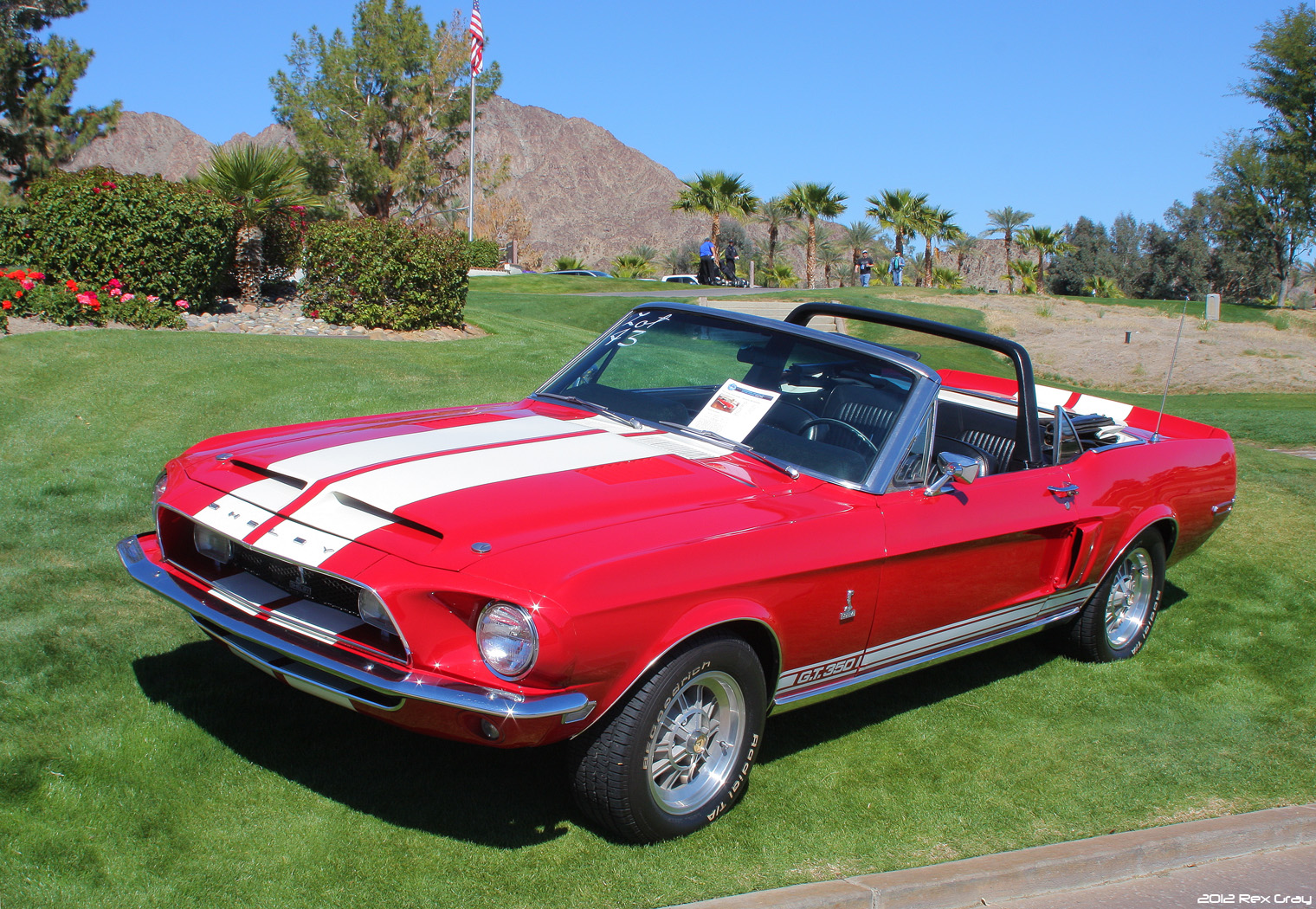
- Shelby GT350 1967–1970 · Coupe, Convertible · 186–228 kW (253–310 PS)
- Shelby GT350 2011–2012 · Coupe, Convertible · 321–391 kW (436–532 PS)
- Shelby GT350 2015–2020 · Coupe · 392 kW (533 PS)
Newest first · 4 generations since 1965
- 2015 Shelby GT350 2015–2020 · Coupe · 392 kW (533 PS)
- 2011 Shelby GT350 2011–2012 · Coupe, Convertible · 321–391 kW (436–532 PS)
- 1967 Shelby GT350 1967–1970 · Coupe, Convertible · 186–228 kW (253–310 PS)
- 1965 Shelby GT350 1965–1966 · Coupe · 228 kW (310 PS)
All generations by year: Shelby GT350 (2015–2020) · Shelby GT350 (2011–2012) · Shelby GT350 (1967–1970) · Shelby GT350 (1965–1966)
Which one is mine?
Pick the year of first registration to see which generation it is.
- Shelby GT350 2015–2020
- Shelby GT350 2011–2012
- Shelby GT350 1967–1970
- Shelby GT350 1965–1966
Which GT350 to choose
Our verdict · Sarah Whitmore
- For history: a 1965 car, the closest to the SCCA racers; check documents carefully, because the R model is rare.
- For a usable classic: a 1966 car, with a rear seat option and automatic gearbox available.
- For a convertible: a 1968 or 1969 car.
- For a modern track car: the 2015–2020 GT350 or GT350R, with the high-revving 5.2 V8 and a manual gearbox only.
Shelby's two-seat roadster is described in our Shelby Cobra article and the company in Shelby history. Every GT350 version is in the Ford catalogue, and the American muscle car guide puts it next to its rivals; power tables are in the car rankings.
The Shelby GT350 is the Mustang that Carroll Shelby's company turned into a race-ready car for 1965, at Ford's request. Over the next five model years it became a heavier, more comfortable fastback and convertible. The name later returned twice: on Shelby American conversions of 2011–2012 and on Ford's own Shelby GT350 of 2015–2020, with a flat-plane-crank 5.2-litre V8 of 392 kW (526 hp).
In short
- 1965: 562 cars with a 289 Hi-Po V8 rated at 228 kW (306 hp, SAE gross); the competition GT350R was built 34 times according to Wikipedia, 36 according to The Henry Ford.
- 1966: 2,378 cars, including about 1,003 fastbacks ordered by Hertz for its rental fleet.
- 1968–1970: Ford took over the design; the 1970 cars were leftover 1969 cars with new serial numbers.
- 2015–2020: 5.2 "Voodoo" V8, 392 kW (526 hp) at 7,500 rpm, six-speed manual only.
Specs by version
Engines
| Version | Engine | Power | Torque | Gearbox | Drive | Production years |
|---|---|---|---|---|---|---|
| Shelby GT350 · 289 Hi-Po V8 (SAE gross) | 4.7 l · 8 cyl · Petrol 4,736 cc | 228 kW 310 PS306 hp | 446 Nm329 lb-ft | 4-sp Manual | Rear-wheel drive | 1965–1966 |
| Shelby GT350 · 302 V8 (SAE gross) | 4.9 l · 8 cyl · Petrol 4,949 cc | 186 kW 253 PS249 hp | — | — | Rear-wheel drive | 1968 |
| Shelby GT350 · 5.2 Voodoo V8 | 5.2 l · 8 cyl · Petrol 5,163 cc | 392 kW 533 PS526 hp | 582 Nm429 lb-ft | 6-sp Manual | Rear-wheel drive | 2015–2020 |
Performance
Show all 1 versions
| Version | Top speed |
|---|---|
| Shelby GT350 · 5.2 Voodoo V8 | 277 km/h172 mph |
Verified Manufacturer and type-approval data from our catalog · Sources and methodology
Shelby Mustang GT350 at a glance
| Specification | Shelby GT350 |
|---|---|
| Model years | 1965–1970; 2011–2012 (Shelby American); 2015–2020 (Ford) |
| Body | fastback; convertible from 1968 (and 2012) |
| Base car | Ford Mustang |
| First engine | 289 cu in (4.7 l) Hi-Po V8, 228 kW (306 hp) at 6,000 rpm, 446 Nm |
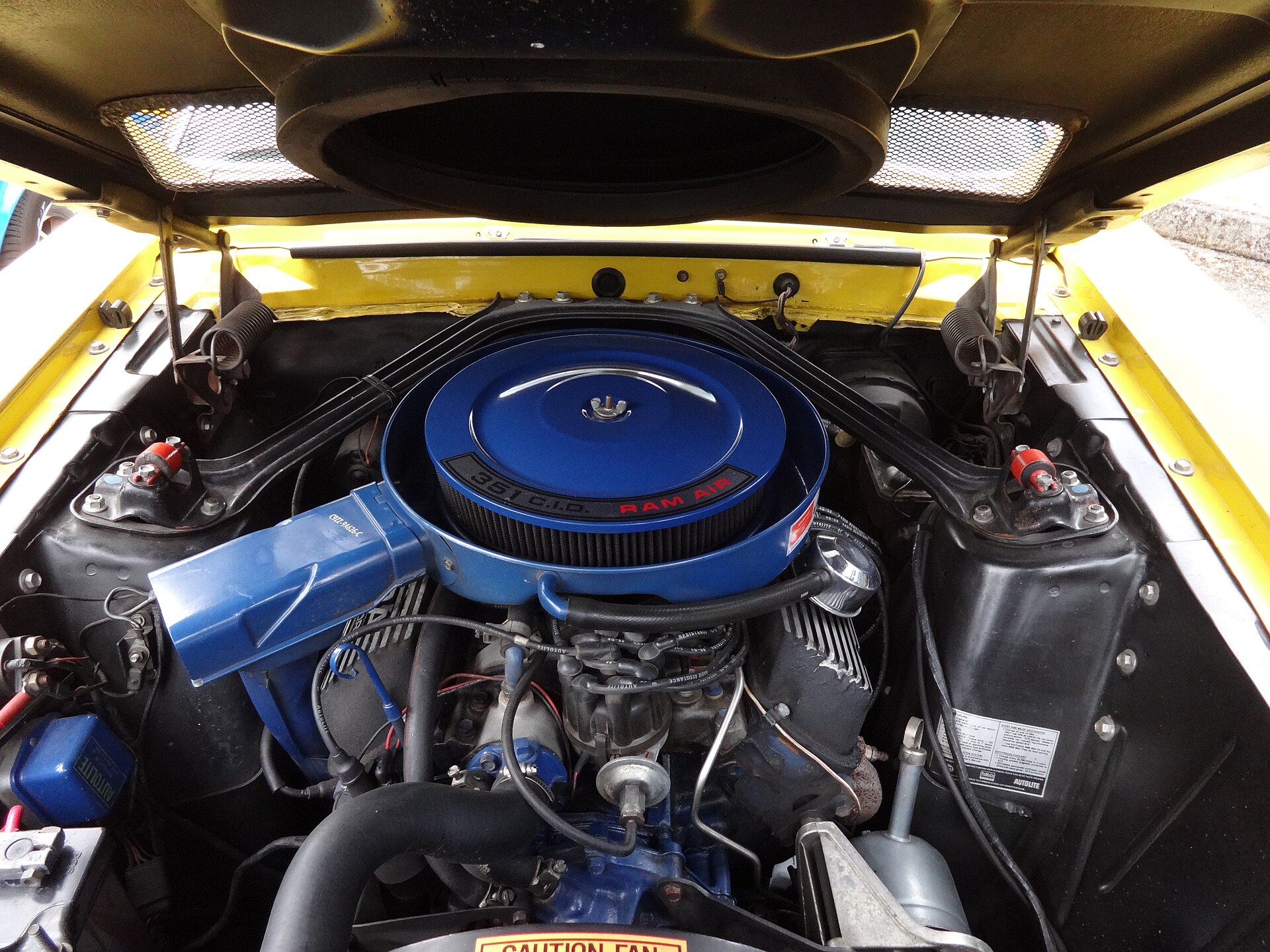
| Later classic engines | 302 V8 (1968), 351 V8 (1969–1970) |
| Gearbox (1965) | Borg-Warner T10 four-speed manual |
| 2015–2020 engine | 5.2 l flat-plane-crank V8, 392 kW (526 hp), 582 Nm |
| 2015–2020 gearbox | Tremec TR-3160 six-speed manual |
| Built | 562 in 1965, 2,378 in 1966 |
| Companion model | Shelby GT500 (from 1967) |
The GT350 is listed in the catalogue as a version of the Ford Mustang, next to the bigger-engined Shelby GT500.
How the GT350 began
In 1964 Ford vice-president Lee Iacocca wanted the new Mustang to win races and asked Carroll Shelby to make it a credible competition car. The Henry Ford museum notes that Shelby was reluctant at first, because Shelby American was busy developing Ford's GT40, but work started in mid-1964. Ford supplied Mustang fastbacks from its San Jose plant, and Shelby modified them in Venice Beach, California, and later at a site by Los Angeles airport.
The name has a simple story. According to The Henry Ford, "GT" stood for Grand Tourer, and "350" came from an associate of Shelby who paced about 350 steps to a nearby building; the name was picked once Shelby had grown tired of Ford's long naming discussions.
The target was SCCA B-Production racing, where the rules treated the car as a sports car. Shelby removed the rear seat and put a full-size spare wheel in its place, which made the GT350 a two-seater, and fitted a glass-fibre bonnet instead of the steel one.
The 1965 GT350
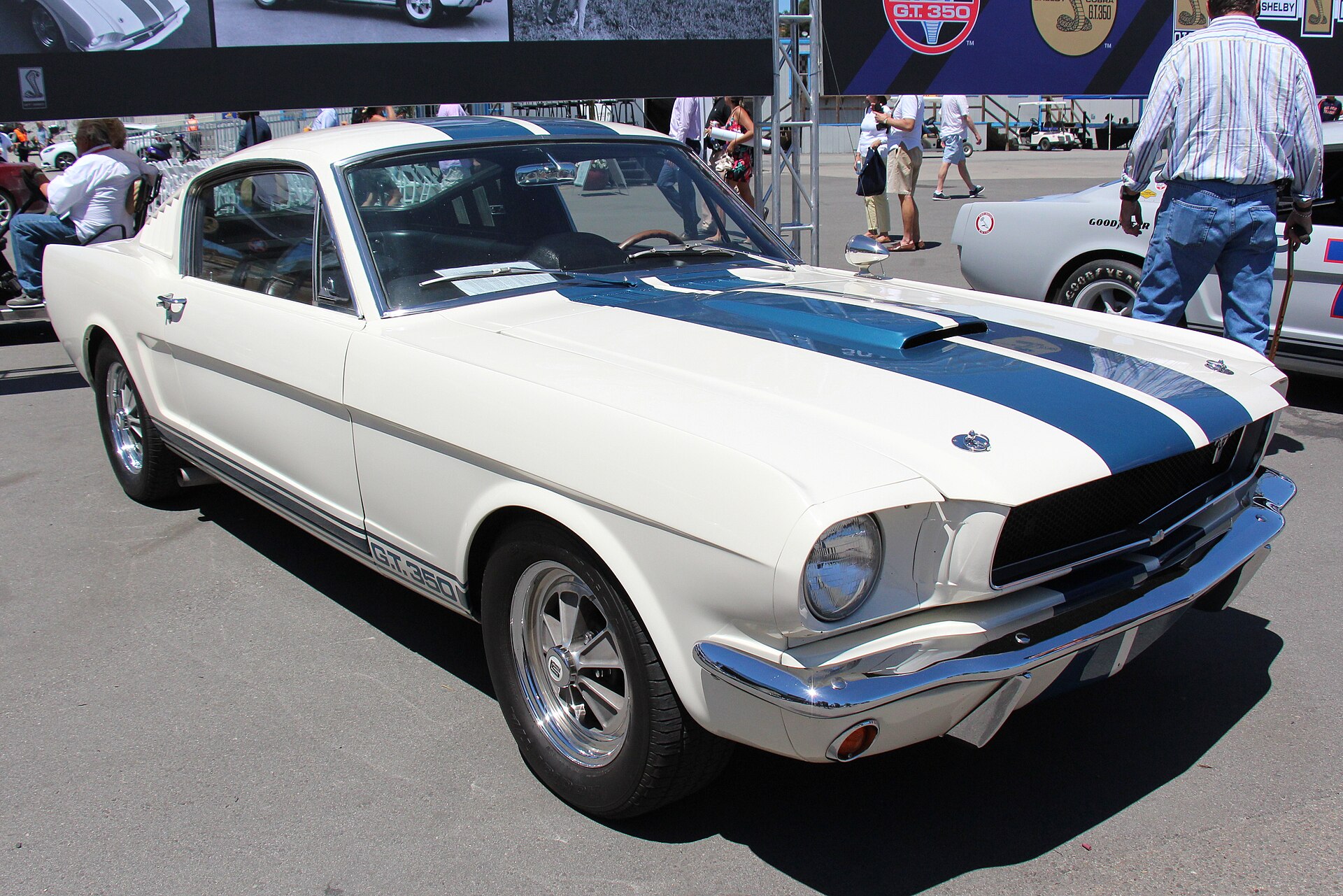
The engine was Ford's 289 Hi-Po V8, the K-code unit that produced 202 kW (271 hp) in a regular Mustang. Shelby added a Cobra high-rise intake, a 725 cfm Holley four-barrel carburettor and Tri-Y headers. The rating rose to 228 kW (306 bhp) at 6,000 rpm and 446 Nm (329 lb-ft) at 4,200 rpm.
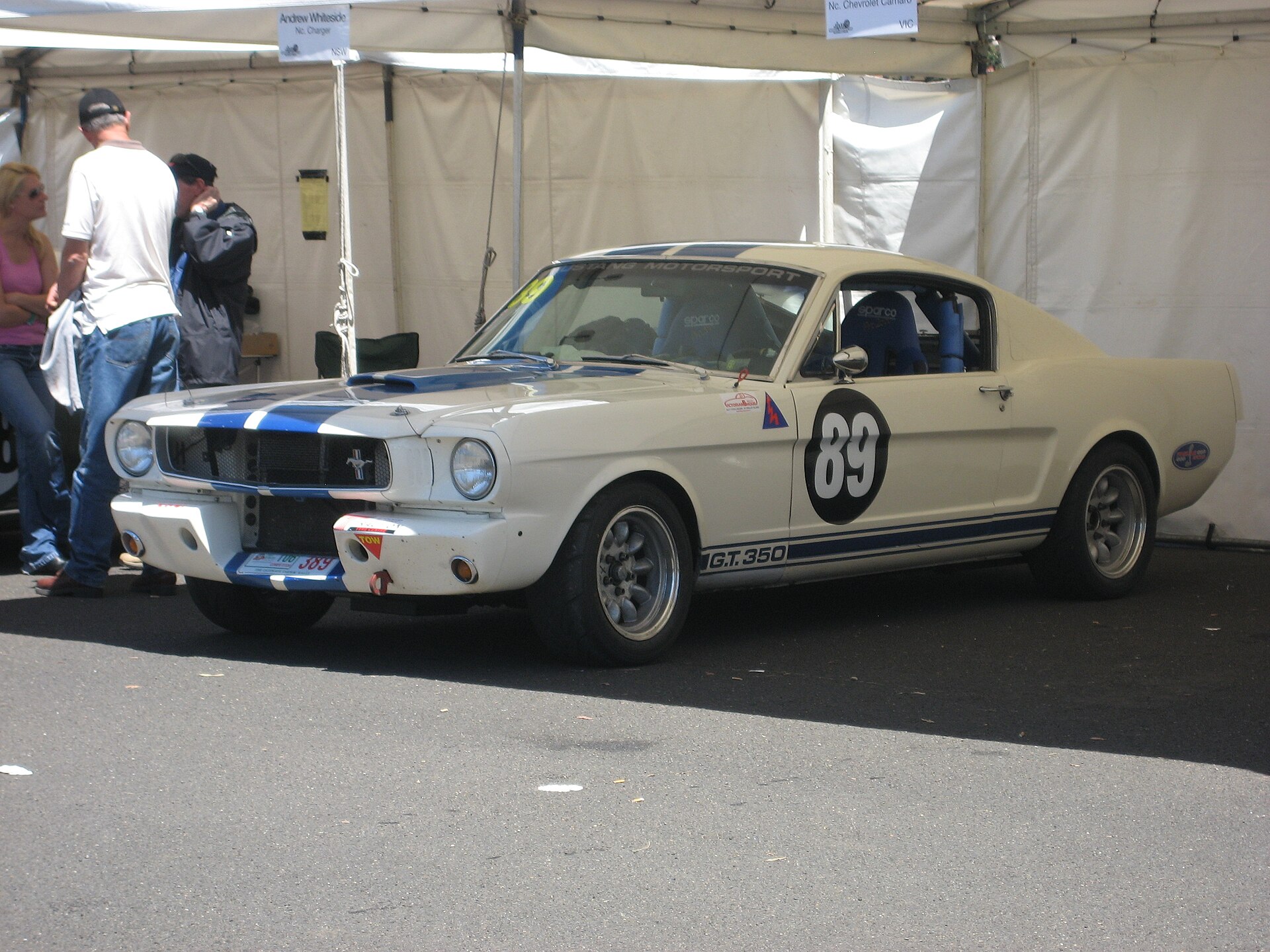
The chassis received Kelsey-Hayes front disc brakes, larger rear drums from the Galaxie, traction bars and relocated A-arms. The only gearbox was a Borg-Warner T10 four-speed manual. Every 1965 car was painted Wimbledon White with Guardsman Blue rocker stripes; about 28 % also had the wide Le Mans stripes over the roof. Many early cars had the battery in the boot, which Shelby changed during the year after complaints about fumes.
Shelby built 562 GT350s for 1965. Wikipedia counts 34 race-spec GT350R cars among them; The Henry Ford says 36 were built for competition.

GT350R and SCCA racing
The GT350R was stripped for racing: plexiglass instead of side and rear glass, no carpets, aluminium door panels and a glass-fibre front apron in place of the bumper to feed more air to the radiator. The Henry Ford gives more than 268 kW (360 hp) for its engine.
The car raced against Corvettes and Jaguars. In the 1965 SCCA season it won five of six divisional championships and the national title, and Wikipedia records that the GT350 was B-Production champion three years in a row. Shelby withdrew his own team after 1965, but private teams kept winning with the GT350R.

1966–1967: Hertz, more colours and more comfort
For 1966 the car lost the Mustang name and was sold simply as the Shelby GT350. Blue, red, green and black joined white, rear quarter windows replaced the extractor vents, and brake cooling scoops appeared on the sides. A three-speed automatic and a rear seat became options, the battery stayed in the engine bay and the traction bars were dropped. A Paxton supercharger was offered as an option, rated at 328 kW (440 hp).
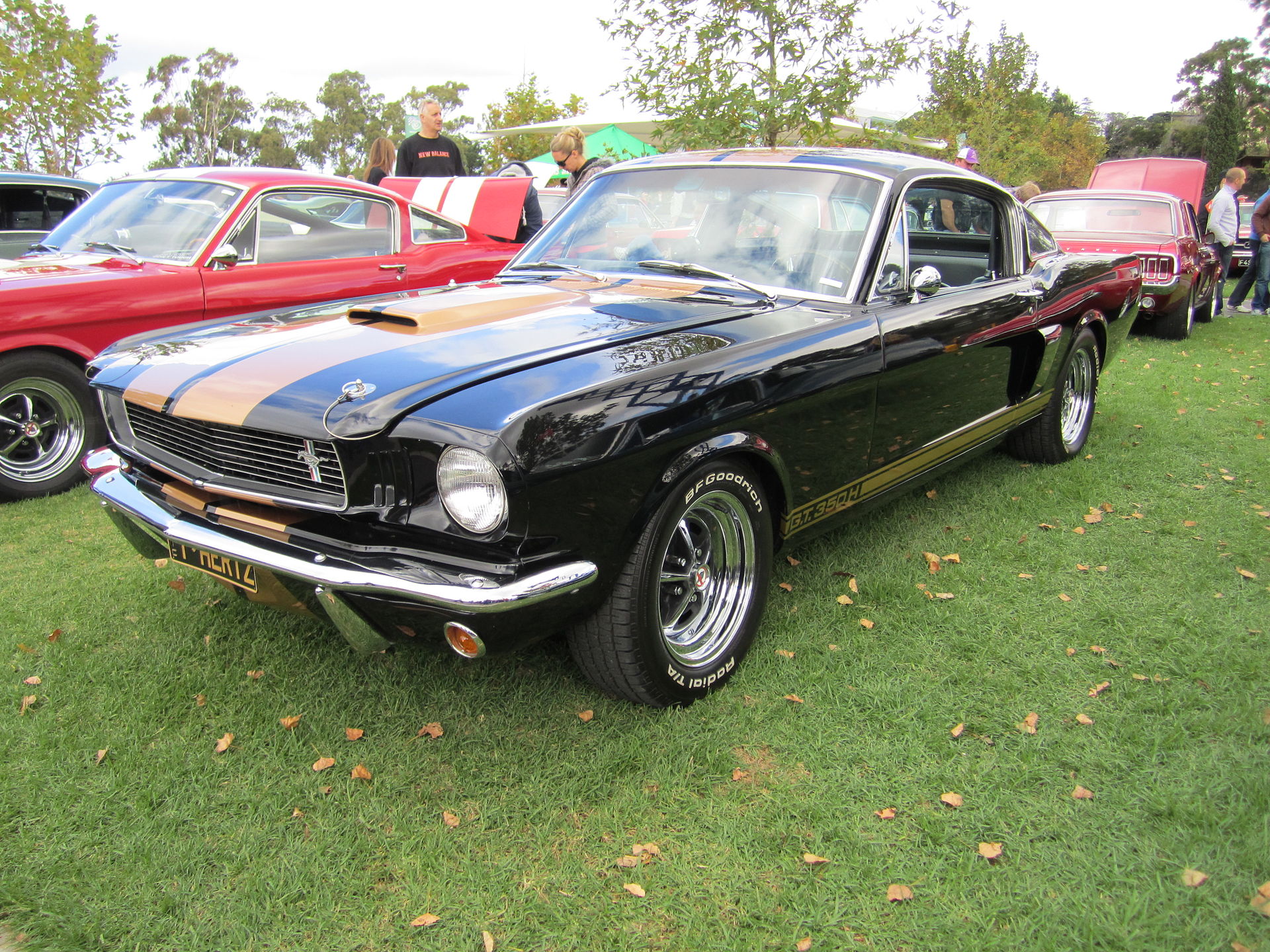
One customer took a large share of the cars: Hertz. Ford's stake in the rental company led to about 1,003 fastbacks, including two prototypes. The first 85 had four-speed manual gearboxes for the "Rent-a-Racer" programme, and about 800 more had automatics; returned cars were sold on as GT350H models. Shelby built 2,378 cars for 1966, including two prototypes and four drag cars, and 1,372 went to private buyers. Four experimental convertibles were also made.
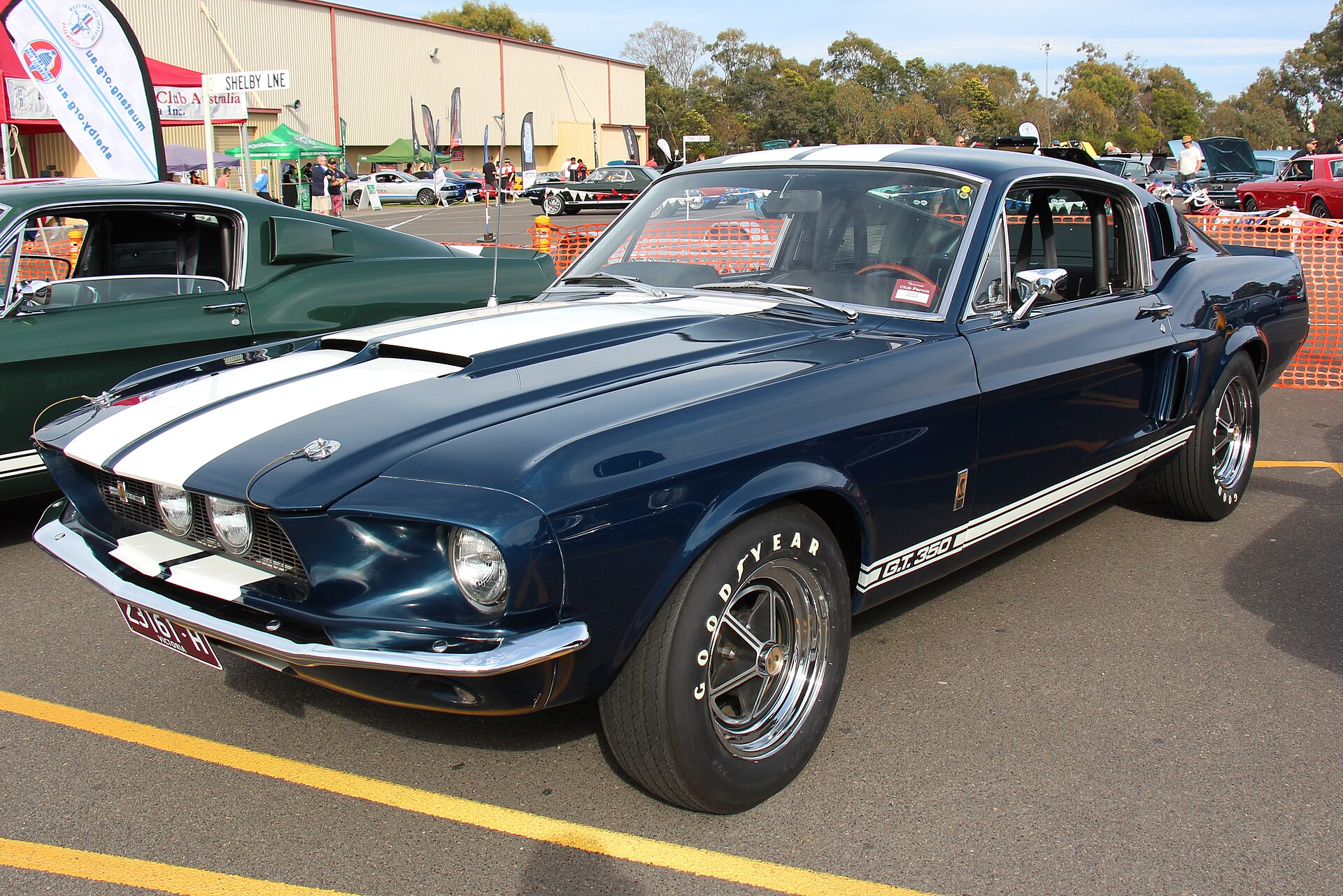
The 1967 car was given a new look with a longer glass-fibre nose, 11.3-inch front discs and taillights taken from the 1967 Mercury Cougar. The 289 kept its 228 kW (306 hp) rating with a single Holley four-barrel. Wikipedia gives about 7 seconds for 0–60 mph and a top speed of 225 km/h (140 mph).
Classic GT350 engines
| Model year | Engine | Power (SAE gross) | Torque |
|---|---|---|---|
| 1965–1967 | 289 cu in Hi-Po V8, four-barrel | 228 kW (306 hp) at 6,000 rpm | 446 Nm (329 lb-ft) at 4,200 rpm |
| 1966 (option) | 289 with Paxton supercharger | 328 kW (440 hp) | — |
| 1968 | 302 cu in V8, hydraulic lifters | 186 kW (250 hp) | — |
| 1969–1970 | 351 cu in V8 | not given in the sources used | — |
For the 302 of 1968 Wikipedia gives two ratings, 172 kW (230 hp) and 186 kW (250 hp), the higher one with the high-rise intake; the table uses 186 kW.

1968–1970: Ford takes over
From 1968 the GT350 used the factory 302 V8 with hydraulic lifters. Shelby's headers were deleted to make room for power steering, a convertible joined the range, and the taillights now came from the 1965 Thunderbird. Wikipedia says an outside contractor, A.O. Smith, modified the 1968 cars; the page is not consistent about which Ford plant built the base cars.
The 1969 GT350 was designed by Ford rather than by Shelby. It had a 351 V8 and a body several inches longer than the Mustang's, and Carroll Shelby ended his agreement with Ford in the summer of 1969. No new cars were built for 1970: unsold 1969 GT350s and GT500s, 789 in total, received 1970 serial numbers under FBI supervision, plus a chin spoiler and two black bonnet stripes.
The modern GT350 (2011–2012 and 2015–2020)
Shelby American showed a new GT350 at the 2010 Barrett-Jackson auction to mark the car's 45th anniversary. It was a conversion of the 2011 Mustang GT, carried out after the car was registered. Output was 321 kW (430 hp) naturally aspirated or 391 kW (525 hp) supercharged; a 465 kW (624 hp) setting was available without warranty. Motor Trend measured 0–60 mph in 3.7 seconds. The 2011 cars came in Performance White with Guardsman Blue stripes, and a convertible arrived for 2012, the first GT350 convertible since 1970.
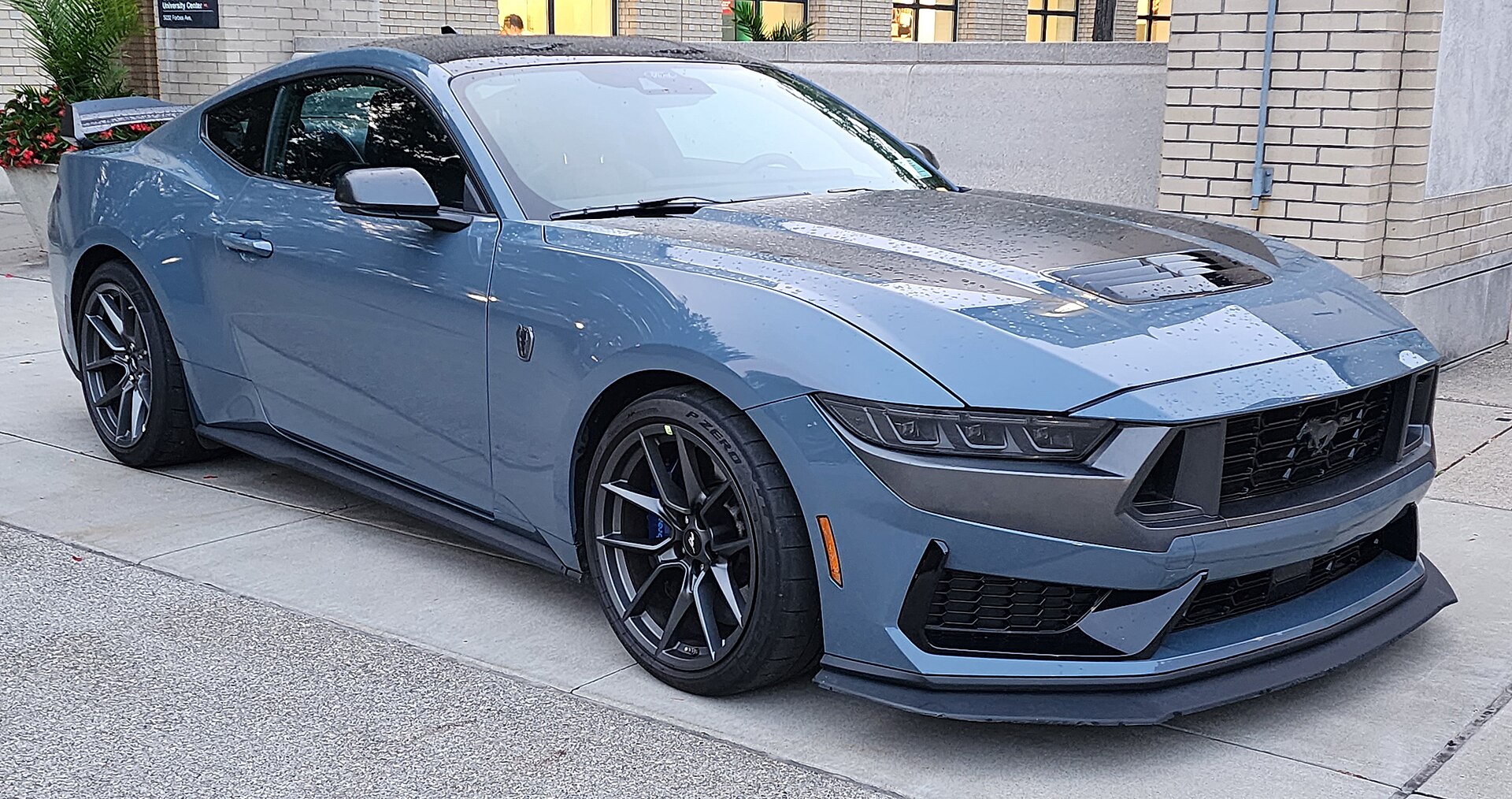
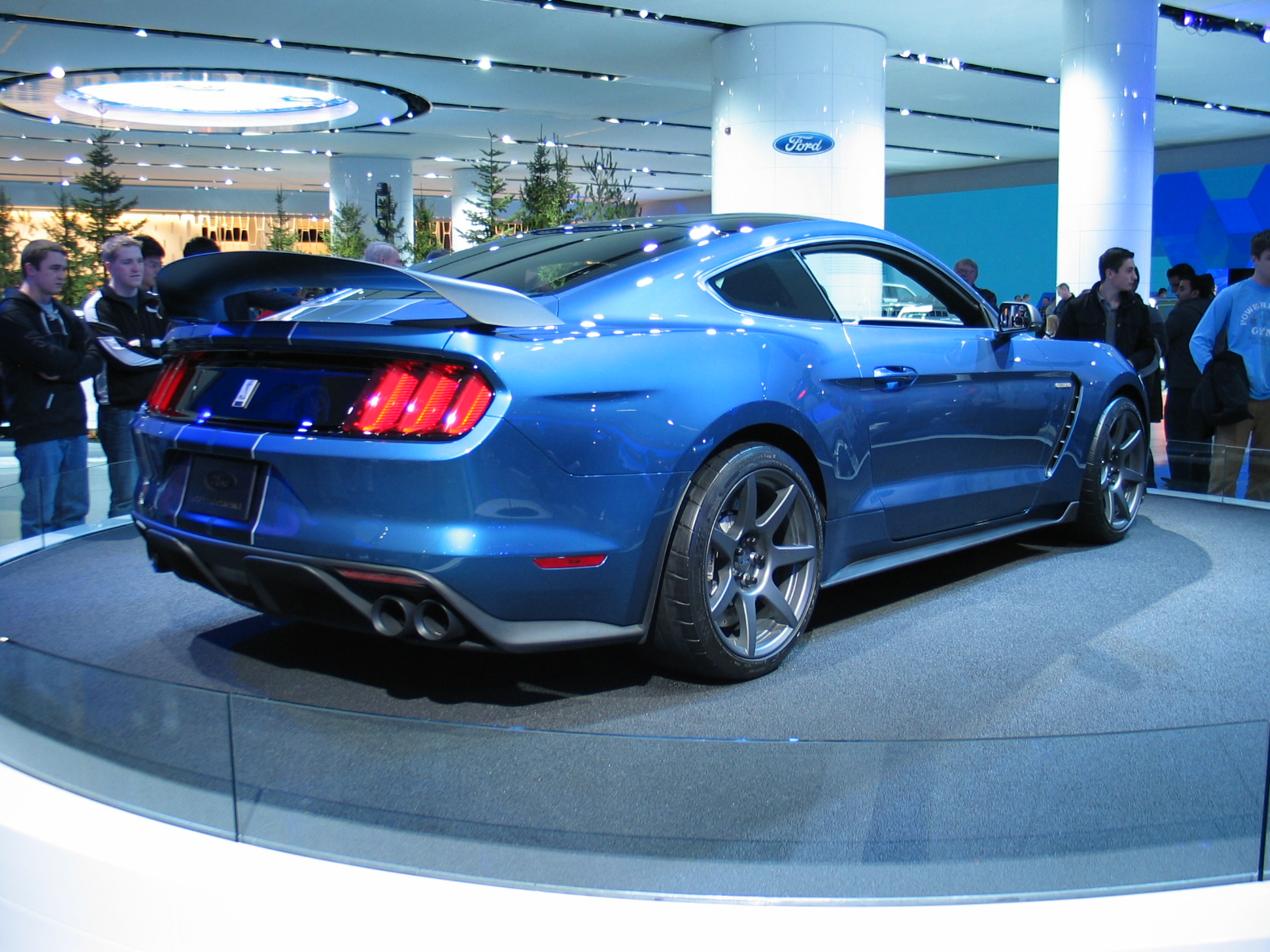
Ford's own Shelby GT350 arrived for 2015 on the sixth-generation Mustang. Its 5.2-litre "Voodoo" V8 used a flat-plane crankshaft and produced 392 kW (526 hp) at 7,500 rpm and 582 Nm (429 lb-ft) at 4,750 rpm. The only gearbox was a Tremec TR-3160 six-speed manual, lightened and adapted for track use. The car had aluminium suspension knuckles, a carbon-fibre grille and optional MagneRide dampers, which Wikipedia describes as a first for a Ford. Wikipedia gives 0–60 mph in 4.2 seconds and a top speed of 277 km/h (172 mph).
| Shelby GT350 (2015–2020) | GT350 | GT350R |
|---|---|---|
| Engine | 5.2 l flat-plane-crank V8 | same |
| Power | 392 kW (526 hp) at 7,500 rpm | same |
| Torque | 582 Nm (429 lb-ft) at 4,750 rpm | same |
| Weight | 1,705 kg (3,760 lb), standard | 1,658 kg (3,655 lb), standard |
| Wheels | 19-inch aluminium | carbon fibre by Carbon Revolution |
| Interior | four seats | no rear seats, air conditioning, stereo or reversing camera |
The GT350R was more than 59 kg lighter than a GT350 with the Track Pack. Road & Track named it its 2016 Performance Car of the Year. The racing GT350R-C, run by Multimatic, won three races in its first season in 2015, and in 2016 the No. 15 car won six of ten races and took the team, driver and manufacturer titles. Ford updated the suspension, aerodynamics and Michelin tyres for 2019 and added Heritage and Carroll Shelby Signature editions for 2020. Production ended in October 2020, when the GT500 took over as the top Mustang.
Photo gallery


Ford Mustang Shelby GT350 evolution in numbers
Did you know?
- The Ford Mustang Shelby GT350 ran for 55 years, from 1965 to 2020, over 4 generations in our catalog.
- The longest-running generation is the Shelby GT350 (2015–2020): 5 years.
- The biggest jump in power came with the Shelby GT350: up to 391 kW (532 PS), 163 kW more than the Shelby GT350.
Most powerful version, kW
Figures from the 1cars catalog: power is the strongest version of each generation; generations without the figure are left out.
Ford Mustang Shelby GT350: first vs latest generation
| Spec | Shelby GT350 | Shelby GT350 | Change |
|---|---|---|---|
| Years | 1965–1966 | 2015–2020 | 50 years apart |
| Most powerful version | 228 kW (310 PS) | 392 kW (533 PS) | +164 kW (+72%) |
Oldest and newest generation in the 1cars catalog. Power is the strongest version of each; other rows are shown only when both generations have the figure.
Ford Mustang Shelby GT350 in our rankings
- No. 9 of 36 · Fastest American cars (277 km/h)
- No. 25 of 154 · Most powerful American cars (392 kW · top 17%)
- No. 59 of 281 · Fastest cars (277 km/h · top 21%)
- No. 181 of 859 · Most powerful cars (392 kW · top 22%)
- No. 71 of 312 · Most powerful cars of the 2010s (392 kW · top 23%)
- No. 130 of 557 · Biggest engines: cars (5,163 cc · top 24%)
More powerful than 83% of ranked American cars in the 1CARS catalog (No. 25 of 154).
Ford Mustang Shelby GT350 photos 6
FAQ
How many 1965 Shelby GT350s were built?
562, according to Wikipedia and The Henry Ford, including 34 (Wikipedia) or 36 (The Henry Ford) competition GT350R cars.
What engine did the first GT350 have?
A modified 289 Hi-Po V8 rated at 228 kW (306 bhp, SAE gross) and 446 Nm.
What does "GT350" mean?
"GT" stands for Grand Tourer; "350" is said to come from the roughly 350 steps between two buildings at Shelby's workshop.
What were the Hertz GT350H cars?
About 1,003 1966 fastbacks built for Hertz, most with automatic gearboxes; returned rental cars were sold as GT350H.
How powerful is the 2015–2020 Shelby GT350?
392 kW (526 hp) at 7,500 rpm and 582 Nm from a 5.2-litre flat-plane-crank V8.
Data sources
Data checked by an editor against the sources below.
- Wikipedia — Shelby Mustang
- Wikipedia — Ford Mustang (sixth generation)