 Ford Capri
All generations, specs and history
Published Sources (1) Report an error
By Felix Hartmann, Automotive Technology & EV Contributor
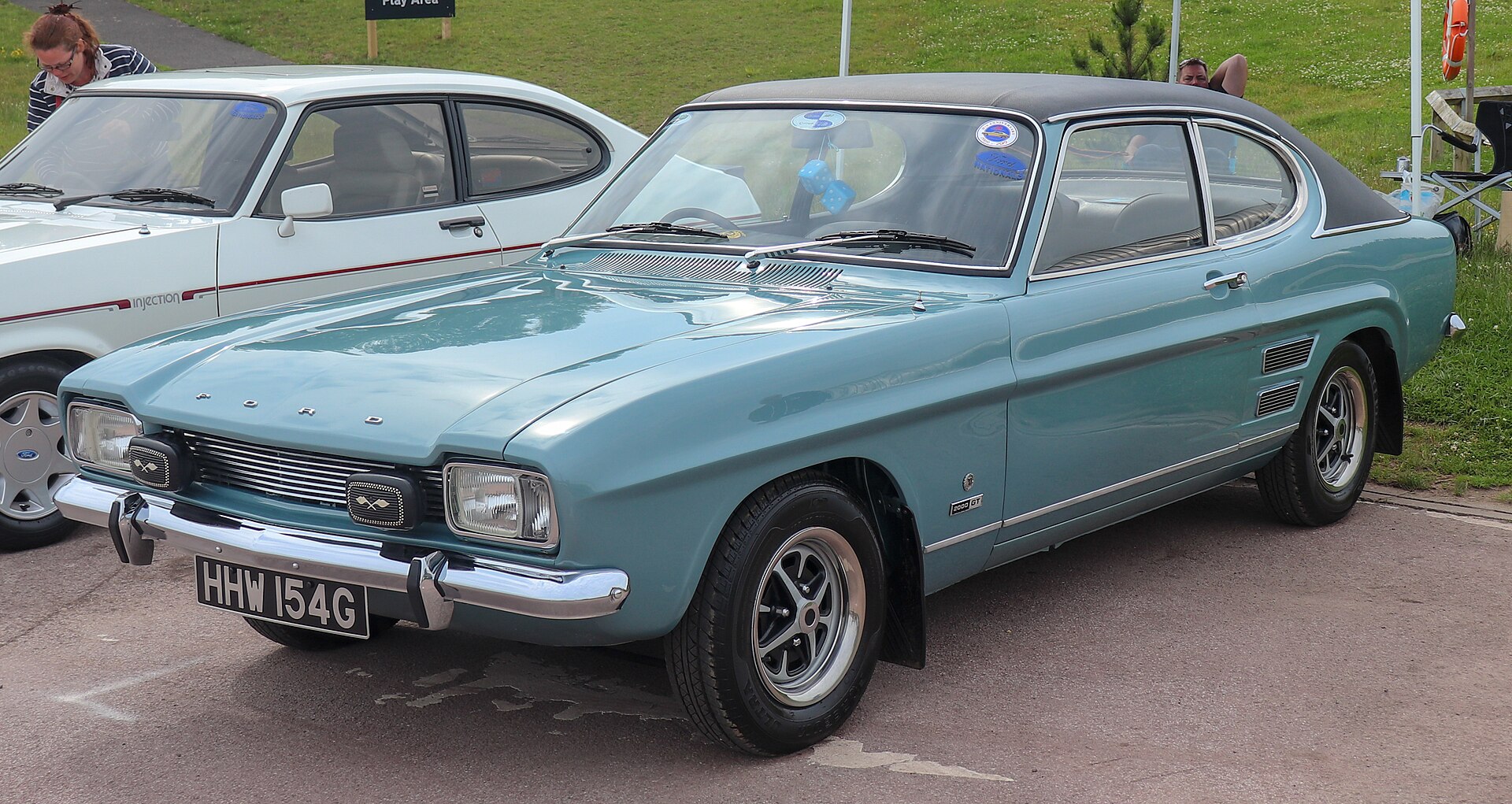
- Built
- 1968–1986
- Generations
- 3 · Mk I to Mk III
- Top power
- 153 kW (208 PS)
Timeline
Capri generations
Click a generation for its own page
- Capri Mk I 1968–1974 · Coupe · 110 kW (150 PS)
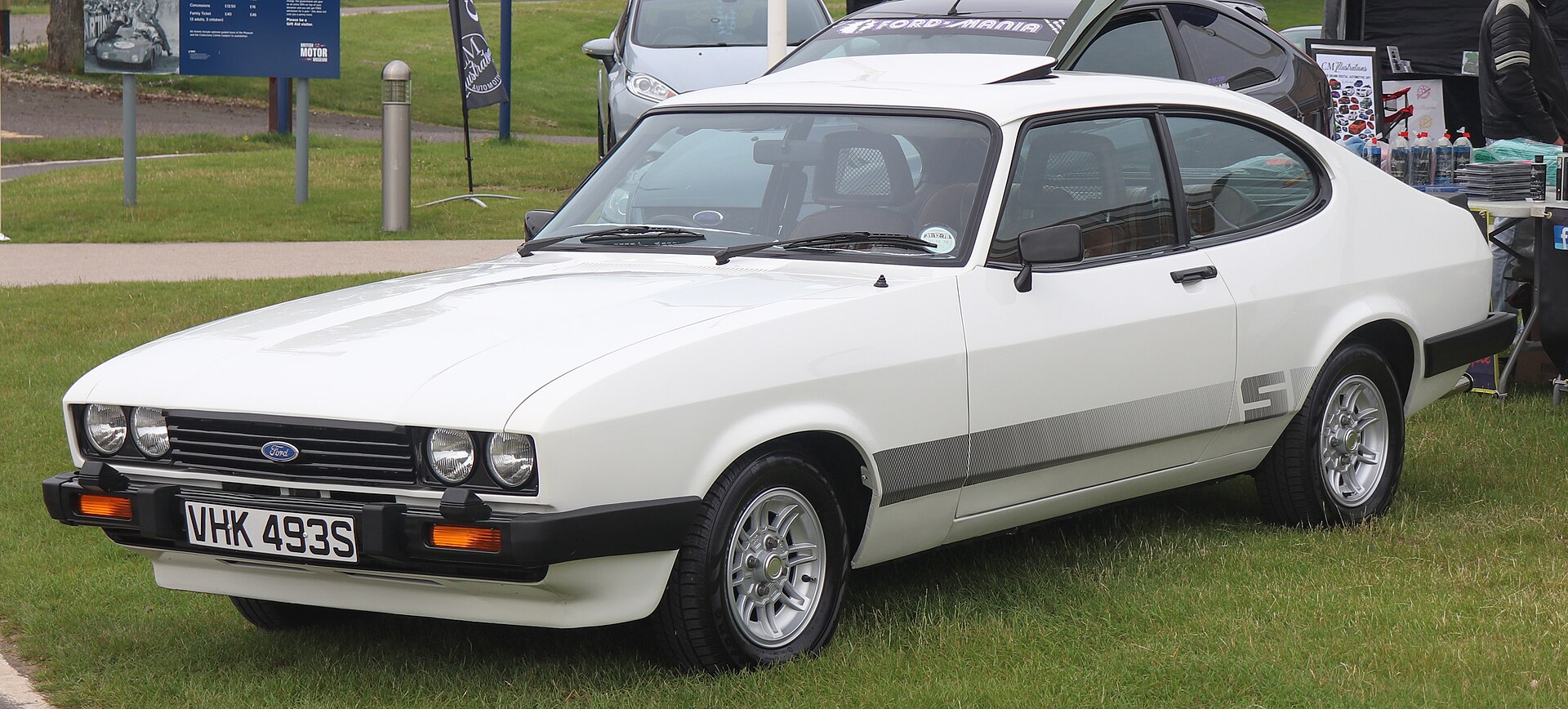
- Capri Mk II 1974–1978 · Liftback · 40–103 kW (54–140 PS)
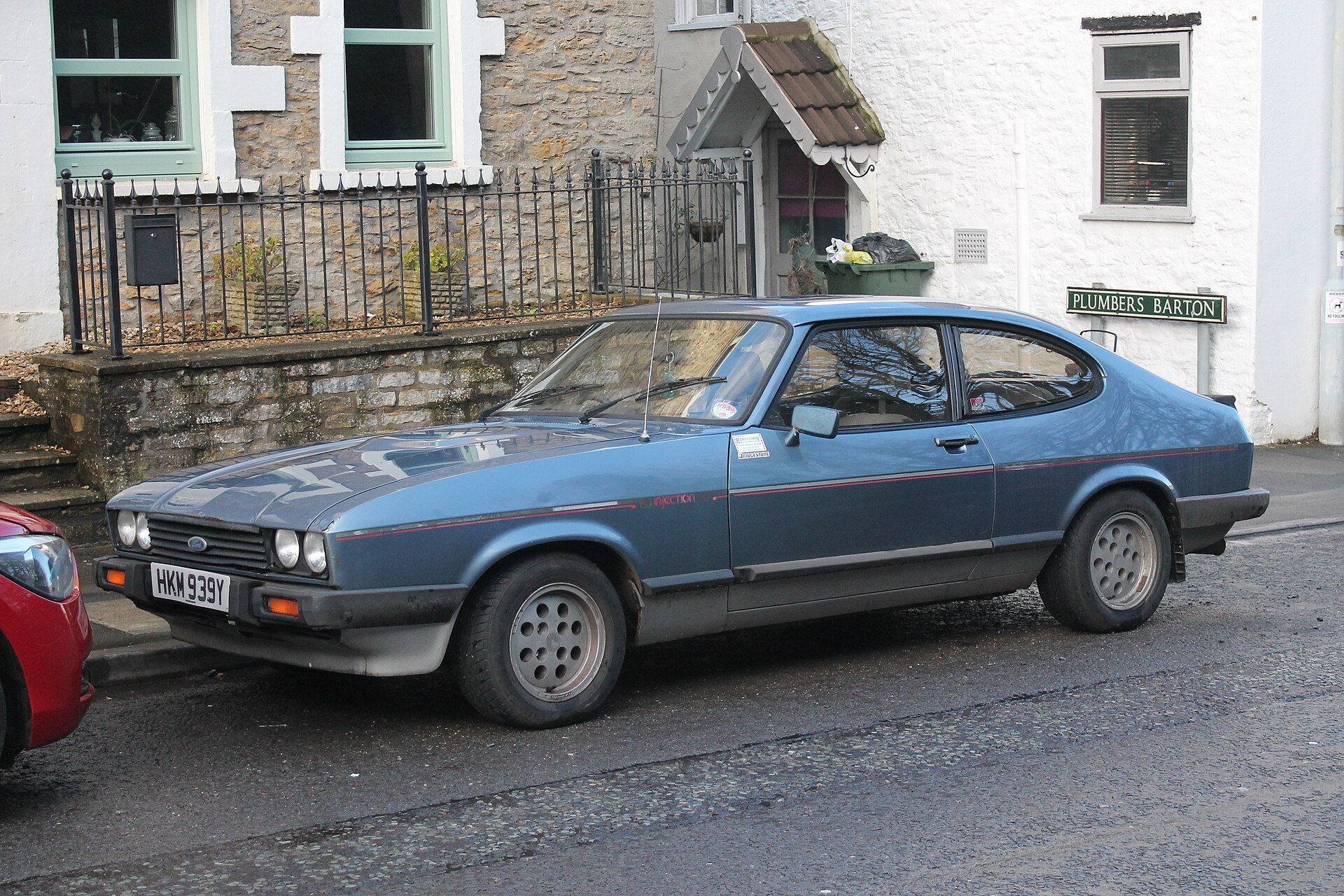
- Capri Mk III 1978–1986 · Liftback · 41–153 kW (56–208 PS)
Newest first · 3 generations since 1968
-
1978
-
1974
-
1968
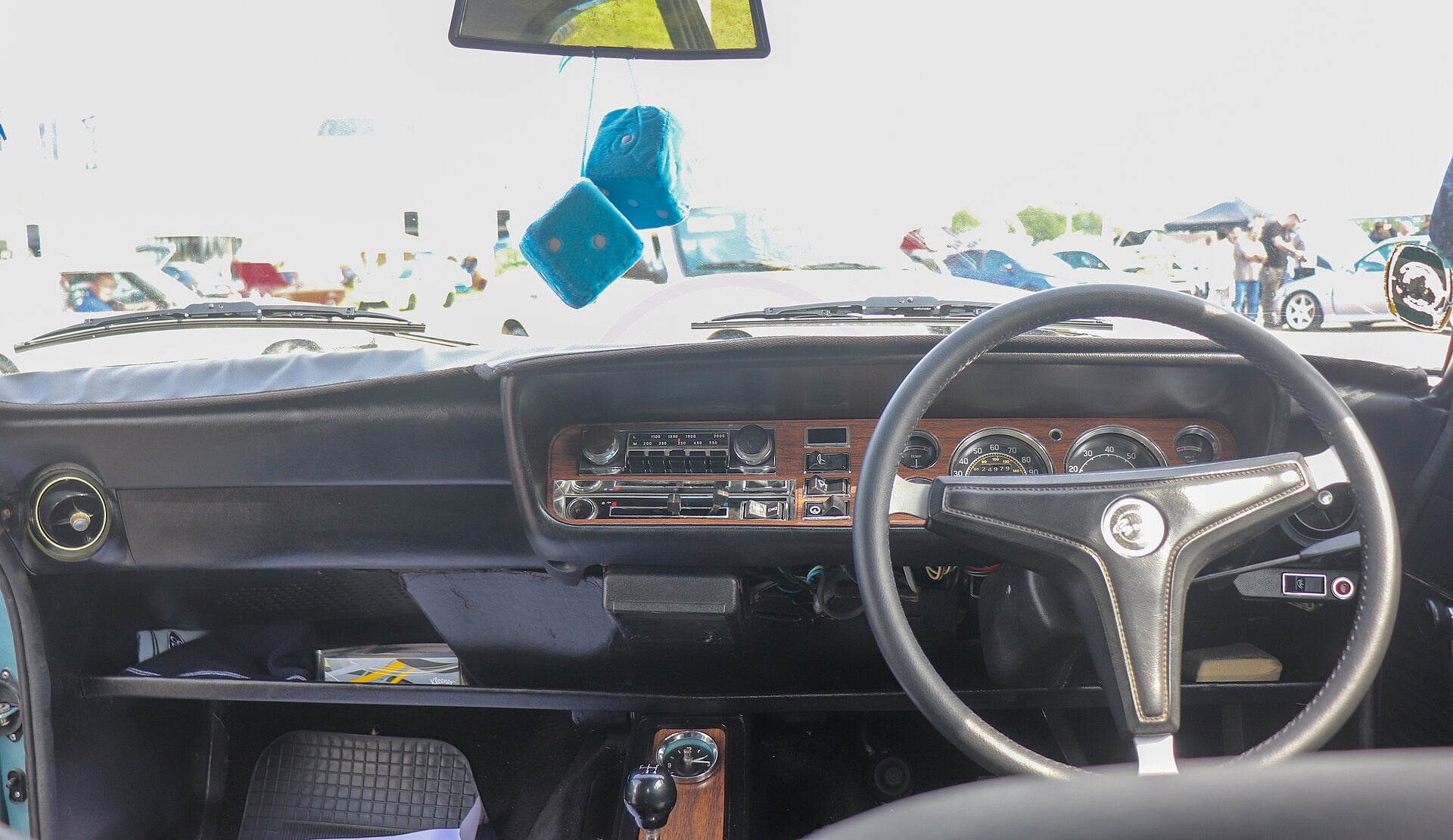


All generations by year: Capri Mk III (1978–1986) · Capri Mk II (1974–1978) · Capri Mk I (1968–1974)
Which one is mine?
Pick the year of first registration to see which generation it is.
Check by VINThe Ford Capri is the sporting coupé that Ford of Europe built from November 1968 to December 1986, a European answer to the Mustang on the mechanical basis of the Cortina. Over three series, Mk I, Mk II and Mk III, Ford built 1,886,647 cars in Britain, West Germany and Belgium, with engines from a 1.3-litre four-cylinder to a 3.0-litre V6. The last car left the Cologne plant on 19 December 1986.
In short
- Produced from November 1968 to December 1986; unveiled at the Brussels Motor Show in January 1969.
- Three series: Mk I (1969-1974), Mk II (1974-1978) with a hatchback, and Mk III (1978-1986).
- Total production: 1,886,647 cars; the one millionth Capri, an RS 2600, was completed on 29 August 1973.
- Engines from 40 kW (54 hp) in the 1.3 to 118 kW (160 PS) in the 2.8 Injection; limited turbo models reached 153 kW (208 PS).
Specs by version
Engines
| Version | Engine | Power | Drive | Production years |
|---|---|---|---|---|
| Mk I · 1968–1974 | ||||
| Mk I · RS 2600 | 2.6 l · 6 cyl · Petrol 2,637 cc | 110 kW 150 PS148 hp | Rear-wheel drive | 1971 |
| Mk III · 1978–1986 | ||||
| Mk III · 2.8 Injection | 2.8 l · 6 cyl · Petrol 2,792 cc | 118 kW 160 PS158 hp | Rear-wheel drive | 1981–1986 |
Performance
Show all 2 versions
| Version | 0–100 km/h | Top speed |
|---|---|---|
| Mk I · 1968–1974 | ||
| Mk I · RS 2600 | 7.7 s 0–62 mph | - |
| Mk III · 1978–1986 | ||
| Mk III · 2.8 Injection | - | 211 km/h131 mph |
Dimensions and weight
Show all 1 versions
| Version | Kerb weight |
|---|---|
| Mk III · 1978–1986 | |
| Mk III · 2.8 Injection | 1,188 kg2,619 lb |
Verified Manufacturer and type-approval data from our catalog · Sources and methodology
Ford Capri at a glance: maker, production years (1968-1986), purpose
The Capri was designed for Ford of Europe by Philip T. Clark, who had previously worked on the Ford Mustang. The brief was a European "pony car": a long bonnet, a short tail and four seats, built from the mechanical parts of a family saloon. The Mk2 Cortina supplied the running gear.
Production ran in several European plants. For the Mk I, Ford built the car at Halewood in England, at Saarlouis and Cologne in West Germany and at Genk in Belgium, with further assembly in Australia (Homebush), South Africa (Port Elizabeth), Singapore and Thailand. From October 1976 all production was concentrated in Cologne. In the United States the German-built Capri was sold from 1970 to 1978 through Lincoln-Mercury dealers as the Mercury Capri.
Development and production history
Production began in November 1968, and the public saw the car at the Brussels Motor Show in January 1969; sales started the following month. The Capri sold quickly: 400,000 in the first two years, and 233,000 in 1973 alone, the highest annual figure in its life. By the time the Mk II arrived in February 1974, 1.2 million Mk I cars had been sold.
The Mk II made the Capri more practical, with a shorter bonnet, a larger cabin and, for the first time on a Ford, a hatchback rear door. The Mk III of March 1978, developed under the internal name "Project Carla", kept the body but brought quad headlamps, a grille that Ford called "Aeroflow" and new rear lamps. Sales in mainland Europe ended in 1984, and from then on Ford built the Capri only with right-hand drive for the British market.
| Year | Event |
|---|---|
| 1968 | Production starts in November |
| 1969 | Public debut at the Brussels Motor Show in January; 3000 GT with the Essex V6 from September |
| 1971 | RS 2600 with fuel-injected 2.6 V6 in September; first ETCC drivers' title |
| 1973 | One millionth Capri, an RS 2600, completed on 29 August; RS 3100 homologation run |
| 1974 | Capri II (Mk II) with hatchback introduced on 25 February |
| 1976 | Halewood production ends in October; Cologne builds all Capris |
| 1978 | Capri Mk III on sale from March |
| 1981 | 2.8 Injection shown at the Geneva Motor Show |
| 1984 | Mainland European sales end; right-hand drive only from 30 November |
| 1986 | Last Capri built in Cologne on 19 December |
Ford did not replace the Capri directly. The Ford Probe, sold in Europe from 1994, was effectively its successor. In July 2024 Ford revived the name for an electric coupé-SUV, which has nothing in common with the original apart from the badge.


Design and engineering
The Capri used a steel monocoque body with a front engine and rear-wheel drive, and running gear from the Cortina. The Mk I was a fastback coupé with a separate boot lid; the Mk II and Mk III added a hatchback. For the Mk II Ford quoted 8.1 cu ft (about 230 litres) of luggage space with the rear seat up and 22.6 cu ft (about 640 litres) with it folded. A typical Mk I weighed around 931 kg, rising to 1,144 kg for the six-cylinder 3000 GXL. By the time of the Mk III, the weight ranged from 1,010 kg for the 1.3 to 1,219 kg for the 3.0 S.
Ford sold the Capri in a large number of trim and engine combinations, designed to let a buyer choose anything from an economical 1.3 to a fast V6 in the same body. Limited editions were a constant: the 1971 Capri Special came in Vista Orange (1,200 cars), the Mk II JPS of March 1975 echoed the black and gold of the John Player Special Formula 1 livery, and the 1984 Injection Special added half-leather seats and a limited-slip differential.

Engine and drivetrain
Britain and Germany used different engine families. British cars had Kent four-cylinder engines (1.3 and 1.6 litres), the Essex V4 2.0 and the Essex V6 3.0. German cars used Taunus V4 units (1.3, 1.5 and 1.7 litres) and the Cologne V6 in 2.0, 2.3 and later 2.6 and 2.8-litre form. The Mk III also had the 2.0-litre Pinto four-cylinder.
| Engine | Series | Power |
|---|---|---|
| 1.3 four-cylinder | Mk II / Mk III | 40-42 kW (54-56 hp) |
| 1.6 GT four-cylinder | Mk II | 65 kW (88 PS) |
| 2.0 four-cylinder (Pinto) | Mk II / Mk III | 72-74 kW (97-99 hp) |
| 2.3 Cologne V6 | Mk I (2300 GT) | 92 kW (125 PS) |
| 2.6 Cologne V6, Kugelfischer injection | Mk I (RS 2600) | 110 kW (150 PS) |
| 3.0 Essex V6 | Mk I-Mk III (to 1981) | 103 kW (140 PS) |
| 3.1 Essex V6 | Mk I (RS 3100) | 110 kW (150 PS), 254 Nm |
| 2.8 Cologne V6, fuel injection | Mk III (2.8i, from 1981) | 118 kW (160 PS) |
| 2.8 V6 turbo (Tickford) | Mk III (1983-1984) | 153 kW (208 PS) |
The 2.8 Injection was the defining late Capri: 118 kW (160 PS) and a top speed of 211 km/h (131 mph). The Essex 3.0 was dropped for the 1982 model year.

Ford Capri specifications
| Parameter | Metric | Imperial |
|---|---|---|
| Production | November 1968 - December 1986 | - |
| Total built | 1,886,647 | - |
| Layout | front engine, rear-wheel drive | - |
| Kerb weight, Mk I base | 931 kg | 2,053 lb |
| Kerb weight, Mk III 2.8i | 1,188 kg | 2,620 lb |
| Luggage space, Mk II, rear seat up / folded | about 230 / 640 l | 8.1 / 22.6 cu ft |
| Power, Mk III 2.8i | 118 kW (160 PS) | - |
| Top speed, Mk III 2.8i | 211 km/h | 131 mph |
| RS 2600 displacement | 2,637 cc | 160.9 cu in |
| RS 3100 displacement / torque | 3,098 cc / 254 Nm | 189 cu in / 187 lb-ft |
| RS 2600, 0-100 km/h | 7.7 s | - |
Variants and derivatives
| Variant | Years | Body / purpose | Engine | Notes |
|---|---|---|---|---|
| 3000 GT / GXL | from 1969 | fastback coupé | 3.0 Essex V6, 103 kW | introduced in September 1969 |
| RS 2600 | from 1971 | homologation coupé | 2.6 Cologne V6, Weslake, injection, 110 kW | ETCC champion 1971 and 1972 |
| RS 3100 | 1973 | homologation coupé | 3.1 Essex V6, 110 kW | 250 built, November-December 1973 |
| Mercury Capri | 1970-1978 | US export | various | German-built cars sold by Lincoln-Mercury |
| Capri II JPS | 1975 | limited edition | various | black and gold livery |
| 2.8 Turbo (RS Turbo) | 1981-1982 | limited edition | 2.8 V6 turbo, 138 kW (188 PS) | about 155-200 built, Zakspeed-inspired |
| 3.0 X Series | Mk III | performance version | 3.0 V6, 138 kW (188 PS) | - |
| Tickford Capri | 1983-1984 | limited edition | 2.8 V6 turbo, 153 kW (208 PS) | 80 sold, about twice the price of a 2.8i |
| Capri 280 "Brooklands" | 1986 | final edition | 2.8 V6 injection | 1,038 built |
The racing versions were just as important for the Capri's image. The RS 2600 carried Dieter Glemser (1971) and Jochen Mass (1972) to the European Touring Car Championship drivers' title. The RS 3100's Cosworth-developed GAA engine was taken to 3.4 litres and 324 kW (435 hp) for Group 2. In the 1981 Deutsche Rennsport Meisterschaft, Klaus Ludwig won the title in a Zakspeed Group 5 Capri turbo. The Mercury Capri name was used again from 1979 to 1986 for a Mustang-based car that had no connection to the European model.

In service: operation, reliability and legacy
The Capri's appeal lay in its simple, familiar engineering. Running gear and engines came from Ford's family cars of the time, so the mechanical parts were shared with high-volume models. Its main enemy over the decades has been the one shared by most steel-bodied cars of the period: corrosion.
The car's legacy is mainly cultural. It brought the pony-car idea to Europe and made a V6 coupé attainable for ordinary buyers. Its success in touring-car racing, from the RS 2600 to the Zakspeed turbo, gave it a reputation that outlasted the model, and the last edition, the 280 "Brooklands" with 1,038 cars, was still being registered as new in November 1989.
Preservation and collecting today
The most sought-after Capris are the low-production performance models: the RS 2600 and RS 3100 of the Mk I era, the Tickford and 2.8 Turbo of the Mk III era, and the final 280 Brooklands. A plain Mk II or Mk III 1.6 or 2.0 is the most affordable way into the model.
When inspecting any Capri, a buyer should check the bodywork for corrosion and repairs, confirm that the engine matches the model designation and, for the RS and limited-edition models, ask for documentation proving their identity. Other classic Fords and coupés of the period can be found in our classic cars section and in the Ford catalogue.

Ford Capri evolution in numbers
Did you know?
- The Ford Capri ran for 18 years, from 1968 to 1986, over 3 generations in our catalog.
- The longest-running generation is the Capri Mk III (1978–1986): 8 years.
- The biggest jump in power came with the Capri Mk III: up to 153 kW (208 PS), 50 kW more than the Capri Mk II.
Most powerful version, kW
Figures from the 1cars catalog: power is the strongest version of each generation; generations without the figure are left out.
Ford Capri: first vs latest generation
| Spec | Capri Mk I | Capri Mk III | Change |
|---|---|---|---|
| Years | 1968–1974 | 1978–1986 | 10 years apart |
| Most powerful version | 110 kW (150 PS) | 153 kW (208 PS) | +43 kW (+39%) |
Oldest and newest generation in the 1cars catalog. Power is the strongest version of each; other rows are shown only when both generations have the figure.
Ford Capri in our rankings
- No. 8 of 91 · Biggest engines: hatchbacks (2,792 cc)
- No. 73 of 391 · Lightest cars (1,188 kg · top 19%)
- No. 221 of 1082 · Longest-running car nameplates (18 years · top 22%)
- No. 19 of 71 · Fastest hatchbacks (211 km/h · top 29%)
- No. 42 of 141 · Most powerful hatchbacks (153 kW · top 30%)
- No. 25 of 76 · Power-to-weight: hatchbacks (99 kW/t · top 33%)
Bigger engine than 91% of ranked hatchbacks in the 1CARS catalog (No. 8 of 91).
FAQ
When was the Ford Capri produced, and where?
From November 1968 to 19 December 1986. It was built at Halewood in England, at Cologne and Saarlouis in West Germany and at Genk in Belgium; from October 1976 production was concentrated in Cologne.
How many Ford Capris were built?
1,886,647 cars across the three series. The one millionth, an RS 2600, was completed on 29 August 1973.
What engines did the Ford Capri have?
Four-cylinder engines from 1.3 to 2.0 litres and V6 engines from 2.0 to 3.1 litres. The most powerful series model was the 2.8 Injection with 118 kW (160 PS); the Tickford turbo had 153 kW (208 PS).
What variants of the Ford Capri were made?
Besides the Mk I, Mk II and Mk III, there were homologation models (RS 2600, RS 3100), turbo models (2.8 Turbo, Tickford), many limited editions such as the JPS and the 280 Brooklands, and the Mercury Capri for the US market.
Is the Ford Capri collectable, and what should buyers check?
Yes, especially the RS models, the turbo models and the 280 Brooklands. Check for corrosion, verify that the engine matches the original specification and ask for proof of identity on rare versions.
Data sources
Data checked by an editor against the sources below.