 Mini Clubman
All generations, specs and history
Published Sources (5) Report an error
By Felix Hartmann, Automotive Technology & EV Contributor
- Built
- 2007–2024
- Generations
- 2 · R55 to F54
- Top power
- 225 kW (306 PS)
Timeline
Clubman generations
Click a generation for its own page


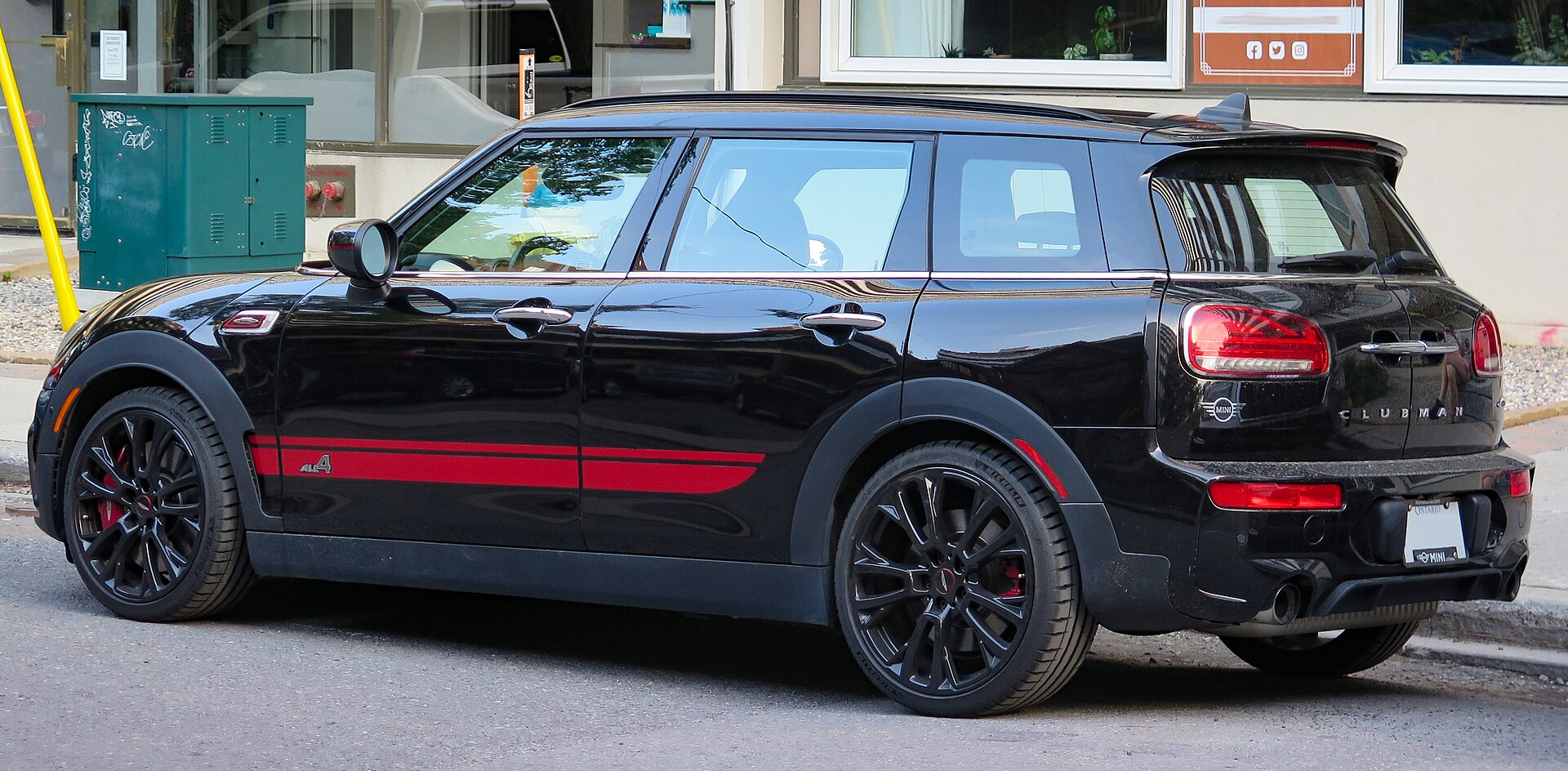
- Clubman R55 2007–2014 · Station wagon · 88–155 kW (120–211 PS)
- Clubman F54 2015–2024 · Station wagon · 75–225 kW (102–306 PS)
Newest first · 2 generations since 2007
-
2015
-
2007
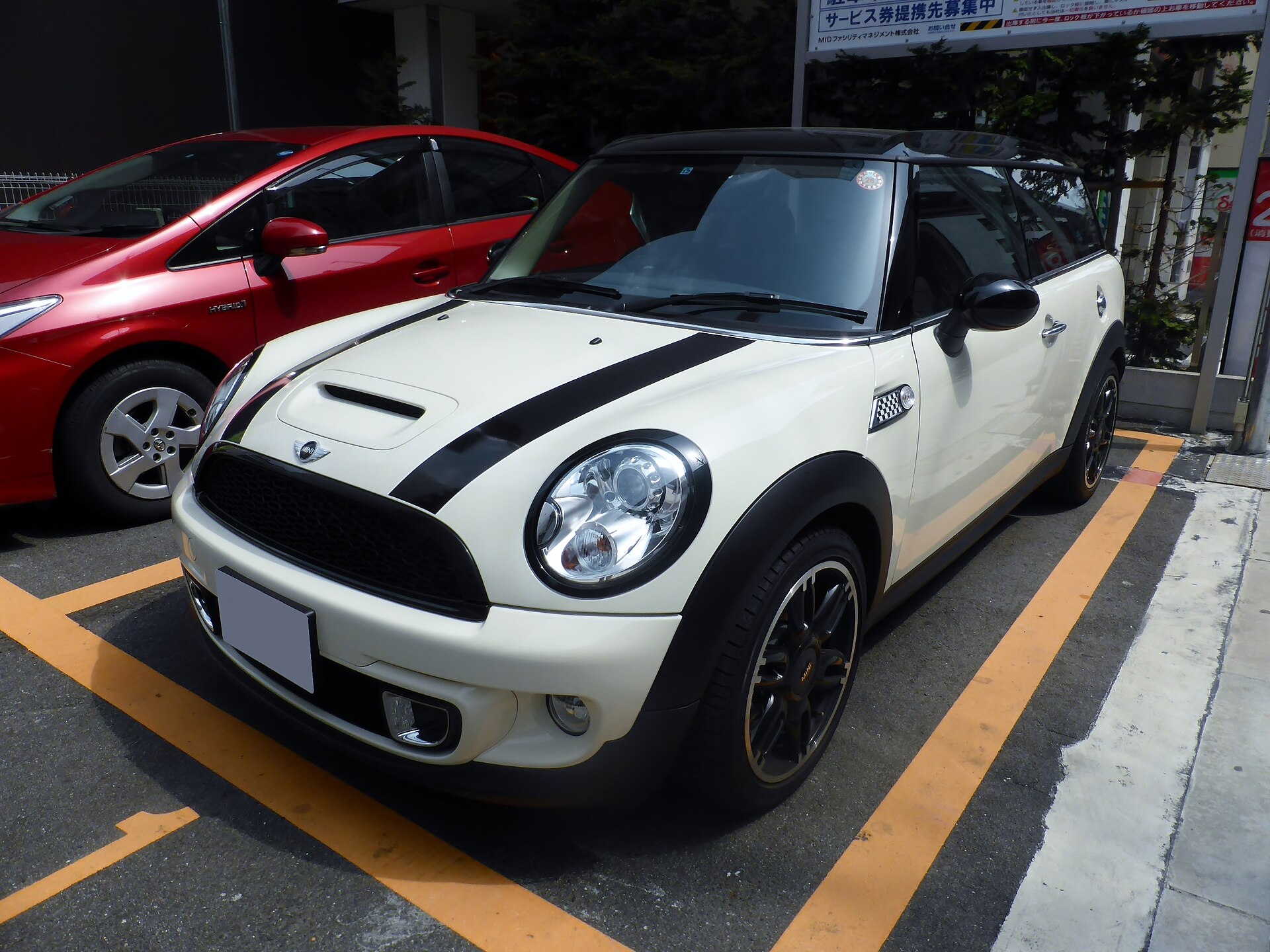
All generations by year: Clubman F54 (2015–2024) · Clubman R55 (2007–2014)
Which one is mine?
Pick the year of first registration to see which generation it is.
Check by VINWhich Clubman to choose
Our verdict · Felix Hartmann
The F54 is the better everyday car: four proper doors, 360 litres of luggage space and modern engines. A Cooper with the 100 kW three-cylinder is enough for family use, and the Cooper S and the diesels suit long distances. Enthusiasts should look for the 225 kW John Cooper Works ALL4 from 2019 onwards. The R55 appeals to buyers who like the asymmetric Clubdoor and the older, lighter Mini character.
On the R55, australiancar.reviews warns of early wear of the timing-chain tensioner on the petrol engines; listen for rattling on a cold start. On the F54, Listers' owners report rear doors that stick or fail to latch and cracked upper engine mounts. A full service history is essential. Buyers who need still more space should look at the Mini Countryman; the current range is on the Mini catalogue page.
The Mini Clubman is the estate version of the BMW-era Mini, built at Oxford from 2007 until February 2024 in two generations. The R55 of 2007–2014 had a small rear-hinged side door, the Clubdoor, on one side only. The larger F54 of 2015–2024 switched to four conventional doors but kept the twin rear doors that open sideways. Engines ranged from 75 to 225 kW, and the F54 was the first Clubman offered with all-wheel drive.
In short
- R55 (2007–2014): 240 mm longer than the Mini hatch, one Clubdoor on the right-hand side and split rear doors.
- F54 (2015–2024): UKL2 platform, about 4.25 m long, four side doors, 360 litres of boot space.
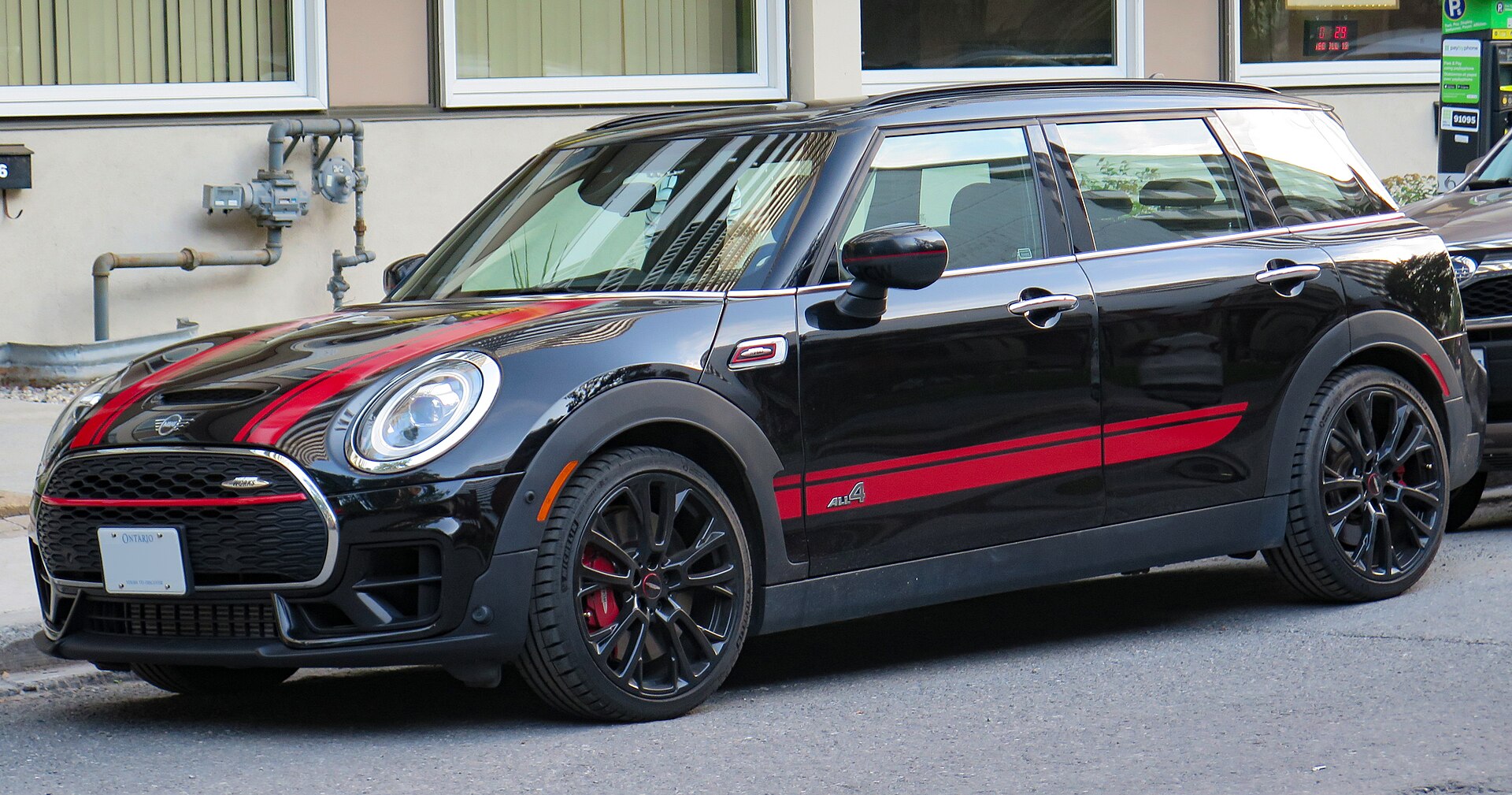
- Most powerful version: the John Cooper Works built from August 2019, rated at 225 kW (306 PS).
- Production ended at Oxford in February 2024, and Mini did not replace the car directly.
Size at a glance
Mini Clubman R55
The Mini Clubman F54 is 308 mm longer, 117 mm wider and 15 mm taller than the Mini Clubman R55.
| Dimensions | Mini Clubman F54 | Mini Clubman R55 | Difference |
|---|---|---|---|
| Length | 4,266 mm168.0 in | 3,958 mm155.8 in | +308 mm+12.1 in |
| Width | 1,800 mm70.9 in | 1,683 mm66.3 in | +117 mm+4.6 in |
| Height | 1,441 mm56.7 in | 1,426 mm56.1 in | +15 mm+0.6 in |
| Wheelbase | 2,670 mm105.1 in | 2,547 mm100.3 in | +123 mm+4.8 in |
| Boot | 360 L12.7 cu ft | 260 L9.2 cu ft | +100 L+3.5 cu ft |
Running cost
Fuel · Clubman F54 Cooper
about 1,600 EUR fuel a year at 15,000 km
6.1 l/100 km · petrol at 1.75 EUR/l · change mileage, fuel price or version
Specs by version
Engines
| Version | Engine | Power | Torque |
|---|---|---|---|
| Diesel · 3 versions | |||
| F54 · One D | Diesel | 85 kW 116 PS114 hp | 270 Nm199 lb-ft |
| F54 · Cooper D | Diesel | 110 kW 150 PS148 hp | 330 Nm243 lb-ft |
| F54 · Cooper SD | Diesel | 140 kW 190 PS188 hp | 400 Nm295 lb-ft |
| Petrol · 8 versions | |||
| R55 · Cooper | Petrol | 88 kW 120 PS118 hp | 160 Nm118 lb-ft |
| R55 · Cooper S | Petrol | 128 kW 174 PS172 hp | 240 Nm177 lb-ft |
| R55 · John Cooper Works | Petrol | 155 kW 211 PS208 hp | 260 Nm192 lb-ft |
| F54 · One | Petrol | 75 kW 102 PS101 hp | 190 Nm140 lb-ft |
| F54 · Cooper | Petrol | 100 kW 136 PS134 hp | 220 Nm162 lb-ft |
| F54 · Cooper S | Petrol | 141 kW 192 PS189 hp | 280 Nm207 lb-ft |
| F54 · John Cooper Works | Petrol | 170 kW 231 PS228 hp | 320 Nm236 lb-ft |
| F54 · John Cooper Works (306 PS) | Petrol | 225 kW 306 PS302 hp | 450 Nm332 lb-ft |
Performance
Show all 8 versions
| Version | 0–100 km/h | Top speed | Fuel consumption | CO₂ |
|---|---|---|---|---|
| Diesel · 3 versions | ||||
| F54 · One D | 11.6 s 0–62 mph | 190 km/h118 mph | 4.8 l/100 km49.0 mpg US · 58.9 mpg UK | 125 g/km |
| F54 · Cooper D | 8.6 s 0–62 mph | 212 km/h132 mph | 5.1 l/100 km46.1 mpg US · 55.4 mpg UK | 132 g/km |
| F54 · Cooper SD | 7.4 s 0–62 mph | 225 km/h140 mph | 5.1 l/100 km46.1 mpg US · 55.4 mpg UK | 133 g/km |
| Petrol · 5 versions | ||||
| F54 · One | 9.9 s 0–62 mph | 195 km/h121 mph | 6.2 l/100 km37.9 mpg US · 45.6 mpg UK | 140 g/km |
| F54 · Cooper | 7.9 s 0–62 mph | 210 km/h130 mph | 6.1 l/100 km38.6 mpg US · 46.3 mpg UK | 140 g/km |
| F54 · Cooper S | 6.8 s 0–62 mph | 235 km/h146 mph | 6.9 l/100 km34.1 mpg US · 40.9 mpg UK | 156 g/km |
| F54 · John Cooper Works | 6.3 s 0–62 mph | 246 km/h153 mph | — | — |
| F54 · John Cooper Works (306 PS) | 4.9 s 0–62 mph | 250 km/h155 mph | 7.5 l/100 km31.4 mpg US · 37.7 mpg UK | 173 g/km |
Dimensions and weight
Show all 10 versions
| Version | Height | Wheelbase | Kerb weight |
|---|---|---|---|
| Diesel · 3 versions | |||
| F54 · One D | — | — | 1,478 kg3,258 lb |
| F54 · Cooper D | — | — | 1,545 kg3,406 lb |
| F54 · Cooper SD | — | — | 1,560 kg3,439 lb |
| Petrol · 7 versions | |||
| R55 · Cooper | 1,426 mm56.1 in | 2,547 mm100.3 in | — |
| R55 · Cooper S | 1,426 mm56.1 in | 2,547 mm100.3 in | — |
| R55 · John Cooper Works | 1,426 mm56.1 in | 2,547 mm100.3 in | — |
| F54 · One | 1,441 mm56.7 in | 2,670 mm105.1 in | 1,395 kg3,075 lb |
| F54 · Cooper | — | — | 1,435 kg3,164 lb |
| F54 · Cooper S | — | — | 1,473 kg3,247 lb |
| F54 · John Cooper Works (306 PS) | — | — | 1,630 kg3,594 lb |
Verified Manufacturer and type-approval data from our catalog · Sources and methodology
Mini Clubman at a glance
| Parameter | R55 (2007–2014) | F54 (2015–2024) |
|---|---|---|
| Plant | Oxford (Cowley) | Oxford (Cowley) |
| Doors | two front doors, one Clubdoor, split rear doors | four side doors, split rear doors |
| Length | about 3.94 m | 4,253–4,270 mm |
| Wheelbase | 2,547 mm | — |
| Engines | 1.6 petrol, 1.6 and 2.0 diesel | 1.5 three-cylinder, 2.0 four-cylinder, petrol and diesel |
| Power | 88–155 kW (petrol) | 75–225 kW |
| Drive | front | front or ALL4 all-wheel drive |
| Gearboxes | six-speed manual, six-speed automatic | six-speed manual, six- and eight-speed automatic, seven-speed dual-clutch |
The Clubman name and the 2007 revival
The Clubman name goes back to 1969, when the classic Mini got a longer, squarer front designed by Roy Haynes. That Clubman replaced the Riley Elf and Wolseley Hornet and was dropped in 1980, when the Metro arrived. The long-wheelbase estate, van and pickup versions lasted until 1981. More on those years is in the history of Mini.
BMW revived the name for an estate built on the second-generation hatch. A concept appeared at the 2005 Frankfurt show, and the production car followed in 2007, designed under Gert Volker Hildebrand. In Australia sales started in March 2008, and a John Cooper Works version was added there in August 2008.
R55: the Clubdoor and split rear doors
The R55 is 240 mm longer than the three-door hatch, with an 80 mm longer wheelbase, and it weighs about 64 kg more. Instead of a tailgate it has two rear doors hinged at the sides. On the right side there is one small rear-hinged door, the Clubdoor, which makes it easier to reach the back seat. Mini kept it on the right in every market. In left-hand-drive countries it opens towards the pavement, but in right-hand-drive markets such as the UK and Australia it sits behind the driver and opens towards the traffic.
| Version | Engine | Power | Torque |
|---|---|---|---|
| Cooper | 1.6 petrol | 88 kW (120 PS) | 160 Nm |
| Cooper S | 1.6 turbo petrol | 128 kW (174 PS) | 240 Nm (260 Nm with overboost) |
| John Cooper Works | 1.6 turbo petrol | 155 kW (211 PS) | 260 Nm (280 Nm with overboost) |
| Cooper D / Cooper SD | 1.6 and 2.0 diesel | — | — |
In 2011 BMW's own 1.6-litre N47 diesel replaced the earlier PSA-Ford unit, and the 2.0-litre N47 appeared in the Cooper SD. The facelifted R55 reached Australia in October 2010. Special editions included the Hampton of 2011 and the Bond Street of 2013.
A panel-van version, the Clubvan, followed in 2012 after a concept at the Geneva show. It was also sold in the US from early 2013, but sales stopped in July 2013 after only 50 vans. Wikipedia EN links this to the US "chicken tax" on imported light commercial vehicles.
F54: four doors and a bigger body
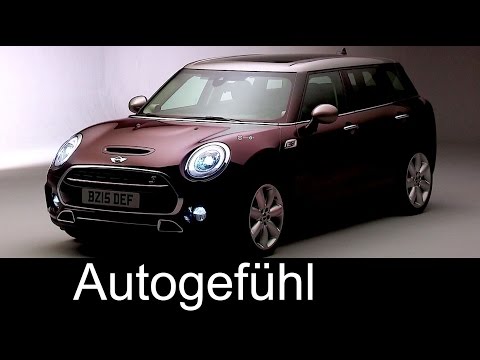
The second Clubman was announced in 2013 under the code F54, shown as a concept at Geneva in 2014 and presented in production form at the Frankfurt IAA in 2015. It moved to BMW's UKL2 front-wheel-drive platform and grew considerably: Wikipedia DE gives a length of 4,253 mm, Wikipedia EN about 4,270 mm, and the width is about 1,800 mm. At its launch it was the largest Mini yet. Compared with the five-door hatch it is 270 mm longer and 73 mm wider, according to Listers.
The Clubdoor gave way to four normal side doors. The split rear doors stayed. The boot takes 360 litres behind the rear seats and 1,250 litres with them folded. The F54 was also the first Clubman with all-wheel drive. The ALL4 system, at first reserved for the Cooper S, reached the Cooper from the 2017 model year, and the John Cooper Works Clubman ALL4 arrived in early 2017.

Engines of the F54
| Version | Engine | Power | Torque | 0–100 km/h | Top speed |
|---|---|---|---|---|---|
| One | 1.5 three-cylinder petrol | 75 kW (102 PS) | 190 Nm | 9.9 s | 195 km/h |
| Cooper | 1.5 three-cylinder petrol | 100 kW (136 PS) | 220 Nm | 7.9 s | 210 km/h |
| Cooper S | 2.0 four-cylinder petrol | 141 kW (192 PS) | 280 Nm | 6.8 s | 235 km/h |
| John Cooper Works (to 2019) | 2.0 four-cylinder petrol | 170 kW (231 PS) | 320 Nm | 6.3 s | 246 km/h |
| John Cooper Works (from 8/2019) | 2.0 four-cylinder petrol | 225 kW (306 PS) | 450 Nm | 4.9 s | 250 km/h |
| One D | 1.5 three-cylinder diesel | 85 kW (116 PS) | 270 Nm | 11.6 s | 190 km/h |
| Cooper D | 2.0 four-cylinder diesel | 110 kW (150 PS) | 330 Nm | 8.6 s | 212 km/h |
| Cooper SD | 2.0 four-cylinder diesel | 140 kW (190 PS) | 400 Nm | 7.4 s | 225 km/h |
The 2019 John Cooper Works gained 55 kW and 130 Nm over the first version and cut 1.4 seconds from the 0–100 km/h time. Listers notes that the Cooper D lasted only until 2019. For converting these outputs into horsepower, use the power converter.

Facelift and the last editions
Mini presented the facelifted F54 in Shanghai in April 2019. It brought a grille without the horizontal bar, optional Union Jack LED rear lights, a 6.5-inch colour screen as standard, a built-in SIM card for the emergency call and connected navigation. The Untold Edition followed in February 2022 with Sage Green paint and 18-inch wheels.
In March 2023 Mini announced the Final Edition, limited to 1,969 cars worldwide, each with a "1 of 1969" badge. The last Clubman left Plant Oxford on 5 February 2024. Wikipedia EN puts total Clubman production at over 1.1 million, about 550,000 of them under BMW. It also notes that the Countryman sold roughly twice as many cars, which is one reason why Mini did not plan a direct replacement.
Safety
Euro NCAP tested a right-hand-drive Clubman Cooper with the 1.5-litre petrol engine in 2015 and awarded four stars, according to australiancar.reviews. Adult occupants got 90 per cent and children 68 per cent. The R55 came with six airbags, stability control, brake assist and electronic brake-force distribution.
Mini Clubman: first vs latest generation
| Spec | Clubman R55 | Clubman F54 | Change |
|---|---|---|---|
| Years | 2007–2014 | 2015–2024 | 8 years apart |
| Most powerful version | 155 kW (211 PS) | 225 kW (306 PS) | +70 kW (+45%) |
| Length | 3,958 mm | 4,266 mm | +308 mm |
| Width | 1,683 mm | 1,800 mm | +117 mm |
| Wheelbase | 2,547 mm | 2,670 mm | +123 mm |
Oldest and newest generation in the 1cars catalog. Power is the strongest version of each; other rows are shown only when both generations have the figure.
Image credits · Photos from Wikimedia Commons under free licences
- Mini Clubman R55 · Photo: Tokumeigakarinoaoshima / Wikimedia Commons, CC0
Mini Clubman in our rankings
- No. 2 of 16 · Smallest station wagons (3,958 mm)
- No. 8 of 22 · Most powerful station wagons (225 kW)
- No. 35 of 420 · Smallest cars (3,958 mm · top 9%)
- No. 39 of 256 · Most economical cars (4.8 l/100 km · top 17%)
- No. 218 of 912 · Longest-running car nameplates (17 years · top 25%)
- No. 16 of 51 · Quickest diesel cars, 0–100 (7.4 s · top 32%)
Shorter than 91% of ranked cars in the 1CARS catalog (No. 35 of 420).
FAQ
What is the Mini Clubman's Clubdoor?
A small rear-hinged door on the right side of the R55 Clubman (2007–2014) that gives access to the back seat. The F54 replaced it with four conventional doors.
When did Mini stop making the Clubman?
Production ended in February 2024, after a run-out Final Edition of 1,969 cars.
How much luggage space does the Clubman have?
The F54 holds 360 litres with all seats in use and 1,250 litres with the rear bench folded.
Is the Mini Clubman four-wheel drive?
The F54 was available with ALL4 all-wheel drive on the Cooper, Cooper S and John Cooper Works; the R55 had front-wheel drive only.
What replaced the Mini Clubman?
There is no direct successor. Wikipedia EN notes that the Countryman outsold the Clubman roughly two to one, so Mini dropped the estate body.
Data sources
Data checked by an editor against the sources below.
- Wikipedia — Mini Clubman (2007)
- Wikipedia — Mini Clubman
- Co — Five Stars Awarded To 11 Cars In Latest Euro Ncap Tests
- Australiancar — Review Mini R55 Clubman 2008 15
- EEA CO₂ monitoring (European Environment Agency, CC BY 4.0)