 Ford Ranchero
All generations, specs and history
Published Sources (2) Report an error
By Sarah Whitmore, Senior Automotive Writer
- Built
- 1957–1979
- Generations
- 5
- Top power
- 280 kW (381 PS)
Timeline
Ranchero generations
Click a generation for its own page
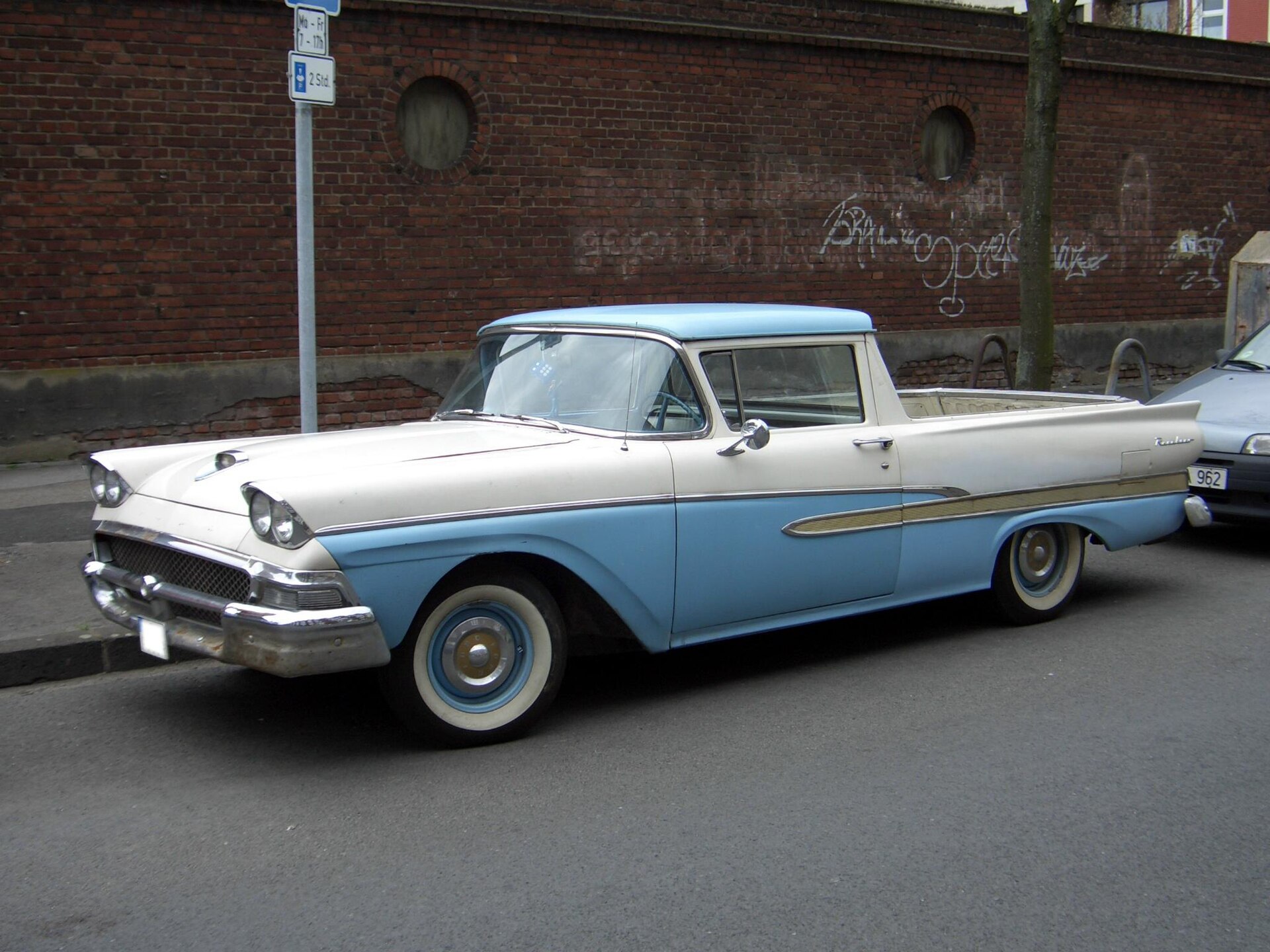
- Ranchero I 1957–1959 · Pickup
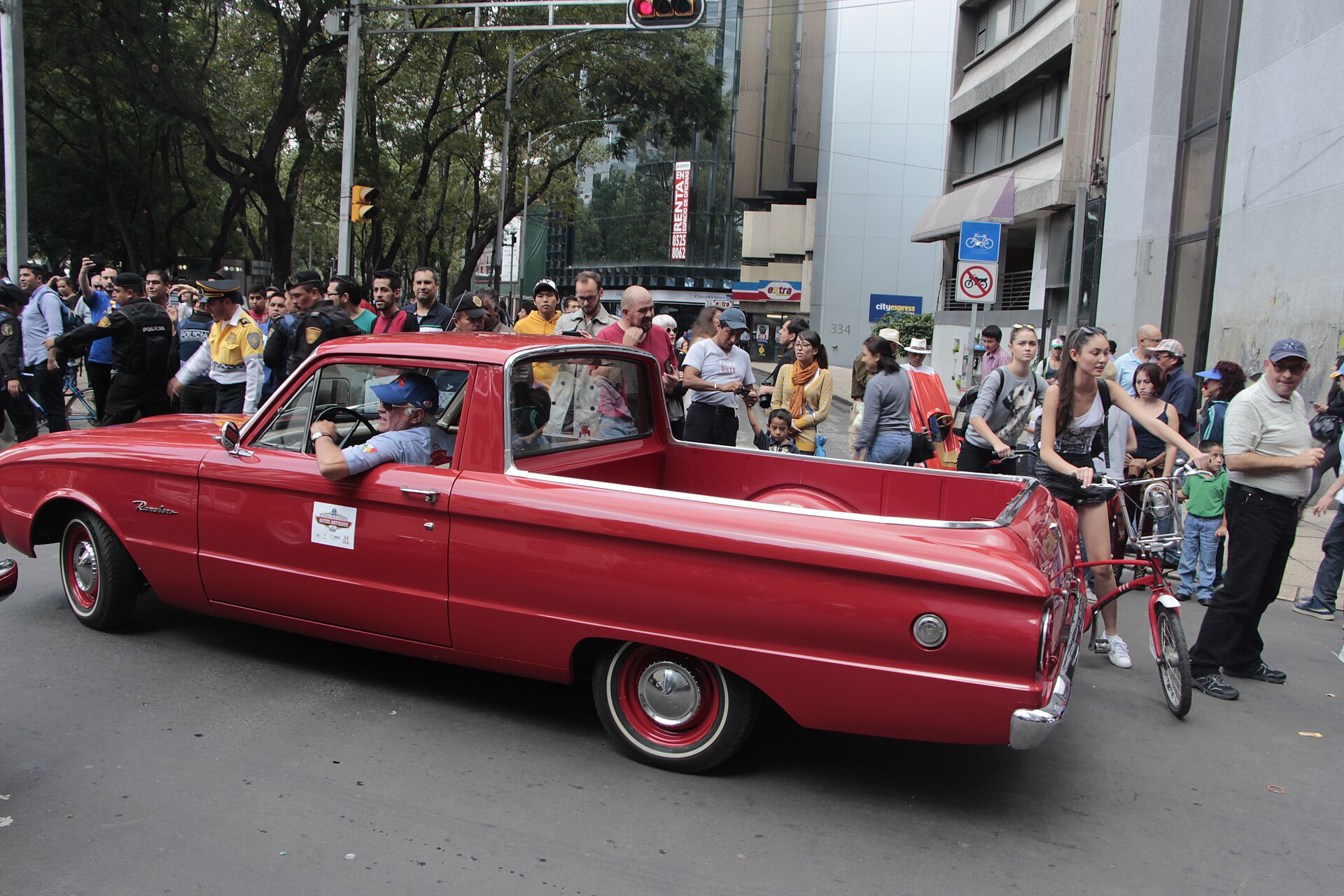
- Ranchero II 1960–1965 · Pickup · 63–149 kW (86–203 PS)
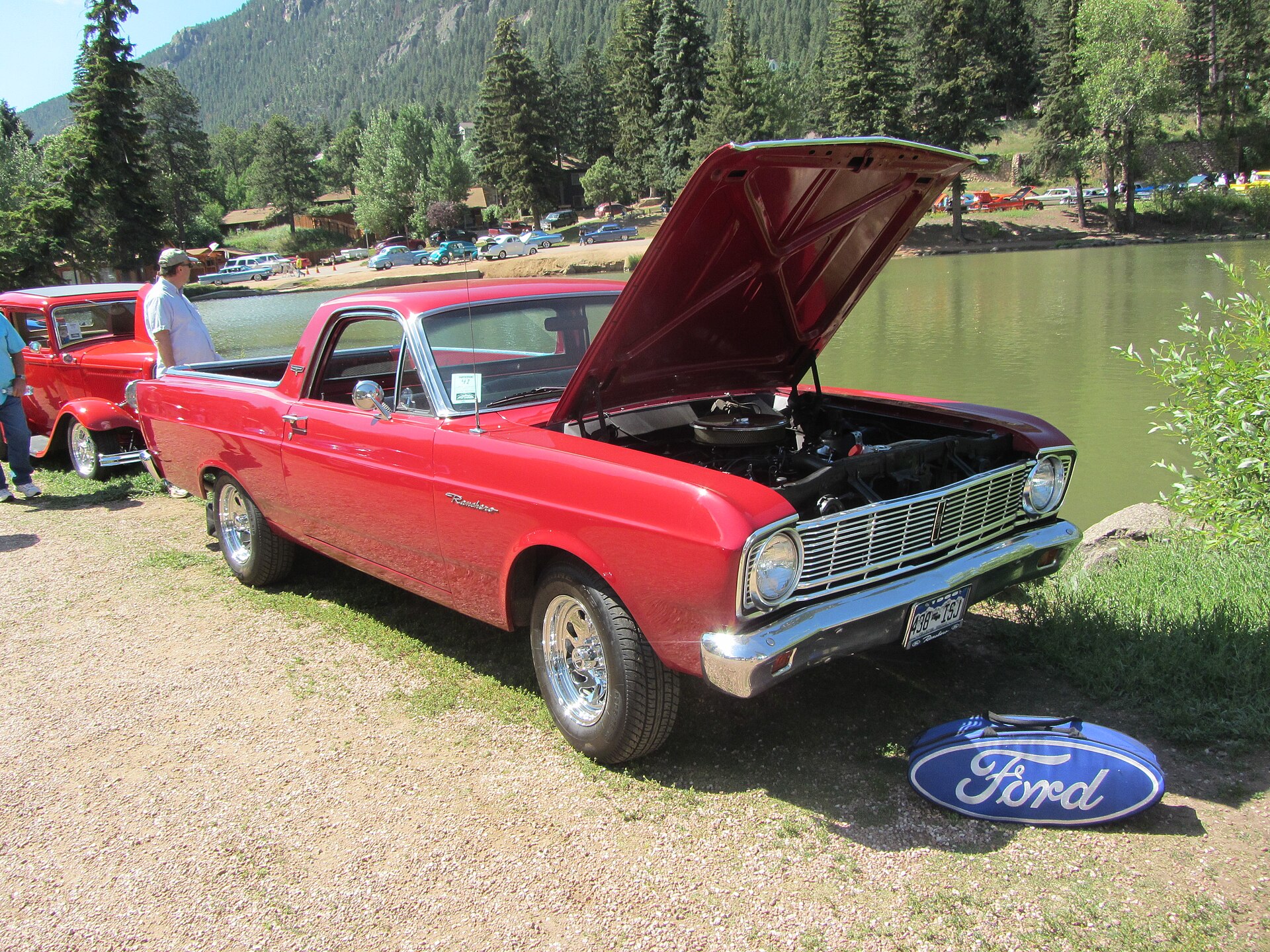
- Ranchero III 1966–1967 · Pickup · 75–235 kW (102–320 PS)
- Ranchero VI 1968–1976
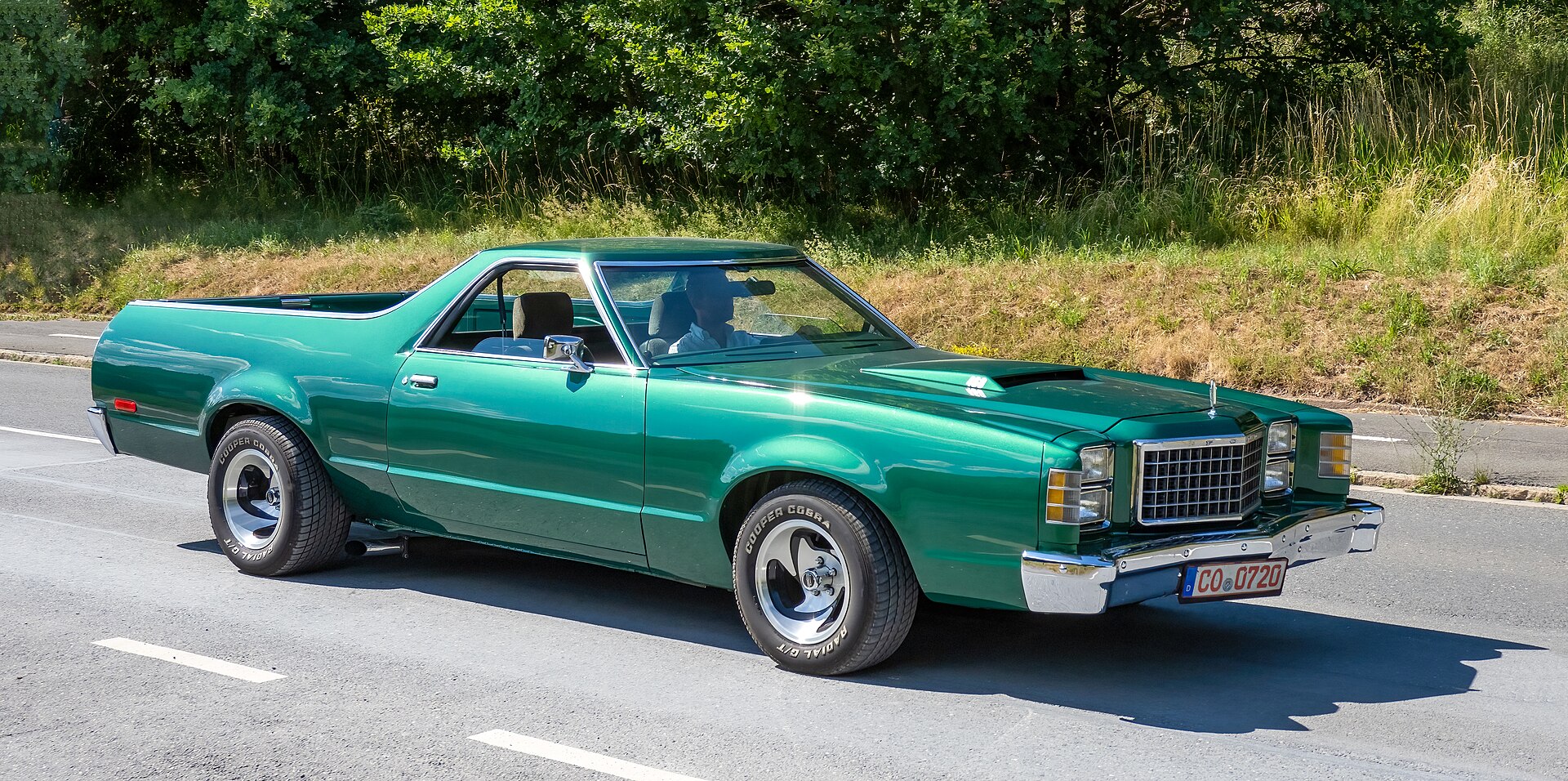
- Ranchero VII 1977–1979 · Pickup · 101–129 kW (137–175 PS)
Newest first · 5 generations since 1957
-
1977
-
1968
-
1966
-
1960
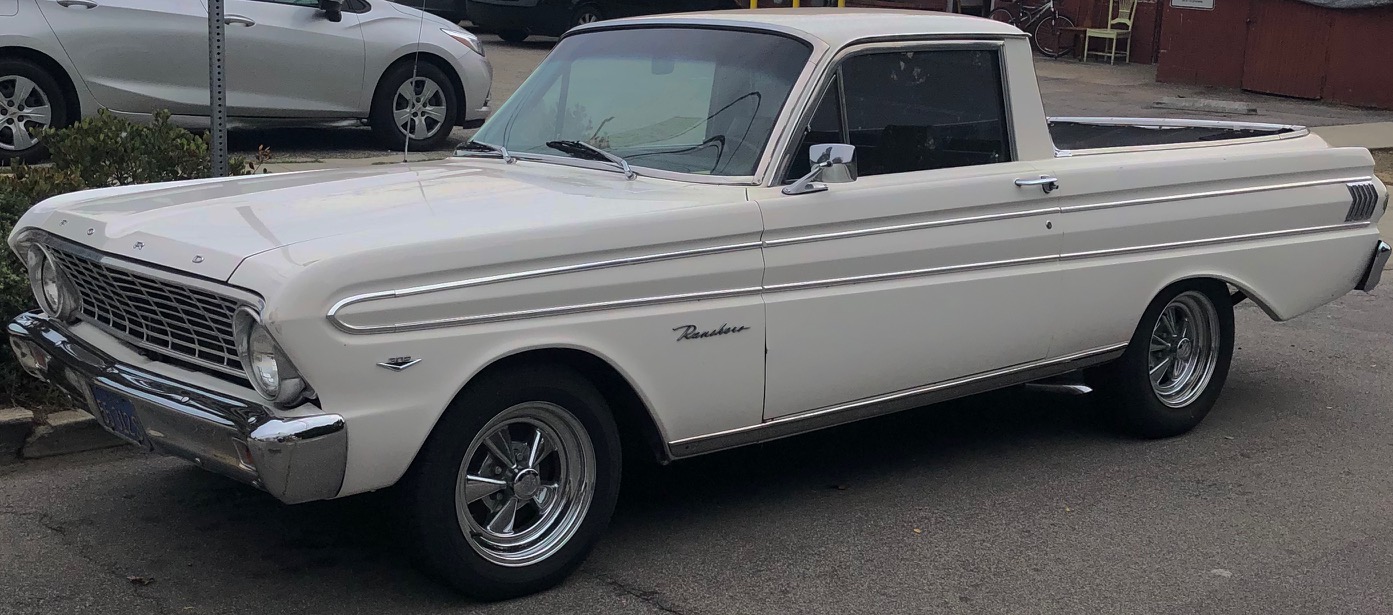
-
1957
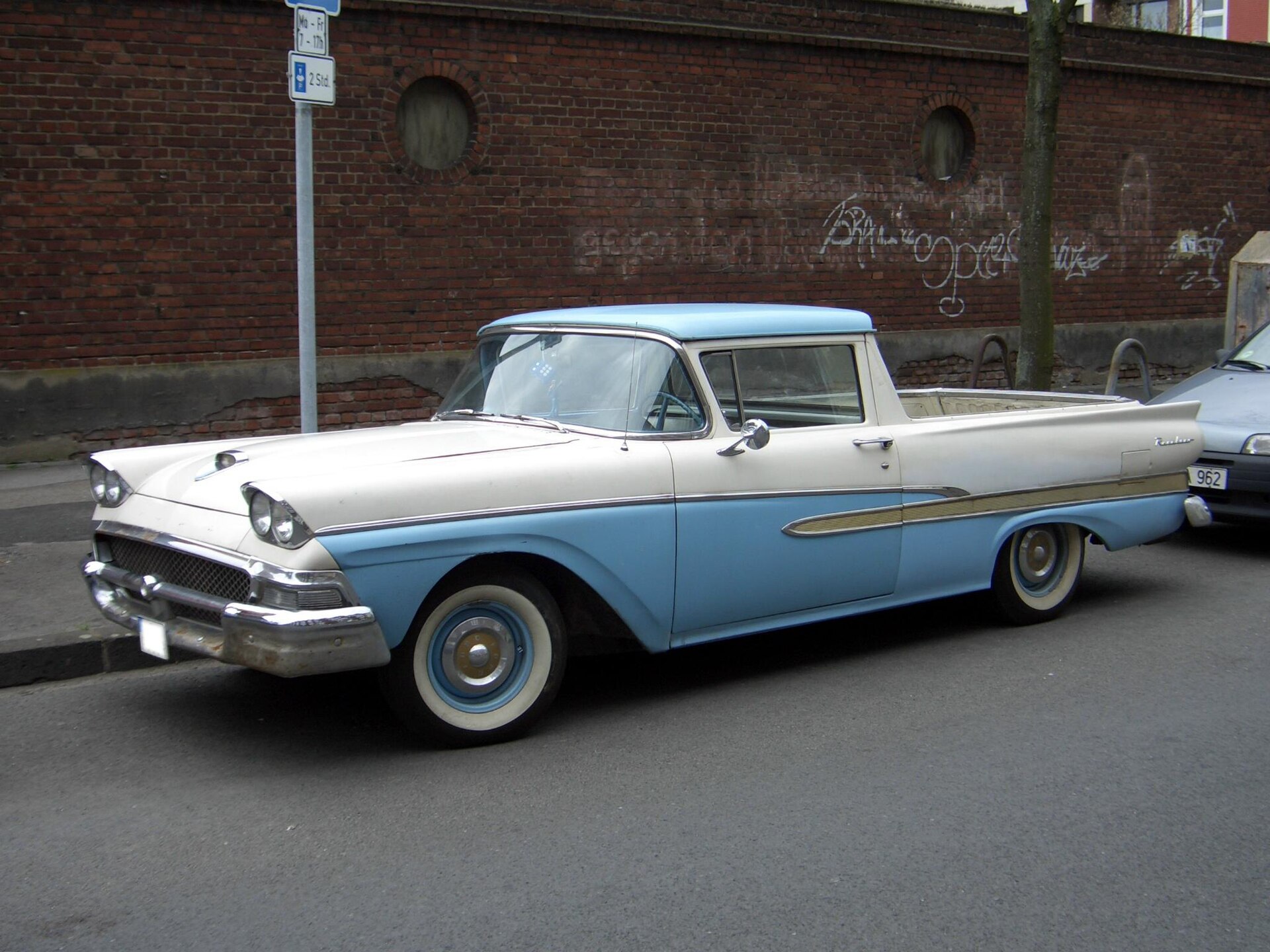


All generations by year: Ranchero VII (1977–1979) · Ranchero VI (1968–1976) · Ranchero III (1966–1967) · Ranchero II (1960–1965) · Ranchero I (1957–1959)
Which one is mine?
Pick the year of first registration to see which generation it is.
- Ranchero VII 1977–1979
- Ranchero VI 1968–1976
- Ranchero III 1966–1967
- Ranchero II 1960–1965
- Ranchero I 1957–1959
The Ford Ranchero was a two-door pickup built on Ford passenger-car platforms from the 1957 to the 1979 model year. It combined a car's cabin and ride with an open cargo bed, and it reached the market two years before Chevrolet answered with the El Camino. Over 22 years and seven generations it moved from the full-size Ford to the compact Falcon, then to the Fairlane, Torino and LTD II, and Hagerty counts 508,355 Rancheros sold in North America.
In short
- Introduced in December 1956 as a 1957 model; production ended in 1979.
- Seven generations on four car lines: full-size Ford, Falcon, Fairlane/Torino and LTD II.
- Engines from the 63 kW (85 hp) 144 cu in six of 1960 to the 280 kW (375 hp gross) 429 Super Cobra Jet of 1970–1971.
- Best years 1972 (40,334) and 1973 (45,741); rarest year 1958 with 9,950 cars.
Specs by version
Engines
| Version | Engine | Power | Drive | Production years |
|---|---|---|---|---|
| Ranchero II · 144 I6 | 2.4 l · 6 cyl · Petrol 2,365 cc | 63 kW 86 PS84 hp | Rear-wheel drive | 1960 |
| Ranchero II · 260 V8 | 4.3 l · 8 cyl · Petrol 4,261 cc | 122 kW 166 PS164 hp | Rear-wheel drive | 1963–1964 |
| Ranchero II · 289 V8 | 4.7 l · 8 cyl · Petrol 4,736 cc | 149 kW 203 PS200 hp | Rear-wheel drive | 1965 |
| Ranchero III · 390 V8 (SAE gross) | 6.4 l · 8 cyl · Petrol 6,391 cc | 235 kW 320 PS315 hp | Rear-wheel drive | 1967 |
| Ranchero VI · 250 I6 (SAE gross) | 4.1 l · 6 cyl · Petrol 4,097 cc | 112 kW 152 PS150 hp | Rear-wheel drive | 1968–1971 |
| Ranchero VI · 460 V8 (SAE net) | 7.5 l · 8 cyl · Petrol 7,536 cc | 167 kW 227 PS224 hp | Rear-wheel drive | 1974–1976 |
| Ranchero VI · 428 Cobra Jet V8 (SAE gross) | 7.0 l · 8 cyl · Petrol 7,014 cc | 250 kW 340 PS335 hp | Rear-wheel drive | 1968–1970 |
| Ranchero VI · 429 Super Cobra Jet V8 (SAE gross) | 7.0 l · 8 cyl · Petrol 7,030 cc | 280 kW 381 PS375 hp | Rear-wheel drive | 1970–1971 |
| Ranchero VII · 302 V8 | 4.9 l · 8 cyl · Petrol 4,942 cc | 101 kW 137 PS135 hp | Rear-wheel drive | 1977–1979 |
| Ranchero VII · 351 V8 | 5.8 l · 8 cyl · Petrol 5,752 cc | 112 kW 152 PS150 hp | Rear-wheel drive | 1977–1979 |
| Ranchero VII · 400 V8 | 6.6 l · 8 cyl · Petrol 6,555 cc | 129 kW 175 PS173 hp | Rear-wheel drive | 1977–1979 |
Dimensions and weight
Show all 4 versions
| Version | Wheelbase |
|---|---|
| Ranchero II · 144 I6 | 2,781 mm109.5 in |
| Ranchero II · 260 V8 | 2,781 mm109.5 in |
| Ranchero II · 289 V8 | 2,781 mm109.5 in |
| Ranchero III · 390 V8 (SAE gross) | 2,870 mm113.0 in |
Verified Manufacturer and type-approval data from our catalog · Sources and methodology
Ford Ranchero at a glance
| Item | Details |
|---|---|
| Maker | Ford Motor Company (sold through the truck division) |
| Production | 1957–1979 model years |
| Purpose | car-based light pickup ("coupe utility") |
| Generations | 7 |
| Base cars | Ford Ranch Wagon and Courier (1957–1959), Falcon (1960–1966), Fairlane and Torino (1967–1976), LTD II (1977–1979) |
| Layout | front engine, rear-wheel drive |
| Engines | inline six from 144 cu in; V8s up to 460 cu in |
| Total sold | 508,355 (Hagerty, Wikipedia) |
| Rival | Chevrolet El Camino (from 1959) |
The Ranchero belongs to our Ford catalogue. Its later versions share their chassis with the Ford Fairlane, the Ford Torino and the Ford Gran Torino.
Ranchero generations
| Generation | Years | Base car | Wheelbase | Engines | Notable versions |
|---|---|---|---|---|---|
| 1 | 1957–1959 | full-size Ford (Ranch Wagon, Courier) | 2,946 mm, 2,997 mm from 1959 | 223 six; 272, 292, 352 V8 | Custom |
| 2 | 1960–1965 | Falcon | 2,781 mm | 144, 170, 200 six; 260, 289 V8 | Falcon Ranchero, Sedan Delivery |
| 3 | 1966–1967 | Falcon (1966), Fairlane (1967) | 2,870 mm (1967) | 170, 200 six; 289, 390 V8 | 500, 500/XL |
| 4 | 1968–1969 | Fairlane / Torino | — | 250 six; 302, 351, 390, 428 Cobra Jet V8 | GT, Rio Grande |
| 5 | 1970–1971 | Torino | — | 250 six; 302, 351, 390, 428, 429 V8 | Squire, GT |
| 6 | 1972–1976 | Torino (body-on-frame) | — | 250 six; 302, 351, 400, 429, 460 V8 | 500, Squire, GT |
| 7 | 1977–1979 | LTD II | — | 302, 351, 400 V8 | GT, Squire |
Wheelbases from Hagerty, converted from inches (116, 118, 109.5 and 113 in).
Key dates
| Year | Event |
|---|---|
| 1956 | Ranchero introduced in December as a 1957 model |
| 1957 | 21,696 sold, the best year of the full-size cars |
| 1958 | 9,950 built, the lowest annual figure; 352 V8 added |
| 1959 | Custom only, 2,997 mm wheelbase; Chevrolet launches the El Camino |
| 1960 | move to the compact Falcon |
| 1967 | Fairlane front end, optional 390 V8 |
| 1968 | 428 Cobra Jet available from mid-year |
| 1970 | Torino body, Squire version, 429 Cobra Jet |
| 1972 | separate frame, 40,334 sold |
| 1973 | 45,741 sold, the best year of all |
| 1977 | LTD II styling |
| 1979 | last model year |
The full-size original: 1957–1959
Ford introduced the Ranchero in December 1956. It was built on the two-door Ranch Wagon and the Courier sedan delivery, with an open cargo bed behind the cab instead of the wagon's rear roof. Wikipedia calls it the first post-war American vehicle of its type adapted at the factory from a popular passenger car. It was sold as a truck through Ford's truck division.
The first year was the best of the full-size era with 21,696 cars; in 1958 only 9,950 were built, the lowest figure of all Ranchero years. Engines were the 223 cu in six and V8s of 272 and 292 cu in in 1957; for 1958 the 272 was dropped and the 352 V8 added. The upmarket Custom had Fairlane styling, and in 1959, on a longer 2,997 mm (118 in) wheelbase, it was the only model left, with a seven-foot bed and 26 paint colours.

Falcon years, 1960–1966
For 1960 Ford moved the Ranchero to the new compact Falcon, sold as the Falcon Ranchero. It was smaller and lighter, with a load capacity of 363 kg (800 lb). The base engine was the 144 cu in six with 63 kW (85 hp); the 170 six followed in 1961, a 260 V8 (122 kW, 164 hp) in 1963 and the 289 V8 (149 kW, 200 hp) in 1965. Gearboxes were a three-speed manual, the two-speed Ford-O-Matic (to 1963) and the three-speed Cruise-O-Matic. The 1964–1965 cars were larger, with sculptured side panels.
The 1966 model was a one-year design on the shared Falcon/Fairlane platform, with the Falcon front end, and it was sold simply as the Ford Ranchero.
Fairlane and Torino: the muscle years, 1967–1976
From 1967 the Ranchero took the Fairlane front end and trim and was marketed as the Fairlane Ranchero, in base, 500 and 500/XL versions on a 2,870 mm (113 in) wheelbase. The optional 390 cu in FE V8 produced 235 kW (315 hp gross), and buyers could order the C6 automatic or a four-speed Toploader manual.
The 1968–1969 generation followed the Torino and offered a GT version. A 250 cu in six with 112 kW (150 hp) became standard, while the option list reached the 428 Cobra Jet (250 kW, 335 hp gross) from mid-1968; the 351 Windsor arrived for 1969. A rare special-order GT called the Rio Grande was built in 1969.
For 1970–1971 the Ranchero received the new Torino body and the Squire version with woodgrain sides. At the top of the engine list stood the 429 Cobra Jet and Super Cobra Jet with ram-air induction and up to 280 kW (375 hp gross), the most powerful Ranchero ever offered. Hidden headlamps were optional.
The 1972–1976 Ranchero grew with the Torino, which now had a separate frame, and these were the best-selling years. Emissions rules lowered compression and power, and from 1972 ratings were given in SAE net horsepower: 104 kW (140 hp) for the 302, 128 kW (172 hp) for the 400 and 167 kW (224 hp) for the 460 of 1974–1976. The 351 Cobra Jet GT with a four-speed manual remained available until 1974. A new front end in 1973 met the front-impact rules.

LTD II base and the end, 1977–1979
When the Torino ended in 1976, the Ranchero moved to the LTD II and took its styling. Engines were the 302 with 101 kW (135 hp), the 351 with 112 kW (150 hp) and the 400 with 129 kW (173 hp), all SAE net. A striped GT and the Squire were offered. The LTD II and the Ranchero ended together after the 1979 model year, and Ford did not replace its car-based pickup; Chevrolet kept the El Camino for about eight more years.

Engine and drivetrain overview
| Engine | Years | Power | Rating |
|---|---|---|---|
| 144 cu in six | 1960 | 63 kW (85 hp) | gross |
| 170 cu in six | 1961–1967 | 75 kW (101 hp) | gross |
| 250 cu in six | 1968–1971 | 112 kW (150 hp) | gross |
| 260 V8 | 1963–1964 | 122 kW (164 hp) | gross |
| 289 V8 | 1965–1968 | 149 kW (200 hp) | gross |
| 390 V8 | 1967–1969 | 235 kW (315 hp) | gross |
| 428 Cobra Jet V8 | 1968–1970 | 250 kW (335 hp) | gross |
| 429 Super Cobra Jet V8 | 1970–1971 | 280 kW (375 hp) | gross |
| 302 V8 | 1972–1976 | 104 kW (140 hp) | net |
| 460 V8 | 1974–1976 | 167 kW (224 hp) | net |
| 400 V8 | 1977–1979 | 129 kW (173 hp) | net |
Gross and net figures are not directly comparable, because net ratings from 1972 were measured with the engine's accessories and exhaust fitted.
Against the Chevrolet El Camino
General Motors answered the Ranchero with the Chevrolet El Camino for 1959. Both followed the same idea of a passenger car with an open bed. The El Camino outlived the Ford by about eight years. In 1973 Ford Argentina started its own Ranchero, a different pickup that sold 110,382 units by 1978 and stayed in production until 1991.

Collecting one today
Hagerty notes that values depend mostly on condition, and that the rare high-performance versions are the most prized. That means the 1968–1971 cars with the 428 or 429 Cobra Jet, the GT models and, for early-car fans, the 1957 first-year Ranchero and the 1959 Custom. Because the Rancheros shared their bodies and running gear with high-volume Fords, many mechanical parts are the same as on the Falcon, Fairlane and Torino. Check the cargo bed floor and the rear body sides for rust and confirm that a "Cobra Jet" car has the documented engine.
To compare a Ranchero's data with an El Camino of the same year, use the 1cars comparison tool.
Ford Ranchero evolution in numbers
Did you know?
- The Ford Ranchero ran for 22 years, from 1957 to 1979, over 5 generations in our catalog.
- The longest-running generation is the Ranchero VI (1968–1976): 8 years.
- The biggest jump in power came with the Ranchero III: up to 235 kW (320 PS), 86 kW more than the Ranchero II.
- The most powerful Ford Ranchero is not the newest: the Ranchero VI (1968–1976) offered up to 280 kW (381 PS), the Ranchero VII up to 129 kW (175 PS).
Most powerful version, kW
Figures from the 1cars catalog: power is the strongest version of each generation; generations without the figure are left out.
Image credits · Photos from Wikimedia Commons under free licences
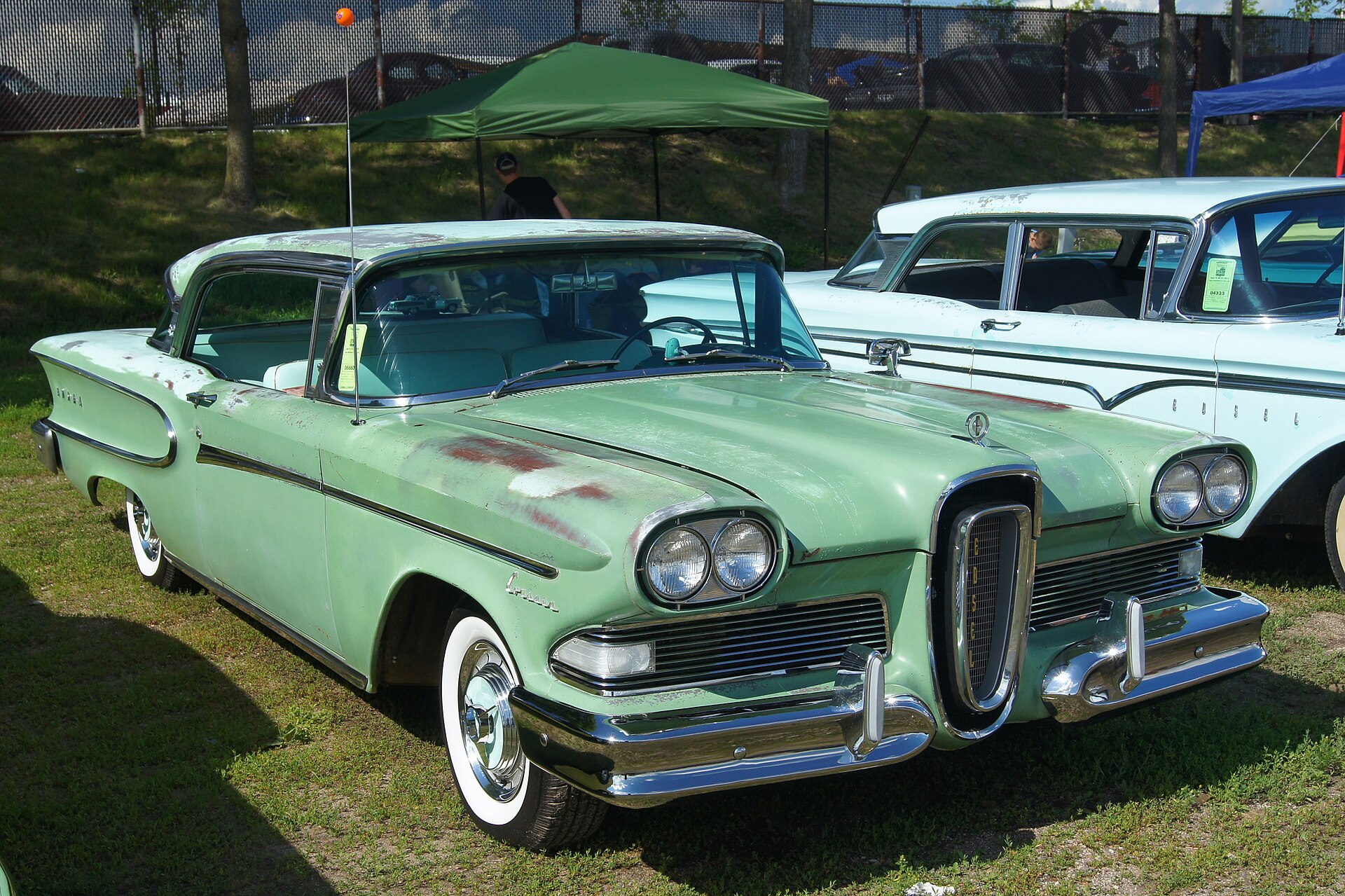
- Ford Ranchero I · Photo: Detectandpreserve / Wikimedia Commons, CC BY-SA 3.0
- Ford Ranchero II · Photo: Accord14 / Wikimedia Commons, CC BY-SA 4.0
- Ford Ranchero III · Photo: JOHN LLOYD from Concrete, Washington, United States / Wikimedia Commons, CC BY 2.0
- Ford Ranchero VI · Photo: Elenats.93 / Wikimedia Commons, CC BY-SA 4.0
Ford Ranchero in our rankings
More powerful than 50% of ranked pickup trucks in the 1CARS catalog (No. 10 of 20).
FAQ
Which came first, the Ford Ranchero or the Chevrolet El Camino?
The Ranchero, introduced in December 1956 as a 1957 model. The El Camino arrived for 1959.
How many generations of the Ranchero were there?
Seven in North America, from 1957 to 1979.
How many Ford Rancheros were built?
508,355 according to Hagerty and Wikipedia, plus the separate Argentine Ranchero.
What is the most powerful Ford Ranchero?
The 1970–1971 Ranchero with the 429 Super Cobra Jet, rated at 280 kW (375 hp gross).
Data sources
Data checked by an editor against the sources below.
- Wikipedia — Ford Ranchero
- Hagerty — Media