 Chevrolet El Camino
All generations, specs and history
Published Sources (1) Report an error
By Sarah Whitmore, Senior Automotive Writer
- Built
- 1959–1987
- Generations
- 5
- Top power
- 336 kW (457 PS)
Timeline
El Camino generations
Click a generation for its own page
- El Camino I 1959–1960 · Pickup
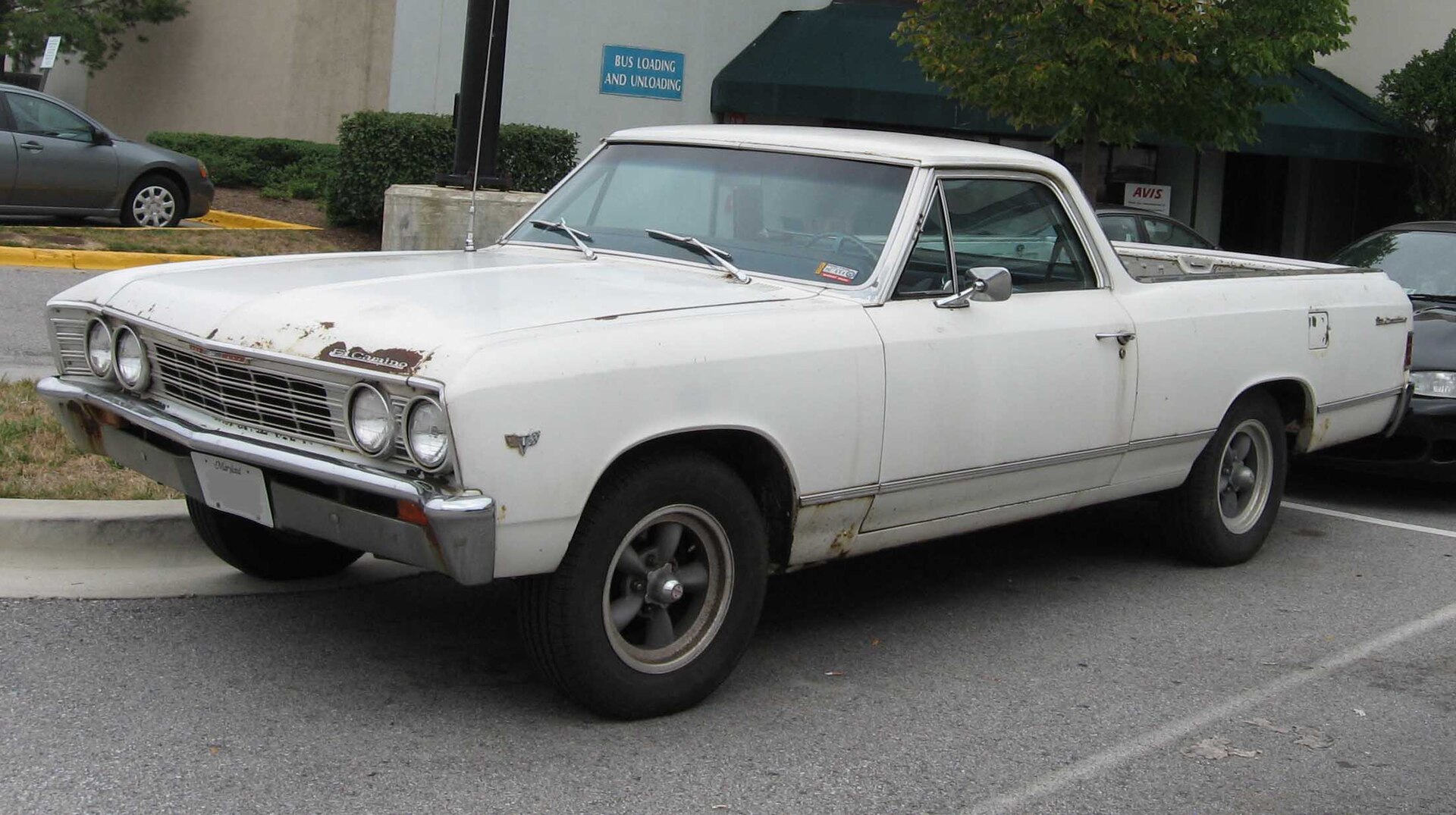
- El Camino II 1964–1967 · Pickup · 89–280 kW (121–381 PS)
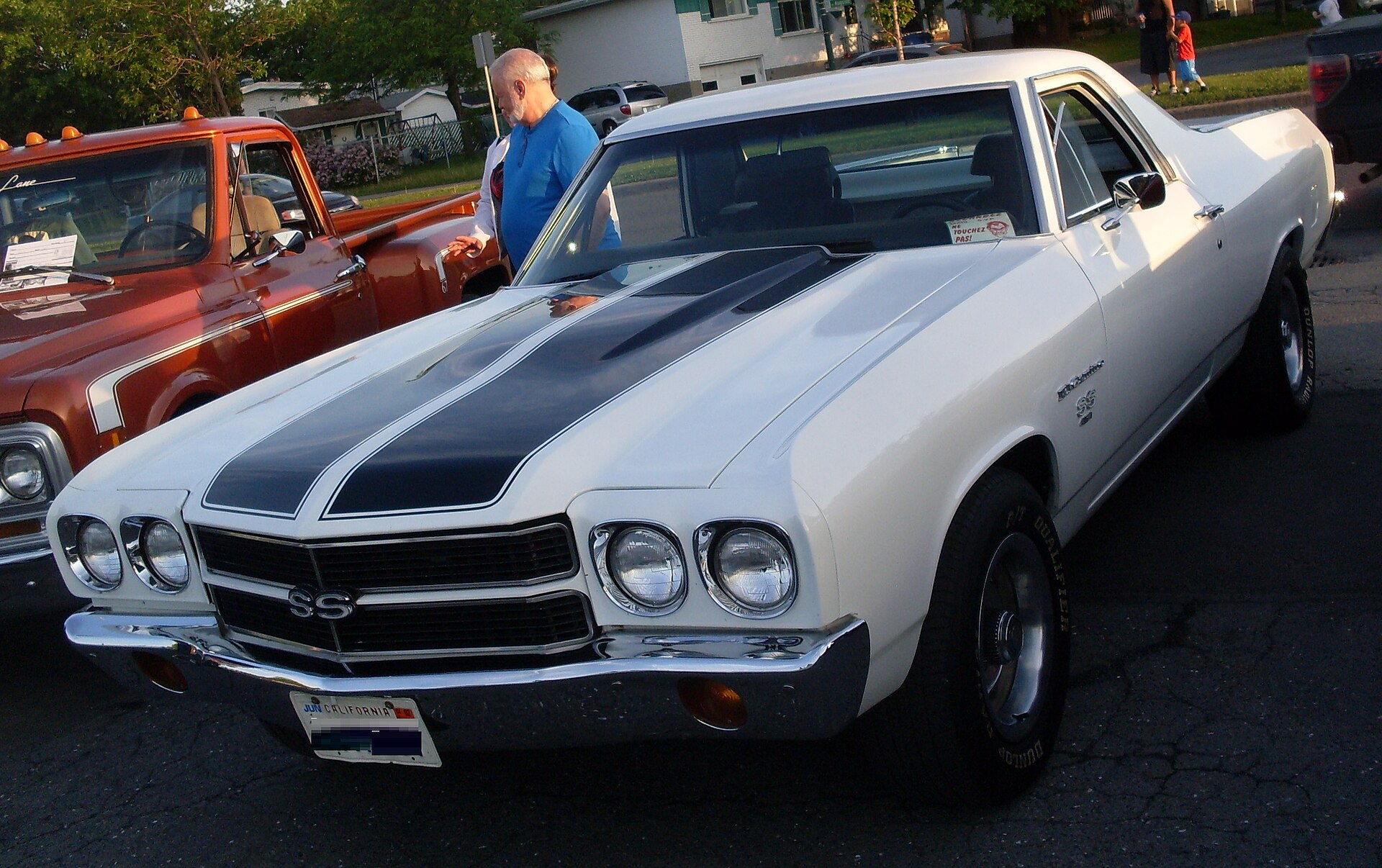
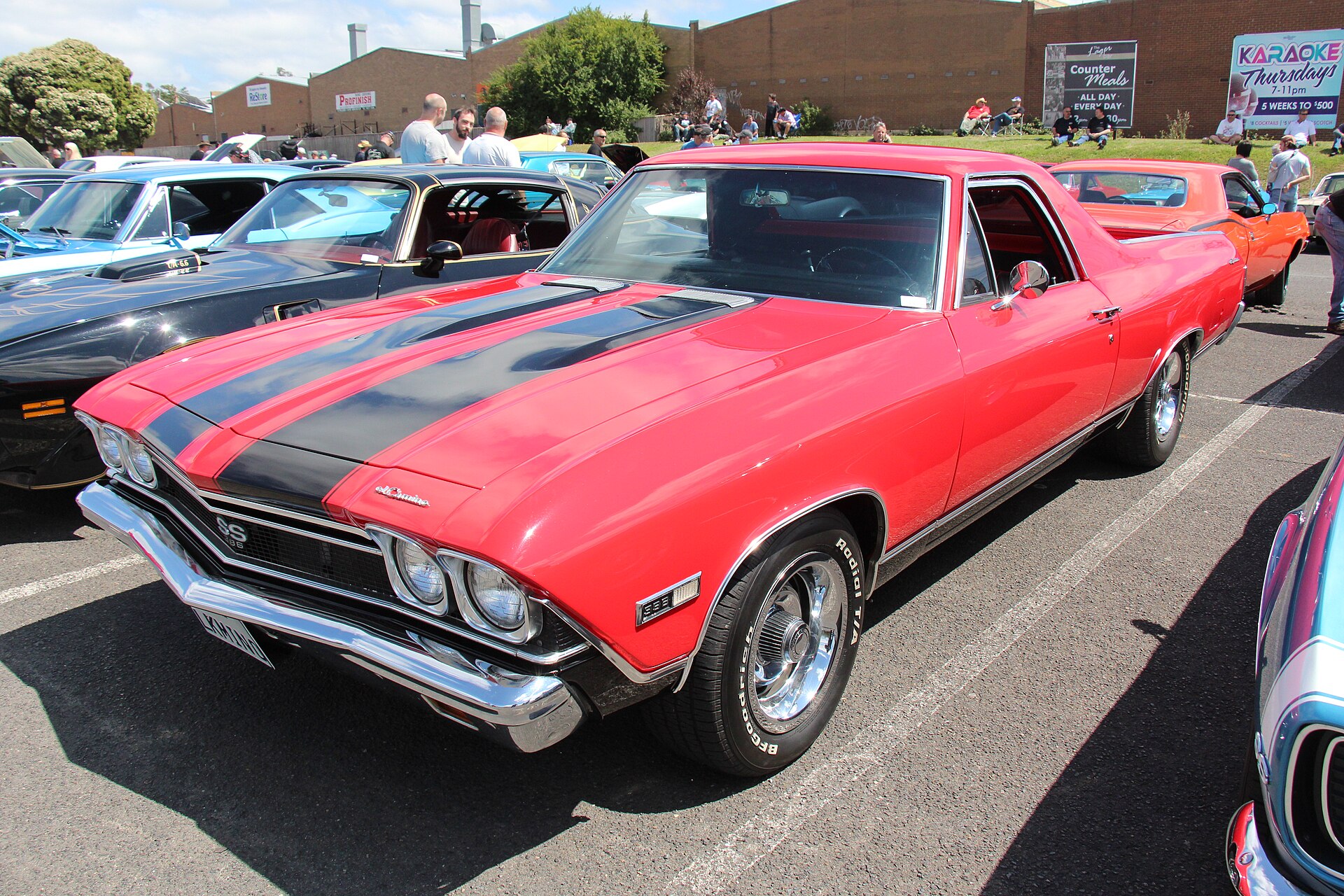
- El Camino III 1968–1972 · Pickup
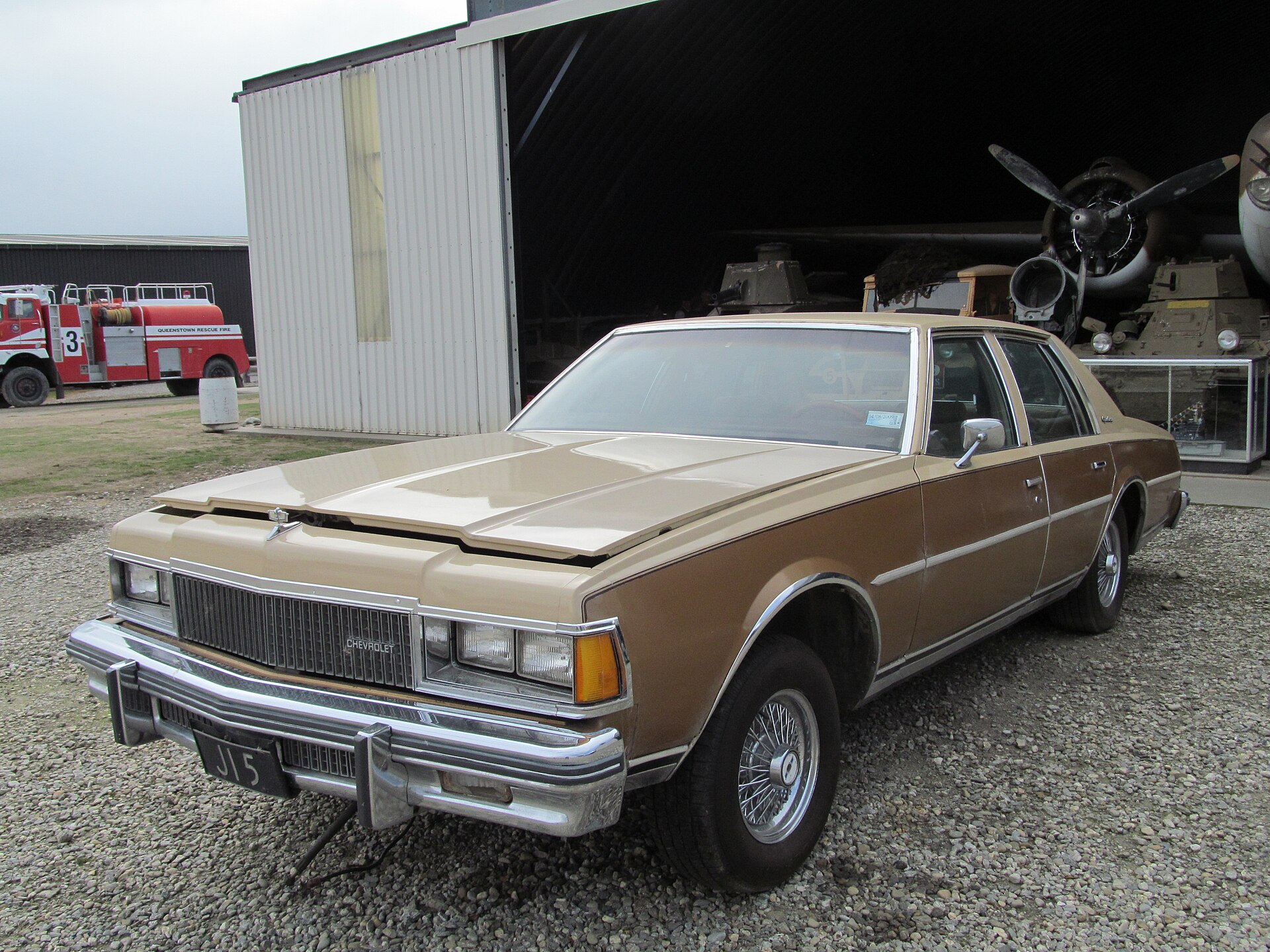
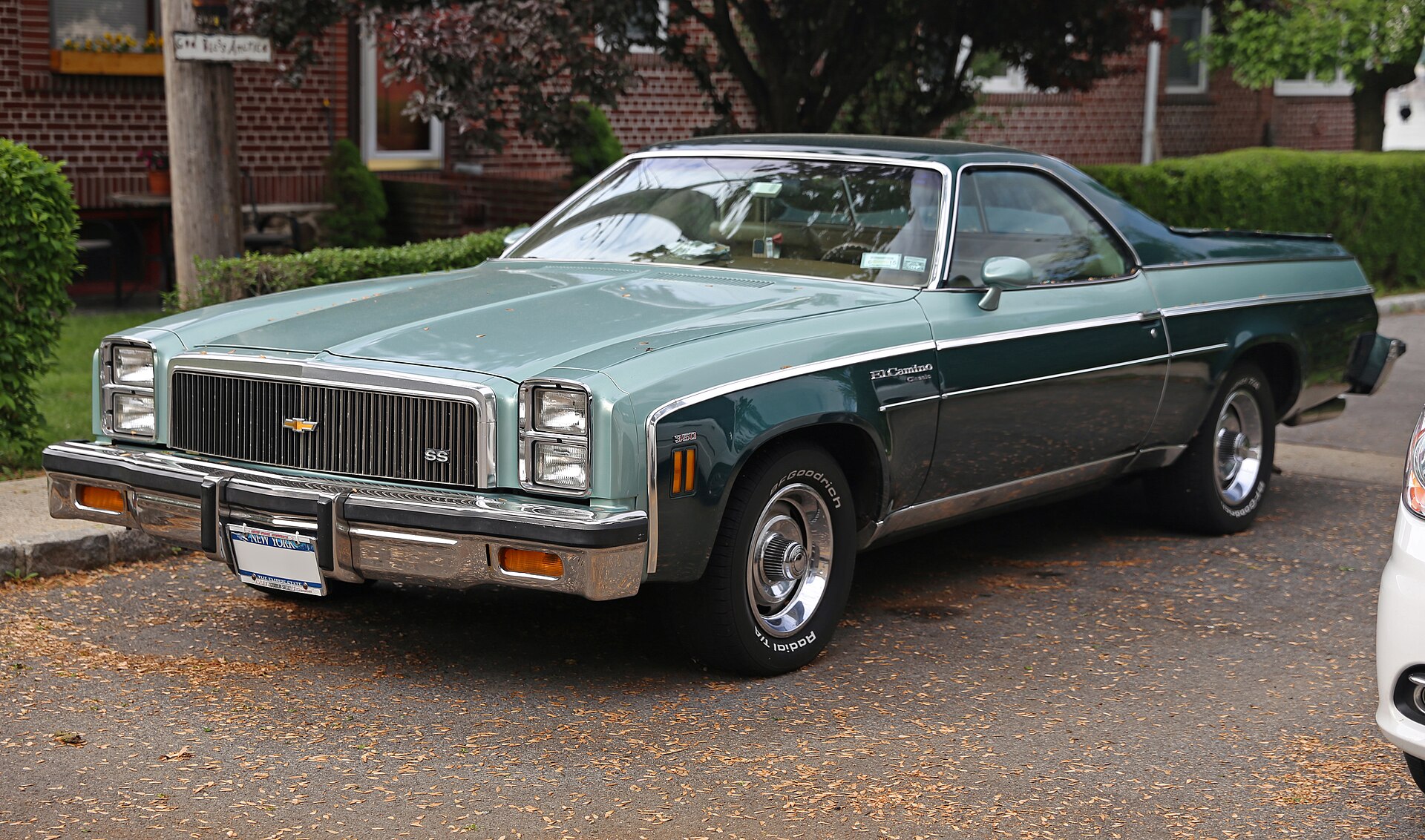
- El Camino IV 1973–1977 · Pickup · 78–183 kW (106–249 PS)
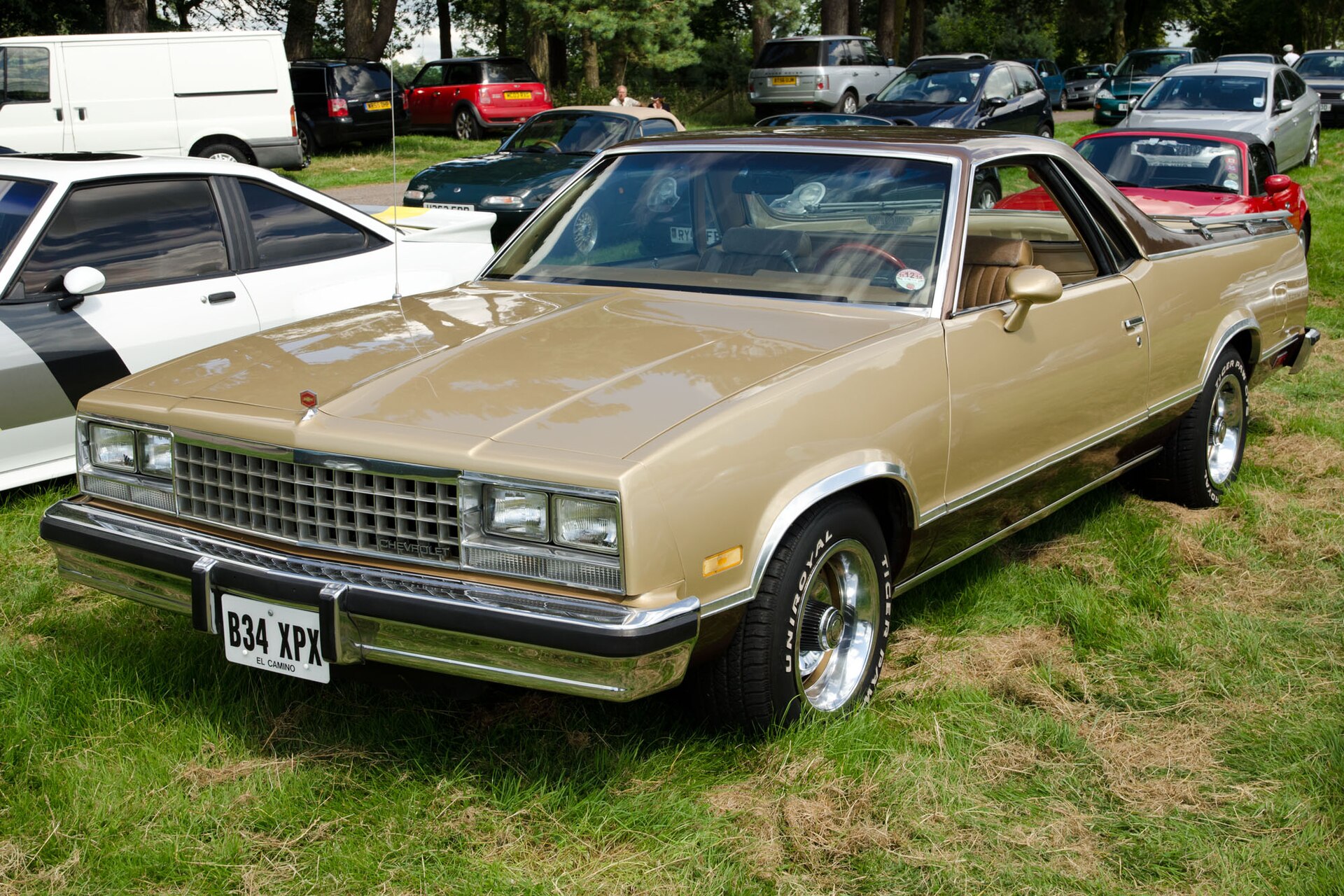
- El Camino V 1978–1987 · Pickup
Newest first · 5 generations since 1959
-
1978
-
1973
-
1968
-
1964
-
1959
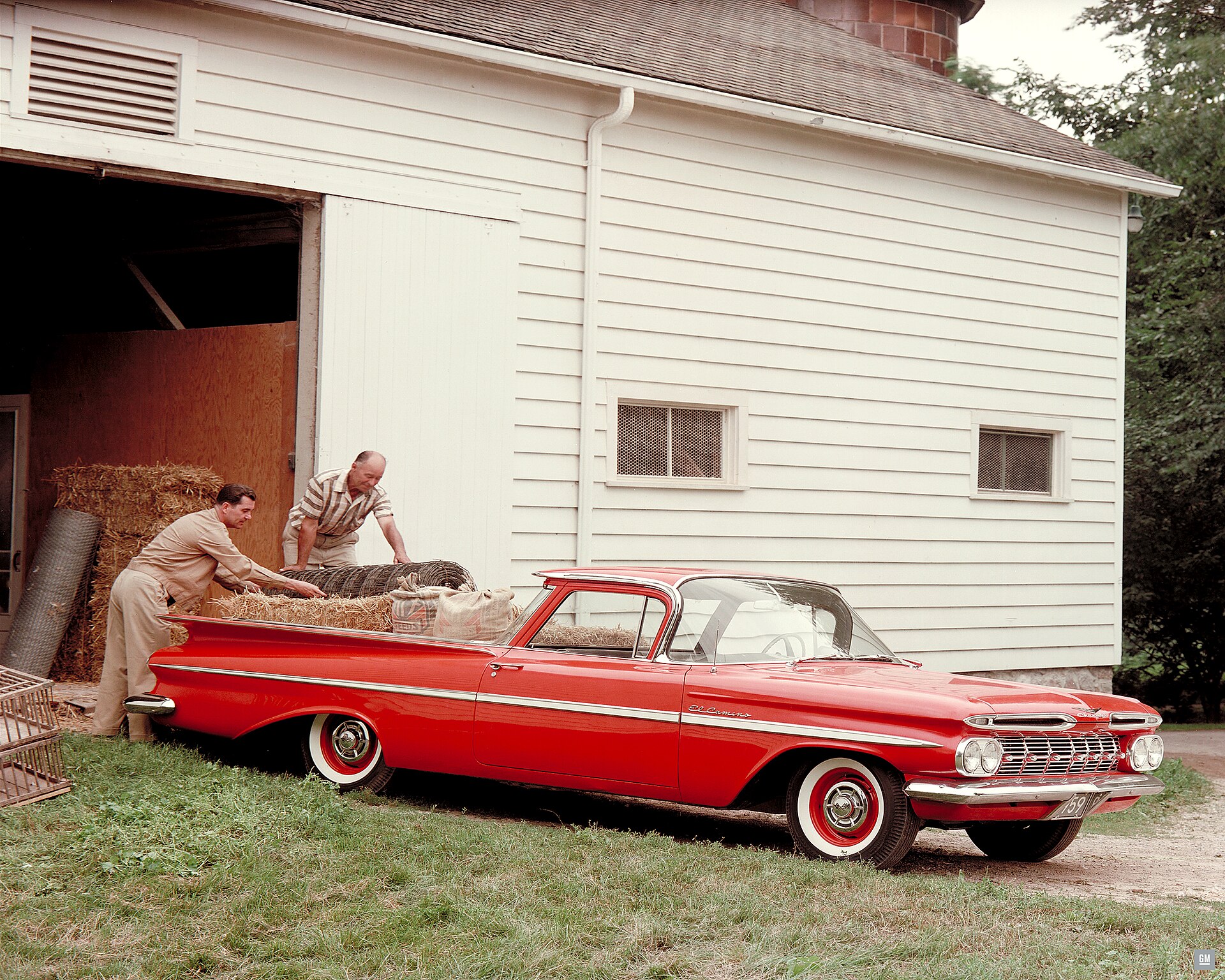


All generations by year: El Camino V (1978–1987) · El Camino IV (1973–1977) · El Camino III (1968–1972) · El Camino II (1964–1967) · El Camino I (1959–1960)
Which one is mine?
Pick the year of first registration to see which generation it is.
- El Camino V 1978–1987
- El Camino IV 1973–1977
- El Camino III 1968–1972
- El Camino II 1964–1967
- El Camino I 1959–1960
Which El Camino to choose
Our verdict · Sarah Whitmore
- For collectors: a 1970 SS 454, the high point of the line in power.
- For style: the 1959 first generation with its full-size fins, built in modest numbers.
- For daily classic use: a 1978–1987 car with the 305 V8 and the familiar Malibu front end.
- To avoid: the 5.7 diesel unless it has a documented history.
More muscle cars are gathered in our muscle car section. For the company behind it, see our Chevrolet brand history; every El Camino generation is also listed in the Chevrolet catalogue.
The Chevrolet El Camino was a two-seat coupé utility: a passenger-car front and cab joined to an open load bed. Chevrolet built it for the 1959–1960 model years on its full-size cars and again from 1964 to 1987 on the mid-size Chevelle and its successors. With the SS 454 of 1970 it also became one of the strongest muscle cars of its day.
In short
- Five generations: 1959–1960, 1964–1967, 1968–1972, 1973–1977 and 1978–1987.
- Created as Chevrolet's answer to the Ford Ranchero of 1957; the 1959 El Camino outsold it in its first year.
- Strongest version: the 1970 SS with the LS6 454 V8, 336 kW (450 hp gross) and 678 Nm.
- GMC sold a twin from 1971, called Sprint and, from 1978, Caballero.
Specs by version
Engines
| Version | Engine | Power | Drive | Production years |
|---|---|---|---|---|
| Diesel · 1 version | ||||
| El Camino V · 5.7 diesel V8 | 5.7 l · 8 cyl · Diesel 5,737 cc | 78 kW 106 PS105 hp | Rear-wheel drive | 1982 |
| Petrol · 22 versions | ||||
| El Camino I · 283 Turbo-Fire V8 | 4.6 l · 8 cyl · Petrol 4,638 cc | 127 kW 173 PS170 hp | Rear-wheel drive | 1960 |
| El Camino I · 283 Ramjet fuel injection V8 | 4.6 l · 8 cyl · Petrol 4,638 cc | 216 kW 294 PS290 hp | Rear-wheel drive | 1959 |
| El Camino I · 348 Turbo-Thrust V8 (three two-barrels) | 5.7 l · 8 cyl · Petrol 5,700 cc | 250 kW 340 PS335 hp | Rear-wheel drive | 1959–1960 |
| El Camino II · 194 I6 | 3.2 l · 6 cyl · Petrol 3,180 cc | 89 kW 121 PS119 hp | Rear-wheel drive | 1964 |
| El Camino II · 283 V8 two-barrel | 4.6 l · 8 cyl · Petrol 4,638 cc | 145 kW 197 PS194 hp | Rear-wheel drive | 1964 |
| El Camino II · 396 L35 V8 | 6.5 l · 8 cyl · Petrol 6,489 cc | 242 kW 329 PS325 hp | Rear-wheel drive | 1966–1967 |
| El Camino II · 327 L79 V8 | 5.4 l · 8 cyl · Petrol 5,359 cc | 261 kW 355 PS350 hp | Rear-wheel drive | 1965 |
| El Camino II · 396 L34 V8 | 6.5 l · 8 cyl · Petrol 6,489 cc | 261 kW 355 PS350 hp | Rear-wheel drive | 1966–1967 |
| El Camino III · 350 V8 (SAE net) | 5.7 l · 8 cyl · Petrol 5,735 cc | 130 kW 177 PS174 hp | Rear-wheel drive | 1972 |
| El Camino III · 454 V8 (SAE net) | 7.4 l · 8 cyl · Petrol 7,440 cc | 201 kW 273 PS270 hp | Rear-wheel drive | 1972 |
| El Camino III · SS 454 LS5 V8 | 7.4 l · 8 cyl · Petrol 7,440 cc | 272 kW 370 PS365 hp | Rear-wheel drive | 1971 |
| El Camino III · SS 396 L78 V8 | 6.5 l · 8 cyl · Petrol 6,489 cc | 280 kW 381 PS375 hp | Rear-wheel drive | 1968 |
| El Camino III · SS 454 LS6 V8 | 7.4 l · 8 cyl · Petrol 7,440 cc | 336 kW 457 PS451 hp | Rear-wheel drive | 1970 |
| El Camino IV · 250 I6 | 4.1 l · 6 cyl · Petrol 4,093 cc | 78 kW 106 PS105 hp | Rear-wheel drive | 1975 |
| El Camino IV · 307 V8 | 5.0 l · 8 cyl · Petrol 5,031 cc | 86 kW 117 PS115 hp | Rear-wheel drive | 1973 |
| El Camino IV · 305 V8 | 5.0 l · 8 cyl · Petrol 4,999 cc | 104 kW 141 PS139 hp | Rear-wheel drive | 1976 |
| El Camino IV · 350 V8 four-barrel | 5.7 l · 8 cyl · Petrol 5,735 cc | 130 kW 177 PS174 hp | Rear-wheel drive | 1973 |
| El Camino IV · 454 V8 | 7.4 l · 8 cyl · Petrol 7,440 cc | 183 kW 249 PS245 hp | Rear-wheel drive | 1973 |
| El Camino V · 3.3 V6 | 3.3 l · 6 cyl · Petrol 3,300 cc | 71 kW 97 PS95 hp | Rear-wheel drive | 1978 |
| El Camino V · 3.8 V6 | 3.8 l · 6 cyl · Petrol 3,800 cc | 82 kW 111 PS110 hp | Rear-wheel drive | 1983–1984 |
| El Camino V · 305 V8 | 5.0 l · 8 cyl · Petrol 4,999 cc | 108 kW 147 PS145 hp | Rear-wheel drive | 1978 |
| El Camino V · 350 V8 | 5.7 l · 8 cyl · Petrol 5,735 cc | 127 kW 173 PS170 hp | Rear-wheel drive | 1978–1979 |
Dimensions and weight
Show all 13 versions
| Version | Length | Wheelbase |
|---|---|---|
| Diesel · 1 version | ||
| El Camino V · 5.7 diesel V8 | - | 2,974 mm117.1 in |
| Petrol · 12 versions | ||
| El Camino I · 283 Turbo-Fire V8 | - | 3,023 mm119.0 in |
| El Camino I · 283 Ramjet fuel injection V8 | - | 3,023 mm119.0 in |
| El Camino I · 348 Turbo-Thrust V8 (three two-barrels) | - | 3,023 mm119.0 in |
| El Camino III · 350 V8 (SAE net) | 5,283 mm208.0 in | 2,946 mm116.0 in |
| El Camino III · 454 V8 (SAE net) | 5,283 mm208.0 in | 2,946 mm116.0 in |
| El Camino III · SS 454 LS5 V8 | 5,283 mm208.0 in | 2,946 mm116.0 in |
| El Camino III · SS 396 L78 V8 | 5,283 mm208.0 in | 2,946 mm116.0 in |
| El Camino III · SS 454 LS6 V8 | 5,283 mm208.0 in | 2,946 mm116.0 in |
| El Camino V · 3.3 V6 | - | 2,974 mm117.1 in |
| El Camino V · 3.8 V6 | - | 2,974 mm117.1 in |
| El Camino V · 305 V8 | - | 2,974 mm117.1 in |
| El Camino V · 350 V8 | - | 2,974 mm117.1 in |
Verified Manufacturer and type-approval data from our catalog · Sources and methodology
Chevrolet El Camino at a glance
| Parameter | Metric | Imperial / note |
|---|---|---|
| Model years | 1959–1960, 1964–1987 | no 1988 models were built |
| Body | two-door coupé utility (car-based pickup) | - |
| Layout | front engine, rear-wheel drive | - |
| Engines | 3.2–4.1 l I6, 3.3–4.3 l V6, 4.6–7.4 l V8, 5.7 l diesel | 194 to 454 cu in |
| Power | 71 kW (1978 V6) to 336 kW (1970 LS6) | 95 to 450 hp |
| Wheelbase | 3,023 mm (1959) / 2,946 mm (1968) / 2,974 mm (1978) | 119 / 116 / 117.1 in |
| Payload (1959) | 295–522 kg | 650–1,150 lb |
| Twin | GMC Sprint (1971–1977), GMC Caballero (1978–1987) | - |
History and production
Ford's Ranchero had opened the market for car-based pickups in 1957. Chevrolet replied for 1959 with a model built on its new two-door Brookwood wagon. Production of the first El Camino stopped after the 1960 model year, and the name returned in 1964 on the mid-size Chevelle. From then on it stayed in the range until the end of 1987.
| Generation | Model years | Basis | Built (by model year) |
|---|---|---|---|
| I | 1959–1960 | full-size Chevrolet | 22,246 + 14,163 |
| II | 1964–1967 | Chevelle | 32,548 / 34,724 / 35,119 / 34,830 |
| III | 1968–1972 | Chevelle wagon chassis | 41,791 / 48,385 / 47,707 / 41,606 / 57,147 |
| IV | 1973–1977 | Chevelle (Colonnade) | 64,987 / 51,223 / 33,620 / 44,890 / 54,321 |
| V | 1978–1987 | own chassis, Malibu front | 58,008 at the peak (1979), 13,743 in 1987 |
The best single year was 1973, when 64,987 were built. From 1979 output fell steadily, and GM moved production to Mexico in 1985.

First generation (1959–1960): the full-size original
The first El Camino shared the long 3,023 mm (119 in) wheelbase and the dramatic fins of the 1959 Chevrolet. Its bed held almost 33 cubic feet (about 0.93 m³), and Wikipedia describes it as the first Chevrolet pickup with a steel bed floor. Payload ranged from 295 to 522 kg depending on drivetrain and suspension.
Engines ran from the six to the 283 Ramjet fuel-injected V8 with 216 kW (290 bhp) and the 348 with three two-barrel carburettors and 250 kW (335 bhp). Hot Rod magazine tested a 348 with a four-speed and predicted a 14-second quarter mile with suitable gearing. For 1960 the base 283 was detuned to 127 kW (170 bhp), and fuel injection disappeared. In 1960 a six-cylinder El Camino started at US$2,366. Sales fell by about a third, to 14,163, and Chevrolet dropped the model.

Second generation (1964–1967): on the Chevelle
When the El Camino returned in 1964, it was a mid-size vehicle: everything ahead of the B-pillars came from the Chevelle two-door wagon. Air shocks at the rear were standard, and the frame was fully boxed through 1967.
| Engine | Years | Power (gross) | Torque |
|---|---|---|---|
| 194 six | 1964–1967 | 89 kW (120 hp) | - |
| 283 V8 two-barrel | 1964–1967 | 145 kW (195 hp) | - |
| 327 L79 V8 | from 1965 | 261 kW (350 hp) | - |
| 396 L35 V8 | 1966–1967 | 242 kW (325 hp) | 556 Nm |
| 396 L34 V8 | 1966–1967 | 261 kW (350 hp) | 563 Nm |
A 327 car of 1965 ran the quarter mile in the low 15-second range. The 1967 model gained a collapsible steering column, disc brakes and the three-speed Turbo Hydra-Matic 400.

Third generation (1968–1972): SS 396 and SS 454
For 1968 the El Camino moved to the longer Chevelle wagon chassis with a 2,946 mm (116 in) wheelbase and a length of 5,283 mm. The SS 396 became a separate model, with up to 280 kW (375 hp) from the L78 and 563 Nm. MuscleCarClub counts 5,190 SS 396 cars in 1968.
The peak came in 1970. The SS 396 actually had 402 cubic inches by then, though the badges stayed the same, and the new LS6 454 delivered 336 kW (450 hp gross) and 678 Nm (500 lb-ft). MuscleCarClub quotes a quarter mile of 13.44 s at 108.17 mph (174 km/h) for an LS6 El Camino. In 1971 compression ratios were lowered for unleaded fuel, the LS6 disappeared, and the LS5 454 remained at 272 kW (365 hp gross). For 1972 net ratings applied: 130 kW (175 hp) for the 350 and 201 kW (270 hp) for the 454, which now came only with the Super Sport trim.
| Engine (third generation) | Year | Power | Torque |
|---|---|---|---|
| SS 396 L78 | 1968 | 280 kW (375 hp gross) | 563 Nm |
| SS 454 LS6 | 1970 | 336 kW (450 hp gross) | 678 Nm |
| SS 454 LS5 | 1971 | 272 kW (365 hp gross) | 630 Nm |
| 350 V8 | 1972 | 130 kW (175 hp net) | - |
| 454 V8 | 1972 | 201 kW (270 hp net) | - |
These cars are closely related to the Chevelle SS covered in our Chevelle SS article.
Fourth generation (1973–1977): the biggest El Camino
The 1973 redesign, built on the Chevelle wagon chassis with wider tracks, produced the largest El Camino of all. Trim levels followed the Chevelle Malibu: base and SS, a Classic from 1974 and an Estate package until 1976. Output ratings now reflected emissions rules. In 1973 the 307 V8 gave 86 kW (115 hp), the four-barrel 350 130 kW (175 hp) and the 454 183 kW (245 hp). The 454 was cut to 160 kW (215 hp) for 1975, its final year, when a 250 six with 78 kW (105 hp) became the base engine. A 305 V8 with 104 kW (140 hp) followed in 1976. The SS package sold between 3,521 and 5,226 units a year.
Fifth generation (1978–1987): own chassis and a quiet end
The last El Camino had its own chassis with a 2,974 mm (117.1 in) wheelbase, the front sheet metal and doors of the Malibu, and trims called Conquista, Super Sport and, in 1978, the Black Knight. Engines started with a 3.3 V6 of 71 kW (95 hp); the 305 V8 gave 108 kW (145 hp) and the 350 127 kW (170 hp) until it was dropped for 1980. From 1982 an Oldsmobile-built 5.7 diesel V8 with 78 kW (105 hp) was available, frugal but expensive and, according to Wikipedia, with a poor repair record. A fuel-injected 4.3 V6 became the base engine from 1985.
Sales slid from 58,008 in 1979 to 13,743 in 1987. Production ended quietly late in 1987; the GM Heritage Center confirmed that no 1988 El Caminos or Caballeros were built. Later concepts, a 1992 Lumina-based study and the 2008 Pontiac G8 ST, never reached showrooms.
Specifications by generation
| Parameter | 1959 | 1965 | 1970 | 1974 | 1980 |
|---|---|---|---|---|---|
| Basis | Brookwood wagon | Chevelle | Chevelle wagon | Colonnade Chevelle | own chassis |
| Wheelbase | 3,023 mm | - | 2,946 mm | - | 2,974 mm |
| Top engine | 348, 250 kW | 327 L79, 261 kW | 454 LS6, 336 kW | 454 (183 kW in 1973) | 305, 116 kW |
| Built that year | 22,246 | 34,724 | 47,707 | 51,223 | 40,932 |
Photo gallery

Chevrolet El Camino evolution in numbers
Did you know?
- The Chevrolet El Camino ran for 28 years, from 1959 to 1987, over 5 generations in our catalog.
- The longest-running generation is the El Camino V (1978–1987): 9 years.
- The biggest jump in power came with the El Camino III: up to 336 kW (457 PS), 56 kW more than the El Camino II.
- The most powerful Chevrolet El Camino is not the newest: the El Camino III (1968–1972) offered up to 336 kW (457 PS), the El Camino V up to 127 kW (173 PS).
Most powerful version, kW
Figures from the 1cars catalog: power is the strongest version of each generation; generations without the figure are left out.
Chevrolet El Camino: first vs latest generation
| Spec | El Camino I | El Camino V | Change |
|---|---|---|---|
| Years | 1959–1960 | 1978–1987 | 19 years apart |
| Most powerful version | 250 kW (340 PS) | 127 kW (173 PS) | −123 kW (−49%) |
| Wheelbase | 3,023 mm | 2,974 mm | −49 mm |
Oldest and newest generation in the 1cars catalog. Power is the strongest version of each; other rows are shown only when both generations have the figure.
Image credits · Photos from Wikimedia Commons under free licences
- Chevrolet El Camino III · Photo: Sicnag / Wikimedia Commons, CC BY 2.0
- Chevrolet El Camino IV · Photo: Vetatur Fumare / Wikimedia Commons, CC BY-SA 2.0
- Chevrolet El Camino V · Photo: SG2012 / Wikimedia Commons, CC BY 2.0
Chevrolet El Camino in our rankings
More powerful than 80% of ranked pickup trucks in the 1CARS catalog (No. 4 of 20).
FAQ
What years did Chevrolet make the El Camino?
For the 1959–1960 model years and again from 1964 to 1987. No 1988 models were built.
Is the El Camino a car or a truck?
A coupé utility: a passenger-car front end and cab with an integrated cargo bed. It used car platforms, from the full-size Chevrolet to the Chevelle, and finally its own chassis with Malibu body parts.
What is the fastest El Camino?
The 1970 SS with the LS6 454, rated at 336 kW (450 hp gross); MuscleCarClub quotes a 13.44-second quarter mile.
What was the GMC version of the El Camino called?
The GMC Sprint from 1971 and the GMC Caballero from 1978 to 1987.
Why did Chevrolet stop making the El Camino?
Sales had fallen to 13,743 in 1987, and Chevrolet ended production that year without a direct successor.
Data sources
Data checked by an editor against the sources below.