 Ford Falcon
All generations, specs and history
Published Sources (1) Report an error
By Sarah Whitmore, Senior Automotive Writer
- Built
- 1959–1970
- Generations
- 3
- Top power
- 276 kW (375 PS)
Timeline
Falcon generations
Click a generation for its own page
- Falcon I 1960–1963 · Sedan, Station wagon · 63–122 kW (86–166 PS)
- Falcon II 1964–1965 · Sedan, Station wagon · 75–122 kW (102–166 PS)
- Falcon III 1966–1970 · Sedan, Station wagon · 116–276 kW (158–375 PS)
Newest first · 3 generations since 1960
-
1966
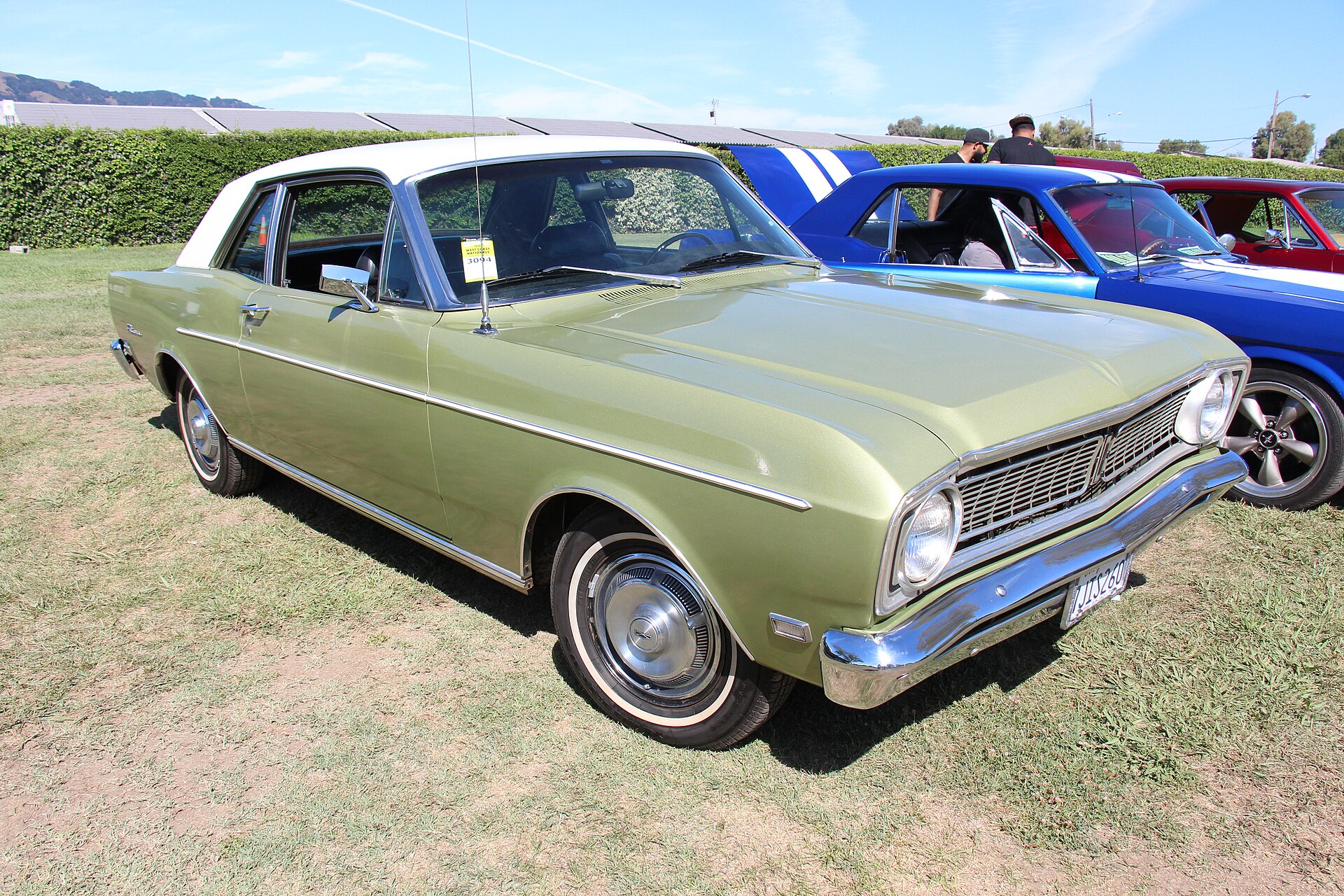
-
1964
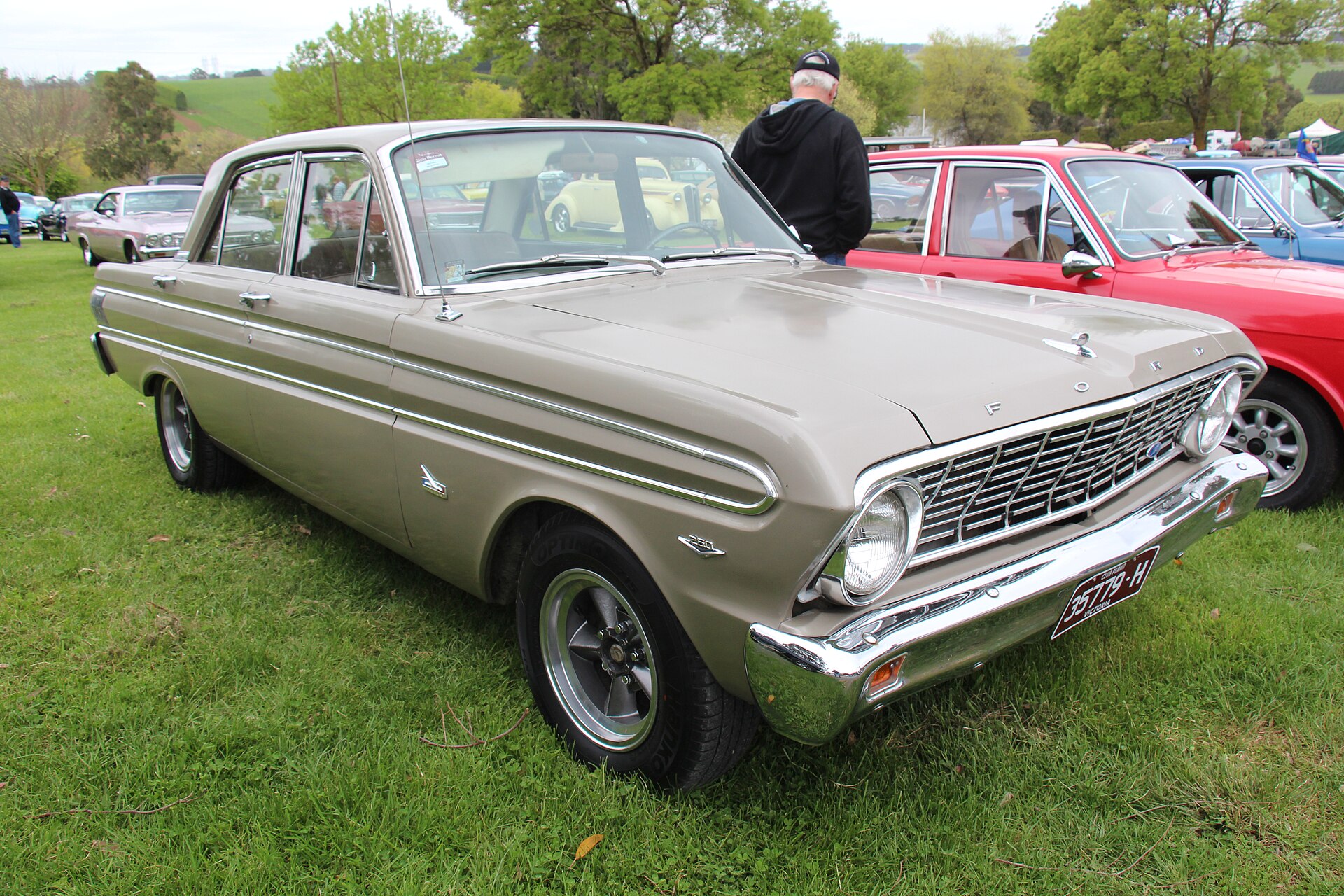
-
1960
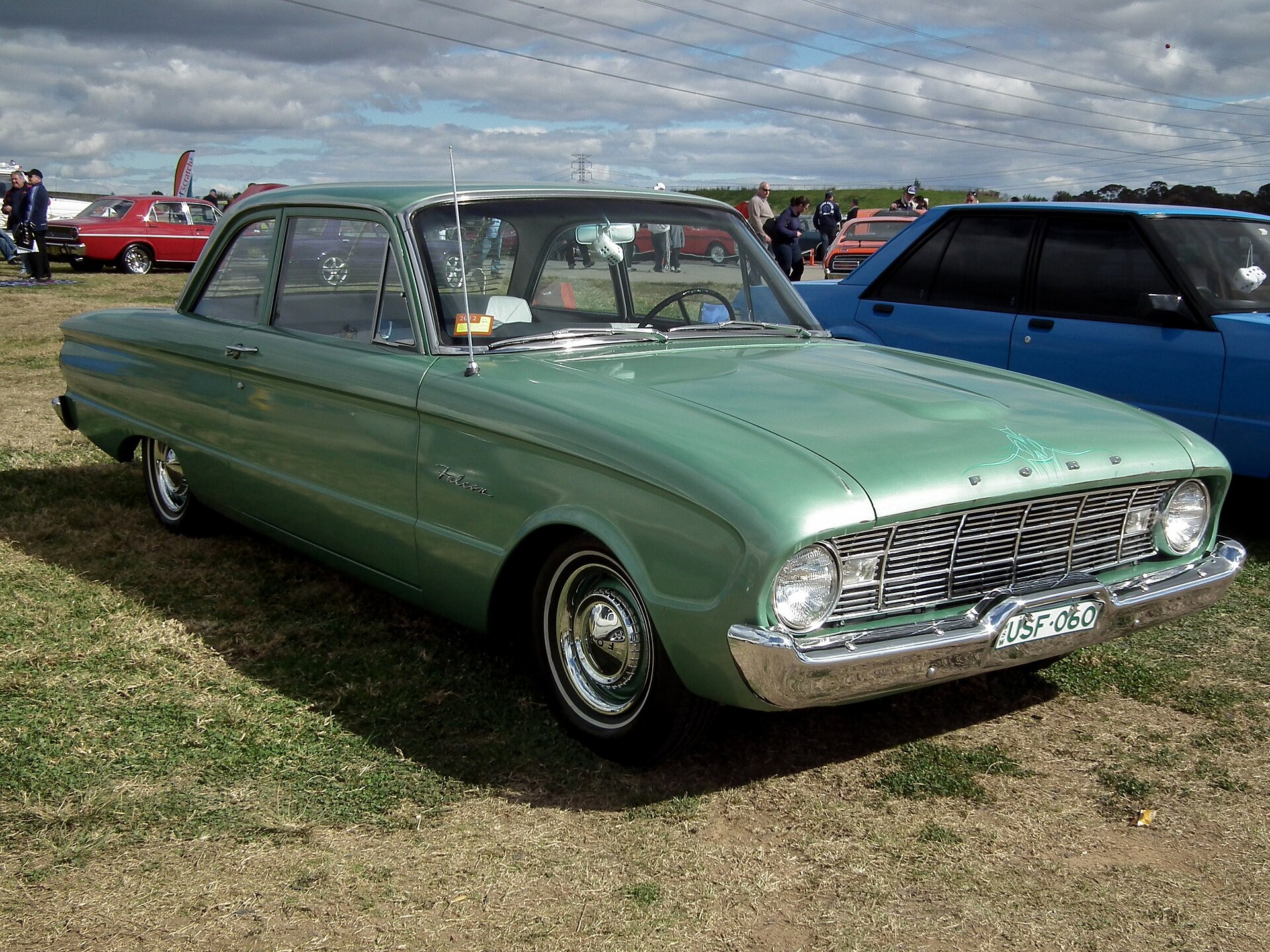


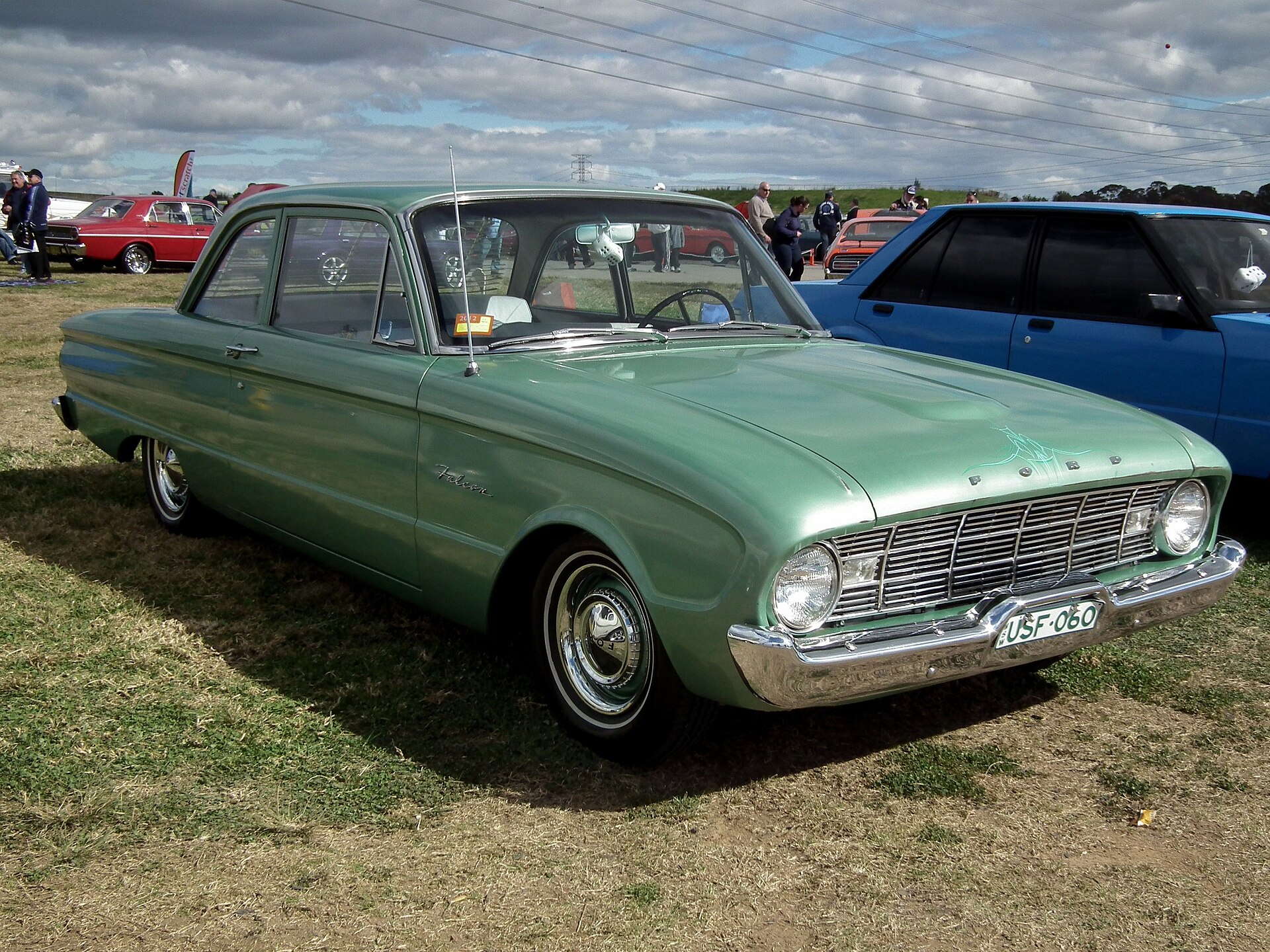
All generations by year: Falcon III (1966–1970) · Falcon II (1964–1965) · Falcon I (1960–1963)
Which one is mine?
Pick the year of first registration to see which generation it is.
- Falcon III 1966–1970
- Falcon II 1964–1965
- Falcon I 1960–1963
Which Falcon to choose
Our verdict · Sarah Whitmore
- For simple, cheap classic motoring: a 1960–1963 sedan with the 170 six, mechanically basic and easy to maintain.
- For style and performance: a 1963½–1964 Sprint hardtop or convertible with the 260 V8, the closest Falcon to an early Mustang.
- For open-top driving: a 1963–1965 Futura convertible, made only until June 1965.
- For practicality: a wagon or Squire wagon, or a Ranchero for light loads.
Our 1960s classics guide puts the Falcon in context with other cars of the decade, and the wider range is in the Ford catalogue.
The Ford Falcon was Ford's compact car for North America from the 1960 to the 1970 model years, and the first compact sold by one of the Big Three American carmakers. Developed under Robert McNamara as a scaled-down Galaxie, the car found over 500,000 buyers in its first year and over a million by the end of its second. Its platform also gave birth to the Ford Mustang. The Maverick replaced it, while the Falcon name carried on in Australia and Argentina.
In short
- Unveiled on 21 September 1959 for the 1960 model year; three generations: 1960–1963, 1964–1965 and 1966–1970.
- Engines from the 144 cu in (2.4-litre) six with 63–71 kW (85–95 hp) to the 260 V8 with 122 kW (164 hp) and the 289 V8.
- Bodies: two- and four-door sedans, wagons, the Ranchero pickup, sedan delivery, hardtop and convertible.
- The 1963½ Falcon Sprint is almost identical mechanically to the first Mustang of 1964½.
Specs by version
| Version | Engine | Power | Drive | Production years |
|---|---|---|---|---|
| Falcon I · 170 cu in six | 2.8 l · 6 cyl · Petrol 2,786 cc | 75 kW 102 PS101 hp | Rear-wheel drive | 1961–1963 |
| Falcon I · 260 cu in Challenger V8 (Sprint) | 4.3 l · 8 cyl · Petrol 4,261 cc | 122 kW 166 PS164 hp | Rear-wheel drive | 1963 |
| Falcon II · 260 cu in V8 | 4.3 l · 8 cyl · Petrol 4,261 cc | 122 kW 166 PS164 hp | Rear-wheel drive | 1964 |
| Falcon III · 250 cu in six (1970½) | 4.1 l · 6 cyl · Petrol 4,097 cc | 116 kW 158 PS156 hp | Rear-wheel drive | 1970 |
| Falcon III · 429 Cobra Jet Ram Air V8 (1970½) | 7.0 l · 8 cyl · Petrol 7,030 cc | 276 kW 375 PS370 hp | Rear-wheel drive | 1970 |
Verified Manufacturer and type-approval data from our catalog · Sources and methodology
Ford Falcon at a glance
| Parameter | Value |
|---|---|
| Production | model years 1960–1970 (built from 1959) |
| Generations | 3, plus the mid-year 1970½ Falcon |
| Layout | front engine, rear-wheel drive, unibody |
| Bodies | 2- and 4-door sedan, wagon, Ranchero, sedan delivery, hardtop, convertible |
| Engines | 144, 170, 200 cu in sixes; 260, 289, 302 cu in V8 (1970½ up to 429 V8) |
| Power range | about 63 kW (85 hp) to 122 kW (164 hp); 1970½ up to 276 kW (370 hp) |
| First-year sales | over 500,000 |
| Related | Mercury Comet, Frontenac (Canada), Ford Mustang |
| Successor | Ford Maverick (1970) |
Why Ford built a compact
The project was sponsored by Robert McNamara, then general manager of the Ford division, who insisted on low weight and low cost. He was promoted before the launch and soon left Ford to become United States Secretary of Defense, but many still call him "the father of the Falcon".
It was unveiled on 21 September 1959 as a two- or four-door sedan. A station wagon and the Ranchero, a car-based pickup, followed within months. The automatic Fordomatic transmission was the most important option, and the car was a hit at once: first-year sales passed half a million.
Generations and model years
| Generation | Model years | Main bodies | Engines | Notes |
|---|---|---|---|---|
| First | 1960–1963 | sedans, wagons, Ranchero, sedan delivery (1961), Futura, convertible and Sprint (1963) | 144, 170 sixes; 260 V8 from 1963½ | coil springs at the front, leaf springs at the rear |
| Second | 1964–1965 | sedans, wagons, Squire wagon, Sprint hardtop, Futura convertible | 170, 200 sixes; 260, 289 V8 | squarer styling; convertibles end 26 June 1965 |
| Third | 1966–1970 | Futura Sports Coupe, four-door sedan, wagon | 170, 200 sixes; 289, 302 V8 | shortened Fairlane platform |
| 1970½ | 1970 | two-door and four-door sedans, wagon | 250 six to 429 V8 | entry intermediate on the Torino body |
Assembly took place at Claycomo (Missouri), Milpitas (California), Edison (New Jersey), Oakville (Ontario) and Cuautitlán (Mexico) for the first generation, and at Lorain (Ohio) and Cuautitlán for the second.

Falcon timeline
| Date | Event |
|---|---|
| 21 September 1959 | Falcon unveiled as a 1960 model, two- and four-door sedans |
| early 1960 | station wagon and Ranchero added |
| 1961 | 170 six, sedan delivery and Deluxe trim |
| 1962 | Futura, Squire wagon and Club Wagon van |
| 1963 | Futura convertibles; 260 V8 and Sprint from January (1963½) |
| 1964 | squarer second-generation body, 200 six |
| late 1964 | 289 V8 replaces the 260 |
| 26 June 1965 | last convertible Falcon built |
| 1966 | third generation on the shortened Fairlane platform |
| 1970½ | Torino-based Falcon, the last North American model |
The original compact (1960–1963)
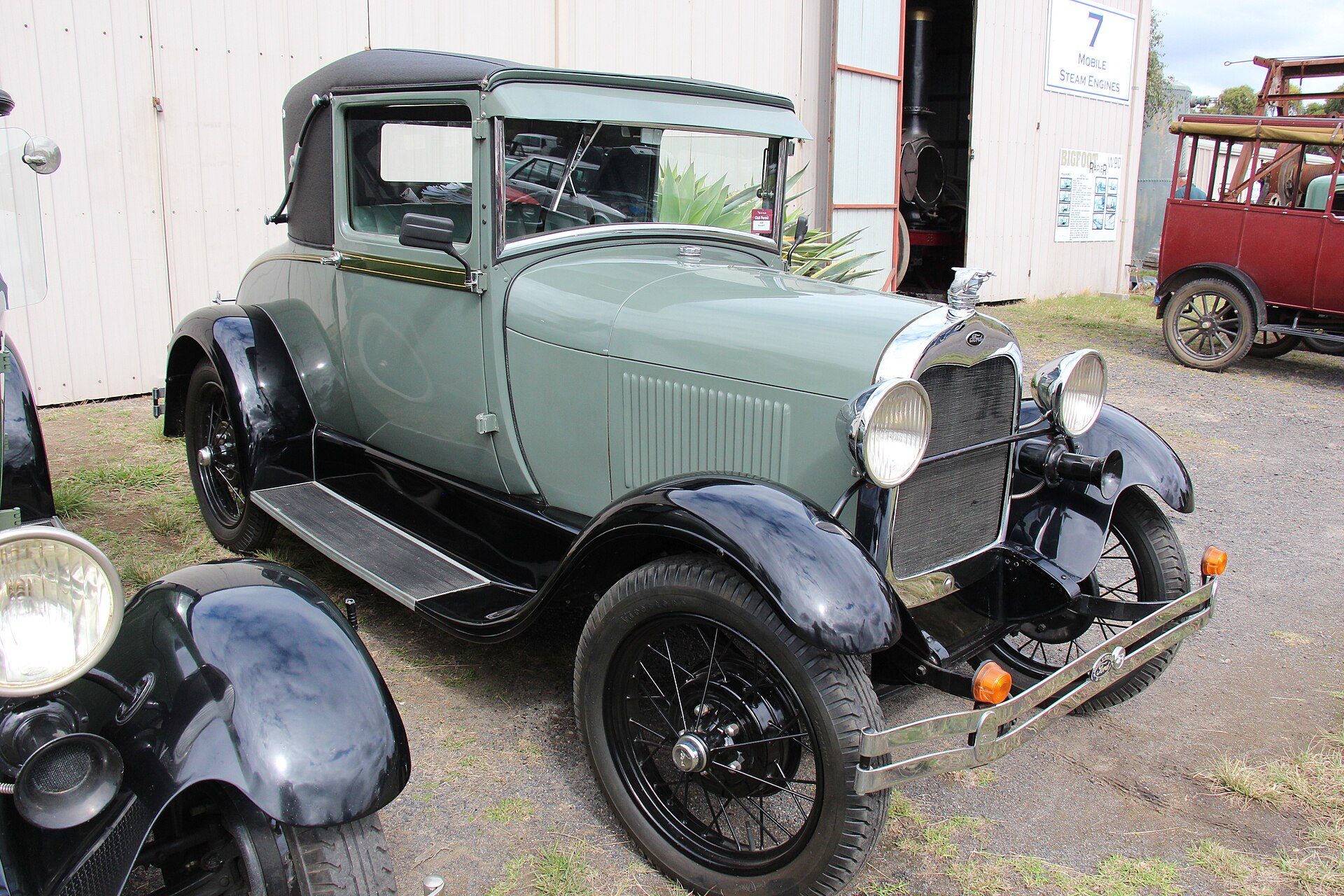
The first car was a simple unibody design with coil springs at the front, leaf springs at the rear and drum brakes all round. Its base engine was the 144 cu in (2.4-litre) Mileage Maker six with a single-barrel carburettor. The sources disagree on its output: English Wikipedia gives 71 kW (95 hp), the Falcon Registry 63 kW (85 hp) and Car & Classic 67 kW (90 hp). A 170 cu in (2.8-litre) six with 75 kW (101 hp) became optional in 1961.
The range grew quickly. The 1961 sedan delivery and the Futura with bucket seats were followed in 1962 by the Squire wagon with wood-effect trim. The same year brought the Club Wagon, an eight-seat van based on the Econoline; passenger Econolines carried the Falcon name from 1961 to 1967. For 1963 came Futura convertibles, a Sports Convertible with bucket seats, rev counter and a four-speed gearbox, and in the middle of the year the 260 cu in (4.3-litre) "Challenger" V8 with 122 kW (164 hp). It was the only V8 offered in a first-generation Falcon.
Sprint, Futura and the Mustang connection
The Sprint of 1963½ combined the 260 V8 with bucket seats in a two-door hardtop or convertible. English Wikipedia records 10,479 Sprint hardtops and 4,602 convertibles for that year.
More important was what came next. The first Ford Mustang, launched late in the 1964 model year, was based heavily on the Falcon's unitised body structure, and the 1963½ Sprint is described as almost mechanically identical to the 1964½ Mustang. The Mustang was an instant success, and Falcon sales never recovered from it. The Sprint package was overshadowed by its own offspring and was dropped after 1965. Our history of the Ford Mustang follows that car from 1964 onwards.

The square Falcon (1964–1965)
The second generation, launched for 1964, swapped the rounded body with sharper, squarer lines. A new 200 cu in (3.3-litre) six joined the range, and in late 1964 the 289 cu in (4.7-litre) V8 replaced the 260. The line-up included a two-door sedan, wagon, Squire wagon, Sprint hardtop, Futura convertible and, for 1965, a Futura four-door sedan. The last convertible Falcon was built on 26 June 1965.

On the Fairlane platform (1966–1970)
For 1966 the car moved to a shortened version of the intermediate Fairlane platform. Hardtops, convertibles and the Squire were dropped, leaving the Futura Sports Coupe as the top model, a four-door sedan and a five-door wagon. The Ranchero moved to the Fairlane line for 1967. Engines were the 170 and 200 Thriftpower sixes and the 289 and 302 V8s, and a 1966 Falcon raced in the Trans-Am series.
The 1970 model year was cut short: cars built until December 1969 matched the 1969 models. A "1970½" Falcon followed as the cheapest intermediate below the Fairlane and Torino, with a locking steering column and three-point seat belts. Its engines ran from a 250 cu in six with 116 kW (155 hp) to the 429 Cobra Jet Ram Air V8 with 276 kW (370 hp). For 1971 Ford used the Torino name across its intermediates, and the Falcon nameplate disappeared from North America.

Falcon engines and outputs
| Engine | Years | Displacement | Power | Note |
|---|---|---|---|---|
| Mileage Maker six | 1960– | 144 cu in (2.4 l) | 63–71 kW (85–95 hp) | sources differ |
| six | 1961– | 170 cu in (2.8 l) | 75 kW (101 hp) | standard in Sports Convertible |
| six | 1964– | 200 cu in (3.3 l) | - | Thriftpower from 1966 |
| Challenger V8 | 1963½–1964 | 260 cu in (4.3 l) | 122 kW (164 hp) | standard in the Sprint |
| Windsor V8 | late 1964–1970 | 289 cu in (4.7 l) | - | replaced the 260 |
| six (1970½) | 1970 | 250 cu in (4.1 l) | 116 kW (155 hp) | Torino-based Falcon |
| Cobra Jet Ram Air V8 (1970½) | 1970 | 429 cu in (7.0 l) | 276 kW (370 hp) | top option |
All outputs are SAE gross ratings of the period.
The Falcon name outside North America
The North American car was also built in Mexico, at Arica in Chile and at Oakville in Canada, where Ford also sold a Falcon-based car called the Frontenac for 1960. In Argentina it was built at Pacheco and its platform stayed in production until 1991. Australia is the best-known case: Ford Australia built the Falcon from 1960 and, from 1972, developed the Falcon as its own model line, which ran until October 2016.
Photo gallery


Ford Falcon evolution in numbers
Did you know?
- The Ford Falcon ran for 11 years, from 1959 to 1970, over 3 generations in our catalog.
- The longest-running generation is the Falcon III (1966–1970): 4 years.
- The biggest jump in power came with the Falcon III: up to 276 kW (375 PS), 154 kW more than the Falcon II.
Most powerful version, kW
Figures from the 1cars catalog: power is the strongest version of each generation; generations without the figure are left out.
Ford Falcon: first vs latest generation
| Spec | Falcon I | Falcon III | Change |
|---|---|---|---|
| Years | 1960–1963 | 1966–1970 | 6 years apart |
| Most powerful version | 122 kW (166 PS) | 276 kW (375 PS) | +154 kW (+126%) |
Oldest and newest generation in the 1cars catalog. Power is the strongest version of each; other rows are shown only when both generations have the figure.
Image credits · Photos from Wikimedia Commons under free licences
- Ford Falcon I · Photo: sv1ambo / Wikimedia Commons, CC BY 2.0
Ford Falcon in our rankings
- No. 4 of 131 · Biggest engines: sedans (7,030 cc)
- No. 33 of 557 · Biggest engines: cars (7,030 cc · top 7%)
- No. 18 of 88 · Most powerful cars of the 1970s (276 kW · top 22%)
- No. 43 of 149 · Most powerful sedans (276 kW · top 29%)
- No. 317 of 859 · Most powerful cars (276 kW · top 38%)
- No. 70 of 154 · Most powerful American cars (276 kW · top 49%)
Bigger engine than 96% of ranked sedans in the 1CARS catalog (No. 4 of 131).
FAQ
What years was the Ford Falcon made in the US?
From the 1960 to the 1970 model years. It was unveiled on 21 September 1959, and the last cars were the mid-year 1970½ models.
Is the Ford Mustang based on the Falcon?
Yes. The first Mustang was based heavily on the Falcon's unitised body structure, and the 1963½ Falcon Sprint is almost mechanically identical to the 1964½ Mustang.
What engines were in the Ford Falcon?
Sixes of 144, 170 and 200 cu in, the 260 and 289 V8s and, in the third generation, a 302 V8. The 1970½ Falcon offered engines up to a 429 V8 with 276 kW (370 hp).
Why was the Ford Falcon discontinued?
The Mustang took many of its buyers from 1964, and for 1971 Ford renamed its intermediate range Torino. The compact role passed to the Maverick.
Is the American Falcon the same as the Australian Falcon?
No. Australia built Falcons from 1960, but from 1972 Ford Australia developed its own Falcon, which stayed in production until 2016.
Data sources
Data checked by an editor against the sources below.