 Ford Galaxie
All generations, specs and history
Published Sources (1) Report an error
By Sarah Whitmore, Senior Automotive Writer
- Built
- 1958–1983
- Generations
- 5
- Top power
- 317 kW (431 PS)
Timeline
Galaxie generations
Click a generation for its own page
III and / LTD / Landau Brazil overlapped in 1967–1968, so / LTD / Landau Brazil sits on a second lane
- Galaxie I 1959 · Sedan, Coupe · 224 kW (305 PS)
- Galaxie II 1960–1964 · Sedan, Station wagon · 317 kW (431 PS)
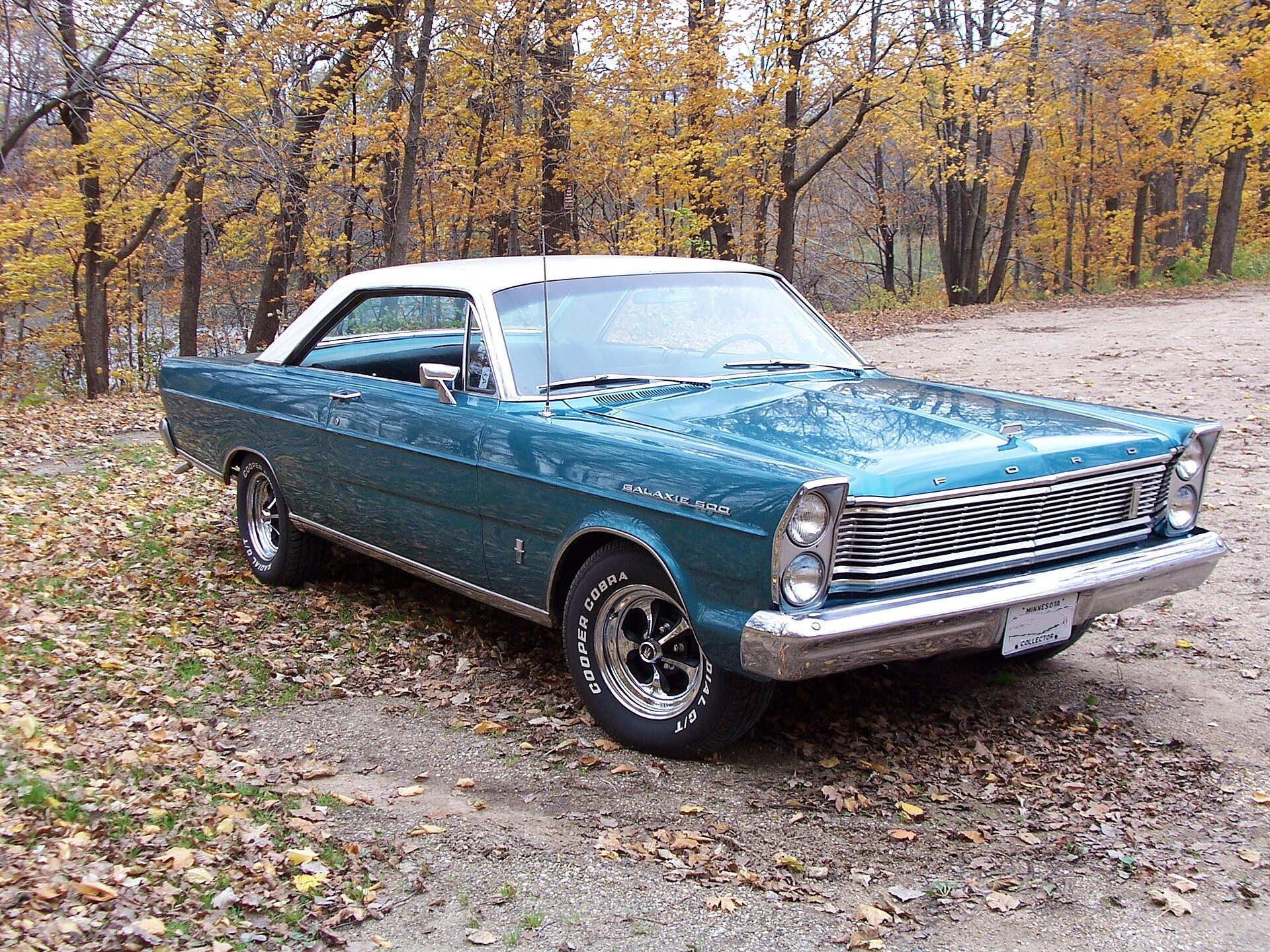
- Galaxie III 1965–1968 · Sedan, Coupe · 268 kW (364 PS)
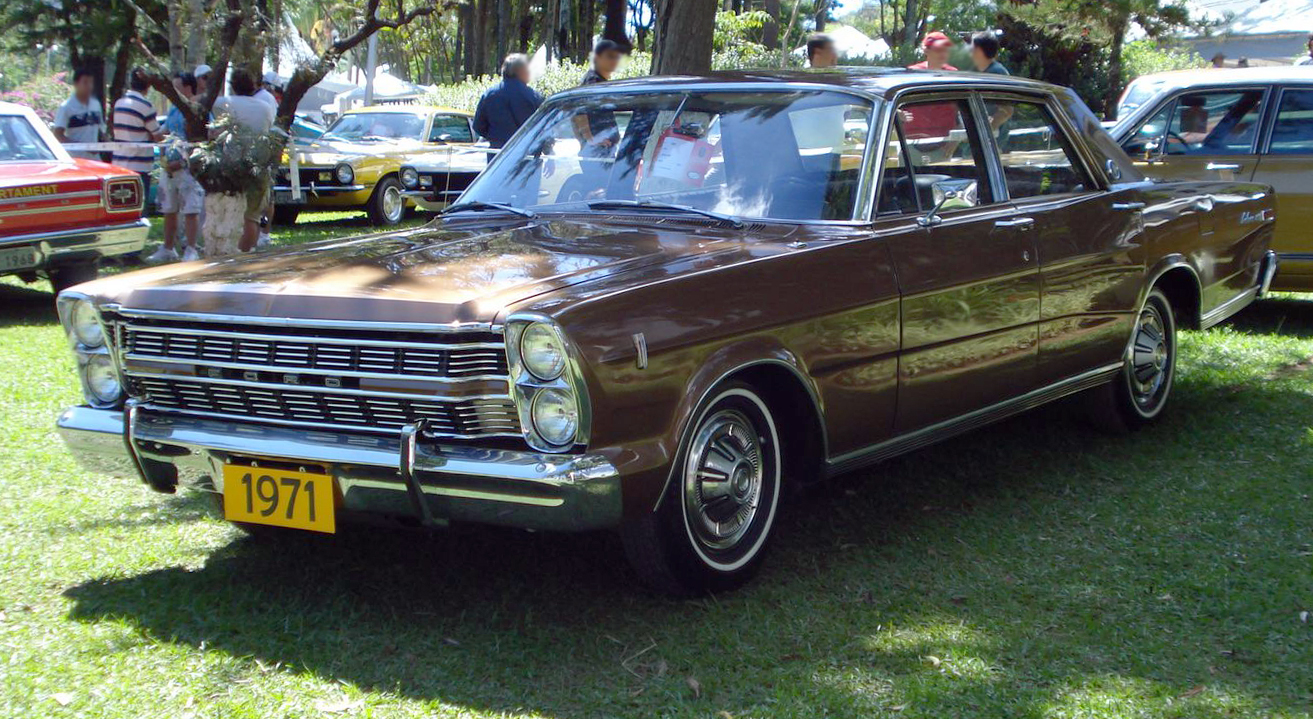
- Galaxie / LTD / Landau Brazil 1967–1983 · Sedan
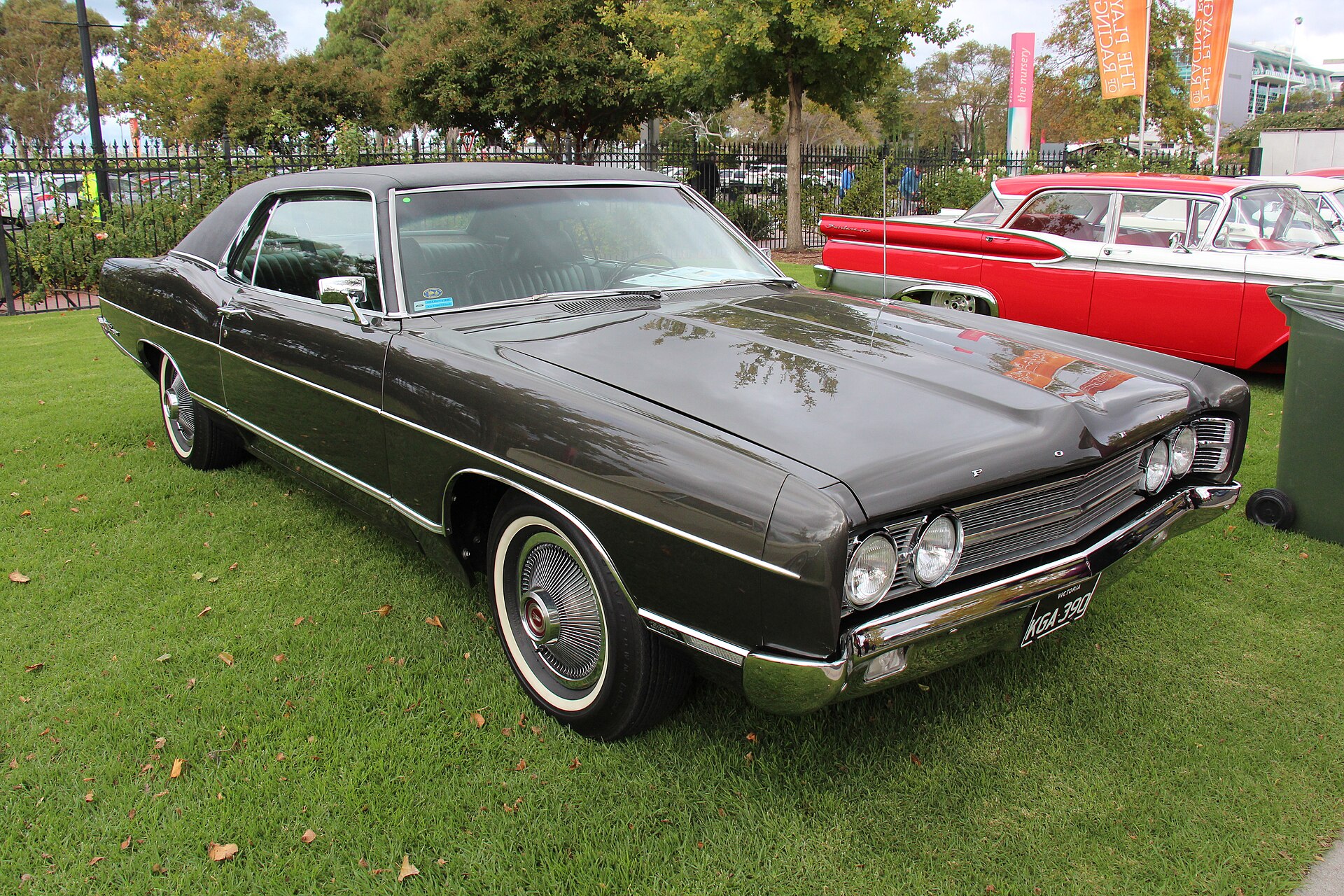
- Galaxie IV 1969–1974 · Sedan, Station wagon · 268 kW (364 PS)
Newest first · 5 generations since 1959
-
1969
-
1967
-
1965
-
1960
-
1959


All generations by year: Galaxie IV (1969–1974) · Galaxie / LTD / Landau Brazil (1967–1983) · Galaxie III (1965–1968) · Galaxie II (1960–1964) · Galaxie I (1959)
Which one is mine?
Pick the year of first registration to see which generation it is.
- Galaxie IV 1969–1974
- Galaxie / LTD / Landau Brazil 1967–1983
- Galaxie III 1965–1968
- Galaxie II 1960–1964
- Galaxie I 1959
Which Galaxie to choose
Our verdict · Sarah Whitmore
- For the purest design: a 1959 Sunliner convertible or, for curiosity value, a Skyliner with its folding steel roof.
- For collectors: a 1963–1964 fastback with the 427, or a 1966 7 Litre with the 428.
- For a comfortable cruiser: a 1965–1968 Galaxie 500 hardtop with the 352 or 390 V8.
- For a budget entry: a late four-door sedan of 1969–1974, the cheapest way into a big Ford of the period.
Our car comparison lines up the Galaxie with its rivals, the 1960s classics guide shows the wider field, and every other model is listed in the Ford catalogue.
The Ford Galaxie was Ford's full-size car for the American market from the 1959 to the 1974 model years, named to cash in on the excitement of the Space Race. It began as the top trim of the 1959 Fairlane 500, became the name of every full-size Ford in 1962 and grew from a 352 V8 sedan into a family of hardtops, convertibles and big-block racers. Brazil built its own Galaxie until 1983. The LTD took over in the United States.
In short
- US model years 1959–1974 in four generations; built in Brazil from 1967 to 1983 and assembled in Australia from 1965 to 1968.
- Peak year 1963 with 648,010 Galaxies; 1959–1974 production adds up to about 6.5 million.
- Engines from the 223 six to the 427 V8 with 317 kW (425 hp) and the 428 7 Litre with 257 kW (345 hp).
- Jack Sears won the 1963 British Saloon Car Championship in Galaxies and Cortinas.
Specs by version
| Version | Engine | Power | Drive | Production years |
|---|---|---|---|---|
| Galaxie I · 352 V8 | 5.8 l · 8 cyl · Petrol 5,768 cc | 224 kW 305 PS300 hp | Rear-wheel drive | 1959 |
| Galaxie II · 390 FE V8 three 2-bbl | 6.4 l · 8 cyl · Petrol 6,391 cc | 299 kW 407 PS401 hp | Rear-wheel drive | 1961 |
| Galaxie II · 427 V8 two 4-bbl (lightweight) | 7.0 l · 8 cyl · Petrol 6,997 cc | 317 kW 431 PS425 hp | Rear-wheel drive | 1963–1964 |
| Galaxie III · 428 V8 7 Litre | 7.0 l · 8 cyl · Petrol 7,014 cc | 257 kW 349 PS345 hp | Rear-wheel drive | 1966–1967 |
| Galaxie III · 428 Police Interceptor V8 | 7.0 l · 8 cyl · Petrol 7,014 cc | 268 kW 364 PS359 hp | Rear-wheel drive | 1966–1968 |
| Galaxie IV · 429 Thunder Jet V8 2-bbl | 7.0 l · 8 cyl · Petrol 7,030 cc | 239 kW 325 PS321 hp | Rear-wheel drive | 1969–1971 |
| Galaxie IV · 429 Thunder Jet V8 4-bbl | 7.0 l · 8 cyl · Petrol 7,030 cc | 268 kW 364 PS359 hp | Rear-wheel drive | 1969–1971 |
Verified Manufacturer and type-approval data from our catalog · Sources and methodology
Ford Galaxie at a glance
| Parameter | Value |
|---|---|
| Production (USA) | model years 1959–1974 |
| Production (Brazil) | 1967–1983, four-door sedan only |
| Built (USA, Galaxie series) | 6,543,138 (sum of the Wikipedia EN table) |
| Bodies | 2- and 4-door sedan, 2- and 4-door hardtop, convertible, Skyliner retractable, wagon |
| Engines | 223, 240 sixes; V8 from 260 to 460 cu in |
| Top output | 317 kW (425 hp gross), 1963 427 |
| Wheelbase | 118 in (1959), 119 in (1960–64), 121 in (1969–74) |
| Rivals | Chevrolet Impala, Plymouth Fury |
| Successor | Ford LTD |
Production by year
| Model year | Galaxie | All full-size Fords |
|---|---|---|
| 1959 | 464,100 | 733,700 |
| 1961 | 349,665 | 486,284 |
| 1963 | 648,010 | 774,382 |
| 1965 | 564,008 | 978,429 |
| 1966 | 597,002 | 1,034,930 |
| 1968 | 448,376 | 920,247 |
| 1970 | 351,938 | 850,315 |
| 1972 | 269,199 | 832,273 |
| 1974 | 117,801 | 519,916 |
The "Galaxie" column counts Galaxie, Galaxie 500, 500XL, XL and, until 1965, the 500 LTD. Classic Industries notes that full-size Fords and Mercurys sold about 7.85 million cars between 1968 and 1978, second only to the Model T among Ford platforms.
The first Galaxie (1959)
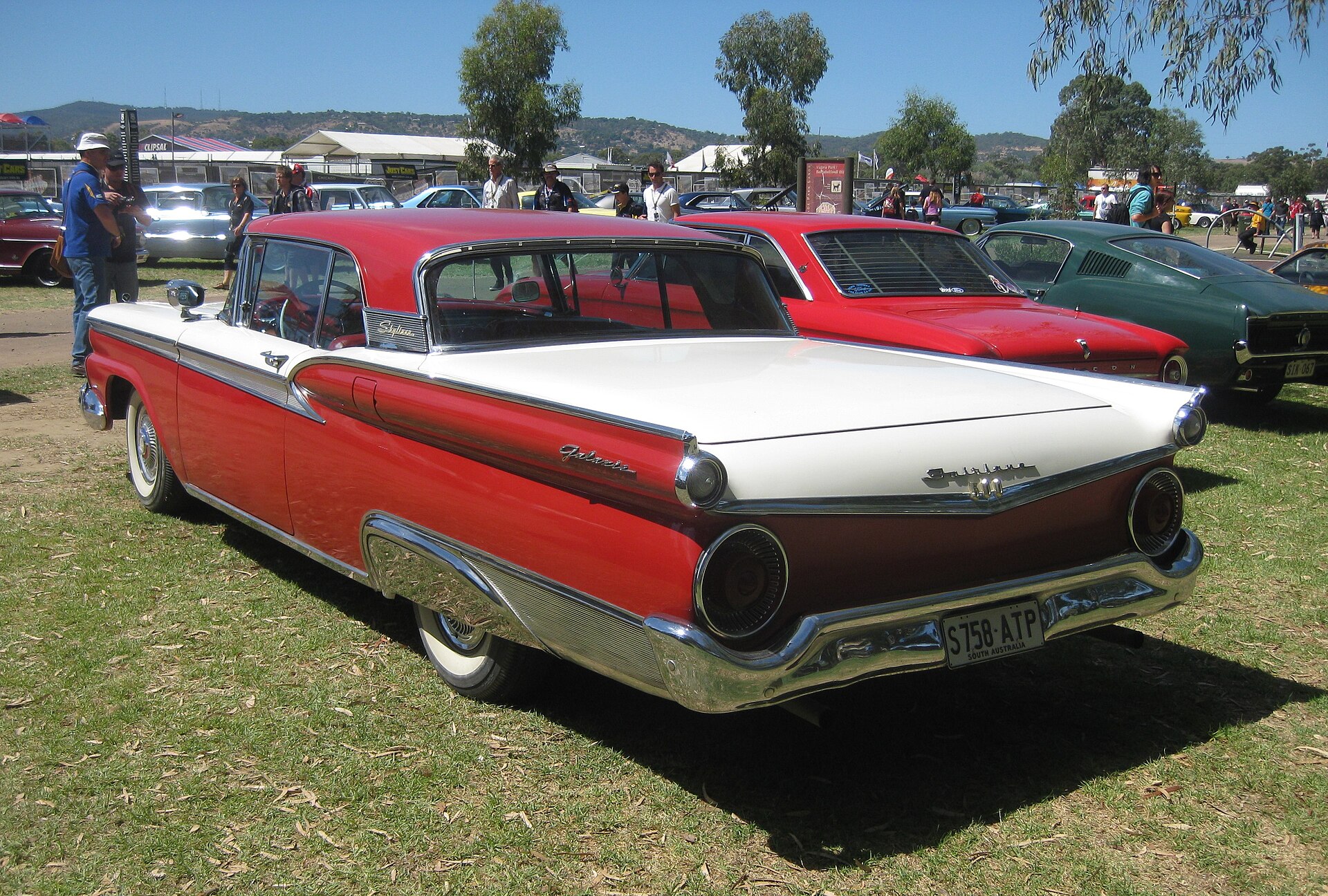
The 1959 Ford range went on sale in late 1958, and the Galaxie joined it in the middle of the model year as the new top trim above the Fairlane 500. The first cars carried both Fairlane 500 and Galaxie badges. They rode on a 118-inch (2,997 mm) wheelbase and were 208 inches (5,283 mm) long.
Four body types were offered: sedans, hardtops, the Sunliner convertible and the Skyliner, a retractable steel hardtop that folded into the boot and left very little luggage space. The biggest engine was the 352 V8 with 224 kW (300 hp). Buyers could choose a three-speed manual or the two-speed Cruise-O-Matic automatic.

Starliner, XL and big engines (1960–1964)
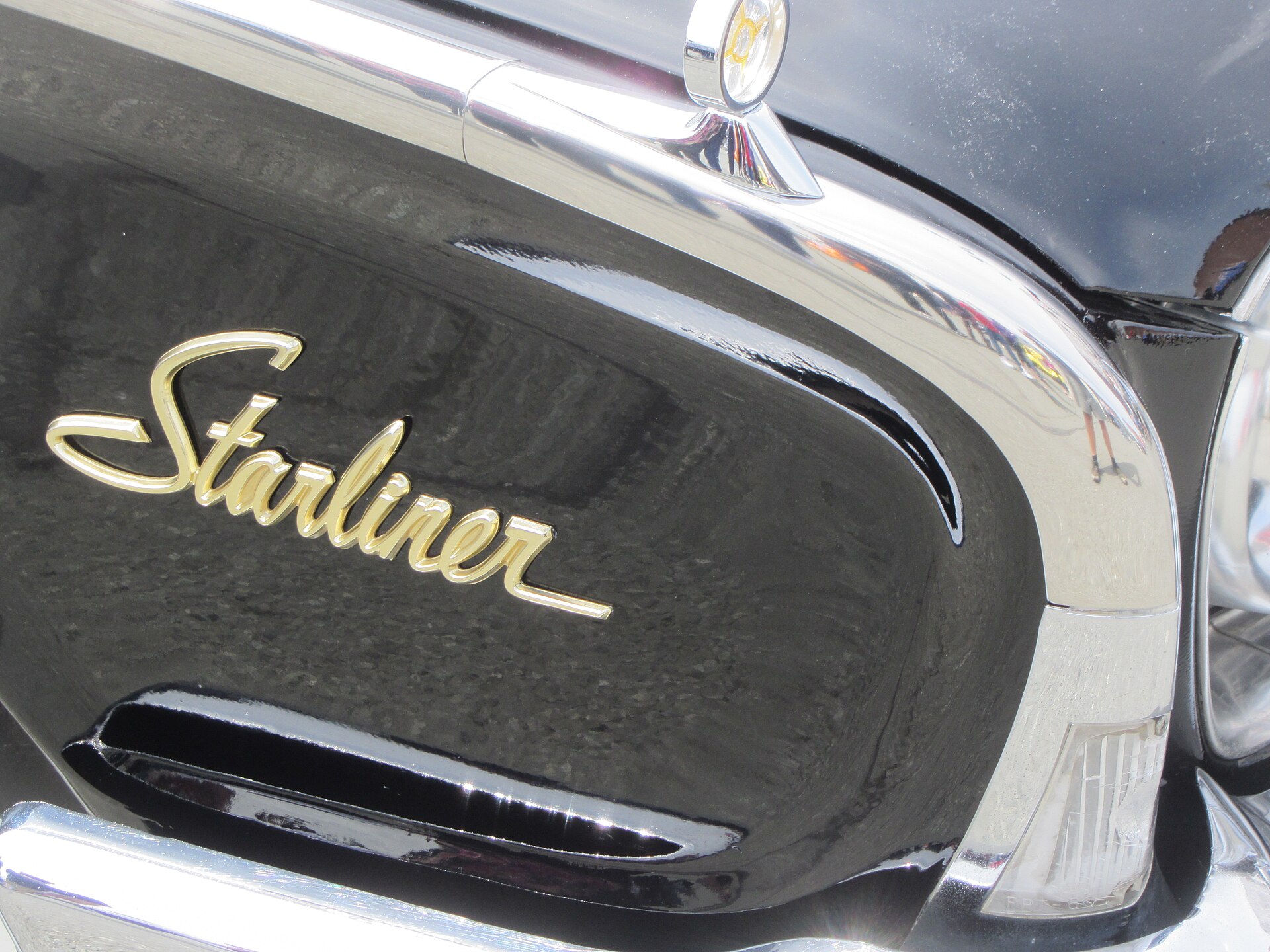
The second generation grew to a 119-inch wheelbase. The Starliner of 1960–61 was a pillarless hardtop with a large curved rear window, and the square-roofed Club Victoria took most sales from 1961. That year brought the 390 FE V8; with three two-barrel carburettors it was rated at 299 kW (401 hp).
In 1962 the Fairlane name moved to a new intermediate, and Galaxie became the name of the whole full-size range. The 406 V8 arrived, along with the Galaxie 500/XL with bucket seats and a console, Ford's reply to the Impala Super Sport. For 1963 the base V8 changed from the 292 to the 260 and then the 289, and a sloping "sports hardtop" roof appeared in the middle of the year to help on the NASCAR superspeedways. A base Ford 300 cost $2,324 and an XL fastback $3,268 in 1963. The 1964 cars, last of the second body, used fastback roofs on all models except wagons.

Racing: 427 lightweights and Jack Sears
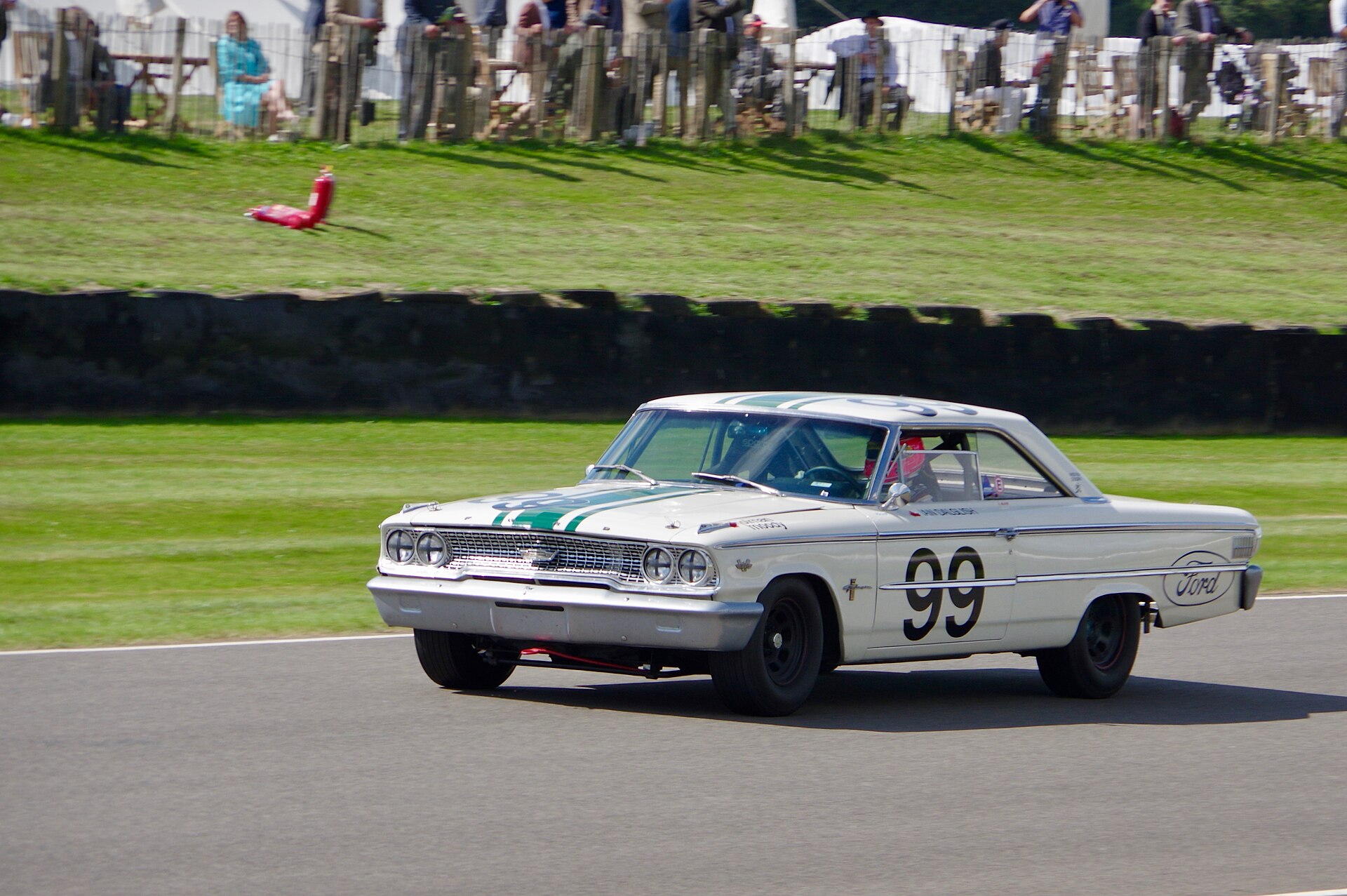
In 1962 Ford's Experimental Garage built 11 lightweight Galaxies with fibreglass and aluminium panels, getting them under 1,542 kg (3,400 lb). For 1963 Ford built a production run of Galaxie 500 Sport Special fastbacks for drag racing, with the 427 V8 (two four-barrel Holley carburettors, solid lifters, 317 kW / 425 hp). Their bonnet, boot lid and front wings were fibreglass, and the bumpers aluminium. The sources disagree on the number: English Wikipedia gives 212 or about 190, German Wikipedia about 200. Each listed at about $4,200 in 1963.
At the 1963 Winternationals, the Tasca Galaxie with Bill Lawton ran the quarter mile in 12.50 seconds at 187.6 km/h (116.60 mph), still not enough against Chevrolet's Z-11 Impalas. Ford judged the car too heavy, built 50 more lightweight 427 cars for 1964 and then moved to the smaller Fairlane Thunderbolt. Classic Industries counts 2,450 factory R-code 427 Galaxie 500s for 1964.
Road racing went better. Holman and Moody prepared Galaxies with disc brakes for Britain, Australia and South Africa, and Jack Sears won the 1963 British Saloon Car Championship driving Galaxies and Lotus Cortinas. Jack Brabham and Graham Hill also raced them. Brake failures led to crashes until the cars received 12-inch discs from the GT40 programme. Before the Galaxie, the top full-size Ford was the Fairlane, described on our Ford Fairlane Crown Victoria page.

LTD and the 7 Litre (1965–1968)
The all-new 1965 Galaxie was taller and bulkier, with vertically stacked headlamps and a three-link coil-spring rear axle in place of leaf springs. The Galaxie 500 LTD and Galaxie 500 XL became the top trims, the 240 cu in six replaced the 223, and the 352 V8 gained a four-barrel carburettor and dual exhausts. The Galaxie 500 convertible sold 27,454 cars in one year, third among American convertibles behind the Mustang and Impala; English Wikipedia dates this to 1966, German Wikipedia to 1965.
For 1966 the styling took on a "Coke-bottle" waist, and the Galaxie 500 7 Litre arrived with the 428 cu in V8 of 257 kW (345 hp); a Police Interceptor 428 gave 268 kW (360 hp). The LTD dropped the Galaxie name that year. In 1967 the 7 Litre became an option on the separate Ford XL, and for 1968 horizontal headlamps replaced the stacked ones and the base V8 grew from 289 to 302 cu in.

The last Galaxies (1969–1974)
The fourth generation used a new 121-inch (3,073 mm) wheelbase. The 429 Thunder Jet V8 replaced the 427 and 428, rated at 268 kW (360 hp) with a four-barrel carburettor and dual exhausts and 239 kW (320 hp) with a two-barrel. The XL and the four-speed manual ended after 1970. A complete redesign for 1971 brought squarer lines, a wraparound bumper, the 351 V8 as standard and a 400 V8 in place of the 390.
The six-cylinder engine and the three-speed manual disappeared after 1972, and 1973 added towing packages and a pillared hardtop. After the 1974 model year Ford dropped the Galaxie name, and the LTD became its full-size car.
Galaxie in Brazil and Australia
Ford do Brasil built the Galaxie from 1967 to 1983 as Galaxie, Galaxie 500, LTD and Landau, always as a four-door sedan based on the 1966 American body. The first cars used the 272 cu in Y-block V8; from 1976 the 302 Windsor V8 was the only engine, and a facelift that year brought horizontal headlamps. Two Brazilian Galaxies served as presidential cars until 1990.
In Australia, Ford assembled the Galaxie at Homebush West, Sydney, from 1965 to 1968, with the 289 or 390 V8 and power steering, power brakes and an automatic gearbox as standard. English Wikipedia counts 3,124 kits; from 1969 the cars came from the United States and were converted to right-hand drive at Broadmeadows.
Values today
Hagerty's analysis of 1960–64 Galaxies found an average value of about $21,800 for cars listed in 2023, roughly €20,200 at 2023 exchange rates. The 427-powered cars lead the market and gained more than 65% in value after the start of the pandemic, while convertibles and coupés sit at the top among body styles. In Hagerty's data only 6.7% of these Galaxies are modified, against 12.7% of comparable Impalas, and modified Galaxies are worth about 37% more than stock ones.
Photo gallery

Ford Galaxie evolution in numbers
Did you know?
- The Ford Galaxie ran for 25 years, from 1958 to 1983, over 5 generations in our catalog.
- The biggest jump in power came with the Galaxie II: up to 317 kW (431 PS), 93 kW more than the Galaxie I.
- The most powerful Ford Galaxie is not the newest: the Galaxie II (1960–1964) offered up to 317 kW (431 PS), the Galaxie IV up to 268 kW (364 PS).
Most powerful version, kW
Figures from the 1cars catalog: power is the strongest version of each generation; generations without the figure are left out.
Ford Galaxie: first vs latest generation
| Spec | Galaxie I | Galaxie IV | Change |
|---|---|---|---|
| Years | 1959 | 1969–1974 | 10 years apart |
| Most powerful version | 224 kW (305 PS) | 268 kW (364 PS) | +44 kW (+20%) |
Oldest and newest generation in the 1cars catalog. Power is the strongest version of each; other rows are shown only when both generations have the figure.
Image credits · Photos from Wikimedia Commons under free licences
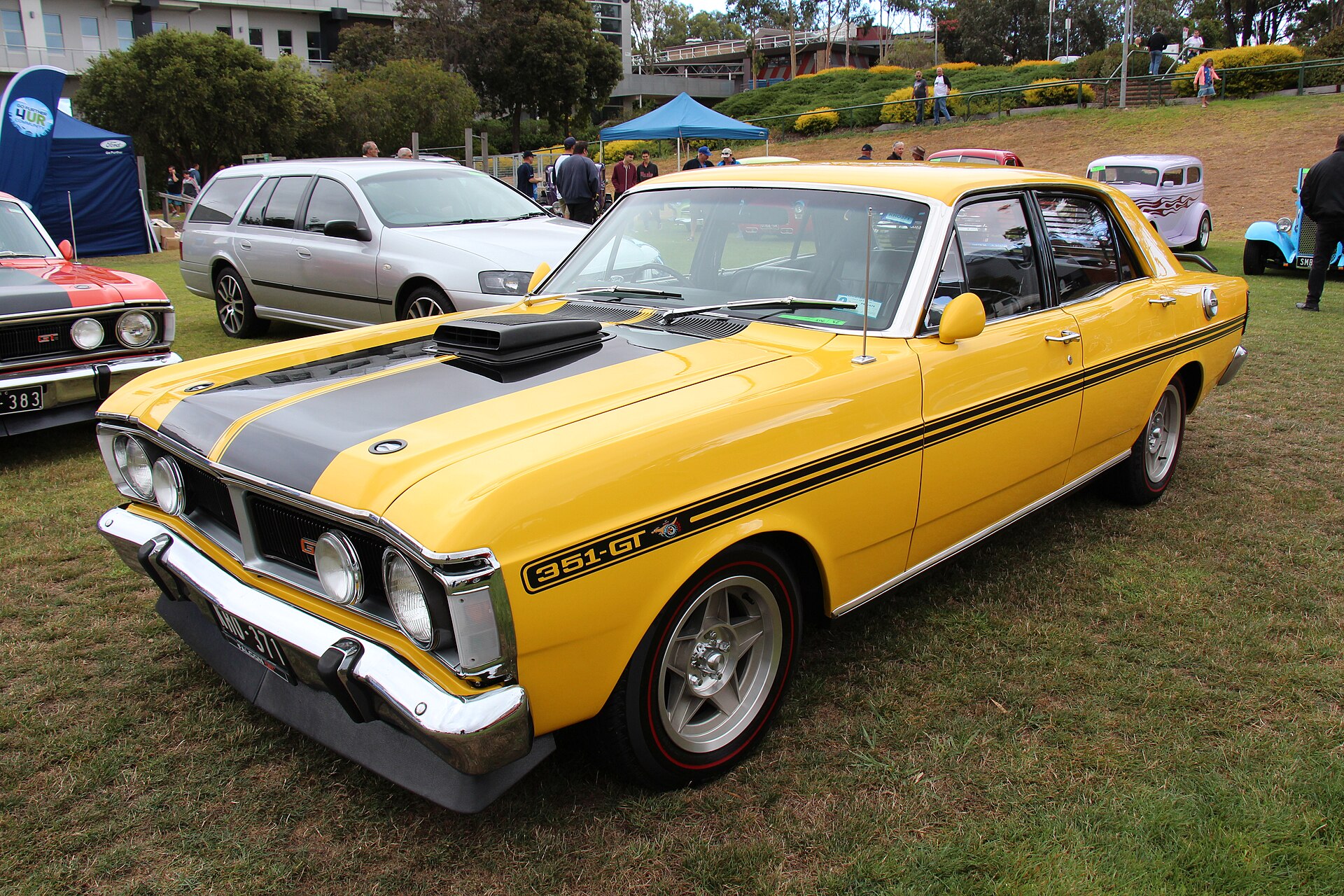
- Ford Galaxie I · Photo: GTHO / Wikimedia Commons, CC BY-SA 3.0
- Ford Galaxie / LTD / Landau Brazil · Photo: Renzo Maia;cropped and adjusted by uploader Mr.choppers / Wikimedia Commons, CC BY 3.0
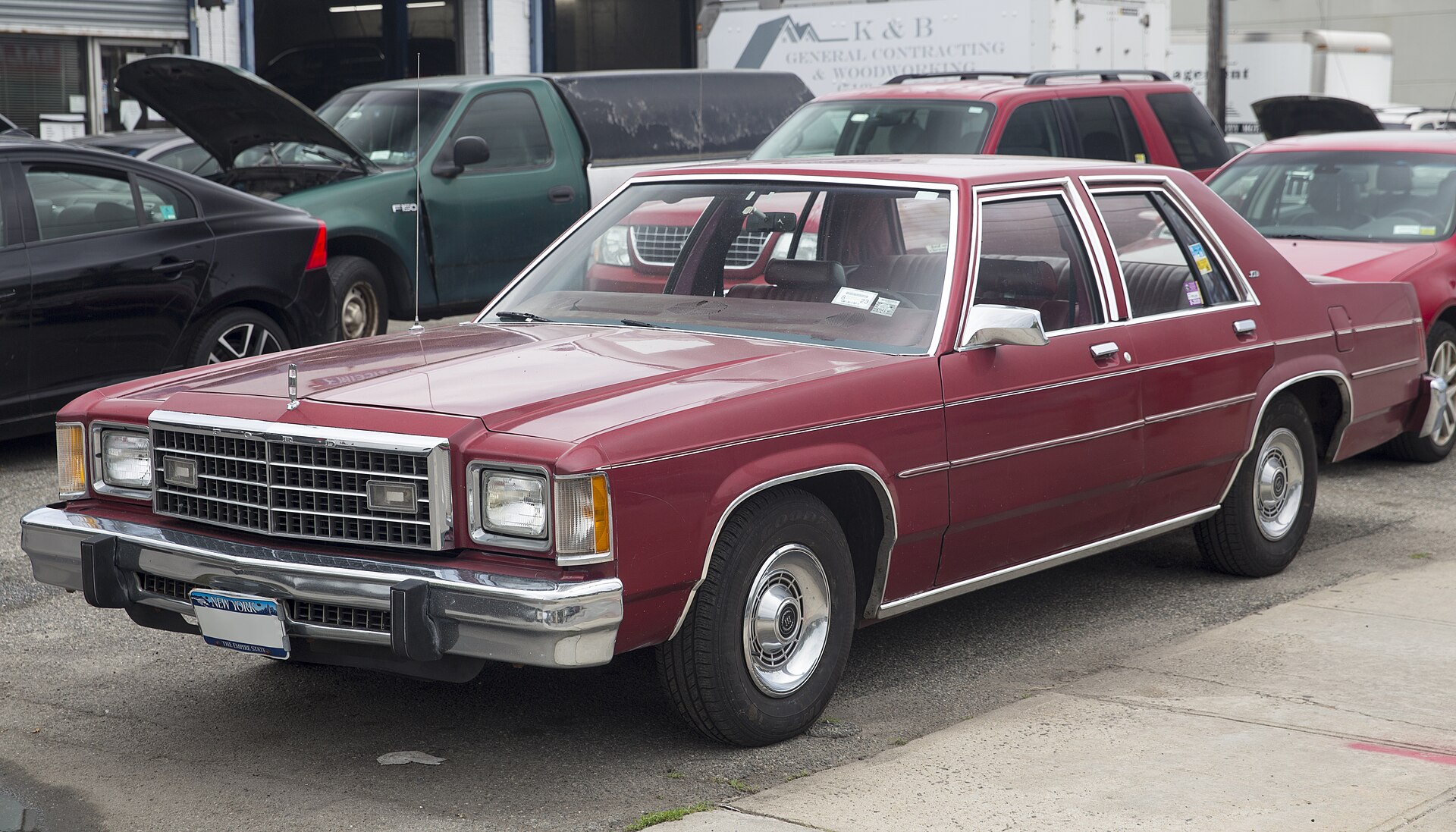
- Ford Galaxie IV · Photo: Sicnag / Wikimedia Commons, CC BY 2.0
Ford Galaxie in our rankings
- No. 5 of 131 · Biggest engines: sedans (7,030 cc)
- No. 34 of 557 · Biggest engines: cars (7,030 cc · top 7%)
- No. 112 of 912 · Longest-running car nameplates (24 years · top 14%)
- No. 13 of 94 · Most powerful cars of the 1960s (317 kW · top 15%)
- No. 33 of 173 · Biggest engines: coupes (6,997 cc · top 20%)
- No. 54 of 345 · Cars with the most generations (5 generations · top 25%)
Bigger engine than 96% of ranked sedans in the 1CARS catalog (No. 5 of 131).
FAQ
What years was the Ford Galaxie made?
In the United States for the 1959 to 1974 model years; Ford do Brasil built it from 1967 to 1983.
Where does the name Galaxie come from?
Ford's marketing team chose it to link the car with the excitement of the Space Race of the late 1950s and 1960s.
What was the most powerful Ford Galaxie engine?
The 1963–1964 427 V8 with two four-barrel carburettors, rated at 317 kW (425 hp) gross and used in the lightweight racing Galaxies.
What is a Galaxie 500 7 Litre?
A 1966 Galaxie 500 model with the 428 cu in (7.0-litre) V8 of 257 kW (345 hp). In 1967 the 7 Litre became an option on the Ford XL.
What replaced the Ford Galaxie?
After the 1974 model year, Ford dropped the Galaxie and Custom names and made the LTD its full-size car.
Data sources
Data checked by an editor against the sources below.