 McLaren Elva
Specs, engines and history
Published Sources (1) Report an error
By Felix Hartmann, Automotive Technology & EV Contributor
- Built
- 2020–2021
- Top power
- 599 kW (814 PS)
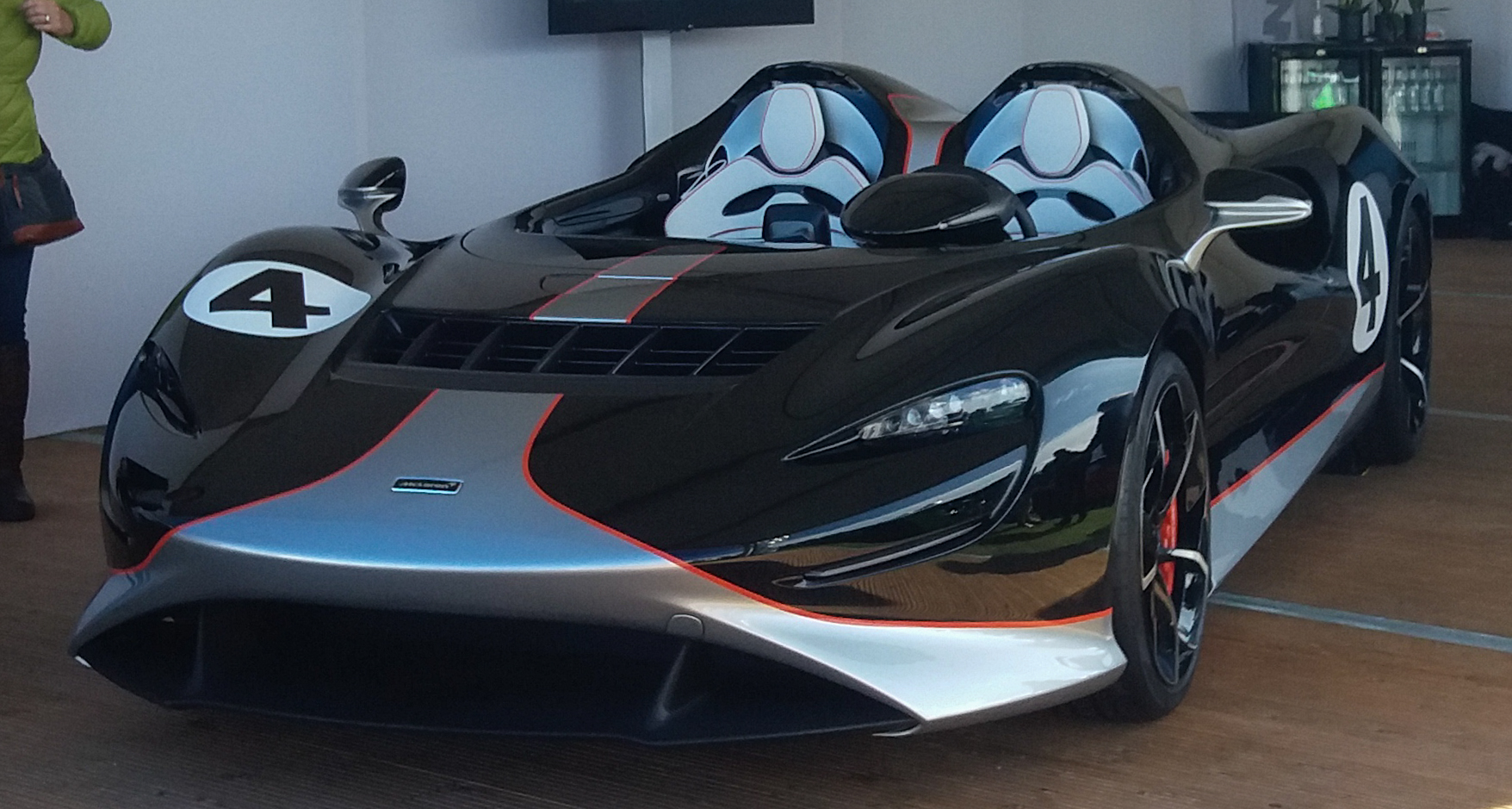
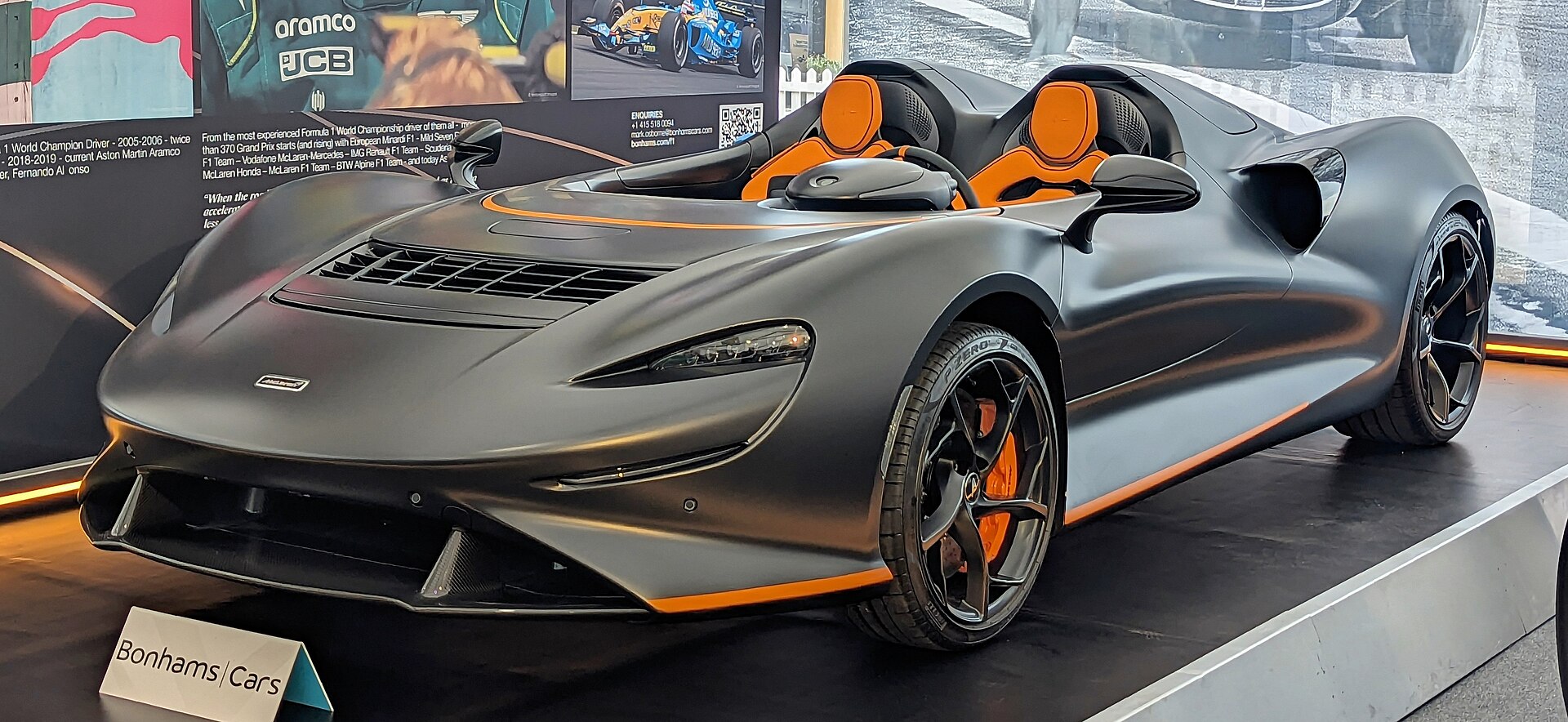
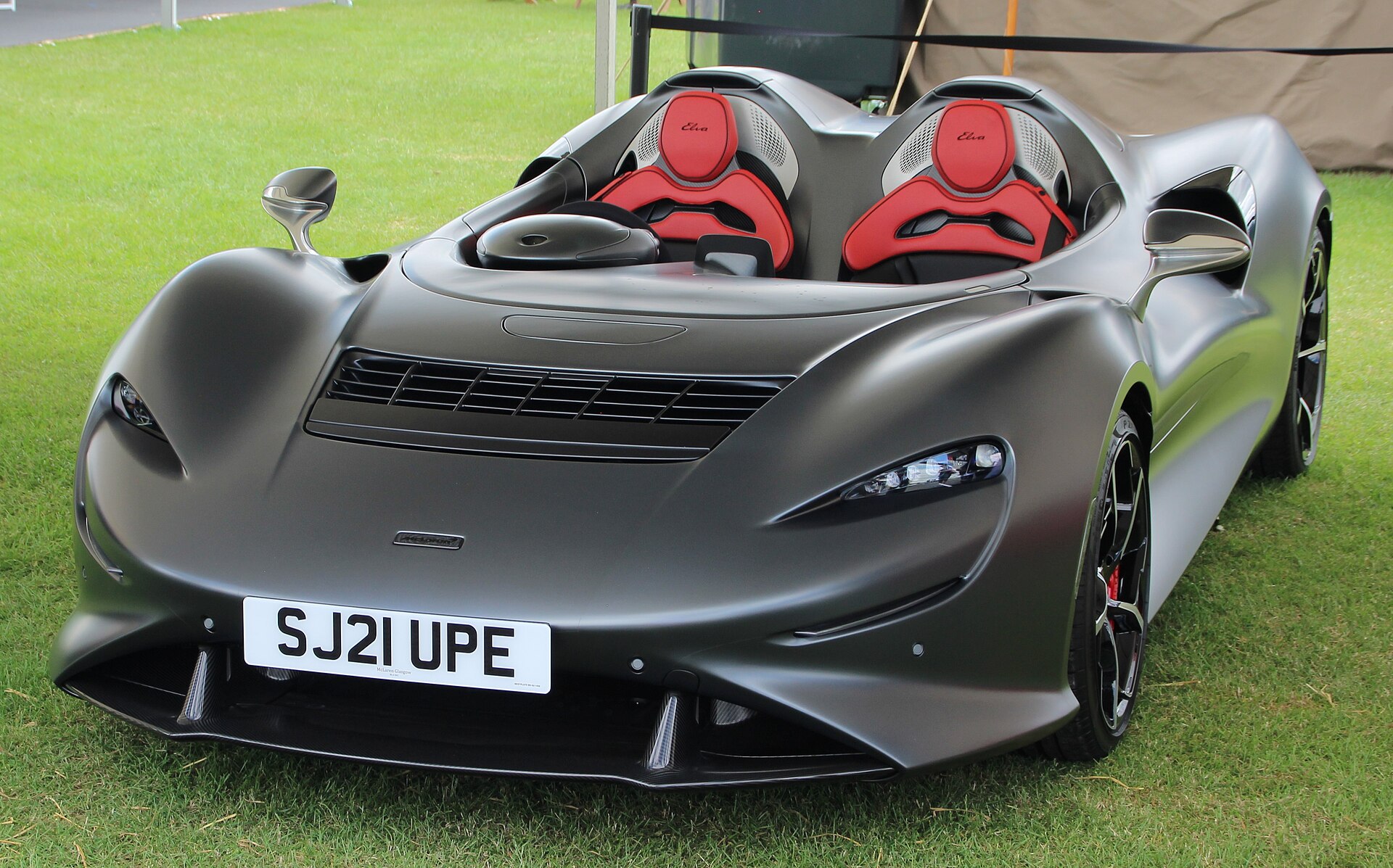
The McLaren Elva is an open two-seat speedster that McLaren unveiled in late 2019 and built in Woking in 2020 and 2021. It has no roof and, in its original form, no windscreen and no side windows. Instead, an active air-management system sends a stream of air over the cabin to protect the occupants. Under the carbon fibre body is the 599 kW (815 PS) twin-turbo V8 of the Senna. The Elva was the fifth model of McLaren's Ultimate Series, and only 149 were made.
In short
- Unveiled in November 2019 in Dubai; built in Woking, England; the fifth Ultimate Series McLaren after the F1, P1, Senna and Speedtail.
- 4.0-litre twin-turbo V8 (M840TR) with 599 kW (815 PS) and 800 Nm, seven-speed dual-clutch gearbox, rear-wheel drive.
- No roof or windows; the Active Air Management System (AAMS) creates a calm zone over the cockpit; a windscreen was offered as an option.
- Planned in 399 cars, reduced to 249 in April 2020 and finally built in 149.
McLaren Elva at a glance
| Specification | McLaren Elva |
|---|---|
| Production | 2020–2021, Woking (England) |
| Cars built | 149 (399 planned at first) |
| Designer | Rob Melville |
| Body | two-seat speedster with dihedral doors, no roof or windows |
| Chassis | MonoCage III carbon fibre monocoque |
| Engine | M840TR 4.0-litre twin-turbo V8, flat-plane crankshaft, dry sump |
| Power | 599 kW (815 PS) |
| Torque | 800 Nm |
| Gearbox | seven-speed dual-clutch |
| Weight | 1,269 kg (infobox figure) |
The Elva belongs to the same top tier as the McLaren F1, the McLaren P1 and the McLaren Senna. All models are in the McLaren catalogue.
The name: Bruce McLaren and Elva
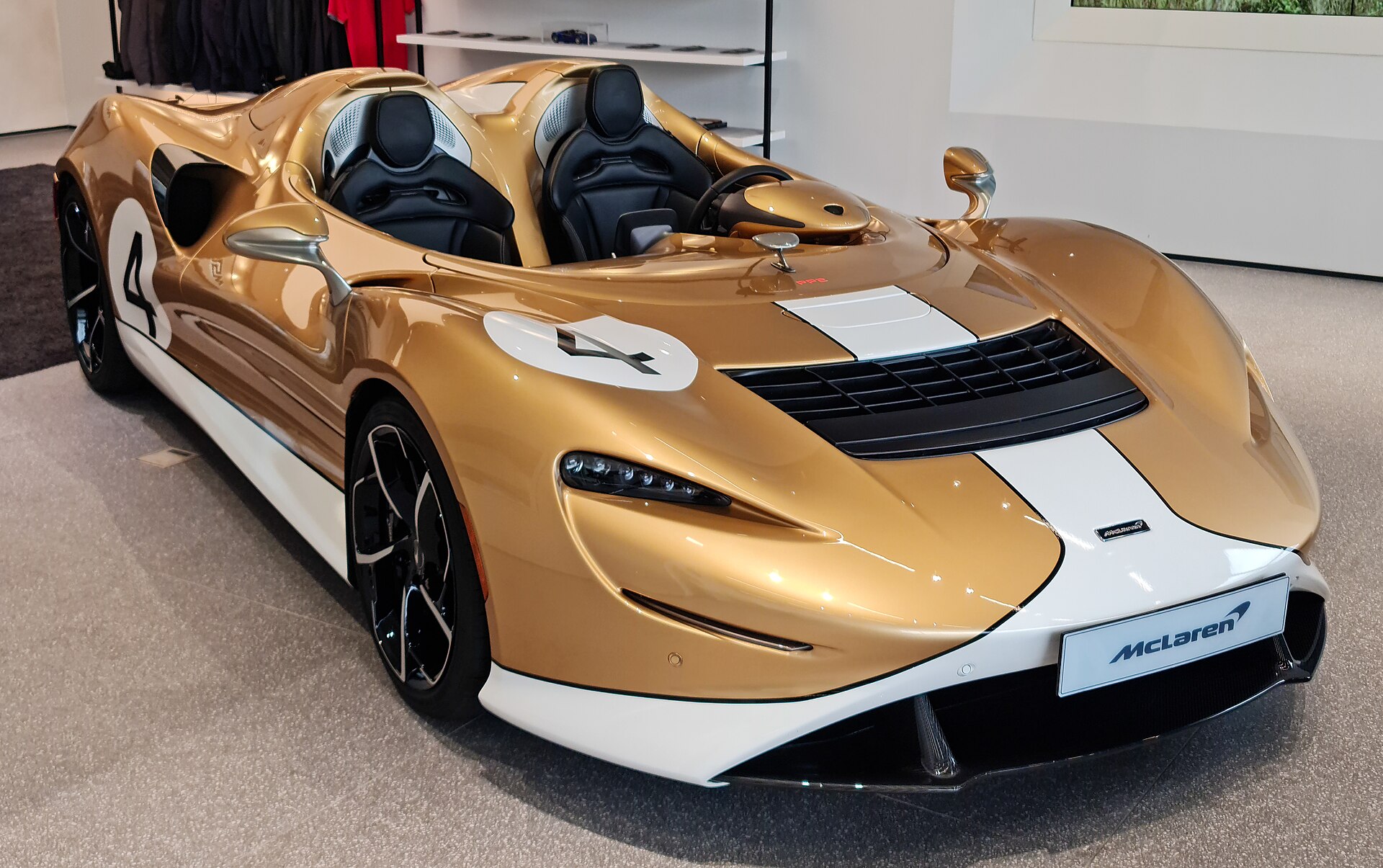
The name goes back to the 1960s. Bruce McLaren built lightweight open-top racing cars — the M1A, M1B and M1C — between 1964 and 1967. Because his team had few staff, production of these cars was outsourced to Elva, a company whose name means "she goes" ("elle va"). The modern Elva honours those cars. References to them return in its Can-Am-themed wheel design and in several MSO colour schemes.
McLaren presented the new Elva in November 2019, with a launch in Dubai. It became the fifth member of the Ultimate Series, after the F1, the P1, the Senna and the Speedtail.
Design and chassis
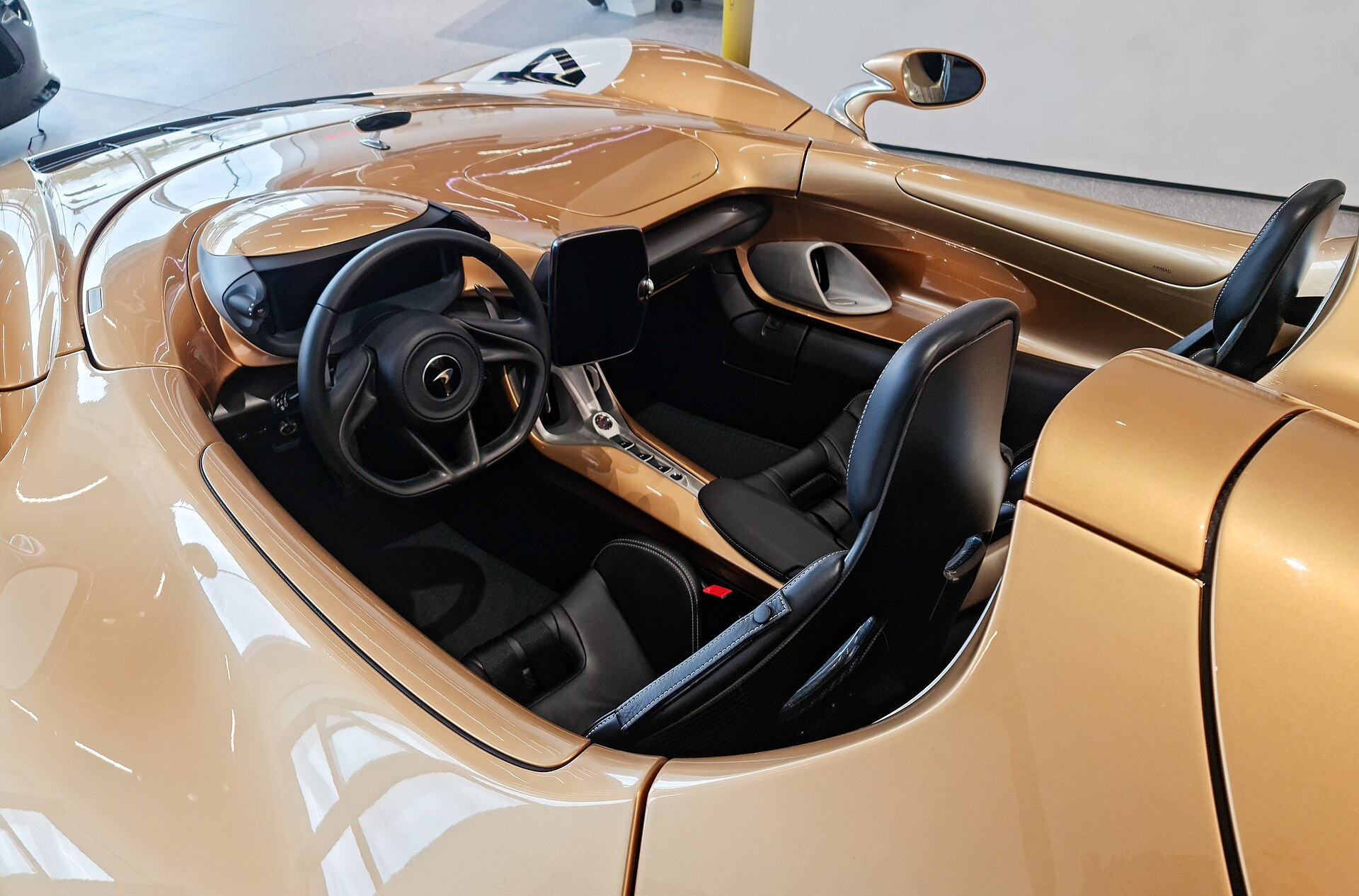
The Elva was designed by Rob Melville. Its structure is the MonoCage III carbon fibre monocoque, and the body, chassis, doors and seats are all made of carbon fibre to save weight. A carbon spar runs the length of the cabin, between driver and passenger; it carries the armrests and some controls.
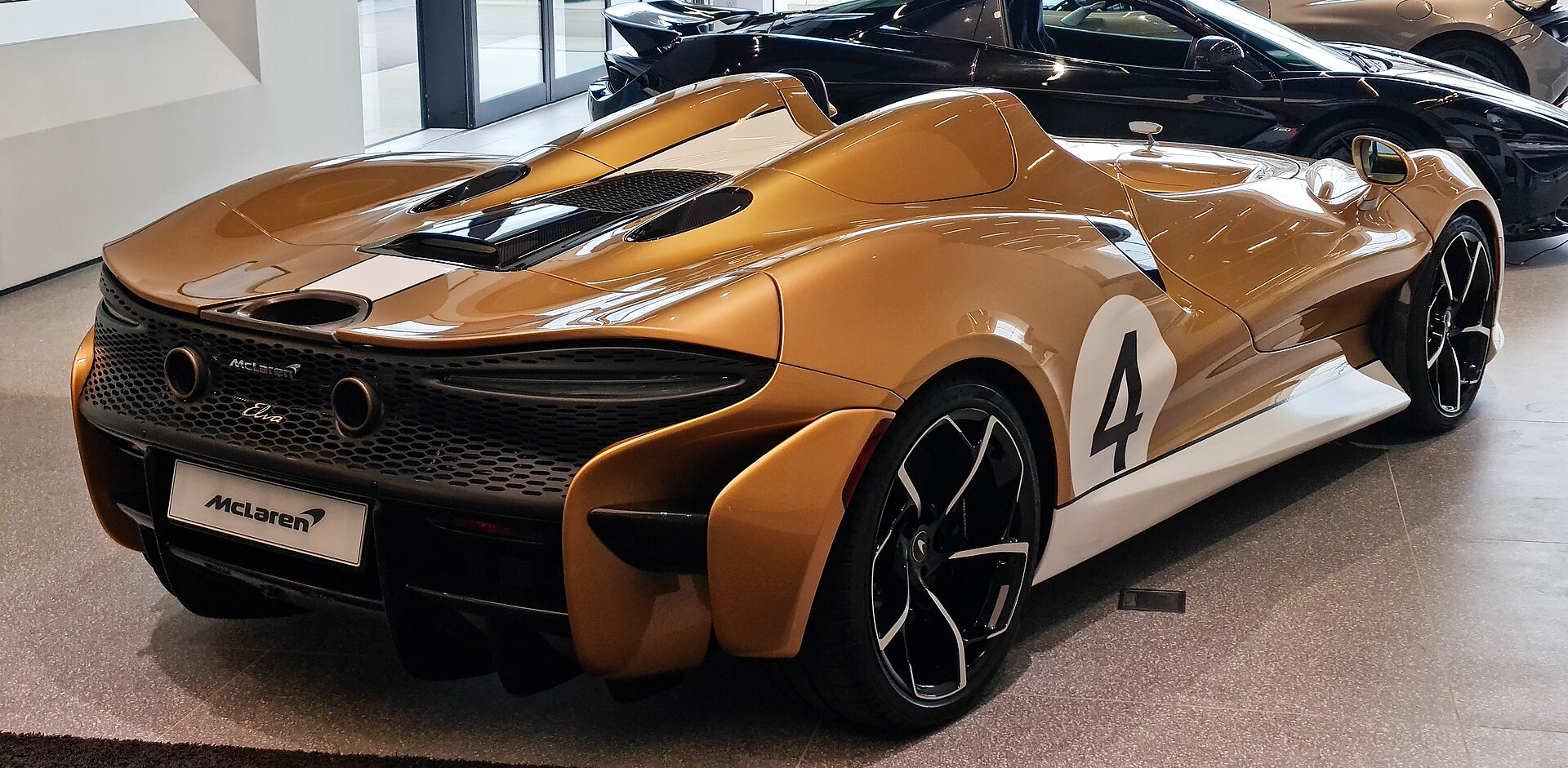
The Elva was McLaren's first road-legal sports car offered without a roof or windows. The doors are dihedral. Air intakes at the front of each door feed two intercoolers ahead of the rear wheels. The underside of the car is flat, and the active rear spoiler also works as an air brake.

Cockpit and the air shield
The most unusual feature is the Active Air Management System, or AAMS. It takes air from an inlet in the front splitter and directs it up and over the cabin across a 130-degree arc in front of the occupants. McLaren called the result an "oasis of calm". The system works up to 40 km/h and can be switched off on a circuit, so that more air goes to the engine.
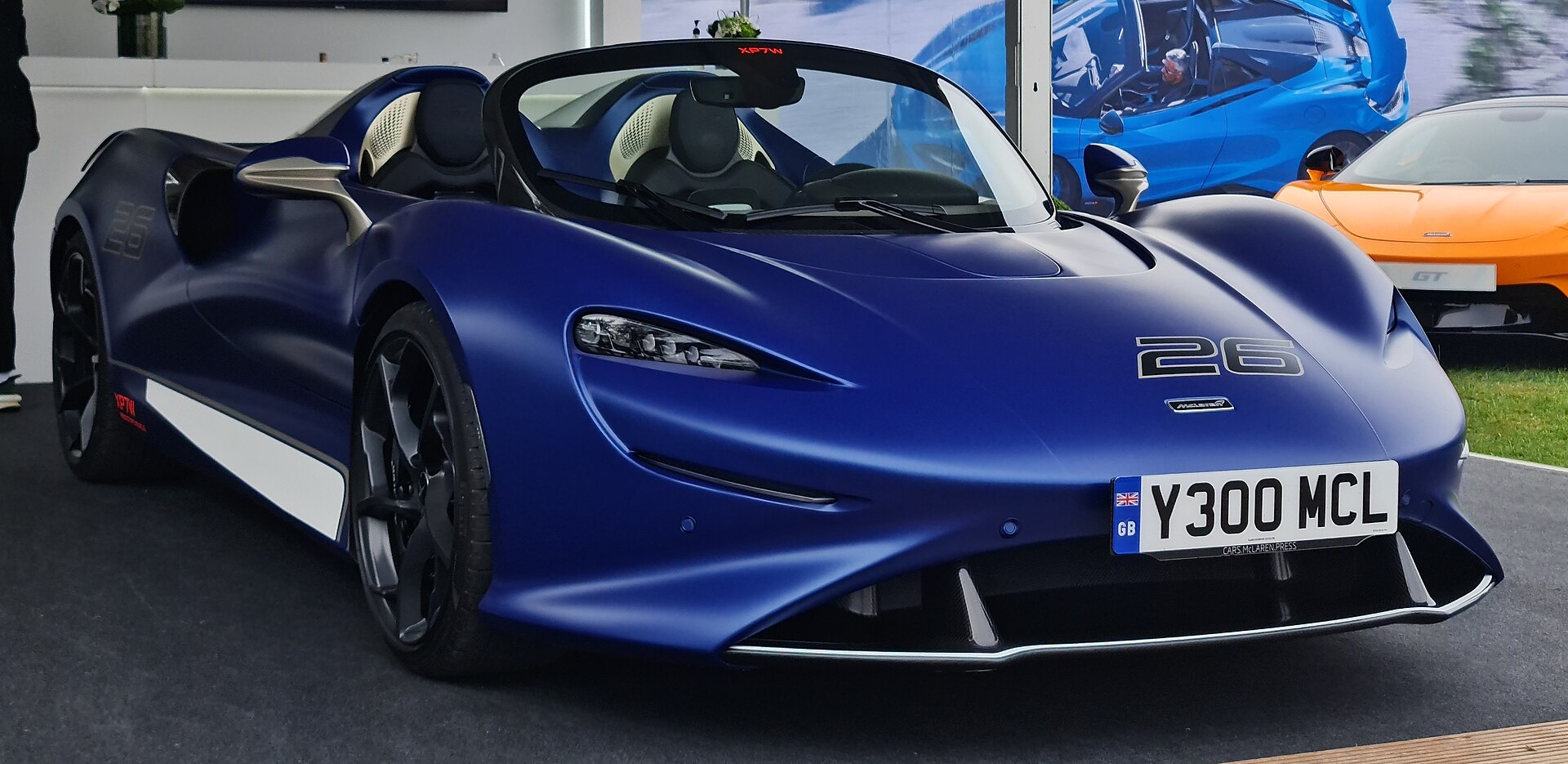
For buyers who wanted a real windscreen — or who needed one to meet the law in certain countries and US states — McLaren announced a windscreen option in 2019. The windscreen version was shown in 2021, at the same event where the M1A Theme car had appeared a year earlier. Its deliveries were planned before the end of 2021, after each car had been personalised by McLaren Special Operations.
Inside, the carbon seats can be ordered with an optional six-point racing harness. A deployable roll-over protection system is standard, and most functions are controlled through a central touchscreen. Owners could also order marine-grade speakers, and a bespoke audio system was available at no extra cost.

Engine and performance
The Elva uses the most powerful version of McLaren's 4.0-litre twin-turbo V8, shared with the Senna and the Speedtail. It has a flat-plane crankshaft, low-mass moving parts and dry-sump lubrication, and it produces 599 kW (815 PS) and 800 Nm. A seven-speed dual-clutch gearbox drives the rear wheels. The exhaust is made of titanium and Inconel and ends in four 3D-printed tips.
| Figure | McLaren Elva |
|---|---|
| Power | 599 kW (815 PS) |
| Torque | 800 Nm |
| 0–100 km/h | under 3 s |
| 0–200 km/h | 6.7 s |
| Top speed | about 327 km/h (203 mph) |
| Weight | 1,269 kg (infobox figure) |
McLaren described the Elva as its lightest road car. The brake discs measure more than 390 mm and come from the Senna, while titanium calipers save about 1 kg compared with the Senna's. The ten-spoke diamond-cut wheels follow a 1964 Can-Am theme.


Production numbers and MSO themes
At the launch McLaren planned 399 cars, with first deliveries in late 2020. In April 2020 chief executive Mike Flewitt cut the run to 249, saying that customers valued exclusivity, and in the end 149 cars were built. Deliveries in the Middle East began in the first half of 2021.
Every Elva was built to order by McLaren Special Operations (MSO). Several themes referred to McLaren's history:
- M1A Theme: shown in 2020, based on Bruce McLaren's M1A of 1964, with exposed carbon fibre, silver sill stripes, a red bonnet pinstripe and red Nubuck seats.
- Can-Am Theme: inspired by McLaren's M6A Can-Am racing car, in Anniversary Orange with a Dove Grey stripe, satin carbon fibre, Bruce McLaren's signature in blue and the race number 4.
- Gulf Theme: in the blue and orange of the Gulf racing colours, shown at Goodwood SpeedWeek and later in Hong Kong.
The Elva also reached a much wider audience in miniature. A LEGO Speed Champions model of the car went on sale on 1 June 2021. Its driver figure was inspired by Rachel Brown, McLaren's Principal Development Engineer for the Ultimate Series.
Legacy
The Elva is one of the most unusual McLarens. It used the drivetrain of the Senna in a car designed for open-air driving, and it replaced the windscreen with a carefully shaped stream of air. Only 149 cars were built, far fewer than the 399 first planned. The company's history is told in our history of McLaren.
Photo gallery


McLaren Elva in our rankings
- No. 4 of 79 · Most powerful convertibles and roadsters (599 kW)
- No. 8 of 109 · Most powerful British cars (599 kW)
- No. 54 of 859 · Most powerful cars (599 kW · top 7%)
- No. 33 of 239 · Most powerful cars of the 2020s (599 kW · top 14%)
- No. 903 of 912 · Longest-running car nameplates (1 year)
More powerful than 94% of ranked convertibles and roadsters in the 1CARS catalog (No. 4 of 79).
McLaren Elva photos 6
FAQ
Does the McLaren Elva have a windscreen?
Not as standard. The original car has no roof, windscreen or side windows, and the AAMS air flow protects the occupants. A windscreen was offered as an option; the windscreen version was shown in 2021.
How much power does the McLaren Elva have?
The 4.0-litre twin-turbo V8 produces 599 kW (815 PS) and 800 Nm.
How many McLaren Elvas were built?
149. McLaren first planned 399 cars and reduced the number to 249 in April 2020.
Why is it called Elva?
It honours the McLaren-Elva racing cars of the 1960s. The name Elva comes from "elle va", which means "she goes".
How fast is the McLaren Elva?
McLaren quotes 0–100 km/h in under 3 seconds and 0–200 km/h in 6.7 seconds. Wikipedia gives the top speed as 203 mph, or about 327 km/h.
Data sources
Data checked by an editor against the sources below.