 McLaren 570S
Specs, engines and history
Published Sources (1) Report an error
By Felix Hartmann, Automotive Technology & EV Contributor
- Built
- 2015–2021
- Top power
- 419 kW (570 PS)
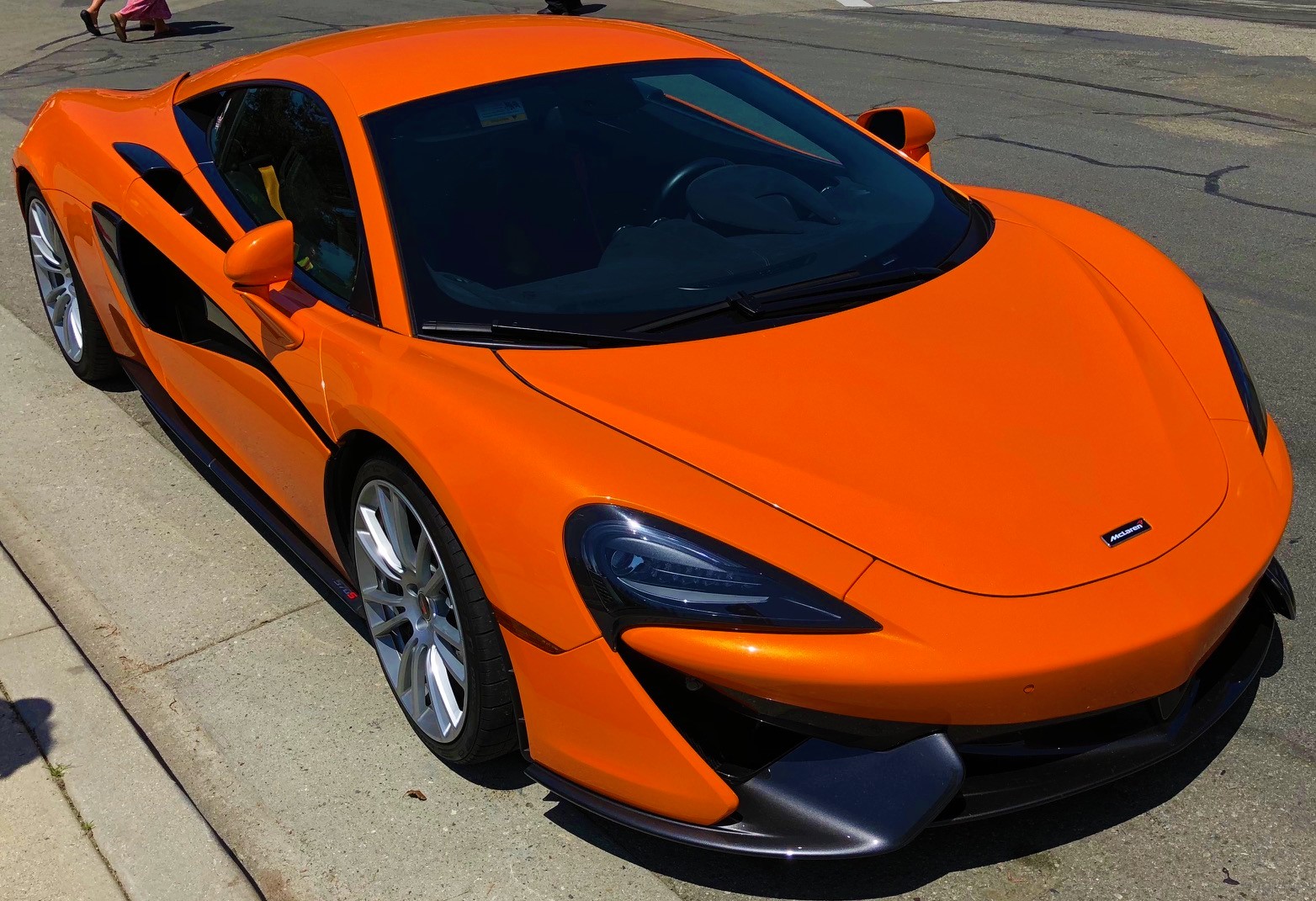
The McLaren 570S is the car that opened McLaren's Sports Series - a range of mid-engined, carbon-chassis supercars placed below the 650S and the P1. It was unveiled at the 2015 New York International Auto Show and built in Woking, England, until 2021. With a 3.8-litre twin-turbo V8, a carbon fibre tub and dihedral doors, it brought the technology of McLaren's more expensive cars to a wider group of buyers and became the basis of a family that included the 540C, the 570GT, the 570S Spider, the 600LT and the 620R.
In short
- Produced 2015–2021 in Woking; designed by Rob Melville; successor: the Artura (all models in the McLaren catalogue).
- 3.8-litre twin-turbo V8 (M838TE) with 419 kW (570 PS) and 600 Nm, seven-speed dual-clutch gearbox, rear-wheel drive.
- MonoCell II carbon fibre chassis, 1,356 kg dry and 1,452 kg with fluids.
- 0–100 km/h in 3.2 seconds and a top speed of 328 km/h.
McLaren 570S at a glance
| Specification | McLaren 570S Coupé |
|---|---|
| Production | 2015–2021, Woking (England) |
| Series | Sports Series |
| Body | two-seat coupé with dihedral doors; Spider from 2017 |
| Chassis | MonoCell II carbon fibre monocoque |
| Engine | M838TE 3.8-litre V8, two turbochargers, mid-mounted |
| Power | 419 kW (570 PS) |
| Torque | 600 Nm |
| Gearbox | seven-speed Graziano SSG dual-clutch |
| Weight | 1,356 kg dry, 1,452 kg with fluids |
The 570S sits in the McLaren family between the first modern McLaren road car, the MP4-12C, and the Super Series 720S. The background of the company - from Bruce McLaren's racing team to the road-car business - is told in our McLaren history.
Design and chassis
The design team led by Rob Melville gave the 570S its own look while keeping the McLaren family features: a low nose, large side intakes that feed the radiators and dihedral doors that open upwards and outwards. The rear styling borrows from the McLaren P1, with a narrow light signature and an open grille over the engine.
Under the skin is the MonoCell II, a carbon fibre monocoque developed from the tub of the 12C. Its lower sills make getting in and out easier than in the earlier car. The body is 4,529 mm long, 1,915 mm wide and 1,201 mm high, on a 2,670 mm wheelbase. The dry weight is 1,356 kg; ready to drive with fluids, the car weighs 1,452 kg.

Engine and gearbox
The 570S uses a version of McLaren's 3.8-litre twin-turbo V8, coded M838TE, with about 30 per cent of its parts redesigned compared with the earlier versions of the engine. It produces 419 kW (570 PS) and 600 Nm and drives the rear wheels through a seven-speed Graziano SSG dual-clutch transmission.
McLaren gave these figures for the coupé:
| Figure | McLaren 570S Coupé |
|---|---|
| 0–100 km/h | 3.2 s |
| Top speed | 328 km/h |
| Fuel consumption | 11.1 l/100 km |
| CO₂ emissions | 249 g/km |
These numbers placed the 570S in the territory of much more expensive supercars of the time, while its daily usability - a usable front luggage compartment, good visibility and a ride softer than in the Super Series cars - was part of its appeal.
Sports, Super and Ultimate Series
When the 570S arrived, McLaren divided its road cars into three tiers. The Ultimate Series held the limited hypercars such as the P1 and the track-only P1 GTR. The Super Series held the 650S and the 675LT, later the 720S and the 765LT. The new Sports Series, opened by the 570S and the 540C, was the entry point to the brand.
The aim of the Sports Series was not to make a cheaper copy of the bigger cars. Every model kept the carbon fibre tub, the mid-mounted twin-turbo V8 and the dihedral doors, so even the least expensive McLaren used the same basic engineering as the brand's flagships. The differences were in the details: a simpler suspension without the hydraulically linked system of the Super Series, a less powerful version of the V8 and a cabin designed with longer journeys in mind. This structure explains why the 570S could be offered as a coupé, a Spider, a GT and two track-focused Longtail-style models without losing its identity.
The 570 family: 540C, 570GT and 570S Spider
The Sports Series grew quickly around the 570S:
| Model | Launch | Power | Torque | Notes |
|---|---|---|---|---|
| 540C | 2015 Shanghai motor show | 397 kW (540 PS) | 540 Nm | entry model, top speed 320 km/h; not sold in the USA |
| 570S Coupé | 2015 New York auto show | 419 kW (570 PS) | 600 Nm | the core model |
| 570GT | 2016 Geneva motor show | 419 kW (570 PS) | 600 Nm | touring version with a side-opening glass hatch |
| 570S Spider | 2017 Goodwood Festival of Speed | 419 kW (570 PS) | 600 Nm | two-piece folding aluminium hard top |
The 570GT was the most comfortable member of the family. It has a glazed hatch over a luggage shelf behind the seats, softer suspension and more sound insulation. From early 2018 it came with carbon-ceramic brakes as standard.
The 570S Spider uses a two-piece aluminium roof that folds behind the seats. Because the carbon tub needs no extra stiffening, the Spider weighs only 46 kg more than the coupé and has the same drivetrain and performance with the roof up. Deliveries began in late 2017.

Track-focused versions: 600LT and 620R
The 600LT, revealed in June 2018, was the fifth McLaren "Longtail". It has 441 kW (600 PS) and 620 Nm, a body extended by 73.7 mm, top-exit titanium exhausts and a dry weight of 1,247 kg - 96 kg less than the 570S. About 23 per cent of its parts are new. A 600LT Spider followed in January 2019.
The 620R, presented in December 2019, is a road-legal version of the 570S GT4 race car. It has 456 kW (620 PS) and 620 Nm, carbon-ceramic brakes, an adjustable rear wing that produces 185 kg of downforce at 250 km/h, 0–100 km/h in 2.9 seconds and a top speed of 322 km/h. McLaren planned 350 cars, but only 225 were built. Read more in our McLaren 620R article.

Legacy
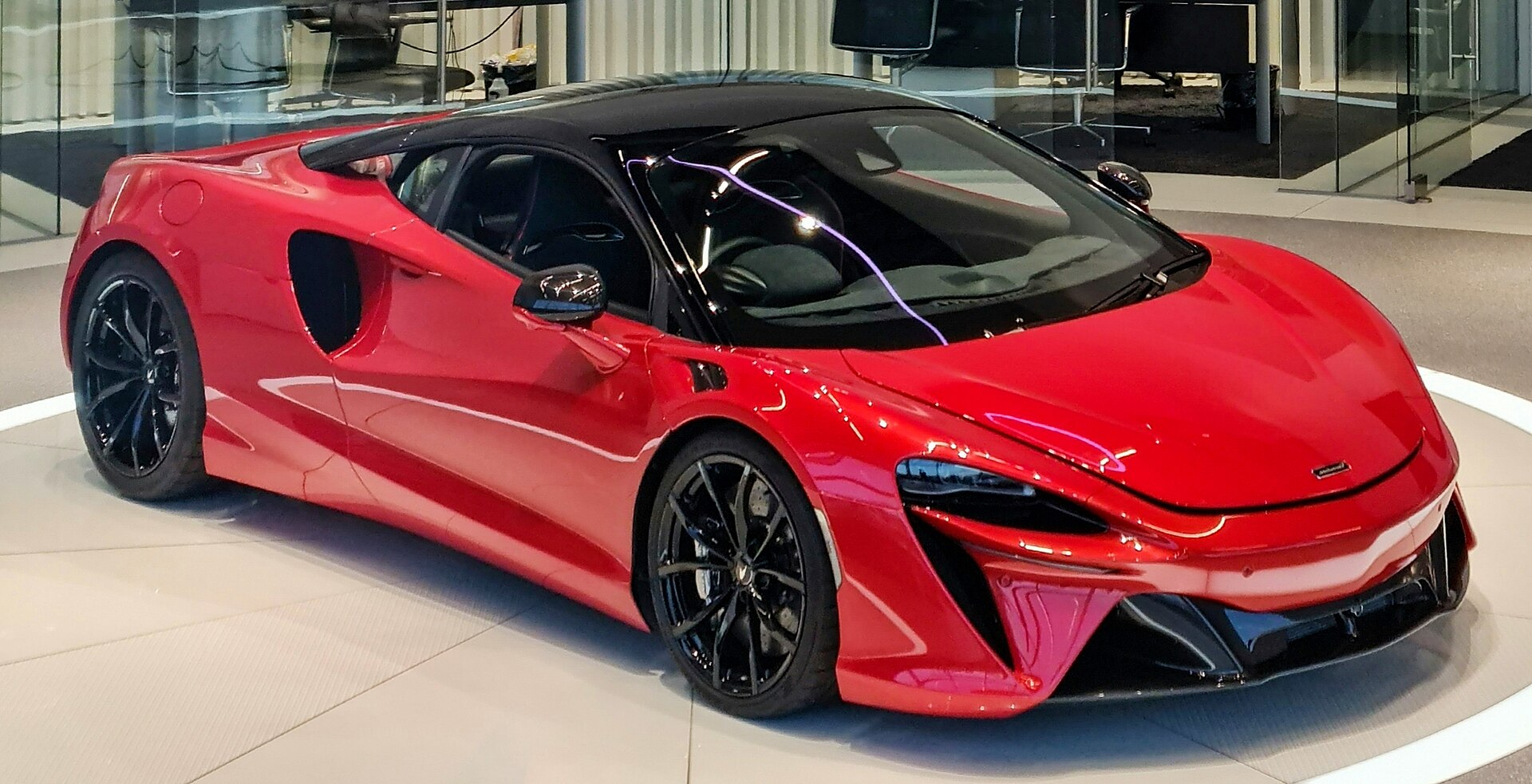
The 570S showed that a carbon-chassis McLaren could work as an everyday supercar, and the Sports Series became an important part of the company's sales. Production ended in 2021, and the role of McLaren's entry supercar passed to the Artura, a V6 plug-in hybrid with a new carbon architecture. To compare the 570S with its bigger brothers, see the McLaren 675LT and McLaren 720S, or browse all supercars on 1CARS.

Photo gallery


McLaren 570S in our rankings
- No. 165 of 859 · Most powerful cars (419 kW · top 20%)
- No. 105 of 313 · Most powerful coupes (419 kW · top 34%)
- No. 41 of 109 · Most powerful British cars (419 kW · top 38%)
- No. 590 of 912 · Longest-running car nameplates (6 years · top 69%)
More powerful than 80% of ranked cars in the 1CARS catalog (No. 165 of 859).
FAQ
How much power does the McLaren 570S have?
The 570S has a 3.8-litre twin-turbo V8 with 419 kW (570 PS) and 600 Nm, driving the rear wheels through a seven-speed dual-clutch gearbox.
How fast is the McLaren 570S?
McLaren quotes 0–100 km/h in 3.2 seconds and a top speed of 328 km/h for the coupé.
What is the difference between the 570S and the 570GT?
The 570GT has the same engine and power but is tuned for touring: a side-opening glass hatch with a luggage shelf, softer suspension and more sound insulation.
What replaced the McLaren 570S?
The 570S family was built until 2021. McLaren's entry supercar after it is the Artura, a V6 plug-in hybrid.
Data sources
Data checked by an editor against the sources below.