 McLaren 750S
Specs, engines and history
Published Sources (2) Report an error
By Felix Hartmann, Automotive Technology & EV Contributor
- Built
- 2023–present
- Top power
- 552 kW (751 PS)
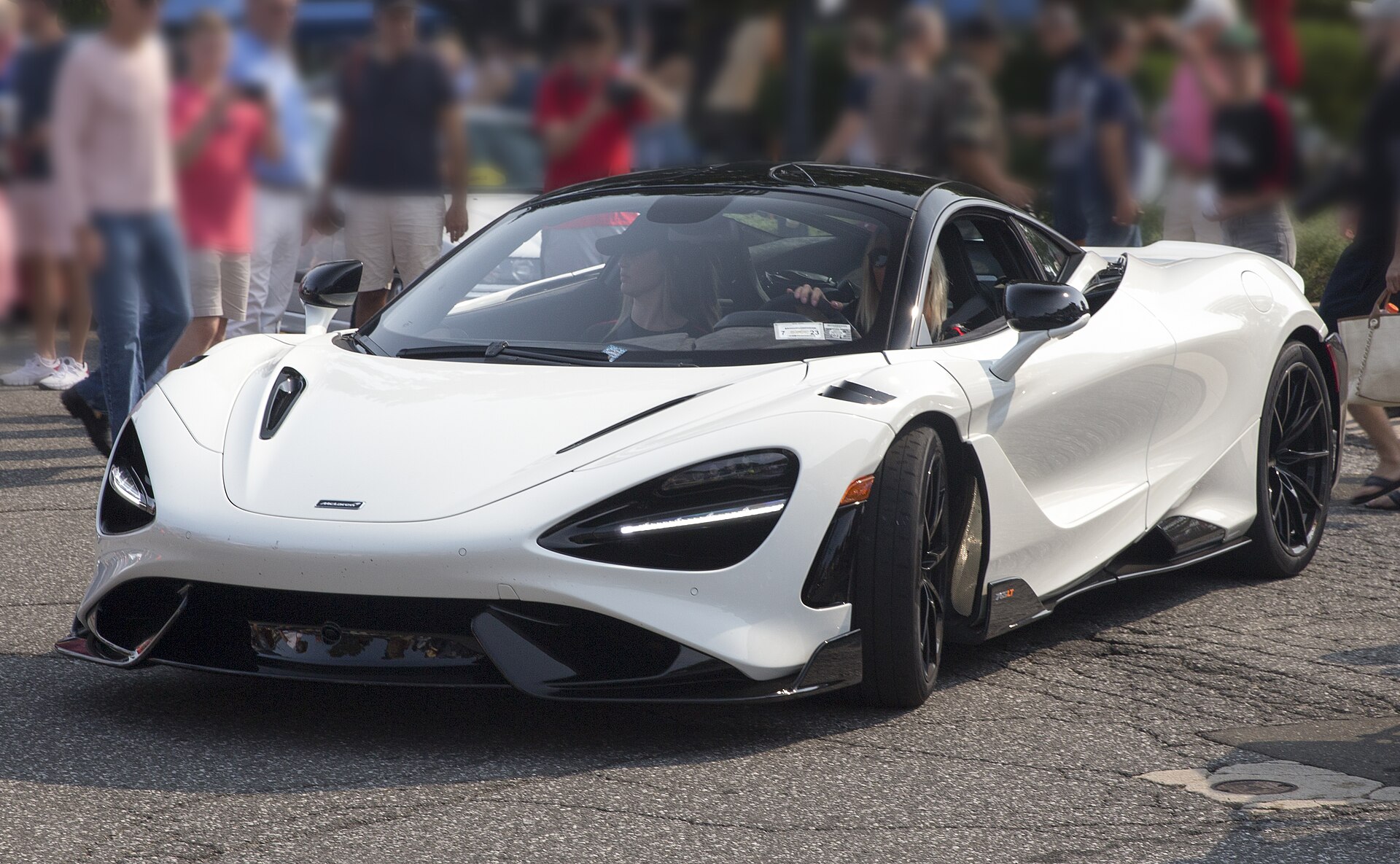
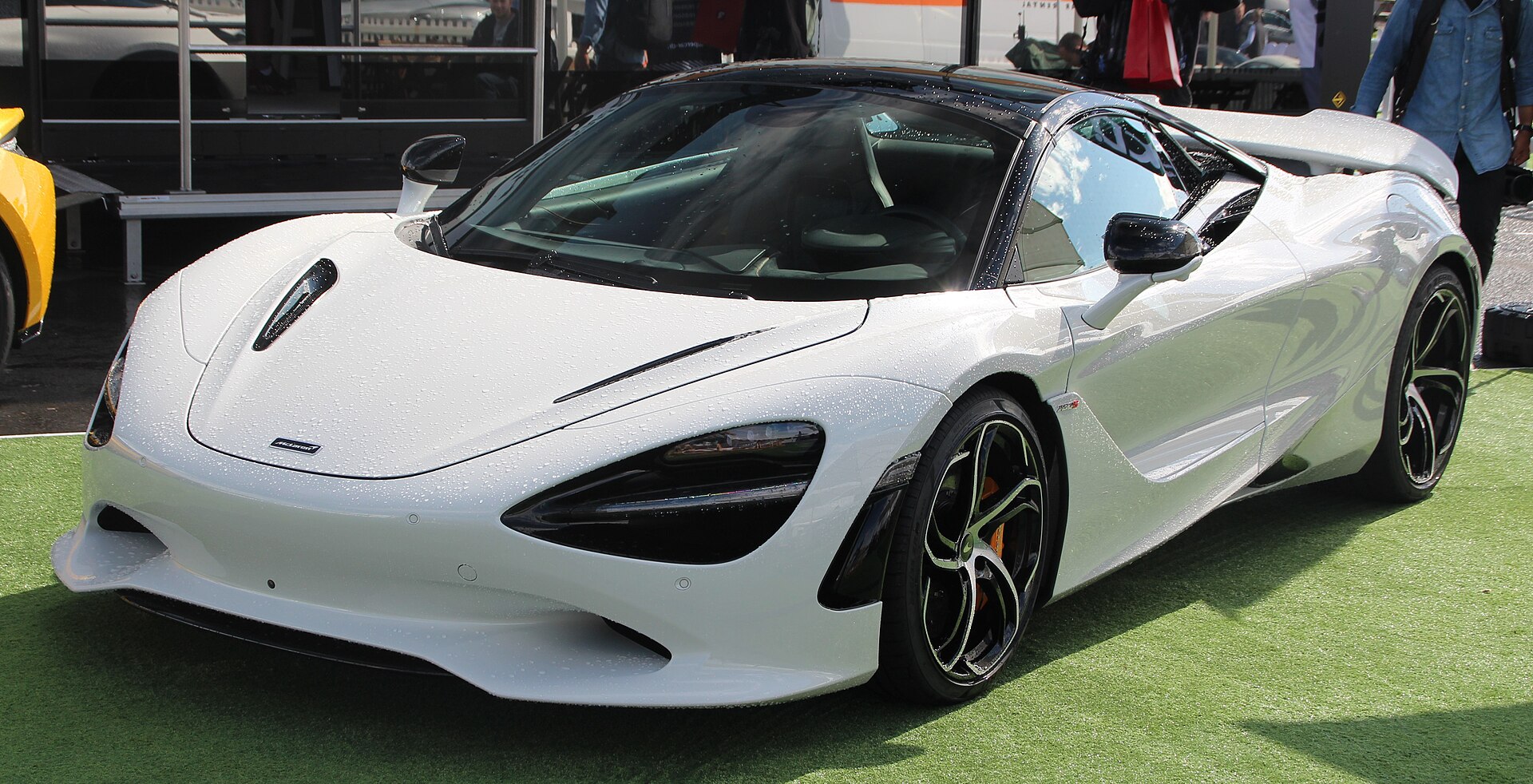
The McLaren 750S is the mid-engined supercar that replaced the 720S in 2023. It was revealed in April 2023 as a coupé and a Spider. The carbon fibre structure and the twin-turbo V8 come from its predecessor, but about 30 per cent of the parts are new. Power rises to 552 kW (750 PS), torque to 800 Nm, and the weight falls by 30 kg. McLaren described it at the launch as its lightest and most powerful series-production supercar, and it was planned as the last McLaren powered only by a combustion engine.
In short
- Revealed in April 2023 as the successor to the 720S, as a coupé and a Spider.
- 4.0-litre twin-turbo V8 with 552 kW (750 PS) and 800 Nm at 5,500 rpm - 22 kW and 30 Nm more than the 720S.
- Dry weight 1,277 kg with lightweight options, 30 kg less than the 720S; 0–100 km/h in 2.8 seconds and 0–200 km/h in 7.2 seconds (claimed).
- In July 2026 McLaren presented the 788HS, a limited final evolution of the line that began with the 720S.
McLaren 750S at a glance
| Specification | McLaren 750S |
|---|---|
| Production | from 2023 |
| Body | two-seat coupé; Spider with retractable hard top |
| Layout | mid-engine, rear-wheel drive |
| Chassis | carbon fibre monocoque (developed from the 720S) |
| Engine | 4.0-litre twin-turbo V8 |
| Power | 552 kW (750 PS) |
| Torque | 800 Nm at 5,500 rpm |
| Gearbox | seven-speed SSG with revised ratios, 15 % shorter final drive |
| Dry weight | 1,277 kg (lightest specification) |
| Predecessor | 720S |
The 750S follows the McLaren 720S and belongs to the same line of carbon-chassis V8 cars as the McLaren 675LT. All models are listed in the McLaren catalogue.
From the 720S to the 750S
The 720S was shown at the Geneva Motor Show on 7 March 2017. McLaren said that 91 per cent of its parts were new compared with the 650S. It used the MonoCage II carbon fibre tub, 18 kg lighter than the previous structure. Its 3,994 cc twin-turbo V8, coded M840T, produced 530 kW (720 PS) at 7,500 rpm and 770 Nm. Its hydraulically linked suspension, Proactive Chassis Control II, used accelerometers and pressure sensors and was 16 kg lighter than the system of the 650S. A Spider followed in December 2018, and the limited 765LT with 563 kW (765 PS) in 2020.
The 750S is an update of this car rather than an all-new model. McLaren redesigned the front and rear and renewed about 30 per cent of the parts.
| Figure | 720S | 750S |
|---|---|---|
| Power | 530 kW (720 PS) | 552 kW (750 PS) |
| Torque | 770 Nm | 800 Nm |
| Weight | - | 30 kg less than the 720S; 1,277 kg dry |
| 0–200 km/h (claimed) | 7.8 s | 7.2 s |
| Top speed (claimed) | 341 km/h | 332 km/h |

Engine and performance
The 4.0-litre twin-turbo V8 was developed further for the 750S. It produces 552 kW (750 PS) - 22 kW more than in the 720S - and 800 Nm at 5,500 rpm. The rear wheels are driven through a seven-speed SSG gearbox with revised ratios and a final drive that is 15 per cent shorter. Autotrader reports that McLaren quotes 10 per cent faster gear changes than in the 720S. A "limit downshift" function holds a requested downshift until it can be made without over-revving the engine. The exhaust was redesigned as a converging centre-exit system, with a look inspired by the McLaren P1.
McLaren claims 0–100 km/h in 2.8 seconds, 0–200 km/h in 7.2 seconds, a quarter mile in 10.1 seconds and a top speed of 332 km/h. With the lightest options, the power-to-weight ratio is 432 kW per tonne. At the launch McLaren's chief executive, Michael Leiters, said the car delivered "a supercar driving experience that hits new heights".

Weight savings and chassis
The 750S weighs 30 kg less than the 720S, according to McLaren's launch figures reported by IOL and Wikipedia (Autotrader gives 36 kg). With carbon fibre and lightweight options, its dry weight is 1,277 kg. The savings come from carbon fibre-shelled racing seats, lighter springs and dampers and new wheels. The ten-spoke forged wheels were the lightest McLaren had fitted to a series-production car at the time. At the front, a new splitter and air intakes in the headlights improve the airflow, and at the rear there is a large diffuser and an active spoiler.
The suspension is the third generation of McLaren's hydraulically linked system, Proactive Chassis Control III. It has its own accumulator tuning, the front springs are softer and the rear springs stiffer than on the 720S, and the steering ratio is quicker. Carbon-ceramic brake discs are standard. Customers who use the car on track can order an upgraded system with ceramic discs and monobloc calipers derived from the McLaren Senna, together with a new brake booster and vacuum pump.
Cockpit and electronics
Inside, the 750S has a new central screen with Apple CarPlay - a first for McLaren - and an 8-inch infotainment system with updated graphics and a surround-view camera. The folding instrument display of the 720S gave way to a new cluster based on that of the McLaren Artura. The powertrain and handling buttons now sit in front of the driver, close to the steering wheel. A new McLaren Control Launcher button lets the driver store a favourite combination of chassis, powertrain, gearbox and aerodynamic settings and recall it with one press.
The Spider version
The Spider has a retractable composite hard top and the same drivetrain as the coupé. It is 48 kg heavier than the coupé. For comparison, the 720S Spider had a one-piece carbon fibre roof that opened in 11 seconds at speeds up to 50 km/h and weighed 45 kg more than the 720S coupé.

Place in the McLaren range
McLaren planned the 750S as its last model with a purely combustion-engined drivetrain. On 9 July 2026 McLaren unveiled the 788HS, which it called the "definitive and final evolution" of the supercar line that began with the 720S. It is limited to 200 cars, split evenly between coupés and Spiders, and has 580 kW (788 PS) and 800 Nm.
The 750S therefore stands at the end of a development that began with the 720S in 2017: a carbon tub, a twin-turbo V8 behind the seats and a hydraulically linked suspension. More about the company is in our history of McLaren.

Photo gallery


McLaren 750S in our rankings
- No. 75 of 859 · Most powerful cars (552 kW · top 9%)
- No. 13 of 109 · Most powerful British cars (552 kW · top 12%)
- No. 56 of 313 · Most powerful coupes (552 kW · top 19%)
- No. 44 of 239 · Most powerful cars of the 2020s (552 kW · top 19%)
- No. 806 of 912 · Longest-running car nameplates (3 years · top 89%)
- No. 276 of 305 · Oldest car models still on sale (3 years · top 92%)
More powerful than 91% of ranked cars in the 1CARS catalog (No. 75 of 859).
FAQ
How much power does the McLaren 750S have?
The 4.0-litre twin-turbo V8 produces 552 kW (750 PS) and 800 Nm, 22 kW and 30 Nm more than the 720S.
How fast is the McLaren 750S?
McLaren claims 0–100 km/h in 2.8 seconds, 0–200 km/h in 7.2 seconds, a quarter mile in 10.1 seconds and a top speed of 332 km/h.
What is the difference between the 720S and the 750S?
About 30 per cent of the parts are new. The 750S has more power and torque, 30 kg less weight and a shorter final drive. It also gets a quicker steering ratio, Proactive Chassis Control III and new infotainment with Apple CarPlay.
How much does the 750S Spider weigh compared with the coupé?
The Spider is 48 kg heavier than the coupé, because of its retractable hard top.
Data sources
Data checked by an editor against the sources below.
- Wikipedia - McLaren 750S
- Wikipedia - McLaren 720S