 Lotus Europa
Specs, engines and history
Published Sources (2) Report an error
By Felix Hartmann, Automotive Technology & EV Contributor
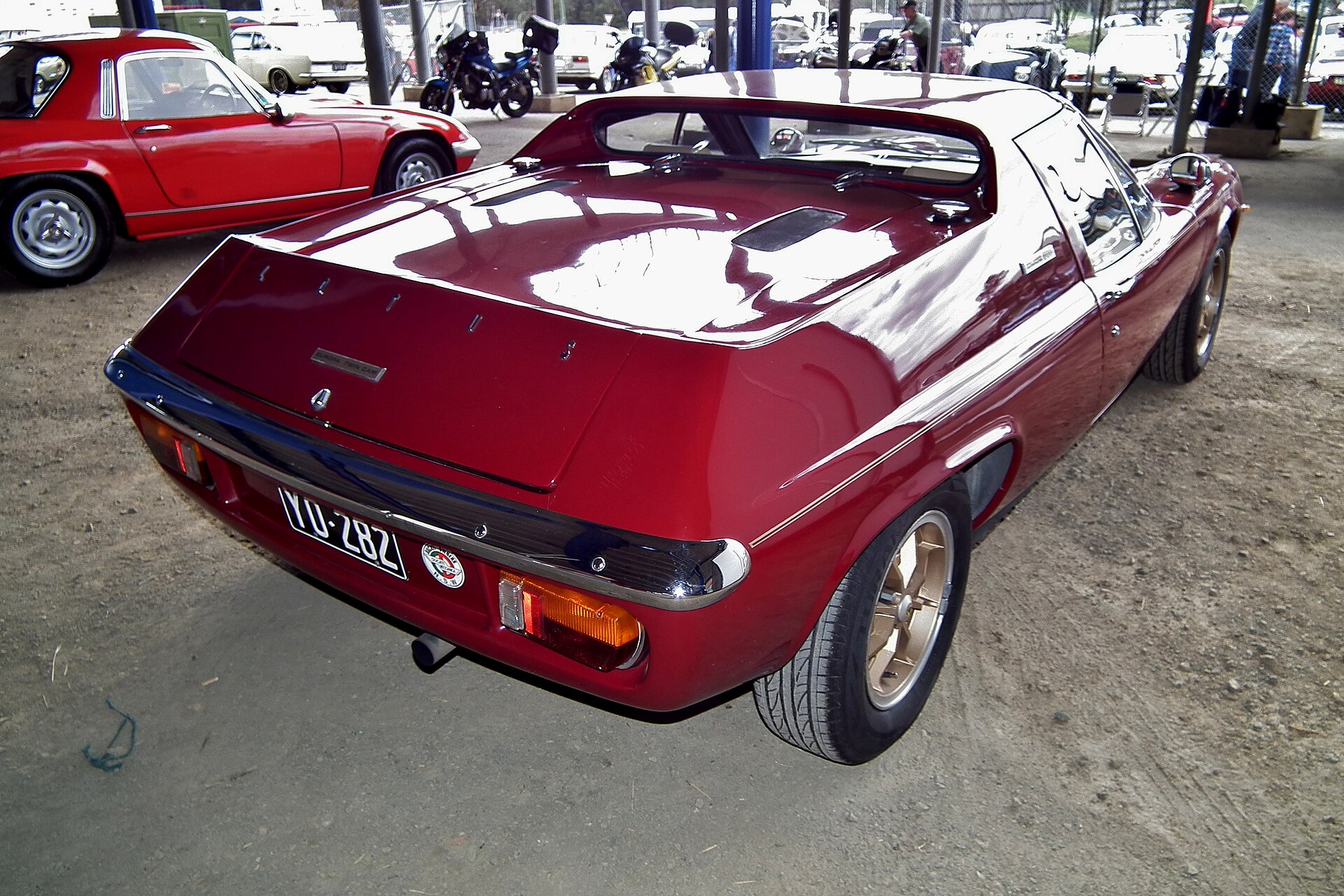
The Lotus Europa is the small mid-engined coupé that Lotus built at Hethel from 1966 to 1975. It combined a folded steel backbone chassis with a light fibreglass body, and it was first powered by a Renault engine, later by the Lotus-Ford Twin Cam. It was designed by Ron Hickman, following the design philosophy of Colin Chapman. The Esprit replaced it in 1975.
In short
- Announced on 20 December 1966; built at Hethel until 1975; successor: the Lotus Esprit.
- Steel backbone chassis with a fibreglass body; kerb weight between 610 and 740 kg depending on the version.
- Renault engines of 1,470 cc and 1,565 cc, then the 1,558 cc Lotus-Ford Twin Cam with up to 94 kW (126 hp) in the Europa Special.
- Main types: Type 46 (S1), Type 54 (S2), Type 65 (US version), Type 74 (Twin Cam and Special), plus the Type 47 racing car.
Lotus Europa at a glance
| Specification | Lotus Europa |
|---|---|
| Production | 1966–1975, Hethel (England) |
| Designer | Ron Hickman (design philosophy by Colin Chapman) |
| Body | two-door coupé, fibreglass |
| Chassis | folded and welded steel backbone |
| Layout | mid-engine, rear-wheel drive |
| Engines | Renault 1,470 cc and 1,565 cc; Lotus-Ford Twin Cam 1,558 cc |
| Power | 61 kW (82 hp) to 94 kW (126 hp) |
| Gearbox | Renault four-speed; five-speed optional on the Special |
| Kerb weight | 610–740 kg |
| Dimensions | 4,064 × 1,714 × 1,080 mm, wheelbase 2,337 mm |
| Successor | Lotus Esprit |
All Lotus models are in the Lotus catalogue.
History
Lotus announced the Europa on 20 December 1966, and the first cars were delivered in France in February 1967. The design was by Ron Hickman, following the philosophy of Lotus founder Colin Chapman: a light car with its engine mounted in the middle.
Over nine years the Europa went through several types. The S1 and S2 used Renault engines, the Type 65 was adapted for the US market, and the Type 74 introduced the more powerful Lotus-Ford Twin Cam engine. The final Europa Special of 1972 was the fastest road version. Production ended in 1975, when the Lotus Esprit took over the role of Lotus's mid-engined sports car.
Chassis and body
The Europa is built around a backbone chassis of folded and welded boxed steel. The fibreglass body sits on top of it. On the S1 the body was fully bonded to the chassis; from the S2 of 1968 it was bolted on instead.
The car is very low and light. It is 4,064 mm long, 1,714 mm wide and only 1,080 mm high, on a 2,337 mm wheelbase. Depending on the version, the kerb weight is between 610 and 740 kg.
| Dimension | Lotus Europa |
|---|---|
| Length | 4,064 mm |
| Width | 1,714 mm |
| Height | 1,080 mm |
| Wheelbase | 2,337 mm |
| Kerb weight | 610–740 kg |

Series 1 and Series 2: Renault power
The first Europa, Type 46, used a 1,470 cc four-cylinder engine derived from the Renault 16. Lotus raised the compression ratio from 8.6:1 to 10.25:1, and the output rose to 61 kW (82 hp) at 6,000 rpm, compared with 47 kW (63 hp) in the standard Renault. The gearbox was a four-speed manual. The S1 weighed only 610 kg and reached 195 km/h. Lotus built 296 S1 cars and about 350 of the S1A and S1B, 644 S1 variants in total.
The Series 2, Type 54, arrived in April 1968. It kept the 1,470 cc Renault engine and the four-speed gearbox, but its body was bolted to the backbone instead of bonded. Wikipedia gives a top speed of about 195 km/h and fuel consumption of about 9.4 l/100 km. With 3,615 cars, the S2 was the most numerous of the Renault-engined Europas.
The Type 65 of 1969 and 1970 was a federal version of the S2 for the United States. It had a taller front end and taller front wings to meet US rules, and a 1,565 cc Renault 16TL engine with 60 kW (80 hp) at 6,000 rpm. Road & Track measured a top speed of 187 km/h.

Twin Cam and Special
In mid-1971 Lotus introduced the Type 74 Europa Twin Cam in Europe; it reached North America in early 1972. The project's chief engineer was Mike Kimberley. The car used the 1,558 cc Lotus-Ford Twin Cam engine with eight valves and 78 kW (105 hp) in European form, or 84 kW (113 hp) in US federal form. The body was redesigned to improve rearward visibility. At first the earlier four-speed gearbox was used; from 1972 Lotus fitted a stronger Renault Type 352 four-speed.
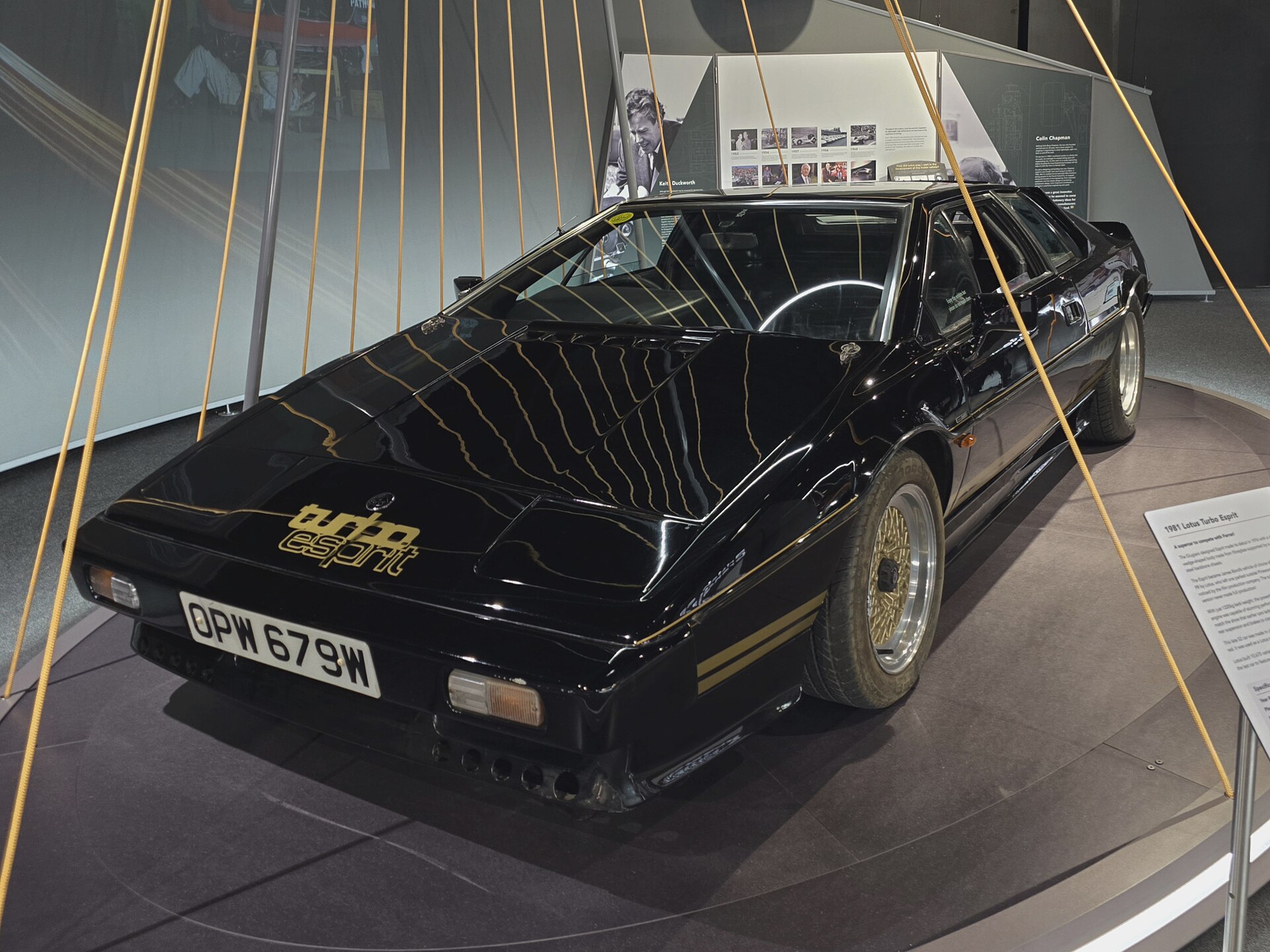
The Europa Special of 1972 had the Big Valve version of the Twin Cam with Dell'Orto carburettors and 94 kW (126 hp) in European form; US cars were rated at 84 kW (113 hp). A Renault Type 365 five-speed gearbox was available, and it became standard on US Specials from 1974, together with larger brakes. The Special weighed 740 kg. Motor measured a top speed of 198 km/h for a UK car. The first 100 cars, introduced in September 1972, were painted black with gold pinstripes in the JPS colours and had a numbered badge on the dashboard.
| Version | Engine | Power | Weight | Top speed |
|---|---|---|---|---|
| S1 (Type 46) | 1,470 cc Renault | 61 kW (82 hp) | 610 kg | 195 km/h |
| S2 (Type 54) | 1,470 cc Renault | 61 kW (82 hp) | — | about 195 km/h |
| Type 65 (USA) | 1,565 cc Renault | 60 kW (80 hp) | — | 187 km/h (Road & Track) |
| Twin Cam (Type 74) | 1,558 cc Lotus-Ford | 78 kW (105 hp) | — | — |
| Special (Type 74) | 1,558 cc Big Valve | 94 kW (126 hp) | 740 kg | 198 km/h (Motor) |
Of 4,710 Type 74 cars, 1,580 were shipped as Twin Cams before the Big Valve engine arrived, and 3,130 were Specials.


How to tell the series apart
Wikipedia gives several features that help to identify a Europa:
| Type | Years | Key features | Built |
|---|---|---|---|
| Type 46 (S1, S1A, S1B) | 1966–1968 | body bonded to the chassis; chassis 460001–460296 for the first S1 | 644 |
| Type 54 (S2) | from April 1968 | body bolted to the backbone, from about chassis 0645 | 3,615 |
| Type 65 (federal S2) | 1969–1970 | taller front end and front wings, 1,565 cc engine | — |
| Type 74 Twin Cam | from 1971 | Lotus-Ford Twin Cam, redesigned body for better rear view | 1,580 |
| Type 74 Special | from 1972 | Big Valve Twin Cam, five-speed option, JPS edition | 3,130 |
The first S1 cars were delivered to customers in France in February 1967, and the S2 followed from about chassis 0645. The Twin Cam reached North America in early 1972, about half a year after its European launch, and US-specification Specials received larger brakes and the five-speed gearbox as standard from 1974.
Type 47: the racing Europa
The Type 47 was launched together with the S1 and was built by Lotus Components after the first car. It used a 1,594 cc Cosworth Mk.XIII dry-sump engine based on the Twin Cam, with 123 kW (165 hp), and a Hewland FT 200 five-speed gearbox. Between 55 and 68 were built from 1966 to 1970; the last car carried the number 47GT-85. Variants included the 47A, with Alfa Romeo tail lights, a few 47F cars and the 47D show car with a Rover V8.
The name returns: Europa S
Lotus revived the name for the Europa S (Type 121), built from 2006 to 2010. It had a 2.0-litre turbo engine with 147 kW (200 PS) and 272 Nm and a top speed of 230 km/h. The Europa SE of 2008 had 165 kW (225 PS) and 300 Nm. Wikipedia's total of 9,230 cars covers all Europa models.
Legacy and collectors
The Europa put a mid-mounted engine into a small, light road car, and the Esprit succeeded it in 1975. For collectors, the clearest differences are between the Renault-engined S1 and S2, the US Type 65, and the Twin Cam and Special models, which have more power and better rear visibility. The first 100 Specials in JPS colours and the early S1 cars with bonded bodies form small groups of their own. The history of the company is told in our history of Lotus.
Photo gallery


Lotus Europa in our rankings
In production longer than 51% of ranked nameplates in the 1CARS catalog (No. 396 of 912).
FAQ
What engine does the Lotus Europa have?
Early cars use Renault 16-derived engines of 1,470 cc (61 kW / 82 hp) and 1,565 cc. From 1971 the Twin Cam and Special use the 1,558 cc Lotus-Ford Twin Cam with up to 94 kW (126 hp).
How many Lotus Europas were built?
Wikipedia gives 9,230 cars of all Europa models, including 644 S1 variants, 3,615 S2 and 4,710 Type 74 Twin Cam and Special cars.
What replaced the Lotus Europa?
The Lotus Esprit, from 1975.
What is the Europa Special?
The final version from 1972, with the Big Valve Twin Cam engine (94 kW / 126 hp in Europe), an optional five-speed gearbox and, on the first 100 cars, black and gold JPS paint.
Data sources
Data checked by an editor against the sources below.
- Wikipedia — Lotus Europa
- Wikipedia — List of Lotus vehicles