 Lotus Europa S
Specs, engines and history
Published Sources (2) Report an error
By Felix Hartmann, Automotive Technology & EV Contributor
- Built
- 2006–2010
- Top power
- 165 kW (224 PS)
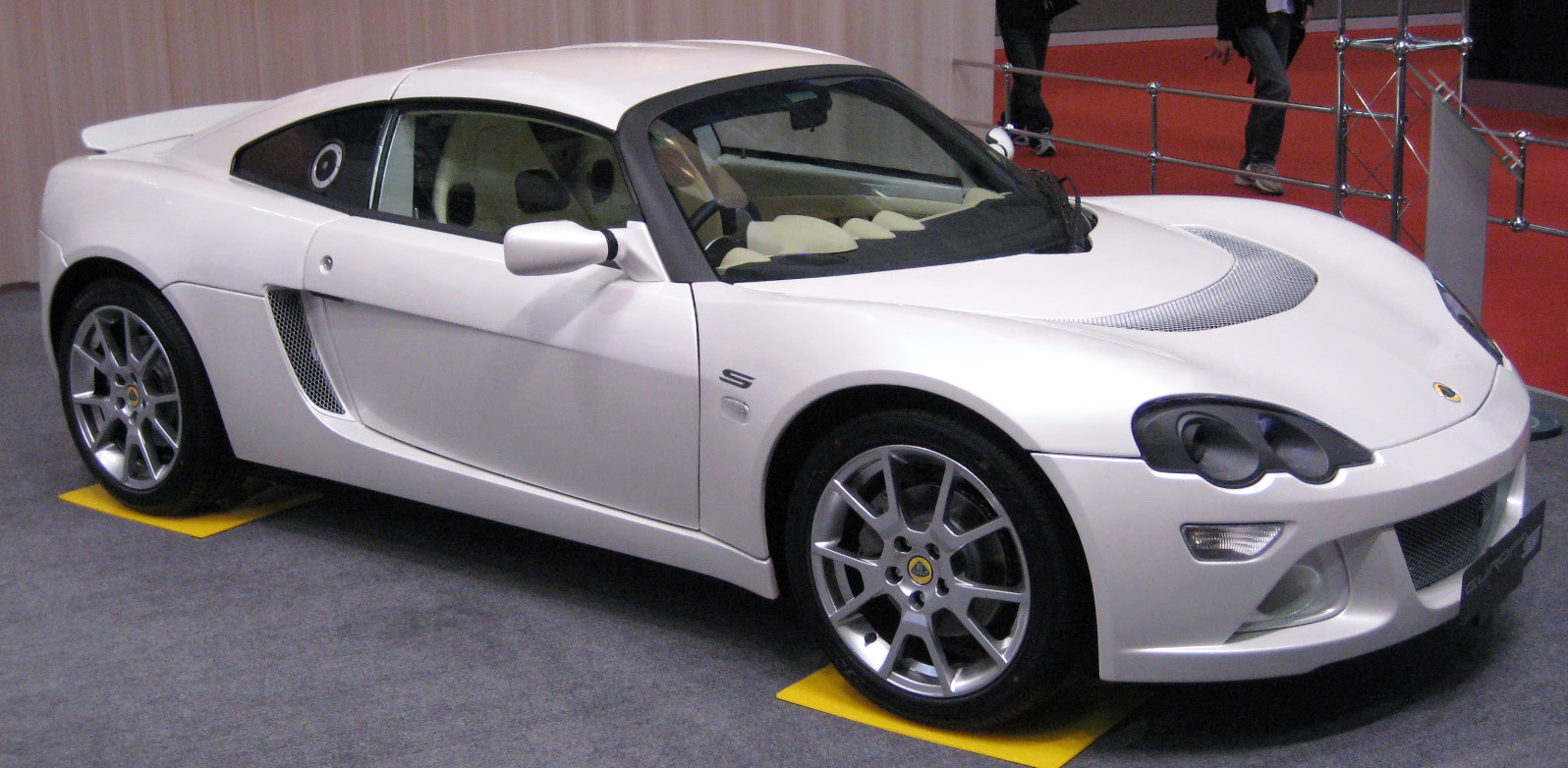
The Lotus Europa S is a mid-engined two-seat coupé that Lotus sold from 2006 to 2010. Known internally as the Type 121, it was built on a lengthened version of the Elise's bonded aluminium chassis and used a 2.0-litre turbocharged engine from General Motors. Lotus positioned it as a more comfortable, more practical car for longer journeys than the Elise and Exige. Just over 500 were built, which makes it one of the rarest modern Lotus models.
In short
- Sold 2006–2010: about 456 Europa S (2006–2008) and 48 Europa SE (2009–2010), according to PistonHeads.
- 1,998 cc turbocharged four-cylinder (GM Ecotec Z20LER): 149 kW (200 hp) and 272 Nm in the S, 168 kW (225 hp) and 300 Nm in the SE.
- Six-speed Getrag manual gearbox, rear-wheel drive, kerb weight 995 kg.
- Larger boot, lower sills and more comfortable suspension than the Elise and Exige.
Lotus Europa S at a glance
| Specification | Lotus Europa S |
|---|---|
| Production | 2006–2010 (S 2006–2008, SE 2009–2010) |
| Cars built | just over 500 |
| Body | two-seat coupé, aluminium and composite panels |
| Chassis | bonded aluminium, lengthened Elise chassis |
| Engine | 1,998 cc four-cylinder, turbocharged, mid-mounted |
| Power | 149 kW (200 hp); SE 168 kW (225 hp) |
| Torque | 272 Nm at 5,000 rpm; SE 300 Nm at 4,000 rpm |
| Gearbox | six-speed manual (Getrag) |
| Kerb weight | 995 kg |
| Dimensions | 3,900 mm long, 1,714 mm wide, 1,120 mm high |
The Europa S belongs to the Elise-based generation of Lotus cars; see our Lotus Elise article and all models in the Lotus catalogue.
Launch in 2006 and production numbers
The Europa S went on sale in 2006. Its name revived Colin Chapman's Europa of 1966, but CAR magazine stressed that it was a clean-sheet design rather than a modern version of the original. The SE was unveiled at the Geneva Motor Show in 2008 and sold in 2009 and 2010.
Sales were modest. PistonHeads counts 456 Europa S and only 48 SE cars — just over 500 in total, compared with more than 9,200 examples of the original Europa of the 1960s and 1970s.
Engine and gearbox
The engine is a 1,998 cc turbocharged four-cylinder from General Motors' Ecotec family, coded Z20LER and also used by Vauxhall. CAR magazine quotes 147 kW (197 bhp) at 5,400 rpm and 271 Nm at 5,000 rpm. PistonHeads gives 149 kW (200 hp) for the S and 168 kW (225 hp) with 300 Nm at 4,000 rpm for the SE. Power goes to the rear wheels through a six-speed Getrag manual gearbox, which PistonHeads describes as light and precise.
| Figure | Europa S | Europa SE |
|---|---|---|
| Power | 149 kW (200 hp) | 168 kW (225 hp) |
| Torque | 272 Nm at 5,000 rpm | 300 Nm at 4,000 rpm |
| Official combined consumption | about 9.3 l/100 km | about 9.8 l/100 km |
| CO₂ | 220 g/km | 229 g/km |
The SE had a higher turbo boost and a revised engine management system.
Chassis and driving
The chassis is the bonded aluminium structure of the Elise, extended by about 100 mm in the wheelbase, with double-wishbone suspension. With Bilstein dampers and Eibach springs, Lotus tuned the Europa for more comfort than the Elise or Exige. At 995 kg it is about 135 kg heavier than an Elise but still under a tonne.
CAR magazine found the steering direct and communicative, the brakes strong with good feel and the body control tight, with mild understeer only at very high cornering speeds. The throttle response was quick and the turbo built boost smoothly. On the other hand, the reviewer found the power modest for the price. Sixth gear was awkward for relaxed cruising and that the gear lever could catch the driver's leg. PistonHeads adds that the S tends to understeer. The SE largely cured this with stiffer springs, revised damping, softer anti-roll bars, a lower ride height, lighter wheels and larger AP Racing front brakes (308 mm discs).


Design and practicality
The body uses aluminium and composite panels. CAR magazine felt that the shape did not flow as well as the Elise or Exige, but the car attracted attention on the road. Inside, the Europa is less claustrophobic than its sister models. Lower sills make getting in and out easier, and there is more storage space and a 42-litre boot — about 50 per cent larger than in an Elise or Exige. The S came with air conditioning, an audio system, carpets and electric windows; a Luxury Touring Pack added better leather.
What to check when buying
PistonHeads lists the typical points to inspect:
- Body: chips, deformation or spider-web stress cracks in the glass-fibre panels.
- Electrics: battery condition first; an ABS warning light can come from a broken or corroded wire to the wheel hub; central locking modules often fail.
- Suspension: the drop-link tab on the wishbone can tear with stiffer anti-roll bar settings; rear springs for the SE are no longer available from Lotus.
- Engine: cars with removed balancer shafts can vibrate at around 4,000 rpm.
- Comfort items: noisy air-conditioning compressors and flickering start buttons; the steering column is not adjustable.
- Service: the official schedule is every 12 months or about 14,500 km.
- Everyday details: the engine tends to hold its revs between gear changes. The single wiper smears washer fluid, the door mirrors vibrate at idle, and the real-world fuel consumption is often disappointing.
Photo gallery

Lotus Europa S in our rankings
- No. 552 of 859 · Most powerful cars (165 kW · top 65%)
- No. 87 of 109 · Most powerful British cars (165 kW · top 80%)
- No. 721 of 912 · Longest-running car nameplates (4 years · top 83%)
- No. 266 of 313 · Most powerful coupes (165 kW · top 86%)
More powerful than 35% of ranked cars in the 1CARS catalog (No. 552 of 859).
FAQ
What engine does the Lotus Europa S use?
A 2.0-litre turbocharged four-cylinder from GM's Ecotec family, with 149 kW (200 hp); the SE has 168 kW (225 hp).
How many Lotus Europa S were built?
Just over 500: about 456 Europa S and 48 Europa SE, according to PistonHeads.
Is the Europa S based on the Elise?
Yes. It uses a lengthened version of the Elise's bonded aluminium chassis, with softer suspension and more space.
What is the difference between the Europa S and SE?
The SE has more power and torque, revised suspension, lighter wheels and larger front brakes, which reduce the understeer of the S.
How fast is the Lotus Europa S?
PistonHeads gives 0–62 mph in 5.8 seconds for the S and 5.3 seconds for the SE, with top speeds of about 230 km/h and 235 km/h respectively.
Data sources
Data checked by an editor against the sources below.
- Wikipedia — Lotus Europa S
- Wikipedia — List of Lotus vehicles