 Lamborghini Jarama
Specs, engines and history
Published Sources (1) Report an error
By Felix Hartmann, Automotive Technology & EV Contributor
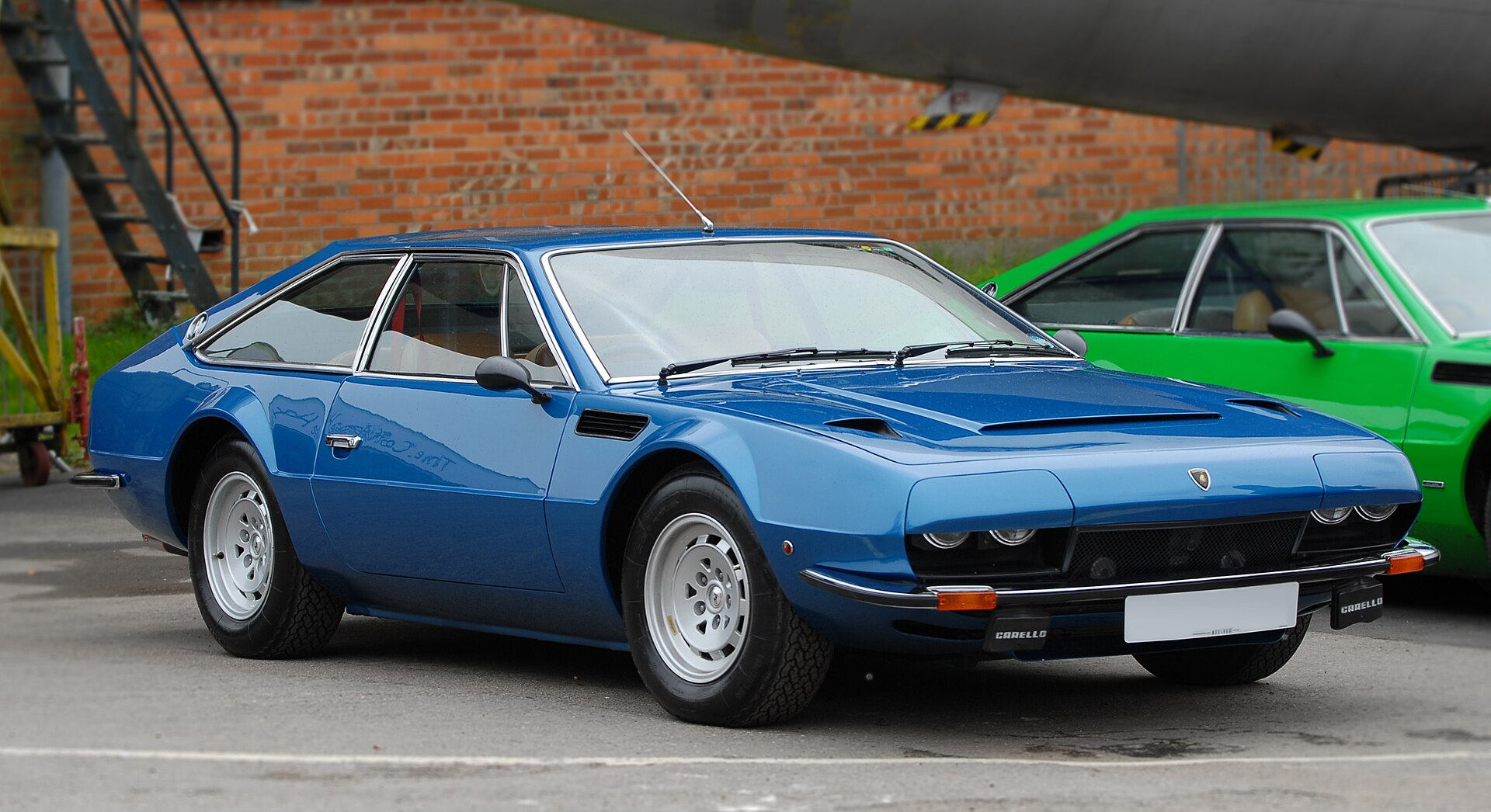
- Built
- 1970–1976
- Top power
- 272 kW (370 PS)
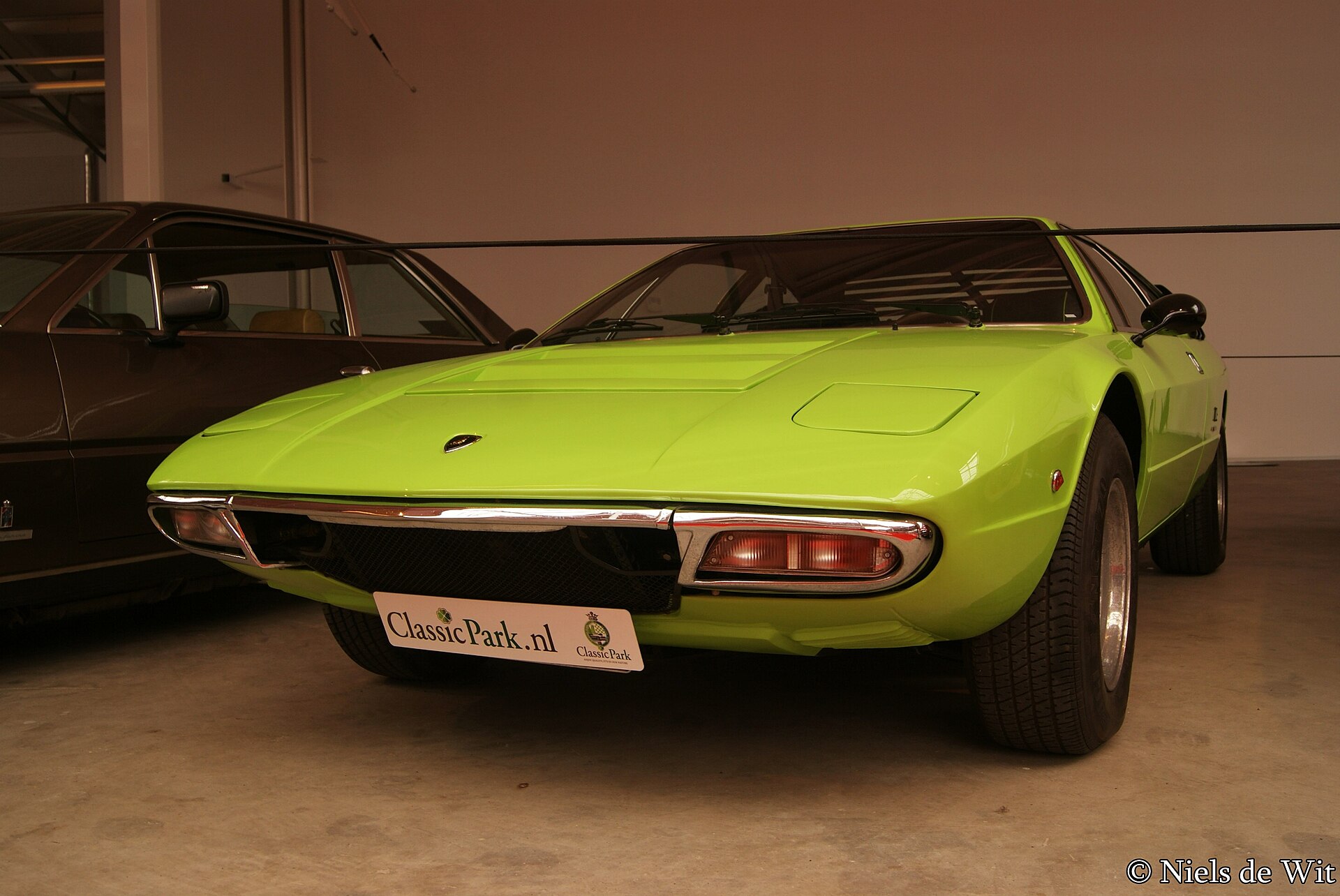
The Lamborghini Jarama is a front-engined 2+2 grand tourer that Lamborghini built at Sant'Agata Bolognese from 1970 to 1976. Introduced at the Geneva motor show in 1970 as the successor to the Islero, it combined a shortened Espada chassis, a body styled by Marcello Gandini at Bertone and the company's 3.9-litre V12. Only about 327 were made, but Ferruccio Lamborghini himself called the Jarama his favourite of all his cars.
In short
- Built 1970–1976 at Sant'Agata Bolognese; 327 or 328 cars depending on the source (177 Jarama, 150 Jarama S).
- 3,929 cc V12 with six Weber 40 DCOE carburettors: 260 kW (350 bhp) in the Jarama, 272 kW (365 bhp) in the Jarama S.
- Five-speed manual gearbox, rear-wheel drive; three-speed automatic optional on the Jarama S.
- Espada-based chassis shortened to a 2,380 mm wheelbase, built to meet US standards; dry weight 1,450 kg.
Lamborghini Jarama at a glance
| Specification | Lamborghini Jarama |
|---|---|
| Production | 1970–1976, Sant'Agata Bolognese (Italy) |
| Cars built | 327 (infobox) or 328 (text): 177 Jarama, 150 Jarama S |
| Body | 2+2 coupé by Bertone (design Marcello Gandini); front engine, rear-wheel drive |
| Engine | 3,929 cc V12, six Weber 40 DCOE carburettors |
| Power | 260 kW (350 bhp); Jarama S 272 kW (365 bhp) |
| Gearbox | five-speed manual; three-speed TorqueFlite automatic optional (Jarama S) |
| Dry weight | 1,450 kg; weight distribution 53:47 |
| Dimensions | 4,485 × 1,820 × 1,190 mm, wheelbase 2,380 mm |
| Predecessor | Islero |
The Jarama belongs to the family of front-engined V12 Lamborghinis that began with the 350 GT; its mid-engined contemporary was the Miura. All models are listed in the Lamborghini catalogue.
History: the Islero's successor
The Jarama replaced the Islero, which Lamborghini had built from 1968 mainly with the American market in mind. The new car was designed to meet US regulations and was presented at the Geneva motor show in 1970.
Its name, chosen by Ferruccio Lamborghini, follows the company's tradition of bull-related names: it refers to the fighting bulls bred in the area of the Jarama river in Spain, not to the Jarama racing circuit near Madrid.
Ferruccio Lamborghini kept a Jarama S for himself, and this car is now on display in the Lamborghini museum at Sant'Agata Bolognese. In a 1991 interview he called the Jarama his favourite model and described it as a compromise between the Miura and the Espada.

Design by Gandini at Bertone
The body was styled by Marcello Gandini at Bertone. It shares several visual features with the Iso Lele, another Gandini design. The car is 4,485 mm long, 1,820 mm wide and only 1,190 mm high, with two small rear seats.
Engine and chassis
The engine is the 3,929 cc Lamborghini V12 derived from the unit of the 400 GT and also used in the Islero and the Espada. It breathes through six Weber 40 DCOE carburettors and drives the rear wheels. The original Jarama was rated at 260 kW (350 bhp).
The chassis comes from the four-seat Espada, with the wheelbase shortened by 272 mm to 2,380 mm. At 1,450 kg dry, the Jarama is heavier than the Islero it replaced, and its standard weight distribution is 53% front and 47% rear. A five-speed manual gearbox was standard. Early cars used centre-lock magnesium alloy wheels like the Miura and the early Espada; the Jarama S switched to five-bolt wheels shared with the Espada Series 3.
| Parameter | Metric | Imperial |
|---|---|---|
| Engine capacity | 3,929 cc | 240 cu in |
| Power (Jarama) | 260 kW | 350 bhp |
| Power (Jarama S) | 272 kW | 365 bhp |
| Wheelbase | 2,380 mm | 93.7 in |
| Length | 4,485 mm | 176.6 in |
| Dry weight | 1,450 kg | about 3,200 lb |

Jarama S (GTS), 1972
In 1972 the Jarama S, also called GTS, replaced the original model. A revised exhaust, cylinder heads and carburettors raised the output to 272 kW (365 bhp). Outside, the S can be recognised by a scoop on the bonnet, exhaust vents in the front wings, a changed windscreen position and relocated indicators.
Inside, the dashboard was redesigned with aluminium trim and the switches were moved to the centre console. Lamborghini added more insulation against heat and noise and improved the rear seats and legroom. Power steering became standard early in Jarama S production.
Two options were rare. Removable roof panels were fitted to an estimated 6 to 20 cars, and the three-speed Chrysler TorqueFlite automatic gearbox is believed to have been fitted to only four.
| Version | Years | Power | Built |
|---|---|---|---|
| Jarama | 1970–1973 | 260 kW (350 bhp) | 177 |
| Jarama S (GTS) | 1972–1976 | 272 kW (365 bhp) | 150 |

Jarama Rally: Bob Wallace's special
Lamborghini test driver Bob Wallace built a one-off racing version known as the Jarama Rally, or "Bob". He moved the engine back in the chassis to get a weight distribution close to 50:50 and raised the output to 280 kW (380 hp) at 8,000 rpm. An aluminium body saved about 300 kg, bringing the weight down to an estimated 1,170 kg. The car had Miura centre-lock wheels, low racing seats, Koni dampers and a stripped interior, and it was reported to reach about 270 km/h and 100 km/h in about 5 seconds. It never raced; it was later found in Saudi Arabia and restored in the United Kingdom in 1990.

Legacy
The Jarama remained a rare car: fewer than 330 were made in six years. For its creator, however, it was the right balance — in his words, a compromise between the Miura and the Espada. Its story is part of our history of Lamborghini.
Photo gallery

Lamborghini Jarama in our rankings
- No. 21 of 88 · Most powerful cars of the 1970s (272 kW · top 24%)
- No. 329 of 859 · Most powerful cars (272 kW · top 39%)
- No. 63 of 127 · Most powerful Italian cars (272 kW · top 50%)
- No. 177 of 313 · Most powerful coupes (272 kW · top 57%)
- No. 556 of 912 · Longest-running car nameplates (6 years · top 69%)
More powerful than 76% of ranked cars of the 1970s in the 1CARS catalog (No. 21 of 88).
FAQ
Why is it called Jarama?
After the fighting bulls bred in the area of the Jarama river in Spain — not after the Jarama race track near Madrid.
How many Lamborghini Jaramas were built?
About 327: 177 of the original Jarama and 150 of the Jarama S (GTS). Some sources give 328.
What engine does the Jarama have?
A 3,929 cc front-mounted V12 with six Weber carburettors: 260 kW (350 bhp) in the Jarama and 272 kW (365 bhp) in the Jarama S.
Why was the Jarama Ferruccio Lamborghini's favourite?
In a 1991 interview he described it as a compromise between the Miura and the Espada. He kept a Jarama S, now shown in the Lamborghini museum.
Data sources
Data checked by an editor against the sources below.