 Lamborghini Islero
Specs, engines and history
Published Sources (1) Report an error
By Felix Hartmann, Automotive Technology & EV Contributor
- Built
- 1968–1969
- Top power
- 261 kW (355 PS)
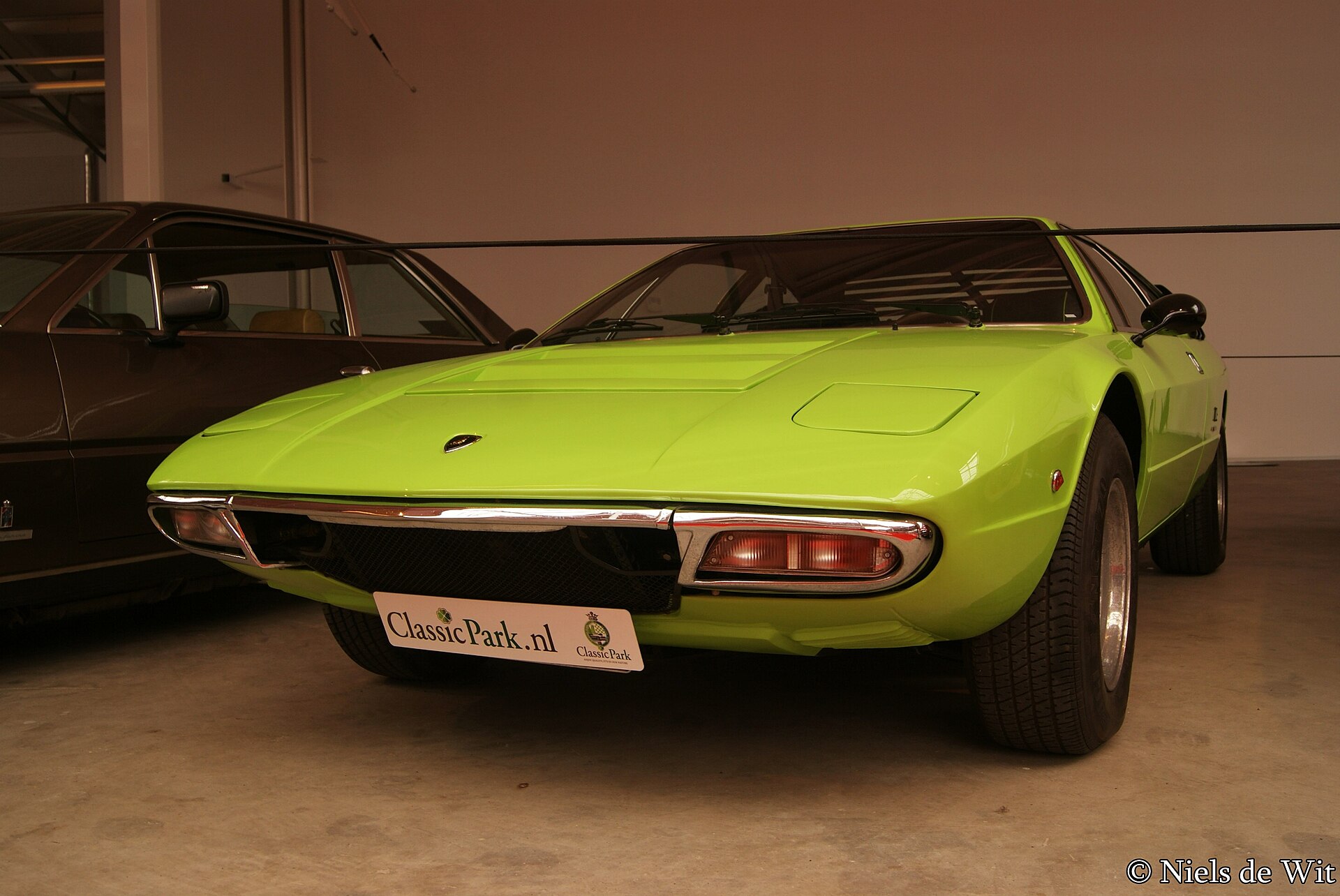
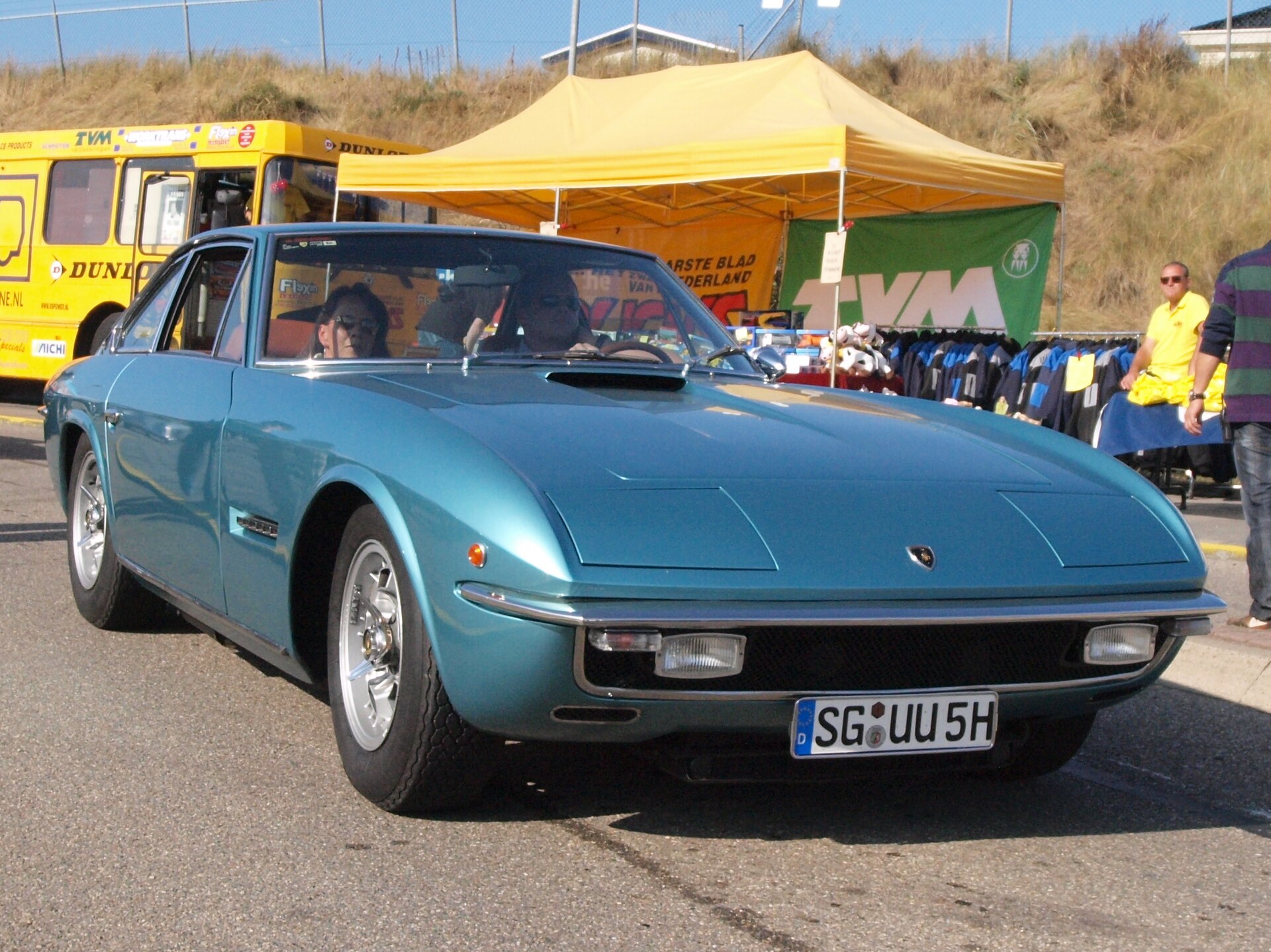
The Lamborghini Islero is a front-engined V12 2+2 coupé that Lamborghini built in Sant'Agata Bolognese in 1968 and 1969. Presented at the Geneva Motor Show together with the four-seat Espada, it replaced the 400 GT and was essentially a new body on that car's chassis. With 225 cars built, it is one of the less well-known Lamborghinis, but it was the car that Ferruccio Lamborghini himself drove at the time.
In short
- Built 1968–1969: 125 Islero and 100 Islero S (also called GTS) - 225 in total.
- Front-mounted 3,929 cc V12 with six Weber carburettors: 242 kW (330 PS) in the Islero, 261 kW (355 PS) in the Islero S.
- Body by Carrozzeria Marazzi on a tubular steel frame, with independent double-wishbone suspension from the 400 GT.
- Top speeds of 248 km/h (Islero) and 259 km/h (Islero S).
Lamborghini Islero at a glance
| Specification | Lamborghini Islero |
|---|---|
| Production | 1968–1969, Sant'Agata Bolognese (Italy) |
| Cars built | 225 (125 Islero, 100 Islero S) |
| Body | two-door 2+2 coupé by Carrozzeria Marazzi |
| Chassis | tubular steel frame with aluminium body panels |
| Engine | 3,929 cc V12, six Weber carburettors, front-mounted |
| Power | 242 kW (330 PS); Islero S 261 kW (355 PS) |
| Gearbox | five-speed manual, Lamborghini design |
| Kerb weight | 1,315 kg |
| Dimensions | 4,525 mm long, 1,730 mm wide, 1,300 mm high, 2,550 mm wheelbase |
| Predecessor / successor | 400 GT / Jarama |
The Islero sat in the range beside the Espada and the mid-engined Miura; all models are listed in the Lamborghini catalogue. The history of the company is told in our history of Lamborghini.
Development and launch in 1968
By 1967 Lamborghini needed a successor to the 400 GT 2+2, the grand tourer that had established the company. The solution was a new body on the existing chassis. Carrozzeria Marazzi built the car, and Mario Marazzi is named as its designer, although Wikipedia notes a rumour that Ferruccio Lamborghini himself dictated the design and Marazzi only carried it out.
The Islero was presented at the Geneva Motor Show in March 1968, alongside the Espada. Like most Lamborghinis, it took its name from bullfighting: Islero was the Miura-bred bull that killed the famous matador Manuel Rodríguez, known as "Manolete", on 28 August 1947.
Ferruccio Lamborghini drove an Islero himself in this period, as did his brother Edmondo - a sign of how much the company's founder preferred refined grand tourers to extreme sports cars.

Design and body
The structure is a tubular steel frame with riveted aluminium body panels. The front track is wider than on the 400 GT, and the car runs on cast magnesium wheels by Campagnolo with Pirelli Cinturato 205VR15 tyres.
Build quality was a weak point. The early cars had problems with fit and finish, some of which were corrected on the Islero S. Lamborghini's test driver Bob Wallace attributed them to the limited resources of the small Marazzi company.
Engine and performance
The front-mounted V12 has a displacement of 3,929 cc and six Weber 40 DCOE carburettors. Power goes to the rear wheels through a five-speed all-synchromesh gearbox designed by Lamborghini, with a hydraulically operated clutch.
| Version | Years | Compression | Power | Top speed | Built |
|---|---|---|---|---|---|
| Islero | 1968–1969 | 9.5:1 | 242 kW (330 PS) | 248 km/h | 125 |
| Islero S (GTS) | 1969 | 10.8:1 | 261 kW (355 PS) | 259 km/h | 100 |
For the Islero S, Lamborghini used the camshafts of the Miura P400 S and raised the compression ratio, while the torque stayed the same. Wikipedia gives 0–60 mph times of 6.4 seconds for the Islero and 6.2 seconds for the Islero S.

Islero S
The Islero S of 1969 brought a number of changes besides the stronger engine. Six cooling vents were added to each front wing, the bonnet scoop was enlarged (it supplies air to the cabin, not the engine), the wheel arches were slightly flared and the side marker lights became round instead of teardrop-shaped. The windows were tinted, the door windows gained a fixed section, the brake discs were larger, the rear suspension was revised and the dashboard and interior were redesigned.
Dimensions and running gear
The Islero is 4,525 mm long, 1,730 mm wide and 1,300 mm high, with a 2,550 mm wheelbase, and weighs 1,315 kg. Its fully independent double-wishbone suspension and disc brakes came from the 400 GT, but the front track was made wider. The Islero S received larger brake discs and a revised rear suspension. The gearbox is a five-speed all-synchromesh unit of Lamborghini's own design, with a hydraulically operated dry clutch. Compared with the mid-engined Miura of the same period, the Islero was a conventional front-engined 2+2 grand tourer, and it was never intended for racing.
In films and on the track
The Islero appears in the Roger Moore thriller The Man Who Haunted Himself and in the Italian film anthology Vedo nudo, where it is the car of Sylva Koscina.
It was never intended for racing, but in 1975 Paul Rilly and Roger Levève entered a lightly modified Islero (chassis 6348) for the 24 Hours of Le Mans in the GTX class. It crashed during qualifying after a best lap of 5:28.00. The organisers later allowed it to start, but the team had already left the circuit.
Legacy
The Islero was in production for only two years and was replaced by the Jarama. It remains a rare and comparatively little-known Lamborghini - a car built for the kind of fast, comfortable touring that Ferruccio Lamborghini himself preferred.

Lamborghini Islero in our rankings
- No. 29 of 94 · Most powerful cars of the 1960s (261 kW · top 31%)
- No. 342 of 859 · Most powerful cars (261 kW · top 41%)
- No. 65 of 127 · Most powerful Italian cars (261 kW · top 52%)
- No. 184 of 313 · Most powerful coupes (261 kW · top 60%)
- No. 880 of 912 · Longest-running car nameplates (1 year)
More powerful than 69% of ranked cars of the 1960s in the 1CARS catalog (No. 29 of 94).
FAQ
What does Islero mean?
Islero was the name of the fighting bull that killed the matador Manolete in 1947.
How many Lamborghini Isleros were built?
225: 125 Islero and 100 Islero S, according to Wikipedia.
What engine does the Islero have?
A front-mounted 3.9-litre V12 with 242 kW (330 PS), or 261 kW (355 PS) in the Islero S.
What replaced the Islero?
The Lamborghini Jarama.
Who designed the Lamborghini Islero?
Carrozzeria Marazzi built the body, and Mario Marazzi is named as the designer, although Ferruccio Lamborghini was rumoured to have dictated the design.
Data sources
Data checked by an editor against the sources below.