 Ferrari 250 GT Lusso
Specs, engines and history
Published Sources (1) Report an error
By Felix Hartmann, Automotive Technology & EV Contributor
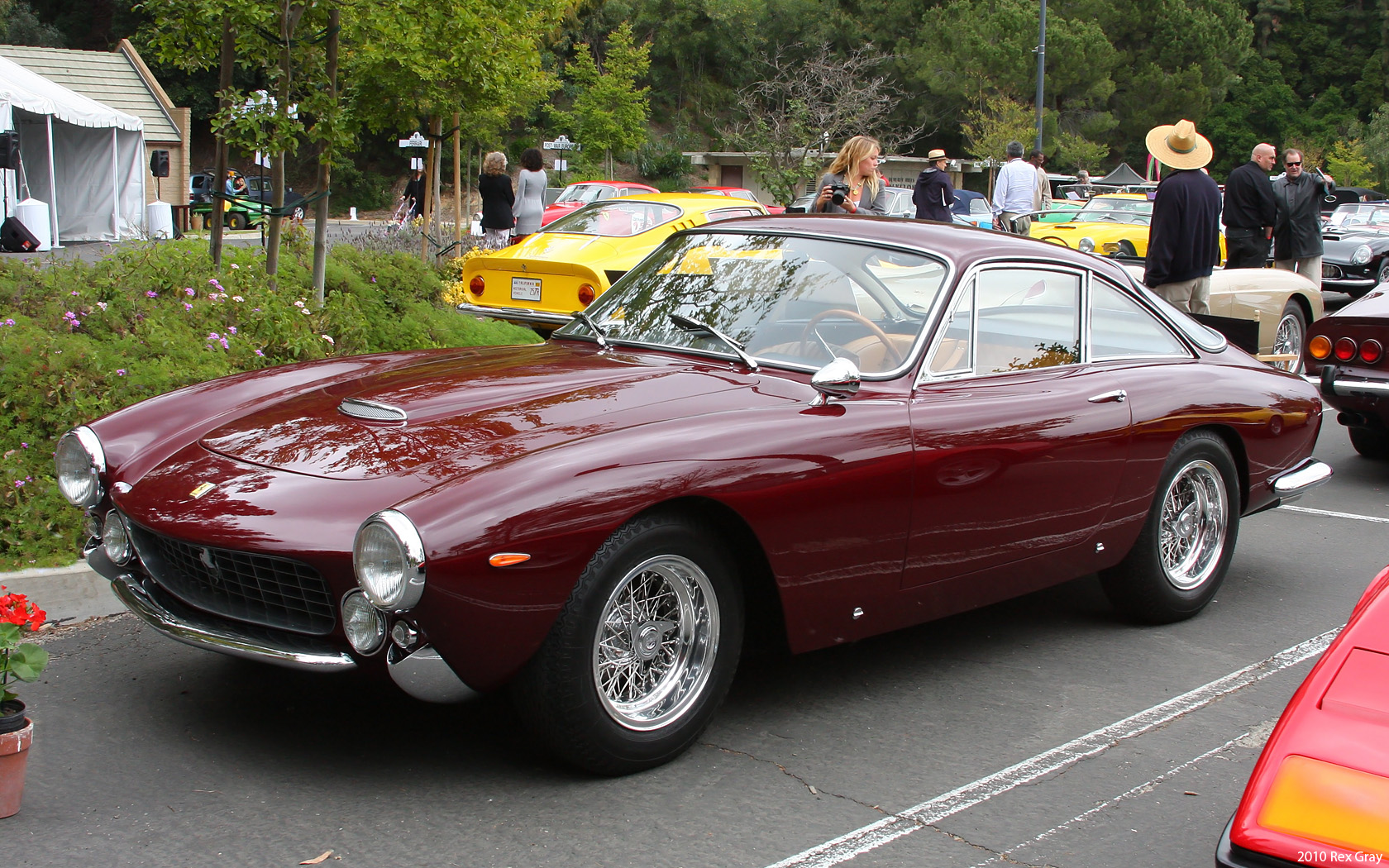
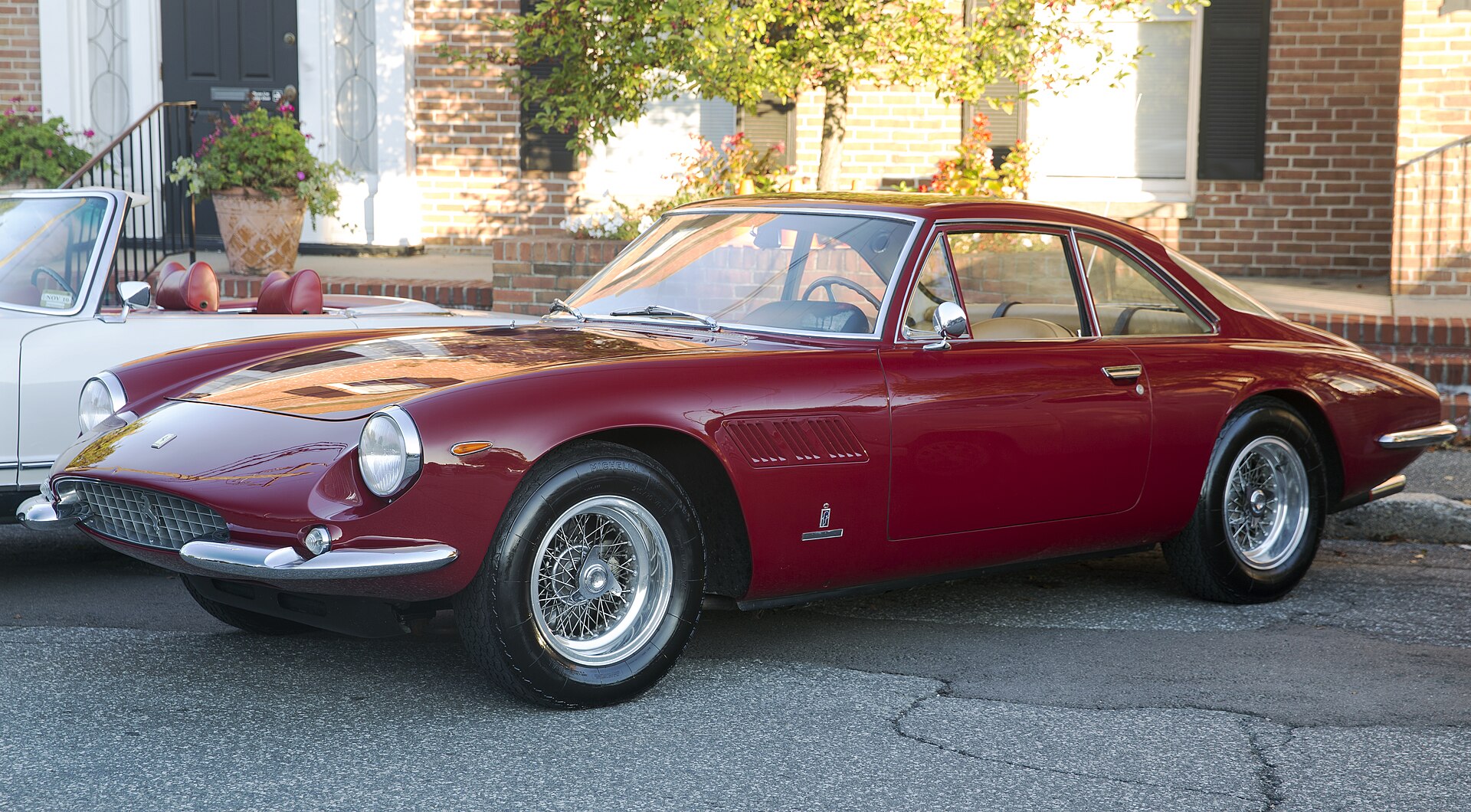
The Ferrari 250 GT Lusso, officially the 250 GT Berlinetta Lusso, is a two-seat grand touring coupé that Ferrari built from late 1962 to 1964. "Lusso" means "luxury" in Italian: the car filled the gap between the sporting 250 GT SWB berlinetta and the four-seat 250 GTE 2+2. Styled by Pininfarina and built by Scaglietti, it was the last road-going model of the 250 GT series, and it is often named among the most beautiful Ferraris ever made.
In short
- Prototype shown at the 1962 Paris motor show; production until August 1964; about 350 cars (Ferrari gives 350, Wikipedia 351).
- Front-mounted 2,953 cc Colombo V12 (type 168/U) with three Weber carburettors: 180 kW (240 hp) at 7,500 rpm and 242 Nm.
- Four-speed all-synchromesh gearbox, rear-wheel drive, disc brakes all round, 2,400 mm wheelbase.
- Top speed about 240 km/h; the first Ferrari with a small integrated rear spoiler on a Kamm tail.
Ferrari 250 GT Lusso at a glance
| Specification | Ferrari 250 GT Lusso |
|---|---|
| Production | 1962–1964, body by Scaglietti in Modena (Italy) |
| Cars built | about 350 (350 Ferrari, 351 Wikipedia) |
| Body | two-seat berlinetta; front engine, rear-wheel drive |
| Engine | Colombo V12, 2,953 cc, bore × stroke 73 × 58.8 mm, one camshaft per bank |
| Power | 180 kW (240 hp) at 7,500 rpm |
| Torque | 242 Nm at 5,500 rpm |
| Gearbox | four-speed manual, all-synchromesh |
| Dimensions | 4,410 × 1,750 × 1,290 mm, wheelbase 2,400 mm |
| Weight | 1,020–1,310 kg depending on equipment and source |
| Successor | 275 GTB |
The Lusso closes the line of 250 GT road cars, which also includes the 250 GT California Spyder and the racing 250 GT Tour de France. All Ferrari models are listed in the Ferrari catalogue.
History of the Lusso
By the early 1960s Ferrari's road range had a gap. The 250 GT SWB berlinetta was a sports car that could also win races, while the 250 GTE was a comfortable four-seater. The Lusso was meant to sit between them: a fast two-seat coupé with more comfort and a more refined finish. Ferrari also notes that it replaced the 250 GT Coupé in the range.
The differences are easy to see on paper. The Lusso shares the 2,400 mm wheelbase and much of the engine with the SWB, but its engine sits further forward to free space in the cabin, and it has a more luxurious interior. Unlike the 250 GTE, it is a strict two-seater, with a luggage platform where the GTE has rear seats.
A prototype (chassis 3849GT) was shown at the Paris motor show in October 1962. According to the Ferrari historian Peter Coltrin, production began soon afterwards, and the series cars were almost identical to the show car. Production lasted about eighteen months, until August 1964. In that time about 350 cars were built.
The Lusso was the last model of the 250 GT generation, a family that had started with the 250 S of 1952. Its successor, the 275 GTB, received a new name because of its larger engine.
Design: Pininfarina lines, Scaglietti body
The shape was drawn by Pininfarina in Turin and the cars were built by Carrozzeria Scaglietti in Modena. The body is steel, with aluminium doors, bonnet and boot lid. It was the first Ferrari to carry the Pininfarina crest on its body.
Ferrari's own description highlights the details: a wide, low egg-crate grille with built-in round driving lights, a three-piece bumper, a five-window cabin with slim pillars and a large curved rear window. At the back, the tail is cut off sharply in the Kamm style and ends in a small integrated lip — the first rear spoiler on a Ferrari. The large round rear lights were later used again on the 275 GTB. The chrome bumpers are mostly decorative.
Most cars have four round headlights. One early show car, chassis 4335GT, which was later used by Battista Pininfarina himself, had covered headlights, a deeper and wider grille and a different dashboard.

Engine and chassis
The engine is the 3.0-litre Colombo V12 in its "short block" form (factory type 168/U), with one overhead camshaft per bank, two valves per cylinder and spark plugs outside the vee. It has 2,953 cc (bore 73 mm, stroke 58.8 mm) and is fed by three twin-choke Weber 36 DCS carburettors — fewer than on the high-performance versions. The crankshaft and valves come from the 250 GT SWB, the pistons and block from the 250 GTE.
The output is 180 kW (240 hp) at 7,500 rpm, with 242 Nm at 5,500 rpm. Power goes through a four-speed all-synchromesh gearbox and a propeller shaft to a rigid rear axle; two final-drive ratios were offered. Wikipedia reports a top speed of about 240 km/h and 0–100 km/h in 7 to 8 seconds.
| Parameter | Metric | Imperial |
|---|---|---|
| Engine capacity | 2,953 cc | 180 cu in |
| Power | 180 kW at 7,500 rpm | 240 hp |
| Torque | 242 Nm at 5,500 rpm | 178 lb-ft |
| Wheelbase | 2,400 mm | 94.5 in |
| Length | 4,410 mm | 173.6 in |
| Width | 1,750 mm | 68.9 in |
| Height | 1,290 mm | 50.8 in |
| Top speed | about 240 km/h | about 150 mph |
The chassis (factory type 539/U) is a tubular steel frame with two large oval-section side members and cross bracing, related to the 250 GTO structure but with thinner tubes. Its 2,400 mm wheelbase is the same as the 250 GT SWB. Ferrari moved the engine further forward than in the SWB to give the cabin more room. The front suspension uses double wishbones and coil springs; the rear has a live axle with leaf springs, coil springs and telescopic dampers. All four wheels have hydraulic disc brakes, and the cars ran on Borrani wire wheels with Pirelli Cinturato 185VR15 tyres.
Not everything was perfect. Testers found the gearing too tall, and some engines smoked under hard acceleration and vibrated at around 3,700 rpm.


Inside the Lusso
The cabin is roomier than in earlier 250 GTs thanks to the forward engine position. The seats are deep leather buckets with fixed backrests, and the pedals can be moved by 5 cm. Behind the seats there is a luggage platform with leather straps and a diamond-quilted cover.
The instrument layout is unusual: the speedometer and the rev counter, with a red line from 8,000 rpm, sit in two large round dials in the centre of the dashboard, angled towards the driver, while five smaller gauges are placed in a row in front of the steering wheel. The three-spoke Nardi wheel is made of wood and aluminium. Cars were built with left- or right-hand drive.
Owners, racing and special cars
The Lusso attracted famous owners. Steve McQueen bought one but sold it in 1967 after continuing problems with engine smoke; Eric Clapton was another owner.
Although it was not built for racing, the Lusso did compete: one car finished thirteenth overall in the 1964 Targa Florio and appeared again in 1965, and another finished thirteenth overall in the 1965 Tour de France Automobile.
Ferrari also used the Lusso shape on special cars. In 1963 a 250 GTO (chassis 4713GT) received an aluminium body in Lusso style with a GTO nose and a large rear spoiler, and four 330 LM berlinettas were built in similar form. Chassis 4385GT had a GTO-style nose, covered headlights, six carburettors and high-lift camshafts.
| Year | Event |
|---|---|
| 1962 | Prototype (3849GT) at the Paris motor show; production starts |
| 1963 | Lusso-style 250 GTO 4713GT and 330 LM berlinettas |
| 1964 | 13th overall at the Targa Florio; production ends in August |
| 1965 | 13th overall at the Tour de France Automobile |

Legacy
Ferrari itself places the Lusso between its racing models and its luxury cars, and Wikipedia sees it as part of Enzo Ferrari's shift towards selling more road cars to pay for the racing programme. In that sense the Lusso was a business car as much as a beautiful one: a Ferrari for customers who wanted speed without the compromises of a competition berlinetta.
The Lusso marks the end of the Ferrari 250 line and the start of more comfortable, luxurious road Ferraris such as the 275 and the 330. It combines a chassis related to the 250 GTO with a refined cabin and Pininfarina's shape, and it is often named among the most beautiful Ferraris. The company's background is in our history of Ferrari.
Ferrari 250 GT Lusso in our rankings
In production longer than 4% of ranked nameplates in the 1CARS catalog (No. 820 of 912).
FAQ
What does "Lusso" mean?
It is Italian for "luxury". The car was a more comfortable two-seat alternative to the sporting 250 GT SWB.
How many Ferrari 250 GT Lussos were built?
About 350 between 1962 and 1964 — Ferrari gives 350, Wikipedia 351.
What engine does the 250 GT Lusso have?
A 2,953 cc Colombo V12 with three Weber carburettors, producing 180 kW (240 hp) at 7,500 rpm.
How fast is the 250 GT Lusso?
Wikipedia gives a top speed of about 240 km/h and 0–100 km/h in 7 to 8 seconds.
Which car replaced the 250 GT Lusso?
The 275 GTB, which took a new name because of its larger engine.
Data sources
Data checked by an editor against the sources below.