 Ferrari F355
Specs, engines and history
Published Sources (1) Report an error
By Oleksandr Hnatiuk, Automotive Editor & Used Car Specialist
- Built
- 1994–1999
- Top power
- 279 kW (379 PS)
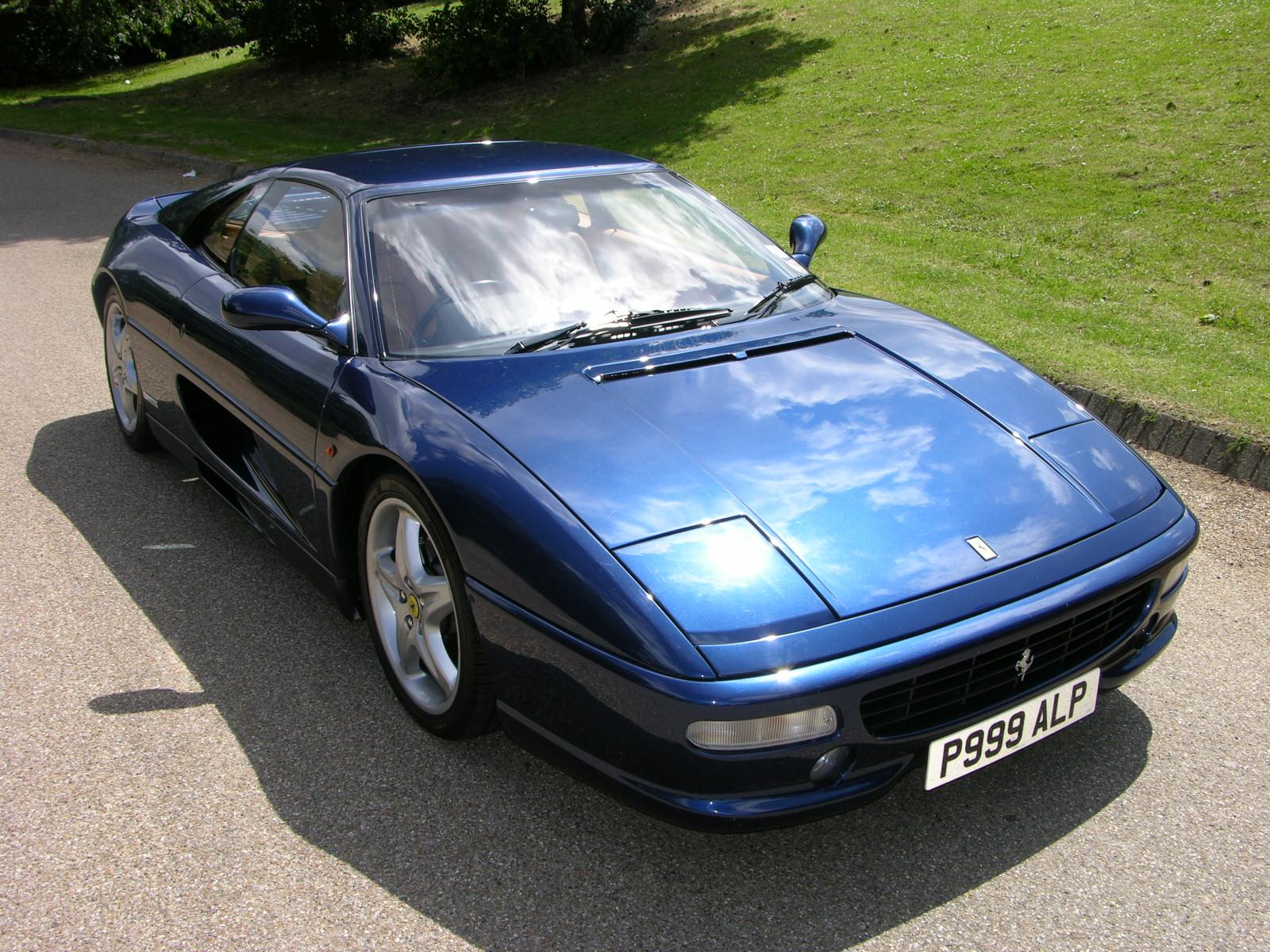
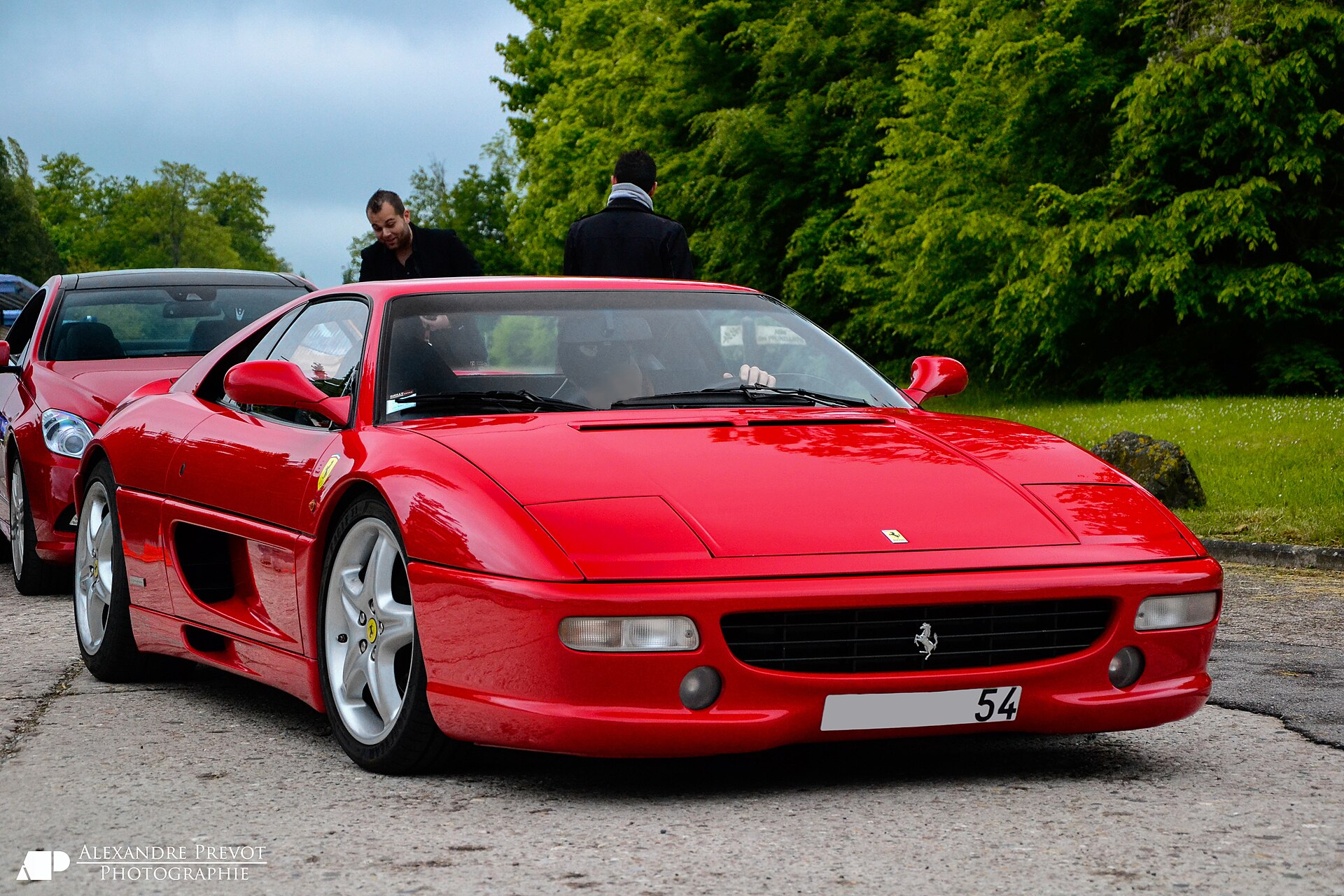
The Ferrari F355 is the mid-engined V8 sports car that Ferrari built from 1994 to 1999 as the successor of the 348. It was offered as a Berlinetta coupé, a GTS with a removable targa roof and a Spider, and in 1997 it became the first road car with a Formula 1-style paddle-shift gearbox. With 11,273 cars built, it was the most-produced Ferrari up to that time, and it is widely remembered as one of the best-looking and best-sounding Ferraris of the 1990s.
In short
- Built May 1994–1999 in Maranello; 4,871 Berlinetta, 3,717 Spider and 2,577 GTS — 11,273 in total.
- 3,495 cc V8 with five valves per cylinder: 279 kW (380 PS) at 8,250 rpm and 363 Nm at 6,000 rpm.
- Six-speed manual gearbox; from 1997 also the "F1" electro-hydraulic paddle-shift version.
- Ferrari claimed 0–100 km/h in 4.7 s and a top speed of 295 km/h.
Ferrari F355 at a glance
| Specification | Ferrari F355 Berlinetta |
|---|---|
| Production | May 1994–1999, Maranello (Italy) |
| Cars built | 11,273 (all body styles) |
| Body | Berlinetta (coupé), GTS (targa), Spider (convertible) |
| Engine | F129 3,495 cc 90° V8, five valves per cylinder, mid-mounted |
| Power | 279 kW (380 PS) at 8,250 rpm |
| Torque | 363 Nm at 6,000 rpm |
| Gearbox | six-speed manual; six-speed F1 paddle-shift from 1997 |
| Kerb weight | 1,483–1,497 kg |
| Dimensions | 4,249 mm long, 1,900 mm wide, 1,171 mm high, 2,451 mm wheelbase |
| Predecessor / successor | 348 / 360 |
The F355 sits in the line of Ferrari's mid-engined V8 cars between the 348 and the 360 Modena, which was followed by the Ferrari F430. All models are listed in the Ferrari catalogue.
Development: a heavily revised 348
The F355 was not an all-new car. Wikipedia describes it as a heavily revised 348, with the main aims of much better performance and easier driving at low speeds, for example in city traffic.
The steel monocoque with a tubular steel rear subframe was carried over in principle, but nearly everything around it changed: the engine, the suspension, the gear linkage and the aerodynamics. To make the gearbox easier to use from cold, a heat exchanger warmed the gearbox oil with engine coolant, and a rod-operated linkage replaced the cables of the 348 for a more precise shift.
The name also broke with Ferrari's habit at the time. Instead of combining capacity and the number of cylinders, "355" stands for 3.5 litres and five valves per cylinder — a way to highlight the most important technical change.
Design and aerodynamics
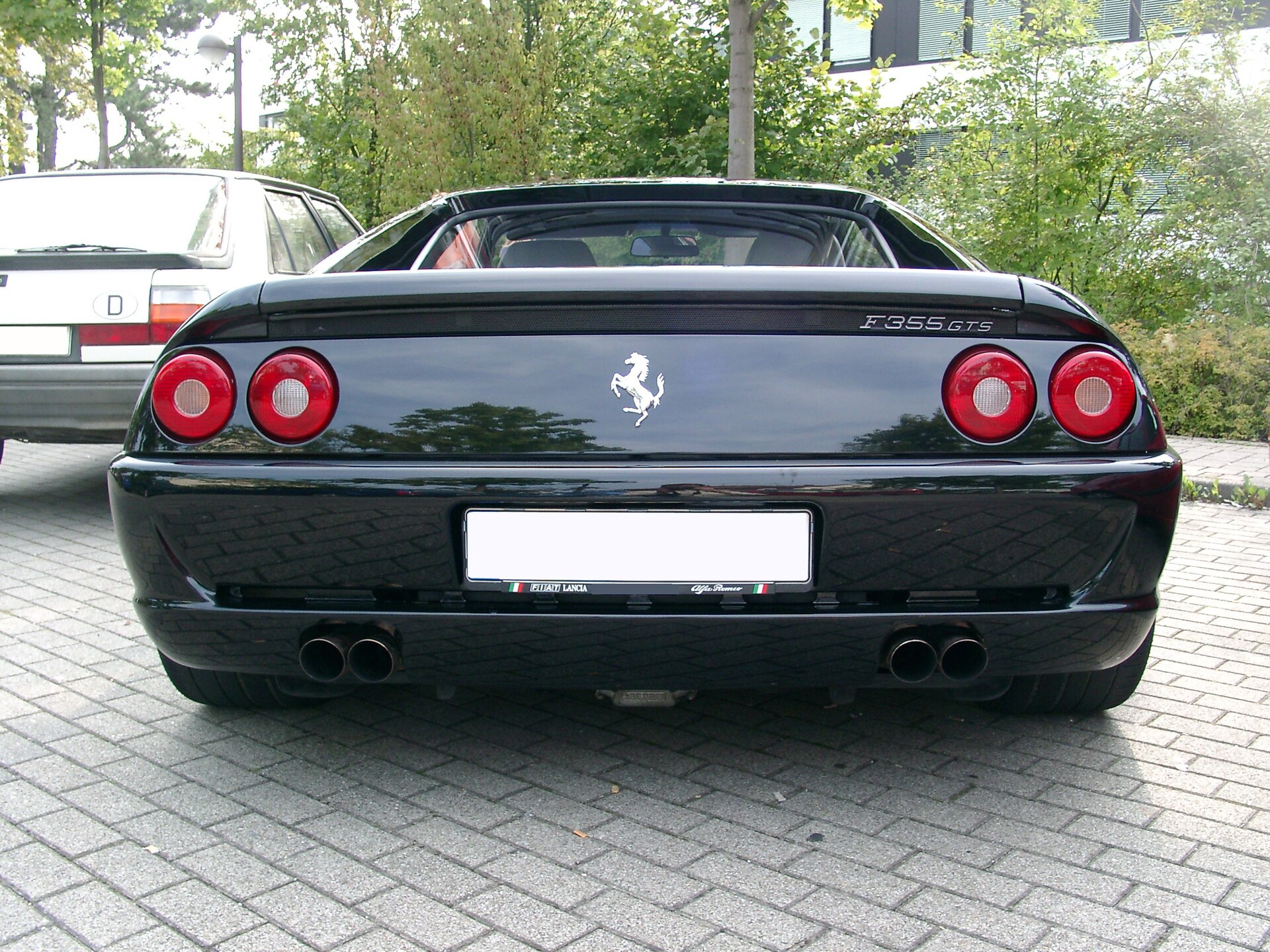
The body was designed at Pininfarina by Maurizio Corbi. It kept the proportions of the 348 but looked cleaner and more rounded, with a lower nose, side intakes in front of the rear wheels and a short tail. The car spent more than 1,300 hours in the wind tunnel. The result was a small lip on the upper part of the tail and an underbody fairing that creates downforce at speed, so the F355 needed no large rear wing.
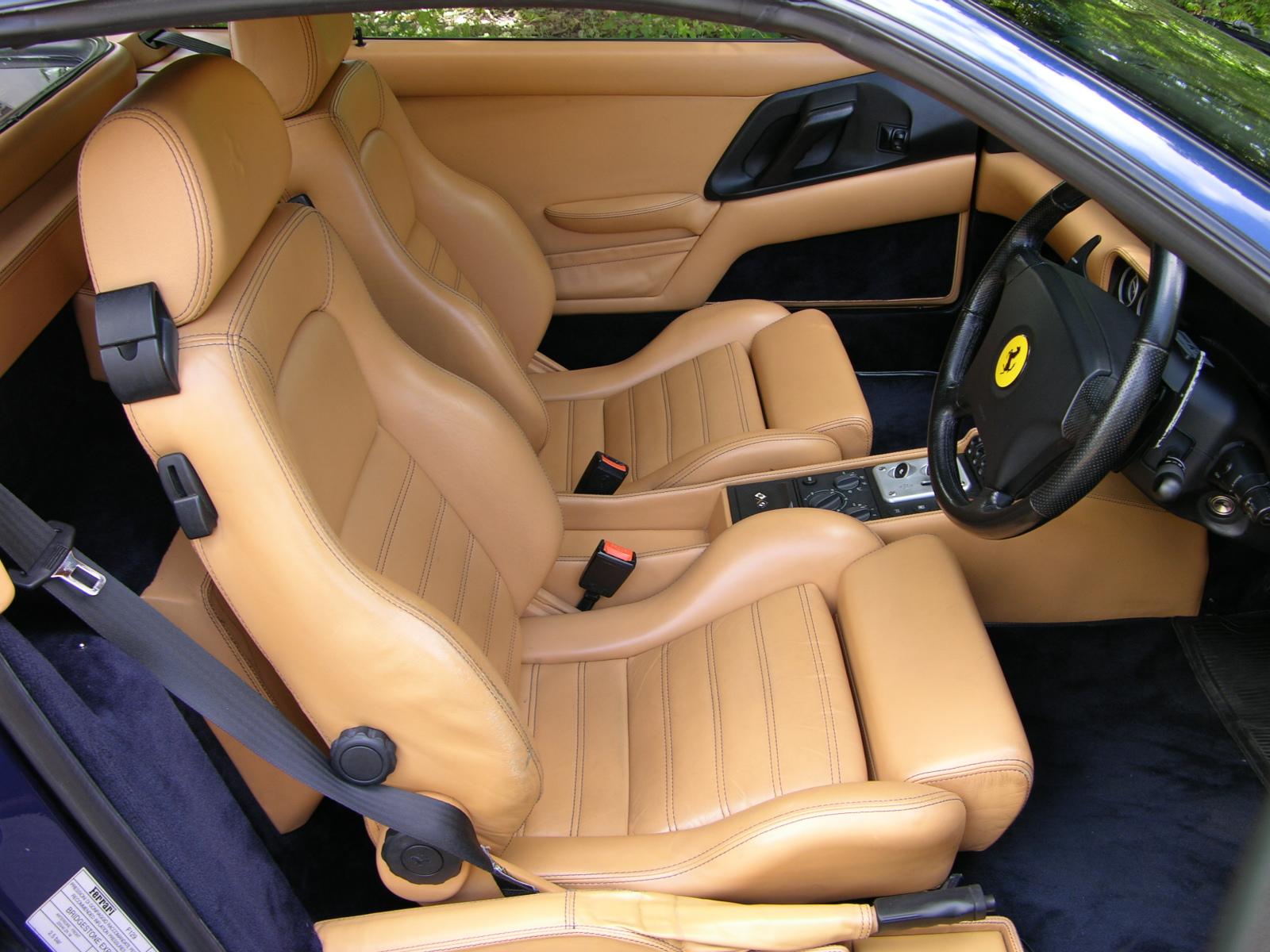
Inside, the seats were trimmed in Connolly leather and mounted slightly off-centre, so the driver sat a little closer to the middle of the car. Power steering was standard; a manual steering rack was available to special order. The suspension used unequal-length wishbones front and rear, coil springs and gas dampers with electronic control, with a choice of "Comfort" and "Sport" settings. The F355 ran on 18-inch Pirelli tyres, 225/40 at the front and 265/40 at the rear.

Engine: five valves per cylinder
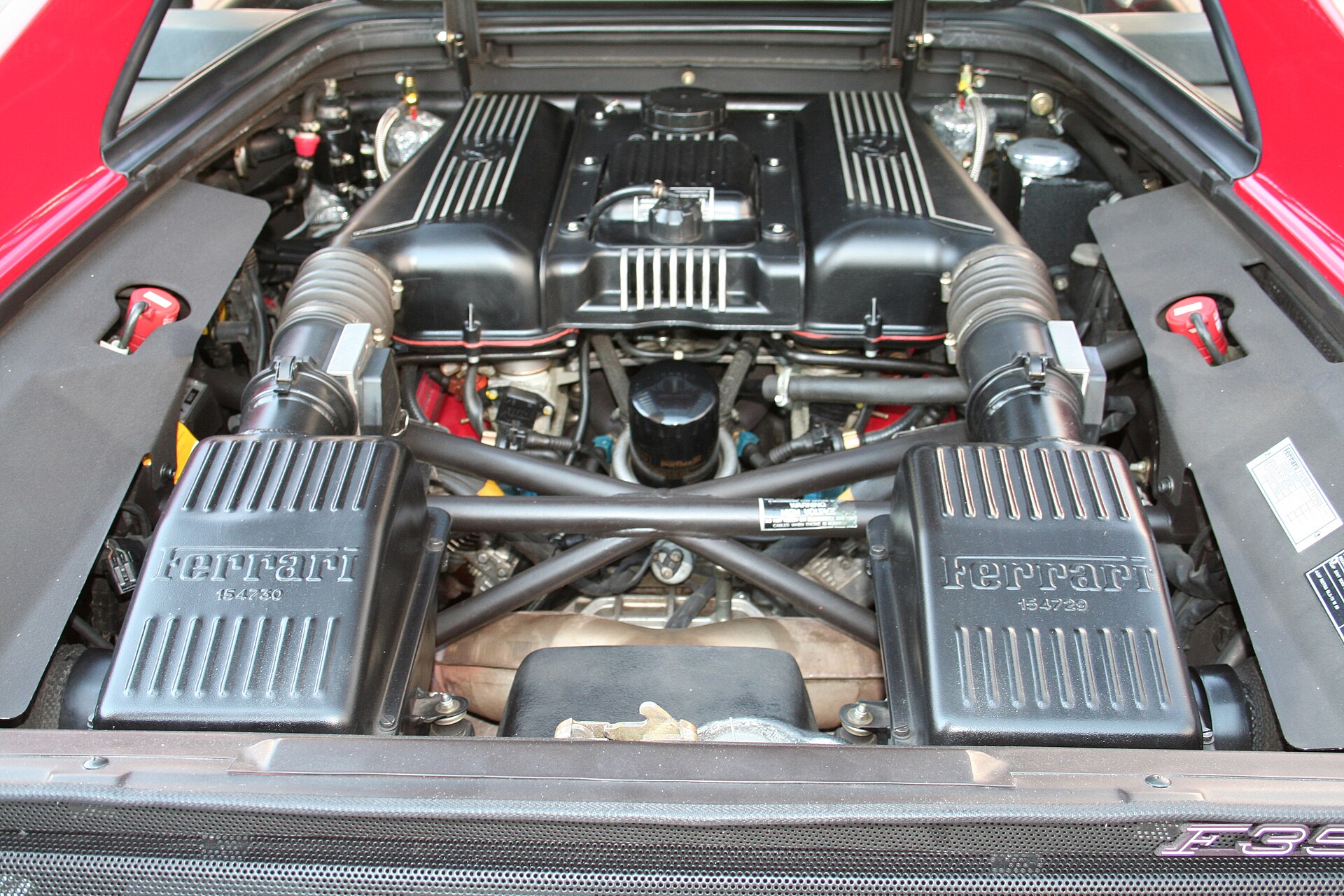
The F129 V8 grew from the 3,405 cc of the 348 to 3,495 cc, mainly through a stroke lengthened by 2 mm to 77 mm. The new cylinder head had five valves per cylinder to improve the flow of air into the engine. Forged titanium connecting rods allowed high revs, and dry-sump lubrication kept the engine low in the chassis. The engine was developed under Paolo Martinelli.
| Figure | Ferrari F355 |
|---|---|
| Displacement | 3,495 cc |
| Compression ratio | 11:1 |
| Power | 279 kW (380 PS) at 8,250 rpm |
| Torque | 363 Nm at 6,000 rpm |
| Engine management | Bosch Motronic 2.7 (1995), Motronic M5.2 (from 1996) |
| 0–100 km/h | 4.7 s (Ferrari) |
| 0–400 m | 12.9 s (Ferrari) |
| Top speed | 295 km/h (Ferrari); 288 km/h measured by Car and Driver |
The specific output of about 80 kW per litre was very high for a naturally aspirated road engine of the time. The F355's high-revving V8 and its sound are among the main reasons why the car has such a strong reputation today.

The F1 gearbox
At launch the only gearbox was a six-speed manual with Ferrari's traditional open metal gate. In 1997 Ferrari introduced the F355 F1. It kept the same six-speed gearbox but added electro-hydraulic actuation of the clutch and the gear change, controlled by paddles behind the steering wheel. Wikipedia describes it as the first road car with this kind of Formula 1-style gearbox management. Ferrari had first used the system in Formula 1 in 1989, when it won on its debut at the Brazilian Grand Prix.
The benefits were faster gear changes and the ability to keep both hands on the wheel. The F1 version was a minority choice on the F355 — 1,042 Berlinettas, 1,053 Spiders and 529 GTS had it — but it set the direction for every later Ferrari.
Berlinetta, GTS and Spider
| Variant | Introduced | Built | Manual | F1 |
|---|---|---|---|---|
| Berlinetta | May 1994 | 4,871 | 3,829 | 1,042 |
| GTS (targa) | 1995 | 2,577 | 2,048 | 529 |
| Spider | 1995 | 3,717 | 2,664 | 1,053 |
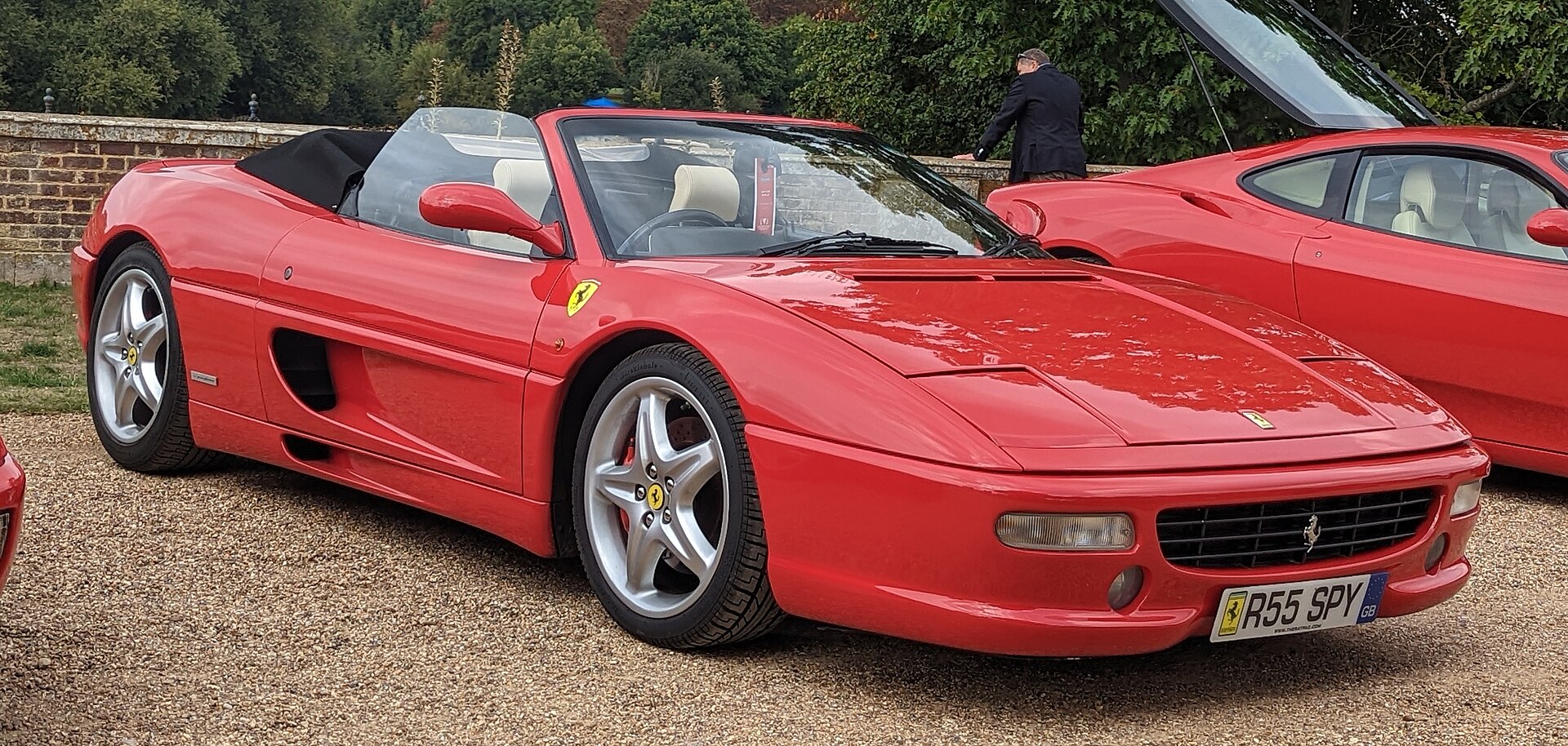
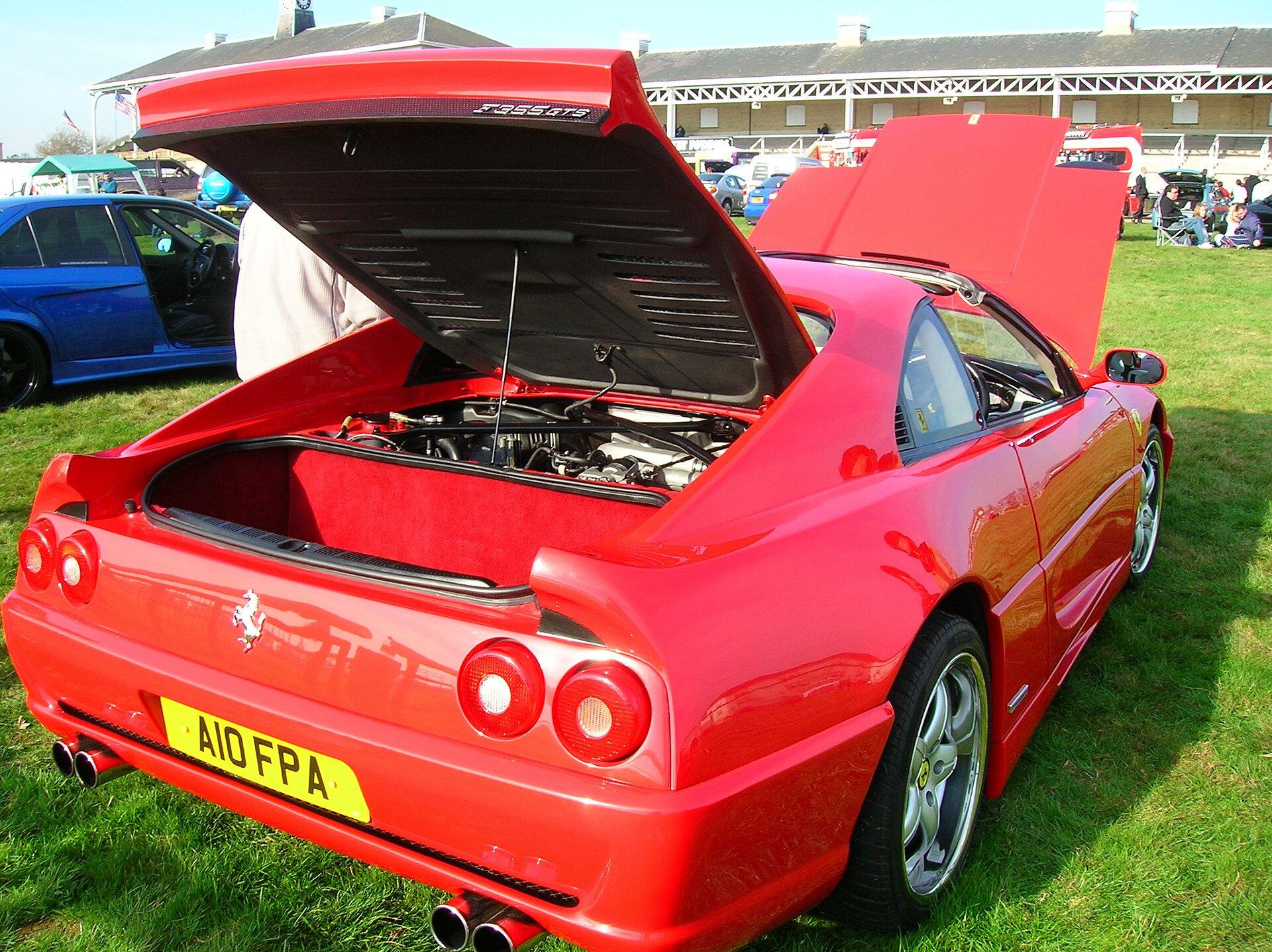
The GTS has a removable roof panel that is stored behind the seats; otherwise it is identical to the Berlinetta. The Spider has a fabric roof with electric operation — the first powered soft top on a Ferrari — and was the second most popular body style.
In March 1999 Ferrari launched the Spider "Serie Fiorano", a limited edition planned at 100 cars, of which 104 were built. It had suspension derived from the competition cars with a wider track, stiffer springs and a thicker anti-roll bar, a quicker steering rack, drilled brake discs and optional carbon fibre trim. Most of these cars went to the United States. In the last production year, European buyers could also order a Fiorano handling pack with similar parts; fewer than 2 per cent of cars had it.


F355 Challenge
From 1995 the F355 was the car of the Ferrari Challenge one-make racing series. Dealers converted standard Berlinettas with a factory kit that included a roll cage, racing seats and safety belts, a fire extinguisher, a rear wing, 14-inch Brembo brakes from the F40, 18-inch Speedline magnesium wheels, Pirelli slicks, stiffer springs and solid bushes. The engine, gearbox and dampers were sealed. Over time the factory supplied more parts each year, and the 1998 evolution cars were delivered almost complete. Wikipedia counts 108 F355 Challenge cars, all with manual gearboxes.
Road tests and ownership notes
Independent tests broadly confirmed Ferrari's figures. Car and Driver measured a top speed of 288 km/h, limited by the rev limiter, a standing quarter-mile in 13.0 seconds at 177 km/h, a stop from 113 km/h in 48 metres and 0.98 g of lateral grip on the skidpad — very high values for a road car of the mid-1990s.
Owners and buyers today should know about one safety action. In November 2009 Ferrari recalled about 2,400 F355 and F355 F1 cars from the 1995–1999 model years in the United States, because incorrectly placed screw clamps could damage the fuel-supply pipes and allow fuel to leak into the engine bay. Ferrari learned of the problem after a lawsuit over a fire that had injured a driver. Any car without proof of this work should be checked.
Legacy
The F355 improved on the 348 in performance and everyday drivability and became the most-produced Ferrari of its time, until the 360 and the F430 overtook it. It was the last Ferrari V8 with a steel body structure; its successor, the 360 Modena of 1999, moved to aluminium. Its F1 gearbox became standard practice in the industry. The story of the company is told in our history of Ferrari.
Photo gallery


Ferrari F355 in our rankings
- No. 18 of 91 · Most powerful cars of the 1990s (279 kW · top 20%)
- No. 314 of 859 · Most powerful cars (279 kW · top 37%)
- No. 62 of 127 · Most powerful Italian cars (279 kW · top 49%)
- No. 172 of 313 · Most powerful coupes (279 kW · top 55%)
- No. 645 of 912 · Longest-running car nameplates (5 years · top 77%)
More powerful than 80% of ranked cars of the 1990s in the 1CARS catalog (No. 18 of 91).
Ferrari F355 photos 6
FAQ
What does F355 stand for?
3.5 litres and five valves per cylinder.
How much power does the Ferrari F355 have?
279 kW (380 PS) at 8,250 rpm and 363 Nm at 6,000 rpm.
How many Ferrari F355s were built?
11,273: 4,871 Berlinettas, 3,717 Spiders and 2,577 GTS.
Was the F355 the first car with paddle shifters?
Wikipedia describes the 1997 F355 F1 as the first road car with Formula 1-style electro-hydraulic gearbox management operated by paddles.
What replaced the Ferrari F355?
The 360 Modena, introduced in 1999.
Data sources
Data checked by an editor against the sources below.