 Bugatti Tourbillon
Specs, engines and history
Published Sources (1) Report an error
By Felix Hartmann, Automotive Technology & EV Contributor
- Built
- 2026–present
- Top power
- 1,324 kW (1,800 PS)
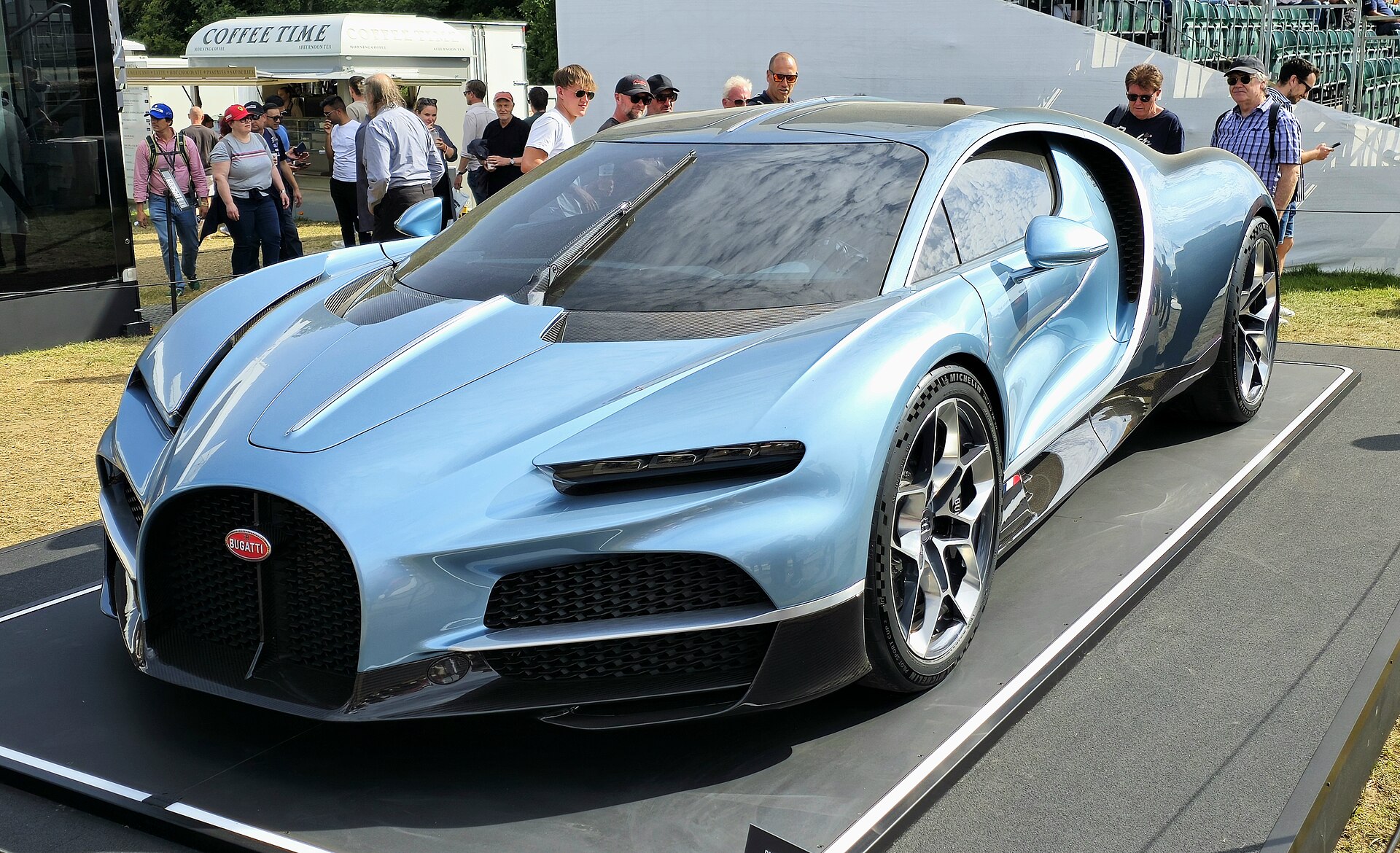
The Bugatti Tourbillon is the hybrid hypercar that replaces the Chiron at the top of Bugatti's range. It was revealed in an online presentation on 20 June 2024, and it combines a naturally aspirated 8.3-litre V16 engine developed with Cosworth with three electric motors. Bugatti plans to build 250 cars in Molsheim, France, with production starting in 2026. It is the first new Bugatti of the Bugatti Rimac era and shares no components with the Chiron.
In short
- Revealed 20 June 2024; 250 cars planned, built at the Bugatti Atelier in Molsheim from 2026; price announced at €3.8 million at the 2024 reveal.
- 8,355 cc naturally aspirated Cosworth V16 with 735 kW (1,000 PS) at 9,000 rpm, plus three electric motors; total output 1,324 kW (1,800 PS) and 2,300 Nm.
- 24.8 kWh battery inside the carbon monocoque, about 60 km of electric range (WLTP), eight-speed dual-clutch gearbox, all-wheel drive.
- Bugatti targets: 0–100 km/h in under 2.0 s, top speed 380 km/h, or 445 km/h with the speed key.
Bugatti Tourbillon at a glance
| Specification | Bugatti Tourbillon |
|---|---|
| Production | from 2026, Molsheim (France); 250 cars planned |
| Body | two-door, two-seat coupé with butterfly doors |
| Chassis | T800 carbon composite monocoque with integrated battery |
| Engine | 8,355 cc V16, naturally aspirated, made by Cosworth |
| Engine power | 735 kW (1,000 PS) at 9,000 rpm, 900 Nm |
| Electric motors | three; 588 kW (800 PS) combined |
| System power | 1,324 kW (1,800 PS) |
| System torque | 2,300 Nm |
| Gearbox | eight-speed dual-clutch, all-wheel drive |
| Kerb weight | 1,995 kg |
| Predecessor | Bugatti Chiron |
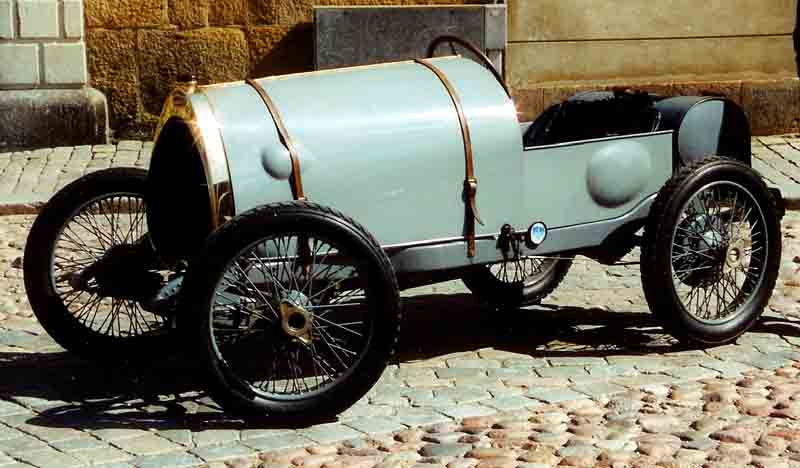
The Tourbillon follows a short line of modern Bugattis: the EB110 of the 1990s, the Bugatti Veyron of 2005 and the Bugatti Chiron of 2016. All models of the brand are listed in the Bugatti catalogue, and the background of the company founded by Ettore Bugatti is told in our Bugatti history.
Development and reveal
The Tourbillon is the first all-new Bugatti developed after the brand joined Rimac in the Bugatti Rimac joint venture, led by Mate Rimac. The Chiron's quad-turbo W16 had reached the end of its life with the Bolide and the W16 Mistral, and the company chose a different route for its next car: a large naturally aspirated engine combined with electric power, rather than a full battery-electric car.
Bugatti approached Cosworth in 2021 to design and manufacture the new engine. According to Cosworth, it took 13 months from the first detailed designs to the first V16 running on the dyno at its Northampton headquarters. The engine was first teased in February 2024, and the complete car was shown on 20 June 2024. The name comes from the tourbillon, a mechanism used in high-end mechanical watches to improve their accuracy — a hint at the watchmaking theme that runs through the car.
After the reveal, the Tourbillon toured events around the world. It won the public prize at the Chantilly Arts & Elegance Richard Mille and was then shown in Doha, Qatar, in October 2024. In January 2026 Bugatti said that customer configurations had started in 2025, that production would begin in 2026 and that a new Atelier with double the production capacity was being built in Molsheim to assemble the car and its hybrid powertrain.

Design: form follows performance
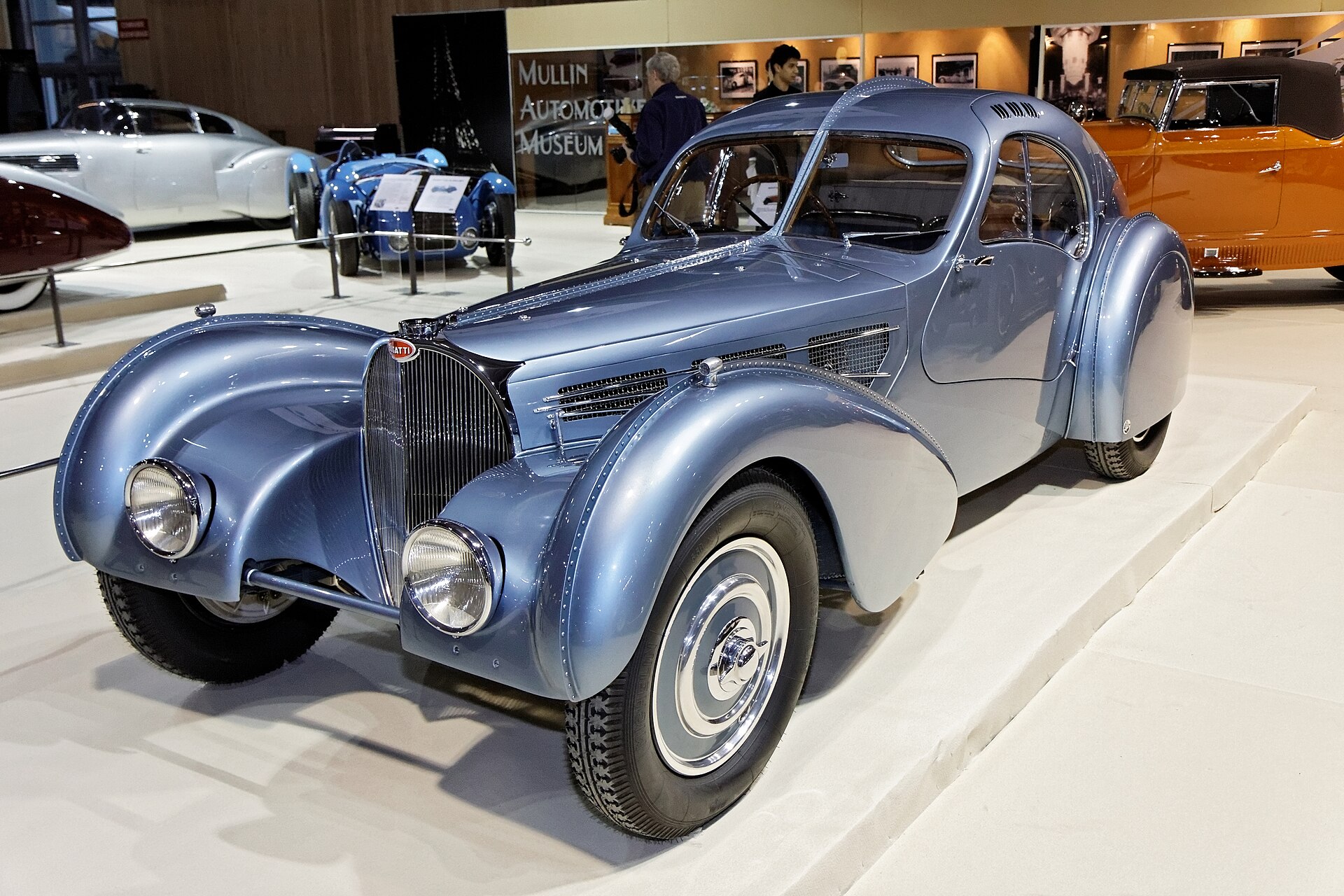
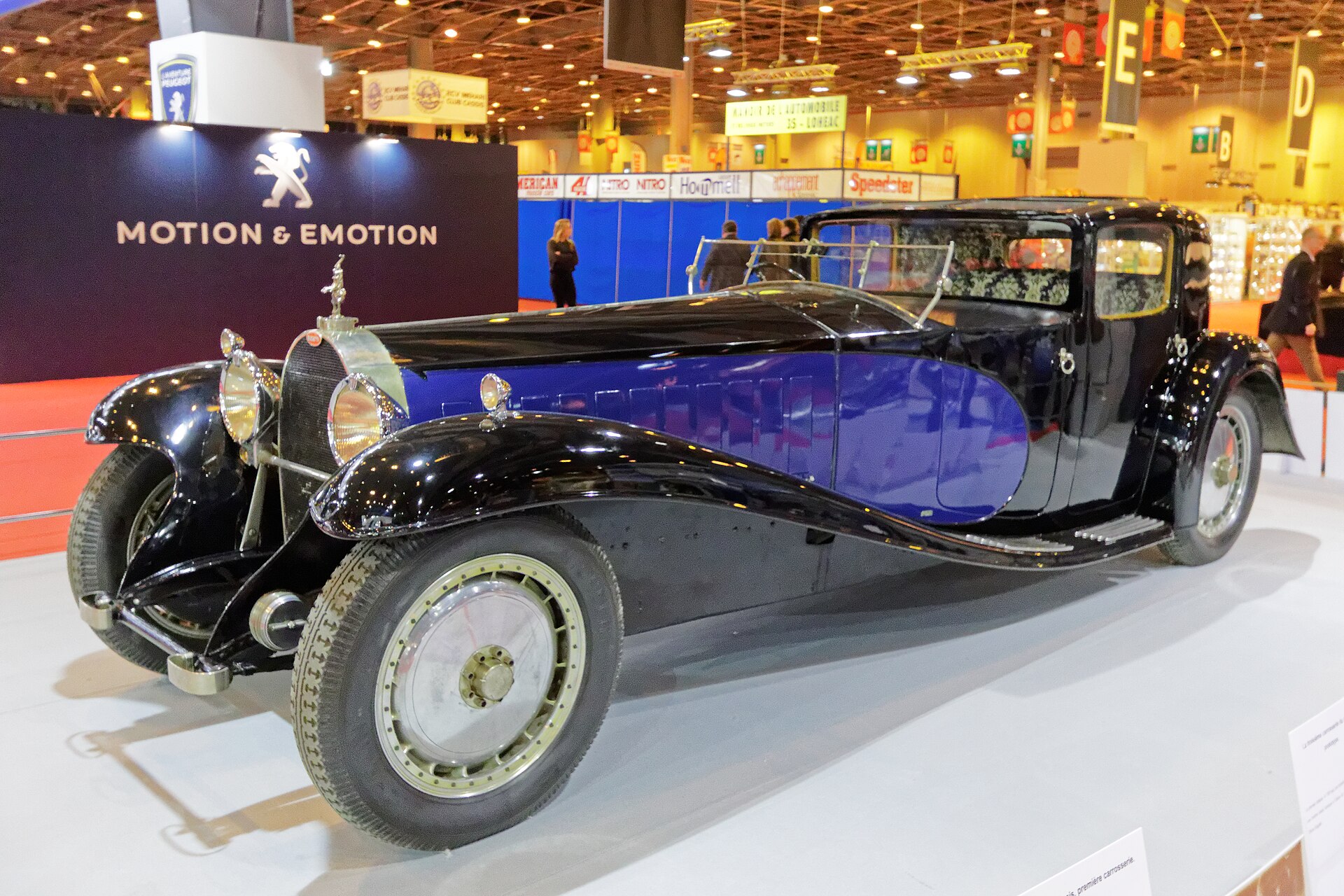
Bugatti describes the Tourbillon as a completely new design. The chief designer was Frank Heyl. The car keeps the signature elements of the brand: the horseshoe grille, the C-shaped "Bugatti line" on the sides, a central ridge running from nose to tail and a two-tone colour split. Bugatti says the design draws on the Type 57SC Atlantic, the Type 35 and the Type 41 Royale.
Another theme is "skeletonised" engineering, borrowed from watchmaking: parts of the mechanism are meant to be visible and to become part of the design. The doors are of the butterfly type. Under the body, the rear diffuser also works as part of the crash structure, replacing a separate rear crash beam to save weight.
The Tourbillon is 4,671 mm long, 2,051 mm wide and 1,189 mm high, on a 2,740 mm wheelbase. With a kerb weight of 1,995 kg it is a large car, but the combination of carbon structure and lighter components keeps the weight in check given its battery and three electric motors.

Interior: a watch on the dashboard
The most unusual part of the cabin is the instrument cluster. It is fully analogue, driven by mechanical gears and built like a watch movement. The needles of the speedometer and the rev counter look like the hands of a watch, and the cluster is made of titanium by the Swiss watchmaker Concepto.
To keep the instruments in view, the steering wheel has a fixed central hub; only the outer rim turns. A centre touchscreen for infotainment retracts into the dashboard when it is not needed. Bugatti's reasoning is that screens age quickly and the car should stay "timeless". The centre console uses machined aluminium and crystal glass.

Engine and hybrid system
The heart of the Tourbillon is the Cosworth V16. It has a displacement of 8,355 cc (bore 92 mm, stroke 78.55 mm), a cross-plane crankshaft, a 90-degree angle between the cylinder banks and dry-sump lubrication. It revs to 9,000 rpm. Cosworth gives the engine weight as 252 kg; the crankshaft alone is a single billet about 900 mm long, and the whole engine is just under one metre long. Titanium connecting rods and a carbon fibre intake plenum help to save weight.
Three electric motors support the engine: two on the front axle and a third at the rear. The battery has a capacity of 24.8 kWh and sits in the central tunnel in front of the engine, as part of the monocoque. It gives an electric range of about 60 km on the WLTP cycle. Power reaches the road through an eight-speed dual-clutch gearbox mounted lengthwise behind the engine.
| Component | Power | Torque |
|---|---|---|
| Cosworth V16 | 735 kW (1,000 PS) at 9,000 rpm | 900 Nm |
| Two front electric motors | 493 kW (670 PS) | — |
| Third (rear) electric motor | 246 kW (335 PS) | — |
| Electric motors combined | 588 kW (800 PS) | — |
| Total system | 1,324 kW (1,800 PS) | 2,300 Nm |
The outputs of the individual motors are taken from the Wikipedia specification table; their sum is higher than the combined electric figure of 588 kW (800 PS) that Bugatti quotes for the system.
Chassis and performance
The monocoque is made of T800 carbon composite, with front and rear frames using 3D-printed braces. The forged aluminium multi-link suspension was developed with Divergent Technologies, the parent company of Czinger, using 3D-printed parts designed with the help of artificial intelligence. Bugatti says the suspension is 45 per cent lighter than that of the Chiron.
Bugatti's performance targets for the Tourbillon are:
| Figure | Bugatti target |
|---|---|
| 0–100 km/h | under 2.0 s |
| 0–200 km/h | under 5.0 s |
| 0–300 km/h | under 10.0 s |
| 0–400 km/h | under 25.0 s |
| Top speed | 380 km/h; 445 km/h with the speed key (limited) |
These are manufacturer figures announced before type approval. Bugatti stated in January 2026 that the car was not yet type-approved, so official fuel consumption and emissions figures were not available at that time.
Production and price
Bugatti plans 250 Tourbillons, all hand-built at the Atelier in Molsheim, the town in Alsace where the brand was founded. At the 2024 reveal the price was announced as €3.8 million. Customers began configuring their cars in 2025, choosing from 23 new exterior colours, 20 new leather combinations and an optional "Équipe Pur Sang" package.
Legacy and place in the Bugatti line
The Tourbillon marks the end of the W16 era that began with the Veyron and continued with the Chiron. It keeps the core Bugatti idea of a very fast car that is also comfortable and luxurious, but it moves to a hybrid layout with a high-revving naturally aspirated engine. With its mechanical instruments and visible engineering, it also tries to answer a question every modern car maker faces: how to make a car that will not look dated when its screens and software do.
Photo gallery

Bugatti Tourbillon in our rankings
- No. 1 of 56 · Most powerful French cars (1,324 kW)
- No. 4 of 239 · Most powerful cars of the 2020s (1,324 kW)
- No. 5 of 313 · Most powerful coupes (1,324 kW)
- No. 5 of 859 · Most powerful cars (1,324 kW)
More powerful than 99% of ranked cars in the 1CARS catalog (No. 5 of 859).
FAQ
How much power does the Bugatti Tourbillon have?
The V16 engine produces 735 kW (1,000 PS); with the three electric motors the total output is 1,324 kW (1,800 PS) and 2,300 Nm.
Who builds the Tourbillon engine?
The 8.3-litre naturally aspirated V16 was designed and is made by Cosworth in Northampton, England.
How fast is the Bugatti Tourbillon?
Bugatti quotes a limited top speed of 380 km/h, or 445 km/h with the speed key, and 0–100 km/h in under 2.0 seconds.
How many Tourbillons will be built?
Bugatti plans 250 cars, built in Molsheim from 2026.
Can the Tourbillon drive on electricity alone?
Yes. The 24.8 kWh battery gives about 60 km of electric range on the WLTP cycle.
Data sources
Data checked by an editor against the sources below.