
 Opel Corsa
All generations, specs and history
Published Sources (2) Report an error
By Felix Hartmann, Automotive Technology & EV Contributor
- Built
- 1982–present
- Generations
- 6
- New price
- from about €14,003 (2019)
- Used price today
- about €8,500–16,000 (AutoScout24, Nov 2026)
Timeline
Corsa generations
Click a generation for its own page


- Corsa A 1982–1993 · Sedan, Hatchback
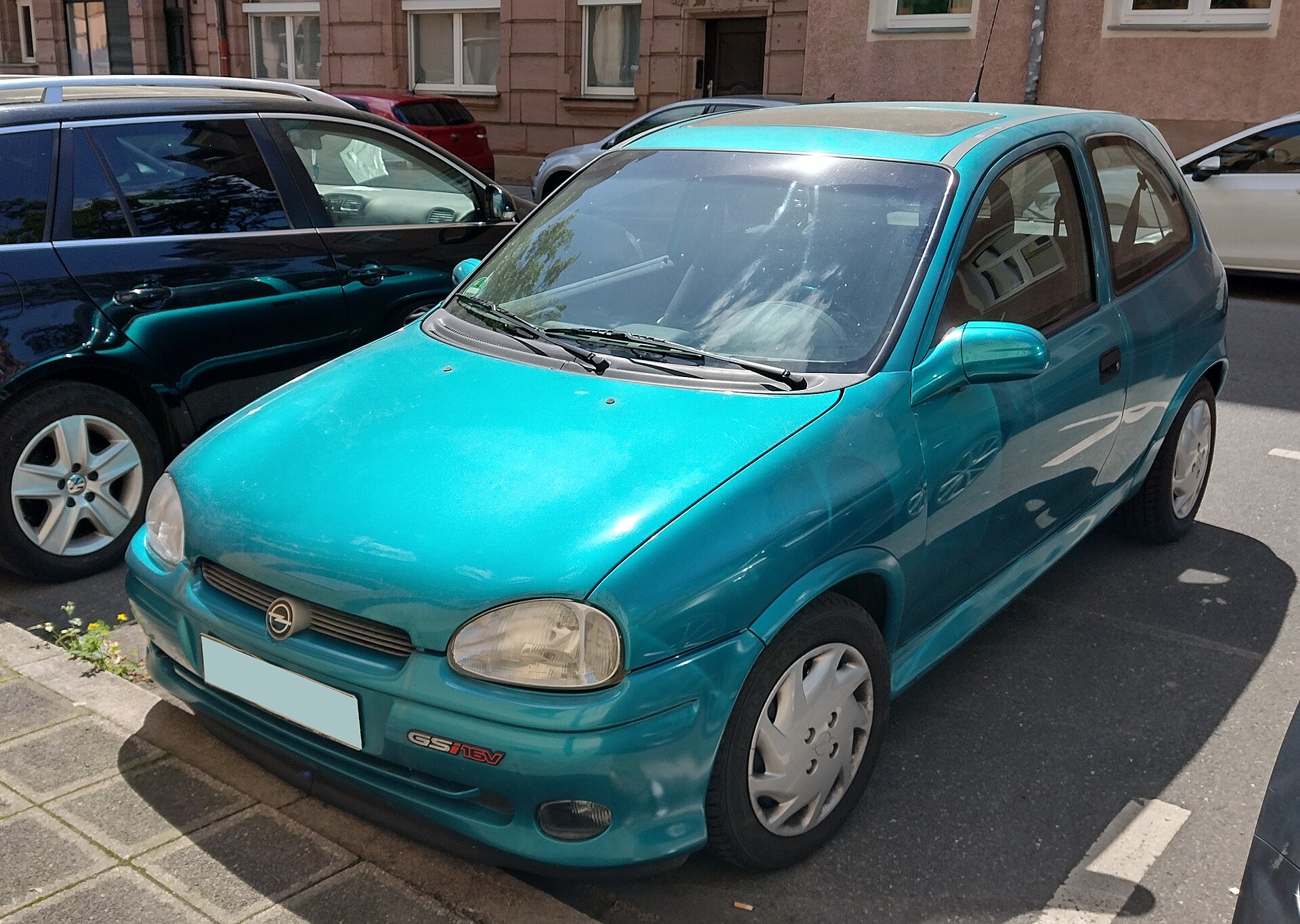
- Corsa B 1993–2000 · Hatchback
- Corsa C 2000–2006 · Hatchback
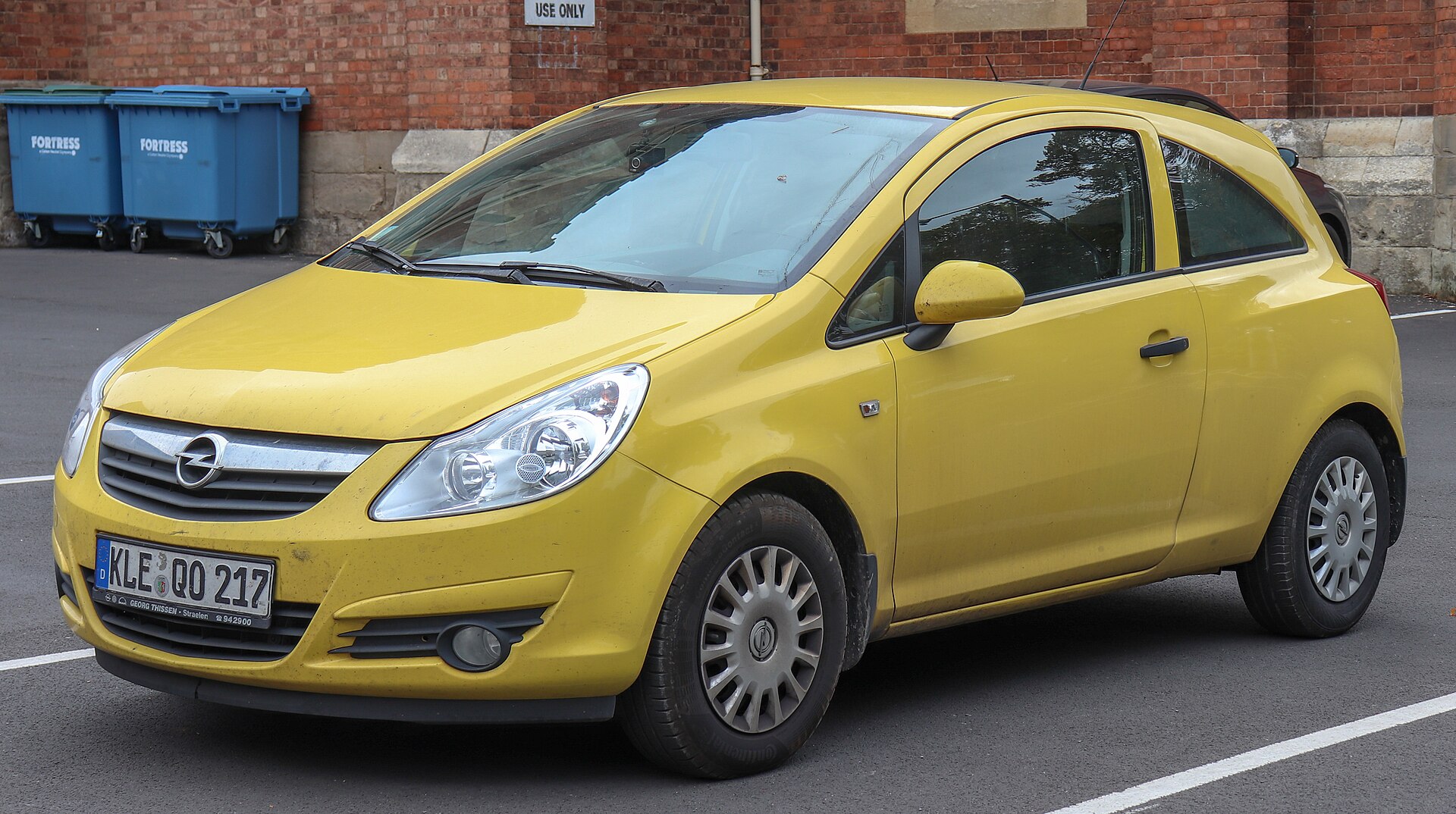
- Corsa D 2006–2014 · Hatchback
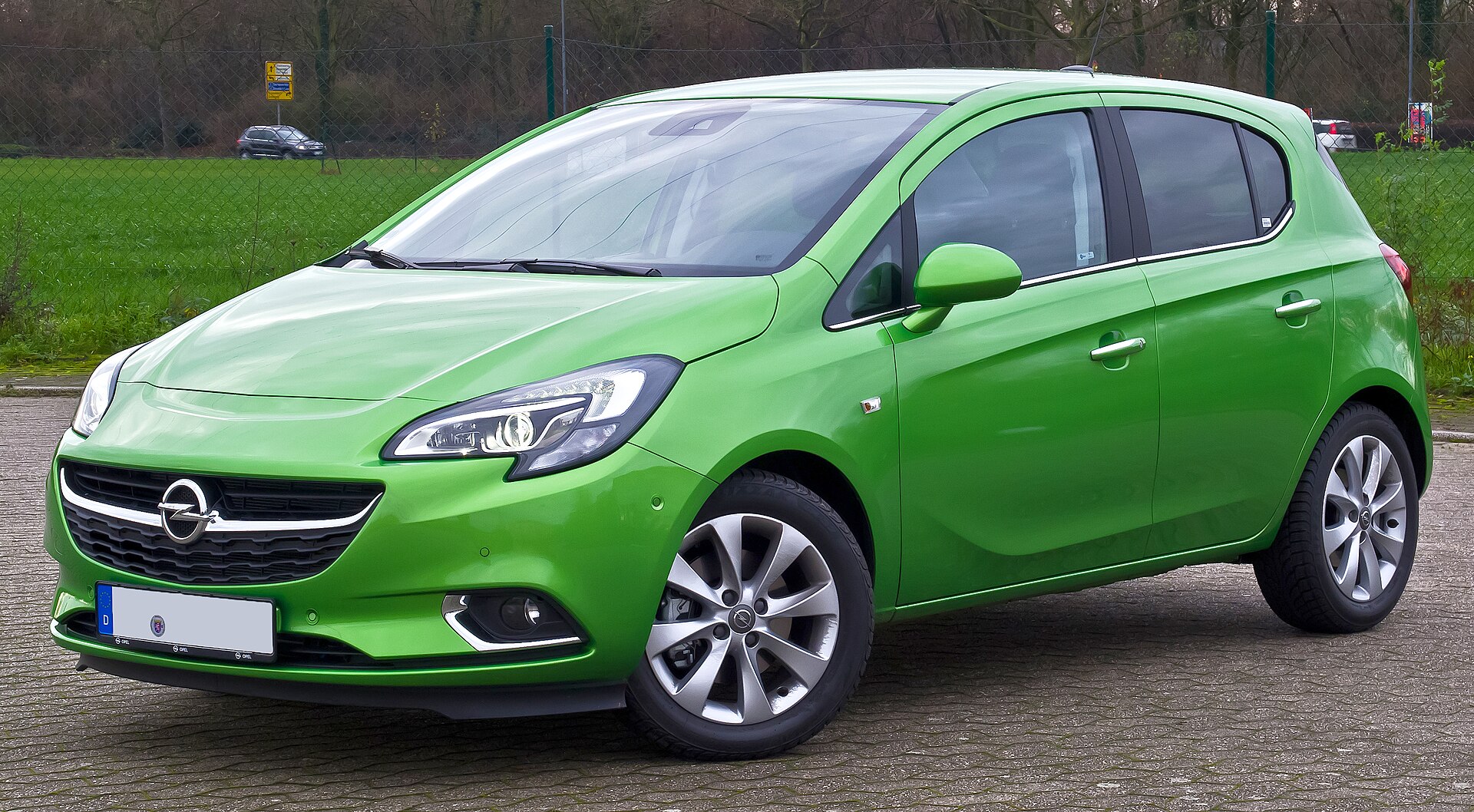
- Corsa E 2014–2019 · Hatchback
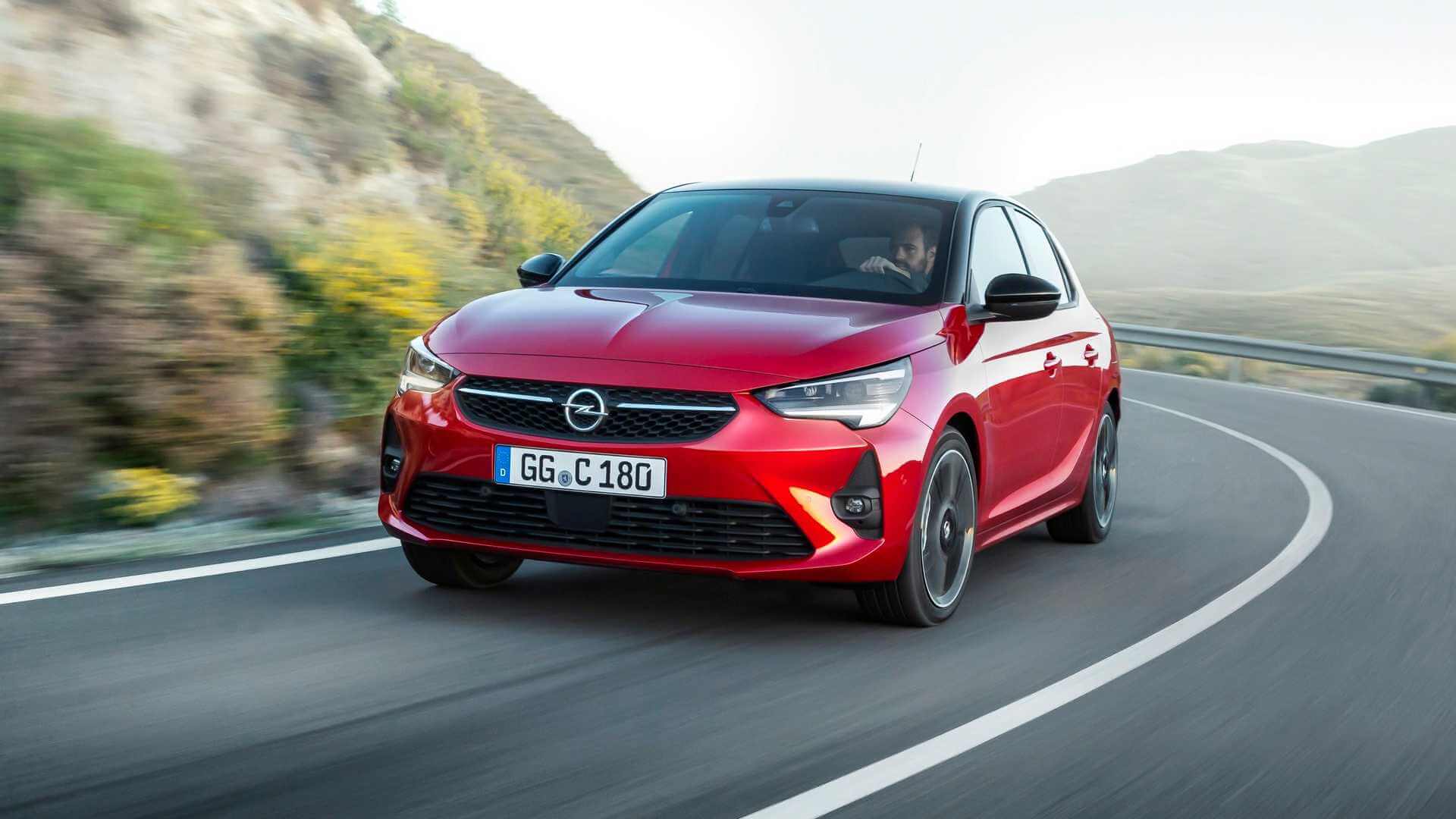
- Corsa F Current 2019–now · Hatchback
Newest first · 6 generations since 1982
-
2019
-
2014
-
2006
- 2000 C 2000–2006 · Hatchback
-
1993
- 1982 A 1982–1993 · Sedan, Hatchback
All generations by year: Corsa F (2019–now) · Corsa E (2014–2019) · Corsa D (2006–2014) · Corsa C (2000–2006) · Corsa B (1993–2000) · Corsa A (1982–1993)
Which one is mine?
Pick the year of first registration to see which generation it is.
- Corsa F 2019–present
- Corsa E 2014–2019
- Corsa D 2006–2014
- Corsa C 2000–2006
- Corsa B 1993–2000
- Corsa A 1982–1993
Verdict
Our verdict · Felix Hartmann
The new Corsa is an evolution rather than a fresh start, but a lot has changed technically and visually, and the car is better equipped than before. Add a high level of safety, a quality modern cabin, economical engines and the electric Corsa-e, and the sixth-generation Corsa is a strong contender in the supermini class.
Watch out
- Wet timing belt degradation (1.2 PureTech petrol) (Corsa F (2019–present))
- Inadequate oil supply, risk of engine damage (2025 recall) (Corsa F (2019–present))
- Timing chain too thin and can break (1.5 diesel) (Corsa F (2019–present))
- Fuel rail or pipe connections can leak (recall, fire risk) (Corsa F (2019–present))
Watch-out points come from our verified ownership data, each with a source.
The Opel Corsa is a front-wheel-drive supermini built by the German manufacturer Opel since 1982, in three- or five-door hatchback form and, in earlier generations, also as a saloon. Six generations have been made so far. The latest, the Corsa F, was unveiled in June 2019 and shown in full at the Frankfurt motor show that autumn. Developed after PSA took over Opel, it shares its platform with the Peugeot 208 and offers stylish looks, a modern cabin, turbocharged engines and, for the first time, a fully electric version, the Corsa-e.
In short
- Six generations: A (1982), B (1993), C (2000), D (2006), E (2014) and F (2019, facelift 2023).
- The Corsa F uses PSA's Common Modular Platform (CMP) with high-strength steel and an aluminium bonnet.
- Petrol 1.2 engines with 55–96 kW (75–130 PS), a 1.5 diesel with 75 kW (102 PS) and the Corsa-e with 100 kW (136 PS) and a 50 kWh battery.
- 309 litres of boot space in petrol and diesel versions, 267 litres in the Corsa-e.
Known problems
-
Critical Corsa F (2019–present)
Wet timing belt degradation (1.2 PureTech petrol) 2019–2023
Oil pressure or engine warning light, rising oil use, and in bad cases engine damage.
Fix: New belt and cleaning of the oil system; Stellantis covers qualifying cases if servicing followed the plan.
Verified Source: What Car? Used Vauxhall Corsa 2019-present reliability -
Critical Corsa F (2019–present)
Inadequate oil supply, risk of engine damage (2025 recall) all years
Usually no warning before oil starvation damages the engine.
Fix: Dealer recall inspects and corrects the oil supply components free of charge.
Verified Source: What Car? Used Vauxhall Corsa 2019-present reliability -
Critical Corsa F (2019–present)
Timing chain too thin and can break (1.5 diesel) 2019–2023
Rattle from the engine, then sudden engine failure if the chain breaks.
Fix: The chain and related parts are replaced under recall.
Verified Source: Gebrauchtwagenberater: Opel Corsa F problems and weak points -
High Corsa F (2019–present)
Fuel rail or pipe connections can leak (recall, fire risk) 2022–2025
Fuel smell in or around the car; leaking fuel near hot parts.
Fix: Dealer recall checks and replaces the fuel line connections.
Verified Source: Gebrauchtwagenberater: Opel Corsa F problems and weak points -
Low Corsa F (2019–present)
Infotainment, digital dashboard and stop-start warnings all years
Frozen or blank screens, dashboard glitches, and engine management or stop-start battery warnings.
Fix: Software updates; some cars need a new stop-start battery or module.
Verified Source: What Car? Used Vauxhall Corsa 2019-present reliability -
Low Corsa F (2019–present)
EAT8 automatic slow to respond when manoeuvring all years
Jerky changes and a delay before drive engages when parking.
Fix: Software update and gearbox adaptation; failures are rare.
Verified Source: Gebrauchtwagenberater: Opel Corsa F problems and weak points -
Critical Corsa E (2014–2019)
Steering linkage can break under heavy load (recall) 2014–2015
Steering failure after a hard knock such as hitting a kerb when parking.
Fix: Recall work replaces the steering linkage free of charge.
Verified Source: ADAC Gebrauchtwagen-Info: Opel Corsa E (2014-2019) Benziner -
High Corsa E (2014–2019)
Handbrake lever segment can fail (manual cars, recall) 2016–2017
The handbrake does not hold and the car can roll away.
Fix: Recall work replaces the toothed segment of the handbrake lever.
Verified Source: ADAC Gebrauchtwagen-Info: Opel Corsa E (2014-2019) Benziner -
Medium Corsa E (2014–2019)
Easytronic automated manual: slow, jerky changes all years
Long pauses between gears, jerky pull-away and higher fuel use.
Fix: Clutch adaptation or actuator repair; a manual car avoids the problem.
Verified Source: ADAC Gebrauchtwagen-Info: Opel Corsa E (2014-2019) Benziner -
Medium Corsa E (2014–2019)
Ignition coil and accelerator pedal sensor faults (Corsa E petrols) all years
Misfire, engine warning light and poor throttle response; stumbling at part throttle on 1.0 and 1.4 Turbo.
Fix: New coil or pedal sensor; a software update cures the part-throttle stumble.
Verified Source: Gebrauchtwagenberater: Opel Corsa E problems and weak points (October 2025)
Opel Corsa at a glance
The name comes from the Italian word for "race" or "run". In the UK the car was sold as the Vauxhall Nova at first and as the Vauxhall Corsa from 1993. More Opel models are listed in our Opel catalogue.
| Generation | Code | Years | Notes |
|---|---|---|---|
| First | A | 1982–1993 | Built in Zaragoza, Spain; three- and five-door hatchbacks, two- and four-door saloons |
| Second | B | 1993–2000 | Also sold as the Holden Barina in Australia |
| Third | C | 2000–2006 | Facelift 2004; built longer in South America |
| Fourth | D | 2006–2014 | SCCS platform shared with the Fiat Grande Punto; facelift 2010 |
| Fifth | E | 2014–2019 | Shown at the Paris motor show 2014; chassis carried over from the D |
| Sixth | F | 2019 onwards | CMP platform; Corsa-e; facelift 2023 |
History
The Corsa story began in 1982 with the Corsa A, offered as a three- or five-door hatchback and a two- or four-door saloon. The second generation, Corsa B, arrived in 1993, followed by the Corsa C in 2000, which was updated in 2004 with a better look, cabin and technology and was built in Europe until 2006 (longer in South America). The fourth generation, Corsa D, was unveiled in 2006 and updated in 2010, and it was replaced in 2014 by the fifth-generation Corsa E. The sixth generation, Corsa F, debuted in an online presentation in June 2019. This article focuses on the Corsa F.
Exterior
The new Corsa came as little surprise: as soon as the new Peugeot 208 appeared, it was clear that the same platform would underpin the next Opel. The two cars do not look alike overall, but some details reveal their relationship - French proportions combined with German minimalism.
Compared with the previous generation, the new Corsa looks more assertive. The front has a compact black plastic grille with Opel's typical mesh, two horizontal chrome bars and the lightning-bolt badge in the centre. The headlights have a sporty, slightly aggressive look. Base versions have halogen headlights, others LED units, and the top option is IntelliLux matrix LED lighting. The headlights are clean and free of superfluous elements, and Opel did not copy the 208's vertical LED "fangs"; instead, small LED fog lamps with black inserts sit at the sides of the bumper. The bumper has a full-width lower grille that also holds sensors for the comfort and safety systems. The bonnet has a curved edge running from the windscreen pillars to the grille and a central line reminiscent of a shark's fin.
The sporty GS Line version has more aggressive bumpers, a large tailgate spoiler, visible twin exhaust outlets and 17-inch wheels with a unique design.
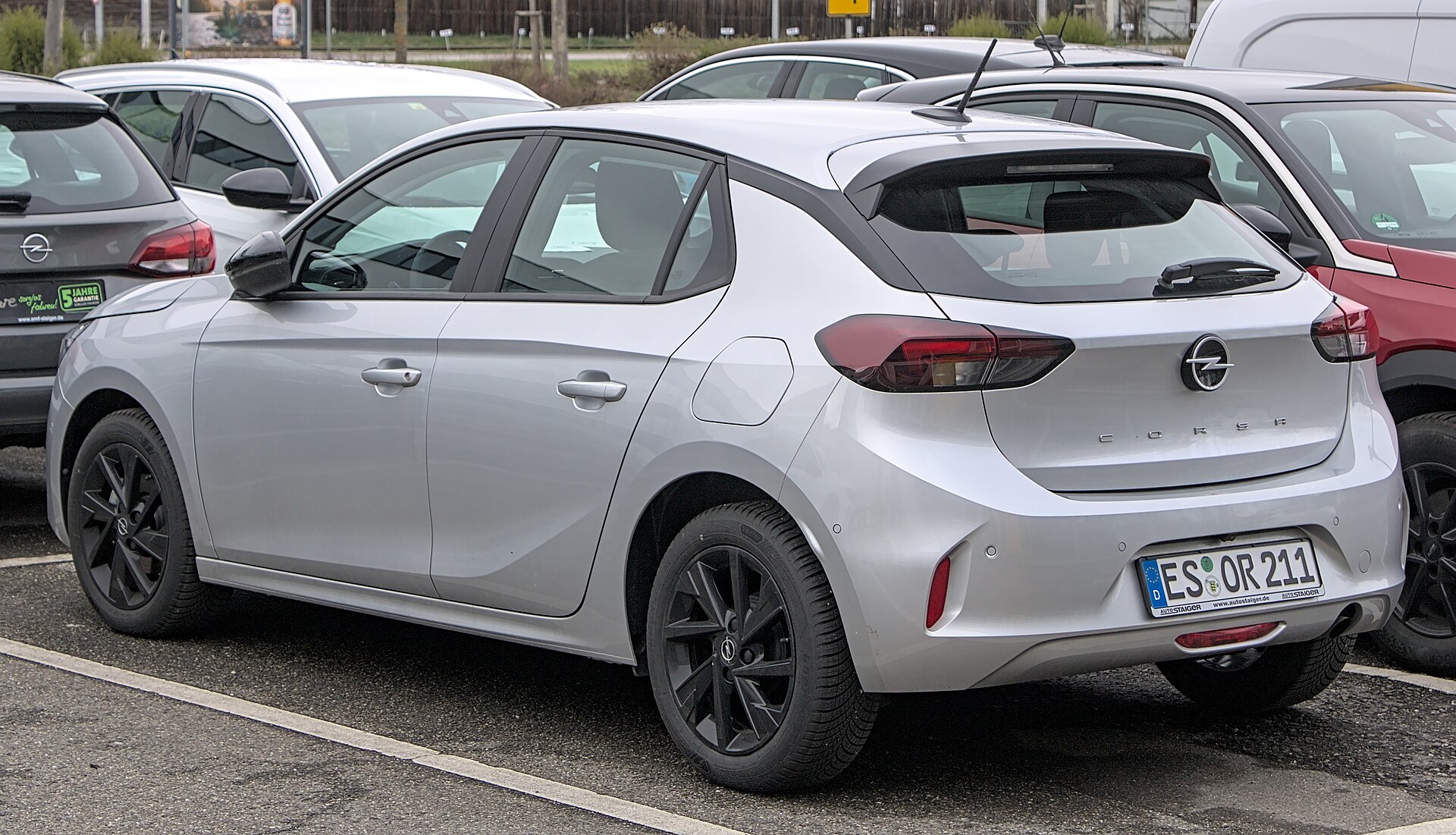
In profile the Corsa resembles the 208, with similar creases at the bottom of the doors, a curved horizontal line on the doors and smooth lines on the wings. Eight paint colours are offered, and the roof can be painted black. The mirrors sit in the corners of the front windows; even base versions have electric adjustment and heating, and higher trims add power folding. The roof is plain, with a rod antenna, and a fixed panoramic glass roof is optional. Entry versions have 15-inch steel wheels, others 16- or 17-inch alloys. Ground clearance is an average 140 mm.
At the rear, a sporty spoiler with an LED brake light tops the tailgate, along with the badge, model and version badges and a wiper. The LED tail lights have a black background and are split into two parts, mostly on the body with a smaller section on the tailgate. The large rear bumper has vertical fog lamps or reflectors at the sides and a recess for the number plate and rear camera in the centre.
Interior
The cabin keeps a familiar layout. The Corsa remains an affordable supermini, so it uses decent plastics and fabric upholstery, but it is attractively designed, with bright inserts on the dashboard and door panels. The driver has a three-spoke multifunction steering wheel with thumb grips, flattened at the bottom on the GS Line, and higher trims get a digital instrument panel.
The Corsa seats five. The front seats are ergonomic, with well-defined bolsters, firm padding, a sufficient range of adjustment and heating. The centre console carries a 7-inch infotainment touchscreen, with a 10-inch screen as an option, and two long air vents above it. Below is a climate control panel with small knobs and a compact display, which flows into the tunnel with wireless charging and, on automatic versions, a small gear-selector lever reminiscent of Peugeot models.
The rear bench is comfortably shaped, with reasonable space in every direction. The boot is well shaped and holds 309 litres, compared with 285 litres in the previous generation; folding the 60/40 split rear seats more than doubles the space. The Corsa-e's boot is slightly smaller at 267 litres.
Engines and transmissions
| Engine | Fuel | Power (kW / PS) | Torque | Gearbox |
|---|---|---|---|---|
| 1.2 three-cylinder, naturally aspirated | Petrol | 55 kW / 75 PS | 118 Nm | 5-speed manual |
| 1.2 Turbo three-cylinder | Petrol | 74 kW / 100 PS | 205 Nm | 6-speed manual or automatic |
| 1.2 Turbo three-cylinder | Petrol | 96 kW / 130 PS | 230 Nm | 8-speed automatic |
| 1.5 four-cylinder turbodiesel, common-rail | Diesel | 75 kW / 102 PS | 250 Nm | 6-speed manual |
| Corsa-e electric motor, 50 kWh battery | Electric | 100 kW / 136 PS | 260 Nm | Single speed |
The petrol engines use 4.1–6.2 l/100 km and the diesel 3.2–4.5 l/100 km. All versions are front-wheel drive. Depending on the engine, the Corsa reaches 100 km/h in 8.7–13.2 seconds and has a top speed of 174–208 km/h. Later, 48-volt mild-hybrid versions of the 1.2 Turbo with 81 and 107 kW (110 and 145 PS) were added.
The Corsa-e shares its drivetrain with the Peugeot e-208. It reaches 100 km/h in 8.1 seconds and has a WLTP range of 330 km at launch; later versions have a larger battery and 115 kW (156 PS).
Chassis
The CMP platform uses a transverse engine, extensive high-strength steel in the body structure and an aluminium bonnet. The front suspension uses MacPherson struts and the rear a semi-independent torsion beam, with coil springs and anti-roll bars. Rack-and-pinion steering has electric assistance. The front brakes are ventilated discs; the rear brakes are drums or discs, depending on the version.
Safety and equipment
Despite its small size, the Corsa offers an impressive set of comfort and safety systems for its class: front and side airbags, curtain airbags, cruise control, ABS, ESP and traction control, hill-start assist, emergency brake assist, lane keeping assist, driver fatigue monitoring, ISOFIX mounts, central locking, an immobiliser, front and rear parking sensors, a rear camera, a surround-view camera, blind-spot monitoring, keyless entry, LED lights and light and rain sensors, depending on the version.
A typical entry version has four airbags, 15-inch wheels, a 7-inch touchscreen, a digital instrument panel, air conditioning, heated electric mirrors, halogen headlights, ABS and EBD and electric windows. Options include leather upholstery, the 10-inch infotainment system, matrix headlights, dual-zone climate control, a heated steering wheel and seats, automatic parking, a rear camera and front seats with massage.
What owners say
Owners of earlier Corsas like their pleasant looks, economy and compact size. The cabin is comfortable and well suited to city driving, and safety and equipment levels are high. On the downside, they mention low ground clearance, a fairly small boot and limited power; at high motorway speeds the car can feel less stable. The new generation addresses some of these points.
Rivals
The Corsa competes with the Peugeot 208, Renault Clio, Volkswagen Polo, Toyota Yaris, SEAT Ibiza, Skoda Fabia and, until 2023, the Ford Fiesta.
Opel Corsa evolution in numbers
Did you know?
- The Opel Corsa has been around for 44 years: 6 generations in our catalog since 1982.
- The longest-running generation is the Corsa A (1982–1993): 11 years.
Owning a Opel Corsa
Common problems, best and worst years, maintenance and running costs - only data checked by our editors, with sources.
Best years
- 2024–2025 Corsa F (2019–present) - The 48-volt mild hybrids use a timing chain instead of the 1.2 PureTech wet belt, with no known problems reported so far. Verified Source: Gebrauchtwagenberater: Opel Corsa F problems and weak points
- 2017–2019 Corsa E (2014–2019) - ADAC breakdown figures improve from 16.6 per 1,000 for 2017 to 10.9 for 2019, against over 21 for 2014-2015 cars. Verified Source: ADAC Gebrauchtwagen-Info: Opel Corsa E (2014-2019) Benziner
Years to avoid
- 2019–2023 Corsa F (2019–present) - The 1.2 PureTech wet timing belt can weaken early on these cars if servicing was neglected; buy only with a full oil-change record. Verified Source: What Car? Used Vauxhall Corsa 2019-present reliability
- 2014–2015 Corsa E (2014–2019) - Early Corsa E cars have ADAC's worst breakdown figures (21.4 and 21.5 per 1,000) and the steering linkage recall. Verified Source: ADAC Gebrauchtwagen-Info: Opel Corsa E (2014-2019) Benziner
Questions and answers
What are the most common Opel Corsa problems?
Wet timing belt degradation (1.2 PureTech petrol) (2019–2023): Oil pressure or engine warning light, rising oil use, and in bad cases engine damage.; Inadequate oil supply, risk of engine damage (2025 recall) (all years): Usually no warning before oil starvation damages the engine.; Timing chain too thin and can break (1.5 diesel) (2019–2023): Rattle from the engine, then sudden engine failure if the chain breaks.; Fuel rail or pipe connections can leak (recall, fire risk) (2022–2025): Fuel smell in or around the car; leaking fuel near hot parts.; Infotainment, digital dashboard and stop-start warnings (all years): Frozen or blank screens, dashboard glitches, and engine management or stop-start battery warnings..
What are the best years for the Opel Corsa?
2024–2025: The 48-volt mild hybrids use a timing chain instead of the 1.2 PureTech wet belt, with no known problems reported so far.; 2017–2019: ADAC breakdown figures improve from 16.6 per 1,000 for 2017 to 10.9 for 2019, against over 21 for 2014-2015 cars..
Which Opel Corsa years should you avoid?
2019–2023: The 1.2 PureTech wet timing belt can weaken early on these cars if servicing was neglected; buy only with a full oil-change record.; 2014–2015: Early Corsa E cars have ADAC's worst breakdown figures (21.4 and 21.5 per 1,000) and the steering linkage recall..
Data checked November 12, 2026 Used Opel Corsa buying guide
Image credits · Photos from Wikimedia Commons under free licences
- Opel Corsa B · Photo: Interesting.cars.insta / Wikimedia Commons, CC0
- Opel Corsa D · Photo: Vauxford / Wikimedia Commons, CC BY-SA 4.0
- Opel Corsa E · Photo: M 93 / Wikimedia Commons, CC BY-SA 3.0 de
- Opel Corsa F · Photo: Alexander-93 / Wikimedia Commons, CC BY-SA 4.0
Opel Corsa in our rankings
- No. 28 of 1192 · Longest-running car nameplates (44 years · top 3%)
- No. 23 of 415 · Oldest car models still on sale (44 years · top 6%)
- No. 43 of 464 · Cars with the most generations (6 generations · top 14%)
In production longer than 97% of ranked nameplates in the 1CARS catalog (No. 28 of 1192).
FAQ
When was the sixth-generation Opel Corsa launched?
It was unveiled in June 2019 and shown at the Frankfurt motor show that autumn; a facelift followed in 2023.
Is the new Opel Corsa related to the Peugeot 208?
Yes. The Corsa F shares the CMP platform and many engines with the Peugeot 208.
What is the range of the Opel Corsa-e?
About 330 km on the WLTP cycle with the original 50 kWh battery; later versions go further.
How big is the Opel Corsa boot?
309 litres in petrol and diesel versions and 267 litres in the Corsa-e.
Data sources
Data checked by an editor against the sources below.
- Wikipedia - Opel Corsa
- Euro NCAP - A59ada3f 4d3e 4f24 B939 D93083f3508e


