 Volvo S60
All generations, specs and history
Published Sources (1) Report an error
By Felix Hartmann, Automotive Technology & EV Contributor
- Built
- 2000–present
- Generations
- 3
Timeline
S60 generations
Click a generation for its own page


Newest first · 3 generations since 2000
All generations by year: S60 III (2018–now) · S60 II (2010–2018) · S60 I (2000–2009)
Which one is mine?
Pick the year of first registration to see which generation it is.
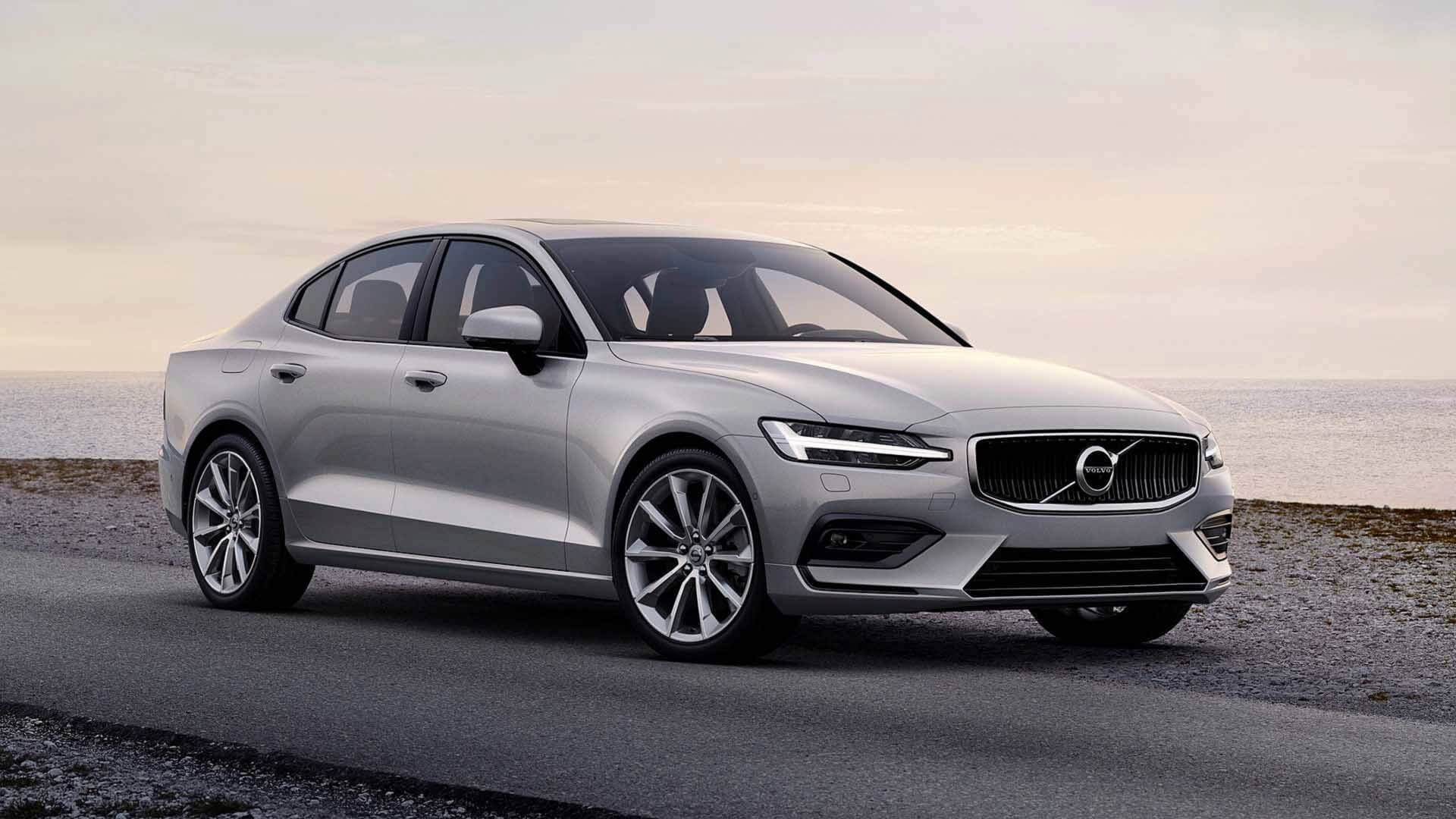
Check by VINThe Volvo S60 is a front- or all-wheel-drive premium mid-size (D-segment) saloon from the Swedish brand Volvo, known for elegant styling, modern technology, rich equipment and a sporty character. The first S60 arrived in 2000 as the successor to the Volvo S70. Three generations were built until US production ended in June 2024. The third generation was unveiled on 20 June 2018 at Volvo's first American plant near Charleston, South Carolina.
In short
- First generation (2000–2009) on the P2 platform, including the S60 R with 221 kW (300 PS).
- Second generation (2010–2018), unveiled in Geneva in March 2010 and built in Ghent, Belgium.
- Third generation (2018–2024) on the SPA platform, petrol and plug-in hybrid only, with an eight-speed automatic.
- The T8 plug-in hybrid offered 287 kW (390 PS) at launch and about 340 kW (455 hp) after a 2022 update.
Volvo S60 at a glance
The S60 is a four-door saloon with a transverse engine. More Volvo models are listed in our Volvo catalogue.
Volvo S60 generations
First generation (2000–2009)
The first S60 replaced the S70 and was introduced in 2000 as a 2001 model. It used the P2 platform shared with the S80, V70, XC70 and XC90. Petrol engines ranged from 2.4-litre naturally aspirated units to the turbocharged 2.0T, 2.4T, 2.5T and T5, joined by the D5 diesel with 120 kW (163 PS), later 136 kW (185 PS), and CNG and LPG versions. The high-performance S60 R used a 2.5-litre turbo with 221 kW (300 PS). Gearboxes were five- and six-speed manuals and Aisin five- and six-speed automatics. The car was facelifted in 2005 and 2008.
Second generation (2010–2018)
The second S60 was unveiled at the Geneva motor show in March 2010, and production began in Ghent, Belgium, in May 2010; a long-wheelbase S60L was also built in Chengdu, China, from October 2014. Engines included T3 to T6 petrol units and Polestar versions with up to about 257 kW (349 PS), plus D2 to D5 diesels with up to about 165 kW (224 PS). Gearboxes included a six-speed manual, six- and eight-speed Aisin automatics and a six-speed dual-clutch unit. A 2013 update brought a revised T5 and new exterior and interior details. The boot held 380 litres.
Third generation (2018–2024)
Exterior
The third S60 adopted Volvo's latest design language. Full-LED headlights with the "Thor's hammer" signature are standard, with a cut towards the grille that gives the saloon a sportier, more aggressive look, and even the base car has automatic high beam that recognises oncoming traffic. The concave grille has a chrome surround and a central emblem housing the front camera. LED fog lamps sit at the corners of the bumper, with black or chrome C-shaped trims, and active shutters in the lower grille open or close to help the engine warm up faster and save fuel. Two creases run along the bonnet. The windscreen has partial heating as standard and full heating as an option.
In profile, the S60 resembles its predecessor but with cleaner forms and a crease low on the doors in place of mouldings. The mirrors now sit on the door panel and come with LED indicators, heating and power folding, with optional memory, and they tilt down when reversing. Wheels are 18 inches as standard and 19 inches as an option. Ground clearance is a modest 142 mm. A solid roof or a panoramic roof with a sliding front section is available, along with a shark-fin antenna. The rear features C-shaped 3D LED tail lights extending from the boot lid down the body, a boot lid shaped into a spoiler with chrome "VOLVO" lettering and a bumper with LED fog lamps, a black insert and two chrome exhaust tips.
Interior
The minimalist interior is shared with other current Volvos, with few buttons and high-quality materials: standard or perforated Nappa leather, aluminium inserts across the dashboard and wood accents. The front seats have modest side support, distinctive elongated head restraints, electric adjustment, an extendable thigh cushion and heating. A three-spoke steering wheel can be trimmed in one- or two-tone leather. Expensive versions have a 12.3-inch digital instrument panel (8 inches on simpler versions) and a head-up display. A 9-inch portrait touchscreen with Sensus Connect navigation, Apple CarPlay and Android Auto sits between two vertical vents. The tunnel holds the gear selector (a crystal selector is optional), start control, drive-mode roller and electric parking brake, plus a wooden cover over cupholders, a USB port and a 12 V socket.
The rear bench seats three, with a fold-down armrest with storage and cupholders, and a rear climate panel allowing four-zone CleanZone climate control. The longer car offers more interior space, and the boot grew from 380 to 442 litres, or 1,680 litres with the rear seats folded, with a full-size spare under the floor.
Engines and transmissions (third generation)
| Version | Engine | Power (kW / PS) | Torque | Drive |
|---|---|---|---|---|
| T4 | 2.0 turbo I4 | 140 kW / 190 PS | 300 Nm | Front |
| T5 | 2.0 turbo I4 | 184 kW / 250 PS | 350 Nm | Front or AWD |
| T6 | 2.0 turbo and supercharged I4 | 228 kW / 310 PS | 400 Nm | AWD |
| T6 Twin Engine | 2.0 I4 + 87 kW electric motor | 250 kW / 340 PS (system) | 590 Nm | AWD (electric rear axle) |
| T8 Twin Engine | 2.0 I4 + 87 kW electric motor | 287 kW / 390 PS (system), later about 340 kW / 455 hp | 640 Nm | AWD (electric rear axle) |
The four-cylinder Drive-E engines have direct injection, variable valve timing on both camshafts, balance shafts and a variable oil pump; the most powerful petrol version adds an Eaton supercharger. No diesel was offered in this generation. 0–100 km/h takes 4.9–7.1 seconds depending on version and top speed is 210–250 km/h. The plug-in hybrids use a 10.4 kWh battery, and published figures give about 2 l/100 km on the official cycle. All versions use an eight-speed automatic; conventional AWD versions engage the rear axle with a Haldex multi-plate clutch.
Chassis
The third S60 is built on Volvo's Scalable Product Architecture (SPA), with a high-strength steel structure and some aluminium. Front suspension uses double wishbones, and the multi-link rear uses a transverse composite leaf spring; adaptive dampers are optional. Rack-mounted electric power steering is standard, and the brakes are ventilated discs at the front and solid discs at the rear with ABS, EBD and other aids.
Safety and equipment
The higher trims offer front, rear and side airbags, curtain airbags and a driver's knee airbag, lane keeping, run-off-road protection, tyre-pressure monitoring, Volvo On Call smartphone connectivity, adaptive headlights, rain and light sensors, post-collision braking, blind-spot monitoring, front and rear collision avoidance, navigation, a 360-degree camera, automatic parking, a programmable key, Pilot Assist semi-autonomous driving, pedestrian and traffic-sign recognition, hill-start assist, a head-up display, ISOFIX anchorages and driver alert. The third-generation S60 was an IIHS Top Safety Pick in 2020 and a Top Safety Pick+ in 2021 and 2022.
Key specifications by generation
| Parameter | 1st generation | 2nd generation | 3rd generation |
|---|---|---|---|
| Years | 2000–2009 | 2010–2018 | 2018–2024 |
| Platform | P2 | — | SPA |
| Main plant | — | Ghent, Belgium | Ridgeville, USA |
| Diesel | Yes (D5) | Yes (D2–D5) | No |
| Boot | — | 380 l | 442 / 1,680 l |
Strengths and weaknesses
Owners praise the S60's reliability, comfort, build quality, materials, body quality, equipment, safety and looks — especially the third generation — and its good winter behaviour. Drawbacks include expensive servicing, modest ground clearance (all-wheel-drive versions cope better), the need to follow service schedules closely and a shortage of qualified specialists in some areas. Rivals include the Jaguar XE, BMW 3 Series, Lexus IS, Mercedes-Benz C-Class, Cadillac ATS, Audi A4, Opel Insignia and Peugeot 508.
Volvo S60 evolution in numbers
Did you know?
- The Volvo S60 has been around for 26 years: 3 generations in our catalog since 2000.
- The longest-running generation is the S60 I (2000–2009): 9 years.
Image credits · Photos from Wikimedia Commons under free licences
- Volvo S60 I · Photo: Vauxford / Wikimedia Commons, CC BY-SA 4.0
- Volvo S60 II · Photo: IFCAR / Wikimedia Commons, Public domain
- Volvo S60 III · Photo: Alexander-93 / Wikimedia Commons, CC BY-SA 4.0
Volvo S60 in our rankings
- No. 102 of 912 · Longest-running car nameplates (26 years · top 12%)
- No. 71 of 305 · Oldest car models still on sale (26 years · top 24%)
- No. 175 of 345 · Cars with the most generations (3 generations · top 68%)
In production longer than 88% of ranked nameplates in the 1CARS catalog (No. 102 of 912).
FAQ
Which car did the Volvo S60 replace?
The Volvo S70, in 2000.
Does the third-generation Volvo S60 have a diesel engine?
No. It was offered only with petrol engines and plug-in hybrids.
How powerful is the Volvo S60 T8?
The T8 Twin Engine plug-in hybrid had 287 kW (390 PS) at launch and about 340 kW (455 hp) after its 2022 update.
When did Volvo S60 production end?
US production ended in June 2024; production continued in China for some Asian and Australian markets.
Data sources
Data checked by an editor against the sources below.