 Opel Zafira
All generations, specs and history
Published Sources (1) Report an error
By Felix Hartmann, Automotive Technology & EV Contributor
- Built
- 1999–2019
- Generations
- 3
Timeline
Zafira generations
Click a generation for its own page


B and C / Tourer overlapped in 2011–2014, so C / Tourer sits on a second lane
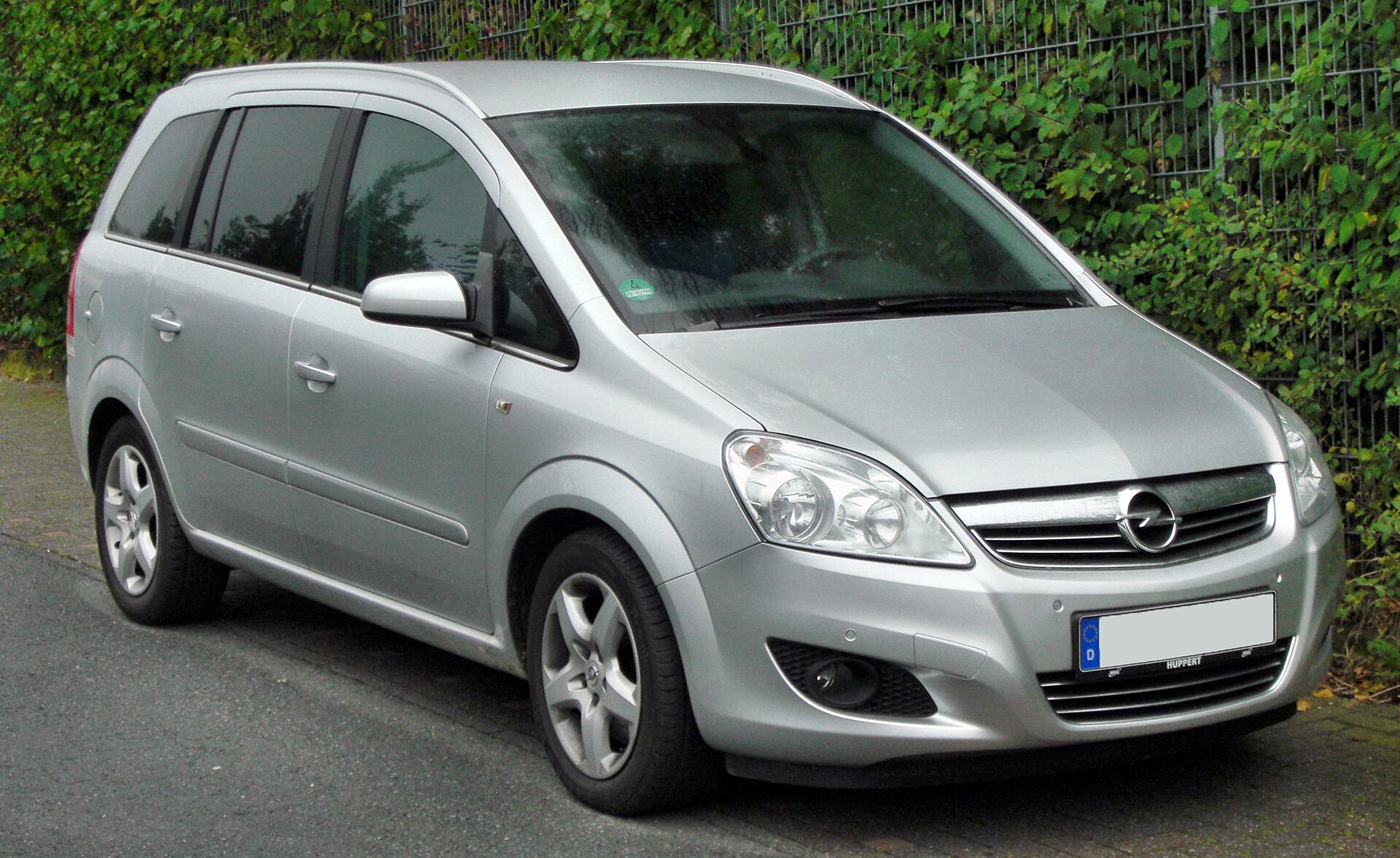
- Zafira A 1999–2005 · Minivan / MPV
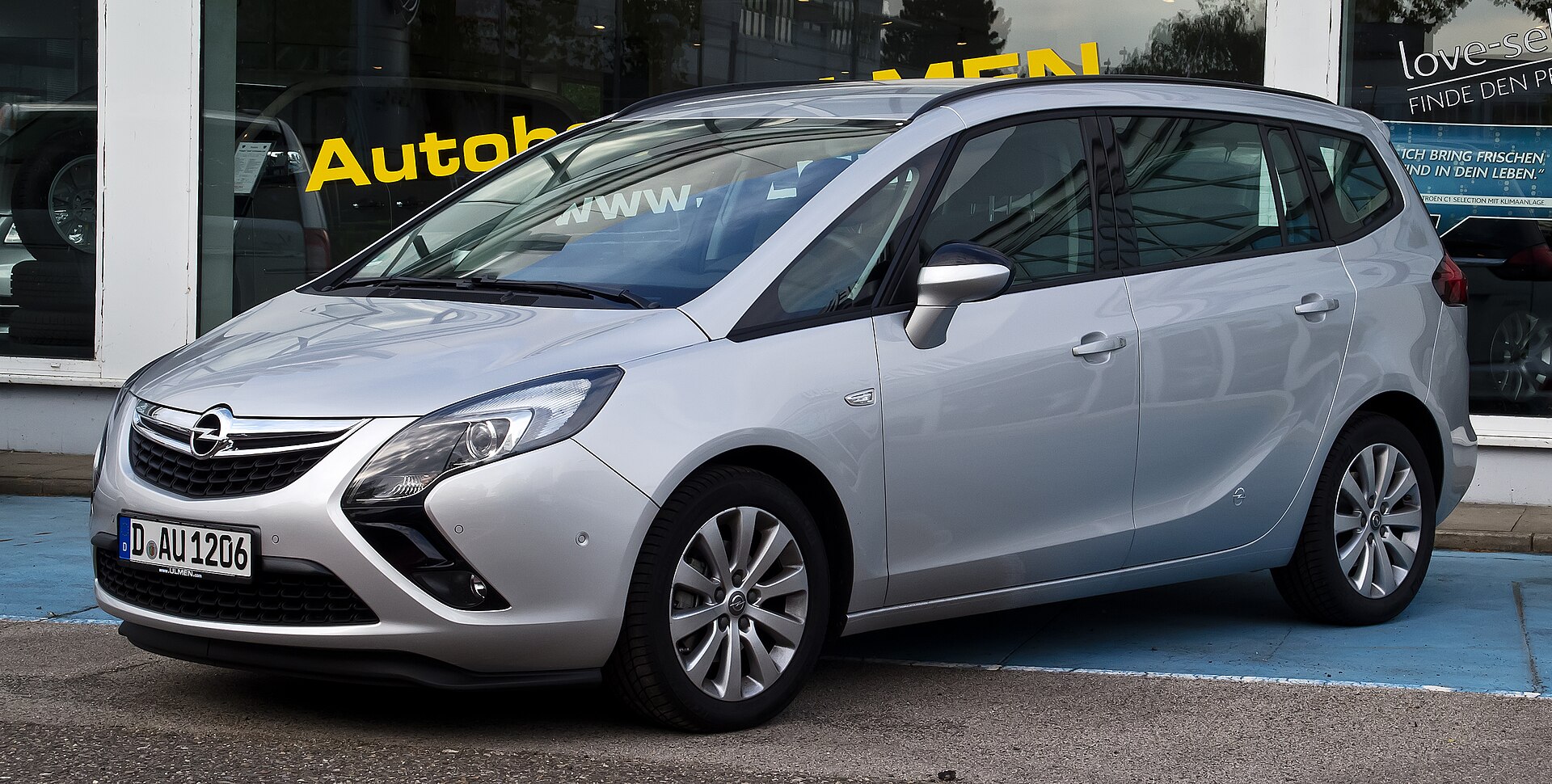
- Zafira B 2005–2014 · Minivan / MPV
- Zafira C / Tourer 2011–2019 · Minivan / MPV
Newest first · 3 generations since 1999
-
2011
-
2005
- 1999 A 1999–2005 · Minivan / MPV
All generations by year: Zafira C / Tourer (2011–2019) · Zafira B (2005–2014) · Zafira A (1999–2005)
Which one is mine?
Pick the year of first registration to see which generation it is.
- Zafira C / Tourer 2011–2019
- Zafira B 2005–2014
- Zafira A 1999–2005
The Opel Zafira is a front-wheel-drive people carrier with five or seven seats, sold in the UK as the Vauxhall Zafira. A concept was shown at the Frankfurt motor show in 1997, and series production of the first compact MPV began in January 1999. Three generations followed until 2019; the last, launched in 2011 as the Zafira Tourer, was larger and more upmarket and was facelifted in 2016. In 2019 the name passed to the Zafira Life, a van-based people carrier.
In short
- Zafira A (1999–2005) introduced the Flex7 system, with third-row seats that fold into the floor.
- Zafira B (2005–2014) was based on the Astra H.
- Zafira C / Zafira Tourer (2011–2019), based on the Astra J, with petrol, LPG, CNG and CDTI diesel engines from 81 to 147 kW (110 to 200 PS).
- Since 2019: Zafira Life, based on the PSA mid-size van.
Opel Zafira at a glance
The Zafira is a monocoque MPV with a transverse front engine and front-wheel drive. More Opel models are listed in our Opel catalogue, and its successor is covered under the Opel Zafira Life tag.
Opel Zafira generations
| Generation | Years | Base | Notes |
|---|---|---|---|
| Zafira A | 1999–2005 | Astra G (T platform) | Seven seats, Flex7 folding third row; built in Bochum |
| Zafira B | 2005–2014 | Astra H | European debut February 2005, on sale June 2005 |
| Zafira C (Tourer) | 2011–2019 | Astra J | Concept Geneva 2011, production Frankfurt 2011; facelift 2016 |
| Zafira Life | 2019 onwards | PSA mid-size van | Van-based people carrier |
The Zafira C was built in Bochum and Rüsselsheim, among other plants. After the June 2016 facelift for the 2017 model year, the Tourer suffix was dropped in Opel markets.
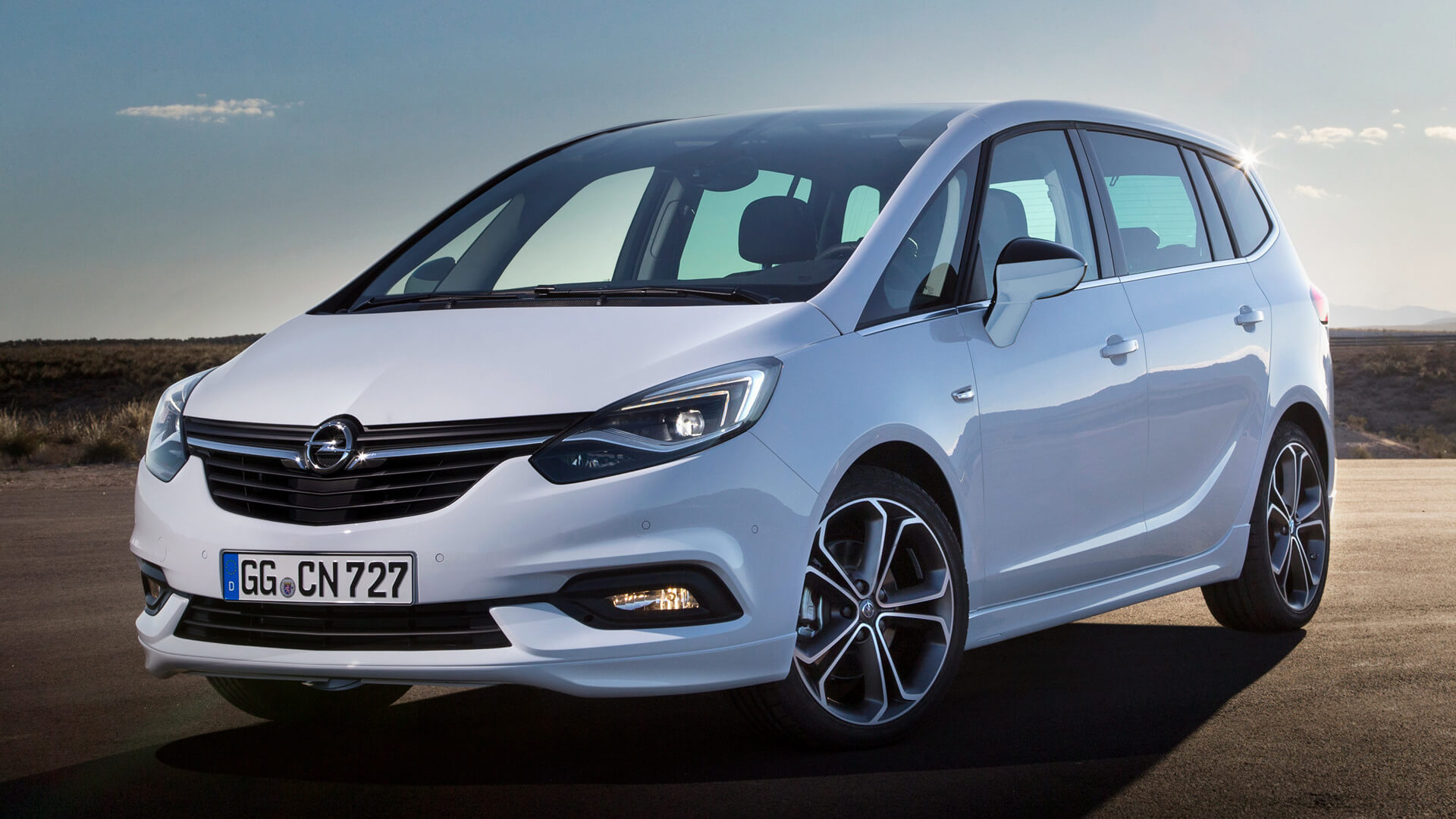
Zafira C after the 2016 facelift
Exterior
The facelift noticeably improved the Zafira. Although it is a family car, it became more assertive, sharing styling cues with other new Opels such as the Astra K and Mokka X, which helps it stand out in traffic. Adaptive LED headlights give the front its character, and the large grille has a chrome bar that links with the light signature. The bumper has lines that emphasise the headlights, recesses for slim fog lights and a stylish lower lip.
In profile the Zafira is restrained and typically German, with smooth lines at both top and bottom, two-tone mirror caps and a chrome strip along the lower edge of the doors. Wheels range from 16 to 19 inches, ground clearance is about 160 mm, and 15 body colours were offered. Cyclists will appreciate the optional FlexFix carrier, which slides out of the rear bumper, carries up to four bicycles and still allows the tailgate to be opened.
The rear is attractive without being overdone: slim LED lights are linked by a chrome bar that crosses the badge. A black panel makes the tail lights appear to run into the rear window, which is actually smaller than it looks, and a similar visual trick is used on the roof. On versions with the panoramic windscreen, the glass extends far into the roof, giving an impressive view upwards. The rear bumper is slightly convex, with reflectors and twin exhaust outlets integrated into a plastic trim panel.
Interior
The cabin follows the style of Opel's other modern models. Leather and soft plastics are used, with black perforated leather, black leather and cloth, or light leather on offer, and the result no longer feels like a working van. The driver faces a stylish three-spoke steering wheel with audio and cruise controls, large analogue dials and two displays between them. The centre of the dashboard holds a 7-inch Navi 4.0 IntelliLink touchscreen with navigation, Apple CarPlay, Android Auto, OnStar and a 4G Wi-Fi hotspot, flanked by slim vertical vents above a simple climate panel. The console now flows smoothly into the tunnel, with a large storage area, the gear lever, safety-system buttons, an electronic parking brake, cupholders and an armrest. Opel's FlexRail console and FlexFix systems remain.
The seats are comfortable and anatomically shaped, so long journeys are not tiring, and higher trims have power-adjustable front seats. The second and third rows are simpler, but the folding sixth and seventh seats are well designed, and there is plenty of legroom in both rear rows, so the third row is not only for children. Fold-down tables with cupholders could be fitted for second-row passengers. Luggage space is 152 litres with all seven seats in use, 710 litres with the third row folded and up to 1,860 litres with both rear rows folded.
Engines and transmissions (Zafira C)
| Fuel | Engine | Power (kW / PS) | Torque |
|---|---|---|---|
| Petrol | 1.4 Turbo | 88 kW / 120 PS; 103 kW / 140 PS | 200 Nm |
| Petrol | 1.6 Turbo SIDI | 125 kW / 170 PS; 147 kW / 200 PS | 260 / 280 Nm (plus overboost) |
| Petrol | 1.8 | 85 kW / 115 PS; 103 kW / 140 PS | 175 Nm |
| LPG | 1.4 Turbo | 103 kW / 140 PS | 200 Nm |
| CNG | 1.6 Turbo | 110 kW / 150 PS | 210 Nm |
| Diesel | 1.6 CDTI | 88 kW / 120 PS; 100 kW / 136 PS | 320 Nm |
| Diesel | 2.0 CDTI | 81–125 kW / 110–170 PS | 260–400 Nm |
| Diesel | 2.0 CDTI Bi-Turbo | 143 kW / 195 PS | 400 Nm |
The petrol engines are turbocharged four-cylinders with 16 valves, and the diesels are common-rail CDTI units. According to published figures, the petrols use about 6.7–7.6 l/100 km and the diesels 4.1–6.2 l/100 km, 0–100 km/h takes 8.9–12.7 seconds and top speed is 186–225 km/h. A six-speed manual gearbox is standard, except with the 1.8 petrol, which has a five-speed manual; a six-speed automatic was available with the 1.4 Turbo and the 121 kW (165 PS) 2.0 CDTI. All versions are front-wheel drive.
Chassis
The Zafira C is based on the Astra J's front-wheel-drive architecture, with a body using high-strength steels. The front suspension uses MacPherson struts, and the rear has a torsion beam with a Watt's linkage. The optional FlexRide adaptive chassis offers several modes. Electric power steering has progressive characteristics, and all four brakes are discs, ventilated at the front, with ABS, EBD and other aids.
Safety and equipment
As a family car, the Zafira had to be safe, and the Zafira Tourer earned five stars from Euro NCAP. The facelift added adaptive LED headlights, the Opel Eye camera with lane departure warning and traffic-sign recognition, and forward collision warning. Base versions have parking sensors, 17-inch wheels, air conditioning, power windows all round, several airbags, rain and light sensors and fog lights; the top-spec version adds adaptive headlights, dual-zone climate control, a panoramic roof, a rear camera and more driver assistance systems.
Strengths and weaknesses
The facelifted Zafira offers modern, stylish looks, a better-finished cabin, a wide choice of engines including gas versions, a high level of safety, good build quality and a large luggage area with flexible seven-seat practicality. On the downside, ground clearance is modest and there was no all-wheel drive. Rivals include the Volkswagen Touran, Ford Grand C-Max, Renault Grand Scénic, Citroën Grand C4 Picasso and Chevrolet Orlando.
Image credits · Photos from Wikimedia Commons under free licences
- Opel Zafira B · Photo: M 93 / Wikimedia Commons, Attribution
- Opel Zafira C / Tourer · Photo: M 93 / Wikimedia Commons, CC BY-SA 3.0 de
Opel Zafira in our rankings
- No. 162 of 912 · Longest-running car nameplates (20 years · top 19%)
- No. 170 of 345 · Cars with the most generations (3 generations · top 68%)
In production longer than 81% of ranked nameplates in the 1CARS catalog (No. 162 of 912).
FAQ
How many seats does the Opel Zafira have?
Five or seven; the third-row seats fold into the floor when not needed.
What is the difference between the Zafira and the Zafira Tourer?
Zafira Tourer was the name of the third generation (Zafira C) at launch in 2011; the Tourer suffix was dropped after the 2016 facelift.
What engines does the Opel Zafira C have?
1.4, 1.6 and 1.8 petrols, LPG and CNG versions and 1.6 and 2.0 CDTI diesels with 81 to 147 kW (110 to 200 PS).
What replaced the Opel Zafira?
In 2019 the van-based Opel Zafira Life took over the name.
Data sources
Data checked by an editor against the sources below.