
Twelve Engines That Changed the Motor Car, 1906 to 1999
The greatest car engines in history are the ones that changed what cars could do: the quiet Rolls-Royce 40/50 six of 1906, Ford's affordable flathead V8, the Volkswagen flat-four, Chevrolet's small-block, the Cosworth DFV racing V8, Toyota's first hybrid petrol engine and a handful of others. Our twelve picks span 1906 to 1999, from 36 kW to 461 kW.
Key takeaways
- Selection: twelve engines chosen for influence, production numbers, racing record or engineering firsts, not for peak power alone.
- Range: from the 7.0-litre side-valve Rolls-Royce six (36 kW) to the 6.1-litre BMW V12 of the McLaren F1 (461 kW).
- Biggest numbers: more than 100 million Chevrolet small-blocks and about 21.5 million Beetles with the air-cooled flat-four.
- Specific output rose from about 5 kW per litre in 1906 to more than 90 kW per litre in the 1999 Honda S2000.
How we chose the twelve engines
Each engine here passed at least one of four tests: it changed how ordinary people drove, it was built in enormous numbers for decades, it dominated motor sport, or it introduced an idea that later became normal, such as the turbodiesel or hybrid drive.
Power is given in kW first, with the original PS, bhp or gross hp rating in brackets, because older American and British ratings were measured differently from today's figures. This page is about historic landmarks; for current engines that last, see our guide to the most reliable modern petrol engines.
Rolls-Royce 40/50 six (1906): refinement as a selling point
The 40/50 hp chassis appeared at the Olympia show in London in 1906 and became famous as the Silver Ghost. Its side-valve straight-six displaced 7,036 cc, with the cylinders cast in two blocks of three, and produced about 36 kW (48 bhp) at only 1,250 rpm. A seven-bearing crankshaft with pressure lubrication kept vibration remarkably low.
The demonstrator AX 201 ran the 1907 Scottish reliability trial and then another 15,000 miles (about 24,000 km). Capacity grew to 7,428 cc in 1910, and 7,874 chassis were built up to 1926.
Ford flathead V8 (1932): eight cylinders for ordinary buyers
Before 1932, V8 engines belonged to expensive cars, partly because their blocks were cast in several pieces. Ford cast the whole block and all eight cylinders in one piece, which made the V8 cheap enough for the Model 18 of 1932. The first 221 cu in (3.6-litre) version made 48 kW (65 hp); by 1935 the same capacity gave 63 kW (85 hp).
It powered Ford cars in the United States until 1953, with bigger versions for Mercury, Lincoln and trucks, and became the first favourite of American hot rodders thanks to its strong crankshaft and cheap parts.
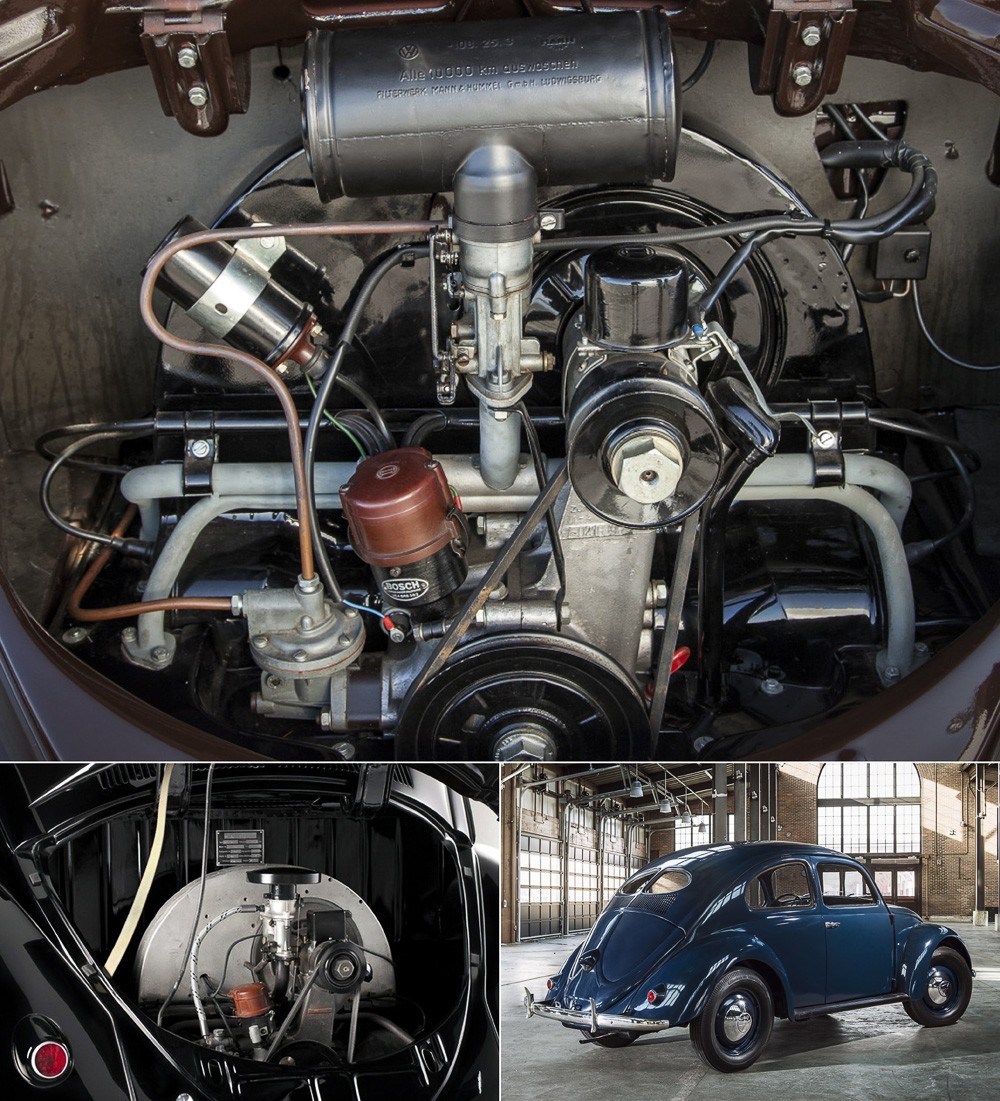
Volkswagen air-cooled flat-four (1938): the engine that never stopped
The Beetle's four-cylinder boxer was designed in Ferdinand Porsche's office in the 1930s; Josef Kales is usually credited with it. The pre-war KdF-Wagen used 985 cc. The post-war Beetle had 1,131 cc and about 18 kW (25 PS), and the same basic design later grew to 1,584 cc.
The last Beetle left the Puebla plant in Mexico on 30 July 2003, after 21,529,464 had been built, and Brazilian Kombi vans kept the air-cooled engine until December 2005. Our page on the Volkswagen Beetle covers the car itself.
Jaguar XK straight-six (1948): racing technology in a road car
Jaguar's XK engine was planned during the Second World War by William Heynes, Walter Hassan, Claude Baily and Harry Weslake. It brought twin overhead camshafts to a series-production road car at a moderate price. It made its debut in the XK120 at the London Motor Show in October 1948, with 3,442 cc and 119 kW (160 bhp gross).
From 2.4 to 4.2 litres, the XK powered the E-Type, the XJ6 and the C-Type and D-Type that won Le Mans five times in the 1950s. It lasted until 1992, and Autocar puts the total at almost 700,000 engines. The story of the car that launched it is on our Jaguar XK120 page.
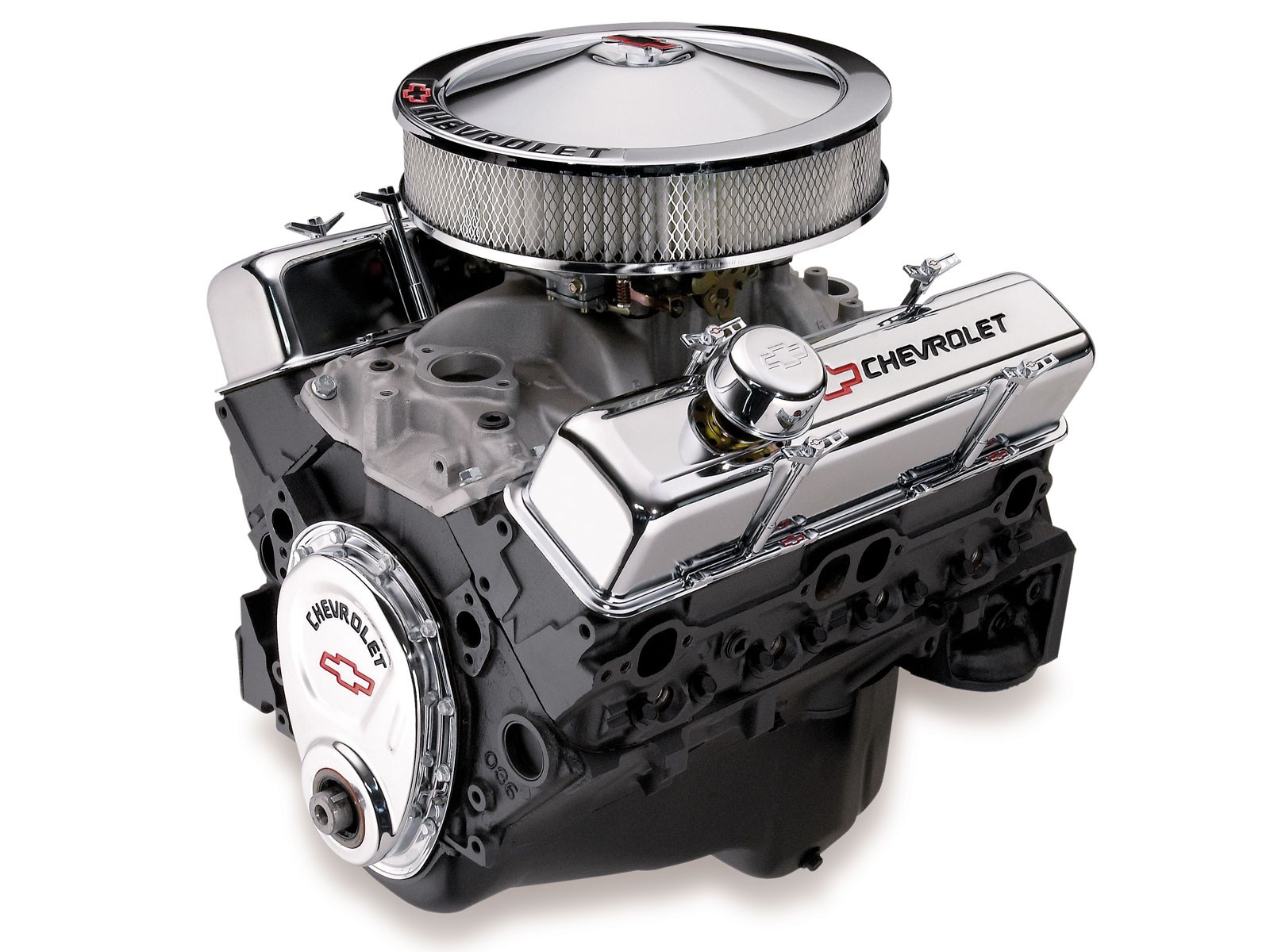
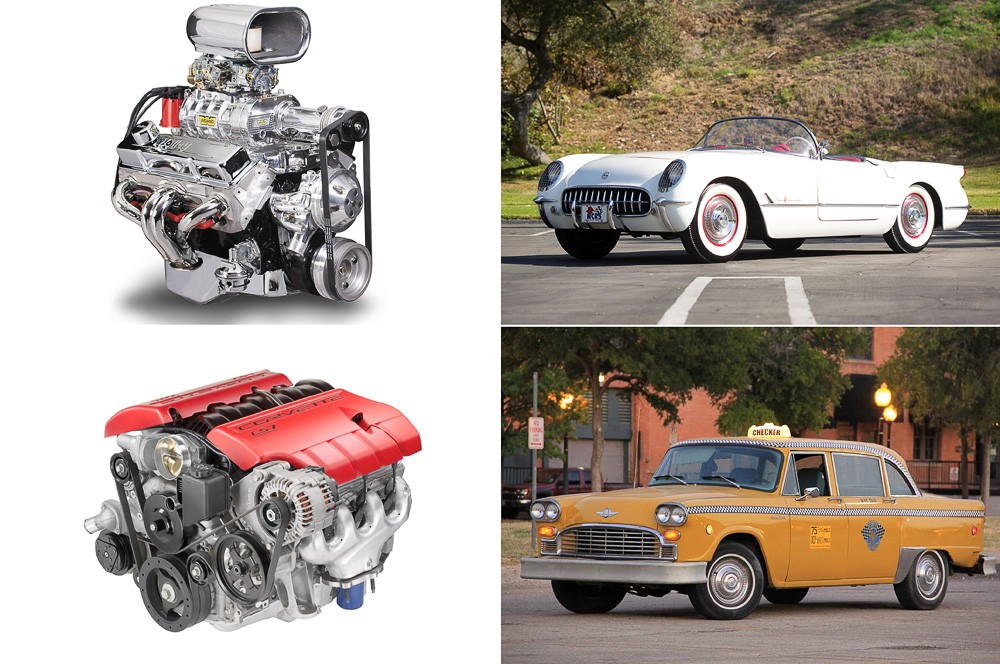
Chevrolet small-block V8 (1955): the most produced V8
Ed Cole's engineering team at Chevrolet designed a compact, light overhead-valve V8 for the 1955 model year. The first 265 cu in (4.3-litre) version with a two-barrel carburettor produced 121 kW (162 hp gross). In 1957 the 283 cu in version with Rochester mechanical fuel injection reached 211 kW (283 hp), the famous one horsepower per cubic inch.
Versions ranged in displacement from 4.3 litres up to 6.6 litres. The first-generation engine ended in 2003, but General Motors still builds it as a crate engine, and more than 100 million small-blocks had been produced by November 2011.
Cosworth DFV (1967): the engine that won 155 Grands Prix
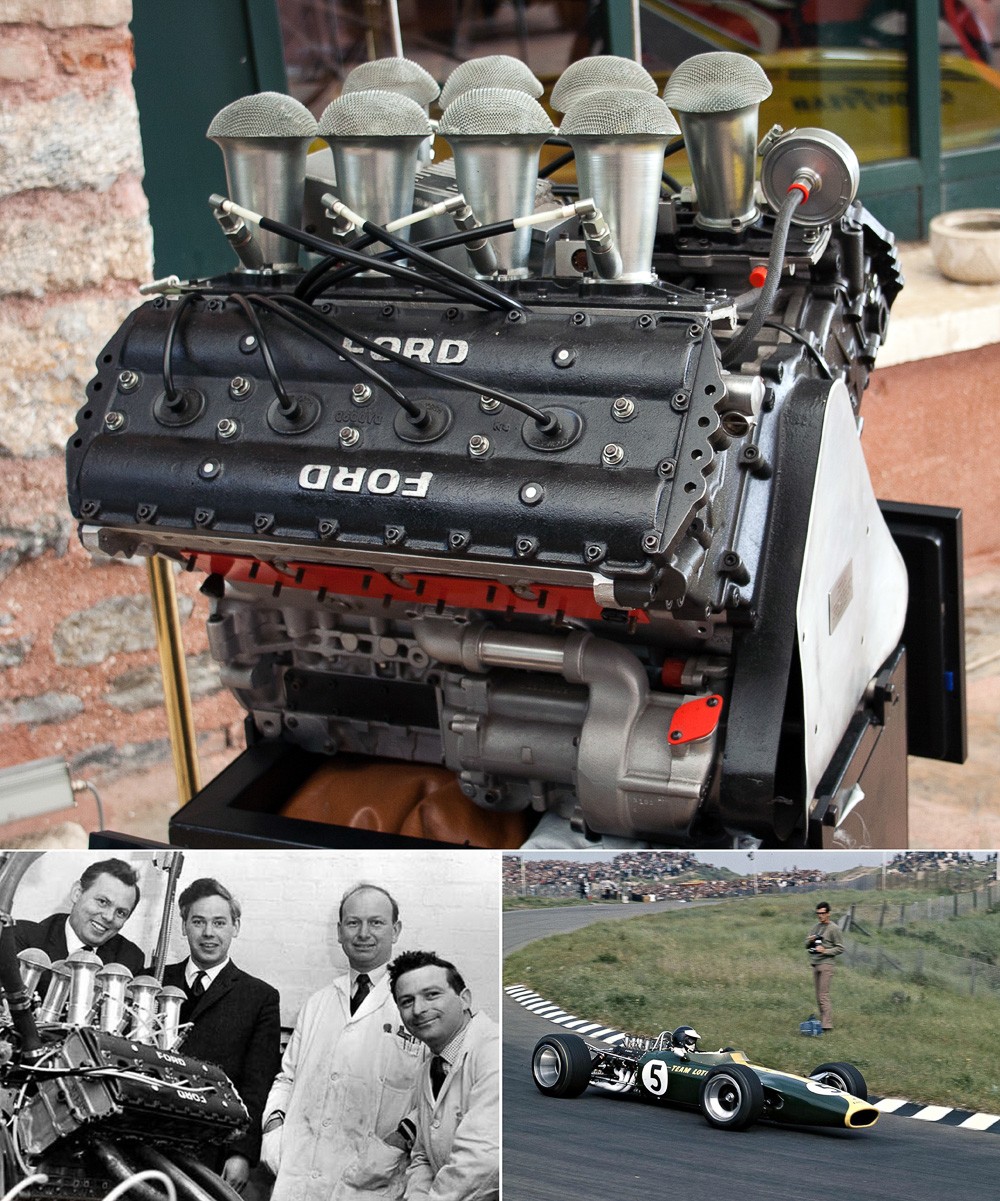
Keith Duckworth and Mike Costin designed the DFV for the new 3.0-litre Formula One rules, with funding from Ford. The 2,993 cc V8 produced about 300 kW (408 bhp) at 9,000 rpm and was bolted directly to the back of the Lotus 49 as part of the chassis. Jim Clark won its first race, the Dutch Grand Prix at Zandvoort, on 4 June 1967.
Because any team could buy one, the DFV won 155 of the 262 Grands Prix it entered between 1967 and 1985, with 12 drivers' and 10 constructors' titles. It also won Le Mans in 1975 and 1980, and its DFX offshoot took ten Indianapolis 500 wins in a row from 1978.
Mercedes-Benz OM617 five-cylinder diesel (1974): turbodiesel pioneer
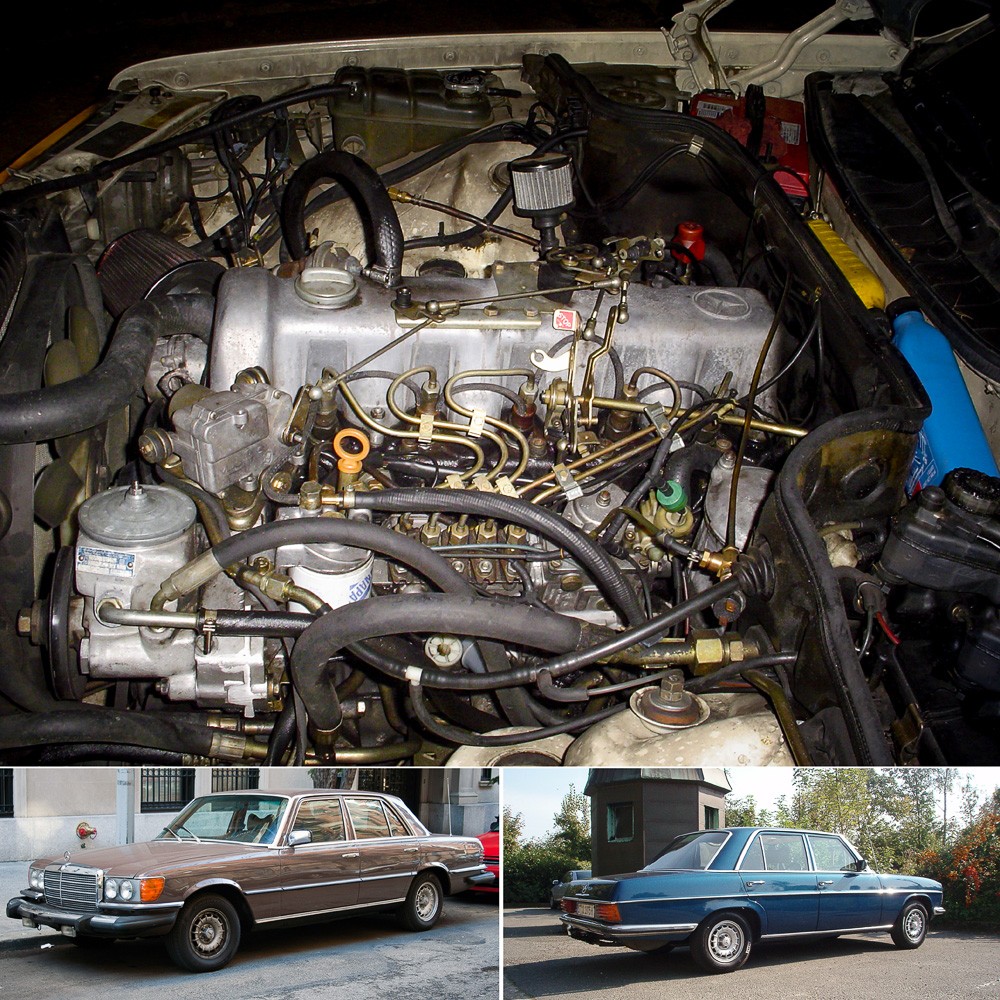
The OM617 was a 3.0-litre straight-five diesel that first appeared in the W115 240D 3.0 in 1974 with 59 kW (80 PS). Its real milestone came in 1978, when the turbocharged OM617.950 went into the 300 SD of the W116 S-Class with 82 kW (111 PS). That car was the first series-production saloon with a turbodiesel engine.
Later versions reached 92 kW (125 PS), and production ended in 1991. Many examples are reported to have covered more than 1,000,000 km without a rebuild.
Porsche 930 Turbo flat-six (1974): turbocharging for the road
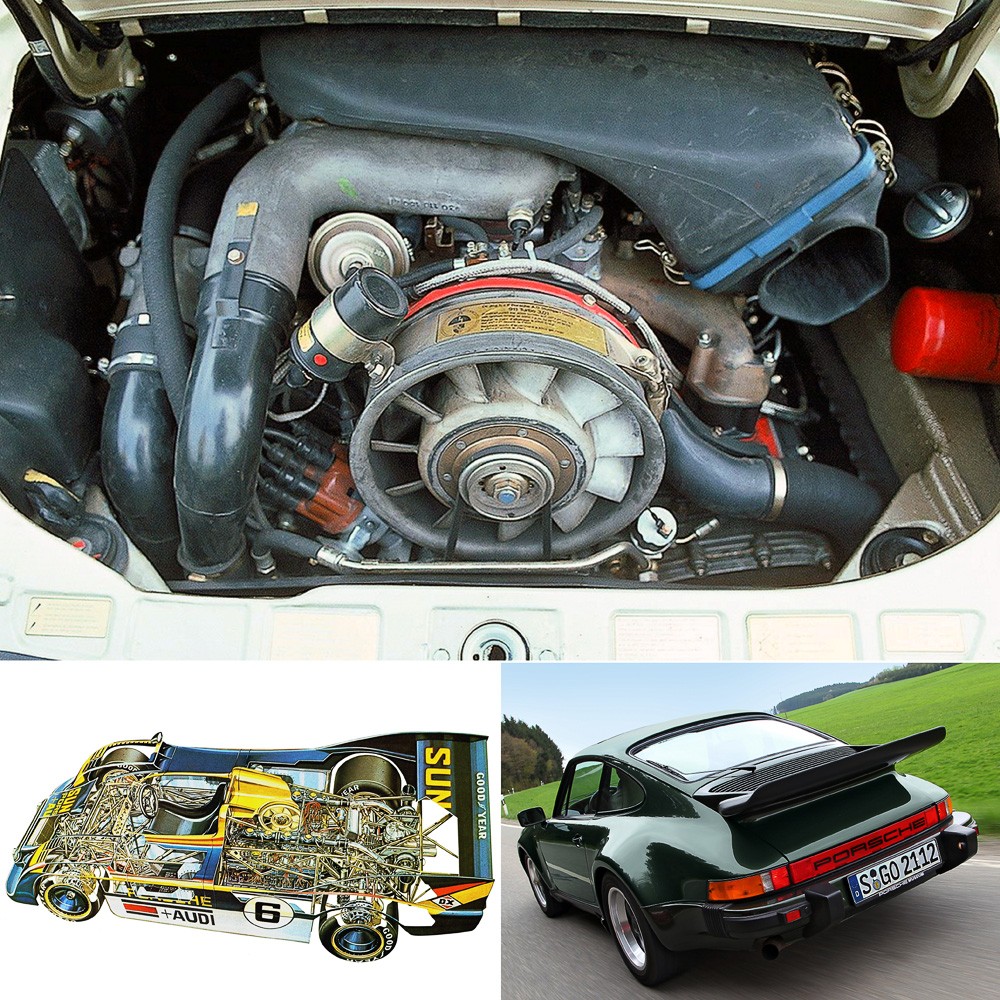
Porsche showed the 911 Turbo, type 930, at the Paris Motor Show in October 1974 and began sales in spring 1975. Its turbocharged 3.0-litre flat-six produced 191 kW (260 PS) at 5,500 rpm and 329 Nm. In 1978 capacity rose to 3.3 litres and an intercooler arrived, giving 221 kW (300 PS) and 412 Nm.
BMW's 2002 Turbo of 1973 came earlier, but the 930 made turbocharging the identity of a long-running sports car. Its turbo lag earned it the nickname "Widowmaker", and Porsche built 21,589 cars up to the 1989 model year.
Toyota 1UZ-FE V8 (1989): Lexus and the end of vibration
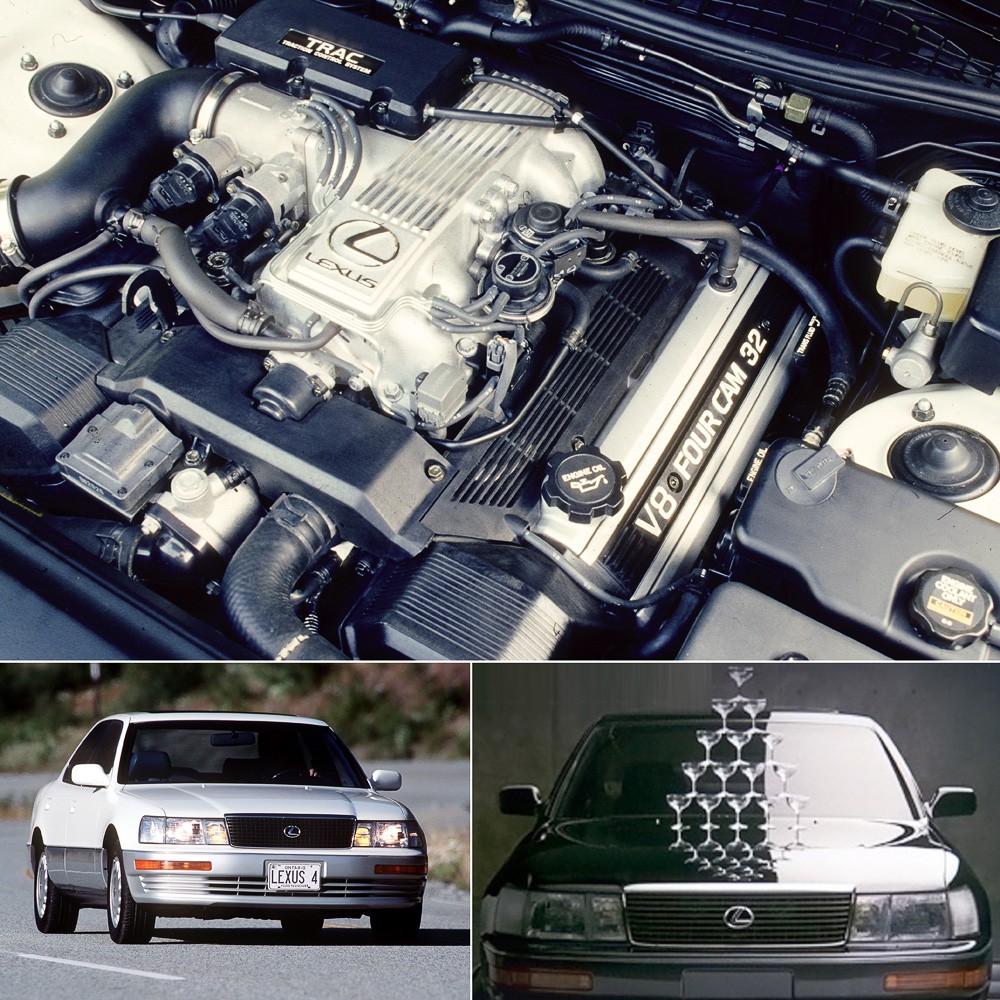
For its new Lexus brand, Toyota wanted a V8 as smooth as the best German engines. The 1UZ-FE was a 3,969 cc all-alloy V8 with four belt-driven camshafts and 32 valves, first fitted to the 1989 Lexus LS 400 and the Toyota Celsior. In Japanese trim it produced 191 kW (260 PS) and 353 Nm; European cars were rated at 180 kW (245 PS).
Variable valve timing arrived in 1997, lifting output to 216 kW (294 PS), and Ward's named the engine one of its 10 Best Engines from 1998 to 2000.
BMW S70/2 V12 (1993): the heart of the McLaren F1
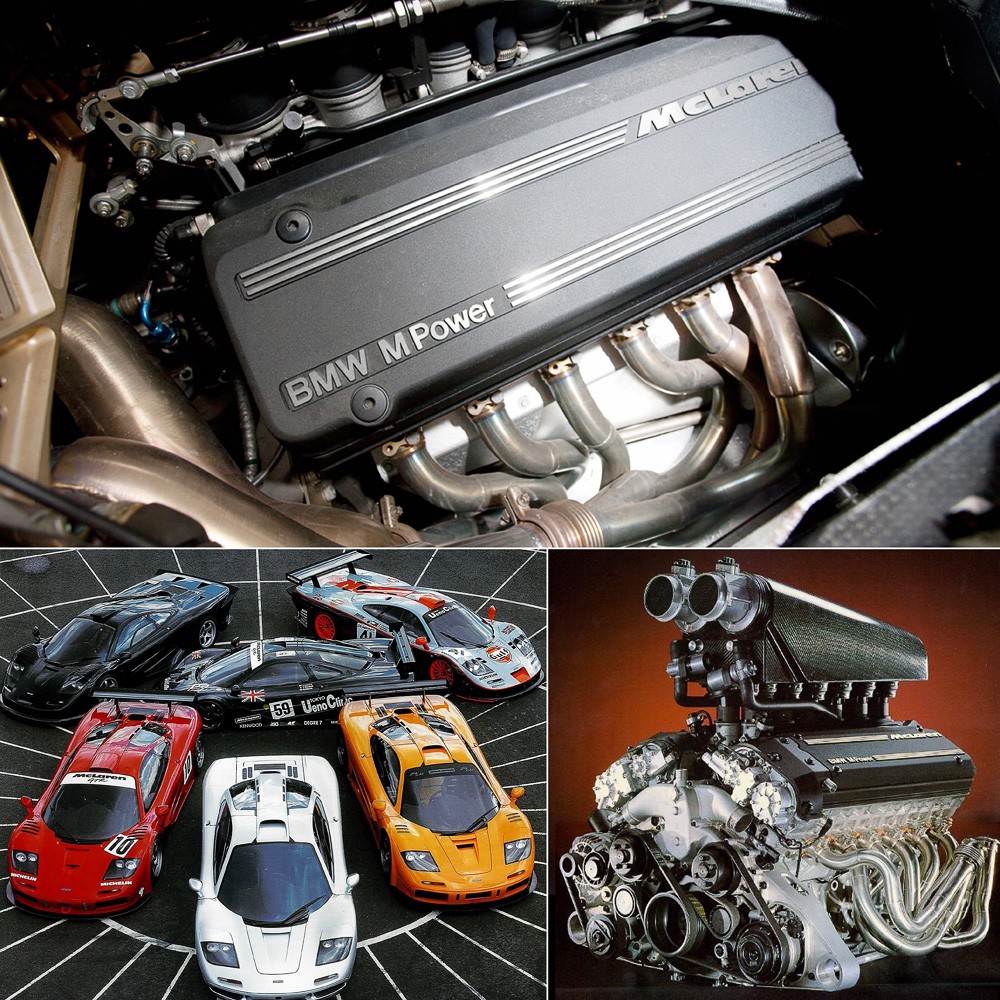
Gordon Murray first asked Honda for a 410 kW engine no longer than 600 mm and no heavier than 250 kg for his McLaren F1. Honda declined, and Paul Rosche's BMW Motorsport team built the S70/2 instead: a 6,064 cc 60-degree V12 with an aluminium block, producing 461 kW (627 PS) at 7,400 rpm and 650 Nm. It ended up 14 % more powerful than the brief and 16 kg heavier, and the engine bay was lined with gold foil to reflect heat.
The F1 reached 386.4 km/h in March 1998, and the F1 GTR racing version won the 1995 Le Mans 24 Hours outright. Only 106 McLaren F1s were built; see our McLaren F1 page.
Toyota 1NZ-FXE (1997): the first mass-produced hybrid petrol engine
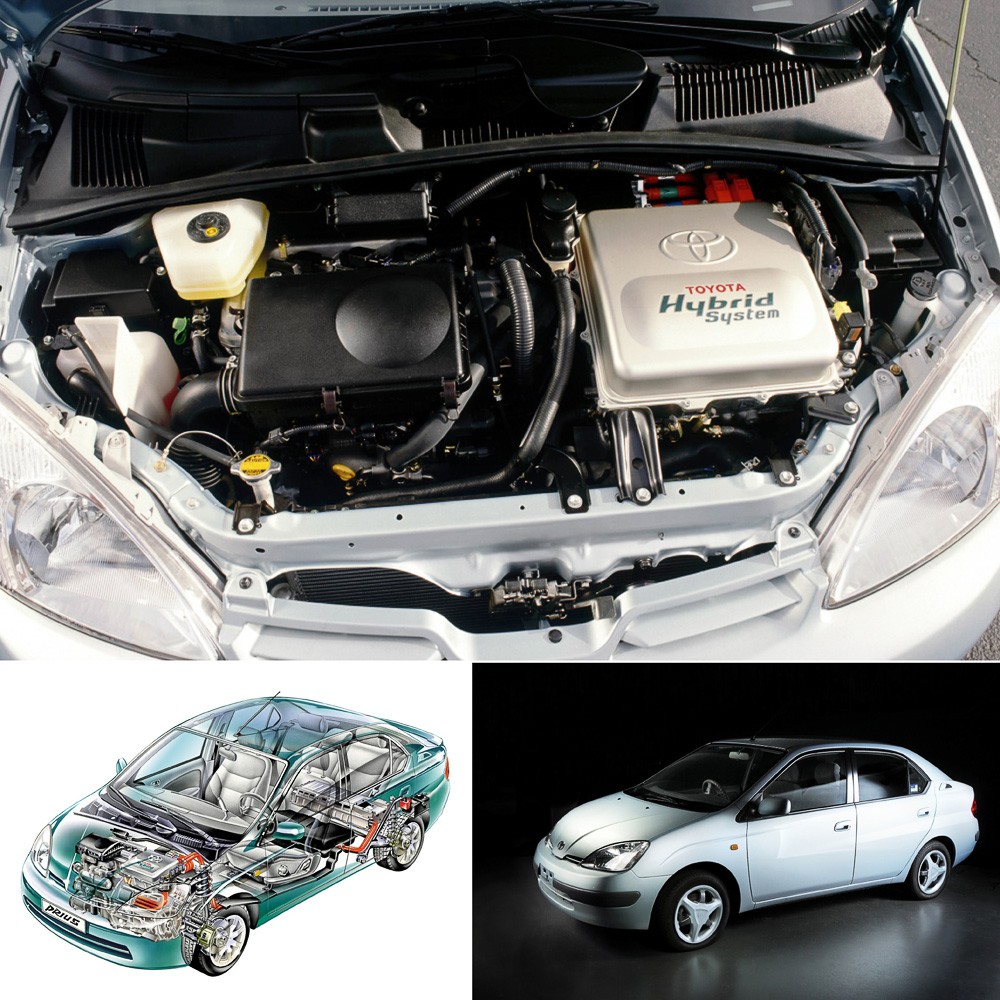
The Prius went on sale in Japan on 10 December 1997 as the world's first mass-produced petrol-electric hybrid. Its 1,497 cc four-cylinder 1NZ-FXE used a simulated Atkinson cycle: the inlet valves close late, so the effective compression ratio is 9.5:1 while the expansion ratio stays at 13.0:1.
It produced only 43 kW (58 PS), helped by a 30 kW electric motor; the 2000 export model raised that to 53 kW (72 PS). Our Toyota Prius page follows the car.
Honda F20C (1999): 9,000 rpm without a turbo
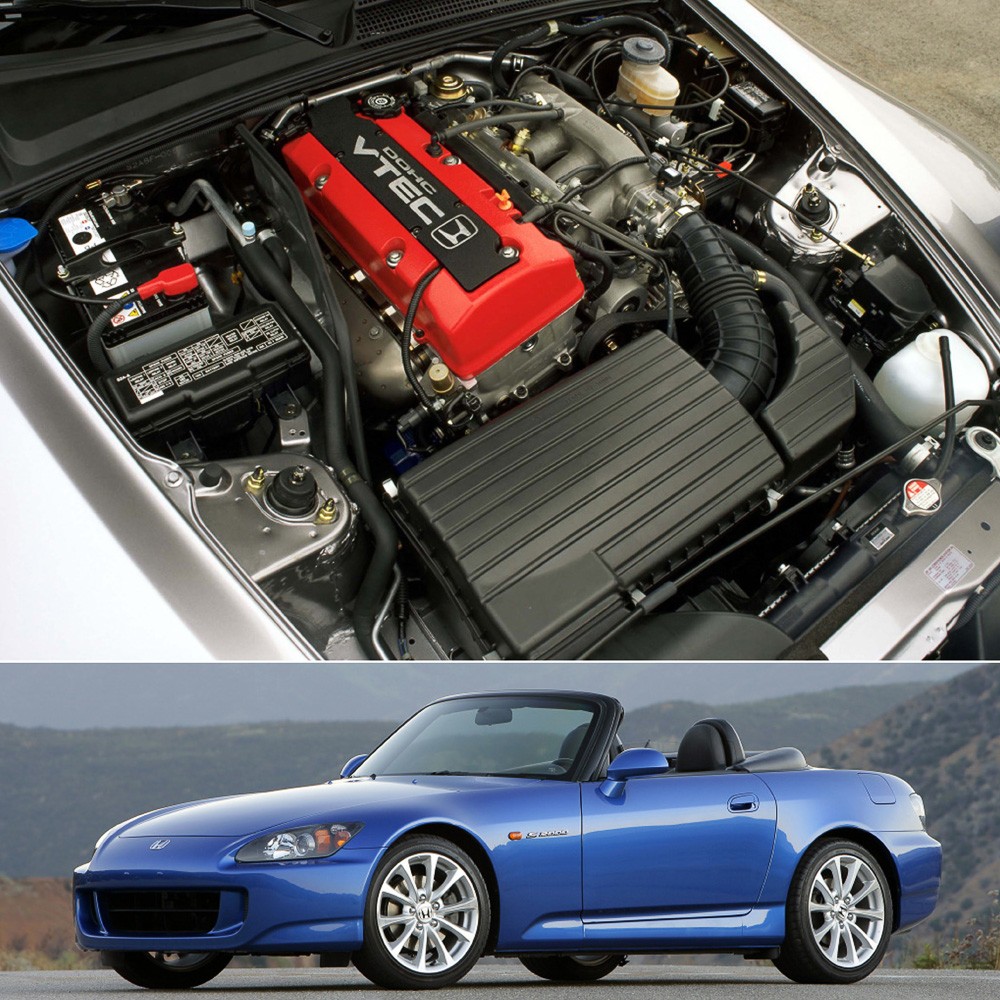
Honda's F20C was written for the S2000 roadster of 1999. The 1,997 cc four-cylinder used VTEC variable valve timing and lift and revved to about 9,000 rpm. Japanese cars produced 184 kW (250 PS) at 8,300 rpm and European cars 177 kW (241 PS), with torque of only about 218 Nm.
At about 92 kW per litre it led all naturally aspirated production engines in cars under 100,000 US dollars until the Ferrari 458 Italia arrived. The S2000 ended in 2009; our Honda S2000 page compares the AP1 and AP2.
Twelve landmark engines compared
Specific output is our calculation from the rated power and displacement. Gross American ratings flatter the older engines a little.
| # | Engine | First car and year | Layout and capacity | Power | kW per litre | Why it is on the list |
|---|---|---|---|---|---|---|
| 1 | Rolls-Royce 40/50 | Silver Ghost, 1906 | I6 side-valve, 7,036 cc | 36 kW (48 bhp) | 5.1 | Refinement and reliability |
| 2 | Ford flathead V8 | Model 18, 1932 | V8, 3,622 cc | 48 kW (65 hp) | 13.3 | First affordable V8 |
| 3 | VW flat-four | Beetle, 1945 (1938 prototype) | Flat-four air-cooled, 1,131 cc | 18 kW (25 PS) | 15.9 | 21.5 million Beetles |
| 4 | Jaguar XK | XK120, 1948 | I6 DOHC, 3,442 cc | 119 kW (160 bhp gross) | 34.6 | Twin-cam six built for 44 years |
| 5 | Chevrolet small-block | Bel Air and Corvette, 1955 | V8 OHV, 4,343 cc | 121 kW (162 hp gross) | 27.9 | More than 100 million built |
| 6 | Cosworth DFV | Lotus 49, 1967 | V8 DOHC, 2,993 cc | 300 kW (408 bhp) | 100.2 | 155 Grand Prix wins |
| 7 | Mercedes OM617 | 240D 3.0, 1974; turbo 300 SD, 1978 | I5 diesel, 3,005 cc | 59 kW (80 PS); turbo 82 kW (111 PS) | 19.6 / 27.4 | First turbodiesel saloon |
| 8 | Porsche 930 | 911 Turbo, 1975 | Flat-six turbo, 2,994 cc | 191 kW (260 PS) | 63.8 | Turbo sports car for the road |
| 9 | Toyota 1UZ-FE | Lexus LS 400, 1989 | V8 DOHC, 3,969 cc | 191 kW (260 PS) | 48.1 | Smoothness and durability |
| 10 | BMW S70/2 | McLaren F1, 1993 | V12 DOHC, 6,064 cc | 461 kW (627 PS) | 76.0 | Le Mans 1995 winner |
| 11 | Toyota 1NZ-FXE | Prius, 1997 | I4 Atkinson cycle, 1,497 cc | 43 kW (58 PS) plus 30 kW motor | 28.7 | First mass-market hybrid |
| 12 | Honda F20C | S2000, 1999 | I4 DOHC VTEC, 1,997 cc | 184 kW (250 PS) | 92.1 | Record specific output |
What a century of engines tells us
Put the twelve in a row and the trend is clear. Compared with the 1906 Rolls-Royce, the 1999 Honda engine extracts 18 times as much power from each litre, and specific output overall rose almost twentyfold, from 5.1 kW per litre in the 1906 Rolls-Royce to 92 kW per litre in the S2000 and 100 kW per litre in the racing DFV. Most of that gain came from breathing and revs: overhead camshafts, four valves per cylinder and fuel injection, then turbocharging and variable valve timing.
The other lesson is that longevity counts as much as peak power: the Beetle engine, the small-block and the XK each lasted more than four decades because they stayed simple, strong and cheap to repair. You can convert any of the older bhp or gross hp ratings with our power converter.
Which landmark engine to buy into today
An air-cooled Beetle, a small-block Chevrolet, a Mercedes W123 with the OM617 or a 1990s Lexus LS 400 can be bought and maintained without specialist budgets. Silver Ghosts, McLaren F1s and DFV racing cars are collector territory, and good S2000s and 930 Turbos have risen sharply in value. For a first classic with a landmark engine, the Beetle or the LS 400 offers the best mix of price and reliability; our power-to-weight calculator shows how differently those two cars perform.
FAQ
What is considered the greatest car engine of all time?
No single engine wins every vote. The Chevrolet small-block is often chosen for production volume, more than 100 million units, and the Cosworth DFV for racing success, with 155 Grand Prix wins. For refinement, the 1906 Rolls-Royce 40/50 six set the first benchmark.
Which car engine has been produced the longest?
Among the engines on this list, the Volkswagen air-cooled flat-four ran from the 1930s to December 2005 in Brazilian vans, and the Chevrolet small-block from 1955 to 2003 in its first form, and it is still sold as a crate engine. The Jaguar XK lasted 44 years, from 1948 to 1992.
Which engine won the most Formula One races?
Among individual engine designs, the Cosworth DFV holds the record for its era. From its 1967 debut to its final start in 1985 the DFV took 155 victories from 262 Grand Prix starts, plus 12 drivers' and 10 constructors' championships, and any team that paid could use it.
Was the Porsche 911 Turbo the first turbocharged car?
No. Turbocharged road cars existed earlier, including the BMW 2002 Turbo of 1973. The 911 Turbo of 1975, Porsche's type 930, built turbocharging into a sports car that stayed on sale for 15 years, with 191 kW from 3.0 litres and later 221 kW from 3.3 litres.
Which car had the first mass-produced hybrid engine?
The Toyota Prius, launched in Japan on 10 December 1997. Its 1,497 cc 1NZ-FXE engine ran on a simulated Atkinson cycle and produced 43 kW, assisted by a 30 kW electric motor. Toyota sold about 123,000 first-generation cars before the second generation arrived.


