
 Honda CR-X
All generations, specs and history
Published Sources (3) Report an error
By Sarah Whitmore, Senior Automotive Writer
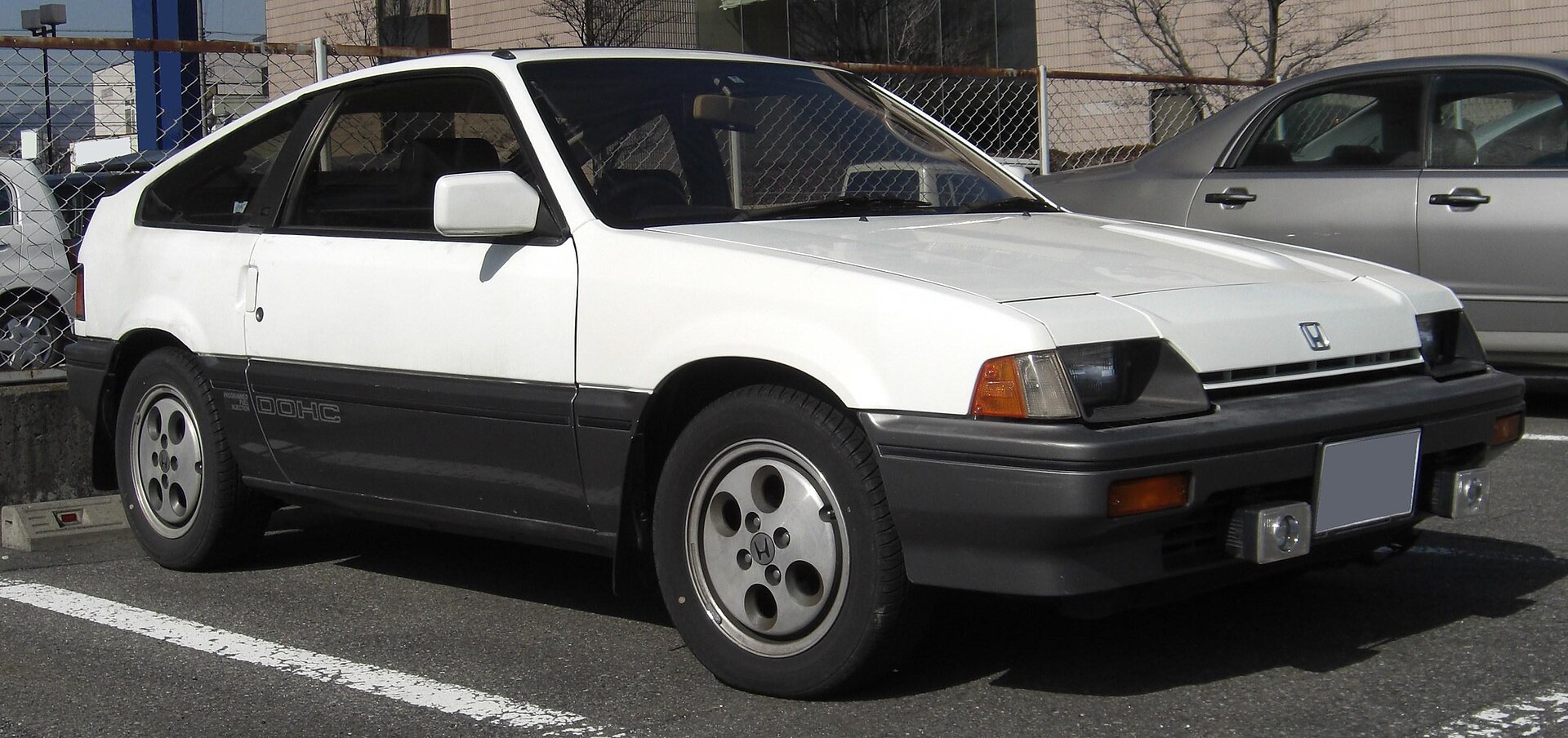
- Built
- 1983–1991
- Generations
- 2
- Top power
- 118 kW (160 PS)
Timeline
CR-X generations
Click a generation for its own page
- CR-X first generation 1983–1987 · Hatchback, Coupe · 45–103 kW (61–140 PS)
- CR-X second generation 1987–1991 · Hatchback, Coupe · 66–118 kW (90–160 PS)
Newest first · 2 generations since 1983
-
1987
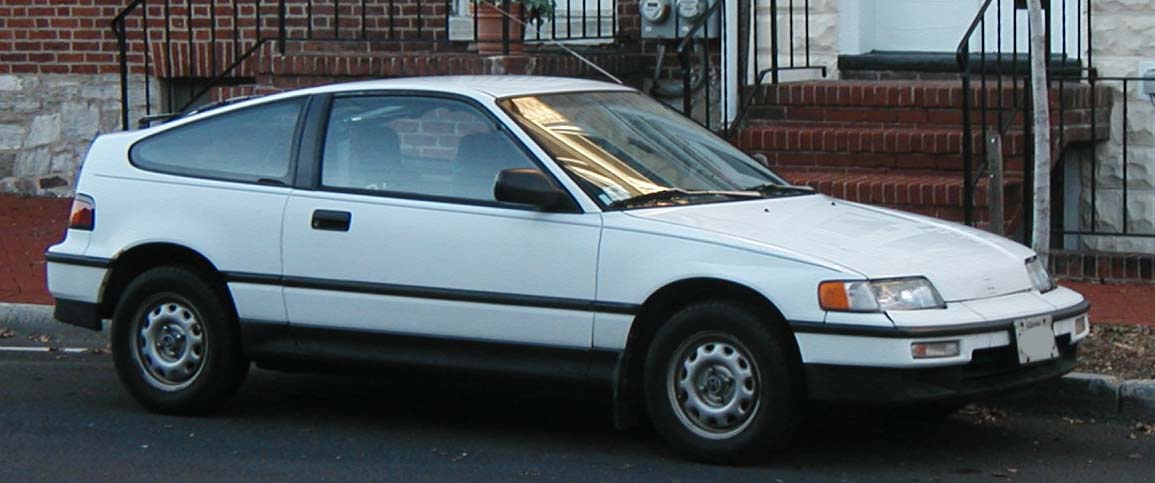
-
1983
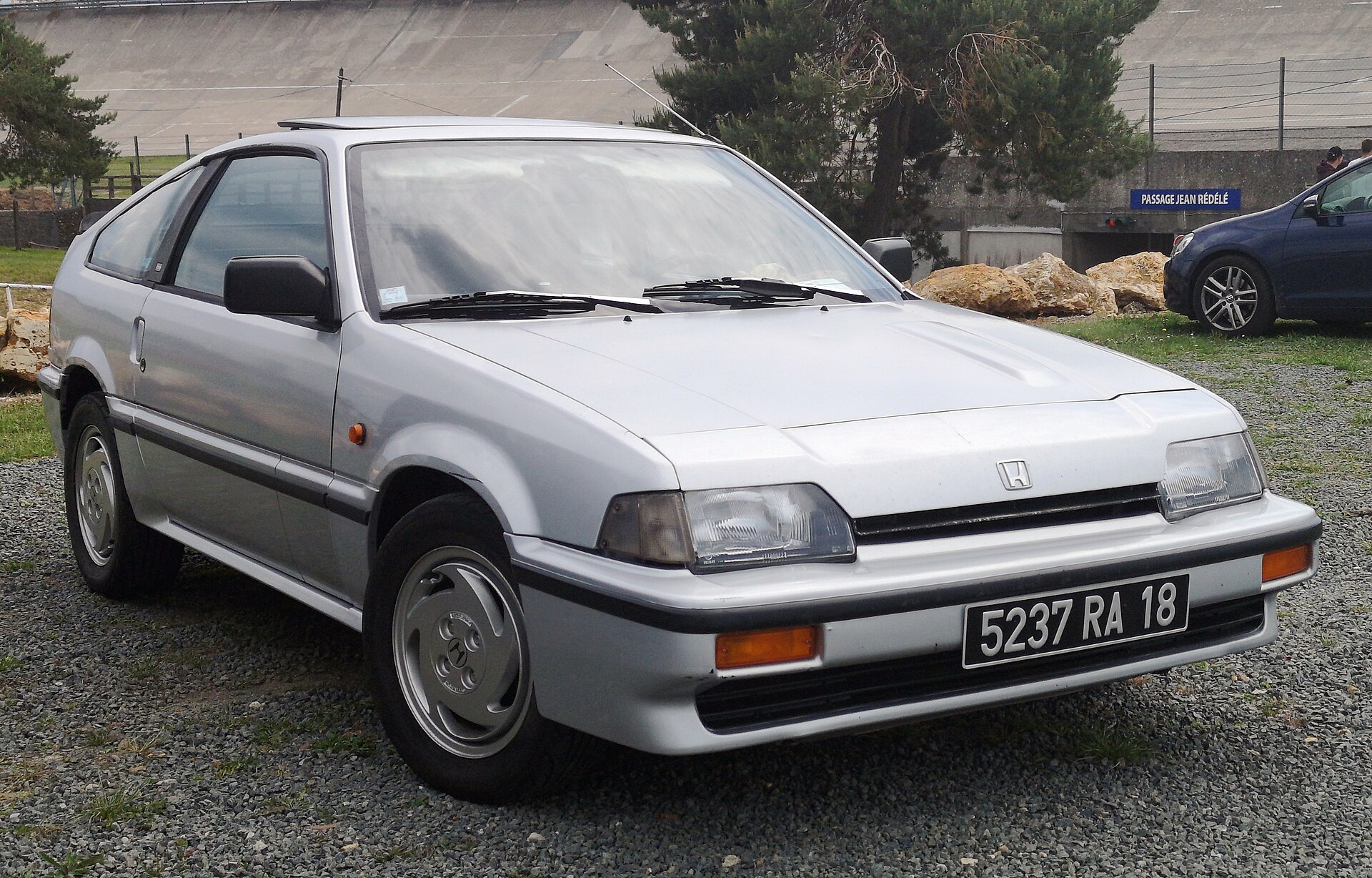


All generations by year: CR-X second generation (1987–1991) · CR-X first generation (1983–1987)
Which one is mine?
Pick the year of first registration to see which generation it is.
- CR-X second generation 1987–1991
- CR-X first generation 1983–1987
The Honda CR-X is a short, light front-wheel-drive coupé derived from the Civic and built at Suzuka from 1983 to 1991 in two generations. Engines ranged from a 1.3-litre economy unit to the 1.6-litre DOHC VTEC with 118 kW (160 PS) in the Japanese SiR. Nearly 400,000 were made, and the plastic-winged first car weighed as little as 777 kg in US HF form.
In short
- Announced on 23 June 1983 as the Ballade Sports CR-X; sold in North America as the CRX and in Europe as the CR-X or Civic CRX.
- Front wings, nose panel and headlamp covers in Honda's H.P. Alloy plastic on the first generation; drag coefficient 0.33.
- The second generation (1987-1991) brought double-wishbone suspension all round and, from 1989, the B16A VTEC engine.
- 171,393 second-generation cars were built for the USA; the HF was rated at up to 51 mpg (4.6 L/100 km) on the EPA highway cycle.
Size at a glance
| Dimensions | Honda CR-X first generation |
|---|---|
| Length | 3,675 mm144.7 in |
| Width | 1,625 mm64.0 in |
| Height | 1,290 mm50.8 in |
Specs by version
Engines
| Version | Engine | Power | Torque | Gearbox | Drive | Production years |
|---|---|---|---|---|---|---|
| CR-X first generation · CRX Si 1.5 91 hp (USA) | 1.5 l · 4 cyl · Petrol 1,488 cc | 68 kW 92 PS91 hp | 126 Nm93 lb-ft | 5-sp Manual | Front-wheel drive | 1985–1987 |
| CR-X first generation · 1.5i 110 PS (Japan) | 4 cyl · Petrol | 81 kW 110 PS109 hp | - | 5-sp Manual | Front-wheel drive | 1983 |
| CR-X first generation · 1.6i-16 ZC 135 PS | 1.6 l · 4 cyl · Petrol ZC | 99 kW 135 PS133 hp | 152 Nm112 lb-ft | - | Front-wheel drive | - |
| CR-X second generation · CRX Si 1.6 105 hp (USA) | 4 cyl · Petrol D16A6 | 78 kW 106 PS105 hp | - | 5-sp Manual | Front-wheel drive | 1988–1991 |
| CR-X second generation · 1.6 VTEC B16A1 150 PS (Europe) | 4 cyl · Petrol B16A1 | 110 kW 150 PS148 hp | - | - | Front-wheel drive | 1989–1991 |
| CR-X second generation · SiR B16A 160 PS (Japan) | 4 cyl · Petrol B16A | 118 kW 160 PS158 hp | - | - | Front-wheel drive | 1989–1991 |
Dimensions and weight
Show all 3 versions
| Version | Length | Width | Height | Kerb weight |
|---|---|---|---|---|
| CR-X first generation · CRX Si 1.5 91 hp (USA) | - | - | - | 886 kg1,953 lb |
| CR-X first generation · 1.5i 110 PS (Japan) | 3,675 mm144.7 in | 1,625 mm64.0 in | 1,290 mm50.8 in | - |
| CR-X second generation · CRX Si 1.6 105 hp (USA) | - | - | - | 915 kg2,017 lb |
Verified Manufacturer and type-approval data from our catalog · Sources and methodology
Honda CR-X at a glance
| Specification | Honda CR-X |
|---|---|
| Years | 1983-1987 (first generation); 1987-1991 (second generation) |
| Production | nearly 400,000 in total; 171,393 second-generation cars for the USA |
| Plant | Suzuka, Mie, Japan |
| Body style | three-door hatchback coupé; 2+2 in Japan and Europe, two seats in North America |
| Layout | front engine, front-wheel drive, Civic mechanicals |
| Engines | 1.3 to 1.6 litres, four cylinders, 8, 12 and 16 valves, carburettor or PGM-FI injection |
| Power | 45 kW (60 hp) US 1.3 to 118 kW (160 PS) Japanese SiR |
| Weight | 777 kg (1985 HF) to 986 kg (1990-1991 US Si) |
| Length | 3,675 mm (1983); 3,754 mm (1988) |
| Top speed | Honda claimed 203 km/h for the first-generation Japanese Si |
| 0-100 km/h | 8 s for the Japanese Si (Honda claim) |
| Price new | JPY 993,000 (1.3) to JPY 1,380,000 (1.5i sunroof) in Tokyo in 1983; USD 6,150 (1.3) and USD 6,599 (1.5) in the USA for 1984 |
Honda CR-X origins: the Ballade Sports as a lighter Civic
Honda launched the car in Japan on 1 July 1983 through its Verno dealer channel, with a sales target of 3,000 a month. CR-X is usually explained as Civic Renaissance Experimental. The platform and drivetrain came from the 1983 Honda Civic, but the CR-X body was shorter and lower, and North American cars had only two seats. Its designer, according to Wikipedia, owned an Alfa Romeo GT Junior Zagato and took cues from it.
Weight saving shaped the first car. Honda made the nose panel, front wings, headlamp flaps and lower door trim from H.P. Alloy, a blend of ABS and polycarbonate that resists chips and does not rust, and used modified polypropylene for the bumpers. The Japanese 1.3 had 59 kW (80 PS) and the fuel-injected 1.5i had 81 kW (110 PS), both from 12-valve engines with two inlet valves and one exhaust valve per cylinder. Tokyo prices in 1983 ran from JPY 993,000 for the 1.3 to JPY 1,380,000 for the 1.5i with sunroof.
First generation versions for Japan, Europe and the USA
The export range began in autumn 1983 as 1984 models. American buyers got a two-seater with a 1.3-litre CVCC engine of 45 kW (60 hp) or a 1.5 of 57 kW (76 hp), priced at USD 6,150 and USD 6,599. In mid-1985 the CRX Si added fuel injection and 68 kW (91 hp), while the HF replaced the base model with a frugal carburettor 1.5. The EPA rated the 1984 1.3 at 52 mpg (4.5 L/100 km) on the highway and the HF at 42 mpg city and 51 mpg highway (5.6 and 4.6 L/100 km).
Japan and Europe received a 2+2. The European fuel-injected 1.5 made 74 kW (100 PS DIN). The Japanese Si and the European CR-X 1.6i-16 used the ZC twin-cam 1,590 cc four with 16 valves. Wikipedia rates it at 99 kW (135 PS) in UK form and 103 kW (140 PS) in Japan, while Ate Up With Motor quotes 99 kW (135 PS) JIS for the Japanese engine. Honda claimed 0-100 km/h in 8 seconds and 203 km/h for the Japanese Si; its speed claims were optimistic, and testers could not reproduce the 190 km/h quoted for European cars.
Motor Trend named the CRX its Import Car of the Year for 1984, and Car and Driver put it on its 10Best list for 1985. A facelift for 1986 brought more aerodynamic headlamps and, on the Si, body-coloured cladding and 14-inch wheels.

Second generation with double wishbones and VTEC
The redesigned CR-X arrived in 1987 in Japan and as a 1988 model in the USA. The wheelbase grew by about 100 mm, the car became 81 mm longer and 51 mm wider, and the torsion-bar front and beam rear suspension gave way to double wishbones at all four wheels. Japanese buyers could order a glass roof panel that ran from the windscreen to the hatch, while US cars gained a stippled glass strip above the tail lights for rearward vision.
| Version | Market | Engine | Power | Years |
|---|---|---|---|---|
| CRX Si | USA | 1.6 D16A6, 16 valves | 78 kW (105 hp), 81 kW (108 hp) from 1989 | 1988-1991 |
| CR-X 1.4 | Europe | 1.4 D14A1 SOHC | 66 kW (90 PS) | 1989-1991 |
| CR-X 1.6i-16 (D16A9) | Europe | 1.6 D16A9 DOHC | 96 kW (130 PS) | 1987-1991 |
| CR-X VTEC (EE8) | Europe | 1.6 B16A1 DOHC VTEC | 110 kW (150 PS) | 1989-1991 |
| CR-X SiR | Japan | 1.6 B16A DOHC VTEC | 118 kW (160 PS) | 1989-1991 |
The B16A arrived in September 1989, making the CR-X the second Honda with DOHC VTEC after the Integra XSi. A 1990 update revised the lamps and bumpers, and the US Si gained disc brakes on all four wheels. Motor Trend named the Si its Import Car of the Year for 1988 and the CRX again for 1990.
In Europe the CR-X competed for the same buyers as hot hatchbacks such as the Peugeot 205 GTI and sporting coupés such as the Volkswagen Scirocco. The CR-X competed in the Nurburgring 24 Hours in 1986 and 1988, took a class podium at the 1989 Spa 24 Hours, and had its own one-make series in the UK from 1988 to 1994.


Honda CR-X vs CR-X del Sol and US production by year
Production of the coupé ended in 1991. Its replacement, the 1992 CR-X del Sol, kept the name and Civic base but switched to a two-seat targa body with a removable roof. That car is a separate model in the catalogue and is not covered here. Hagerty's US production figures show the trend: 66,629 CRXs in 1986, the best year, against 26,975 in 1991.
Honda CR-X today: what to check when buying
Hagerty's US buyer's guide starts with the cambelt: belt, tensioner and water pump are due every 60,000 miles (97,000 km), and a car without records needs them at once. Cylinder-head bolts are single-use and hard to find. Carburettor cars have complex vacuum plumbing, and cars with it removed often run badly. A bypassed fan switch can hide overheating, so check compression and coolant.
Rust starts in the wheelarches and around clogged sunroof drains, and tired hatch seals let water in. The plastic front wings and cladding turn brittle and crack. Original struts, upper mounts, brake discs and tyre sizes such as 185/60 R14 are getting scarce. Engine swaps and coilover conversions are common, so originality adds value.
A clean 1987 Si sold on Bring a Trailer in October 2021 for USD 22,000, about EUR 19,000 at the October 2021 rate, and Hagerty's guide of the same period put first-generation cars in #2 condition at about USD 17,000. The guide expected prices of clean, unmodified Si models to hold steady. The Honda catalogue covers the brand's other coupés and hatchbacks.
Honda CR-X: first vs latest generation
| Spec | CR-X first generation | CR-X second generation | Change |
|---|---|---|---|
| Years | 1983–1987 | 1987–1991 | 4 years apart |
| Most powerful version | 103 kW (140 PS) | 118 kW (160 PS) | +15 kW (+15%) |
| Lightest kerb weight | 886 kg | 915 kg | +29 kg |
Oldest and newest generation in the 1cars catalog. Power is the strongest version of each; other rows are shown only when both generations have the figure.
Honda CR-X in our rankings
- No. 5 of 125 · Smallest coupes (3,675 mm)
- No. 9 of 115 · Lightest coupes (886 kg)
- No. 27 of 664 · Smallest cars (3,675 mm · top 5%)
- No. 26 of 522 · Lightest cars (886 kg · top 5%)
- No. 612 of 1261 · Longest-running car nameplates (8 years · top 52%)
- No. 61 of 102 · Most powerful cars of the 1980s (118 kW · top 62%)
Shorter than 96% of ranked coupes in the 1CARS catalog (No. 5 of 125).
FAQ
What does CR-X stand for?
CR-X is most often explained as Civic Renaissance Experimental. In Japan the first car was sold as the Ballade Sports CR-X, while North America used CRX without the hyphen and some European markets added the Civic name.
Which Honda CR-X is the fastest?
The fastest is the second-generation Japanese SiR of 1989-1991, whose 1.6-litre B16A VTEC engine produced 118 kW (160 PS). European buyers got the VTEC version with the B16A1 and 110 kW (150 PS).
How economical is the Honda CR-X HF?
The HF was the economy special of the range: the EPA rated the first-generation HF at 42 mpg city and 51 mpg highway, about 5.6 and 4.6 L/100 km, and the 1984 1.3-litre CRX reached 52 mpg on the highway.
Is the CR-X del Sol the same car as the CR-X?
No. The CR-X del Sol of 1992 replaced the coupé but has a two-seat targa body on the later Civic base. It shares the name and the Civic connection, not the coupé body.
Data sources
Data checked by an editor against the sources below.
- Wikipedia - Honda CR X
- Global
- Ateupwithmotor


