 Volvo S40
All generations, specs and history
Published Sources (1) Report an error
By Felix Hartmann, Automotive Technology & EV Contributor
- Built
- 1995–2012
- Generations
- 2
- Top power
- 169 kW (230 PS)
Timeline
S40 generations
Click a generation for its own page


I and II overlapped in 2003–2004, so II sits on a second lane
Newest first · 2 generations since 1995
-
2003
-
1995
All generations by year: S40 II (2003–2012) · S40 I (1995–2004)
Which one is mine?
Pick the year of first registration to see which generation it is.
Check by VINWhich Volvo S40 to buy
Our verdict · Felix Hartmann
- For low running costs: a 2010-2012 S40 II DRIVe or D2 diesel, rated at 3.8 l/100 km.
- For performance: the T5 with 169 kW (230 PS) from 2008, 0-100 km/h in 6.8 seconds; AWD versions add traction.
- For flexibility: the 1.8F or 2.0F flexifuel, which runs on E85 as well as petrol.
- For a budget buy: a late first-generation S40 with the side curtain airbags added in late 2002, or a 2.0T or T4.
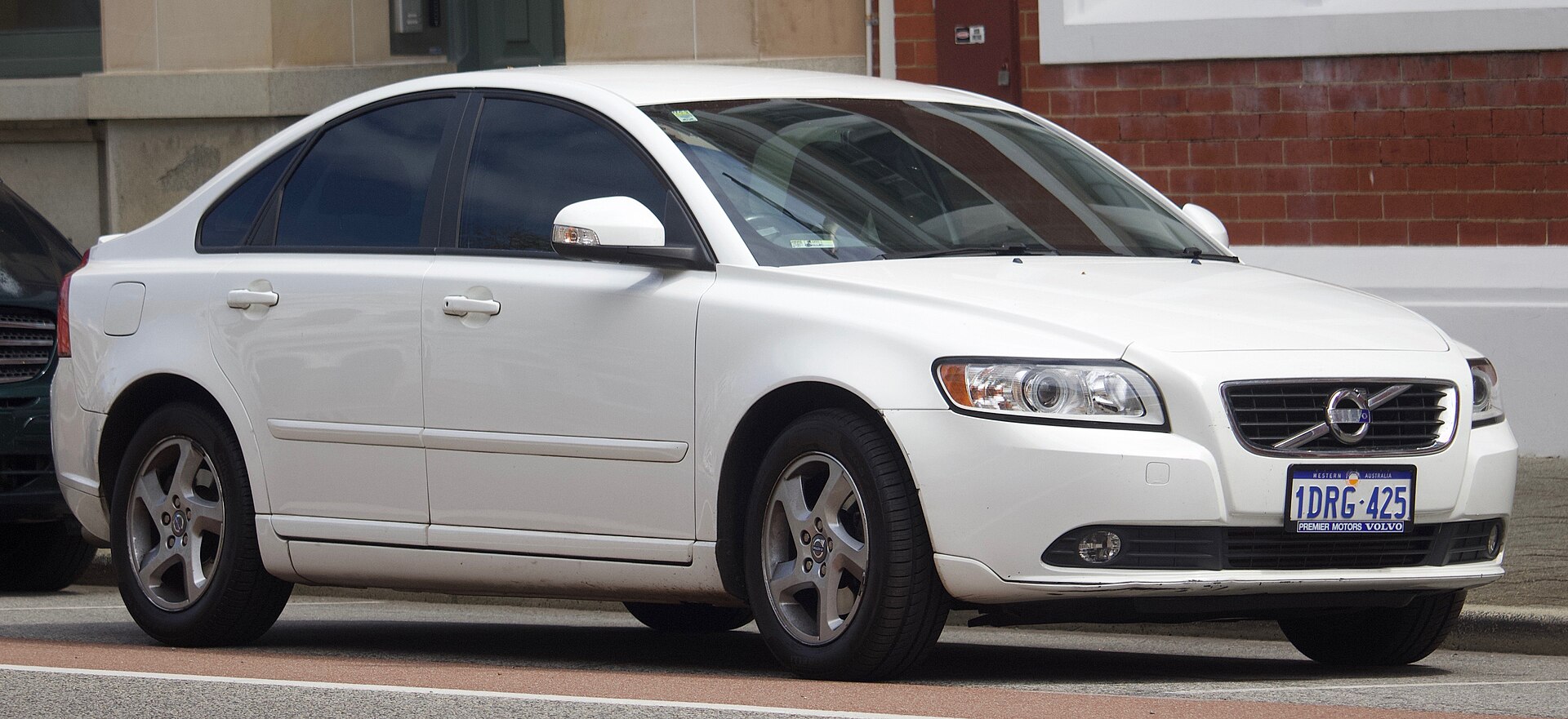
The Volvo S40 is a compact executive saloon that Volvo built in two generations from 1995 to 2012. The first car came from the NedCar plant in Born, the Netherlands, and shared its platform with the Mitsubishi Carisma; the second was built in Ghent, Belgium, on the Volvo P1 platform shared with the Ford Focus and Mazda3. In total 602,910 S40s were made, and Volvo never replaced the saloon directly.
In short
- Two generations: S40 I (1995-2004, estate sister V40) and S40 II (2003-2012, estate sister V50).
- Petrol engines from 74 kW (100 PS) to 169 kW (230 PS) in the five-cylinder T5; diesels from 66 kW (90 PS) to 132 kW (180 PS).
- The first S40 was the first car to earn four stars in Euro NCAP, in 1997.
- Production ended in May 2012; the V40 hatchback took over the 40-series role.
Volvo S40 at a glance
| Parameter | Volvo S40 |
|---|---|
| Segment | Compact executive car (C segment) |
| Body | Four-door saloon |
| Layout | Front engine, front-wheel drive; all-wheel drive on some second-generation versions |
| Built | NedCar, Born, Netherlands (1995-2004); Ghent, Belgium (2003-2012); also assembled in Malaysia, South Africa, Thailand, Botswana and China |
| Production | 602,910 S40s (1995-2012) |
| Predecessor | Volvo 440/460 |
| Successor | None directly; V40 hatchback from 2012 |
Volvo had planned to call the cars S4 and F4. Audi had already reserved S4, so the saloon became the S40 and the estate the V40. Current Volvo models are in the Volvo catalogue.
Generations
| Generation | Code | Years | Body styles | Engines | Power (kW / hp) |
|---|---|---|---|---|---|
| S40 I | - | 1995-2004 | saloon (estate: V40) | 1.6-2.0 petrol, 1.9 turbodiesel | 66-147 kW / 89-197 hp |
| S40 II | - | 2003-2012 | saloon (estate: V50) | 1.6-2.5 petrol, 1.6-2.4 diesel, flexifuel | 74-169 kW / 99-227 hp |
S40 I (1995-2004): the NedCar years
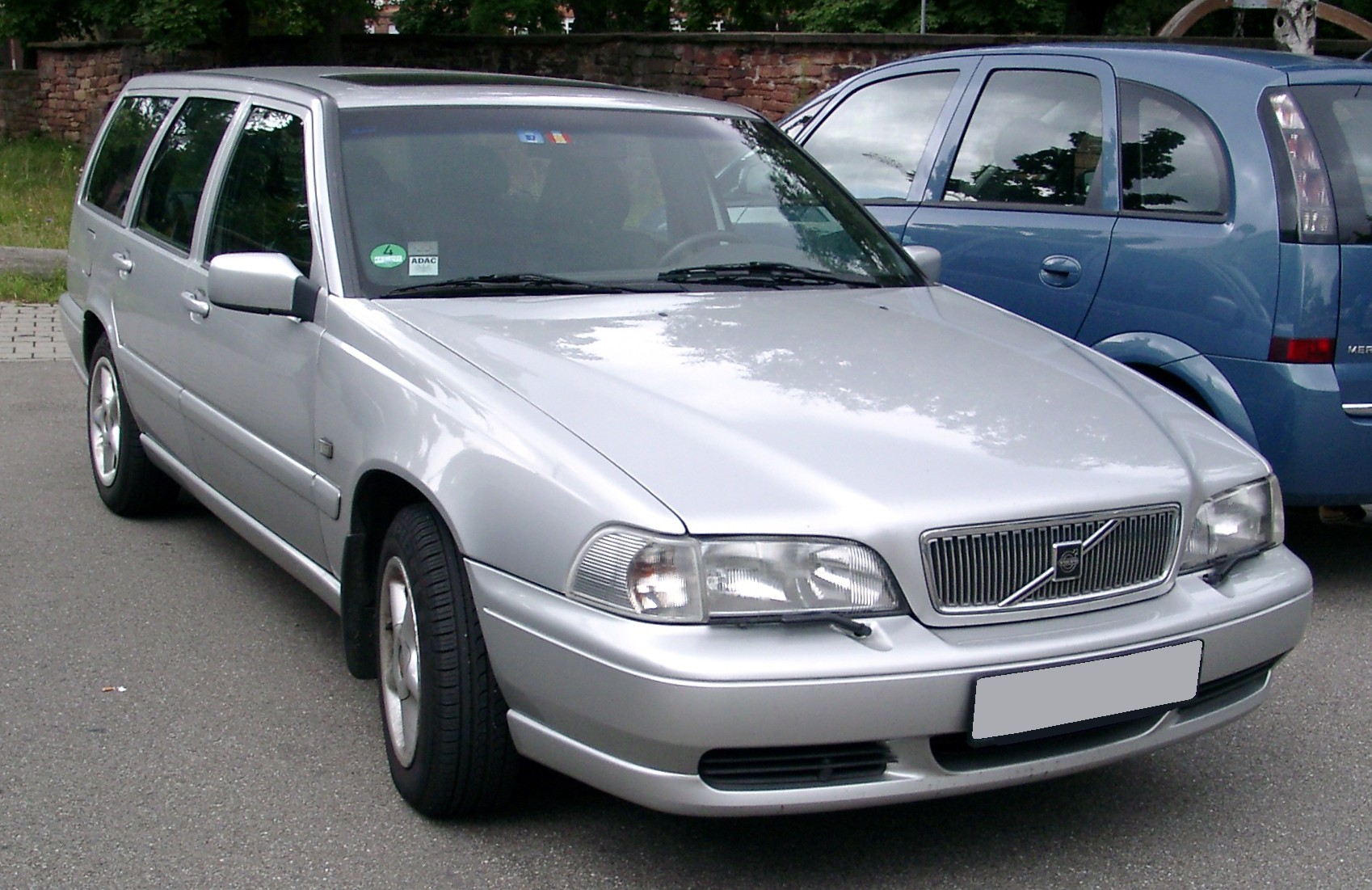
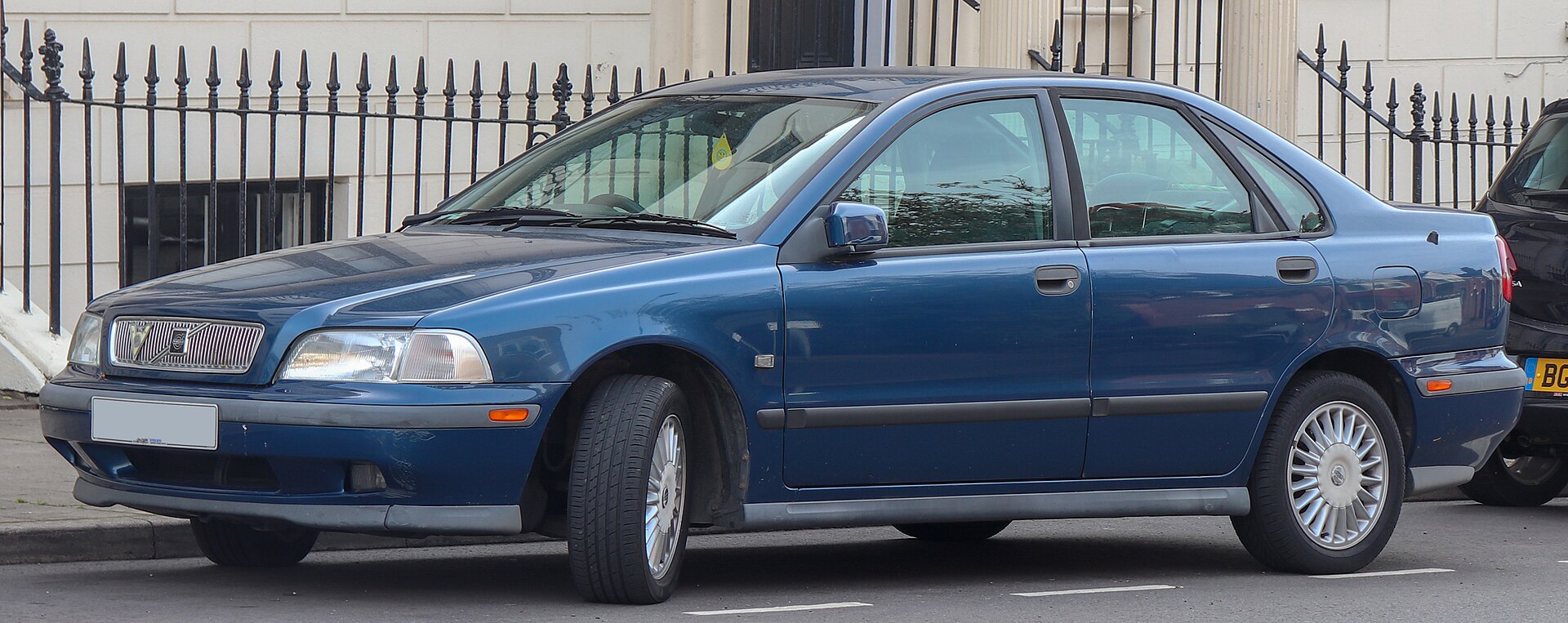
The first S40 went on sale in August 1995 and made its show debut in Frankfurt the following month; the V40 estate premiered in Bologna in December 1995. It was the first full model under design director Peter Horbury. The car shared its platform with the Mitsubishi Carisma and was the last Volvo built at NedCar.
A "Phase II" update in July 2000 brought new engine management, direct-injection diesels, larger brakes, a new front suspension, wider tracks and a light facelift. A further update in late 2002 added a new grille, a three-spoke steering wheel and side curtain airbags. North America got the car from the 2000 model year, with the 1.9 turbo only.
The S40 also raced. It was homologated for Super Touring on 1 January 1997, ran in the British Touring Car Championship with Tom Walkinshaw Racing from 1997 to 1999 and took the 1998 drivers' title with Rickard Rydell.


S40 II (2003-2012): the P1 compact
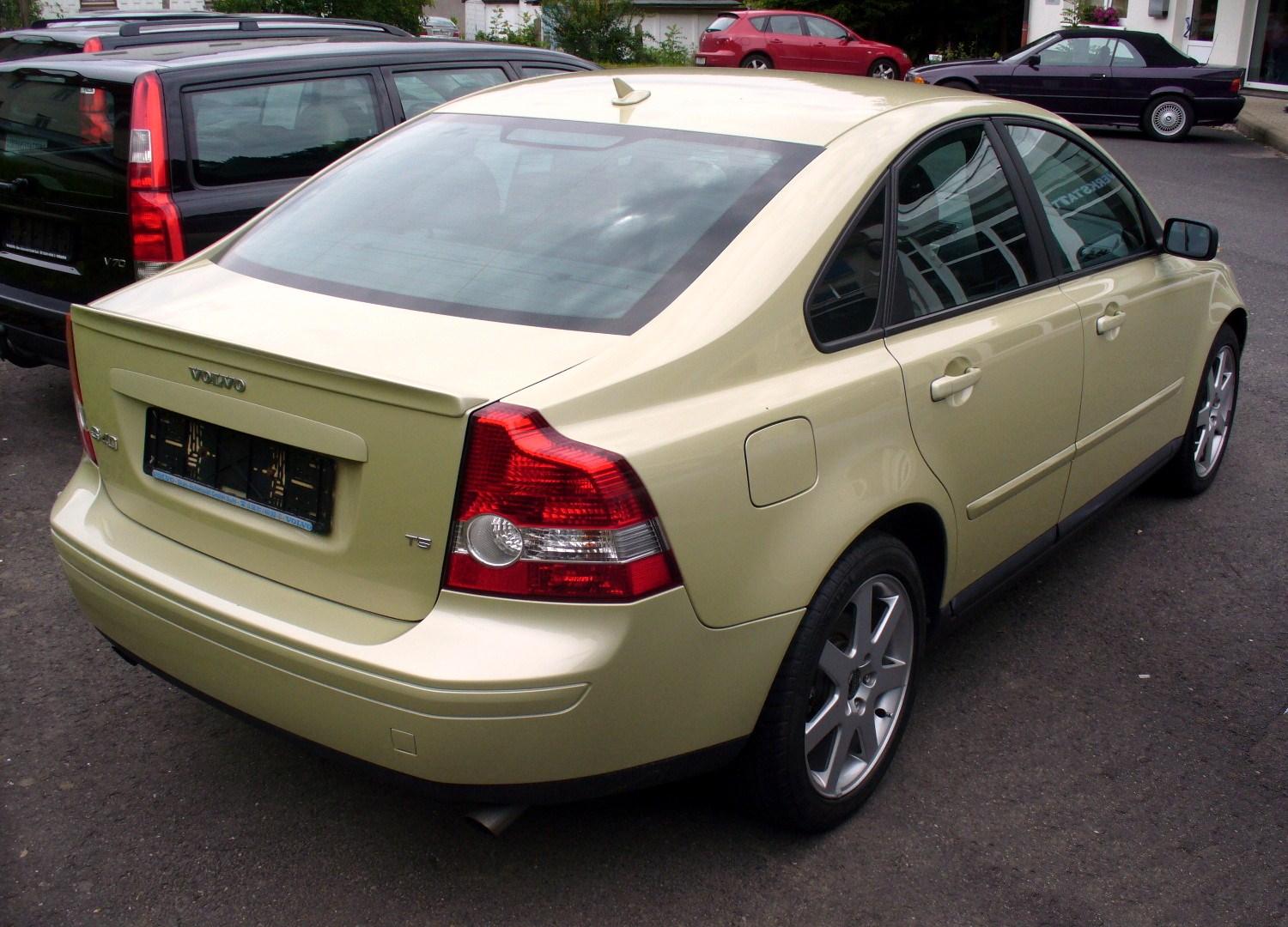
The second generation was shown in Frankfurt in September 2003, and production started in Ghent the following month. It used the Volvo P1 platform, which shares parts with the European Ford Focus and the Mazda3. The V50 estate followed a few months later, and from March 2006 the S40 was also built by the Changan Ford Mazda joint venture in China.
This was the first small Volvo with a five-cylinder engine. The T5 AWD combined a Volvo powertrain with a Getrag gearbox and a Haldex all-wheel-drive system. The car was refreshed in 2007 with better audio, more storage, emergency brake lights, optional active bi-xenon headlights and the BLIS blind-spot system. In May 2010 it gained a larger Volvo logo and a new engine range, including the D2, D3 and D4 diesels. Production ended in May 2012; the 2011 model year was the last in the US and Canada.

Engines and performance
| Engine | Generation | Years | Power |
|---|---|---|---|
| 1.6 petrol | I | 1996-2004 | 77-80 kW (105-109 PS) |
| 1.8 petrol | I | 1995-1999 | 85 kW (115 PS) |
| 1.8 GDI petrol (Mitsubishi) | I | 1998-2001 | 92 kW (125 PS) |
| 2.0T petrol | I | 1998-2004 | 118-127 kW (160-172 PS) |
| T4 petrol | I | 1998-2003 | 147 kW (200 PS) |
| 1.9 turbodiesel (Renault) | I | 1996-2004 | 66-85 kW (90-116 PS) |
| 1.6 petrol | II | 2005-2012 | 74 kW (100 PS) |
| 2.0 petrol, 2.0F flexifuel | II | 2004-2012 | 107 kW (145 PS) |
| 2.4i petrol | II | 2004-2010 | 125 kW (170 PS) |
| T5 petrol | II | 2005-2012 | 162-169 kW (220-230 PS) |
| 1.6D / DRIVe / D2 diesel | II | 2005-2012 | 80-85 kW (109-115 PS) |
| D3 / D4 diesel | II | 2011-2012 | 110-130 kW (150-177 PS) |
| D5 diesel | II | 2006-2010 | 132 kW (180 PS) |
Two ADAC data sheets for the facelifted second generation show the spread of the range:
| Parameter | S40 DRIVe 1.6D (2010-2011) | S40 T5 (2009-2010) |
|---|---|---|
| Engine | 1,560 cc, four cylinders | 2,521 cc, five cylinders, turbo |
| Power | 84 kW (115 PS) | 169 kW (230 PS) |
| Torque | 270 Nm | 320 Nm |
| 0-100 km/h | 11.4 s | 6.8 s |
| Top speed | 195 km/h (121 mph) | 240 km/h (149 mph) |
| Consumption (NEDC) | 3.8 l/100 km, 99 g/km | 8.7 l/100 km, 203 g/km |
| Kerb weight | 1,363 kg | 1,465 kg |
Dimensions and boot
| Parameter | Metric | Imperial |
|---|---|---|
| Length, S40 II (facelift) | 4,476 mm | 176.2 in |
| Width (without mirrors) | 1,770 mm | 69.7 in |
| Height | 1,454 mm | 57.2 in |
| Wheelbase, S40 II | 2,640 mm | 103.9 in |
| Wheelbase, S40 I | 2,550-2,557 mm | 100.4-100.7 in |
| Length, S40 I (2002-2004) | 4,521 mm | 178.0 in |
| Boot, S40 II | 404 l, 883 l with rear seats folded | 14.3 / 31.2 cu ft |
| Fuel tank, S40 II | 55-62 l | 12.1-13.6 imp gal |
The facelifted S40 II is 45 mm shorter than the last first-generation car but has a wheelbase 83 mm longer. Compare it with today's compact saloons using the size comparison tool.
Running costs and prices
The most frugal S40 was the 2010 DRIVe diesel, rated at 3.8 l/100 km and 99 g/km in the NEDC cycle. The T5 used more than twice as much fuel on paper, 8.7 l/100 km. In Germany the facelifted S40 1.6 started at EUR 21,890 in April 2007, and a T5 Summum AWD Geartronic cost EUR 40,020 in 2009 (ADAC list prices). ADAC lists the first S40 1.8 of February 1996 at the equivalent of EUR 19,500.
Safety
The first-generation S40 was crash-tested by Euro NCAP in 1997 and was the first car to earn a four-star rating. The second generation was rated five stars by ANCAP in Australia in 2004, with 13.15 of 16 points in the frontal offset test, the full 16 in the side test and 2 of 2 in the pole test; pedestrian protection was rated marginal. Stability control was optional. For newer cars, see our safety rankings.

Reliability and known issues
We have not found a sourced reliability study specific to the S40, so we do not list typical faults. As with any car of this age, condition and service history matter more than the badge.
Sales, awards and the end of the S40
The RAC credited the first generation with making buyers see Volvo as a credible compact executive brand. The second generation was a World Car of the Year 2005 nominee, Canadian Car of the Year in the Best New Sport Compact class for 2005 and South African Car of the Year 2005. Global sales of the S40 II peaked at 72,329 in 2006 and fell to 12,354 in 2012, when production ended. In 2016 the Concept 40.2 previewed a possible saloon successor, but the next 40-series cars became the XC40 and, under a separate brand, the Polestar 2.
Rivals
In its time the S40 competed with the Audi A4, BMW 3 Series and Mercedes-Benz C-Class at the top end of the compact class, and with well-equipped versions of its platform sisters, the Ford Focus saloon and the Mazda3 saloon, at the lower end.
| Model | Engines | Power (hp) | Boot (l) | Price from (EUR) |
|---|---|---|---|---|
| Volvo S40 II | 1.6-2.5 petrol, 1.6-2.4 diesel | 99-227 | 404 | 21,890 (Germany, 2007) |
| Audi A4 (B7) | - | - | - | - |
| BMW 3 Series (E90) | - | - | - | - |
| Ford Focus II saloon | - | - | - | - |
Photo gallery

Volvo S40: first vs latest generation
| Spec | S40 I | S40 II | Change |
|---|---|---|---|
| Years | 1995–2004 | 2003–2012 | 8 years apart |
| Most powerful version | 147 kW (200 PS) | 169 kW (230 PS) | +22 kW (+15%) |
Oldest and newest generation in the 1cars catalog. Power is the strongest version of each; other rows are shown only when both generations have the figure.
Volvo S40 in our rankings
- No. 248 of 1082 · Longest-running car nameplates (17 years · top 25%)
- No. 88 of 174 · Most powerful sedans (169 kW · top 51%)
- No. 634 of 1011 · Most powerful cars (169 kW · top 63%)
- No. 288 of 411 · Cars with the most generations (2 generations)
In production longer than 75% of ranked nameplates in the 1CARS catalog (No. 248 of 1082).
FAQ
How many generations of the Volvo S40 are there?
Two: the first (1995-2004), built at NedCar in the Netherlands, and the second (2003-2012), built in Ghent, Belgium.
What platform is the Volvo S40 based on?
The first generation shared its platform with the Mitsubishi Carisma; the second used the Volvo P1 platform, related to the Ford Focus and Mazda3.
What is the most powerful Volvo S40?
The second-generation T5 from 2008, with a 2.5-litre five-cylinder turbo producing 169 kW (230 PS).
Is the Volvo S40 safe?
The first generation was the first car to get four stars from Euro NCAP (1997); the second got five stars from ANCAP in 2004.
What replaced the Volvo S40?
No direct saloon successor was built. The V40 hatchback replaced the S40 and V50 range in 2012.
Data sources
Data checked by an editor against the sources below.