 Volvo PV650 Series
Specs, engines and history
Published Report an error
By Felix Hartmann, Automotive Technology & EV Contributor
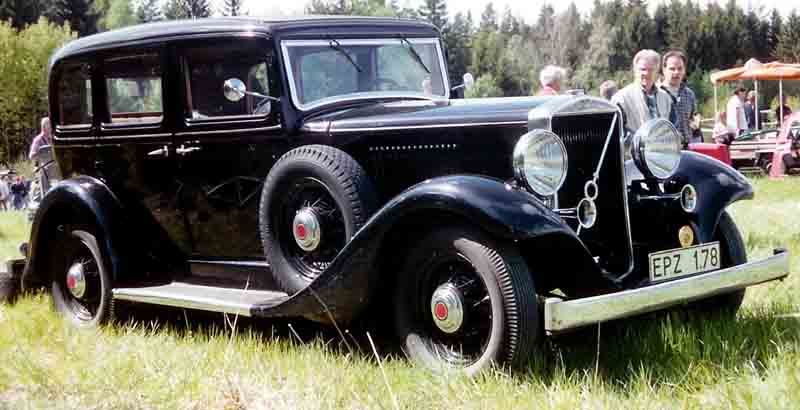
The Volvo PV650 series was Volvo's first six-cylinder passenger car line, built in Gothenburg from 1929 to 1937. It began with the PV651 saloon of 1929 and grew into a family of standard and de luxe saloons and long commercial chassis for ambulances, hearses and light trucks. About 3,600 were made before the PV51 took over the passenger car range in 1936.
In short
- Built 1929–1937: saloons PV651 to PV659 and commercial chassis PV650, PV655, PV656 and PV657.
- Side-valve inline-six engines of 3.0, 3.4 and 3.7 litres, from 40 kW (55 PS) to 63 kW (86 PS).
- Hydraulic brakes from spring 1930; all-steel body from autumn 1933.
- About 3,577 cars and chassis in total, according to the production figures in Wikipedia.
Volvo PV650 series at a glance
| Item | Details |
|---|---|
| Maker | AB Volvo, Gothenburg (Sweden) |
| Production | April 1929 – 1937 |
| Name | PV = PersonVagn (passenger car); 6 = six cylinders; last digit = version |
| Body | four-door, five-seat saloon; commercial chassis; a few two-door and convertible bodies |
| Layout | front engine, rear-wheel drive |
| Engines | side-valve inline-six: 3,010 cc, 3,366 cc, 3,670 cc |
| Power | 40–63 kW (55–86 PS) |
| Wheelbase | 2,950 mm (PV657 chassis: 3,550 mm) |
| Predecessor / successor | ÖV4 / PV4 / Volvo PV51 (1936) |
Volvo's later models are in the Volvo catalogue on 1cars, and the history of Volvo starts with the company's first cars of 1927.
PV650 production timeline
| Year | Event |
|---|---|
| 1926 | Volvo begins planning a larger, six-cylinder successor to its first car |
| April 1929 | PV651 saloon introduced with a 3.0-litre six and mechanical brakes |
| spring 1930 | PV652 with hydraulic brakes replaces the PV651 |
| 1931 | four-speed gearbox |
| January 1932 | 3.4-litre EB engine; three-speed gearbox with synchronised second and third gears |
| autumn 1933 | PV653 and de luxe PV654 with all-steel body and X-braced chassis |
| 1935 | PV658 and PV659 with a 3.7-litre engine and V-shaped grille |
| 1936 | PV51 replaces the saloons |
| 1937 | last commercial chassis (PV657) |
Development and production history
Volvo built its first car, the four-cylinder ÖV4, in 1927. As early as 1926 the company had started to plan a larger car, and in April 1929 it introduced the PV651, a five-seat saloon with a six-cylinder engine. The model name explained the car: PV for PersonVagn, 6 for six cylinders and the final digit for the version.
The first saloons had a wooden frame covered in steel panels. The PV652 replaced the PV651 in the spring of 1930 and brought hydraulic brakes. Together the PV651 and PV652 reached 2,176 cars, the largest share of the whole series. A commercial chassis, the PV650, was built alongside them from 1929, with 206 made.
In the autumn of 1933 Volvo introduced the PV653 standard and PV654 de luxe models with an all-steel body, a stronger chassis with an X-shaped cross member and 17-inch wheels. The final saloons, the PV658 and PV659 of 1935, received a larger engine and a slightly V-shaped grille. When the PV51 arrived in 1936, the saloons ended, while the commercial chassis continued for one more year.


Design and engineering
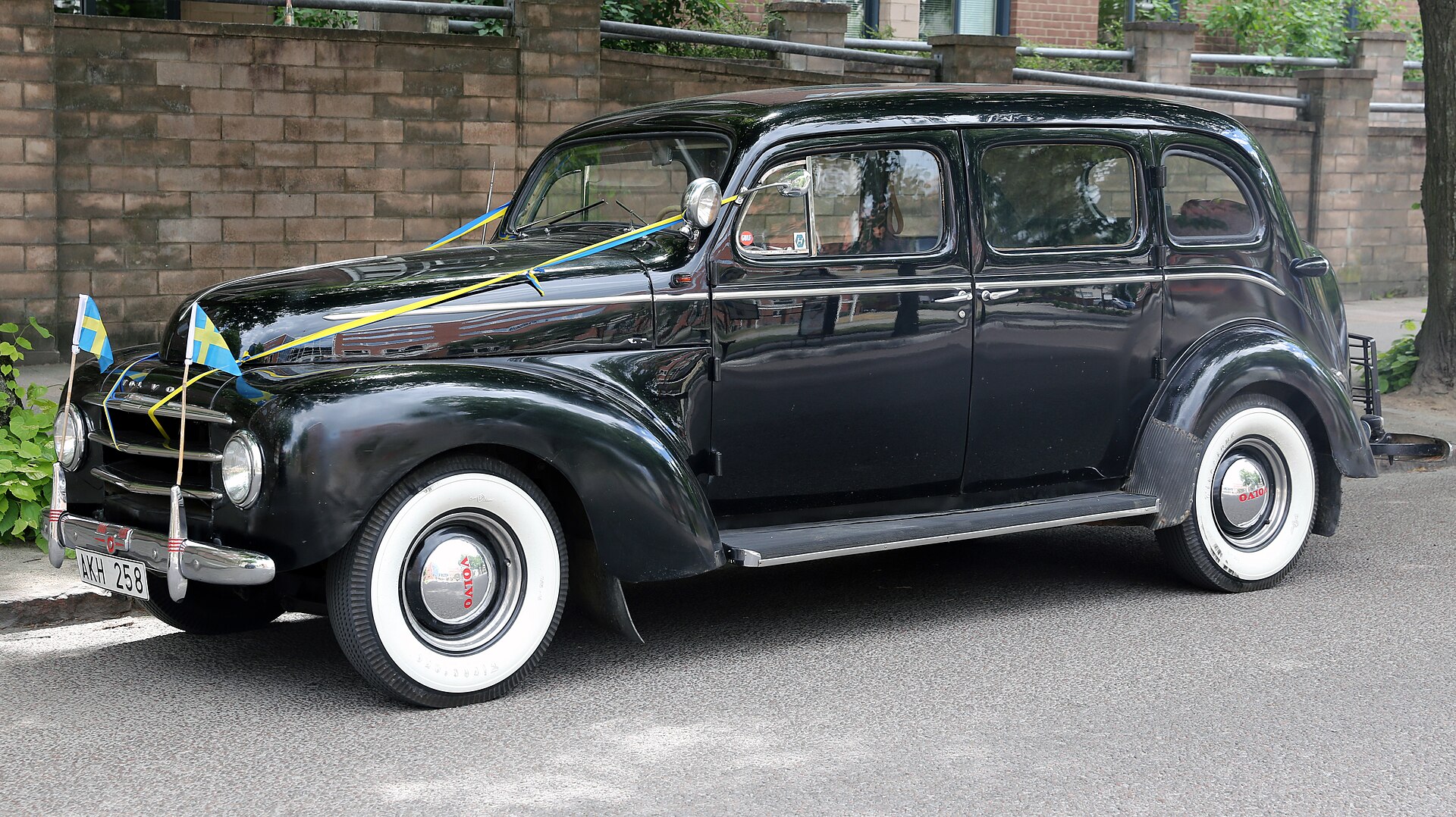
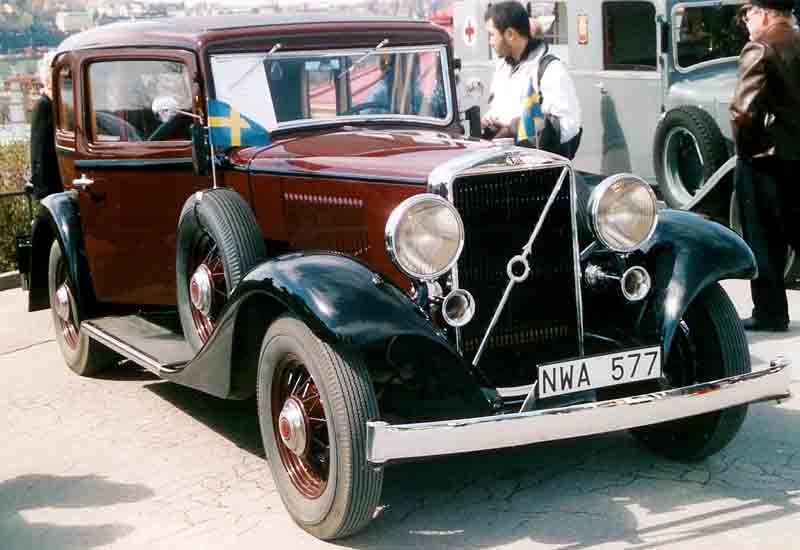
All PV650-series cars used a separate chassis with a front-mounted inline-six driving the rear wheels. The wheelbase of the saloons and the standard chassis was 2,950 mm (116.1 in). The 1933 update gave the body a slightly raked windscreen and grille, and the roof centre was the only part still covered in artificial leather. The de luxe PV654 stood out with two spare wheels mounted in the front wings, chrome horns and two tail lamps.
The gearbox changed several times. The PV651 had a three-speed gearbox without synchromesh, a four-speed unit arrived in 1931, and from January 1932 Volvo used a three-speed gearbox with synchronised second and third gears. Brakes went from mechanical (cable-operated) on the PV651 to hydraulic on the PV652 from 1930.
Engine and drivetrain
| Engine | Used in | Displacement | Bore × stroke | Power |
|---|---|---|---|---|
| DB | PV651, early PV652 | 3,010 cc | 76.2 × 110 mm | 40 kW (55 PS) at 3,000 rpm |
| EB | PV652 from 1932, PV653–PV655 | 3,366 cc | 79.4 × 110 mm | 48 kW (65 PS) at 3,200 rpm |
| EC | PV656–PV659 | 3,670 cc | - | 63 kW (86 PS) |
All three are side-valve inline-sixes. The first engine had a seven-bearing crankshaft and a compression ratio of only 5.1:1.

Volvo PV650 series specifications
| Parameter | Metric | Imperial |
|---|---|---|
| Engine (PV651) | 3,010 cc side-valve inline-six | 183.7 cu in |
| Power (PV651) | 40 kW (55 PS) at 3,000 rpm | 40 kW (54 hp) |
| Engine (PV658/PV659) | 3,670 cc | 224.0 cu in |
| Power (PV658/PV659) | 63 kW (86 PS) | 63 kW (85 hp) |
| Wheelbase | 2,950 mm | 116.1 in |
| Wheelbase, PV657 chassis | 3,550 mm | 139.8 in |
| Wheels (from 1933) | 17 in | 17 in |
PV650 series variants and production
| Variant | Years | Body / purpose | Engine | Notes |
|---|---|---|---|---|
| PV650 | 1929–1933 | commercial chassis | 3.0 / 3.4 six | 206 built |
| PV651 | 1929–1930 | saloon, mechanical brakes | 3.0 six | 2,176 PV651/652 together |
| PV652 | 1930–1933 | saloon, hydraulic brakes | 3.0, later 3.4 six | see PV651 |
| PV653 | 1933–1934 | standard saloon, all-steel | 3.4 six | 230 built |
| PV654 | 1933–1934 | de luxe saloon | 3.4 six | 361 built |
| PV655 | 1933–1935 | commercial chassis | 3.4 six | 62 built |
| PV656 | 1935–1936 | commercial chassis, 2,950 mm | 3.7 six | 16 built |
| PV657 | 1935–1937 | commercial chassis, 3,550 mm | 3.7 six | 55 built |
| PV658 | 1935–1936 | standard saloon | 3.7 six | 301 built |
| PV659 | 1935–1936 | de luxe saloon | 3.7 six | 170 built |
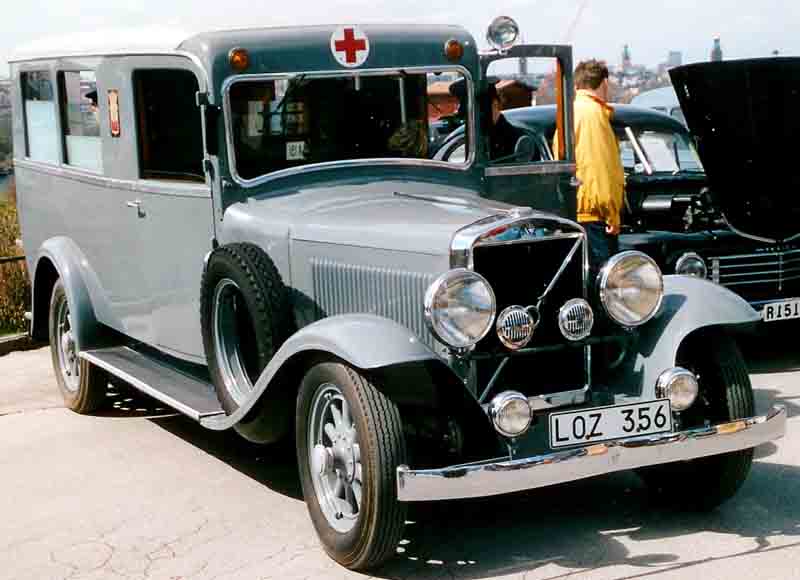
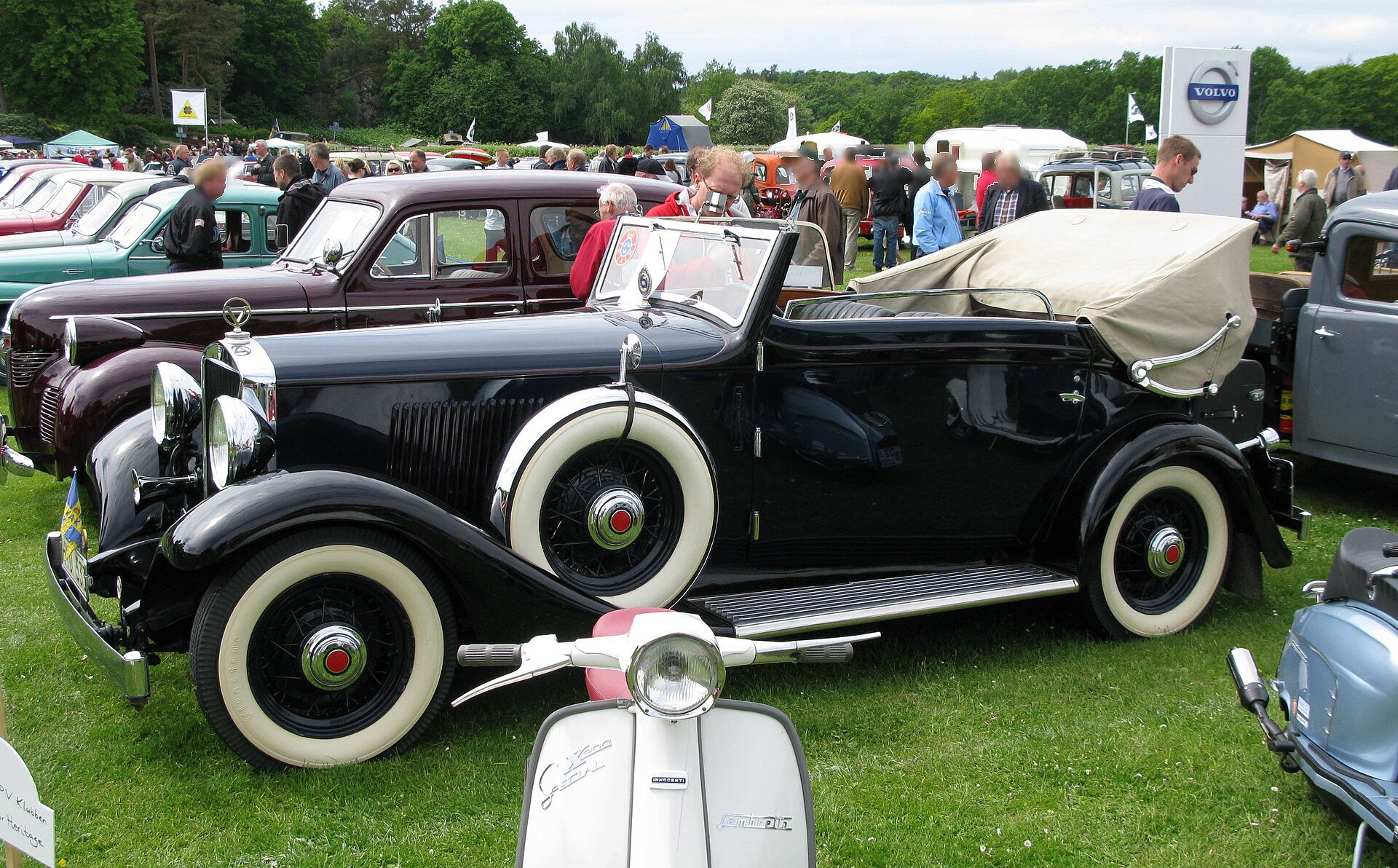
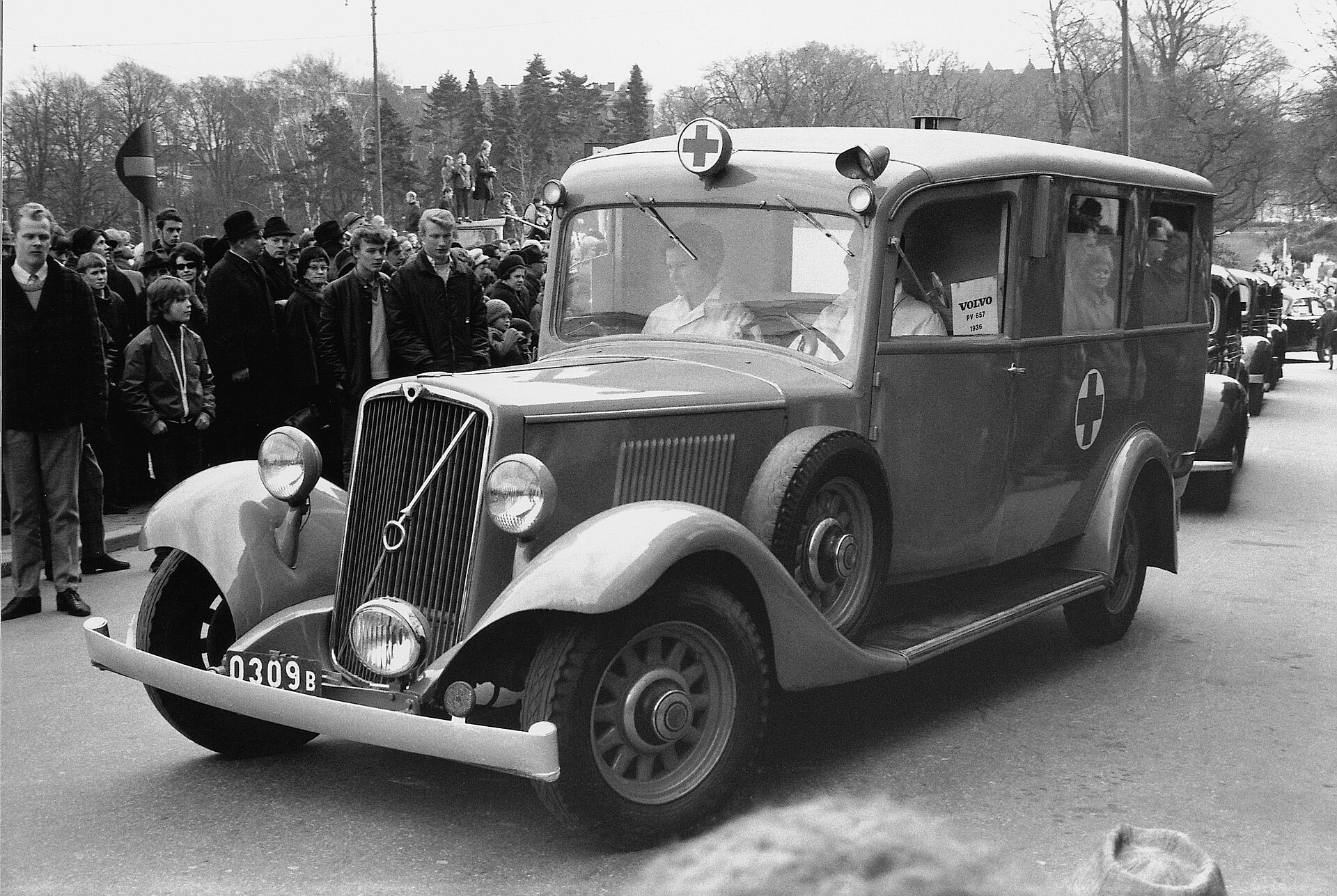
The commercial chassis carried bodies for light trucks, ambulances and hearses. A small number of chassis received two-door open or closed bodies; the Swedish coachbuilder Norrmalm made a one-off PV655 convertible in 1933, and Nordberg of Stockholm built some four-door convertibles on the PV657.

In service and legacy
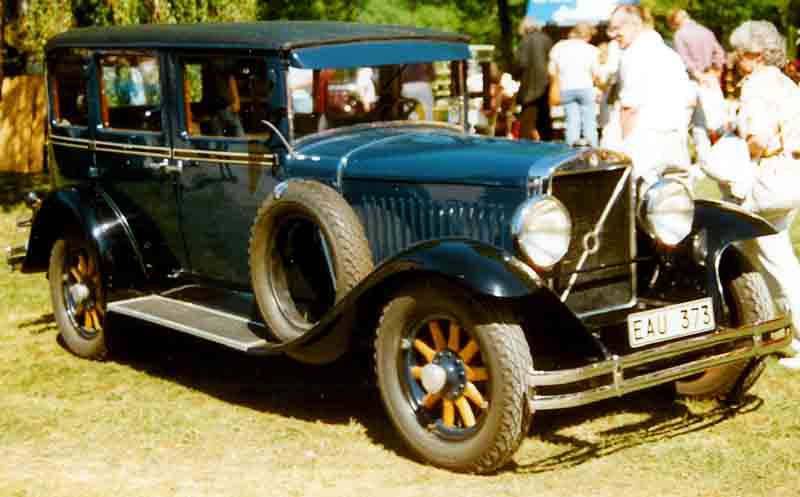
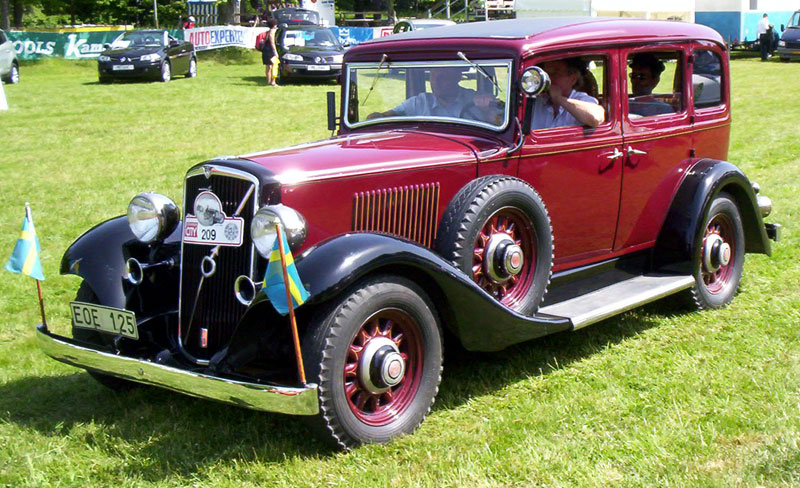
The PV650 series gave Volvo a six-cylinder car only two years after its first model, and its long chassis made the young company a supplier of ambulances and hearses as well as private cars. The series was followed by the PV51. With fewer than 3,600 built, the PV650 cars are rare today; surviving examples photographed in recent years include a 1929 PV651, de luxe PV654 saloons of 1933, a 1935 PV659 and PV655 and PV657 ambulances.
When looking at a surviving car, check which body construction it has (wood-framed before autumn 1933, all-steel afterwards), whether the engine matches the model (DB, EB or EC) and whether the brakes are mechanical or hydraulic. More cars of the pre-war period are in the classics section.
Photo gallery


Volvo PV650 Series photos 6
FAQ
When was the Volvo PV650 series produced, and where?
From April 1929 to 1937 in Gothenburg, Sweden; the saloons ended in 1936.
How many Volvo PV650-series cars were built?
About 3,577 according to the figures per model: 2,176 PV651/652 saloons, 1,062 later saloons and 339 commercial chassis.
What engine does the Volvo PV650 series have?
A side-valve inline-six of 3,010 cc (40 kW / 55 PS), later 3,366 cc (48 kW / 65 PS) and from 1935 3,670 cc (63 kW / 86 PS).
What variants of the PV650 were made?
Standard and de luxe saloons (PV651–PV654, PV658, PV659) and commercial chassis (PV650, PV655–PV657) for ambulances, hearses and light trucks.
What replaced the PV650 series?
The Volvo PV51 of 1936; the commercial chassis continued until 1937.