 Peugeot 407
Specs, engines and history
Published Sources (2) Report an error
By Felix Hartmann, Automotive Technology & EV Contributor
- Built
- 2004–2011
- Top power
- 177 kW (241 PS)
Which Peugeot 407 to buy: verdict
Our verdict · Felix Hartmann
- Best all-rounder: a 2.0 HDi with 100 kW (136 PS) or, after 2009, 120 kW (163 PS), with strong torque and reasonable consumption.
- Cheapest to buy and run: the 1.6 HDi, although it is the slowest 407, at 13.1 seconds to 100 km/h.
- Most comfortable: a 2.7 or 3.0 V6 HDi automatic, ideally with AMVAR suspension, at the cost of higher running bills.
- Most stylish: the 407 Coupé, which received the best Euro NCAP score of the range.
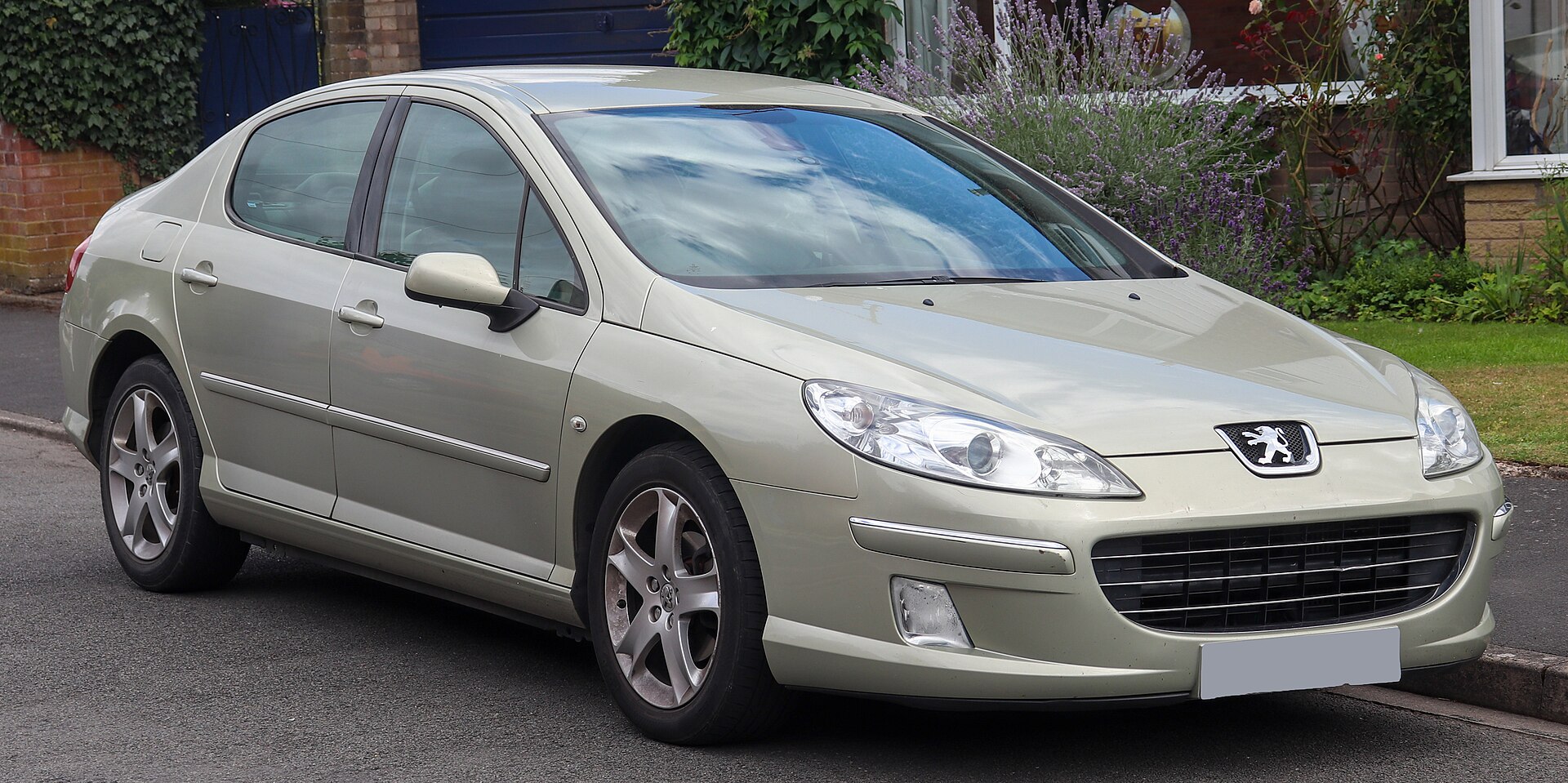
The Peugeot 407 is the large family car Peugeot built from 2004 to 2011 as the successor to the 406 and the predecessor of the 508. It was offered as a four-door saloon, a five-door 407 SW estate and a two-door 407 Coupé, with engines from a 1.6 HDi diesel to a 3.0 V6 petrol and, from 2009, a 3.0 V6 HDi diesel with 177 kW (241 PS). Peugeot built 1,109,148 cars at Rennes in France and in Gurun, Malaysia.
In short
- D-segment saloon, estate and coupé on the PSA PF3 platform, shared with the Citroën C5 and C6 and the Peugeot 607.
- Built in Rennes, France, and assembled in Gurun, Malaysia; saloon 2004-2011, coupé 2005-2011.
- Petrol engines from 1.8 to 3.0 V6, diesels from 1.6 HDi to 3.0 V6 HDi; power from 80 kW (109 PS) to 177 kW (241 PS).
- Five stars from Euro NCAP for the saloon in 2004 and for the coupé in 2005.
Size at a glance
| Dimensions | Peugeot 407 I |
|---|---|
| Length | 4,676 mm184.1 in |
| Width | 1,811 mm71.3 in |
| Height | 1,445 mm56.9 in |
| Wheelbase | 2,725 mm107.3 in |
| Boot | 407 L14.4 cu ft |
Specs by version
Engines
| Version | Engine | Power | Torque | Gearbox | Drive | Production years |
|---|---|---|---|---|---|---|
| Diesel · 3 versions | ||||||
| 2.0 HDi 136 | 2.0 l · 4 cyl · Diesel DW10BTED4 | 100 kW 136 PS134 hp | 320 Nm236 lb-ft | 6-sp Manual | Front-wheel drive | 2004–2009 |
| 2.7 V6 HDi 204 | 2.7 l · 6 cyl · Diesel DT17TED4 | 150 kW 204 PS201 hp | 440 Nm325 lb-ft | Automatic | Front-wheel drive | 2006–2009 |
| 3.0 V6 HDi 241 | 3.0 l · 6 cyl · Diesel DT20C | 177 kW 241 PS237 hp | 450 Nm332 lb-ft | - | Front-wheel drive | 2009–2011 |
| Petrol · 1 version | ||||||
| 1.8 125 | 1.7 l · 4 cyl · Petrol EW7 | 92 kW 125 PS123 hp | 170 Nm125 lb-ft | Manual | Front-wheel drive | 2005–2010 |
Performance
Show all 4 versions
| Version | 0–100 km/h | Top speed |
|---|---|---|
| Diesel · 3 versions | ||
| 2.0 HDi 136 | 9.8 s 0–62 mph | 208 km/h129 mph |
| 2.7 V6 HDi 204 | 8.5 s 0–62 mph | 230 km/h143 mph |
| 3.0 V6 HDi 241 | 7.9 s 0–62 mph | 245 km/h152 mph |
| Petrol · 1 version | ||
| 1.8 125 | 10.3 s 0–62 mph | 203 km/h126 mph |
Dimensions and weight
Show all 1 versions
| Version | Length | Width | Height | Wheelbase | Kerb weight | Boot |
|---|---|---|---|---|---|---|
| 2.0 HDi 136 | 4,676 mm184.1 in | 1,811 mm71.3 in | 1,445 mm56.9 in | 2,725 mm107.3 in | 1,580 kg3,483 lb | 407 l14.4 cu ft |
Verified Manufacturer and type-approval data from our catalog · Sources and methodology
Peugeot 407 at a glance
| Specification | Peugeot 407 |
|---|---|
| Segment | D-segment large family car |
| Model codes | D23 (saloon), D22 (SW), D25 (coupé) |
| Production | 2004-2011 (coupé until late 2011) |
| Plants | Rennes (France), Gurun (Malaysia) |
| Platform | PSA PF3, front engine, front-wheel drive |
| Designer | Dominique Leonard |
| Body styles | 4-door saloon, 5-door SW estate, 2-door coupé |
| Power range | 80-177 kW (109-241 PS) |
| Predecessor / successor | Peugeot 406 / Peugeot 508 |
You will find the 407 and its siblings in our Peugeot catalogue.
Generations and model history
The 407 had one generation with a facelift in August 2008. Peugeot previewed the design with the 407 Elixir concept at the 2003 Frankfurt Motor Show, presented the saloon to the press in Paris in February 2004 and launched it publicly at The Sunday Times Motor Show Live on 27 May 2004. French sales began in June 2004 and the rest of Europe followed a month later. The SW estate arrived in September 2004. PSA invested EUR 1.12 billion in the launch (2004).
| Generation | Code | Years | Body styles | Engines | Power (kW / hp) |
|---|---|---|---|---|---|
| 407 (pre-facelift) | D22, D23, D25 | 2004-2008 | saloon, SW, coupé | 1.8-3.0 V6 petrol, 1.6-2.7 V6 HDi | 80-155 kW (108-208 hp) |
| 407 (facelift) | D22, D23, D25 | 2008-2011 | saloon, SW, coupé | 1.8-2.2 petrol, 1.6-3.0 V6 HDi | 80-177 kW (108-238 hp) |
The coupé was previewed by the near-production 407 Prologue at Geneva in 2005, shown in final form at Frankfurt in September 2005 and went on sale in January 2006. At 4,815 mm it was 139 mm longer than the saloon and 57 mm wider.
The 2008 facelift withdrew most petrol engines in the UK and several other European countries, leaving the 407 as a car bought mainly with diesel engines. One version gained AMVAR electronic suspension, which adjusts the damping at each wheel every 2.5 milliseconds. The last saloons were built on 5 July 2011; the 508, announced at the Paris Motor Show in October 2010, took over both the 407 and the larger 607. In South America the Chinese-built 408 saloon replaced the 407.


Engines, transmissions and performance
All 407 engines have four valves per cylinder and double overhead camshafts. The diesels use common-rail injection and, in Europe, a particulate filter (FAP).
| Engine | Power | Torque | 0-100 km/h | Top speed | Years |
|---|---|---|---|---|---|
| 1.8 (EW7) | 92 kW (125 PS) | 170 Nm | 10.3 s | 203 km/h | 2005-2010 |
| 2.0 (EW10) | 103 kW (140 PS) | 200 Nm | 10.3 s | 213 km/h | 2005-2011 |
| 2.2 (EW12) | 120 kW (163 PS) | 220 Nm | 10.1 s | 222 km/h | 2005-2009 |
| 3.0 V6 (ES9) | 155 kW (211 PS) | 290 Nm | 8.7 s (auto) | 235 km/h | 2004-2009 |
| 1.6 HDi (DV6) | 80 kW (109 PS) | 240 Nm | 13.1 s | 192 km/h | 2004-2010 |
| 2.0 HDi (DW10) | 100 kW (136 PS) | 320 Nm | 9.8 s | 208 km/h | 2004-2009 |
| 2.0 HDi (DW10C) | 120 kW (163 PS) | 340 Nm | 9.6 s | 210 km/h | 2009-2011 |
| 2.2 HDi biturbo (DW12) | 125 kW (170 PS) | 370 Nm | 8.7 s | 225 km/h | 2006-2010 |
| 2.7 V6 HDi biturbo (DT17) | 150 kW (204 PS) | 440 Nm | 8.5 s | 230 km/h | 2006-2009 |
| 3.0 V6 HDi biturbo (DT20C) | 177 kW (241 PS) | 450 Nm | 7.9 s | 245 km/h | 2009-2011 |
The first-year petrol engines were slightly weaker: the 1.8 started at 87 kW (118 PS; ADAC lists 85 kW / 116 PS for Germany), the 2.0 at 100 kW (136 PS) and the 2.2 at 116 kW (158 PS). Gearboxes were five- and six-speed manuals, a four-speed ZF automatic and a six-speed Aisin automatic. In Germany, ADAC lists the V6 petrol and V6 HDi models only with an automatic gearbox.

Dimensions, space and boot
| Parameter | Metric | Imperial |
|---|---|---|
| Length (saloon / SW / coupé) | 4,676 / 4,763 / 4,815 mm | 184.1 / 187.5 / 189.6 in |
| Width (saloon, SW / coupé) | 1,811 / 1,868 mm | 71.3 / 73.5 in |
| Height (saloon / SW / coupé) | 1,445-1,455 / 1,486 / 1,400 mm | 56.9-57.3 / 58.5 / 55.1 in |
| Wheelbase | 2,725 mm | 107.3 in |
| Kerb weight | 1,475-1,799 kg | 3,252-3,966 lb |
| Boot (saloon) | 407 l | 14.4 cu ft |
| Fuel tank | 66 l | 17.4 US gal |
| Drag coefficient (saloon) | Cd 0.29 |
The saloon's 407-litre boot, as ADAC lists it for the 2.0 HDi, is modest for the class.

Fuel economy and running costs
ADAC quotes 5.9 l/100 km and 155 g/km of CO2 (NEDC) for the 2.0 HDi 136 saloon with the six-speed manual, which reaches 100 km/h in 9.8 seconds. The 1.6 HDi was the most frugal engine, while the V6 petrol and V6 diesel models, with automatic gearboxes and kerb weights near 1.8 tonnes, cost considerably more to run. A rough annual figure is easy to get with our fuel cost calculator.

Trims, equipment and prices
German list prices (ADAC) for the first series ran from EUR 20,990 for the 115 Esplanade saloon (2004) to EUR 36,850 for the V6 HDi 205 Platinum automatic (2006). The popular HDi FAP 135 Esplanade cost EUR 25,100 (2004). After the facelift the range started at EUR 21,890 for the 125 Millesim 200 (2010). German trim names included Esplanade, Tendance, Prémium, Sport, JBL and Platinum.
Peugeot also showed two concepts based on the 407: the Silhouette race car, styled like the coupé, and the 407 Macarena, a four-door coupé-convertible built by Heuliez for the 2006 Geneva show.
Safety
| Test | Year | Adult | Child | Pedestrian |
|---|---|---|---|---|
| Euro NCAP, saloon | 2004 | 34 points | 39 points | 15 points |
| Euro NCAP, coupé | 2005 | 35 points | 42 points | 15 points |
Both body styles received five stars for adult occupant protection. ANCAP gave the saloon 15.34 out of 16 in the frontal offset test and 14.32 out of 16 in the side test (2004), and the coupé a full 16 out of 16 for frontal offset (2006). ANCAP lists electronic stability control as standard. More on how the tests work is on our safety page.
Reliability and known issues
The sources we used do not document model-specific faults for the 407, so we do not list any. As with any complex diesel of this period, a used 407 HDi should be checked for a full service history, and particulate-filter models suit drivers who regularly cover longer distances.
Rivals
| Model | Engines | Power (hp) | Boot (l) | Price from (EUR) |
|---|---|---|---|---|
| Peugeot 407 (2004-2011) | 1.8-3.0 petrol, 1.6-3.0 diesel | 108-238 | 407 | 20,990 (Germany, 2004) |
| Volkswagen Passat B6 (2005-2010) | 1.4-3.6 petrol, 1.9-2.0 diesel | - | - | - |
| Ford Mondeo Mk III (2000-2007) | 1.8-3.0 petrol, 2.0-2.2 diesel | - | - | - |
| Renault Laguna II (2001-2007) | 1.6-3.0 petrol, 1.9-3.0 diesel | - | - | - |
Rival figures are approximate ranges for orientation. The comparison tool has full data.
Photo gallery

Peugeot 407 in our rankings
- No. 7 of 33 · Fastest French cars (245 km/h)
- No. 38 of 175 · Most powerful diesel cars (177 kW · top 23%)
- No. 17 of 70 · Most powerful French cars (177 kW · top 25%)
- No. 16 of 60 · Fastest sedans (245 km/h · top 29%)
- No. 116 of 376 · Fastest cars (245 km/h · top 32%)
- No. 34 of 106 · Most torque: diesel cars (450 Nm · top 33%)
Faster than 78% of ranked French cars in the 1CARS catalog (No. 7 of 33).
FAQ
How many generations of the Peugeot 407 are there?
One. The 407 was built from 2004 to 2011, with a facelift in August 2008. It was replaced by the Peugeot 508.
How many Peugeot 407s were built?
1,109,148 cars, with the best year in 2005, when about 271,000 were produced.
What is the most powerful Peugeot 407?
The 3.0 V6 HDi of 2009-2011, with 177 kW (241 PS) and 450 Nm, reaching 100 km/h in 7.9 seconds.
Is the Peugeot 407 safe?
Yes for its time: Euro NCAP gave the saloon five stars for adult protection in 2004 and the coupé five stars in 2005.
How big is the Peugeot 407 boot?
ADAC lists 407 litres for the saloon.
Data sources
Data checked by an editor against the sources below.