 Opel Omega
All generations, specs and history
Published Sources (1) Report an error
By Felix Hartmann, Automotive Technology & EV Contributor
- Built
- 1986–2003
- Generations
- 2 · A to B
- Top power
- 281 kW (382 PS)
Timeline
Omega generations
Click a generation for its own page

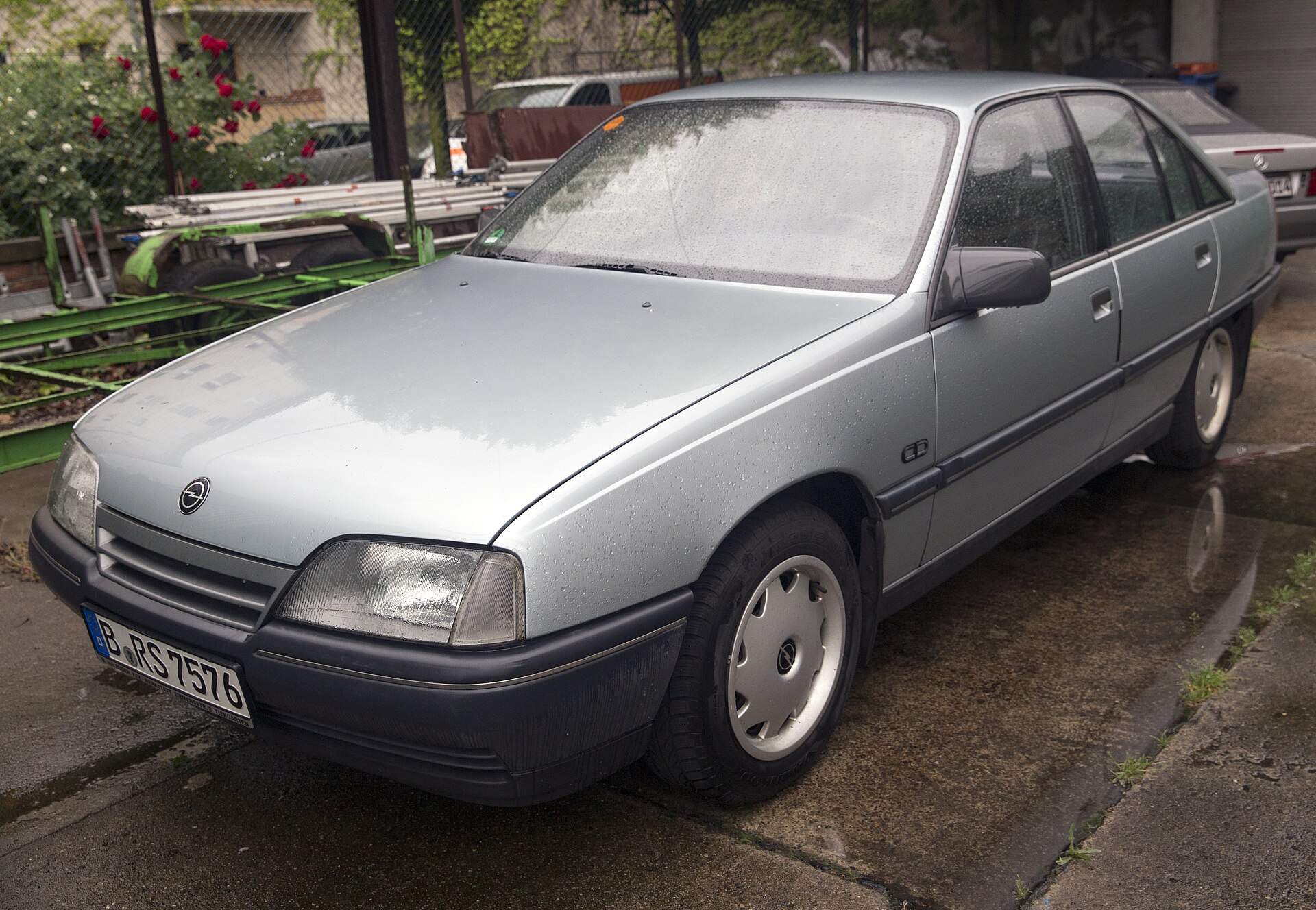
- Omega A 1986–1994 · Sedan, Station wagon · 54–281 kW (73–382 PS)
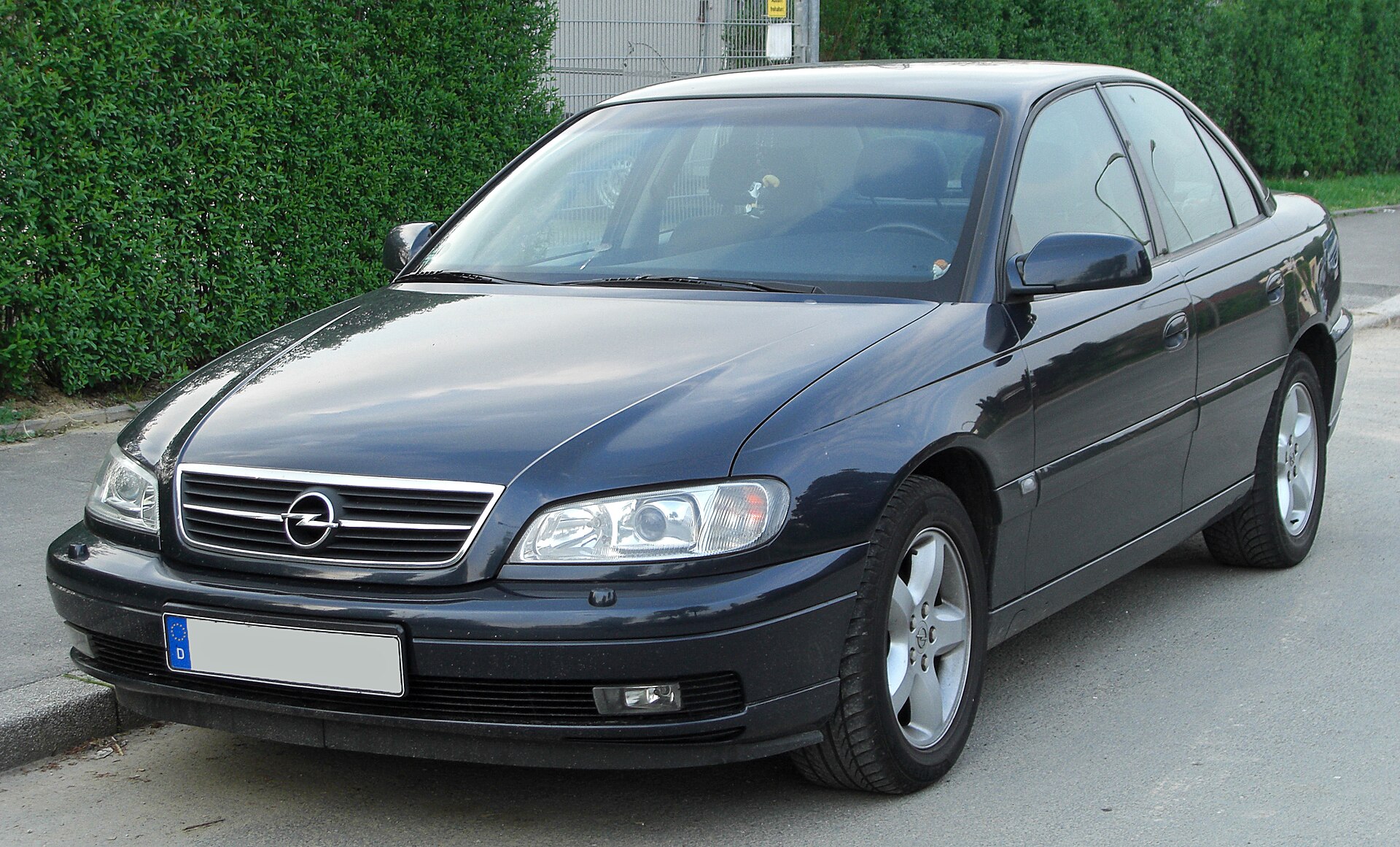
- Omega B 1994–2003 · Sedan, Station wagon · 74–160 kW (101–218 PS)
Newest first · 2 generations since 1986
-
1994
-
1986
All generations by year: Omega B (1994–2003) · Omega A (1986–1994)
Which one is mine?
Pick the year of first registration to see which generation it is.
Check by VINWhich Omega to buy
Our verdict · Felix Hartmann
- For collectors: the Lotus Omega and the Omega Evolution 500, both built in small numbers.
- Classic everyday car: an Omega A 3000 or a 2.6/3.0 six-cylinder.
- Most practical: an Omega B Caravan with a V6 petrol or the 2.5 DTI diesel.
- Newest: a 2001-2003 B2 with the 3.2 V6 or the 2.5 DTI.
The Opel Omega is the rear-wheel-drive executive saloon and estate that Opel built in Rüsselsheim from 1986 to 2003, in two generations: the Omega A (1986-1994) and the Omega B (1994-2003). The first car won European Car of the Year 1987 and spawned the Lotus Omega with about 281 kW (377 bhp); the second was the last big rear-drive Opel. In the UK both were sold by Vauxhall, first as the Carlton and then as the Omega.
In short
- E-segment executive car, four-door saloon and five-door estate (Caravan), rear-wheel drive, GM V platform.
- Omega A (1986-1994): four- and six-cylinder petrol engines from 61 to 150 kW, plus Irmscher and Lotus versions; 2.3 diesels.
- Omega B (1994-2003): 2.0 to 3.2-litre petrol engines from 85 to 160 kW, diesels from 74 to 110 kW, some from BMW.
- Replaced indirectly by the Opel Signum; the Omega B also became the Cadillac Catera in North America.
Specs by version
Engines
| Version | Engine | Power | Torque | Gearbox | Drive | Production years |
|---|---|---|---|---|---|---|
| Diesel · 1 version | ||||||
| B · 2.5 DTI | 6 cyl · Diesel Y25DT | 110 kW 150 PS148 hp | - | - | Rear-wheel drive | 2001–2003 |
| Petrol · 1 version | ||||||
| B · 3.2 V6 | 3.2 l · 6 cyl · Petrol Y32SE | 160 kW 218 PS215 hp | 290 Nm214 lb-ft | 4-sp Automatic | Rear-wheel drive | 2001–2003 |
Dimensions and weight
Show all 2 versions
| Version | Length |
|---|---|
| Diesel · 1 version | |
| B · 2.5 DTI | 4,898 mm192.8 in |
| Petrol · 1 version | |
| B · 3.2 V6 | 4,898 mm192.8 in |
Verified Manufacturer and type-approval data from our catalog · Sources and methodology
Opel Omega at a glance
| Specification | Opel Omega |
|---|---|
| Segment | E-segment executive car |
| Production | September 1986 - 2003 |
| Main plant | Rüsselsheim, Germany |
| Other plants | São Caetano do Sul, Brazil (Omega A, 1992-1998); Kikinda, Yugoslavia (Omega A); Rayong, Thailand (Omega B) |
| Platform | GM V platform, front engine, rear-wheel drive |
| Body styles | 4-door saloon, 5-door estate (Caravan) |
| Predecessor / successor | Opel Rekord E / Opel Signum (indirect) |
| Badge versions | Vauxhall Carlton and Omega, Chevrolet Omega (Brazil), Cadillac Catera (US, 1997-2001) |
Both generations are listed with other models in our Opel catalogue, and older executive cars are collected under classic cars.
Generations and model history
| Generation | Code | Years | Body styles | Engines | Power (kW / hp) |
|---|---|---|---|---|---|
| Omega A | A | 1986-1994 | saloon, estate | 1.8-3.0 petrol I4/I6, 3.6 twin-turbo I6 (Lotus), 2.3 diesel | 54-281 kW (72-377 hp) |
| Omega B | B | 1994-2003 | saloon, estate | 2.0-3.2 petrol I4/V6, 2.0-2.5 diesel | 74-160 kW (100-215 hp) |
Omega A (1986-1994)
Production began in September 1986 and sales in November. The Omega A replaced the Rekord E, cost Opel 2.5 billion Deutschmarks to develop and had a drag coefficient of 0.28 (0.32 for the Caravan). It was voted European Car of the Year 1987, ahead of the Audi 80 and the BMW 7 Series. Technology unusual for the time included electronic engine management, ABS, an on-board computer, self-diagnosis and, on the CD model from 1987, an LCD instrument cluster. The trim ladder ran LS, GL, GLS and CD. A facelift for the 1991 model year (ADAC dates it 1990) dropped the LS and GLS trims and the 1.8 engine and added Club and CD Diamant.
Omega B (1994-2003)
The Omega B of 1994 was an all-new car, again with rear-wheel drive and again as a saloon and an estate. The saloon was 4,790 mm long and the estate 4,820 mm. The B2 facelift of autumn 1999 brought electronic stability control and a new centre console with satellite navigation and climate controls; the facelifted car measured 4,898 mm. From 2001 the BMW-built 2.5 DTI common-rail six-cylinder diesel became the top diesel. Opel developed a V8 version with the GM LS1 engine, shown as the V8.com concept in Frankfurt in 1999, but cancelled it after 32 pre-series cars, citing transmission concerns and durability at sustained full throttle. The last Omega was built in Rüsselsheim in 2003.

Engines, transmissions and performance
Omega A engines
| Engine | Cylinders | Power | Torque | Years |
|---|---|---|---|---|
| 1.8i (18NV) | I4 | 61 kW (83 PS) | 135 Nm | 1986-1987 |
| 1.8i (18SEH) | I4 | 85 kW (115 PS) | 160 Nm | 1986-1992 |
| 2.0i (C20NE) | I4 | 85 kW (115 PS) | 170 Nm | 1986-1993 |
| 2.4i (C24NE) | I4 | 92 kW (125 PS) | 195 Nm | 1988-1993 |
| 2.6i (C26NE) | I6 | 110 kW (150 PS) | 220 Nm | 1990-1993 |
| 3.0i 12V (C30NE) | I6 | 130 kW (177 PS) | 240 Nm | 1987-1993 |
| 3.0i 24V (C30SE) | I6 | 150 kW (204 PS) | 270 Nm | 1989-1993 |
| 2.3 D (23YD) | I4 diesel | 54 kW (73 PS) | - | 1986-1993 |
| 2.3 TD (23DTR) | I4 diesel | 74 kW (101 PS) | - | 1988-1993 |
The Omega A had a five-speed manual or a four-speed automatic. The Omega 3000 combined the 3.0 six with lowered suspension, a limited-slip differential and a rear spoiler: 220 km/h and 0-100 km/h in 8.8 s with 12 valves, 240 km/h and 7.6 s with the later 24-valve engine. For touring car racing, Irmscher built 500 Omega Evolution 500 cars with 169 kW (230 PS), reaching 249 km/h. The Lotus Omega (Lotus Carlton in the UK) had a 3.6-litre twin-turbo six with about 281 kW (377 bhp), a six-speed ZF gearbox, 0-100 km/h in 5.3 s and a claimed top speed of 280 km/h or more.
Omega B engines
| Engine | Cylinders | Power | Torque | Years |
|---|---|---|---|---|
| 2.0i 8V (X20SE) | I4 | 85 kW (116 PS) | 172 Nm | 1994-1999 |
| 2.0i 16V (X20XEV) | I4 | 100 kW (136 PS) | 185 Nm | 1994-1999 |
| 2.2i 16V (Y22XE / Z22XE) | I4 | 107 kW (145 PS) | 205 Nm | 1999-2003 |
| 2.5i V6 (X25XE) | V6 | 125 kW (170 PS) | 227 Nm | 1994-2000 |
| 2.6 V6 (Y26SE) | V6 | 132 kW (180 PS) | 240 Nm | 2001-2003 |
| 3.0i V6 (X30XE) | V6 | 155 kW (211 PS) | 270 Nm | 1994-2000 |
| 3.2 V6 (Y32SE) | V6 | 160 kW (218 PS) | 290 Nm | 2001-2003 |
| 2.0 DTI (X20DTH) | I4 diesel | 74 kW (101 PS) | - | 1998-2000 |
| 2.2 DTI (Y22DTH) | I4 diesel | 88 kW (120 PS) | - | 2000-2003 |
| 2.5 TD (BMW M51) | I6 diesel | 96 kW (130 PS) | - | 1994-2000 |
| 2.5 DTI (BMW M57) | I6 diesel | 110 kW (150 PS) | - | 2001-2003 |
Gearboxes were five-speed manuals and four-speed automatics; in the last years the 3.2 V6 was sold only with the automatic in Germany. ADAC lists the 2.2 petrol with 106 kW (144 PS), one kilowatt less than Wikipedia.

Dimensions and space
| Parameter | Metric | Imperial |
|---|---|---|
| Length, Omega B saloon / estate | 4,790 / 4,820 mm | 188.6 / 189.8 in |
| Length, Omega B2 (from 1999) | 4,898 mm | 192.8 in |
| Drag coefficient, Omega A saloon / Caravan | 0.28 / 0.32 | - |
| Kerb weight, Lotus Omega | 1,663 kg | 3,666 lb |
At almost 4.9 m after the facelift, the Omega B is a long car by today's standards too: check it against your parking space with the garage fit tool. Boot volumes are not given in our sources.

Prices and equipment
ADAC's list of the facelifted Omega B shows how wide the range was in Germany: from EUR 25,641 for the 2.2 16V and the 2.2 DTI saloons (1999-2000) to EUR 39,670 for the 3.2 V6 Executive automatic (2002-2003). Trims of the Omega B2 included Selection, Edition, Elegance, Sport, Design Edition and Executive. The Omega B2 brought ESP and a new centre console with navigation; the Omega A had introduced ABS and an on-board computer to the range.
Safety
The Omega predates most Euro NCAP testing and we have no sourced crash-test rating for either generation. ABS was part of the Omega A specification, and electronic stability control arrived with the B2 facelift in 1999.
Reliability and known issues
In the UK, the Vauxhall Omega sold well but was criticised for heavy depreciation and for its reliability record, according to Wikipedia. Sales then suffered once the Ford Scorpio and Rover 800 left the market, because buyers turned to the BMW 5 Series. For a car of this age, condition and documented maintenance count for more than the engine choice.

Rivals
| Model | Engines | Power (hp) | Boot (l) | Price from (EUR) |
|---|---|---|---|---|
| Opel Omega B2 | 2.2-3.2 petrol, 2.2-2.5 diesel | 100-215 | - | 25,641 (Germany, 1999) |
| BMW 5 Series (E39) | petrol and diesel I4/I6/V8 | - | - | - |
| Mercedes-Benz E-Class (W210) | petrol and diesel | - | - | - |
| Ford Scorpio | petrol and diesel | - | - | - |
| Audi A6 (C4/C5) | petrol and diesel, quattro | - | - | - |
You can set the Omega against these cars with the comparison tool.
Photo gallery


Opel Omega: first vs latest generation
| Spec | Omega A | Omega B | Change |
|---|---|---|---|
| Years | 1986–1994 | 1994–2003 | 8 years apart |
| Most powerful version | 281 kW (382 PS) | 160 kW (218 PS) | −121 kW (−43%) |
Oldest and newest generation in the 1cars catalog. Power is the strongest version of each; other rows are shown only when both generations have the figure.
Opel Omega in our rankings
- No. 98 of 531 · Longest cars (4,898 mm · top 19%)
- No. 245 of 1082 · Longest-running car nameplates (17 years · top 25%)
- No. 341 of 1011 · Most powerful cars (281 kW · top 34%)
- No. 37 of 101 · Longest sedans (4,898 mm · top 37%)
- No. 58 of 141 · Biggest engines: sedans (3,175 cc · top 42%)
- No. 273 of 627 · Biggest engines: cars (3,175 cc · top 44%)
Longer than 81% of ranked cars in the 1CARS catalog (No. 98 of 531).
FAQ
How many generations of the Opel Omega are there?
Two: the Omega A (1986-1994) and the Omega B (1994-2003), each with one facelift.
What replaced the Opel Omega?
No direct successor. Opel positioned the Signum, a larger hatchback on the Vectra platform, as an indirect replacement.
What engine does the Lotus Omega have?
A 3.6-litre straight-six with two Garrett T25 turbochargers, about 281 kW (377 bhp) and a six-speed ZF manual gearbox.
Was the Omega sold as a Cadillac?
Yes. The Omega B was sold in North America as the Cadillac Catera from 1997 to 2001.
Data sources
Data checked by an editor against the sources below.