 Opel Manta
Specs, engines and history
Published Report an error
By Felix Hartmann, Automotive Technology & EV Contributor
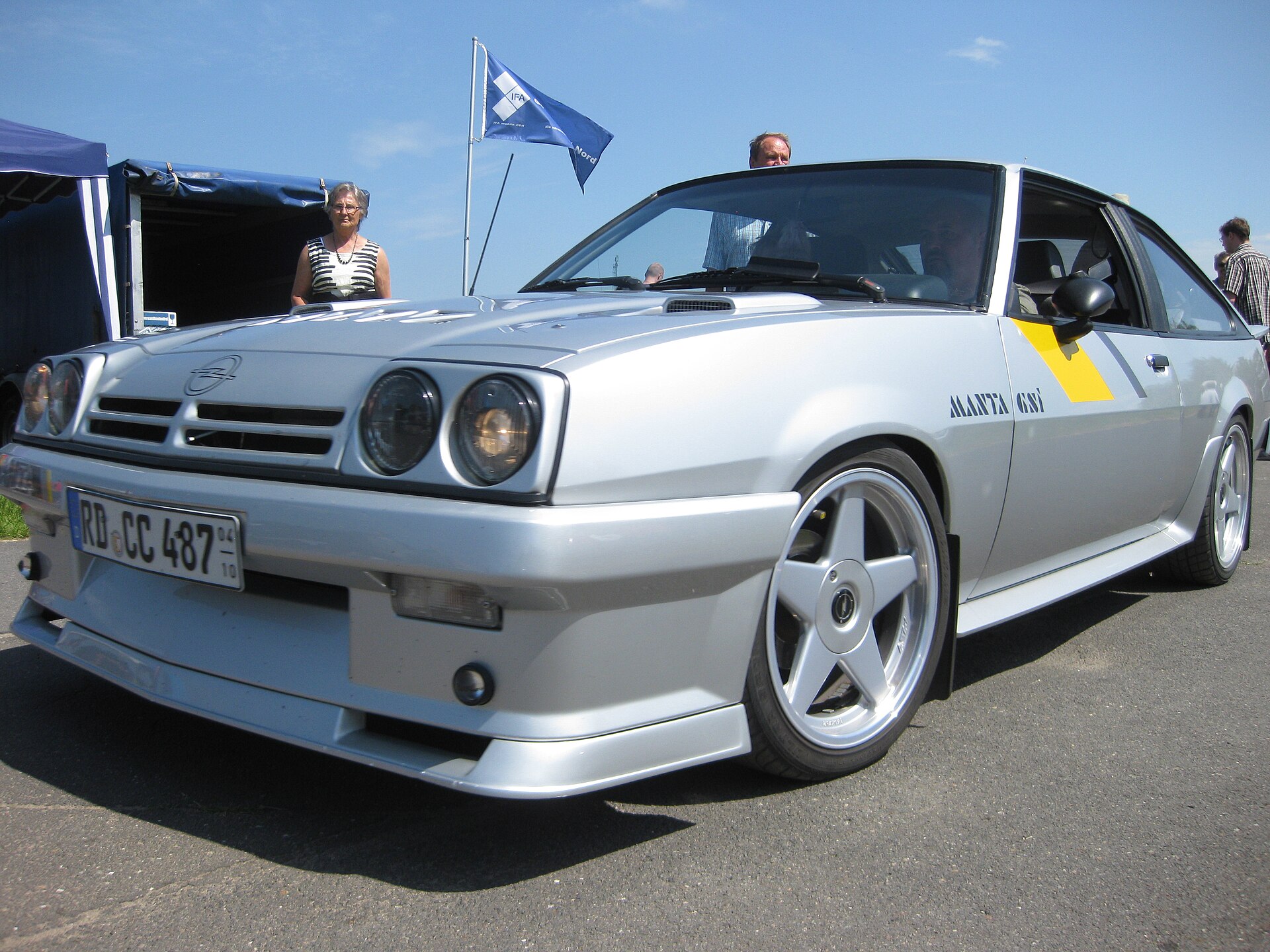
The Opel Manta is a rear-wheel-drive sports coupé that Opel built in two generations from 1970 to 1988. Based on the Ascona family saloon, it was Opel's answer to the Ford Capri. More than a million were made: 498,553 of the Manta A (1970–1975) and over 530,000 of the Manta B (1975–1988), including a three-door hatchback. In Germany the Manta B later became a cult car of the tuning scene and the subject of jokes and two films, while the Manta 400 was Opel's Group B rally car.
In short
- Two generations: Manta A (September 1970 – 1975) and Manta B (August 1975 – 28 August 1988).
- About 1,056,000 built in total; production in Rüsselsheim and Antwerp, only in Antwerp from 1982.
- Four-cylinder engines from 1.2 to 2.0 litres, 40–81 kW (55–110 PS); Manta 400 rally homologation model with 2.4 litres.
- Replaced by the front-wheel-drive Opel Calibra, shown in 1989.
Opel Manta at a glance
| Specification | Opel Manta |
|---|---|
| Maker | Opel (General Motors) |
| Production | 1970–1988, two generations |
| Plants | Rüsselsheim (Germany); Antwerp (Belgium), sole plant from 1982 |
| Numbers built | Manta A 498,553; Manta B 534,634 (incl. 95,116 CC hatchbacks); total about 1,056,000 |
| Body styles | two-door coupé; three-door hatchback (CC) from 1977 |
| Layout | front engine, rear-wheel drive |
| Platform | Opel Ascona A / Ascona B |
| Engines | 1.2 OHV, 1.3 OHC, 1.6 CIH, 1.8 OHC, 1.9 CIH, 2.0 CIH, 2.4 (Manta 400) |
| Rival | Ford Capri |
| Successor | Opel Calibra (1989) |
The Manta is listed in our Opel catalogue. Opel's other long-running classic of the same era is described in our history of the Opel Kadett, and more cars of the period are collected in our classics section.
Development and production history
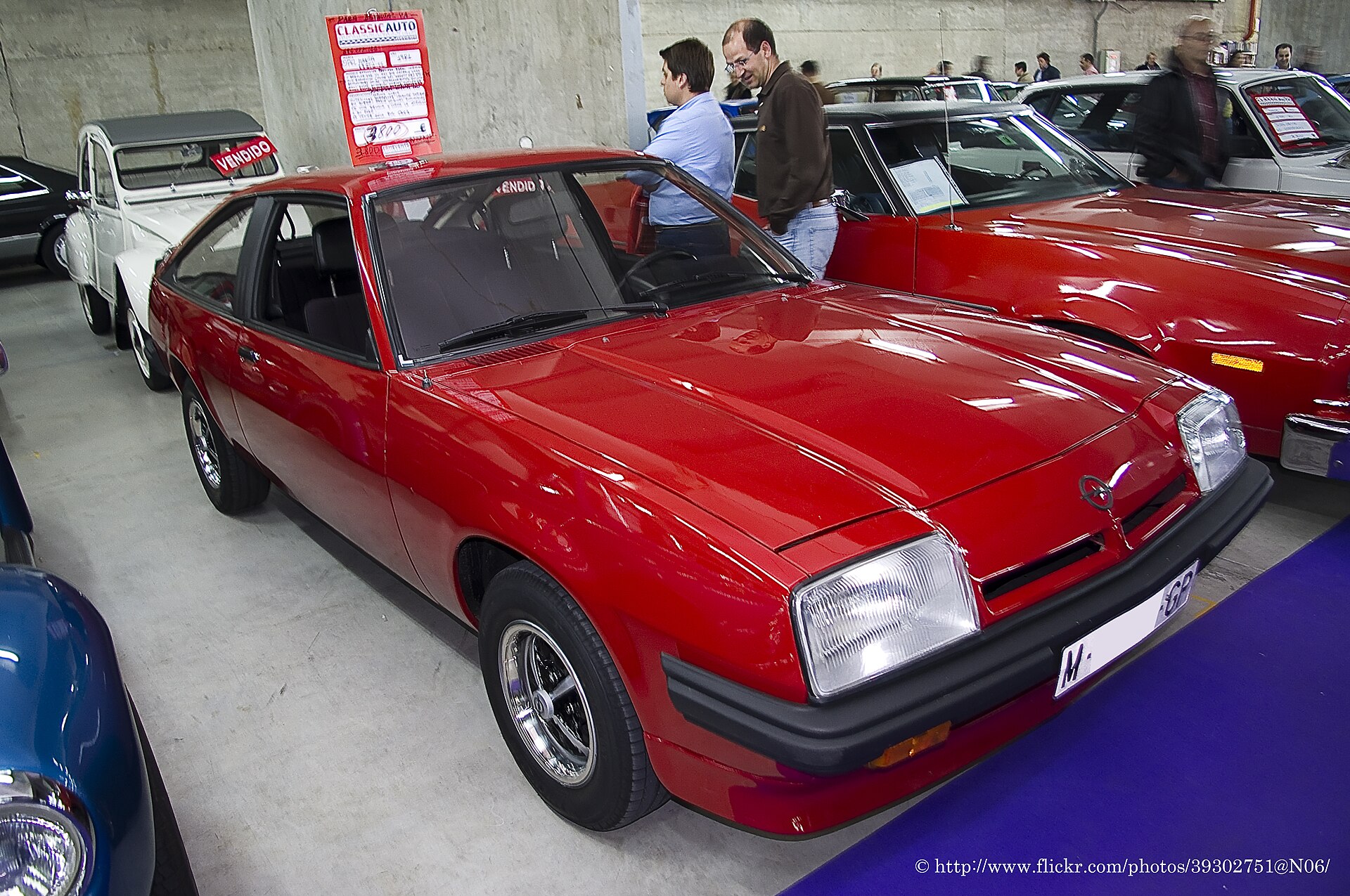
Opel presented the Manta in September 1970 at Timmendorfer Strand, as the coupé version of the new Ascona A. The name came from the Manta Ray, a 1961 General Motors concept car that also influenced the Chevrolet Corvette C3; Wikipedia DE credits designer George Gallion, inspired by Jacques Cousteau's film footage of manta rays. With its four round tail lights, the Manta A competed directly with the Ford Capri.
The second-generation Manta B followed in August 1975, after that year's factory holidays. Mechanically it was based on the redesigned Ascona B; visually it had a sloping "droop-snoot" nose. A three-door hatchback, the CC, joined the coupé in 1977. The 1982 facelift (often called the B2) introduced OHC four-cylinders from GM's Family II range, and from 1982 the car was built only in Antwerp, after Ascona B production had ended.
The Manta B stayed in production for 13 years. By 1988 its rear axle and CIH engines, whose designs went back to the 1960s, were outdated, even though the car had received a catalytic converter and a five-speed gearbox in its last years. The last Manta left the Antwerp line on 28 August 1988, and the Calibra, shown at the Frankfurt IAA in 1989, took its place.
| Year | Event |
|---|---|
| 1970 | Manta A presented in September as the coupé of the Ascona A |
| 1971 | US launch for the 1971 model year through Buick dealers, at first as the "1900" |
| 1974 | GT/E with fuel injection |
| 1975 | Last Manta A (Black Magic edition); Manta B from August |
| 1977 | Three-door CC hatchback |
| 1979 | GT/E with the 2.0 injection engine (81 kW) |
| 1981 | Manta 400 shown at the Geneva Motor Show |
| 1982 | Facelift with OHC engines; production only in Antwerp |
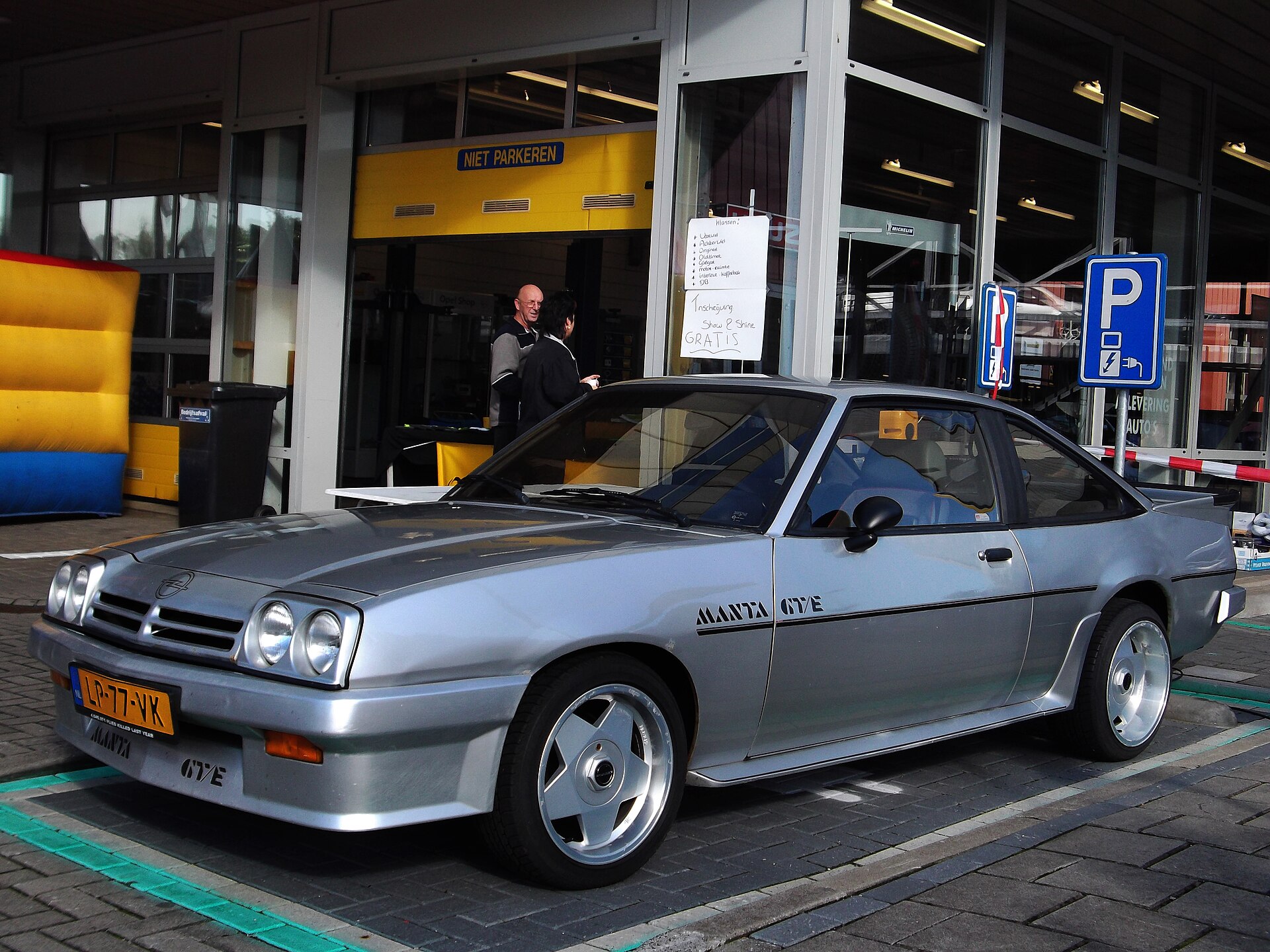
| 1983 | GT/E renamed GSi (except in the UK) |
| 1988 | Production ends on 28 August |


Design and engineering
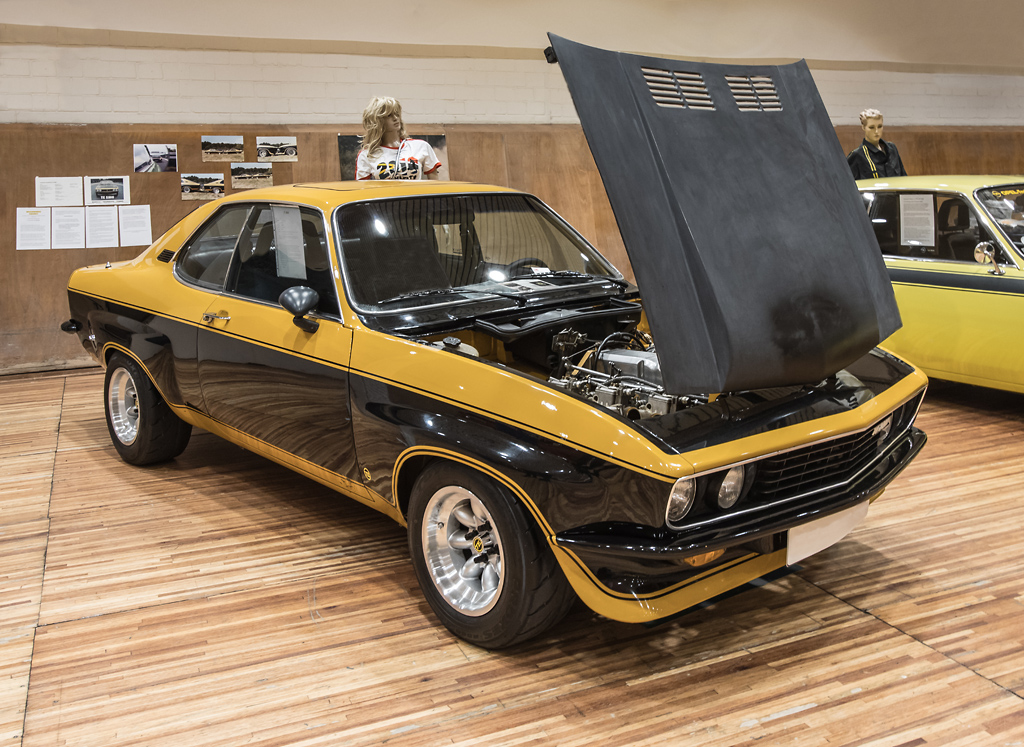
Both generations used Opel's conventional mid-size layout of the time: a front-mounted four-cylinder engine and rear-wheel drive. The Manta A shared its platform with the Ascona A and the Manta B with the Ascona B, so mechanical parts were common with the family saloons. Opel offered the cars in several trim levels. The Manta A was sold as the L, the Berlinetta and the sporty SR with wider wheels and black stripes. The last GT/Es of 1975 formed the black Black Magic edition with yellow-red stripes. The Manta B range included the GT/J, the CC Berlinetta and, from the mid-1980s, the top GSi Exclusiv.

Engine and drivetrain
| Engine | Generation | Displacement | Power | Years |
|---|---|---|---|---|
| 1.2 S (OHV) | A | 1,196 cc | 44 kW (60 PS) | 1972–1975 |
| 1.6 N / S (CIH) | A | 1,584 cc | 50 / 59 kW (68 / 80 PS) | 1970–1975 |
| 1.9 S (CIH) | A | 1,897 cc | 66 kW (90 PS) | 1971–1975 |
| 1.9 E, GT/E (CIH) | A | 1,897 cc | 77 kW (105 PS) | 1974–1975 |
| 1.2 N / S (OHV) | B | 1.2 l | 40 / 44 kW (55 / 60 PS) | 1975–1979 |
| 1.3 N / S (OHC) | B | 1.3 l | 44 / 55 kW (60 / 75 PS) | 1979–1986 |
| 1.8 S (OHC) | B | 1.8 l | 66 kW (90 PS) | 1982–1983 |
| 2.0 S (CIH) | B | 2.0 l | 74 kW (100 PS) | 1977–1983 |
| 2.0 E, GT/E and GSi (CIH) | B | 2.0 l | 81 kW (110 PS) | 1977–1988 |
The GT/E of the Manta A reached 188 km/h according to Opel. The fuel-injected 2.0 E with Bosch L-Jetronic powered the GT/E and later the GSi; in the US the Manta A was sold only with the 1.9-litre engine, detuned to 56 kW (75 hp) in 1973.
Opel Manta specifications
| Parameter | Metric | Imperial |
|---|---|---|
| Displacement, GT/E (Manta A) | 1,897 cc | 115.8 cu in |
| Power, GT/E (Manta A) | 77 kW (105 PS) | - |
| Top speed, GT/E (Manta A, factory) | 188 km/h | 117 mph |
| Power, GT/E and GSi (Manta B) | 81 kW (110 PS) | - |
| Power, Manta 400 road car | 106 kW (144 PS) | - |
| Kerb weight, Manta 400 | 960 kg | 2,116 lb |
| Fuel consumption, 1.8 OHC (Manta B) | about 7.1 l/100 km | about 33 mpg US |
Variants and derivatives
| Variant | Years | Body / purpose | Engine | Notes |
|---|---|---|---|---|
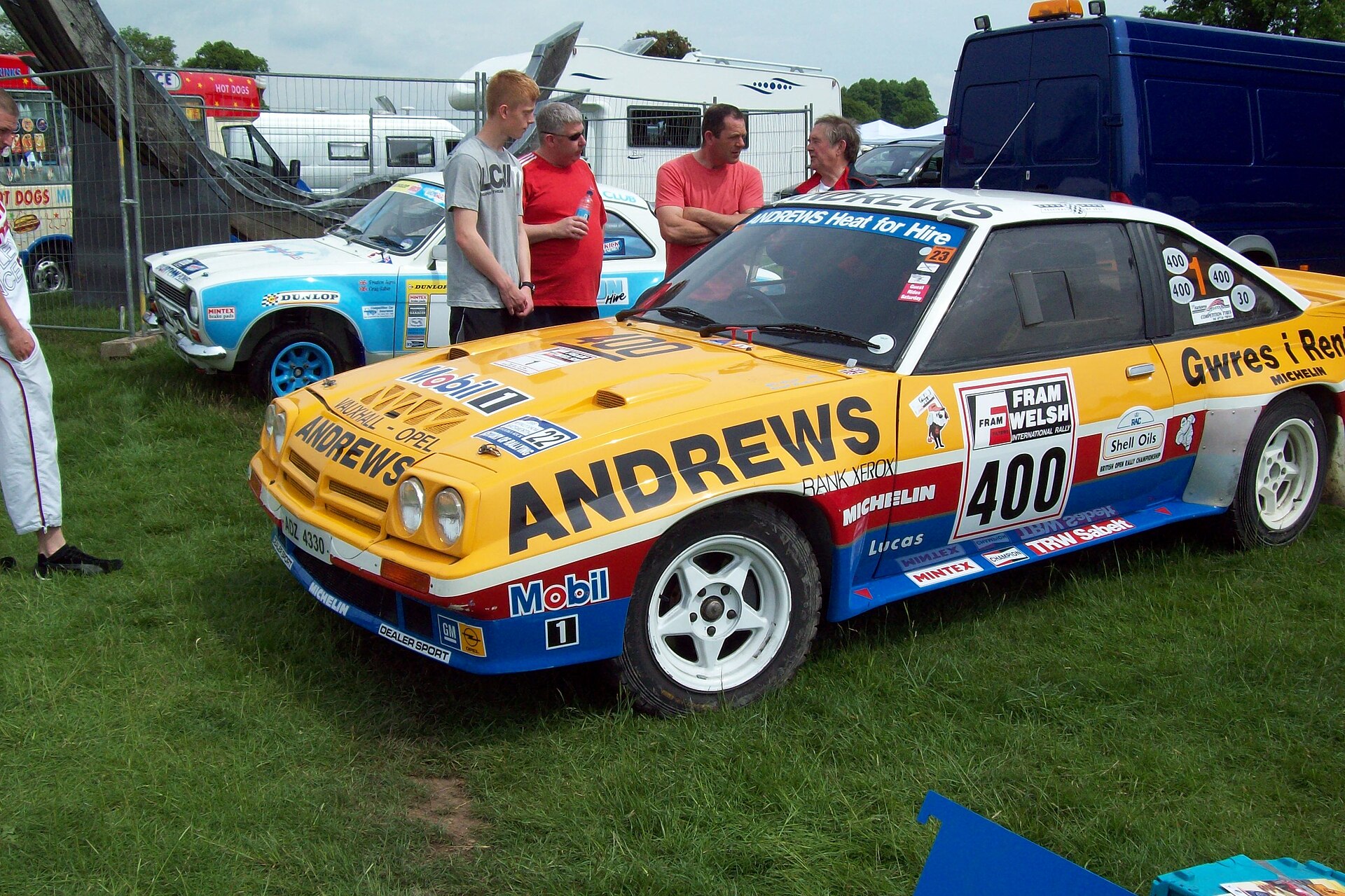
| Manta 400 | 1981–1984 | rally homologation coupé | 2.4 four-cylinder | 245 built; developed with Irmscher and Cosworth; 106 kW road car, up to 169–200 kW in rally trim |
| Manta i200 | 1980s | sporty road version | four-cylinder, GSi-based | about 700 built, 92 kW (125 PS), based on the GSi |
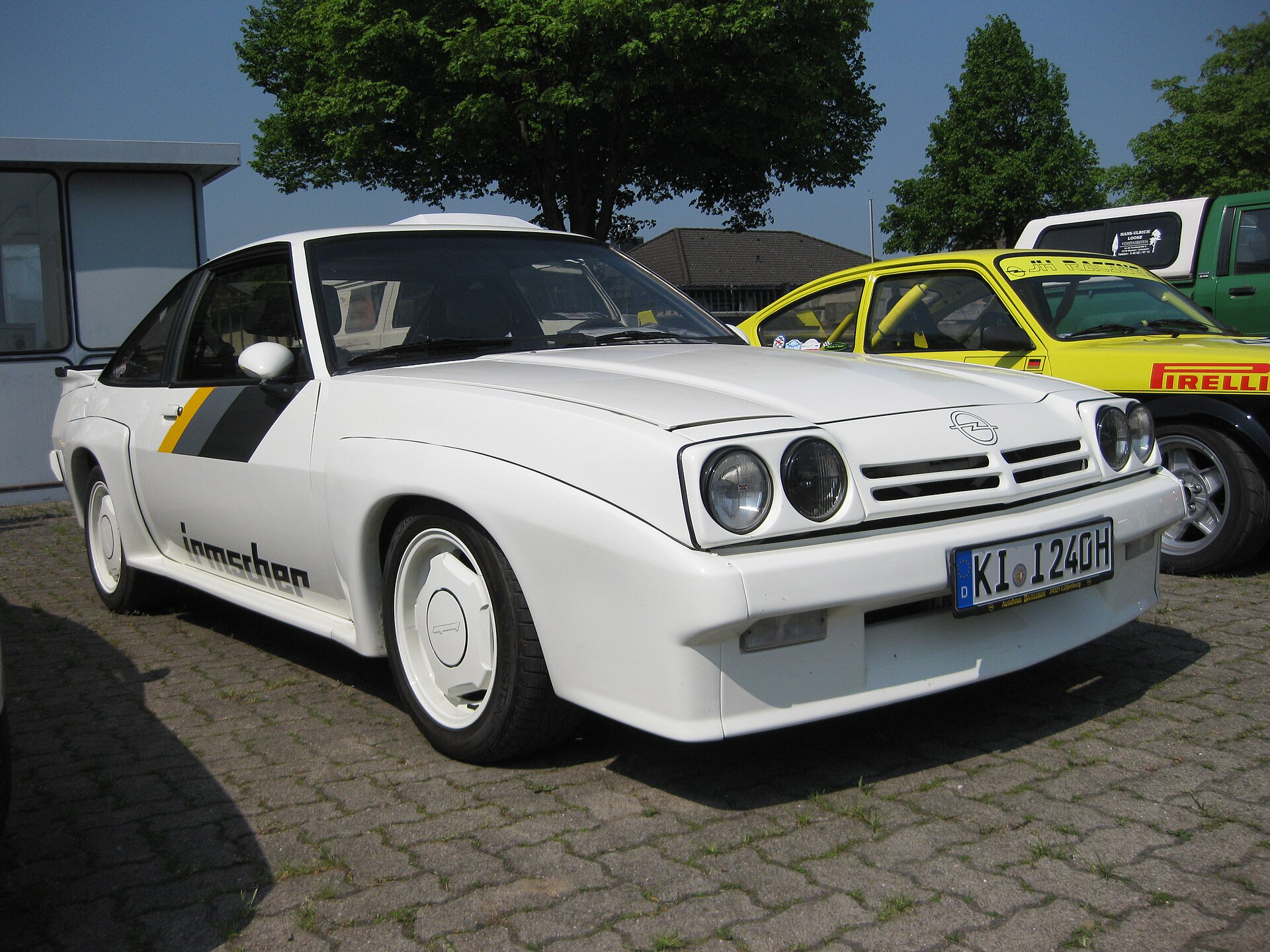
| Manta i240 | 1980s | sporty road version | four-cylinder | about 300 built, 100 kW (136 PS), 200 km/h |
| Turbomanta | 1970s | turbo conversion of the Manta A | Holset turbocharger | with Broadspeed; 116 kW (156 bhp); 5 to 33 cars, depending on source |
| TE2800 | 1970s | conversion, not an official Opel | 2.8 six from the Commodore GS | 79 built by Transeurop Engineering, sold by Steinmetz |
| Vauxhall Cavalier Coupé and Sports Hatch | 1975–1981 | UK version of the Manta B | Vauxhall/Opel fours | sold alongside the Opel version until 1981 |
The Manta 400 was presented at the Geneva Motor Show in March 1981 as the successor to the Ascona 400, the car in which Walter Röhrl won the 1982 drivers' world championship. Group B rules required at least 200 cars, and Opel built 245 by 1984. In Britain, Vauxhall sold the Manta B as the Cavalier Coupé and Sports Hatch, and a few of the 118 Vauxhall Centaur convertibles of 1978–1979 were built on Manta bodies.

In service: the Manta as a cult car
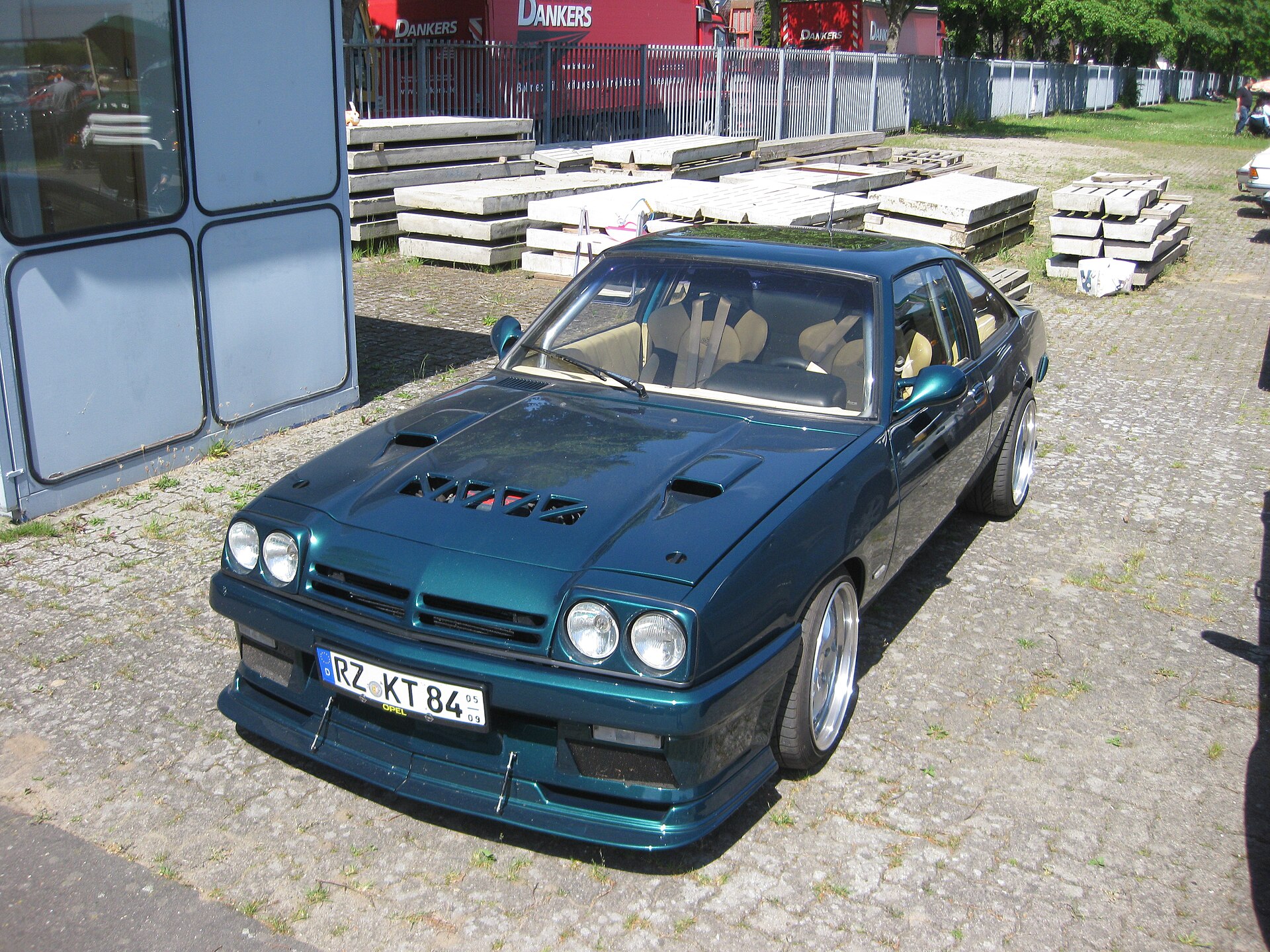
In the 1980s and 1990s the Manta B became a cult object in the German tuning scene. It also stood at the centre of a stereotype: the "Manta driver" with cowboy boots and Ruhr slang, mocked in jokes and in a song by Norbert & die Feiglinge. In 1991 two films, Manta, Manta and Manta – Der Film, portrayed the car and its owners, often ironically. A Manta B has competed in the Nürburgring 24 Hours since 1994; the 1981 car weighs about 930 kg and produces around 165 kW (225 PS). From March 2017 to January 2018 an original car was even shown at the Haus der Geschichte museum in Bonn.

Preservation and prices then and now
Period prices show how the Manta moved up-market. In 1972 a Manta A 1.2 cost DM 8,528 in Germany, and the GT/E about DM 12,500. In July 1976 the Manta B started at DM 11,560 (about €5,900 at the fixed DM rate). By 1986 the range ran from DM 20,725 for the GT 1.8 S to DM 24,550 for the GSi Exclusiv (about €10,600 to €12,600). Production figures help explain the collector interest in the rarer versions: only 245 Manta 400s, about 700 i200s and about 300 i240s were built. The comparison tool helps set a Manta against a Capri of the same era.
Photo gallery


Opel Manta photos 6
FAQ
When was the Opel Manta produced, and where?
From September 1970 to 28 August 1988, in Rüsselsheim (Germany) and Antwerp (Belgium); from 1982 only in Antwerp.
How many Opel Mantas were built?
About 1,056,000: 498,553 Manta A and, according to Wikipedia DE's production table, 534,634 Manta B including 95,116 CC hatchbacks (another figure on the same page is 557,940).
What engine does the Opel Manta have?
Four-cylinder petrol engines from 1.2 to 2.0 litres, 40–81 kW (55–110 PS); the strongest series version is the 2.0 E of the GT/E and GSi with 81 kW (110 PS).
What was the Manta 400?
A rally homologation model of 1981 with a 2.4-litre engine developed with Cosworth; 245 were built for Group B.
What replaced the Opel Manta?
The front-wheel-drive Opel Calibra, presented at the IAA in 1989 and sold from June 1990.